Time needed
15 min
What you need
- Plain white drawing paper or printer paper
- Crayons (light orange, dark orange, brown, black, and pink)
- Pencil
- Eraser
Tools
- Standard pencil
- Soft rubber eraser
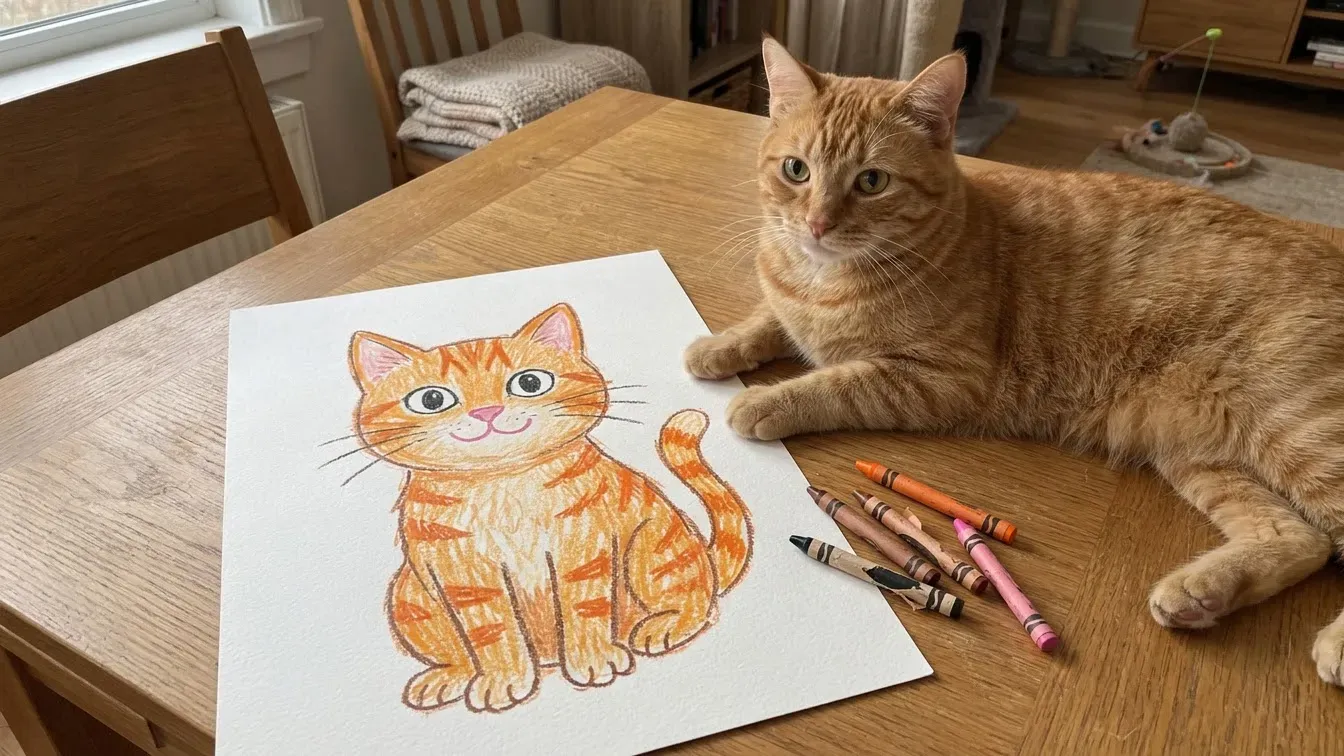
Your child can draw a recognizable, smiling orange tabby cat in about 15 minutes using nothing more than circles, ovals, and triangles. When rainy weather keeps everyone indoors and young artists get frustrated by realistic pet anatomy, breaking a cat down into everyday shapes removes the guesswork and builds confidence fast.
This screen-free project works well for children ages four to ten and requires zero messy paints or specialized art supplies. Grab a few sheets of paper, a pencil, and a handful of orange and brown crayons to turn a quiet afternoon into a fun tribute to your favorite ginger pet.
- 1
Draw a Medium Circle for the Head
Start near the upper middle of your paper so you leave plenty of room below for the body. Lightly sketch one medium circle about the size of a juice glass rim. It does not need to be completely round; a slightly wider, chubby circle actually gives your kitten a sweeter, softer face.
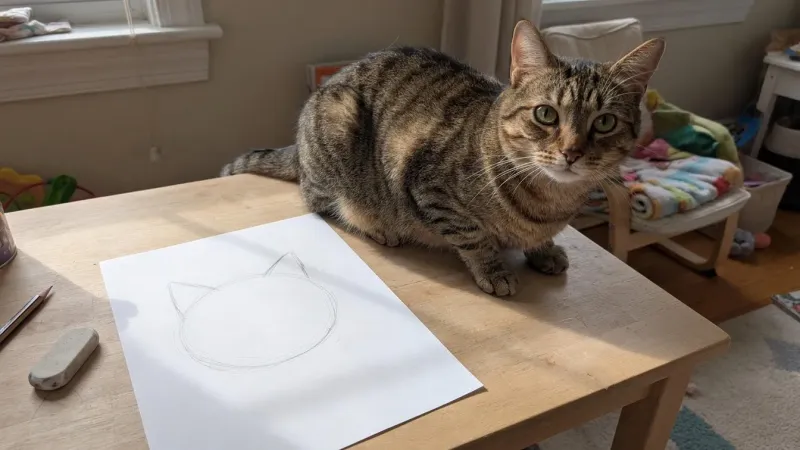
- 2
Add Two Triangles for Pointy Ears
Place two medium triangles on top of the head circle, one on the upper left and one on the upper right, leaving a small flat space between them. Inside each outer triangle, draw a slightly smaller triangle to create the pink inner ears that give cats their alert expression.
- 3
Sketch an Oval Body Underneath
Directly beneath the head circle, draw a larger vertical oval that looks like a plump jellybean or egg. Let the top edge of this oval tuck slightly behind the bottom of the chin so the head and body connect smoothly without needing a complicated neck.
- 4
Add Two Front Paws and Side Curves
At the very bottom center of the body oval, draw two small upright U-shapes side by side for the front paws, adding three tiny vertical lines inside each paw for toes. On the lower left and right sides of the oval, add two curved C-shapes to represent the folded back legs.
- 5
Draw a Long Curved Tail
Starting near the bottom right hip of the body oval, draw a long, curving line that swoops upward like the letter S or a candy cane. Follow that curve back down to the body to give the tail thickness, rounding off the tip smoothly.
- 6
Create a Cute Face and Whiskers
Inside the middle of the head circle, draw two large circles for eyes and color them in, leaving a tiny white dot in each eye to make them sparkle. Add a small upside-down triangle for the nose, a curvy W-shape underneath for a happy mouth, and three straight whiskers on each cheek.
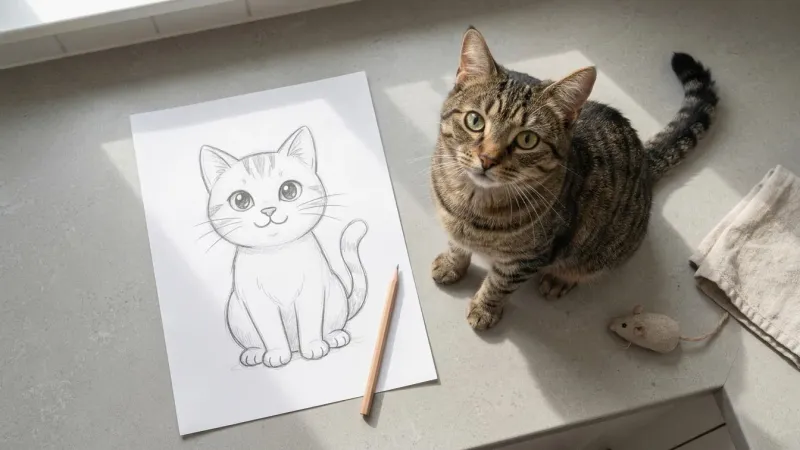
- 7
Add Classic Orange Tabby Stripes
Every orange tabby carries a signature M-shaped marking right on the forehead between the eyes, so draw a gentle letter M above the brow. Add two short horizontal stripes on each cheek, three small stripes across the chest, and evenly spaced stripes wrapping around the tail.
- 8
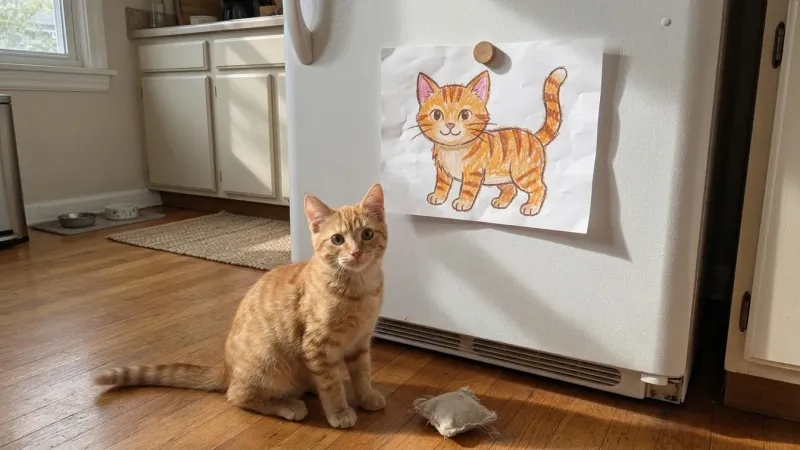
Trace and Color with Orange Crayons
Use a dark brown or black crayon to trace firmly over all your final pencil lines, then gently erase any stray guideline marks where the head meets the body. Color the main coat with a bright orange crayon, use a darker orange or light brown for the tabby stripes, and shade the inner ears and nose soft pink.
Simple Fixes for Common Kid Drawing Frustrations
Young children often press too hard with their pencils, making guidelines difficult to erase once the cat takes shape. Encourage your child to draw "whisper lines" by holding the pencil lightly near the middle rather than gripping tightly near the tip. If a circle turns out wobbly or lopsided, remind them that real cats look fluffy and cozy, so uneven lines actually make the fur look softer.
Keep art sessions safe when pets are nearby. Cats love batting at rolling pencils and chewing on paper scraps, and ingesting crayon wax or pencil erasers can cause stomach upset. Store small supplies in a lidded cup when stepping away from the table, and if your cat ever swallows a large piece of crayon or plastic eraser, contact your veterinarian right away.
Fun Ways to Customize Your Ginger Cat
Once your child masters the basic sitting pose, they can easily adjust the shapes to match your family pet or invent a new character. Here are three easy variations to try on the next sheet of paper:
- Sleeping curled-up kitten: Draw one large oval for the body, tuck a smaller circle inside the curve for the head, and swap the open eyes for two downward-curved U-shapes.
- White paws and bib: Leave the bottom tips of the paws and a small triangle on the chest white while coloring the rest of the fur bright orange, just like the patterns seen in many orange-and-white cats.
- Fluffy long-haired tail: Replace the smooth curved tail with a wide, cloud-like zigzag shape to mimic a plush coat.
If your child enjoys practicing different coat colors, they can also follow our guide on how to draw an easy white cat step by step to build a whole paper litter.
Once the crayons are put away, invite your child to name their new paper pet—or pick inspiration from our list of orange cat names for male kittens—and tape the finished artwork to the refrigerator. Practicing simple shapes turns pet drawing into an easy, confidence-boosting habit for any rainy afternoon.
Sources: ASPCA
Frequently asked questions
How do you draw a quick simple cat for young kids?
Start with just three basic shapes: a circle for the head, two triangles on top for the ears, and a larger oval underneath for the sitting body. Adding a curved tail, two dot eyes, a triangle nose, and six whiskers completes a recognizable cat in under five minutes.
Why do orange cats have an M on their forehead?
All orange cats are genetically tabbies, meaning their coats carry striped, spotted, or swirled patterns rather than solid color. The dark M-shaped marking above the eyes is a natural hallmark of the tabby coat pattern seen across ginger cats.
What age is best for this step-by-step cat drawing?
Children ages four to ten get the most out of this shape-based method. Preschoolers around age four or five can draw the big circles and color the stripes with minimal help, while older elementary kids can add detailed shading and extra fur texture.
Are crayons safe if my real cat chews on them?
Most standard children's crayons are labeled non-toxic, meaning a small nibble rarely causes serious poisoning. However, swallowing chunks of wax or paper wrappers can irritate your cat's stomach or cause a blockage, so keep art supplies stored out of reach and call your vet if your pet swallows a large piece.
Nathan Brooks
Nathan Brooks runs Farmingzoom to help loving pet owners create safe, enriching homes for their animals. He cares deeply about responsible pet care and focuses on making everyday decisions simpler for fellow owners.…