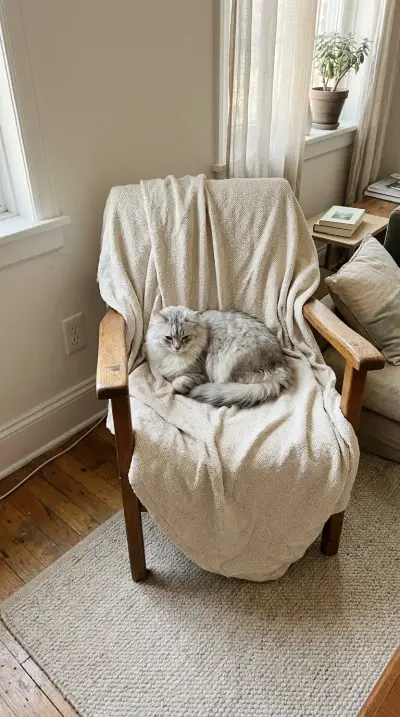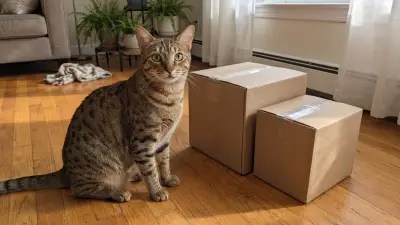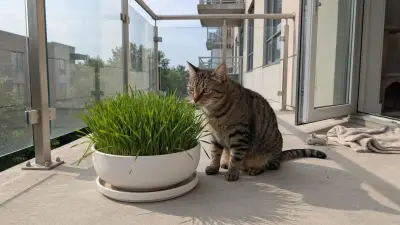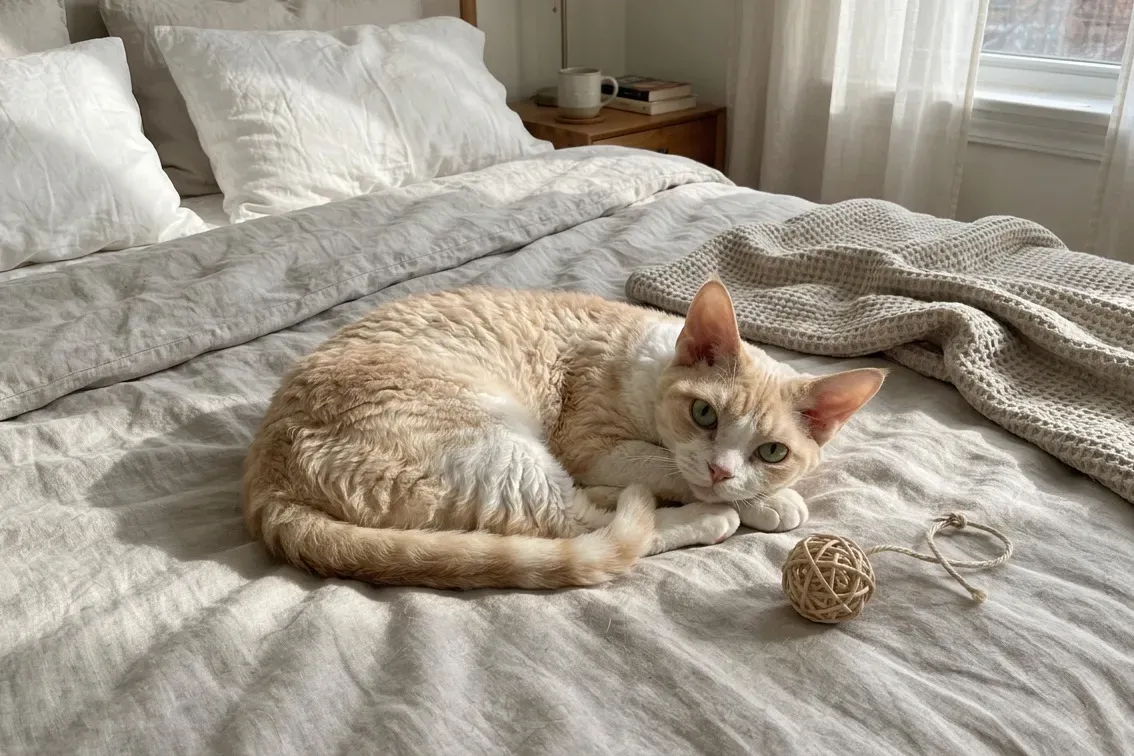
No cat breed is completely free of allergens, because the Fel d 1 protein lives in feline saliva and skin oils rather than the fur itself. However, curly-coated breeds trap loose hair and dander inside their waves instead of letting it float onto your pillows, making them practical companions for couples sharing a small one-bedroom apartment with mild allergies.
Below is a side-by-side comparison of six notable curly-coated cat breeds, focusing on their shedding levels, grooming routines, and nighttime habits when keeping the bedroom door shut is not an option.
| Breed | Origin | Weight | Coat Type | Shedding Level |
|---|---|---|---|---|
| Cornish Rex | United Kingdom | 6–10 lbs | Short marcel waves | Very low |
| Devon Rex | United Kingdom | 6–9 lbs | Short loose curls | Very low |
| Selkirk Rex | United States | 6–16 lbs | Plush dense curls | Moderate |
| LaPerm | United States | 6–12 lbs | Bouncy ringlets | Low to moderate |
| German Rex | Germany | 6–10 lbs | Velvety tight waves | Very low |
| Ural Rex | Russia | 7–13 lbs | Elastic spiral waves | Low |
1Cornish Rex
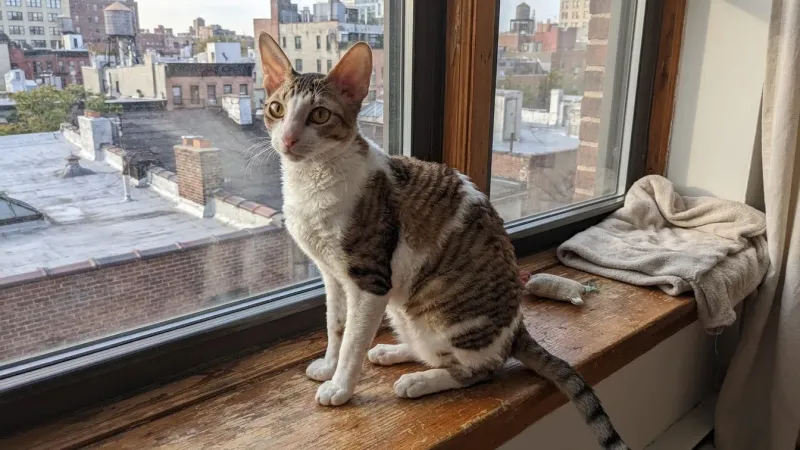
Origin: United Kingdom · Weight: 6–10 lbs · Coat Type: Short marcel waves · Shedding Level: Very low The Cornish Rex has only a soft, rippled undercoat and lacks guard hairs, leaving very little loose fur on apartment furniture. Because its coat is thin, this breed seeks warmth constantly and will happily burrow under your blanket at night. You will need to wipe its skin and clean its large ears weekly to remove natural oils that hold dried saliva, and daily interactive play helps burn off its high acrobatic energy before bedtime.
2Devon Rex
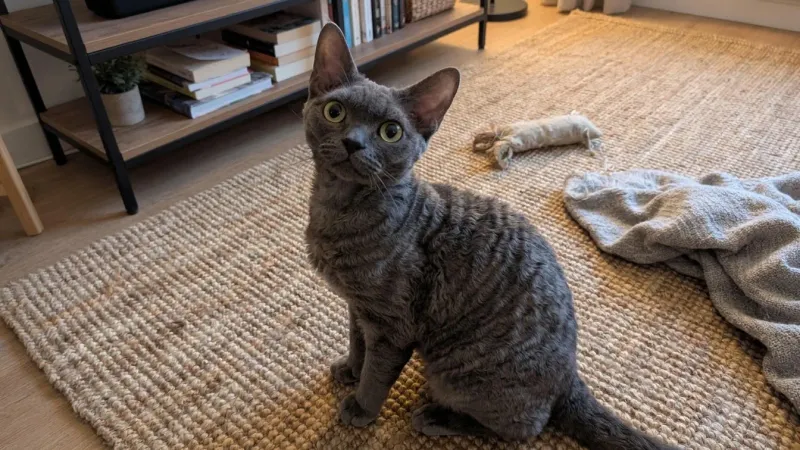
Origin: United Kingdom · Weight: 6–9 lbs · Coat Type: Short loose curls · Shedding Level: Very low With pixie-like ears and a suede-like coat of loose curls, the Devon Rex has all three hair types—guard, awn, and down hairs—that are very short, sparse, and curled, so it sheds minimally and adapts easily to small apartment living. This sociable cat bonds closely with both partners and likes sleeping right next to your pillow or on your chest. Gentle weekly wiping with a damp cloth removes skin oils without breaking its fragile curls, and a compact cat tree near a sunny window gives it plenty of daytime stimulation.
3Selkirk Rex
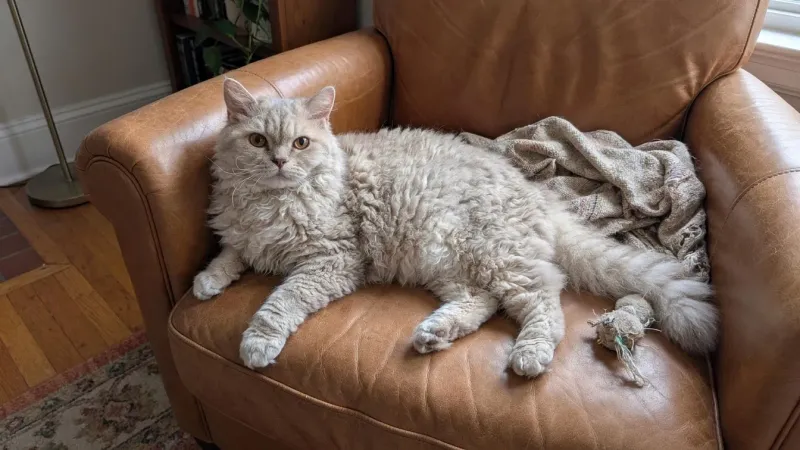
Origin: United States · Weight: 6–16 lbs · Coat Type: Plush dense curls · Shedding Level: Moderate Unlike the slender Cornish and Devon Rex, the Selkirk Rex has a sturdy, rounded build and a thick, teddy-bear coat available in short or long lengths. Because it possesses all three hair layers, it sheds more than other curly breeds and suits mild allergy sufferers better than sensitive ones. Comb its plush curls two or three times a week to prevent mats and remove trapped dander, and expect a laid-back, patient companion that sleeps calmly through the night.
4LaPerm
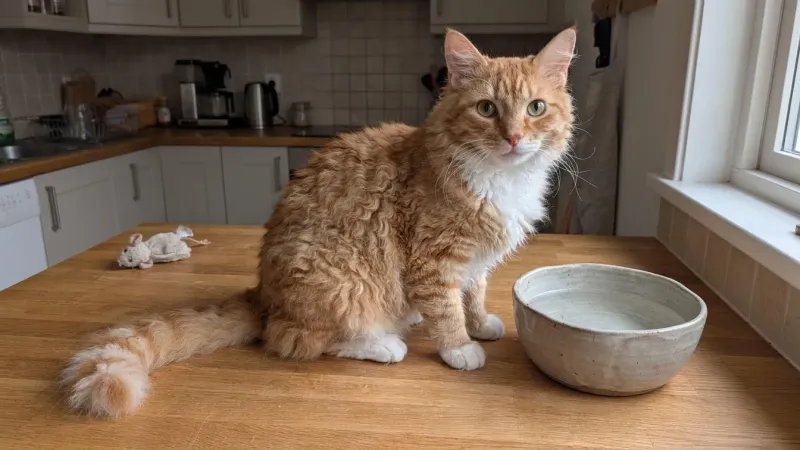
Origin: United States · Weight: 6–12 lbs · Coat Type: Bouncy ringlets · Shedding Level: Low to moderate The LaPerm gets its name from its loose, springy ringlets that stand away from the body and allow air to circulate through the coat. It sheds less than standard straight-haired cats, though you will notice a light seasonal shed in spring and autumn. A weekly comb with a wide-tooth metal tool keeps the ringlets tidy without frizzing, and its affectionate, middle-of-the-road energy fits couples who want both evening play and quiet cuddles.
5German Rex
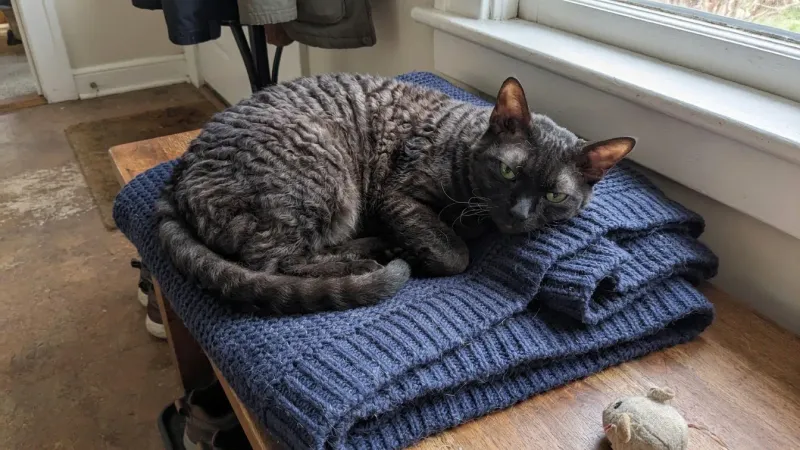
Origin: Germany · Weight: 6–10 lbs · Coat Type: Velvety tight waves · Shedding Level: Very low Sharing the same recessive coat-curl gene as the Cornish Rex, the rare German Rex carries a short, velvety wave of pure undercoat with curled whiskers. Its compact size and gentle, people-oriented temperament make it well suited to a one-bedroom layout where personal space is shared closely. Because the coat is dense and short, occasional warm baths with a veterinarian-approved feline shampoo help wash away surface dander before it transfers onto your sheets.
6Ural Rex
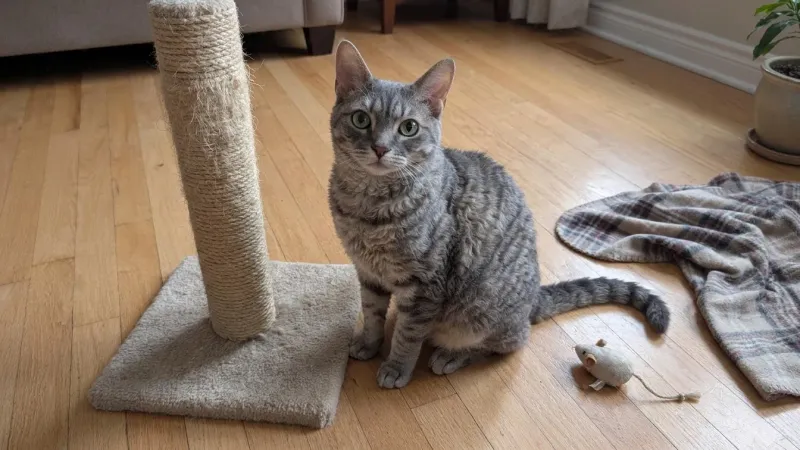
Origin: Russia · Weight: 7–13 lbs · Coat Type: Elastic spiral waves · Shedding Level: Low Originating in Russia's Ural region, this medium-sized breed features soft, elastic curls that lie close to the body in neat waves and shed very little around the house. The Ural Rex is known for a balanced, quiet disposition, making it less likely to wake light sleepers with midnight zoomies in a small apartment. Brush gently with a soft bristle brush once a week to lift loose hairs and distribute skin oils evenly.
Managing Allergens in a Shared Small Bedroom
Even with a low-shedding curly breed, sharing sleeping quarters in a compact apartment concentrates dander in one room. Before bringing a cat home, spend at least an hour inside a breeder's cattery with the specific breed to test how the allergic partner reacts.
- Run a HEPA air purifier: Place a true HEPA unit near the bed to capture airborne skin flakes and saliva particles continuously.
- Wash bedding weekly in hot water: Use zippered allergen-barrier encasements on pillows and mattresses so dander cannot settle deep into the fabric.
- Wipe the coat regularly: Use vet-approved feline grooming wipes every few days to lift dried saliva off the curls before it flakes into the air.
- Check household plants: If you add greenery to freshen apartment air, verify every plant is non-toxic, as common lilies and pothos are dangerous to cats.
If either partner develops wheezing, chest tightness, or persistent sinus swelling, consult an allergist promptly rather than relying solely on breed choice.
Common Mistakes Couples Make With Curly-Coated Cats
Many first-time owners assume curly fur requires zero upkeep or behaves like human hair. Avoiding a few frequent missteps keeps both your skin and your cat's coat healthy:
- Over-brushing delicate curls: Harsh slicker brushes can snap the fragile hair shafts of a Cornish or Devon Rex. Stick to a damp chamois cloth or a wide-tooth comb for longer coats like the LaPerm.
- Skipping ear and skin care: Because short-coated Rex breeds lack thick guard hairs to absorb body oils, skin grease builds up faster and needs gentle bathing every few weeks using a mild, vet-recommended cat shampoo.
- Expecting a quiet nighttime sleeper: Active breeds like the Cornish Rex want to burrow under your duvet at midnight. If you prefer a calmer roommate, explore quiet cat breeds for apartments or look through hypoallergenic cat breeds easier on allergies to compare non-curly options too.
Choosing among the six curly-coated cat breeds comes down to matching coat density with your allergy threshold and nighttime sleep style. Short-coated Rex breeds like the Cornish, Devon, and German Rex minimize loose hair in a shared bedroom, while the LaPerm and Selkirk Rex offer plush curls for milder sensitivities. Always spend time with the individual cat first, keep a HEPA filter running, and consult your veterinarian for skin and coat care tailored to your home.
Sources: Cornell Feline Health Center · The Cat Fanciers' Association (CFA) · The International Cat Association (TICA) · International Cat Care
Frequently asked questions
Are curly-coated cats completely hypoallergenic?
No cat breed is 100 percent hypoallergenic. All cats produce the Fel d 1 allergen in their saliva and skin glands. Curly-coated breeds help people with mild allergies because their wavy fur traps loose hair and dander closer to the skin instead of releasing it into the air.
Which curly cat breed sheds the least in a small apartment?
The Cornish Rex, Devon Rex, and German Rex shed the least: the Cornish and German Rex lack guard hairs entirely, while the Devon Rex has very short, sparse, and curled guard, awn, and down hairs that shed minimally. Regular wiping with a damp cloth or occasional bathing removes built-up skin oils that carry allergens.
How often should you bathe a curly-coated cat for allergies?
Most short-coated Rex cats benefit from a gentle bath every three to four weeks using a lukewarm water rinse and a vet-approved feline shampoo. Over-bathing can dry out their skin and increase flaking, so wipe their coat with damp grooming cloths between baths.
Can a curly-coated cat sleep in the bedroom if my partner has mild allergies?
Yes, many couples with mild allergies share a bedroom with a curly-coated cat by taking simple precautions. Run a true HEPA air purifier next to the bed, wash sheets weekly in hot water, and wipe the cat's fur regularly to reduce saliva buildup.

Nathan Brooks
Nathan Brooks runs Farmingzoom to help loving pet owners create safe, enriching homes for their animals. He cares deeply about responsible pet care and focuses on making everyday decisions simpler for fellow owners.…