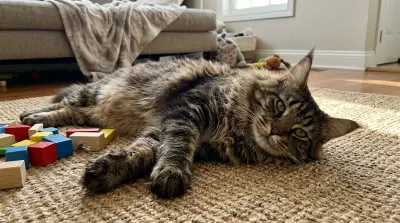
Black and white coats appear across dozens of recognized cat breeds, meaning you can choose a feline with both striking tuxedo or bicolor markings and the steady temperament needed for life with young children. Instead of picking a high-strung breed that hides under the bed whenever toys clatter, families do best with sturdy, people-oriented cats that welcome loud play and gentle petting.
The eight breeds below combine classic black and white coat patterns with calm, forgiving personalities. Compare their sizes, origins, and lifespans below to find the right match for your household.
| Breed | Origin | Size | Lifespan |
|---|---|---|---|
| Maine Coon | United States | Large to extra-large | 12-15 years |
| Ragdoll | United States | Large | 12-17 years |
| British Shorthair | United Kingdom | Medium to large | 12-20 years |
| American Shorthair | United States | Medium to large | 15-20 years |
| Exotic Shorthair | United States | Medium | 12-15 years |
| Scottish Fold | United Kingdom | Medium | 11-15 years |
| Manx | Isle of Man | Medium | 14-16 years |
| Ragamuffin | United States | Large | 12-16 years |
1Maine Coon
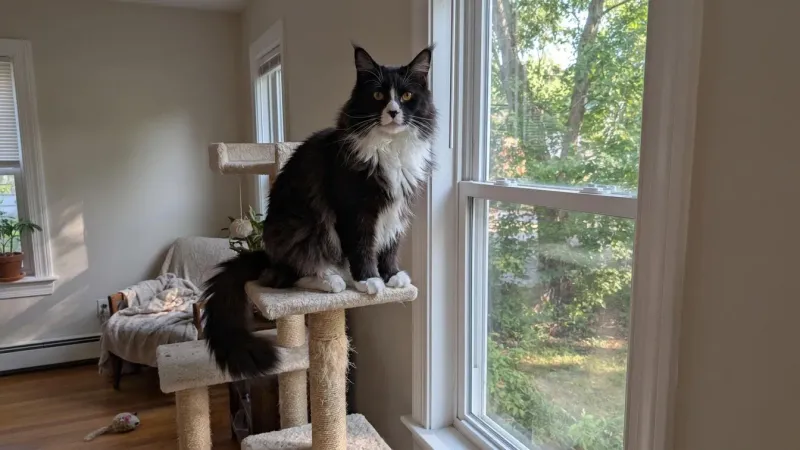
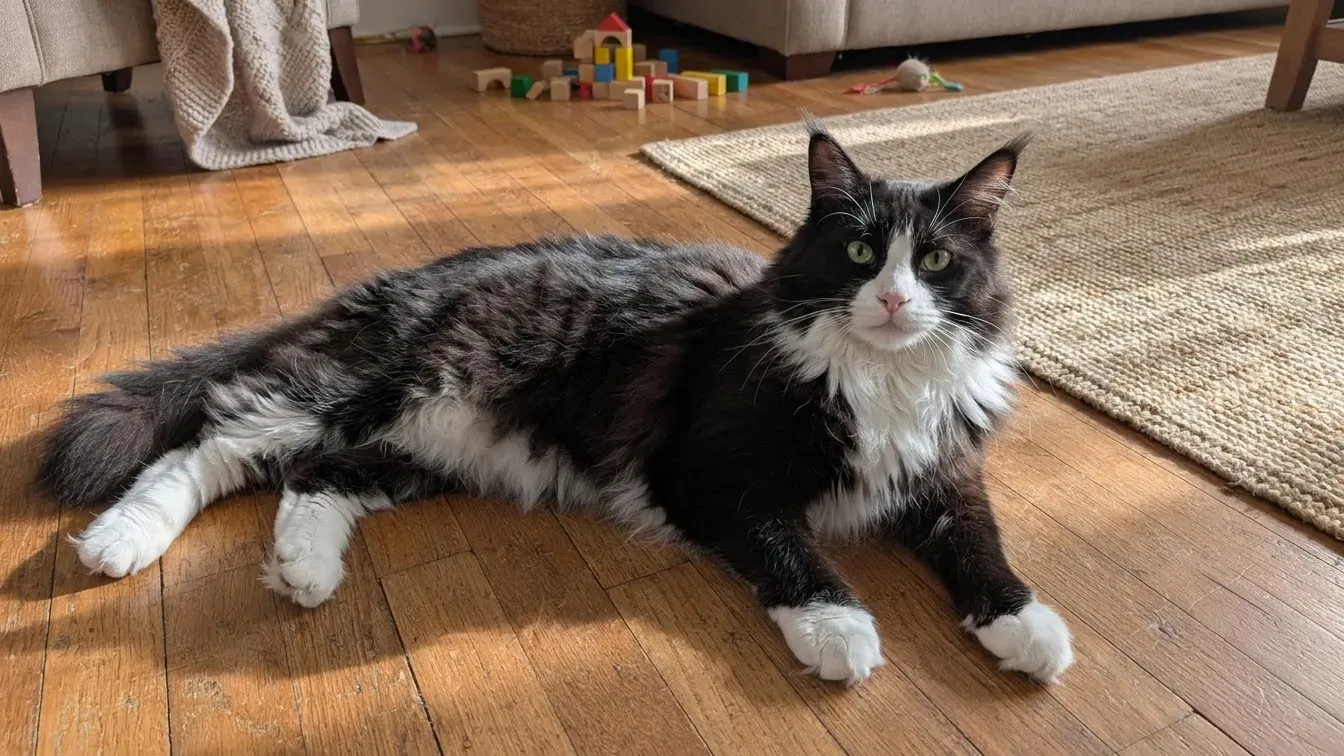
Origin: United States · Size: Large to extra-large · Lifespan: 12-15 years Often called gentle giants, Maine Coons regularly wear dramatic black and white tuxedo or bicolor coats with snowy white chests and mittens. Their heavy bone structure and muscular build make them far less fragile around toddlers than fine-boned cats. Maine Coons love following family members from room to room, enjoy interactive wand games, and rarely startle at dropped blocks or loud laughter. Brush their shaggy water-resistant coat twice a week to prevent tangles behind the ears and under the legs.
2Ragdoll
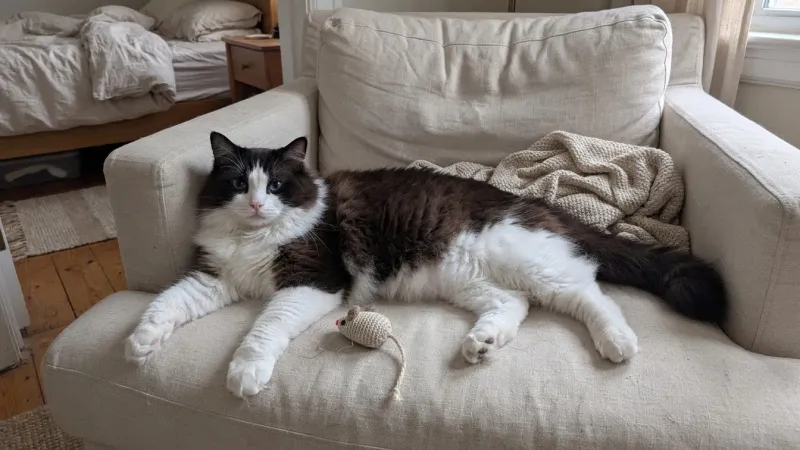
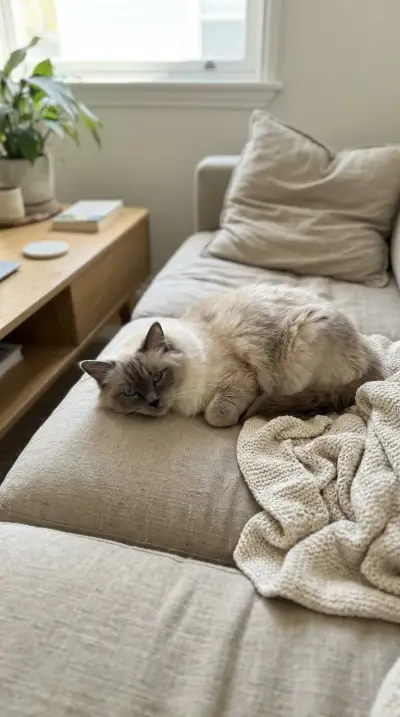
Origin: United States · Size: Large · Lifespan: 12-17 years Traditional Ragdolls are colorpointed cats—where a seal bicolor shows dark brown-black points with white markings and blue eyes—while solid and mink black-and-white patterns only occur in non-traditional lines not accepted for championship by major registries like CFA and TICA. True to their name, they tend to relax completely when picked up, making them remarkably tolerant of supervised toddler affection. They prefer staying close to the family on the living room rug rather than darting away from sudden movements. Because Ragdolls lack a dense undercoat, a quick weekly comb keeps their silky plush fur smooth and free of mats.
3British Shorthair
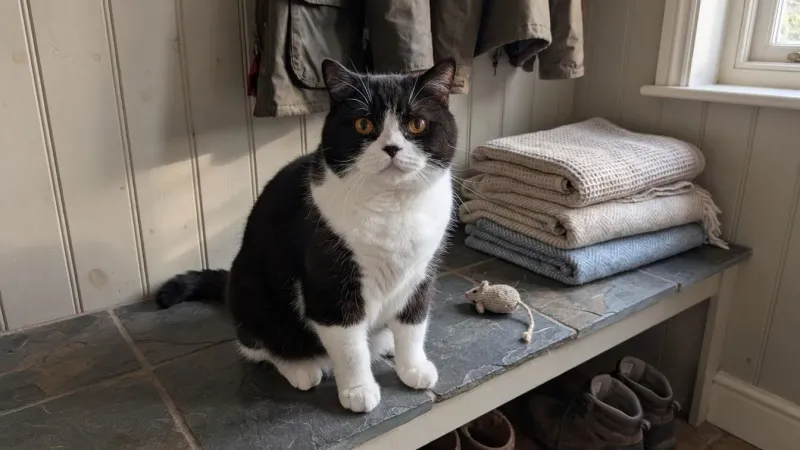
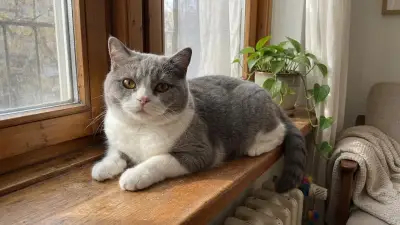
Origin: United Kingdom · Size: Medium to large · Lifespan: 12-20 years With round cheeks, broad chests, and dense plush fur, black and white British Shorthairs look like living teddy bears. They are famously unflappable, preferring to sit beside noisy playrooms rather than climbing curtains or panicking at sudden shouts. British Shorthairs are affectionate without being overly clingy, which suits busy parents juggling toddler schedules. Feed measured portions and encourage daily chase games, as their stocky frames can gain extra weight easily indoors.
4American Shorthair
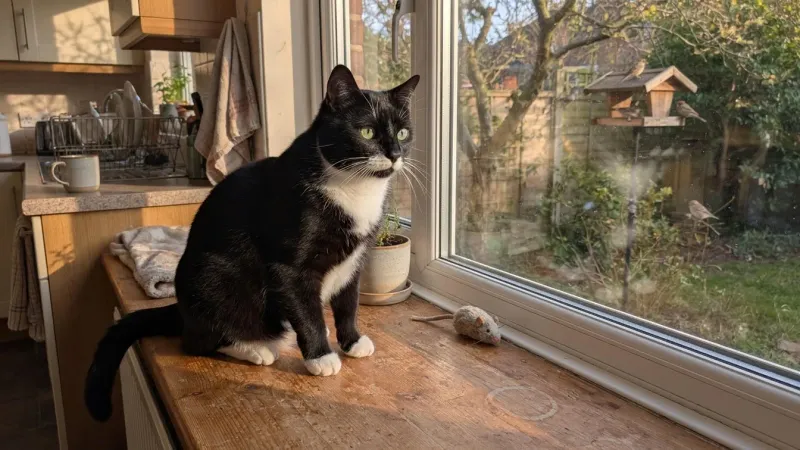
Origin: United States · Size: Medium to large · Lifespan: 15-20 years Descended from hardy working cats, the American Shorthair comes in crisp black and white tuxedo and van patterns with dense, low-maintenance fur. They combine an easygoing, adaptable nature with sturdy athleticism that stands up well to active family life. American Shorthairs enjoy chasing rolled paper balls with young children and then settling quietly onto a sunny windowsill for afternoon naps. Their short coats only need a quick weekly brushing to remove loose hair.
5Exotic Shorthair
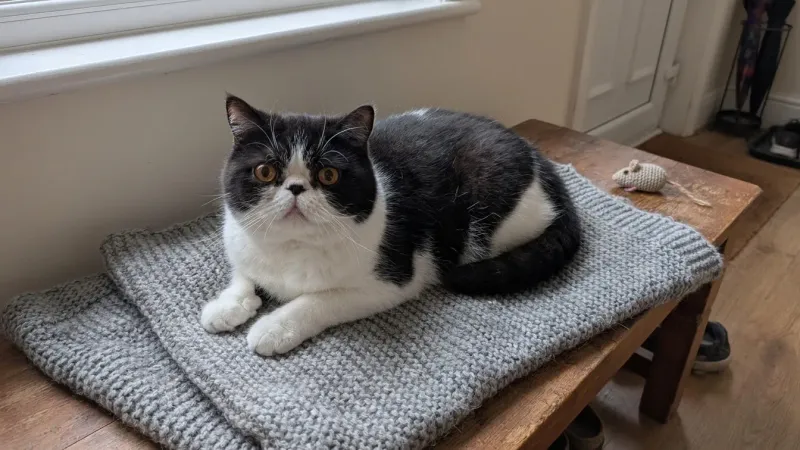
Origin: United States · Size: Medium · Lifespan: 12-15 years Bred to offer the sweet, laid-back personality of a Persian without daily marathon grooming, the Exotic Shorthair looks adorable in black and white bicolor markings. Their compact, heavy-boned bodies and round faces give them a calm, teddy-bear presence in busy living rooms. They rarely vocalize loudly and prefer gentle lap time over chaotic zooming. Wipe the corners of their large eyes daily with a damp cloth to keep tear staining clean, and watch for the specific health risks of extreme flat-faced breeding—including brachycephalic obstructive airway syndrome, heat sensitivity, dental malocclusion, and polycystic kidney disease (PKD), verifying DNA testing for PKD before buying.
6Scottish Fold
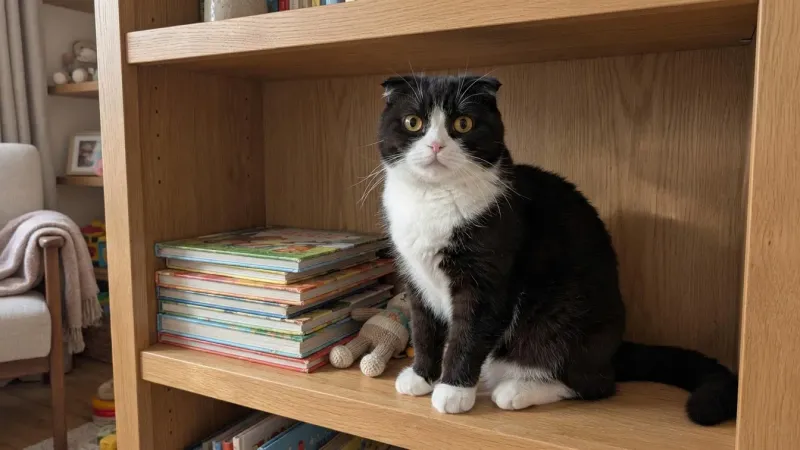
Origin: United Kingdom · Size: Medium · Lifespan: 11-15 years Black and white Scottish Folds are sweet-tempered, adaptable companions that bond closely with children and adjust smoothly to noisy suburban households. However, the dominant mutation behind the folded ears causes painful osteochondrodysplasia—a progressive joint and bone disease affecting cartilage in all folded-ear cats—and breeding them is banned or restricted in several jurisdictions for animal welfare reasons. Because every folded-ear cat develops skeletal and joint discomfort, families should consider a straight-eared Scottish Straight or another sturdy breed instead.
7Manx
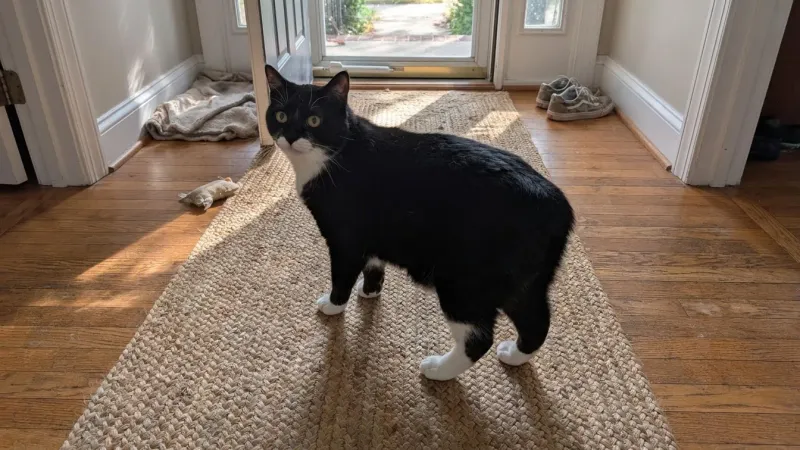
Origin: Isle of Man · Size: Medium · Lifespan: 14-16 years Known for their tailless or short-tailed silhouettes and rounded rumps, black and white Manx cats are sturdy, dog-like companions. Having no long tail to accidentally pull removes one of the biggest stress points between toddlers and family cats. Manx cats are loyal, playful, and comfortable around household commotion, often greeting family members at the front door. However, the tailless gene can cause Manx syndrome—a severe congenital condition involving spinal deformities, bowel and bladder incontinence, and hind-limb nerve issues—so prospective owners must ensure kittens are thoroughly screened for normal bowel, bladder, and hind-limb function before adoption.
8Ragamuffin
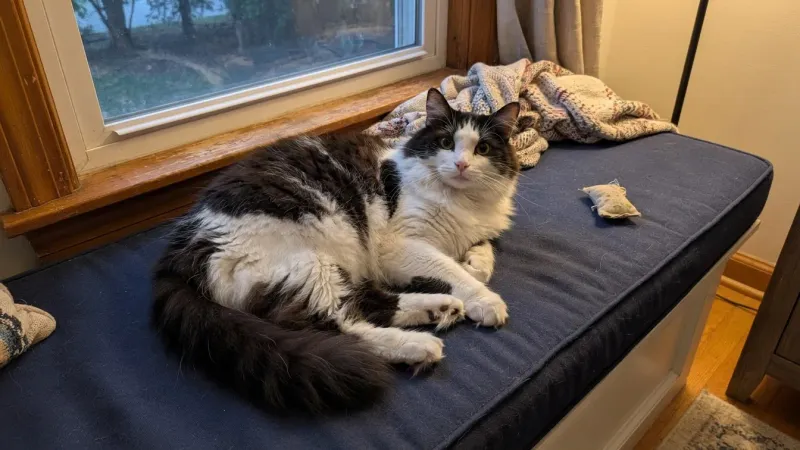
Origin: United States · Size: Large · Lifespan: 12-16 years Closely related to the Ragdoll, the Ragamuffin comes in every pattern, including rich black and white tuxedo and patched coats. They are heavy-boned, muscular cats with sweet expressions and an almost endless reserve of patience for young children. Ragamuffins happily accept gentle dress-up play or quiet reading sessions on the sofa without extending their claws. If you want more coat color variety alongside similar fluffy cat breeds with gentle personalities, Ragamuffins rank near the top.
How to Prepare Your Busy Home for a Black and White Cat
Even the most patient cat needs predictable escape routes when toddlers are learning how to share space. Set up vertical territory like a sturdy cat tree or wall shelves in the main living area so your cat can watch family life safely above floor level. Keep litter boxes, water bowls, and food stations behind a baby gate with a small pet door so curious hands cannot interrupt bathroom breaks or mealtime.
Teach young children to pet cats with open, flat hands along the back and shoulders rather than grabbing tails or fur. When bringing a new cat home, schedule a wellness exam with your veterinarian to establish a vaccine schedule, discuss parasite prevention, and check for breed-specific health considerations.
Common Mistakes Families Make When Choosing a Bicolor Cat
Many families adopt based purely on a cute tuxedo mustache or cow-spot pattern without checking the underlying breed's energy level or sensitivity to noise. High-energy breeds like the Oriental Shorthair or Cornish Rex come in gorgeous black and white coats, yet their sleek builds and intense vocal habits can clash with chaotic toddler routines. Choosing medium-to-large patient cat breeds gives your household a much better temperament match.
Another common oversight is assuming adult cats are harder to integrate than kittens. Tiny kittens have fragile bones that can be accidentally hurt during clumsy toddler play, whereas a fully grown adult cat already has sturdy muscle mass and a settled personality.
Black and white cats are not a single breed, which gives families with toddlers the freedom to match classic tuxedo looks with a truly sturdy, unflappable temperament. Choose a medium-to-large adult cat with a calm track record, set up high perches and gated quiet zones before adoption day, and involve your children in gentle daily feeding routines.
Sources: The Cat Fanciers' Association (CFA) · The International Cat Association (TICA) · International Cat Care · ASPCA
Frequently asked questions
Is a tuxedo cat a specific breed?
No, a tuxedo cat is a coat pattern rather than a distinct breed. Tuxedo markings feature a mostly black coat with white fur on the chest, paws, belly, and sometimes the chin or muzzle, appearing in mixed-breed cats as well as pedigreed breeds like Maine Coons and British Shorthairs.
Are black and white cats rare?
Black and white cats are very common because the piebald spotting gene responsible for white patches appears widely across domestic cat populations. While the color pattern itself is easy to find in shelters and breeders, specific pedigreed breeds with balanced facial markings are less common.
Are black and white cats good with toddlers?
Temperament depends on the individual cat and breed rather than coat color alone. Choosing sturdy, laid-back breeds like the Ragdoll, British Shorthair, or Maine Coon in black and white patterns gives families a much higher chance of finding a patient companion for loud toddlers.
Should families with toddlers adopt a kitten or an adult cat?
An adult cat over one or two years old is usually safer and easier for homes with toddlers. Adult cats have heavier bones, established personalities, and better self-control than tiny kittens, which can easily be injured during clumsy toddler play.

Nathan Brooks
Nathan Brooks runs Farmingzoom to help loving pet owners create safe, enriching homes for their animals. He cares deeply about responsible pet care and focuses on making everyday decisions simpler for fellow owners.…