True zero-shedding cats do not exist, but several low shedding long haired cats lack dense undercoats or hold loose hair in curls, meaning far less loose fur lands on your sofa and tailored work clothes. By choosing a breed with a single-layered, curly, or light-undercoat coat, you can enjoy plush feline company without spending your evenings vacuuming.
Each breed below pairs manageable shedding with a fast, realistic grooming schedule designed for busy weeks. Compare coat types, grooming time, and origins at a glance before picking your match.
| Breed | Origin | Coat Type | Grooming Routine | Shedding Level |
|---|---|---|---|---|
| Balinese | United States | Single-layer silky | Once weekly (5 min) | Very low |
| Javanese (Colorpoint Balinese) | United States | Single-layer silky | Once weekly (5 min) | Very low |
| Turkish Angora | Turkey | Single-layer fine | 1-2 times weekly | Low |
| LaPerm (Longhair) | United States | Curly single-to-light | Once weekly (5 min) | Very low |
| Selkirk Rex (Longhair) | United States | Plush loose curls | 1-2 times weekly | Low |
| Cornish Rex (Long-coated lines) / Devon Rex (Longhair) | United Kingdom | Wavy fine down-like | Once weekly (5 min) | Very low |
| Oriental Longhair | United States | Fine silky single | Once weekly (5 min) | Very low |
| Turkish Van | Turkey | Cashmere-like seasonal | 1-2 times weekly | Low to moderate (heavy spring molt) |
| Birman | Myanmar / France | Silky single-layer | 1-2 times weekly | Low |
| Ragamuffin | United States | Plush rabbit-like coat | 2 times weekly | Low to moderate |
| Cymric (Longhaired Manx) | Isle of Man | Plush double coat | 2 times weekly | Low to moderate |
1Balinese
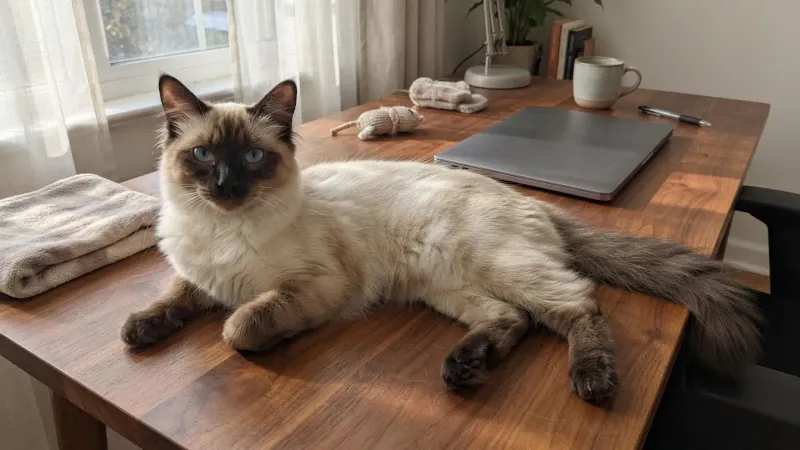
Origin: United States · Coat Type: Single-layer silky · Grooming: Once weekly · Shedding: Very low Often called the long-haired Siamese, the Balinese carries a fine, single-layered coat without a woolly undercoat. Because there is no dense underfur to trap dead hair, strands rarely mat or drift onto dark trousers. Run a wide-toothed metal comb through its plume tail and body for five minutes every Sunday to lift loose hair before it falls on furniture. Balinese cats are social and vocal, making them great companions if you work from home.
2Javanese (Colorpoint Balinese)
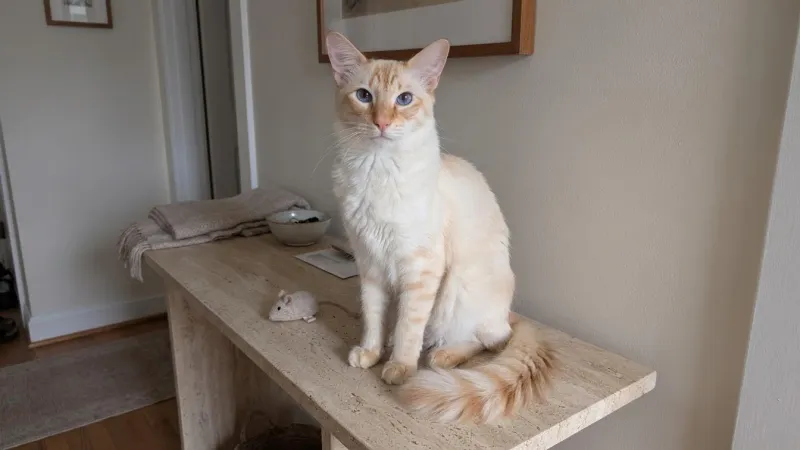
Origin: United States · Coat Type: Single-layer silky · Grooming: Once weekly · Shedding: Very low Recognized by major registries such as the Cat Fanciers' Association (CFA) as a color division of the Balinese rather than a completely separate breed, the Javanese expands the color palette to tabby, tortie, and red points while keeping the same sleek, undercoat-free fur. Its medium-long coat lies flat against its athletic body rather than puffing outward. A single five-minute combing session each week keeps the coat glossy and prevents static flyaways on upholstery. They thrive on interactive play during your evening downtime and adapt smoothly to tidy apartment living.
3Turkish Angora
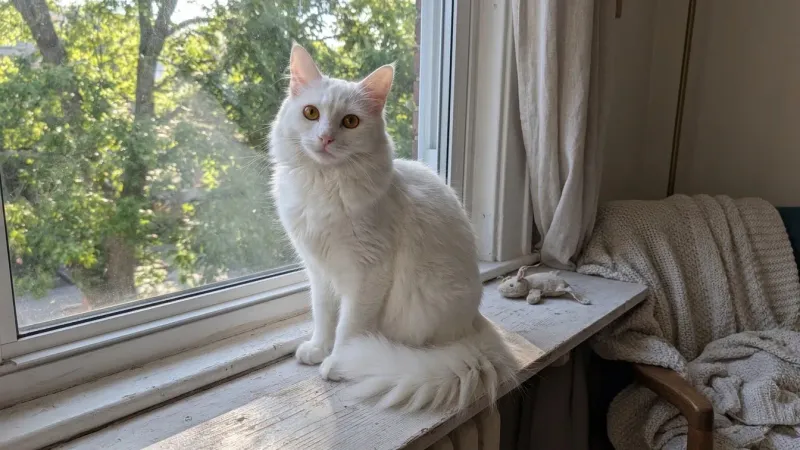
Origin: Turkey · Coat Type: Single-layer fine · Grooming: 1-2 times weekly · Shedding: Low This historic natural breed wears a shimmering, single-layer coat that feels like spun silk and lacks a heavy undercoat. Hair tends to stay neatly on the cat until you brush it out, leaving your sofa remarkably clean between sessions. Comb the neck ruff and bushy tail once or twice weekly using a stainless-steel comb to prevent minor tangles behind the ears. Agile and alert, Turkish Angoras love perching high above your home office.
4LaPerm (Longhair)
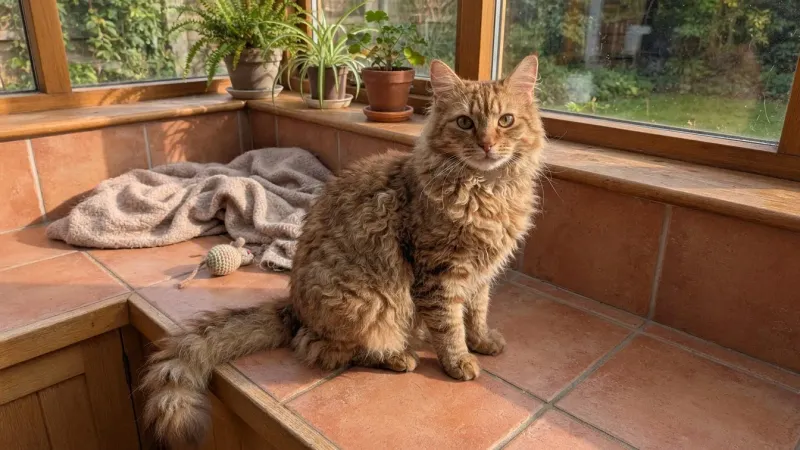
Origin: United States · Coat Type: Curly single-to-light · Grooming: Once weekly · Shedding: Very low The long-haired LaPerm sports springy, loose ringlets that hold onto shed hairs instead of releasing them onto your blazer or carpets. Because the curls prevent tight matting, you can skip daily brushing and stick to one quick weekly mist with water followed by a gentle finger-comb or wide-toothed comb. Avoid heavy slicker brushes that pull out the natural wave pattern. LaPerms are affectionate lap cats that stay calm while you answer emails.
5Selkirk Rex (Longhair)
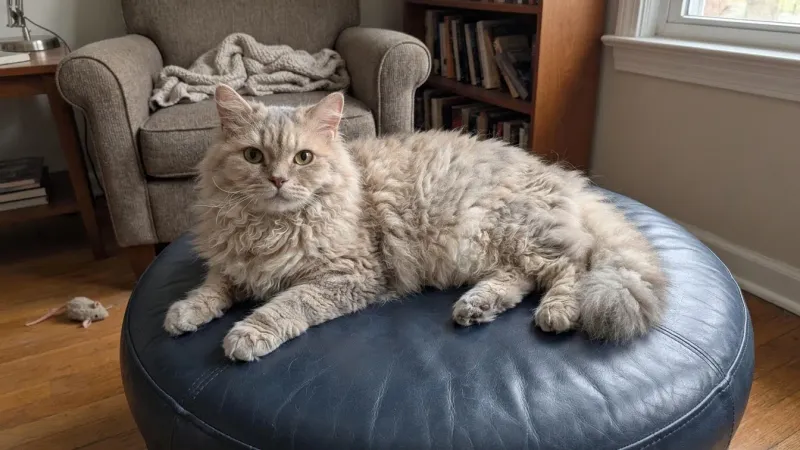
Origin: United States · Coat Type: Plush loose curls · Grooming: 1-2 times weekly · Shedding: Low With a teddy-bear face and thick, tousled curls, the long-haired Selkirk Rex traps loose hairs inside its wavy coat rather than scattering them across floors. Gently comb through the curls once or twice a week to remove trapped fur and keep the coat airy without frizzing the ringlets. Despite their plush appearance, they have an easygoing temperament and happily nap on a designated desk bed while you focus on work.
6Devon Rex (Longhair)
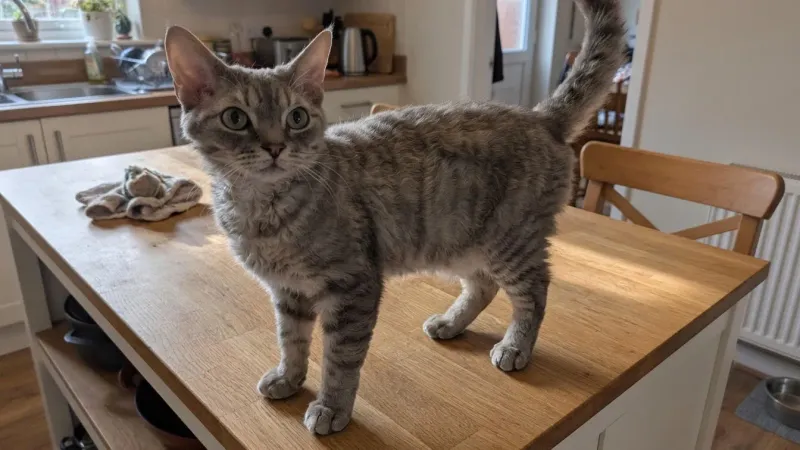
Origin: United Kingdom · Coat Type: Wavy fine down-like · Grooming: Once weekly · Shedding: Very low Longer-coated Devon Rex cats carry an ultra-fine, loosely waved coat that lacks heavy guard hairs and sheds remarkably little compared to traditional double-coated breeds. The airy waves resist matting and drop minimal fur onto dark clothing or upholstery. A gentle five-minute pass with a soft bristle brush or damp microfiber cloth once a week lifts loose strands without breaking delicate hairs. If you want an active, playful cat that respects a clean home, explore other fluffy cat breeds that rarely mat.
7Oriental Longhair
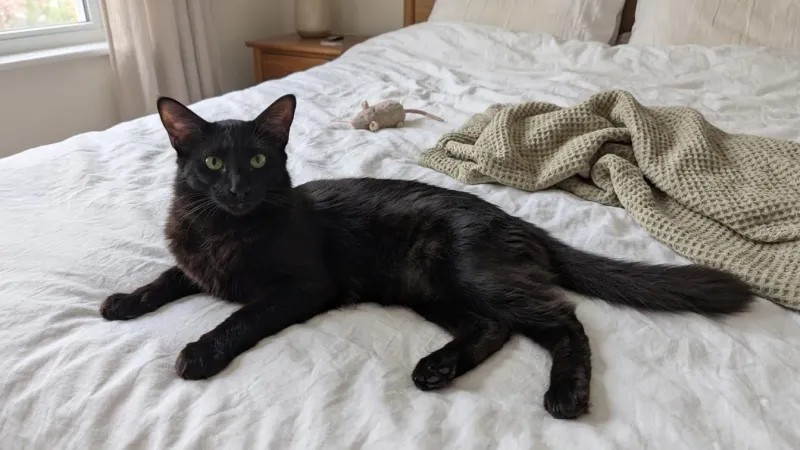
Origin: United States · Coat Type: Fine silky single · Grooming: Once weekly · Shedding: Very low Built with slender lines, large ears, and a flowing coat available in hundreds of colors and patterns, the Oriental Longhair completely lacks a dense undercoat. Loose hair stays minimal year-round, making this breed ideal for professionals wearing dark suits. Pass a metal comb from head to tail once a week in under five minutes to keep the silky strands smooth. Keep mental puzzles handy, as this clever breed enjoys staying occupied during your workday.
8Turkish Van
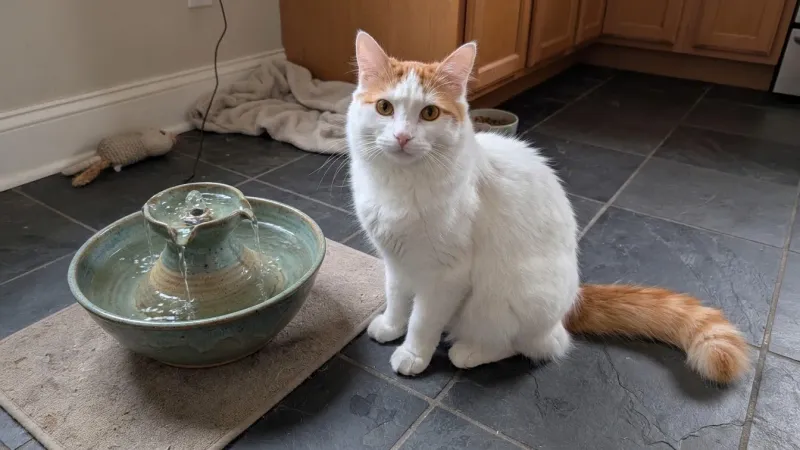
Origin: Turkey · Coat Type: Cashmere-like seasonal · Grooming: 1-2 times weekly · Shedding: Low to moderate (heavy spring molt) Known for its colored head and tail markings against a chalk-white body, the Turkish Van wears a water-resistant, cashmere-textured coat that stays light in summer but develops a thick, dense winter undercoat. While daily shedding is modest during warmer months, the breed experiences a heavy spring molt when that winter coat blows out. Brush once or twice a week with a slicker or metal comb, stepping up grooming during spring shedding. Energetic and coordinated, Turkish Vans appreciate sturdy climbing shelves that keep them entertained indoors.
9Birman
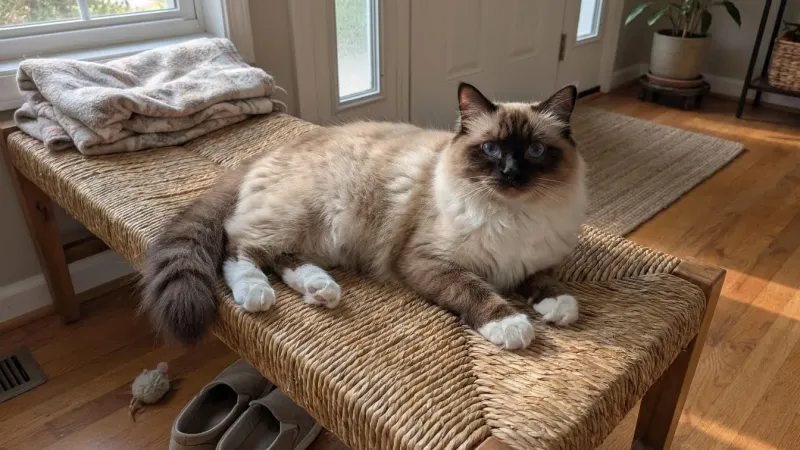
Origin: Myanmar / France · Coat Type: Silky single-layer · Grooming: 1-2 times weekly · Shedding: Low The Birman pairs color-pointed markings and pure white paws with sapphire eyes and a silky single-layer coat that lacks thick woolly underfur. Because there is no dense undercoat to mat into clumps, household cleanup stays straightforward and predictable. Comb the chest ruff and feathered tail once or twice a week to remove loose strands and prevent small knots under the chin. Gentle and devoted, this quiet breed prefers following one or two favorite people calmly from room to room.
10Ragamuffin
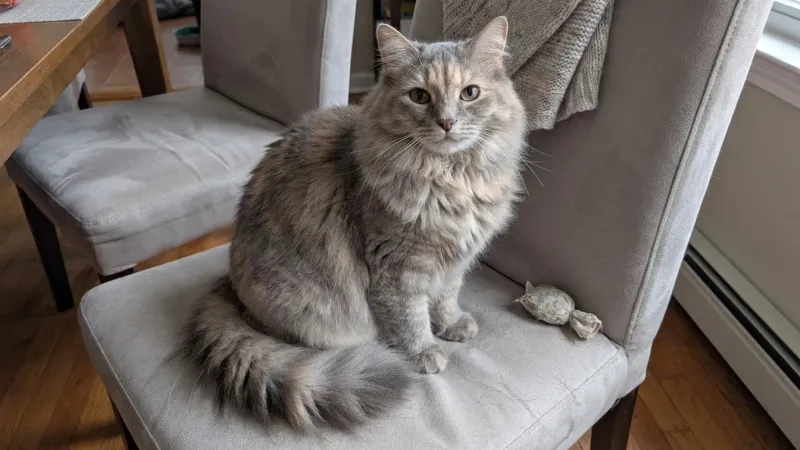
Origin: United States · Coat Type: Plush rabbit-like coat · Grooming: 2 times weekly · Shedding: Low to moderate Known for its sweet expression and dense, rabbit-soft medium-long fur, the Ragamuffin carries a plush coat that resists matting far better than cottony Persian-type fur. Although it sheds lightly to moderately, dead hairs tend to stay suspended in the coat rather than scattering heavily across fabrics. Spend ten minutes twice a week combing the ruff and breeches with a stainless-steel comb to capture loose hairs before they reach dark clothes. Affectionate and docile, Ragamuffins adore quiet, predictable household routines.
11Cymric (Longhaired Manx)
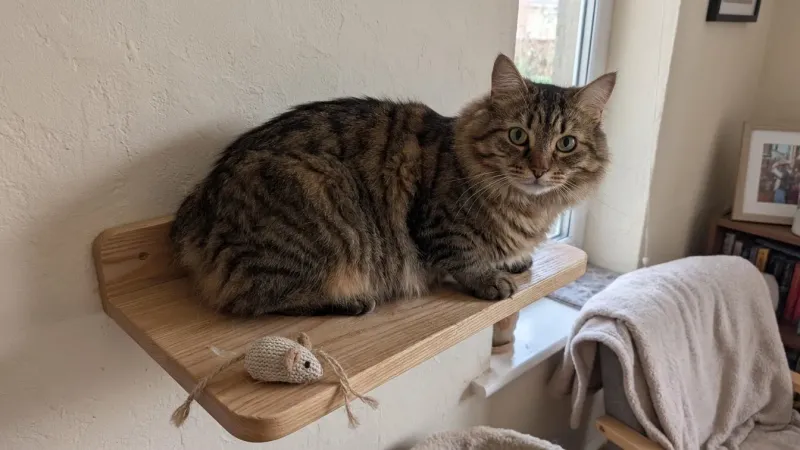
Origin: Isle of Man · Coat Type: Plush double coat · Grooming: 2 times weekly · Shedding: Low to moderate The Cymric—the long-haired variety of the Manx—carries a glossy, resilient medium-long double coat that lies smoothly and resists tangling with minimal effort. Outside of seasonal transitions, loose hair stays manageable compared to heavy, woolly-coated breeds. Combing twice weekly for ten minutes keeps the neck ruff and breeches neat and captures dead undercoat before it drifts onto rugs. Calm, intelligent, and loyal, Cymrics fit smoothly into busy apartment or townhouse schedules.
Simple Habits to Keep Your Home Fur-Free
Even the lightest-shedding longhair drops dead hairs during spring and autumn coat transitions. Set a five-minute Sunday alarm to run a stainless-steel greyhound comb through your cat's ruff, armpits, and hindquarters before loose strands drift onto upholstery. Pairing your cat with easy-to-clean cat trees made from sealed wood or removable washable cushions prevents hair from embedding into fabric.
Keep a washable microfiber throw over your cat's favorite armchair so you can shake it out in seconds before guests arrive. Feeding a complete, vet-approved diet rich in omega fatty acids also strengthens hair follicles and minimizes excess breakage.
When Sudden Shedding Signals a Health Issue
A steady, light dusting of hair is normal, whereas sudden clumps, bald patches, flaky skin, or constant scratching point to an underlying medical concern. Allergies, external parasites, fungal infections, stress overgrooming, or hormonal imbalances can all trigger abrupt hair loss.
Never apply over-the-counter dog flea treatments, essential oils, or human skin creams to your cat, as many ingredients—including permethrin and tea tree oil—are toxic to felines. Schedule a veterinary exam promptly whenever coat changes appear alongside lethargy, appetite shifts, or frequent hairballs.
You do not have to settle for a hairless breed to keep your home spotless. Choosing single-coated or low-matting longhairs like the Balinese, Birman, or Turkish Angora—and committing to one quick weekly combing session—lets you enjoy luxurious fur without constant lint-rolling. Meet adult cats at a reputable breeder or rescue first to feel their coat texture in person.
Sources: The Cat Fanciers' Association (CFA) · The International Cat Association (TICA) · Cornell Feline Health Center · International Cat Care
Frequently asked questions
Which long-haired cat breed sheds the absolute least?
The Balinese (including its Javanese color division) and Oriental Longhair shed the least among true long-haired cats because they have a fine, single-layered coat with no dense undercoat. A quick five-minute combing once a week removes almost all loose hair before it lands on clothes or furniture.
Do long-haired cats always shed more than short-haired cats?
No. Shedding volume depends on coat density and whether a breed has a thick undercoat, not hair length alone. Single-coated longhairs like the Turkish Angora often leave less fur on upholstery than double-coated shorthairs such as British Shorthairs.
How often should you brush a low-shedding long-haired cat?
Most single-coated or curly long-haired breeds need only one five-to-ten-minute combing session per week to remove dead hairs and prevent small tangles. Increase brushing to two or three times weekly during spring and autumn seasonal coat changes.
Are low-shedding long-haired cats completely hypoallergenic?
No cat is 100 percent hypoallergenic because allergies are triggered mainly by Fel d 1 proteins in saliva and skin dander rather than fur length. However, breeds like the Balinese and Devon Rex often produce lower allergen loads or scatter less hair around the home.

Nathan Brooks
Nathan Brooks runs Farmingzoom to help loving pet owners create safe, enriching homes for their animals. He cares deeply about responsible pet care and focuses on making everyday decisions simpler for fellow owners.…