Time needed
4 h
What you need
- 1 sheet of 3/4-inch untreated birch or pine plywood (4x8 feet)
- 3 untreated kiln-dried 4x4 lumber posts (8 feet long), or two 8-foot posts plus one 6-foot post
- 2 untreated 1x3 pine trim boards (8 feet long)
- 200 feet of 3/8-inch natural unoiled sisal rope
- 2 square yards of low-pile, tight-loop carpet
- 8 hex lag screws (3/8-inch by 3-1/2-inch) with flat washers
- 1 box of 1-1/4-inch wood screws and 3-inch structural screws
- 1 box of 1-1/2-inch finish nails
- 8 heavy-duty steel L-brackets (3-inch)
- Non-toxic PVA wood glue
- 3/8-inch and 1/2-inch heavy-duty staples
- 120-grit sandpaper
- Optional: 1 untreated 2x4 board (8 feet long) for diagonal knee braces and fitted perch cushions
Tools
- Circular saw or miter saw
- Cordless drill with 1/4-inch drill bit and socket adapter
- Heavy-duty staple gun
- Rubber mallet and claw hammer
- Tape measure and carpenter's square
- Utility knife
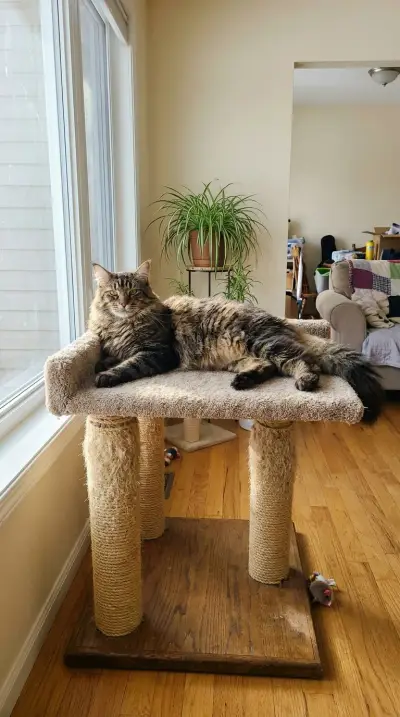
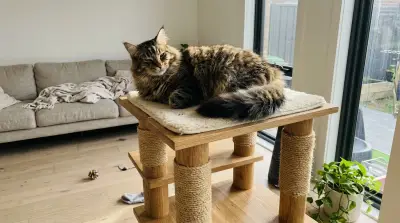
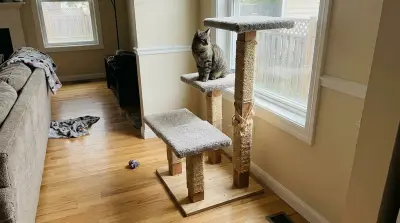
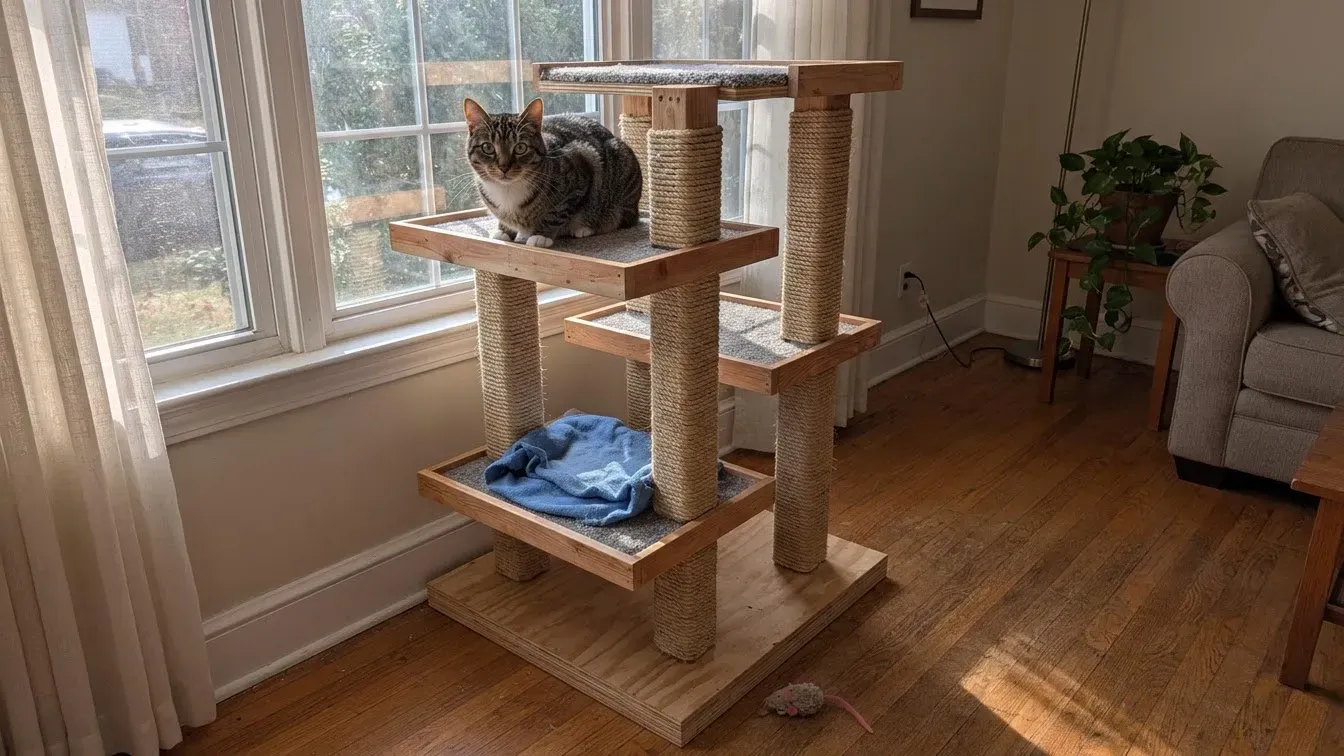
You can build a rock-solid cat tree for cats over 15 pounds by pairing a 32-by-32-inch double-thick plywood base with solid 4x4 lumber posts and oversized 18-by-18-inch perches. Most retail cat towers rely on hollow cardboard tubes and narrow footprints that buckle or tip the moment a full-grown Maine Coon, Ragdoll, or Norwegian Forest Cat leaps at full speed.
Using real structural lumber, heavy lag screws, and untreated sisal rope keeps the center of gravity low and absorbs lateral jumping forces. Even if you prefer a budget-friendly DIY cat tree, upgrading the base width and post thickness makes all the difference for large breeds. Gather your lumber and hardware to assemble a safe, tip-proof tower in one afternoon.
- 1
Cut the Base and Perch Plywood Panels
Using a circular saw, cut two 32-by-32-inch squares from 3/4-inch birch or pine plywood for a double-thick base. Next, cut three perches: a 20-by-20-inch lower platform, an 18-by-22-inch middle shelf, and an 18-by-18-inch top bed. Sand all cut edges smooth with 120-grit sandpaper so no splinters catch your cat's paws or fur.
- 2
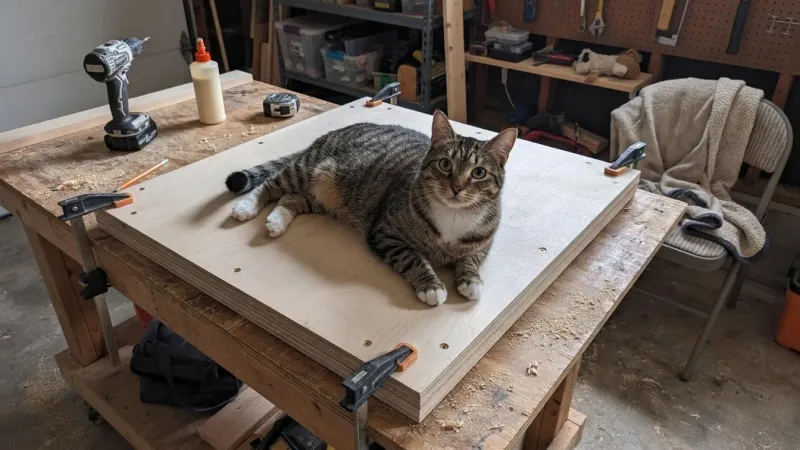
Laminate the Double-Thick Base
Apply a generous zigzag layer of non-toxic PVA wood glue across one 32-by-32-inch base panel, then press the second panel squarely on top. Drive 1-1/4-inch wood screws every 8 inches around the perimeter and center to clamp the layers tightly together. Creating a 1.5-inch-thick base adds heavy bottom weight and prevents screws from pulling through.
- 3
Cut Four 4x4 Support Posts
Cut four kiln-dried, untreated 4x4 posts with a miter saw or circular saw: one 18-inch post, one 34-inch post, and two 52-inch posts. Using two full-height posts to support the top perch eliminates the single-column wobble common in store-bought trees. Check that every end cut is completely flat and square so the platforms sit level.
- 4
Wrap Posts With Unoiled Sisal Rope
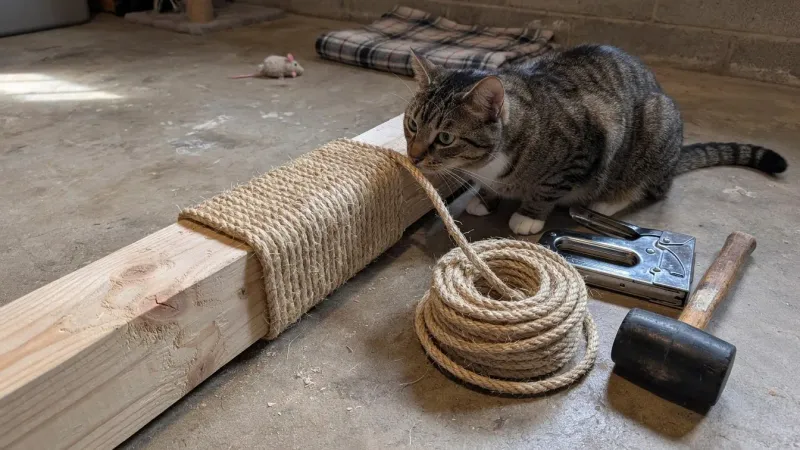
Start flush at the bottom edge of each 4x4 post and staple one end of 3/8-inch untreated sisal rope into the wood so cats have full scratching reach down to the base. Wind the rope tightly up the post, tapping each row down with a rubber mallet to close gaps, and secure every 10 wraps with a recessed 1/2-inch staple. Stop 1.5 to 2 inches below the top edge to leave bare wood where L-brackets attach under the platforms, finishing with a final staple.
- 5
Add Raised Lips to the Perches
Cut 1x3 untreated pine trim strips to frame the four outer edges of your top and middle perches. Attach the strips flush with the bottom of each plywood platform using wood glue and 1-1/2-inch finish nails. This 2.5-inch wooden rim holds thick cushions in place and keeps large cats from sliding off when they roll over.
- 6
Upholster Platforms With Low-Pile Carpet
Cut low-pile, tight-loop carpet pieces to fit the flat top surface of the laminated base, the top of the 20-by-20-inch lower platform, and the inside bed surfaces of the rimmed perches. Avoid plush loop-pile carpets that snag feline claws. Stop the base carpet flush at the edges rather than wrapping underneath so the base sits flat on the floor, and leave the raised wooden perch rims uncarpeted so cushions stay contained; secure all carpet flat with wood glue and recessed 3/8-inch staples tapped flush with a hammer.
- 7
Bolt the Posts to the Base
Mark balanced positions for your four posts on the base, keeping the two 52-inch posts 11 inches apart on one side for the top perch. Before covering the top surface with carpet (or by folding back the carpet corners), countersink 3/4-inch shallow recesses into the underside of the plywood base and drill 1/4-inch pilot holes upward through the base and 2 inches into each 4x4 post. Drive 3-1/2-inch hex lag screws with flat washers into the countersunk holes so the heads sit recessed below the bottom surface and will not scratch hard floors.
- 8
Attach Platforms and Test Stability
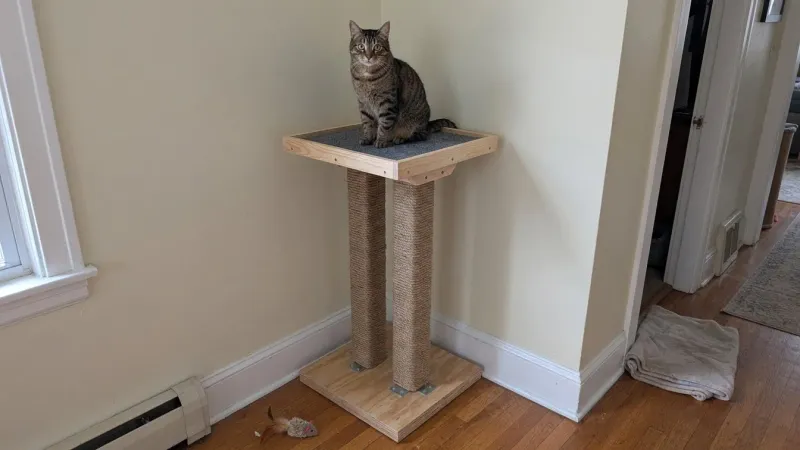
Mount the 20-by-20-inch lower platform onto the 18-inch post, the 18-by-22-inch middle shelf onto the 34-inch post, and the top bed across both 52-inch posts using two heavy-duty steel L-brackets per post-to-platform connection (eight total) and angled structural pocket screws driven through the sides of the 4x4 posts rather than into end grain. Tie both the lower platform and middle shelf directly into the adjacent 52-inch posts with L-brackets or structural screws so heavy cats landing on cantilevered edges cannot pry the joints loose. Push firmly on the top perch from all four sides; if any movement occurs, add diagonal 2x4 knee braces under the upper shelves.
Structural Rules for Cats Over 15 Pounds
When a 20-pound cat launches onto a top perch, lateral momentum matters just as much as downward weight. Follow these core proportions to prevent tipping:
- Base-to-height ratio: Keep the base width at least 60 percent of the total tower height. For a 54-inch tower, use a minimum 32-by-32-inch footprint.
- Post thickness: Skip cardboard tubes and thin 2x2 boards. True 4x4 wood posts (3.5 by 3.5 inches actual size) resist bending and give big cats a wide surface to dig their claws into.
- Perch sizing: Oversized cats need platforms at least 18 by 18 inches with raised wooden lips or bolsters so they can stretch out without rolling off in their sleep.
Materials to Avoid for Pet Safety
Hardware stores carry treated lumber and glues designed for outdoor decks that can harm cats who chew or lick their paws after scratching. Always choose kiln-dried untreated pine, fir, or birch plywood.
Avoid pressure-treated wood, which contains chemical preservatives, as well as aromatic cedar, which releases oils irritating to feline respiratory tracts. When wrapping scratching posts, buy natural, unoiled sisal rope rather than hardware-grade rope treated with mineral oil or chemical brighteners, and secure carpet with recessed staples or non-toxic wood glue rather than solvent-based contact cement.
Alternatives If You Cannot Build a Full Tower
If floor space is tight or you do not have power tools, wall-mounted cat shelves anchored directly into wall studs offer unmatched stability for heavy cats because they cannot tip over. Always drive 3-inch lag screws into at least two wood studs per shelf rather than relying on drywall anchors.
You can also compare commercial options in our guide to sturdy cat trees for large cats or look into cat tree bookshelf designs that use heavy shelving units for built-in counterweight.
Once the glue dries and every screw is tight, place your new tower on a flat, hard floor surface rather than thick shag carpet for maximum grip. Sprinkle a little dried catnip on the lower levels and reward your cat with treats as they explore each platform so they build confidence jumping onto their sturdy new perch.
Sources: International Cat Care · ASPCA
Frequently asked questions
How wide should a cat tree base be for a 20-pound cat?
Make the base at least 30 to 36 inches wide and deep for a tower around 4.5 to 5 feet tall. Keeping the base width at least 60 percent of the total height prevents heavy cats from tipping the structure when they leap sideways.
What wood is safest for building a DIY cat tree?
Kiln-dried, untreated pine, fir, or birch plywood is safest for indoor cat furniture. Never use pressure-treated outdoor lumber, which contains toxic chemical preservatives, or aromatic cedar, which can irritate your cat's lungs and skin.
Why are 4x4 posts better than PVC pipes or cardboard tubes?
Solid 4x4 lumber holds lag screws tightly without stripping and does not flex under the momentum of a 15- to 25-pound cat. Cardboard tubes crush over time, and smooth PVC requires messy sand filling and special end caps to hold fasteners.
How big should perches be for Maine Coons and large cats?
Build perches at least 18 by 18 inches, or up to 18 by 24 inches for lounging beds. Standard 12-inch store-bought perches force large breeds to curl tightly and increase the risk of falls while sleeping.

Nathan Brooks
Nathan Brooks runs Farmingzoom to help loving pet owners create safe, enriching homes for their animals. He cares deeply about responsible pet care and focuses on making everyday decisions simpler for fellow owners.…