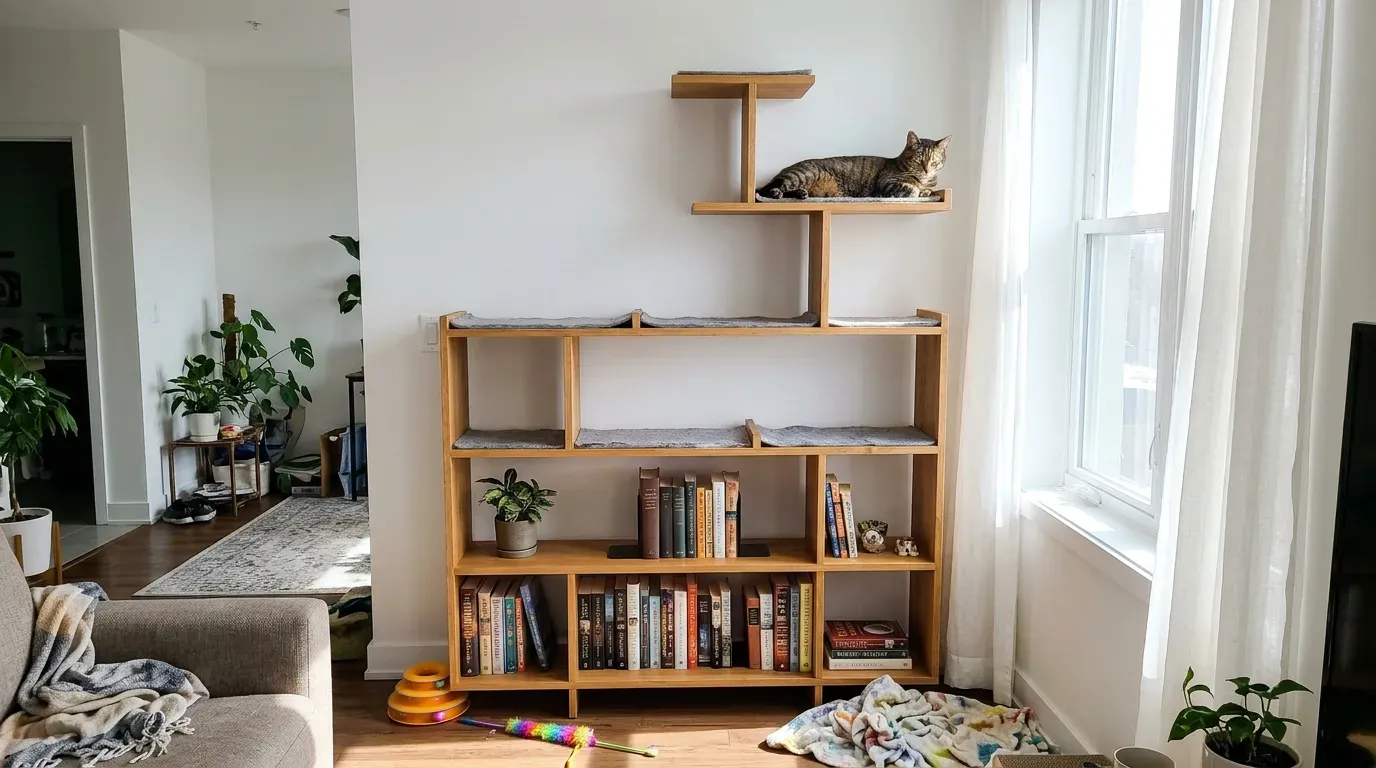
A cat tree bookshelf solves two common apartment problems at once by merging your home library with a vertical playground for your pet. Instead of giving up precious square footage to a bulky carpeted tower, you can give your cat high perches while keeping your favorite reads neatly organized.
The main challenge with shared furniture is preventing energetic leaps from knocking hardcovers or decor onto the floor. Below are 15 practical cat tree bookshelf ideas designed for small spaces, complete with smart anchoring methods, traction upgrades, and layout tricks to keep both your books and your feline safe.
1Modern Multi-Level Oak and Walnut Tower
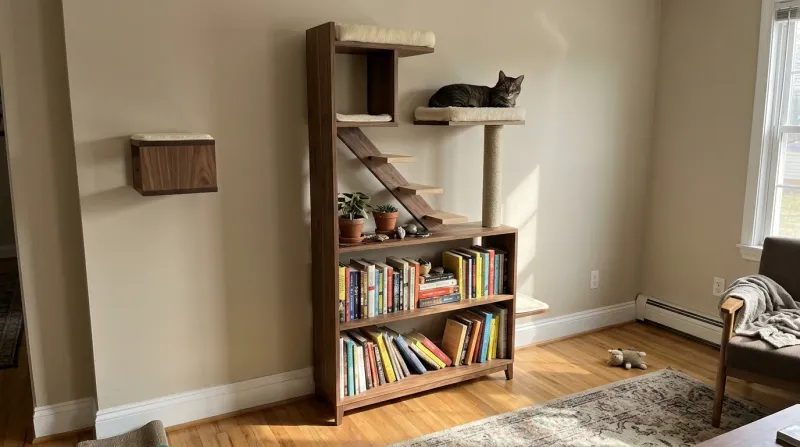
Pre-built multifunction units like the Clifford cat tree bookshelf combine clean-lined wood shelving with staggered climbing platforms that reach nearly 69 inches high. Choose warm oak or walnut finishes with sturdy metal feet to match contemporary living room furniture. Keep heavier hardcovers on the lower enclosed shelves while reserving the top open ledges for plush lounging mats. Always secure the back frame to a wall stud so the tall profile stays completely motionless when your cat bounds to the summit.
2Clamp-On Bookshelf Climbing Steps
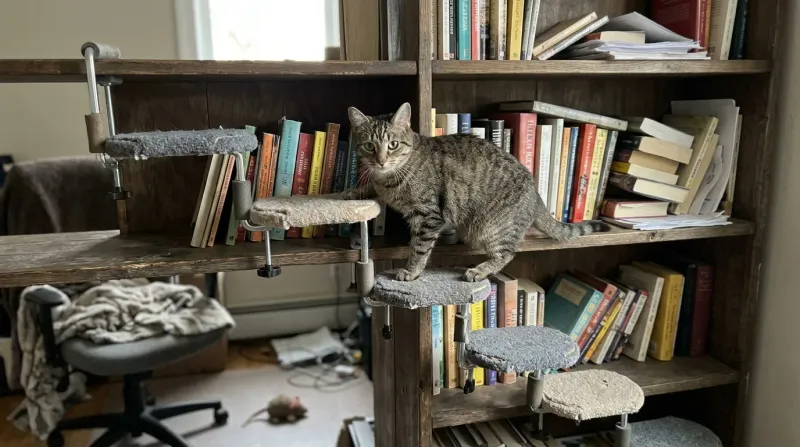
Convert a standard bookcase you already own into a vertical cat tower using heavy-duty clamp-on steps like the CatKick system. These cushioned platforms attach directly to the front edge of sturdy wooden shelves without drilling permanent holes, making them ideal for renters. Space the steps 12 to 15 inches apart in a zigzag pattern so your cat can ascend easily. Pair this setup with solid wood bookcases rather than hollow particleboard so the clamps grip tightly without crushing the shelf edge.
3Staggered Cube Shelving With Open Pathways
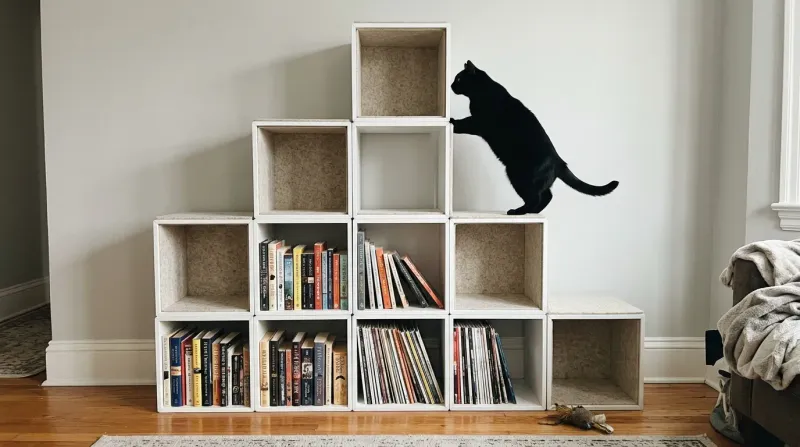
Modular cube bookcases allow you to leave specific squares empty to create an interior staircase for your cat. Arrange three-tier and four-tier units side by side in a step-like silhouette against a living room wall. Fill the bottom and middle cubes tightly with books to weigh down the base, and line the open climbing cubes with self-adhesive felt pads. This layout prevents your cat from brushing against book spines while moving upward to the top perch.
4Leaning Ladder Bookshelf With Top Perch
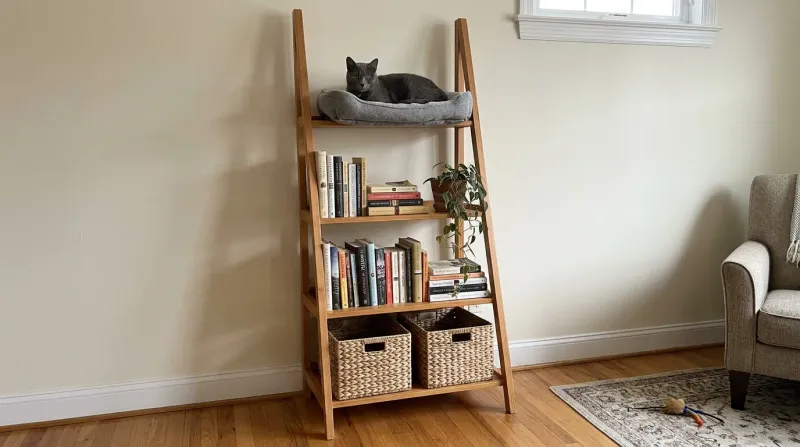
A wooden ladder bookcase offers naturally graduated shelf depths that act like wide stairs for agile indoor cats. Place heavy storage baskets on the deepest bottom tiers, pack books snugly on the middle shelves, and choose a wide-step ladder unit whose top perch is at least 12 inches deep—or add a wider anchored top platform—so your cat can turn around and lie down without slipping. Because ladder frames lean against the wall, drive two wood screws through the top rail directly into a wall stud so the frame cannot slide backward during an energetic launch.
5Enclosed Bottom Cubby Hideaway
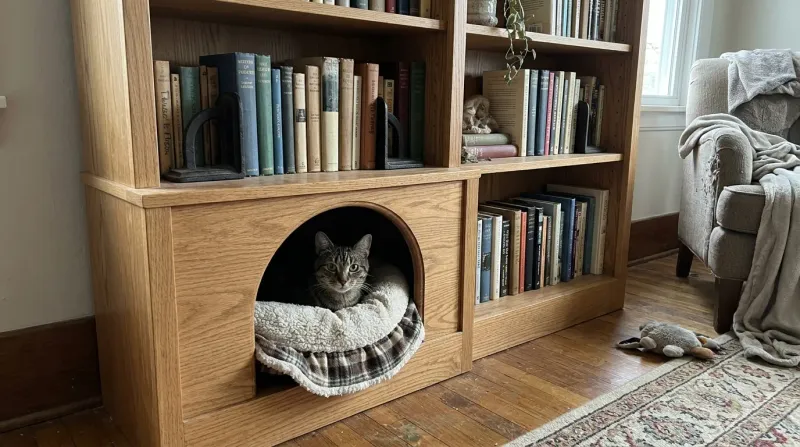
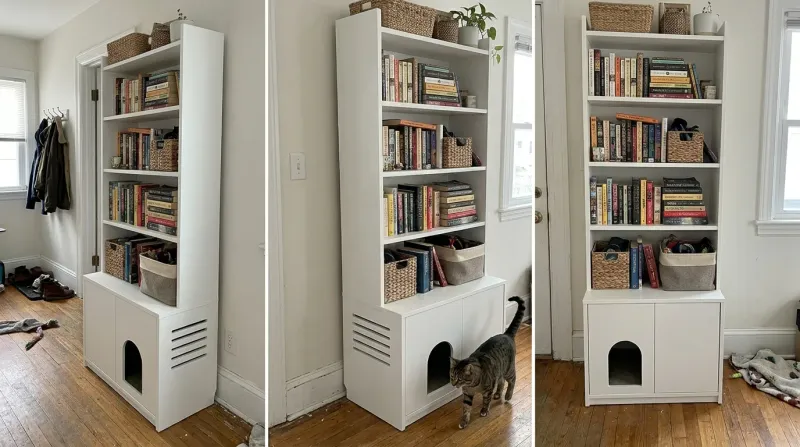
Transform the lowest compartment of a wide bookcase into a cozy ground-level den by removing a cabinet door or cutting a neat entry arch into a solid panel. Line the interior floor with a washable fleece bed so shy cats or older seniors have a quiet retreat without needing to jump high. Keeping the sleeping cave at floor level also adds stability to the bottom of the unit while keeping upper bookshelves free for your reading collection.
6Sisal-Wrapped Side Post Upgrade
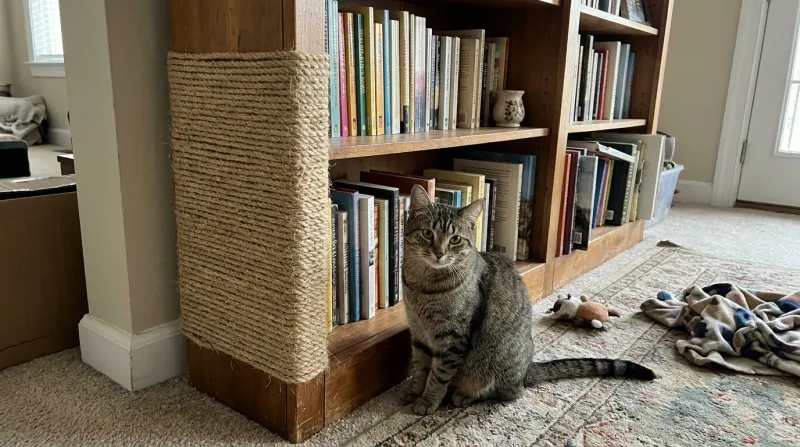
Protect wooden bookcase uprights from claw marks by wrapping one vertical side support tightly in natural sisal rope. Secure the starting end at the base with a dab of non-toxic wood glue and a small staple on the back edge, then coil the rope upward until you reach the middle shelf. This turns the outer frame into a dedicated scratching post, encouraging your cat to stretch vertically outside the bookcase rather than pawing at your book covers.
7Corner Bookshelf Tower for Tight Rooms
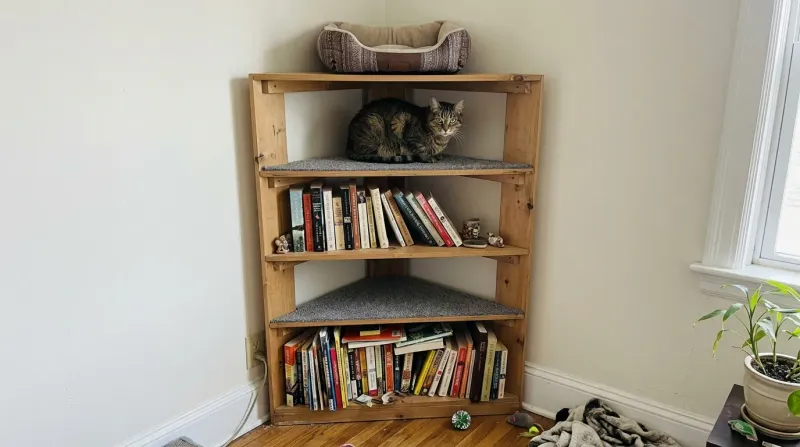
Unused room corners are prime real estate in studio apartments, and a five-tier corner bookcase turns dead space into a cozy feline lookout. The triangular shelves fit snugly against two walls, giving the unit extra lateral stability when anchored on both sides. Alternate between packed book tiers and open carpeted perches, placing a curved bolster bed on the very top triangle where your cat can monitor the whole room.
8Wall-Mounted Floating Shelf Staircase
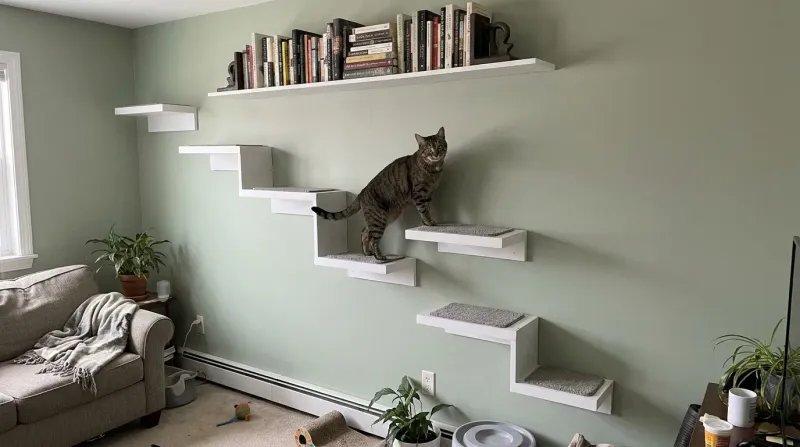
If you have zero floor space to spare, install heavy-duty floating shelves in an alternating staircase pattern leading up to a high wall-mounted book ledge. Use concealed steel brackets anchored directly into wall studs so each step supports at least 30 pounds. Cover the cat-only stepping shelves with low-pile carpet strips for traction, and install raised metal bookends on the reading shelves so running paws cannot push paperbacks over the edge.
9Industrial Pipe and Wood Bookshelf
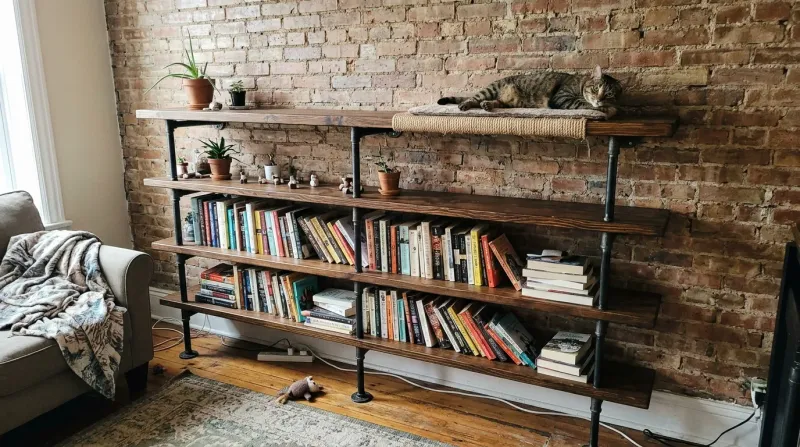
Open-frame bookshelves built from black iron plumbing pipes and thick solid pine boards handle heavy feline traffic with ease. The rugged metal uprights double as sturdy anchor points for sisal rope wraps, while the thick wood planks resist bowing under the weight of large cats and dense textbooks. Add a wooden lip or thin metal rail along the back of the book sections so your cat can walk behind or beside your collection safely.
10Window-Side Bookcase Lounge
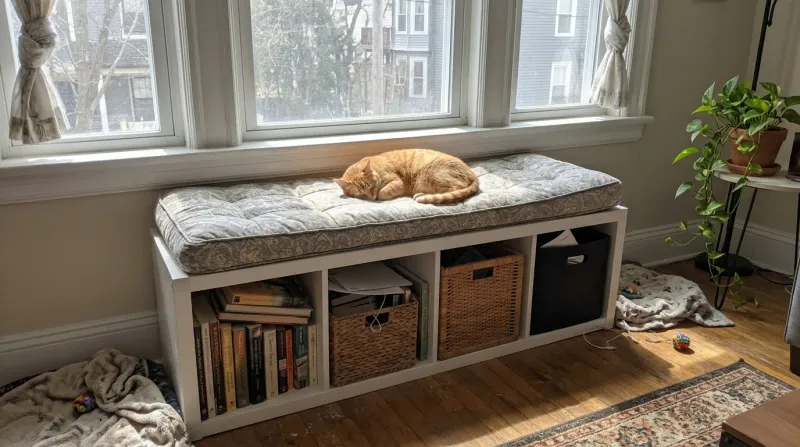
Position a mid-height horizontal bookcase directly beneath a sunny living room window to create an instant sun-bathing station. Store books, board games, and storage bins inside the vertical cubbies below, and top the flat surface with a thick, non-slip window cushion. Most cats love watching birds from a warm ledge, and keeping the entire top surface clear of knickknacks eliminates the risk of broken items.
11Over-the-Door Header Bookshelf
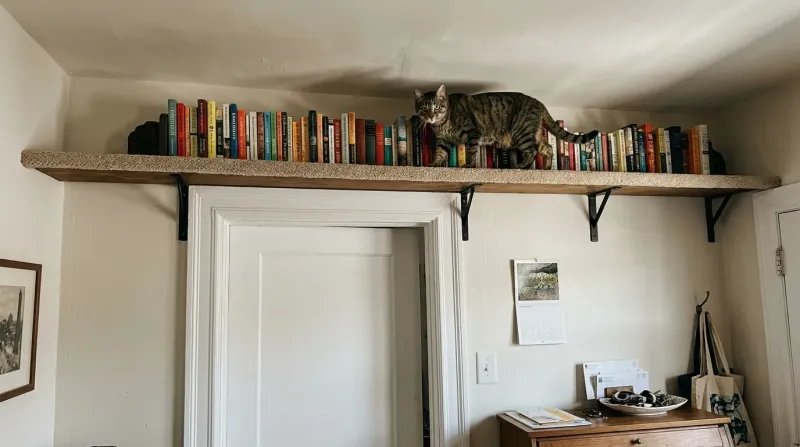
Install a sturdy horizontal bookshelf 14 to 16 inches above a bedroom or hallway doorframe to build an elevated cat highway that stores extra books out of reach. Connect the high ledge to the floor using a slim vertical bookcase on one side of the door frame so your cat can climb up easily. Use tight-fitting bookends on the header shelf and leave an open runway along the front edge for smooth passes.
12Glass-Front Cabinet With Roof Perch
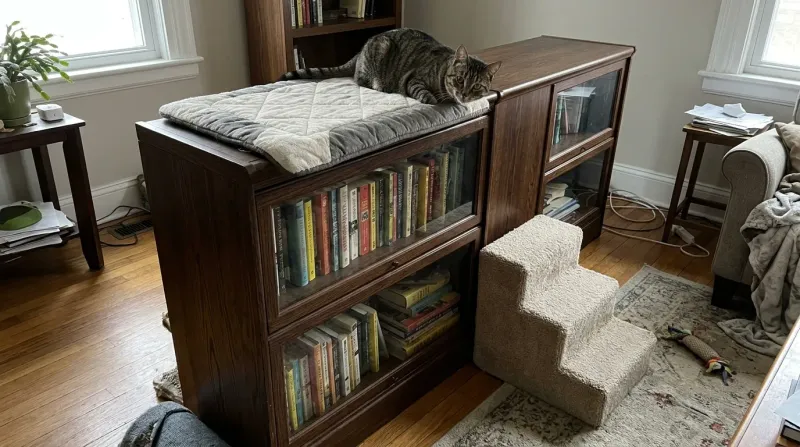
For rare hardcovers, collectibles, or fragile keepsakes, choose a bookcase fitted with tempered glass doors on the lower and middle tiers. The closed doors completely block curious paws from pulling books off the shelves, while the flat top roof serves as an elevated lounging deck. Attach a carpeted cat condo or wall-mounted step beside the cabinet so your pet can reach the roof without scratching the wood trim.
14Room Divider Open-Back Bookcase
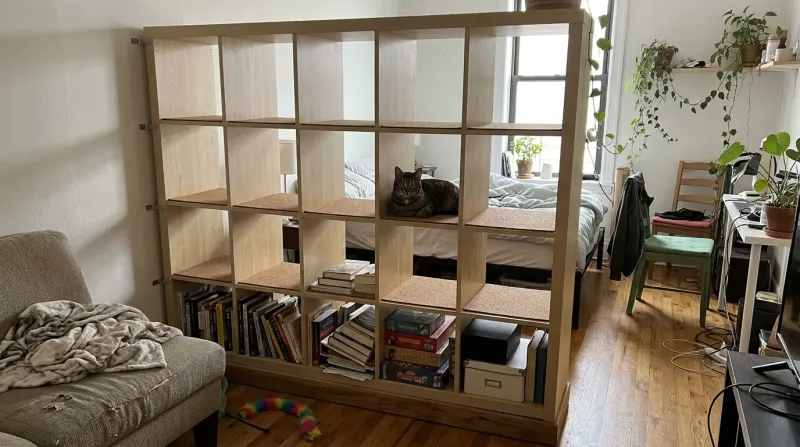
In a studio layout, an open-back cube bookshelf works as a partial wall that separates your sleeping area from the living room while letting light pass through. Leave several middle cubes open as pass-through tunnels so your cat can weave from one side of the room to the other. Anchor the divider into an adjacent wall stud and a heavy floor base—or use floor-to-ceiling compression brackets fastened specifically into structural ceiling joists—so the freestanding frame stays rock-solid.
15Hallway Slim-Profile Cat Bookcase
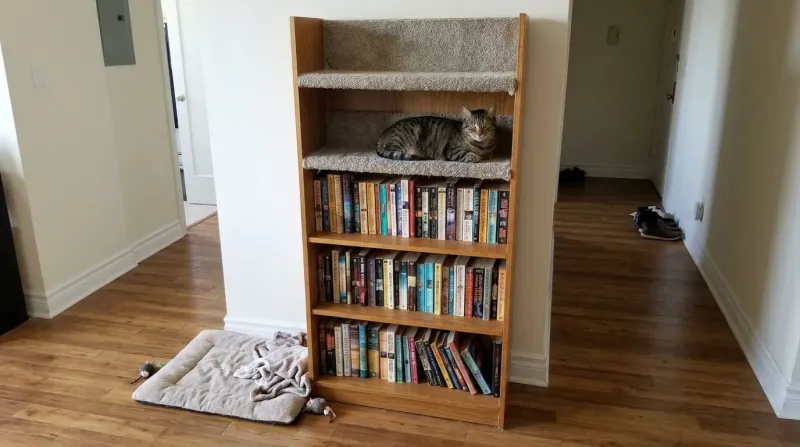
Wide hallways often sit underused, and a bookcase with a minimum shelf depth of 12 to 14 inches for the upper cat perches gives an adult cat enough room to turn around comfortably without blocking foot traffic. Store paperbacks and framed photos securely on the lower half, and mount carpet-lined perches on the upper tiers where your cat can sit above doorway height. Keep the top ledges completely free of loose decor and place a soft landing mat below in a low-traffic section of the hallway so your cat can leap down safely.
How to Keep Your Books Safe and Shelves Secure
Combining climbing zones with household storage requires a few basic safety adjustments before you let your cat explore. Even well-behaved felines can lose their footing on smooth wood or send lightweight objects flying when they launch toward a higher tier.
- Anchor to wall studs: Always secure tall bookcases to the wall using heavy-duty anti-tip L-brackets driven into wooden studs, not just drywall anchors.
- Add surface traction: Smooth laminate and finished wood are slippery for cat paws. Attach adhesive carpet tiles, cork sheets, or sisal mats to the designated climbing steps so your cat can grip firmly.
- Use museum putty and heavy bookends: Place small dabs of removable museum gel under potted plants or decorative items, and use heavy cast-iron bookends to prevent books from sliding off open edges.
- Check weight limits and feline size: Large or heavy breeds put extra force on shelf pins when jumping. If you share your home with a hefty feline, look at our guide to sturdy cat trees for large cats to compare structural weight capacities.
Plants and Objects to Keep Off Cat-Accessible Shelves
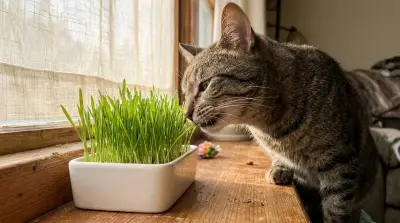
When your bookcase doubles as a feline highway, anything stored on those shelves becomes reachable to curious noses and paws. Keep toxic houseplants completely off cat-accessible shelving—common favorites like lilies, pothos, philodendrons, and sago palms can cause severe illness or organ failure if chewed. Stick to pet-safe greenery on higher tiers, or dedicate a sunny lower cubby to a pot of fresh cat grass.
Avoid storing fragile glass vases, trailing charging cords, or small rubber bands on open ledges, and avoid using active essential oil diffusers entirely in rooms accessible to cats—diffused oils such as tea tree, eucalyptus, peppermint, and citrus can cause severe respiratory irritation or liver toxicity anywhere in your cat's airspace. If your cat ever swallows string, ribbon, or pieces of a toxic plant, contact your veterinarian right away rather than waiting for symptoms to appear.
A well-planned cat tree bookshelf turns wasted vertical air into a shared hub for your books and your feline companion. Start by anchoring your shelving unit firmly to wall studs, adding non-slip traction to climbing steps, and keeping fragile or toxic items out of reach so your cat can explore safely every day.
Frequently asked questions
How do I stop my cat from knocking books off a bookshelf?
Pack books tightly together using heavy metal bookends so there is no wiggle room for paws to hook behind the spines. You can also dedicate specific open shelves solely to your cat with carpeted mats, or use glass-front cabinets for fragile items and paperbacks.
Are cat tree bookshelves safe for large or senior cats?
Yes, provided the shelves are spaced close together and covered with non-slip carpet or sisal for grip. Senior cats with stiff joints need shorter step heights of 10 to 12 inches, while large breeds require solid wood shelves anchored securely into wall studs.
How do I anchor a cat bookshelf without damaging rental walls?
If you cannot drill into drywall, choose a wide, low-profile horizontal bookcase with a heavy base rather than a tall narrow tower. You can also use tension-rod floor-to-ceiling cat trees wedged tightly between the floor and ceiling next to a standard bookcase.
What is the best way to clean cat hair off wooden bookshelves?
Wipe smooth wood shelves weekly with a slightly damp microfiber cloth, which traps loose fur instead of pushing it into the air. For carpeted climbing steps or sisal pads, use a handheld vacuum with a rubber upholstery attachment to lift embedded hair quickly.

Nathan Brooks
Nathan Brooks runs Farmingzoom to help loving pet owners create safe, enriching homes for their animals. He cares deeply about responsible pet care and focuses on making everyday decisions simpler for fellow owners.…