Time needed
20 min
What you need
- Organic cat grass seeds (wheat, oat, barley, or rye blend)
- Organic, fertilizer-free potting soil or coconut coir
- Drip tray or saucer (to catch runoff from drainage holes)
- Filtered or cool tap water
Tools
- Wide, heavy ceramic or terracotta dish with drainage holes (3 to 4 inches deep)
- Fine-mesh strainer
- Glass soaking jar
- Clean spray bottle
- Sharp scissors
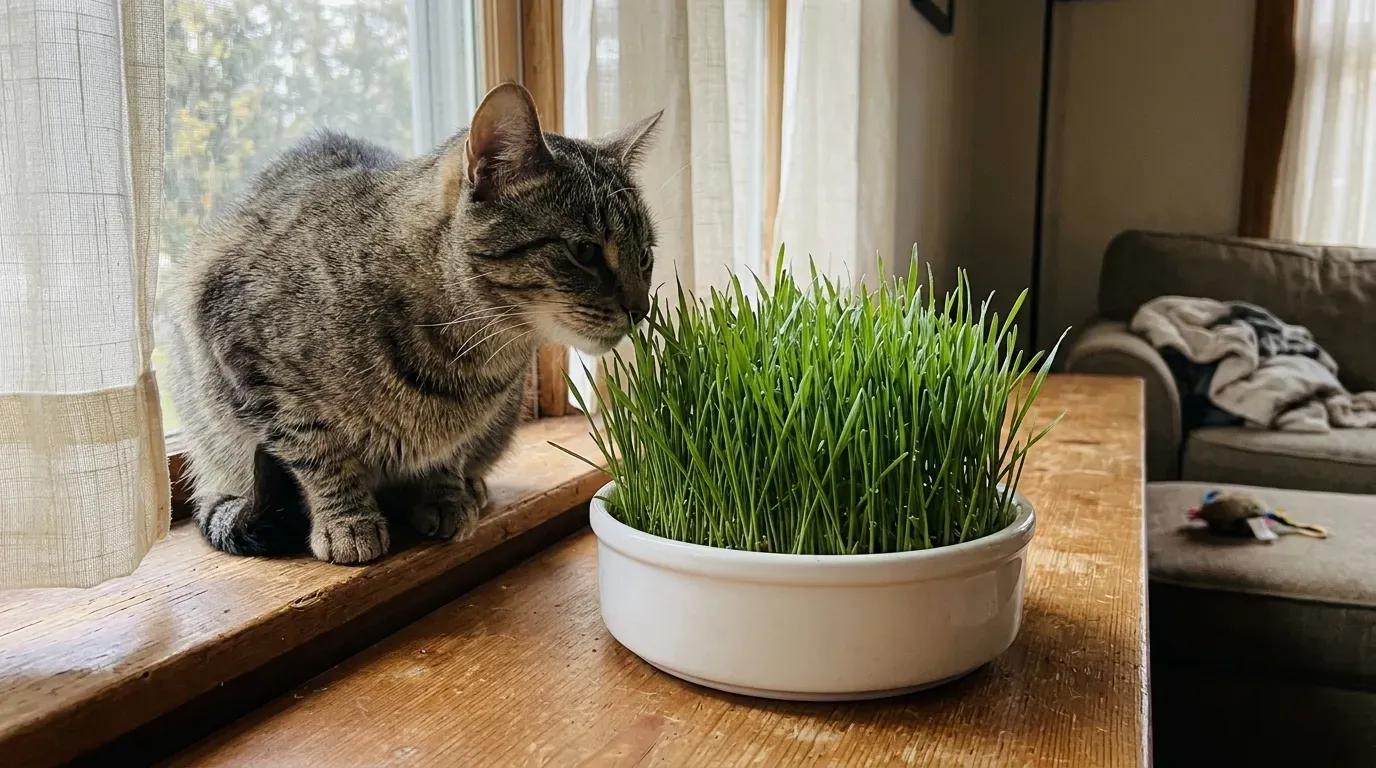
You can grow fresh, safe cat grass indoors in just seven to ten days using a shallow container, organic cereal seeds, and proper airflow to prevent mold. Store-bought cartons often wilt or develop white fuzz within a week because their dense roots sit in stagnant moisture.
By sprouting your own seeds at home, you control the drainage, soil quality, and hygiene. Offering a fresh tray provides a safe alternative that can help distract curious cats from houseplants, though toxic plants like lilies must still be kept completely out of reach.
- 1
Soak Your Organic Cereal Seeds Overnight
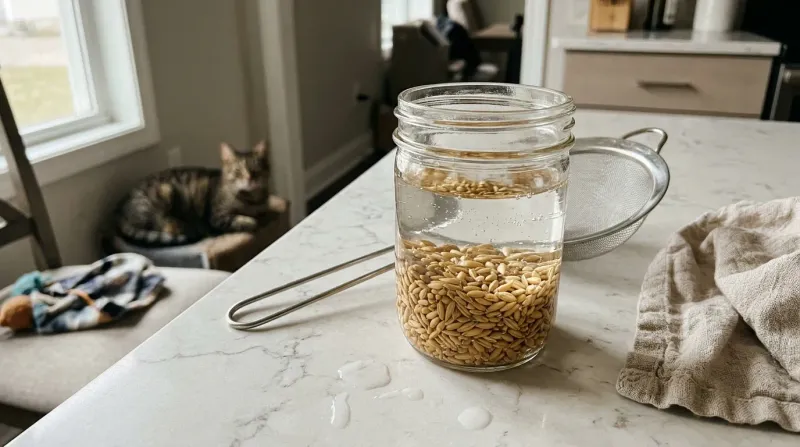
Measure out one-quarter to one-half cup of organic wheat, oat, barley, or rye seeds, depending on your container size. Rinse them thoroughly in a fine-mesh strainer under cool tap water to remove dust and loose chaff. Place the clean seeds in a glass jar, cover them with two inches of cool water, and let them soak for eight to twelve hours. Pre-soaking jumpstarts germination and softens the outer hulls so your seeds sprout evenly without sitting wet in soil for extra days.
- 2
Prepare a Shallow Container With Drainage
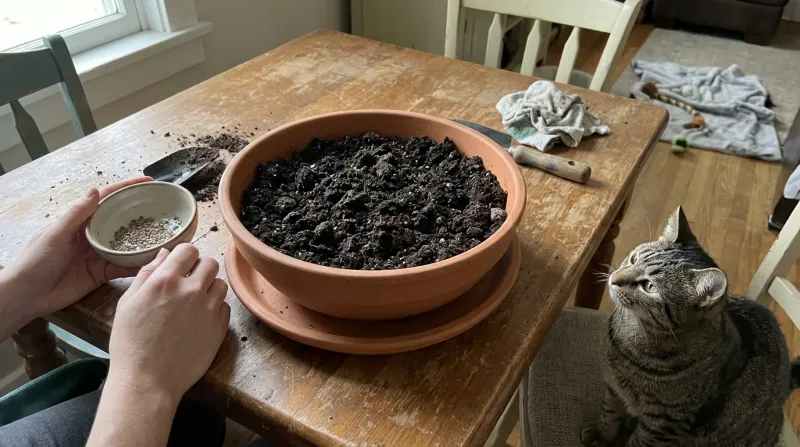
Select a wide, heavy-bottomed dish at least three inches deep with actual drainage holes, and set it on a drip tray so excess water can escape while keeping the pot stable when your cat tugs on the blades. Avoid using a holeless dish with a layer of gravel at the bottom, as gravel in a container without drainage holes traps stagnant water rather than draining it. Fill the container with two inches of organic, fertilizer-free potting mix or damp coconut coir, leaving a half-inch gap below the rim. Never use standard garden soil or potting mixes containing chemical fertilizers, pesticides, or moisture-retaining crystals.
- 3
Spread Seeds Evenly Without Stacking
Drain your soaked seeds completely and scatter them across the damp growing medium in a single, even layer. Aim for seeds to sit side by side without piling into thick clumps, which trap humidity and invite fungal growth. Gently press the seeds into the surface with your palm so they make solid contact with the moist mix, then mist the top lightly with a spray bottle. Avoid burying the seeds under a thick layer of soil, as surface light and airflow help them sprout cleanly.
- 4
Germinate in a Warm, Shaded Spot
Set your seeded tray on a kitchen counter or shelf away from direct sunlight and heating vents, where temperatures stay between 65°F and 75°F. Mist the seeds twice a day with a spray bottle just enough to keep the top layer slightly damp, never soggy or puddled. Within three to four days, you will see tiny white roots anchoring downward and pale green shoots pushing upward. Once the shoots reach one inch tall, move the container to a bright spot with indirect sunlight.
- 5
Water From the Base and Harvest Safely
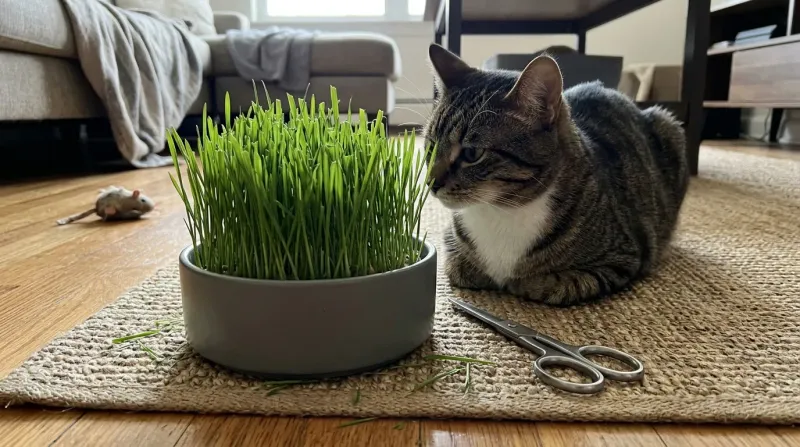
Switch from misting to gentle bottom-watering or pouring a small splash of water along the edge of the dish so the grass blades stay dry. Let the grass grow to about four inches tall—usually seven to ten days after planting—before introducing it to your pet. Trim overgrown tips with clean scissors to encourage tender regrowth, and explore spill-proof cat grass planter ideas if your cat likes to dig. Discard and compost the tray after two to three weeks once the roots become dense and yellow.
Best Seed Varieties and Soil-Free Options
Cat grass is not a single plant species; it is a blend of fast-growing cereal grains such as wheat, oat, barley, and rye. Oat grass tends to be sweeter and softer, making it ideal for kittens or senior cats with sensitive gums, while wheat and barley grow thick, sturdy blades that hold up well to enthusiastic chewing.
If you want to skip potting soil altogether, you can grow these seeds hydroponically on unbleached paper towels, coconut coir mats, or food-grade hemp pads. Soil-free setups eliminate dirt tracked across your floors, though they require daily rinsing with fresh water to prevent sour odors in warm rooms.
How to Prevent White Mold in Low-Airflow Homes
White, fuzzy mold on the soil surface is the biggest challenge when growing grass in apartments with limited ventilation. Always space your seeds so they touch lightly without stacking on top of one another, and avoid covering the tray with plastic wrap once the first green shoots appear.
If you notice a powdery white layer forming at the base of the stems, discard the entire batch immediately rather than trying to scrape it off, as ingesting mold spores can upset your pet's stomach. Placing your tray near a slightly open window—fitted with a secure, cat-proof screen to prevent falls or escapes—or across the room from a gentle ceiling fan keeps air moving over the soil surface.
Safety Limits and When to Call Your Vet
While nibbling greens supports digestion, overeating can trigger temporary vomiting or loose stools. Review how cat grass affects your cat and limit sessions to a few minutes a day for aggressive grazers or flat-faced breeds that tend to gulp blades whole.
Always keep toxic houseplants—including true lilies, sago palms, aloe vera, and snake plants—out of reach, as cats rarely distinguish safe greens from poisonous ones. Contact your veterinarian promptly if your cat experiences repeated vomiting, lethargy, or gagging after eating grass, since a blade can occasionally become lodged in the nasal passage or throat.
Growing cat grass at home takes only a few minutes of hands-on prep and gives your indoor companion a fresh, safe source of enrichment. Plant a second small batch about ten days after your first tray so you always have lush greens ready to rotate in, and check the soil surface daily to keep every nibble clean and healthy.
Frequently asked questions
Is cat grass good for indoor cats?
Yes, cat grass provides gentle dietary fiber, trace vitamins, and mental stimulation for indoor cats. Nibbling safe cereal grasses can help move swallowed fur through the digestive tract and satisfies a natural urge to chew without risking exposure to toxic houseplants.
Can cat grass live permanently as a houseplant?
No, cat grass is an annual cereal grain rather than a permanent houseplant. Even with regular trimming and indirect light, a single tray typically lasts two to three weeks before exhausting its stored seed energy, yellowing, and needing replacement.
What are the disadvantages of cat grass?
The main drawbacks are short lifespan, messy soil if knocked over, and occasional vomiting if a cat eats too quickly. Trays kept in warm, stagnant rooms can also develop white surface mold if overwatered or planted too densely.
Why does store-bought cat grass die in a week?
Store-bought cartons are usually packed tightly with overlapping roots and sit under bright retail lights without proper drainage. By the time you bring the carton home, the plant has already exhausted its nutrients and often suffers from root rot.

Nathan Brooks
Nathan Brooks runs Farmingzoom to help loving pet owners create safe, enriching homes for their animals. He cares deeply about responsible pet care and focuses on making everyday decisions simpler for fellow owners.…