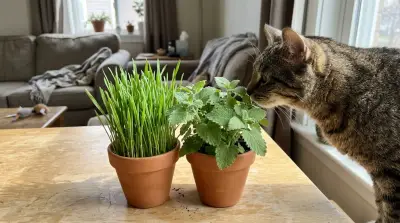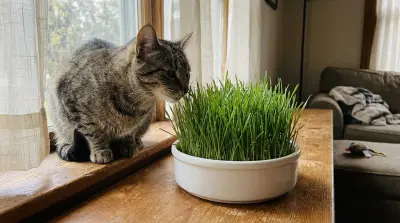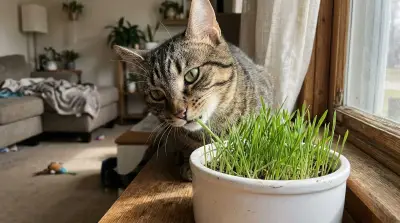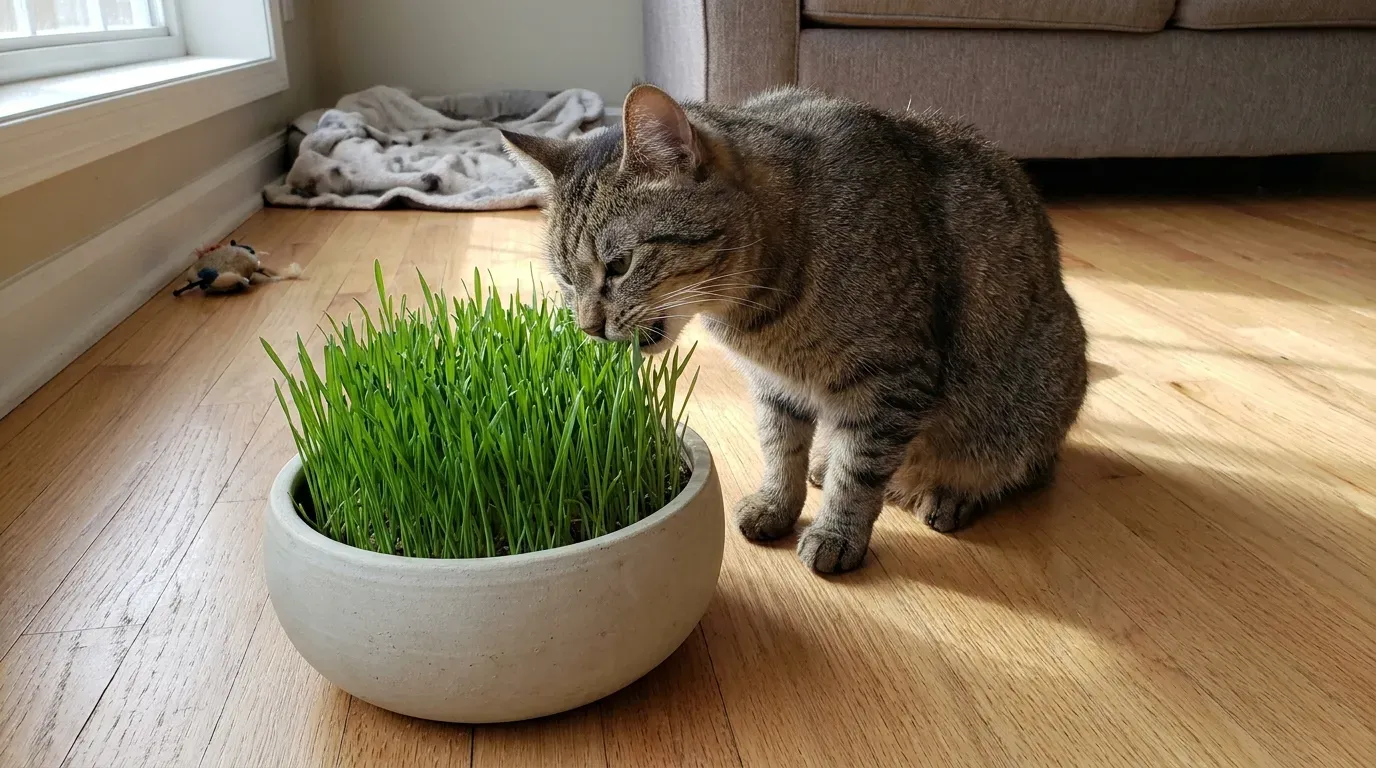
These 15 creative cat grass planter ideas use heavy bases, wide footprints, and smart barriers to keep soil off your floors while your cat grazes. Lightweight plastic pots tip over the moment an enthusiastic cat tugs on a blade of wheatgrass or paws at the dirt.
By choosing non-toxic, weighted materials and stabilizing shapes, you give your feline safe access to fresh greens without daily vacuuming. Understanding real cat grass benefits for indoor felines makes setting up a clean, permanent grazing station well worth the effort.
1Heavy Concrete Bowl Planter
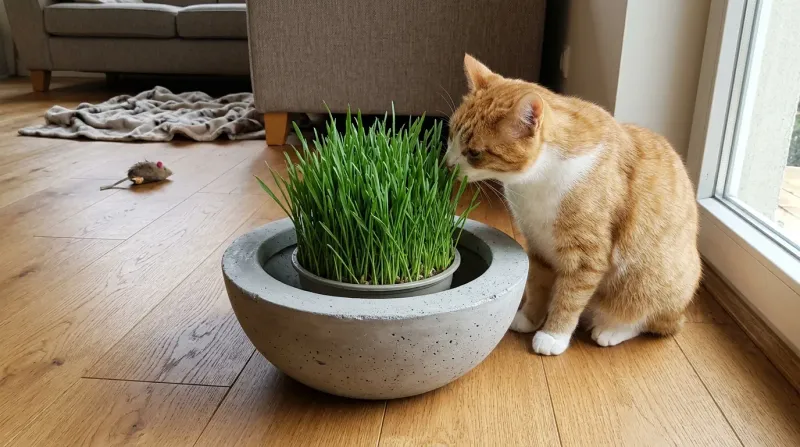
A thick-walled, shallow concrete bowl offers unmatched weight that even large cats cannot slide across hardwood floors. Drill drainage holes in the base with a masonry bit and pair it with a saucer, or place a removable plastic nursery pot with drainage holes inside the concrete shell before adding two inches of organic soil and oat seeds. Seal the outside with a pet-safe, water-based concrete sealer so moisture does not stain your furniture, and place felt pads underneath to protect delicate surfaces.
2Wide Low-Profile Terracotta Dish
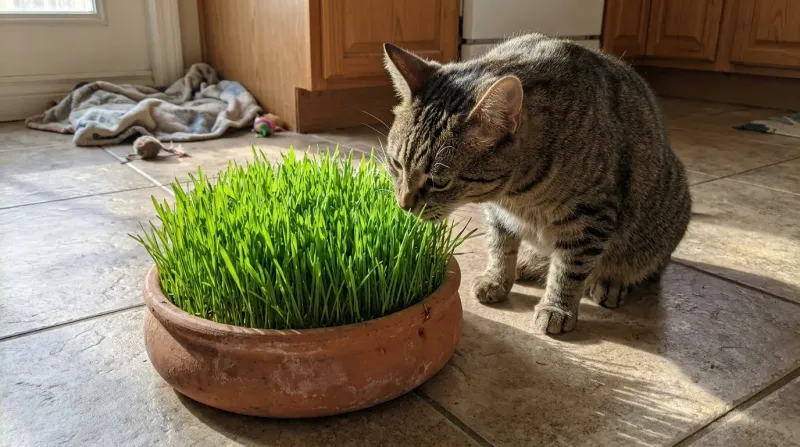
Terracotta bulb pans are much wider than they are tall, creating a low center of gravity that resists tipping when cats tug on grass blades. The porous clay naturally wicks away excess moisture, preventing root rot and mold growth. Soak the unglazed pot in water for thirty minutes before planting so the clay does not draw moisture away from your sprouting wheatgrass seeds.
3Grid-Topped Hydroponic Sprouter
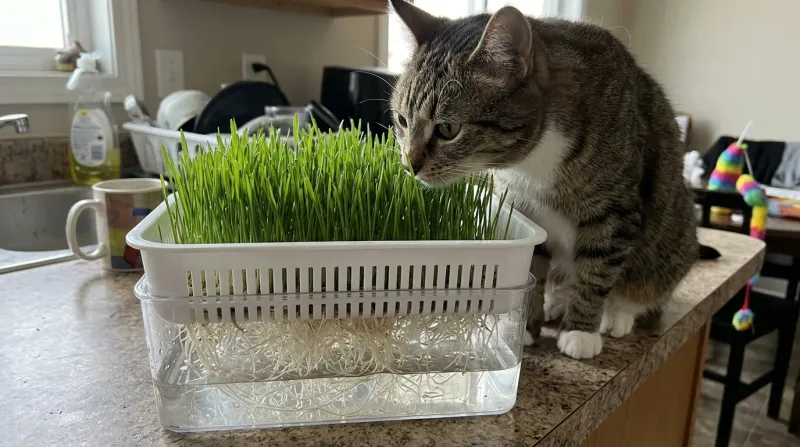
Slotted plastic or ceramic hydroponic trays eliminate potting soil completely, stopping digging behavior before it starts. You spread soaked barley seeds across the perforated upper tray while water sits safely in the reservoir below. Because the roots weave tightly through the grid, cats can bite and pull on the blades without yanking the plants out or scattering dirt across your kitchen.
4Weighted Glazed Ceramic Loaf Pan
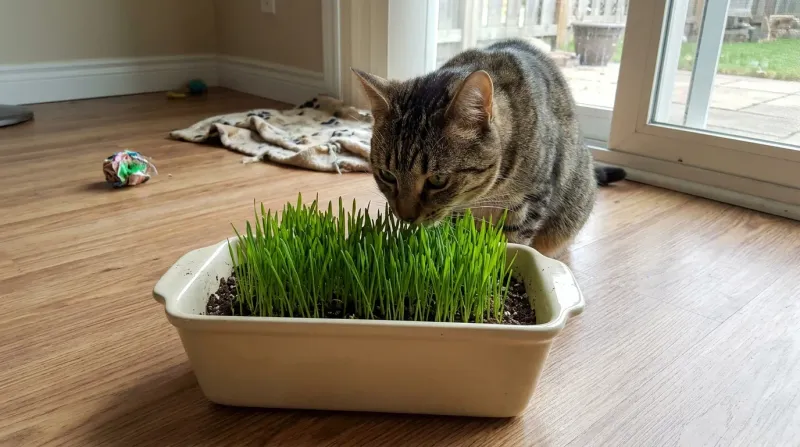
Repurposing a heavy, food-safe ceramic loaf pan gives you a long, rectangular grazing strip that accommodates two cats at once. Choose a pan with thick walls and a flat, unglazed base ring for solid traction on tile or laminate. Drill two small drainage holes in the bottom with a masonry bit, or layer activated charcoal beneath the soil to keep roots fresh.
5Recessed Wood Box With Removable Tray
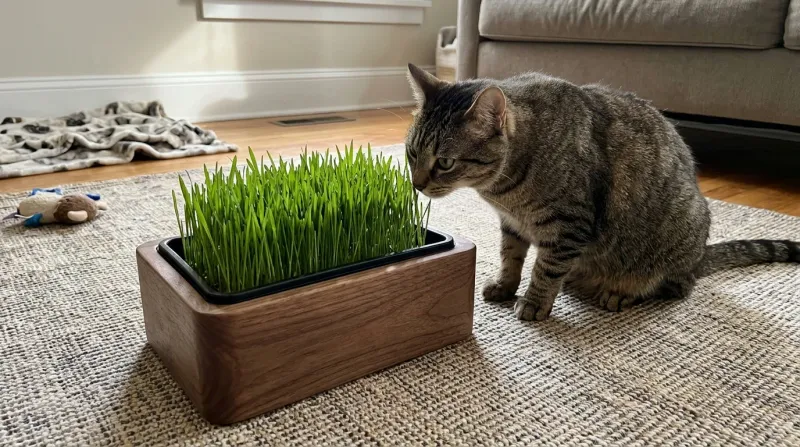
Build or buy a solid hardwood frame with a heavy plywood base that holds a snug plastic nursery tray inside. The outer wooden box adds substantial weight and hides plain black plastic, while the inner liner lifts out easily for rinsing and replanting. Sand all wood corners smooth and finish with raw beeswax or food-grade mineral oil so it stays safe if chewed.
6Cast Iron Skillet Herb Garden
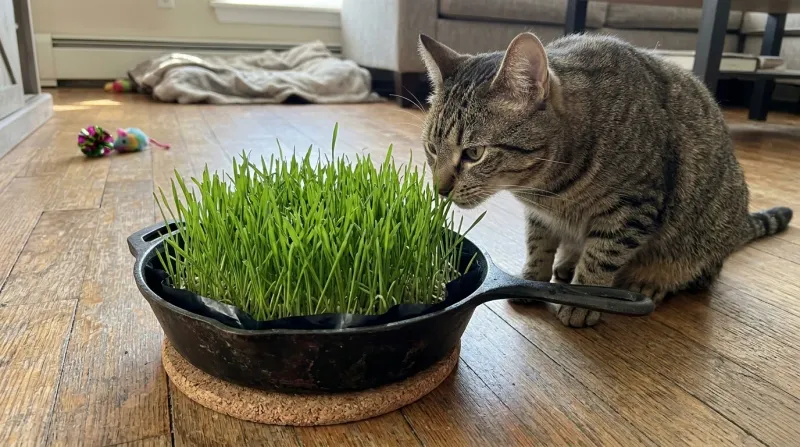
An old, seasoned cast iron skillet weighs several pounds and sits completely flat, making it virtually impossible for a cat to flip over. Fit a shallow plastic liner with drainage holes inside the pan to prevent rust and waterlogged soil, add organic potting mix, and sow tender oat, wheat, or barley seeds. Keep a cork trivet underneath to protect floors from moisture, and dry the rim thoroughly after watering.
7Screw-Mounted Windowsill Bracket Planter
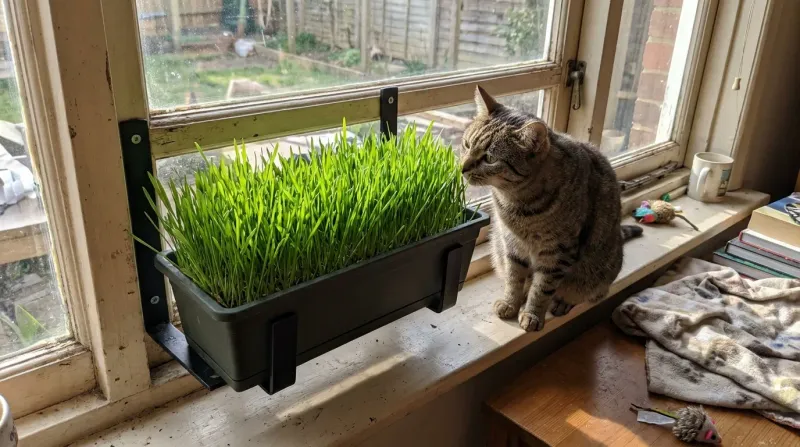
Heavy-duty metal windowsill brackets screw directly into the wooden window frame or trim, lifting the grass off the floor while keeping it solidly anchored against pawing. Unlike suction-cup planters that can detach during temperature swings or under downward paw pressure, a screwed-in bracket holds firm even for energetic cats. Position the planter right at windowsill height so your pet can reach the sunny greens comfortably without putting weight on the tray.
8Stoneware Pet Bowl Conversion
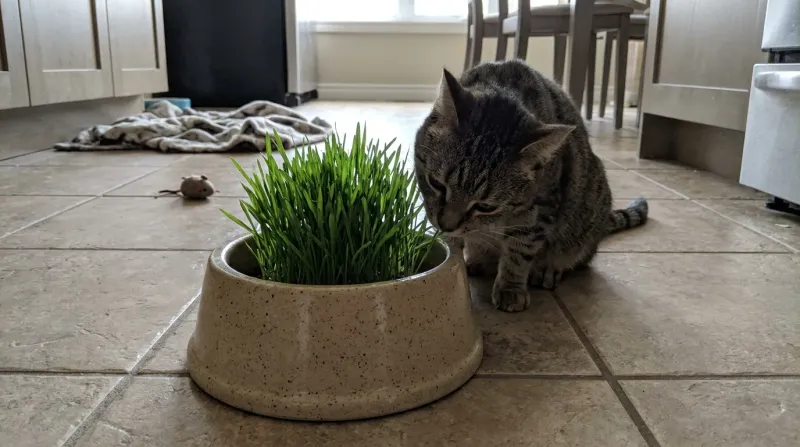
Thick stoneware dog bowls with inward-sloping sides are specifically engineered to stay upright against enthusiastic noses and paws. Their heavy ceramic construction and broad base ring prevent sliding on slick floors. Layer small stones at the bottom for drainage, fill with two inches of organic soil, and grow dense oat grass that stays neat and contained within the curved rim.
9Raised Wooden Stand With Recessed Crock
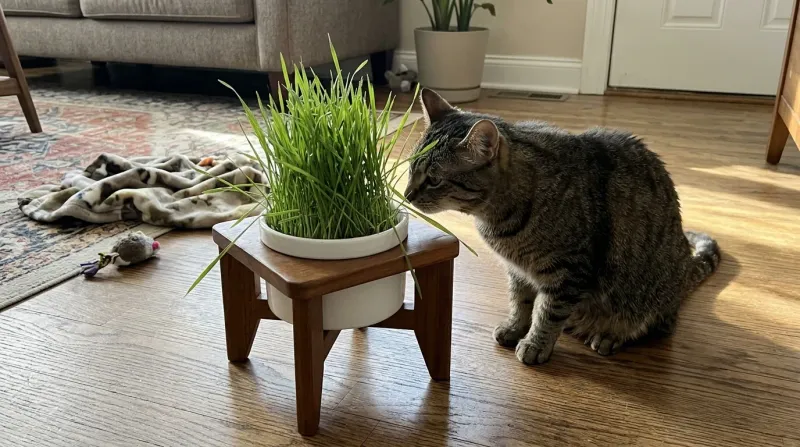
Elevate a heavy ceramic crock inside a sturdy, wide-legged wooden feeder stand to put cat grass at a natural, comfortable neck height. Raising the planter helps older cats or large breeds graze without crouching, while the snug wooden cutout prevents the pot from tipping sideways. This setup works especially well alongside your sturdy cat trees for large cats.
10Catio Border Grazing Trough
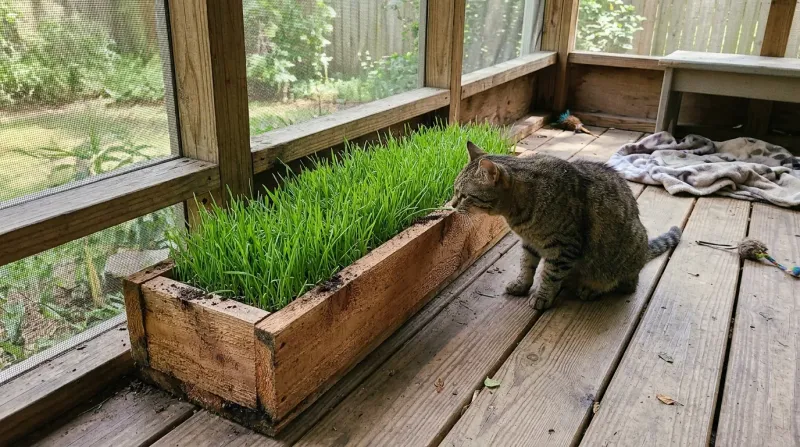
Turn a long, shallow cedar or resin planter box into a dedicated border grazing trough along the edge of an enclosed patio or catio. Fill a twenty-four-inch-wide container with organic soil and tender wheatgrass so your cat can nibble comfortably from the side without crushing the shoots or tracking damp dirt indoors. Use a container at least six inches deep with plenty of drainage holes so rainwater passes straight through.
11Mesh-Covered Dig-Proof Box
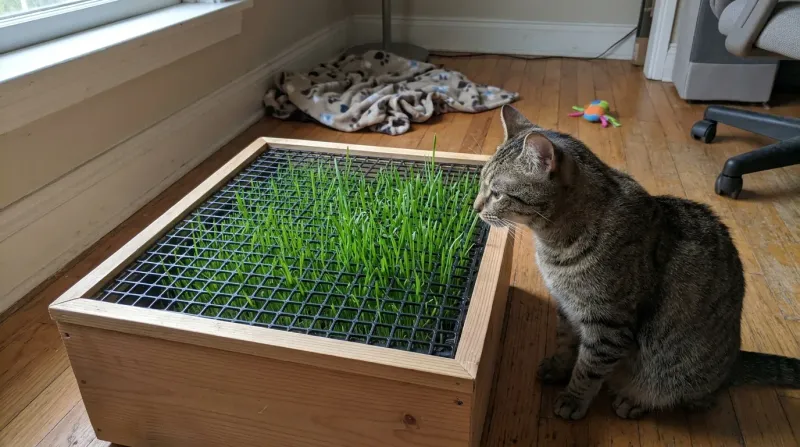
If your cat loves flinging soil with their paws, staple food-safe stainless steel wire mesh or BPA-free plastic garden netting across the top of a wooden planter box. Grass blades grow easily through the half-inch openings, while the grid blocks paws from reaching the dirt below. Tuck all cut mesh ends neatly under a wooden top trim frame so whiskers and noses stay completely protected.
12Bamboo Tray Multi-Pot Trio
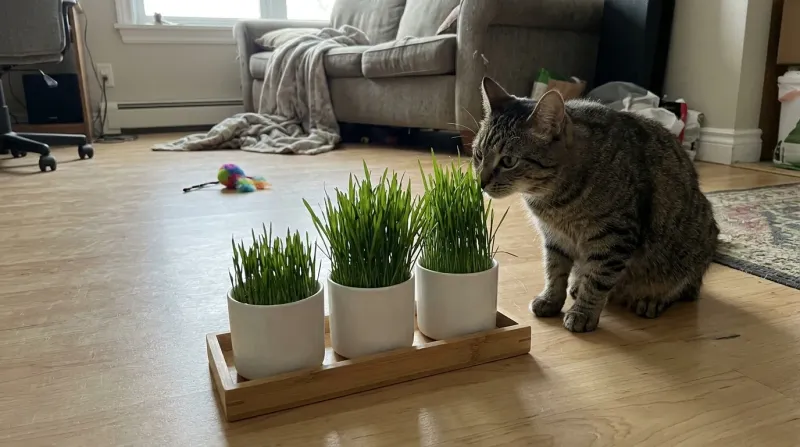
Arrange three small, heavy ceramic pots inside a snug-fitting bamboo drainage tray with raised edges. Grouping the pots together increases the overall footprint and weight, making the unit far harder to knock over than a single small cup. You can stagger your planting schedule by one week per pot so your cat always has a fresh patch of grass ready.
13Wall-Mounted Rail Planter
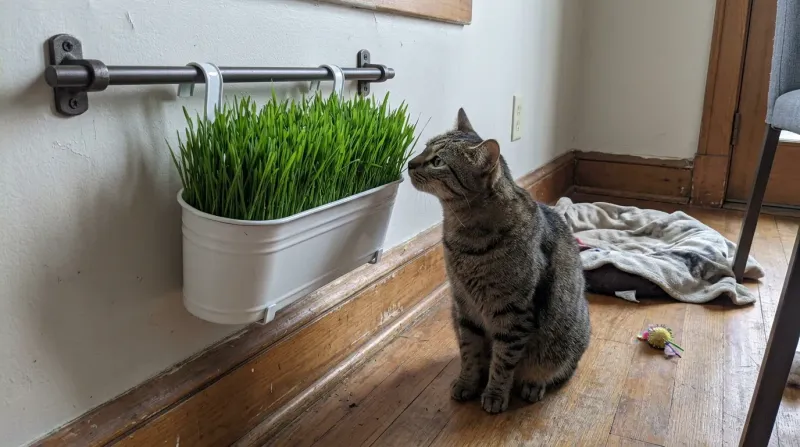
Attach a sturdy metal or wooden wall rail a few inches above the baseboard and hook a deep trough planter securely onto the bar. Mounting the container to the wall eliminates tipping entirely and frees up valuable floor space in small apartments. Choose a planter with a flat back that sits flush against the wall so it does not wobble when pulled.
14Wide Base Weighted Floor Trough
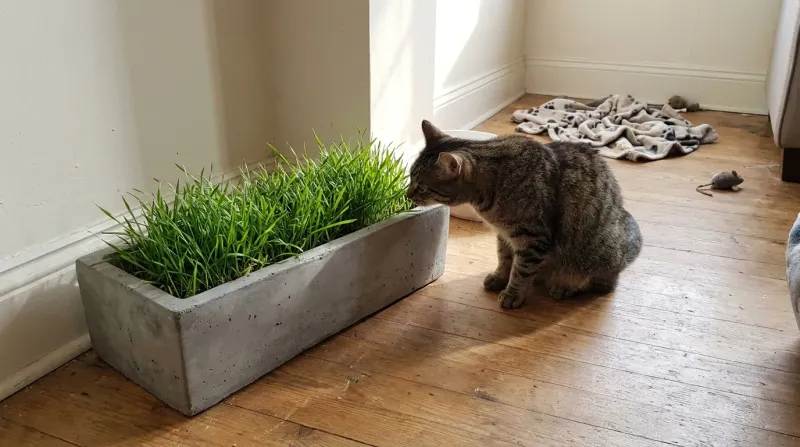
Set a long, heavy-bottomed fiberglass or concrete trough planter directly on the floor against a wall or corner so cats have plenty of room to graze side by side without climbing overhead shelves. Its low profile and broad base eliminate any tipping risk, while keeping all grazing activity safely at ground level. Choose a trough with built-in drainage plugs and a matching saucer to catch excess water.
15Marble Mortar or Stone Vessel
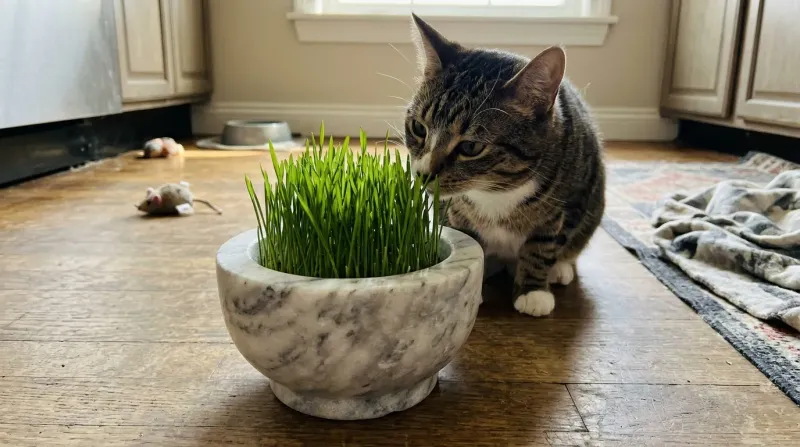
A wide, unpolished marble or granite mortar offers exceptional density in a compact footprint that fits neatly beside a feeding station. Because solid stone is naturally heavy, cats cannot push it around while chewing tough blades. Add an inch of horticultural charcoal at the bottom to absorb excess water, and plant fast-sprouting barley seeds for a clean, sculptural look.
Choosing Safe Soil and Seeds for Your Planter
Always plant cat grass in plain, organic potting soil free from chemical fertilizers, pesticides, and perlite beads, which can irritate your cat's stomach if swallowed. Stick to safe, fast-growing seeds like wheat, oat, or barley grass, and keep toxic houseplants like lilies, pothos, and aloe well away from your cat's grazing zone.
Sprouts usually appear within three to five days and reach grazing height in about ten days. If your cat vomits repeatedly after eating grass, shows lethargy, or loses their appetite, remove the planter and consult your veterinarian right away.
Common Cat Grass Planter Mistakes to Avoid
Avoid tall, narrow pots that act like levers when a cat pulls upward on tough grass blades. Skip painted ceramics with unknown glazes that might contain lead, and never use containers with sharp metal edges that could cut your pet's gums or paws.
Overwatering is another frequent misstep that leads to moldy roots and sour smells. Empty standing water from drainage trays daily, and replace the entire planting every two to three weeks once the blades yellow or thin out.
The best cat grass planter combines a wide, heavy base with pet-safe materials and proper drainage so your cat can graze without scattering soil. Start with one sturdy container, keep the soil chemical-free, and refresh the seeds every few weeks—or check how much cat grass to feed your cat to keep their digestion running smoothly.
Frequently asked questions
What is the best container to grow cat grass in?
Wide, shallow containers made from heavy materials like glazed ceramic, unglazed terracotta, concrete, or thick stoneware work best. A low profile with a broad base stops cats from tipping the pot over when they tug on grass blades, while drainage holes or a removable inner pot keep the roots healthy.
Can I grow cat grass without soil to avoid mess?
Yes, you can grow cat grass hydroponically using a slotted sprouting tray and water. The seeds rest on a perforated grid above a water reservoir, allowing roots to grow downward without any potting mix. This method completely prevents digging and keeps dirt off your floors.
How deep does a cat grass planter need to be?
A planter only needs two to three inches of soil depth because wheat, oat, and barley grasses have shallow root systems. Choosing a shallow, wide dish rather than a deep, narrow flower pot saves potting soil and creates a much more stable base against enthusiastic chewing.
What are the disadvantages of cat grass?
Cat grass can cause mild vomiting if a cat eats too much too quickly, and poorly drained soil can develop mold that upsets their stomach. Loose dirt also creates mess if tipped over, so using a weighted planter and refreshing the grass every two to three weeks prevents most issues.

Nathan Brooks
Nathan Brooks runs Farmingzoom to help loving pet owners create safe, enriching homes for their animals. He cares deeply about responsible pet care and focuses on making everyday decisions simpler for fellow owners.…