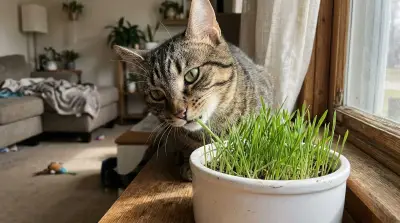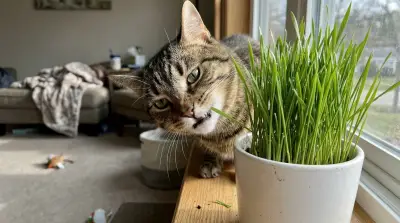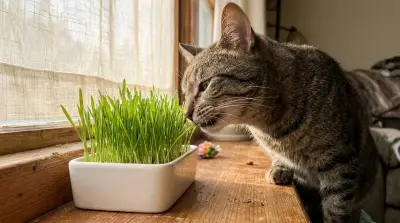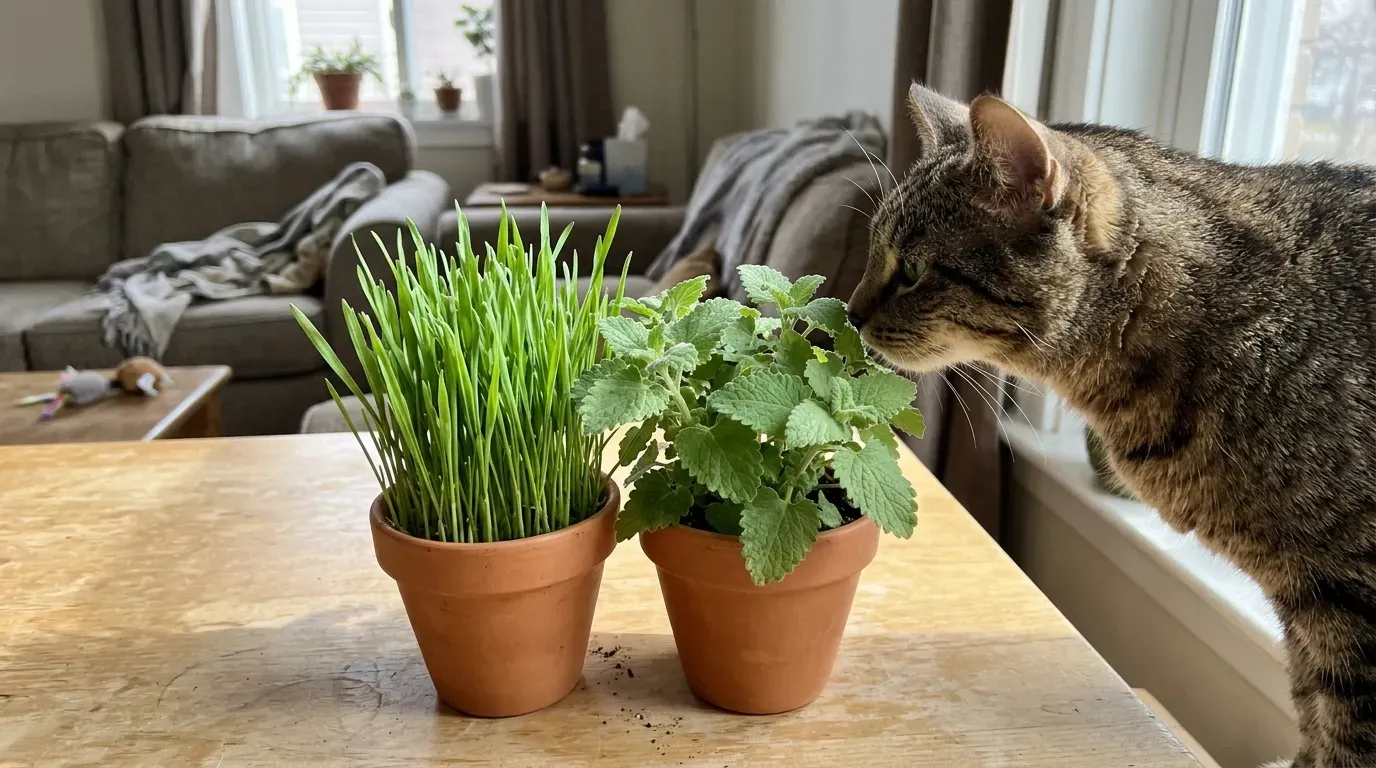
Cat grass and catnip are two completely different plants that serve opposite purposes in your cat's daily routine. Cat grass is a blend of young cereal grains meant to be chewed for digestive support, while catnip is a fragrant herb in the mint family that triggers a temporary behavioral response when smelled or eaten.
Understanding how these two greens work helps you pick the right option for your indoor cat's specific needs. Whether you want to curb hairballs, redirect chewing away from toxic houseplants, or encourage energetic play, knowing when and how to offer each plant keeps your feline happy and safe.
What Is the Main Difference Between Cat Grass and Catnip?
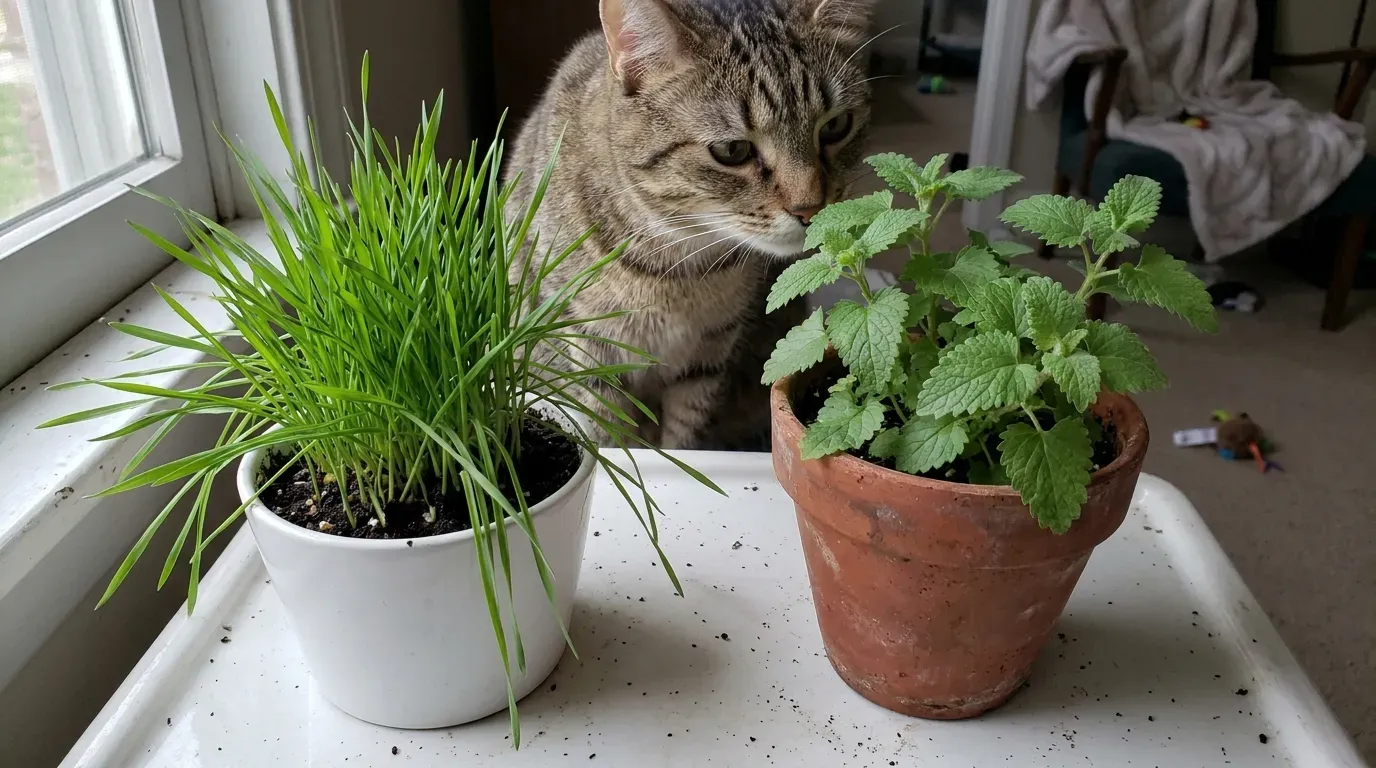
The core distinction between cat grass and catnip comes down to plant species and how your cat's body processes them. Cat grass is grown from either a single cereal grass or a blend of cereal seeds such as wheat, oat, barley, or rye. Cats eat the tender blades directly for dietary fiber and micronutrients, making it a physical and nutritional addition to their environment.
Catnip (Nepeta cataria), on the other hand, is a perennial herb belonging to the mint family. Its leaves and stems contain an essential oil called nepetalactone. Rather than providing nutritional roughage, catnip acts as a sensory stimulant that binds to receptors in your cat's olfactory and vomeronasal systems, producing a brief neurological reaction.
| Feature | Cat Grass | Catnip |
|---|---|---|
| Plant Family | Cereal grasses (wheat, oat, barley, rye) | Mint family (Nepeta cataria) |
| Primary Interaction | Eaten and chewed | Smelled, rubbed, or occasionally eaten |
| Main Effect | Physical and digestive support | Neurological and behavioral stimulation |
| Affected Cats | Safe for all ages and breeds | About 70–90% of adult cats (genetic trait) |
| Duration of Effect | Ongoing digestive support | 5 to 15 minutes per session |
How Cat Grass Affects Your Cat's Digestion and Habits
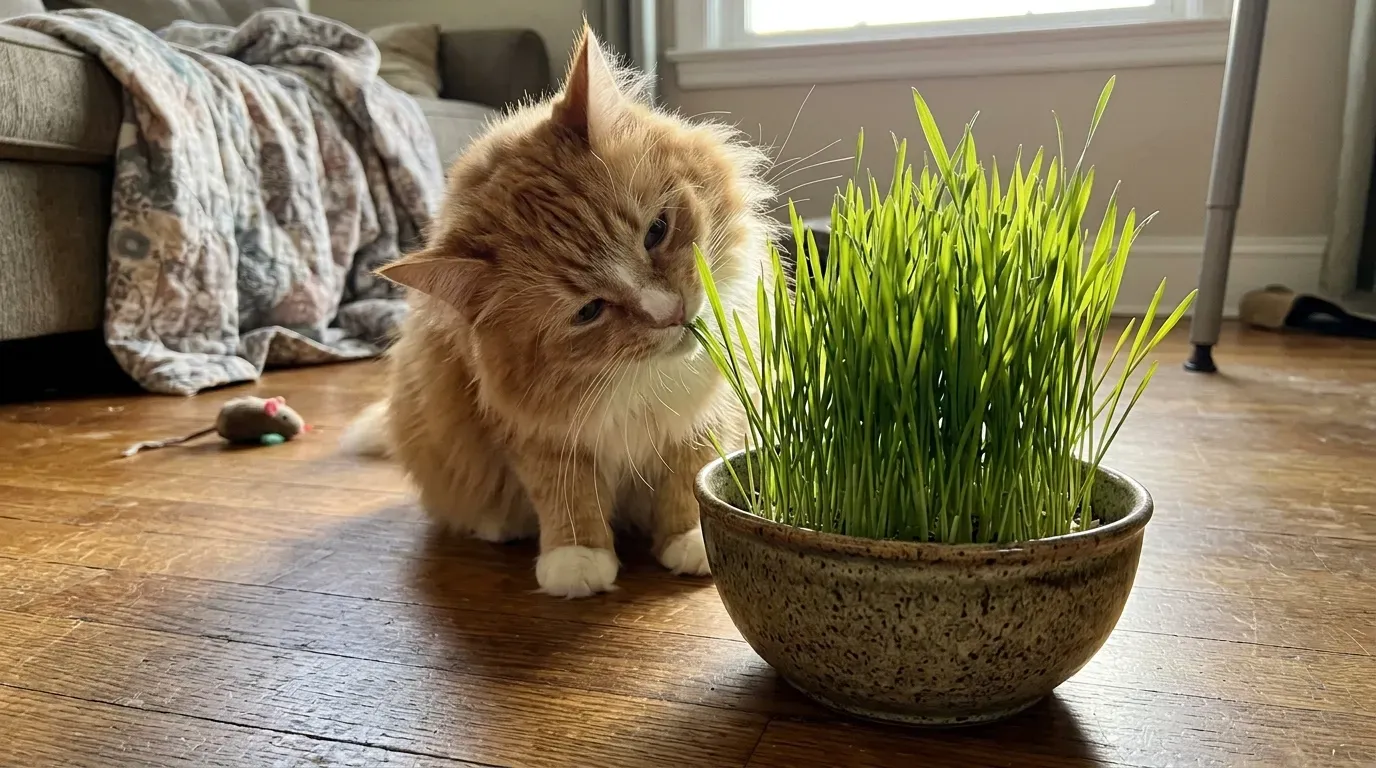
Indoor cats naturally seek out greenery to nibble on, and offering dedicated grass gives them a safe, non-toxic outlet. Because felines lack the enzymes needed to break down large amounts of plant matter, the insoluble fiber in grass passes through their digestive tract mostly intact. This roughage helps move swallowed fur smoothly through the stomach and intestines, reducing hairball blockages.
For a closer look at how cat grass affects your cat, veterinarians note that gentle grazing also provides trace vitamins like folic acid and satisfies a cat's instinct to chew. Keeping a fresh pot accessible is one of the easiest ways to protect common household plants—such as lilies, pothos, philodendrons, and sago palms—which are toxic to cats if chewed.
- Digestive motility: Adds gentle bulk to stool and helps clear accumulated fur from the stomach.
- Enrichment: Offers crunchy texture and mental stimulation for strictly indoor pets.
- Plant redirection: Draws curious nibblers away from dangerous decorative houseplants.
How Catnip Triggers Playfulness or Relaxation
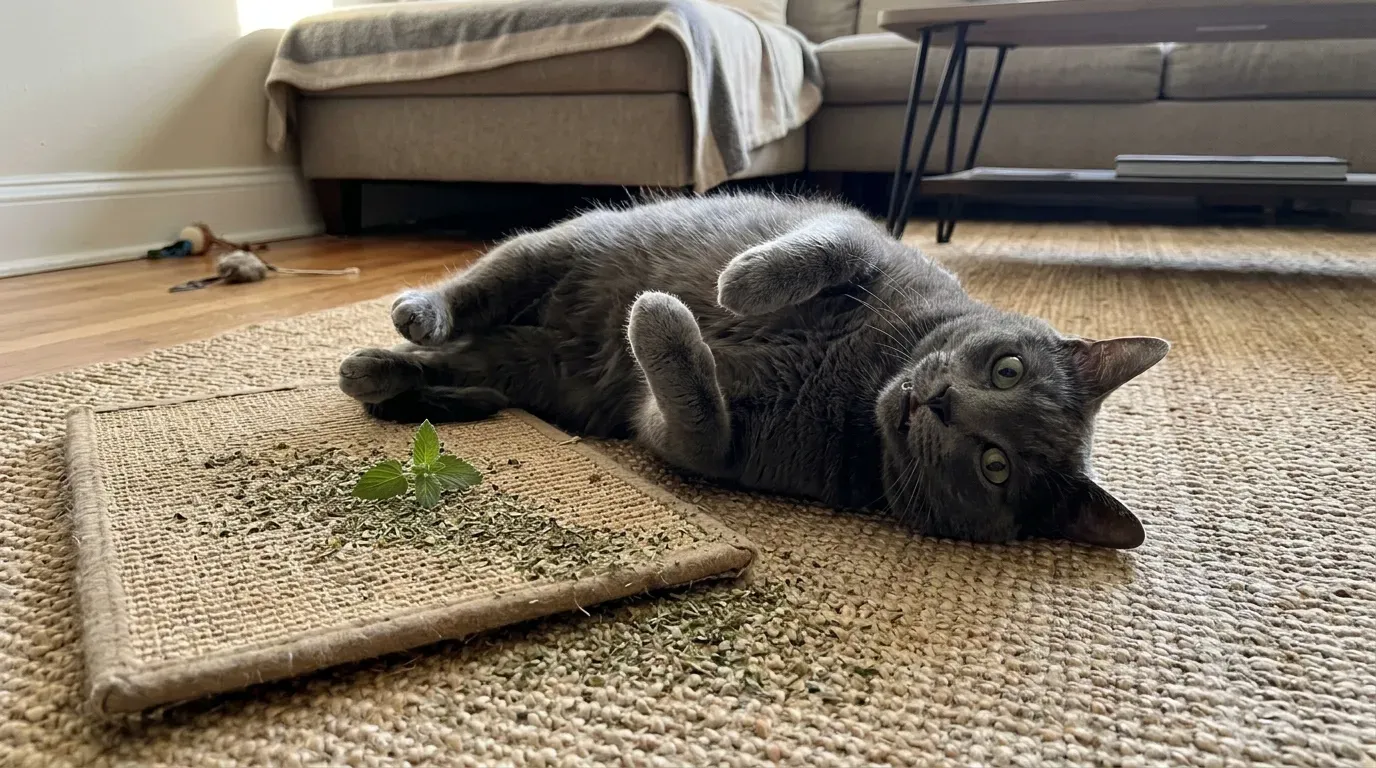
When a sensitive cat sniffs catnip, nepetalactone enters the nasal passages and stimulates sensory neurons linked to parts of the brain that regulate emotion and behavior. Within seconds, many cats enter a burst of euphoric energy that lasts between 5 and 15 minutes. During this window, your cat may roll on the floor, rub their cheeks against the herb, vocalize, leap, or sprint around the room.
Once that initial burst fades, cats experience a temporary refractory period lasting roughly one to two hours during which catnip has no effect. Interestingly, if a cat eats dried or fresh catnip leaves rather than just sniffing them, the herb often produces the opposite response—acting as a mild calming agent that helps anxious cats settle down. Sensitivity to catnip is inherited, affecting roughly 70 to 90 percent of cats, while kittens younger than 3 to 6 months rarely react at all because their olfactory receptors are still developing.
Safety Risks and Side Effects to Watch For
Both plants are non-toxic to cats and dogs, yet improper serving or poor pot maintenance can still cause problems. Overeating cat grass is the most common issue; swallowing too many long blades at once can tickle the stomach lining and trigger immediate vomiting. In rare cases, a stiff blade of grass can lodge in the back of the throat or nasal cavity, causing repeated sneezing, gagging, or pawing at the mouth.
Mold growth in damp potting soil is another hidden hazard for indoor planters. If you notice fuzzy white or gray spots on the soil surface, discard the pot immediately, as inhaling or ingesting mold spores can upset your cat's stomach. With catnip, excessive exposure can occasionally lead to mild stomach upset or temporary overstimulation, causing usually gentle cats to swat or play too roughly. Contact your veterinarian right away if your cat experiences persistent vomiting, lethargy, diarrhea, or continuous sneezing after chewing any plant.
How Much and How Often Should You Serve Each Plant?
Moderation keeps both greens enjoyable without upsetting your cat's stomach. Rather than leaving an entire tray unattended for a cat that tends to gorge, veterinarians generally recommend letting your pet nibble a few blades of grass at a time. Understanding how much cat grass to feed your cat prevents binge eating while still delivering steady digestive fiber.
For catnip, limiting sessions to two or three times per week keeps the scent novel and prevents your cat from becoming desensitized to nepetalactone. Follow these practical serving guidelines:
- Fresh cat grass: Allow 5 to 10 minutes of supervised grazing per day, or trim a small pinch of blades to mix into wet food.
- Dried catnip: Sprinkle a small pinch (about half a teaspoon) onto a scratching post, cardboard pad, or washable mat.
- Catnip sprays: Mist toys or bedding lightly and let the spray dry for 10 to 15 minutes before handing the item to your cat, especially for water-based or botanical mist formulas.
- Fresh catnip leaves: Crush one or two leaves between your fingers to release the natural oils before offering them.
Which One Should You Choose for Your Cat?
Choosing between cat grass and catnip depends on what problem you are trying to solve in your home. You do not have to pick only one—many cat owners keep both on hand because they fulfill completely different roles.
- Choose cat grass if: Your cat struggles with frequent hairballs, chews on your indoor houseplants, or enjoys grazing on leafy textures. Long-haired breeds like Maine Coons, Persians, and Ragdolls often benefit most from regular fiber support during heavy shedding seasons.
- Choose catnip if: Your indoor cat needs extra encouragement to exercise, ignores a new scratching post, or feels tense during routine changes like moving furniture or visiting the vet.
- Consider alternatives if your cat ignores catnip: Roughly 10 to 30 percent of cats lack the gene for catnip sensitivity. If yours shows zero interest, silver vine or Tatarian honeysuckle wood often triggers a similar playful reaction.
Simple Tips for Growing Both Plants Indoors
Growing your own greens at home ensures they stay free of commercial pesticides, chemical fertilizers, and synthetic sprays. Cat grass sprouts quickly and typically stays fresh and lush for roughly 1 to 3 weeks (10 to 21 days) before yellowing and needing to be replanted, so planting a new batch every couple of weeks keeps a steady supply ready. Using heavy ceramic containers or cat grass planters that prevent tipping stops enthusiastic grazers from spilling soil across your floor.
To avoid fungal issues in humid rooms, follow proven methods for growing cat grass indoors without mold: use sterile, organic potting mix without added fertilizers, choose pots with drainage holes, and water lightly only when the top half-inch of soil feels dry. Catnip grows slower from seed than cereal grains, so buying a young organic starter plant from a garden center is often easier. Place your catnip pot in a sunny windowsill receiving at least six hours of bright light daily, and pinch back the top stems regularly to encourage bushy leaf growth.
Cat grass and catnip work best as complementary tools rather than direct substitutes: cat grass supports healthy digestion and protects your houseplants, while catnip sparks short bursts of play and stress relief. Start with small, supervised portions to see how your cat responds, keep soil clean and pesticide-free, and check with your veterinarian if your pet ever develops persistent digestive upset.
Frequently asked questions
What is better, cat grass or catnip?
Neither plant is universally better because they serve different purposes. Cat grass is better for supporting digestion, reducing hairballs, and distracting cats from chewing toxic houseplants. Catnip is better for encouraging energetic play, training cats to use scratching posts, and easing mild anxiety in cats that carry the genetic sensitivity trait.
Can cats eat both cat grass and catnip safely?
Yes, both plants are non-toxic to cats and can be offered safely as part of an indoor enrichment routine. Keep portions moderate—offer a few blades of cat grass daily and limit catnip to two or three sessions per week—so your cat does not swallow too much plant matter and vomit.
Why does my cat ignore catnip but love cat grass?
Sensitivity to catnip is inherited, and roughly 10 to 30 percent of cats lack the genetic receptor needed to react to nepetalactone. Kittens under 3 to 6 months old also rarely respond. Cat grass does not rely on brain receptors, so almost any cat can enjoy nibbling its crunchy blades.
What are the disadvantages of cat grass?
The main drawbacks of cat grass are vomiting if a cat gorges on too many blades at once, mold growth in overly damp indoor pots, and a short container lifespan of about 1 to 3 weeks. Rarely, a stiff blade can irritate the throat or nasal passages, requiring a veterinarian to remove it.

Nathan Brooks
Nathan Brooks runs Farmingzoom to help loving pet owners create safe, enriching homes for their animals. He cares deeply about responsible pet care and focuses on making everyday decisions simpler for fellow owners.…