A heavy duty wall mounted cat tree needs direct stud anchoring, thick solid wood boards, and platforms at least 12 inches deep to support cats weighing over 15 pounds without sagging or pulling out of drywall.
When a 16- to 25-pound Maine Coon, Ragdoll, or large mixed-breed cat launches onto a shelf, the dynamic landing force easily doubles their resting body weight. Standard decorative shelves rely on hollow-wall toggles that bend or tear loose over time, risking serious injury to your pet.
The 16 reinforced designs below focus on structural stud-spanning brackets, generous lounging footprints, and grippy surfaces so your big cat can climb, stretch, and nap with complete stability.
1Dual-Stud Solid Oak Lounging Ledge
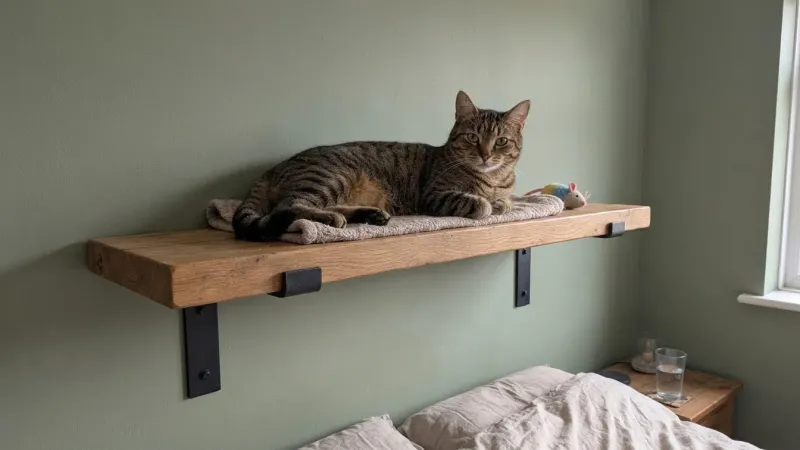
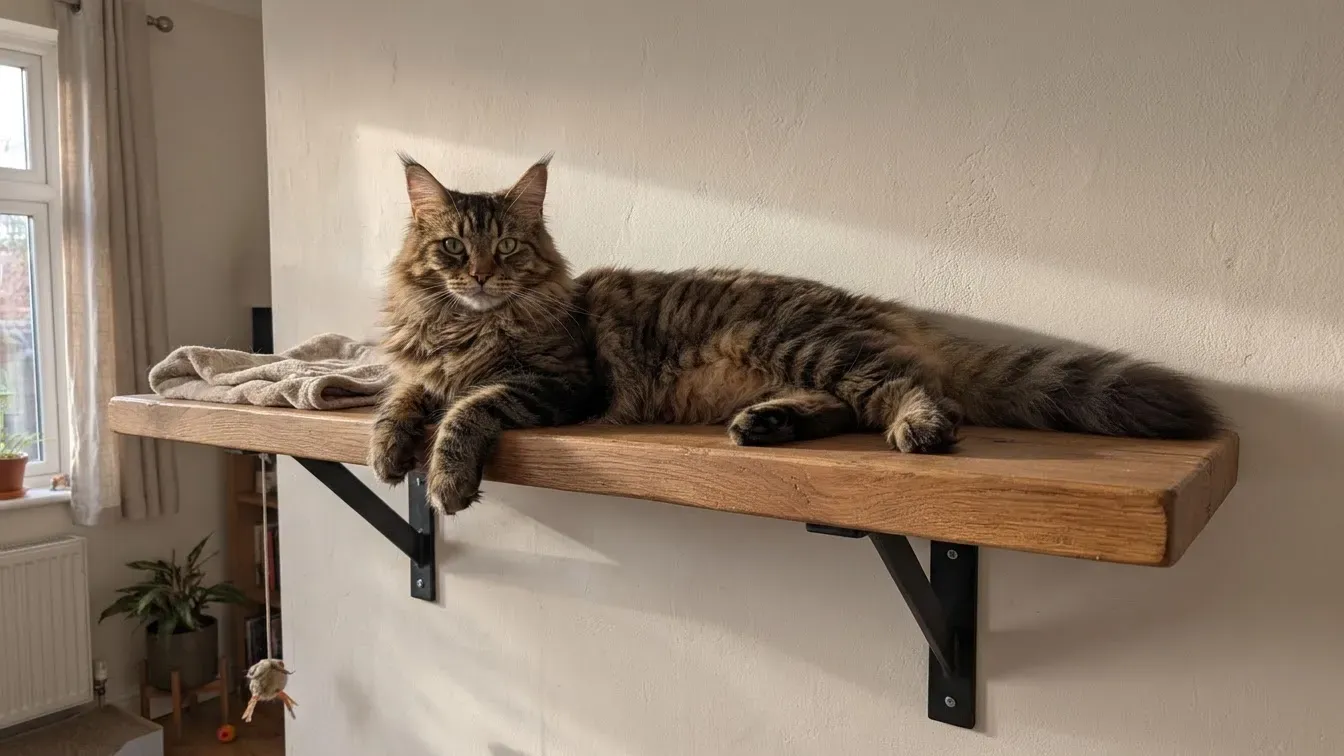
Constructed from 1-inch-thick kiln-dried oak, this wide platform spans two standard 16-inch wall studs using heavy steel L-brackets hidden beneath the board. The 14-inch depth gives broad-shouldered cats plenty of room to turn around and curl up without hanging over the edge. Pre-drilled mounting holes align cleanly with wood framing, supporting up to 65 pounds of combined static and jumping weight.
2Triple-Post Vertical Sisal Climbing Column
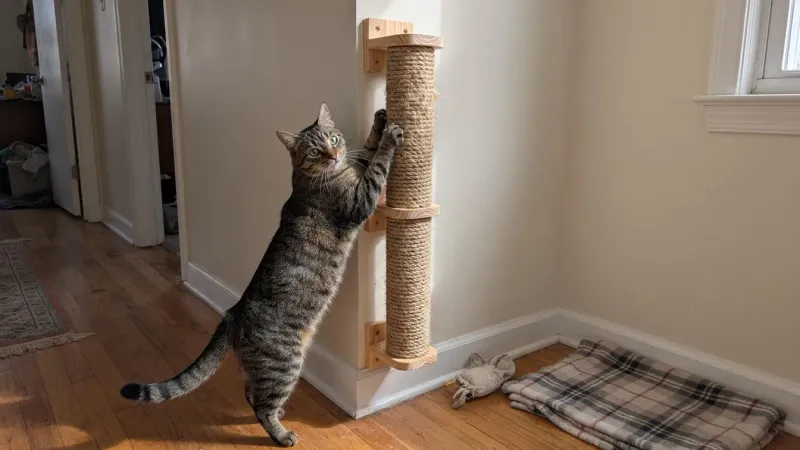
Built around a 4.5-inch-thick solid pine core wrapped in braided natural sisal rope, this wall-mounted scratching post anchors at the top, middle, and base directly into a single stud. Heavy cats can dig their claws in and haul their full weight upward without the column twisting or pulling away from the drywall. Place it below a high perch to create a safe vertical highway.
3Canvas Sling Hammock with Steel Crossbars
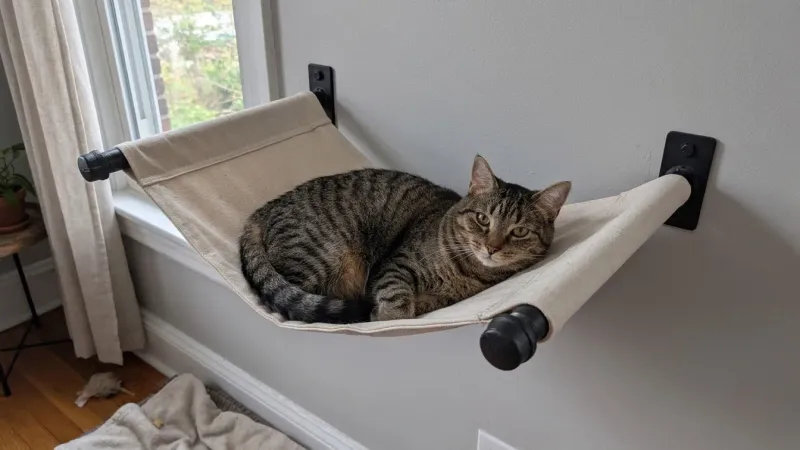
Unlike lightweight fabric slings held up by tiny wood dowels, this heavy-duty wall hammock uses thick powder-coated steel rods bolted into dual wall studs. Heavy-gauge cotton duck canvas cradles a 20-pound cat comfortably while resisting tearing under sharp claws. The fabric slides off the metal bars easily so you can machine-wash shed fur and dander whenever needed.
4Bridge-Style Multi-Stud Suspension Walkway
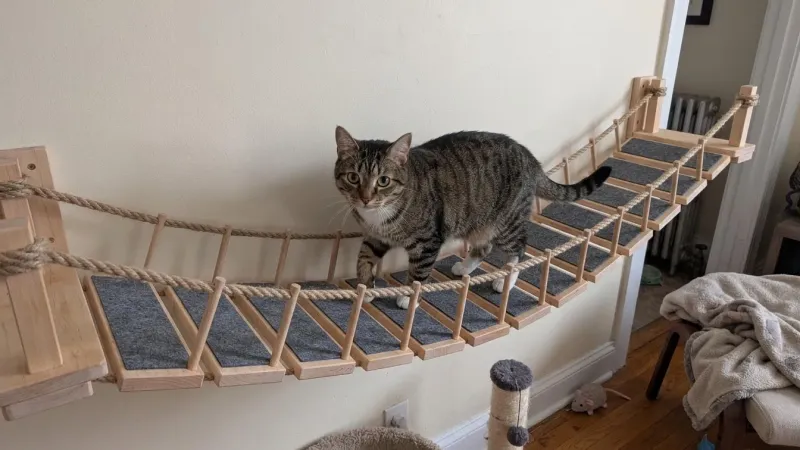
Designed to span 36 to 48 inches across a living room wall, this plank bridge anchors into three separate studs at both ends and the midpoint. Thick rope or steel cable side rails connect solid birch slats lined with non-slip carpet treads. Multiple heavy cats can cross or nap on the span simultaneously without the middle bowing downward.
5Deep Enclosed Wall Condo Box
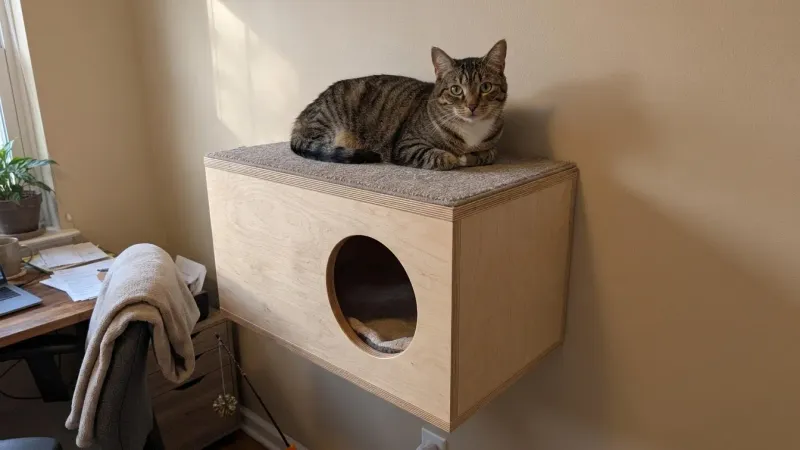
Measuring 18 inches wide by 16 inches deep, this reinforced plywood cubby attaches to the wall with a full-width French cleat screwed straight into two studs. The roomy interior accommodates large breeds that feel cramped in standard 12-inch cubes, while the flat carpeted roof doubles as a sturdy upper observation deck.
6Steel-Bracketed Birch Step Staircase
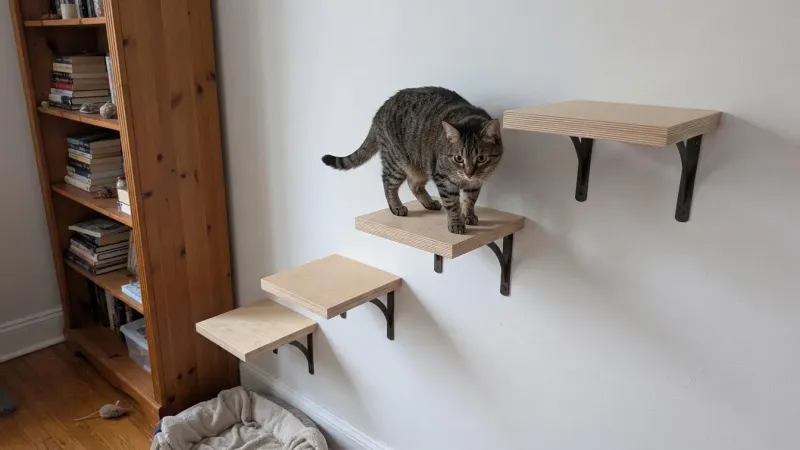
Arranged in a gentle diagonal climb, each 12-by-12-inch birch step mounts on an industrial cast-iron bracket rated for 50 pounds per shelf. The short 10-inch vertical spacing helps senior large cats or heavier breeds climb safely without high-impact leaps. Secure low-pile carpet treads to each step with staples, tacks, or industrial-strength construction adhesive rather than standard peel-and-stick backing for dependable grip.
7Corner-Anchored Wedge Lookout Perch
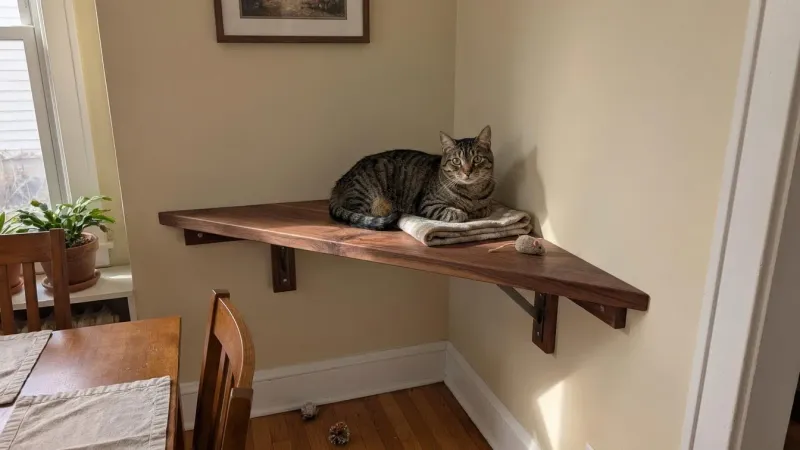
Shaped to fit snugly into a 90-degree room corner, this triangular hardwood platform bolts into the framing studs on both adjoining walls. Dual-wall support eliminates forward cantilever leverage, making it virtually impossible for a heavy cat to tip or sag the shelf. Its 26- to 28-inch front edge provides roughly 13 to 14 inches of usable center depth to the back corner along with a panoramic view of the entire room.
8Padded Window-Level Perch with Under-Bracing
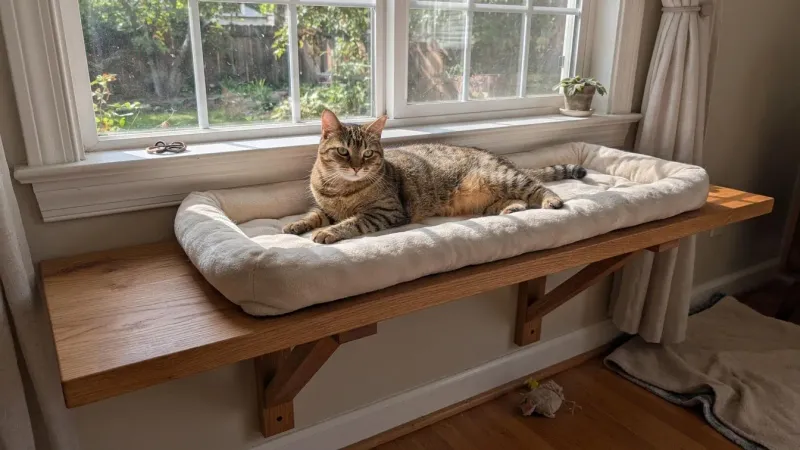
Mounted just below a sunny window sill, this 28-inch-long solid wood shelf uses angled diagonal support struts that transfer downward weight directly into the wall studs below. A washable 2-inch-thick bolster cushion attaches with heavy-duty hook-and-loop strips so it stays put when a big cat jumps on or off.
9Modular Track-Mounted Heavy Shelf System
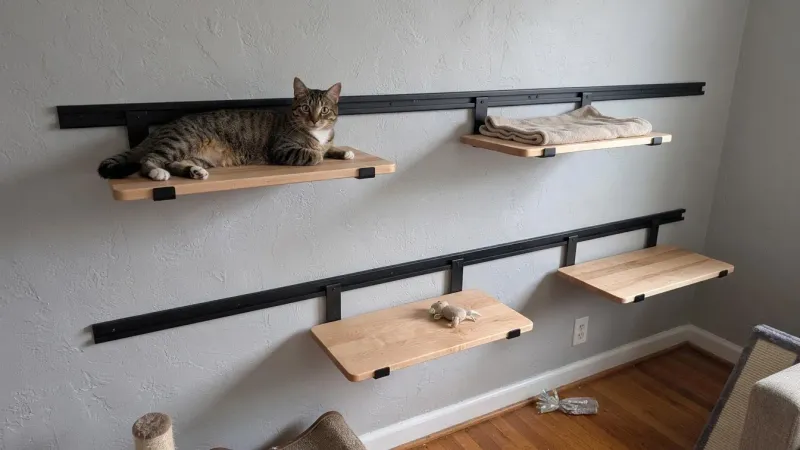
Instead of drilling dozens of separate holes, this system uses two horizontal steel tracks bolted across three wall studs. Thick wooden shelves, scratchers, and beds lock onto the tracks with heavy metal hooks. You can rearrange heights as your cat ages while keeping the structural load spread evenly across the wall framing.
10Extra-Wide Curved Plywood Lounge
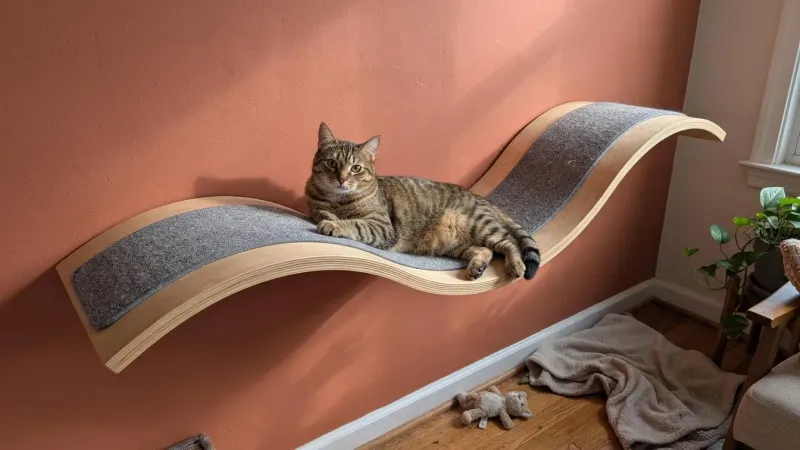
Molded from 12 layers of pressed birch veneer, this curved wave perch measures 32 inches long and 13 inches wide. Heavy steel mounting plates bolt flush into two studs behind the curve, hiding all hardware from view. The gentle ergonomic dip supports a large cat's spine while carpeted strips prevent sliding during sudden launches.
11Dual-Tier Over-Doorway Cat Bridge
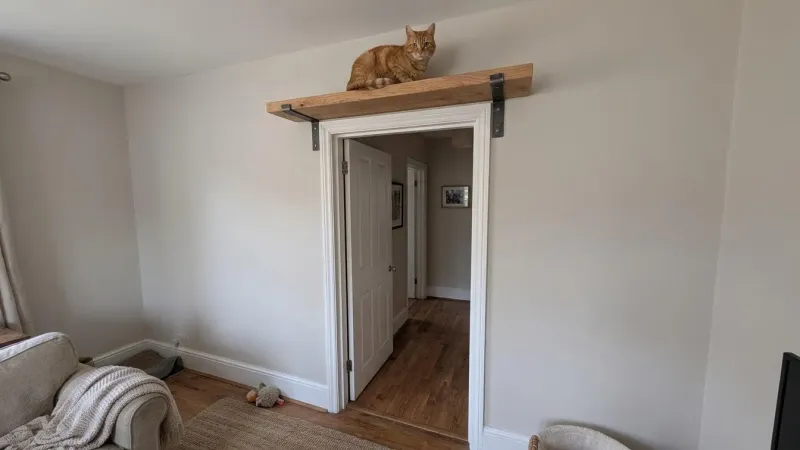
Installed above a standard interior doorway, this thick timber shelf gives big cats an elevated pass-through between rooms. Because non-load-bearing interior door frames typically only have a thin 2x4 top plate rather than a deep solid header—and electrical wiring for adjacent switches often runs overhead—scan carefully for wires and anchor structural lag screws directly into the vertical jack and king studs or confirmed solid framing for rock-solid stability.
12Reinforced Wall-Mounted Curved Scratching Ramp
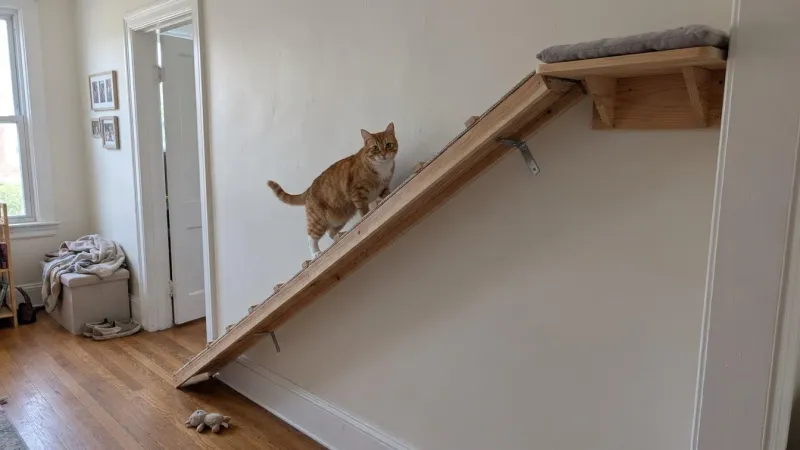
Set at a 35-degree incline, this 40-inch-long carpeted ramp bridges the gap between the floor and a high wall perch. Solid wood side rails prevent flex under heavy paws, while top and bottom brackets anchor into wall studs. It lets large or arthritic cats walk up smoothly rather than jumping.
13Heavy-Duty Floating Box Shelf with Side Cutouts
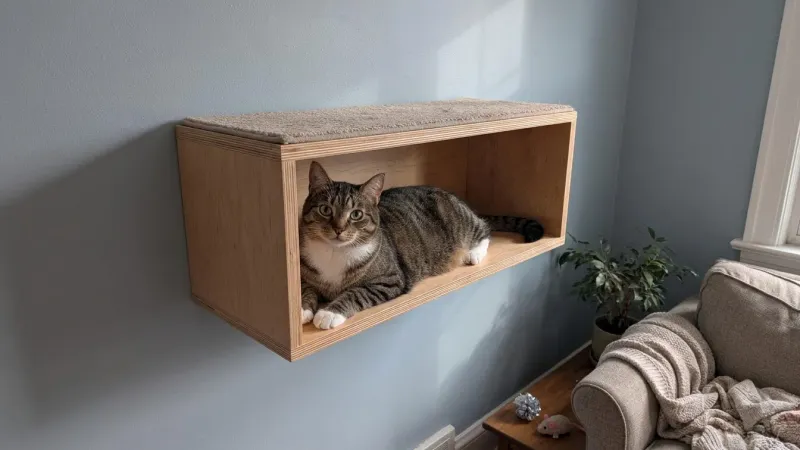
Built from 3/4-inch cabinet-grade maple plywood, this open-ended tunnel shelf features a concealed steel inner frame bolted to two studs. Big cats can pass right through the interior or lounge on the 15-inch-deep top deck. Rounded edges and sanded corners protect long fur and whiskers from snagging.
14Wide Bolstered Wall Bed with Metal Frame
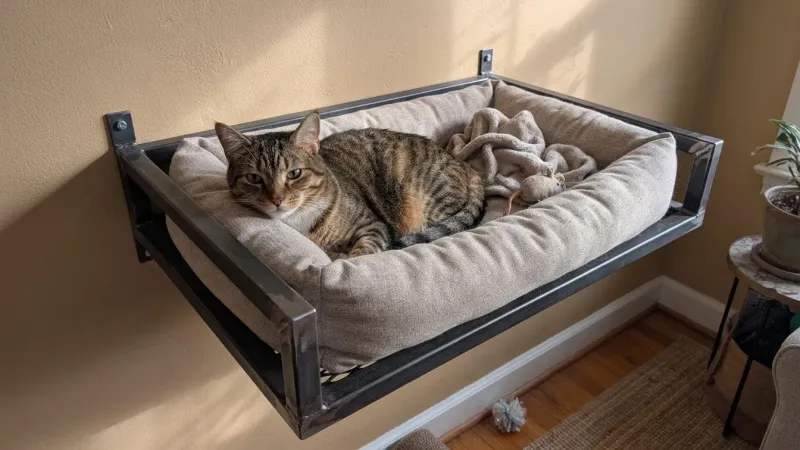
Combining a welded steel perimeter frame with a removable plush bolster bed, this wall-mounted sleeper holds up to 70 pounds. Four lag bolts anchor the back plate directly into two adjacent studs. The raised cushioned rim gives heavy cats something solid to lean against while sleeping deeply.
15Staggered Carpeted Landing Pads
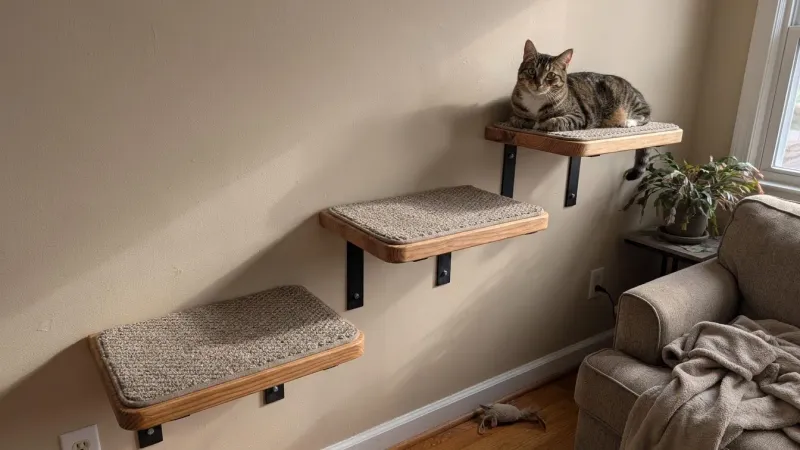
Each 24-by-14-inch wooden landing pad is surfaced with high-traction plush or loop-pile carpet—reserving sisal for vertical scratching surfaces—and supported by dual steel brackets screwed into studs. The generous surface area acts as a high-grip braking zone where a fast-moving 18-pound cat can land at speed without skidding.
16Multi-Cat Staggered Tower Wall System
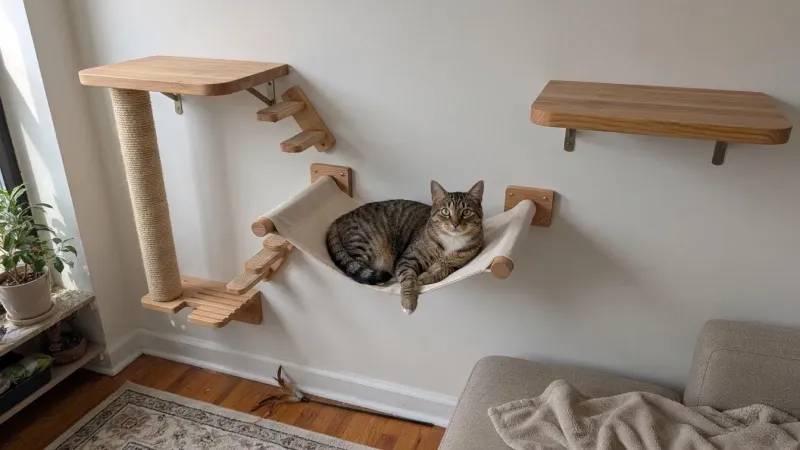
Designed for households with two or more large cats, this interconnected layout pairs two 24-inch lounging shelves, a vertical sisal post, and a central steel-framed hammock. Every component ties into wall studs across a 6-foot span, ensuring two big cats can pass each other without crowding or jostling.
How to Measure and Space Shelves for Large Cats
Large cats have longer spines and heavier joints than average 10-pound cats, which changes how you should plan your wall layout. Keep vertical jumps between 12 and 16 inches so your cat can step or hop smoothly without straining their shoulders or hips on the way down.
- Platform Depth: Aim for at least 12 to 14 inches of depth so a broad-chested cat can turn around without slipping off the edge.
- Lounging Length: Choose primary napping perches that measure 24 inches or longer so your cat can stretch out fully.
- Stud Spacing: Most residential walls have wood studs spaced 16 inches apart on center, though many newer homes and interior partition walls use 24-inch stud spacing; measure your actual stud layout before buying fixed-width brackets engineered to hit two studs at once.
If you also want floor-level options alongside your wall setup, compare modern cat trees built to stay stable for large cats to give heavy seniors an easy ground-floor alternative.
Installation Mistakes That Cause Wall Cat Trees to Fail
Even a thick hardwood shelf will fail if the hardware behind it is weak. Never rely on plastic drywall anchors for any perch meant to hold a cat over 15 pounds.
- Skipping the Stud Finder: Always locate the center of the wood stud and drive 2.5-inch or 3-inch structural lag screws directly into the framing.
- Ignoring Dynamic Load: A static weight rating of 30 pounds can fail when a 20-pound cat leaps from across the room; look for assemblies rated for 50 pounds or more.
- Leaving Smooth Wood Bare: Polished wood offers zero claw traction for heavy paws, so always add replaceable carpet treads, sisal pads, or cork mats.
For tighter hallways or awkward room layouts, check out corner wall mounted cat trees for narrow hallways that anchor into intersecting corner framing for extra rigidity.
Building a safe vertical territory for a cat over 15 pounds comes down to matching solid wood shelves with true stud-mounted hardware and generous platform depths. Measure your wall studs before buying, keep vertical jumps comfortable for heavy joints, and add non-slip traction pads so your big cat can climb confidently every day.
Sources: International Cat Care
Frequently asked questions
How much weight should a wall mounted cat tree hold for a large cat?
Look for wall shelves rated to hold at least 50 to 65 pounds. When a 15- to 25-pound cat leaps upward or drops down onto a platform, the sudden impact creates dynamic force much higher than their resting body weight.
Can I mount a heavy duty cat shelf using drywall anchors?
No, standard drywall anchors can pull loose or bend under the weight of a large cat jumping. Always anchor brackets directly into wooden wall studs using 2.5-inch or 3-inch structural lag screws for safe, long-term support.
What shelf depth is best for cats over 15 pounds?
Choose platforms at least 12 to 14 inches deep and 20 to 24 inches long. Extra depth allows broad-shouldered breeds like Maine Coons and Ragdolls to turn around, stretch out, and sleep comfortably without slipping off.
How far apart should I space wall cat shelves for a heavy cat?
Space vertical steps 12 to 16 inches apart in a staggered pattern. Shorter vertical jumps protect your large cat's joints, shoulders, and spine from high-impact landings while making climbing easier as they age.

Nathan Brooks
Nathan Brooks runs Farmingzoom to help loving pet owners create safe, enriching homes for their animals. He cares deeply about responsible pet care and focuses on making everyday decisions simpler for fellow owners.…