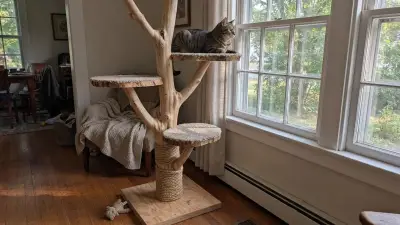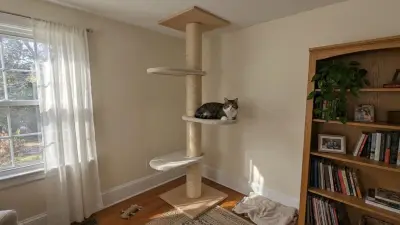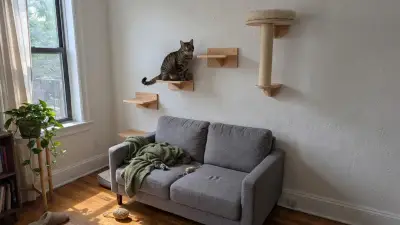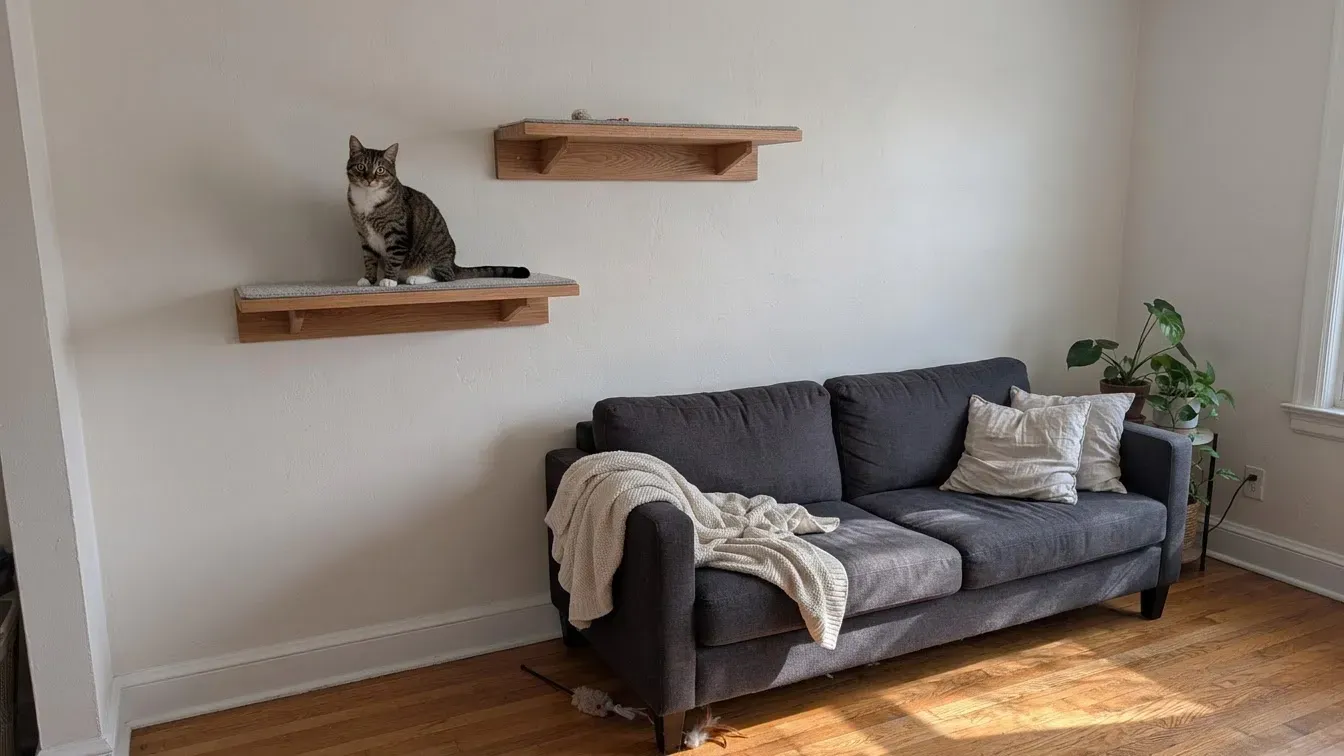
Wall-mounted cat trees mounted at least 48 to 54 inches above the floor keep resting cats completely out of a toddler's reach while eliminating tip-over hazards. Traditional floor towers invite young children to climb the lowest platforms and tug on tails during naptime, creating stress for pets and fall risks for kids.
By shifting vertical territory onto wall studs and using adult-height furniture as launch pads, you create a secure, child-free zone where your cat can sleep, watch the room, and feel relaxed in a busy family home.
1High-Entry Wall Perches Above a Tall Sofa
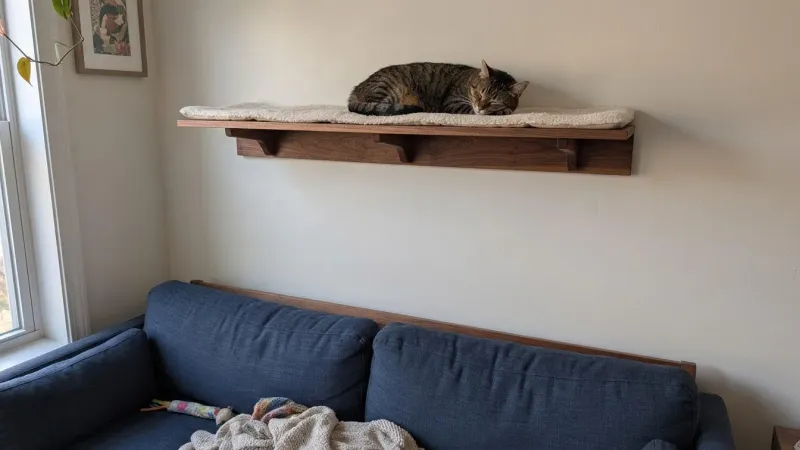
Mount a staggered set of carpeted wall shelves starting at least 36 to 48 inches above the backrest of a full-size sofa—or above a taller, unclimbable piece of furniture—so a toddler standing on the cushions cannot reach the cat. Adult cats can easily hop from an adjacent high perch or bookshelf onto the first shelf, while toddlers cannot bridge the vertical gap or climb up without assistance. Keep the sofa pulled a couple of inches from the wall if needed so little hands cannot reach up to the lowest bracket.
2Floating Bookcase-to-Wall Cat Bridge
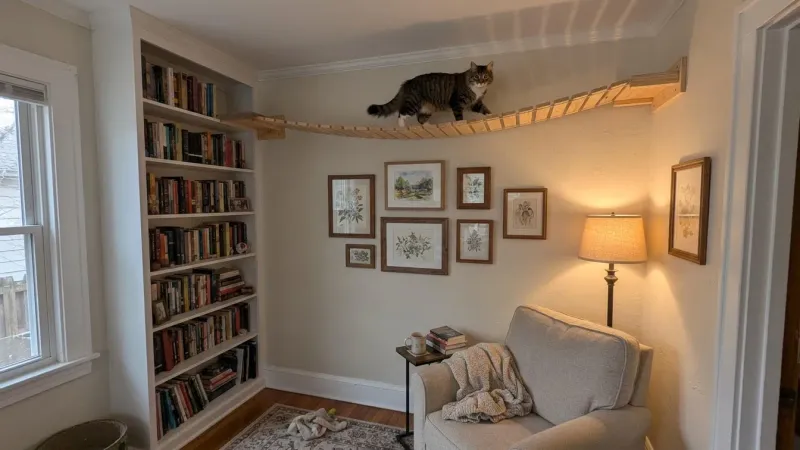
Place a sturdy, anchored 5-foot bookcase against the wall and mount a wooden cat bridge extending horizontally from the top shelf to a high corner hammock. Your cat uses the anchored bookcase to reach the ceiling-level walkway, removing any need for low wall steps near the floor. Always secure the bookcase itself to wall studs with anti-tip straps so toddlers cannot pull it forward.
3Over-the-Doorway Cat Highway
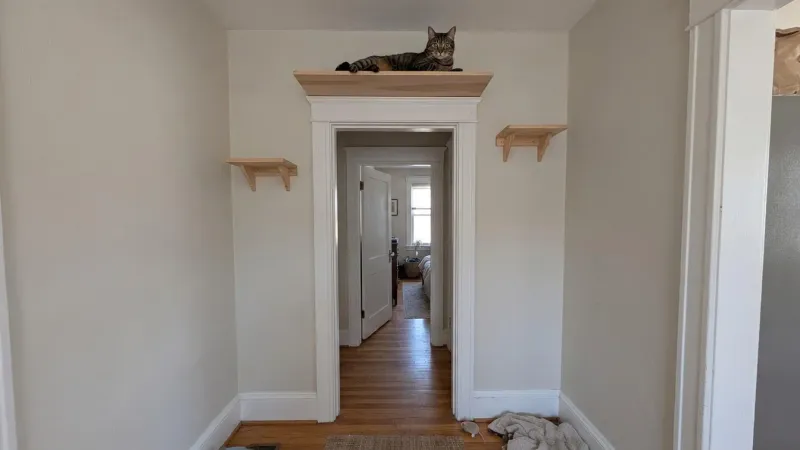
Install deep, non-slip wall shelves along both sides of a room leading up to a wide header shelf mounted directly above a standard 80-inch doorframe. Cats love surveying busy rooms from the highest vantage point, and an 84-inch perch is completely unreachable for young children. Leave at least 12 inches of clearance between the top shelf and the ceiling so large cats can sit upright comfortably.
448-Inch Clearance Corner Climbing Steps
Position a vertical column of corner-mounted floating steps with the very bottom step placed 48 inches off the floor. Most healthy adult cats can jump 4 feet from a standstill onto a wide, carpet-topped platform, whereas toddlers cannot reach or pull themselves onto that height. Space the remaining steps 12 to 14 inches apart vertically to create an easy spiral climb toward a high ceiling perch.
5High Window-Frame Hammock Setup
Mount a canvas or plush wall hammock beside the upper sash of a living room window, well above the lower sill where toddlers like to stand and look outside. Use a launch point that toddlers cannot climb onto—such as a 48-to-54-inch anchored bookcase with no lower footholds—positioned with a horizontal gap that only an adult cat can jump. Your cat gets warm afternoon sun and birdwatching without sudden interruptions.
6Wall-Mounted Sisal Scratching Post Above Baseboard
Skip floor scratching posts that toddlers can topple and mount a 36-inch vertical sisal-wrapped post onto a wall stud starting at least 48 inches above the floor—or relocate it behind a baby gate. Cats can reach up to stretch and scratch from a tall anchored bookcase or sturdy piece of furniture, while the mounted post stays firmly bolted in place. Ensure no loose sisal strings dangle below the bottom wooden end cap.
7Gated Hallway Vertical Cat Wall
If you already use pressure-mounted or hardware-mounted baby gates to block off a hallway or home office, install a full wall-mounted cat tree system inside that gated zone. Because toddlers cannot enter the hallway, you can place lower starter steps for older cats or kittens while keeping the upper lounges high. This setup works especially well in compact apartments with limited floor space.
8High-Mounted Enclosed Cat Condo Cube
Bolt a solid wood wall cube with a single round entry hole 60 inches above the floor, lined inside with a washable fleece pad. Shy cats often feel overwhelmed by toddler noise and sudden movements, and a high enclosed hideaway blocks both visual chaos and little hands. Face the entry hole toward a connecting high shelf rather than open air so your cat can step inside safely.
9Mantel-to-Wall Floating Shelf Run
Use a sturdy fireplace mantel—only when the fireplace is completely unused or safely blocked off—as a mid-level landing leading up to two high wall perches. Keep the mantel clear of breakable decor and mount the cat shelves 16 inches higher on the adjacent wall. Toddlers cannot climb a flat wall below a 50-inch mantel, giving your cat a quiet elevated route across the living room.
10Behind-the-Desk Home Office Cat Wall
Install a staggered trio of wide wooden cat shelves on the wall directly behind an adult desk inside a baby-gated home office, or remove any chair-to-desk climbing path so toddlers cannot climb up to the shelves. Cats jump from the desktop onto the wall perches, staying safely out of a toddler's reach. Tuck all computer cables inside rigid cord covers so neither your cat nor your child can chew or tug on wires.
11Ceiling-Hung Rope Bridge Between High Shelves
Connect two 65-inch-high wall platforms with a slatted wood and sisal rope suspension bridge anchored into ceiling joists or wall studs. Because the bridge hangs nearly 6 feet above the ground, toddlers cannot grab the ropes or swing from the slats. Keep the rope tension tight so the bridge sways gently without tipping your cat off balance.
12Nursery-Adjacent High Corridor Perches
Mount a sleek row of felt-lined wall shelves 66 inches high along the wall outside your child's bedroom door. Cats often want to stay near family members during bedtime routines without being petted roughly by sleepy toddlers. Felt lining dampens claw clicks and landing thuds so your cat can come and go silently during naptime.
13Kitchen Upper-Cabinet Cat Walkway
If your kitchen cabinets stop 15 to 18 inches below the ceiling, mount two sturdy wall steps above a tall refrigerator or pantry cabinet to give your cat access to the cabinet tops. Add a non-slip rubber mat along the cabinet surface so your cat has firm traction far above kitchen foot traffic. Keep all toxic foods, onions, garlic, and cleaning supplies locked in lower cabinets.
14Double-Stud Heavy-Duty Perches for Large Cats
Larger breeds like Maine Coons need wide 18-by-24-inch wall platforms anchored into two adjacent wall studs spaced 16 inches apart. Mount the lowest platform at least 50 inches high and pair it with a solid wood storage chest at least 36 to 42 inches tall with smooth, foothold-free sides—or keep a clear vertical gap of at least 36 inches between the top of the chest and the 50-inch perch—so heavy cats have a broad, stable launch pad without a toddler being able to reach the cat. For extra reinforcement tips, see our guide on keeping cat furniture sturdy for large cats.
15Built-In Bookshelf High Cat Cubby
Clear out the top two shelves of a floor-to-ceiling built-in shelving unit, cut an internal pass-through opening between compartments, and line the floor with carpet tiles. The lower shelves stay filled with books or closed storage bins so toddlers have no footholds to climb upward. Your cat reaches the top cubby from an adjacent high wall step mounted out of reach.
16Low-Impact High Shelves for Senior Cats
Older cats still need refuge from toddlers, even if they can no longer leap 4 feet straight up from the floor. Set up your senior cat ramp inside a baby-gated room or hallway, starting your wall-mounted ramp at 52 inches above the floor using low-rise steps or sturdy furniture so older cats can climb without giving toddlers a stepped climbing path. Wide, carpeted ramps angled at 30 degrees let senior pets walk comfortably up to high resting spots without straining stiff joints.
17Two-Cat High Corner Lounge
In multi-cat homes, mount two separate 60-inch-high corner beds on opposite walls connected by an overhead walkway so one cat cannot trap the other when a toddler enters the room. Providing two exit routes prevents territorial standoffs and keeps both cats calm during active playtime. Choose smooth, sealed wood finishes that wipe clean easily and pair well with gentle cats living with toddlers.
Anchoring and Safety Checks for Family Homes
High wall-mounted perches only stay safe when anchored directly into solid wood wall studs or masonry using heavy-duty lag bolts. Drywall anchors alone can pull free under the dynamic weight of a leaping cat or a toddler tugging on a low hanging sisal rope.
Check every bracket, screw, and carpeted pad monthly for loosening or fraying, and avoid dangling toys or cords that hang within a child's reach. If your cat suddenly refuses to jump onto high shelves or shows signs of joint stiffness, schedule a visit with your veterinarian to rule out arthritis or pain before lowering their perches.
Raising your cat's vertical territory to at least 48 inches off the floor protects both your pet and your toddler from preventable accidents. Start by choosing one quiet wall anchored into solid studs, add a high furniture launch point, and give your cat a few days with treats to discover their new child-free sanctuary.
Sources: International Cat Care · ASPCA · Cornell Feline Health Center
Frequently asked questions
How high should wall-mounted cat shelves be to stay safe from toddlers?
Mount the lowest wall shelf at least 48 to 54 inches above the floor so toddlers cannot reach or climb onto it. Let your cat reach that first shelf by jumping from a nearby adult-height anchored bookcase, tall smooth-sided chest, or gated furniture.
Can I mount cat shelves into drywall without hitting wall studs?
No, standard drywall anchors cannot safely hold the sudden impact of a jumping cat or a child pulling on a shelf. Always drive lag bolts directly into solid wood wall studs or masonry anchors into brick or concrete.
How do senior cats or kittens reach high toddler-safe cat walls?
Kittens under six months and senior cats with stiff joints should not make big vertical jumps. Create gradual, low-rise steps using sturdy furniture inside a baby-gated room, or ask your vet for safe mobility advice.
What materials are safest for wall-mounted cat trees around young children?
Choose solid hardwood or birch plywood finished with zero-VOC, non-toxic sealants, paired with tightly woven sisal or low-pile carpet. Avoid loose hanging ropes, small detachable toys, or unstable particleboard that can splinter or pose choking hazards.

Nathan Brooks
Nathan Brooks runs Farmingzoom to help loving pet owners create safe, enriching homes for their animals. He cares deeply about responsible pet care and focuses on making everyday decisions simpler for fellow owners.…