Time needed
45 min
What you need
- Cat's existing litter box and litter scoop
- Unwashed blanket or worn shirt from the previous home
- Familiar cat litter (same brand and texture)
- Regular wet cat food and dry kibble
- Plain, onion-free and garlic-free chicken broth
- Synthetic feline pheromone diffuser refill
Tools
- Existing litter box and scoop
- Two shallow, wide food and water bowls
- Covered cat bed or open pet carrier
Even a bold, outgoing cat can hide, refuse food, and skip the litter box during the first 24 hours in a new house. Unlike dogs, cats rely heavily on familiar territory and scent markers to feel safe, so an unpacked home full of strange smells triggers an immediate survival freeze.
You can break this stress cycle quickly by shrinking your cat's territory, restoring familiar scents, and adjusting how you serve meals. Follow these practical steps right after moving to get your cat eating, drinking, and using the litter box again.
- 1
Set Up a Quiet Safe Room Immediately
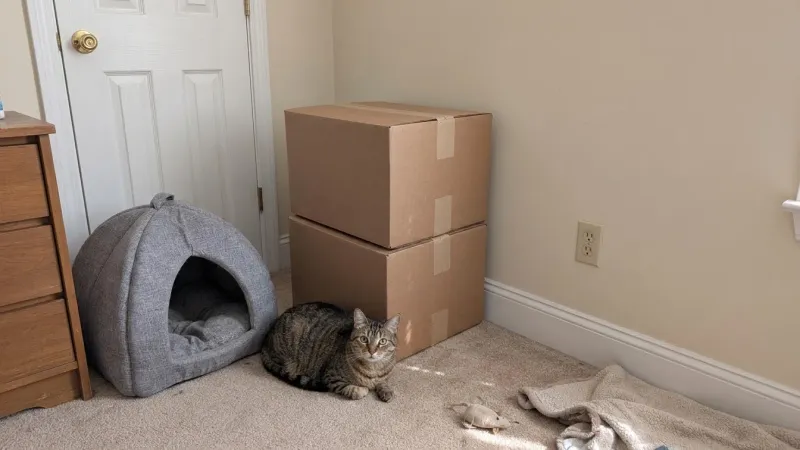
Choose one small, quiet bedroom or bathroom away from front door traffic and unpacking noise. Close the door so your cat only has to map a single room instead of an entire unfamiliar house. Keep windows shut, blinds partially drawn, and loud appliances off while your cat settles in.
- 2
Place Familiar Scent Items Near Resting Spots
Unpack an unwashed blanket, cat bed, or worn sweatshirt from your old home and place it in a covered corner or open carrier. Familiar scents signal safety to a stressed cat faster than visual cues. Avoid washing your cat's bedding during moving week so those comforting pheromones stay intact.
- 3
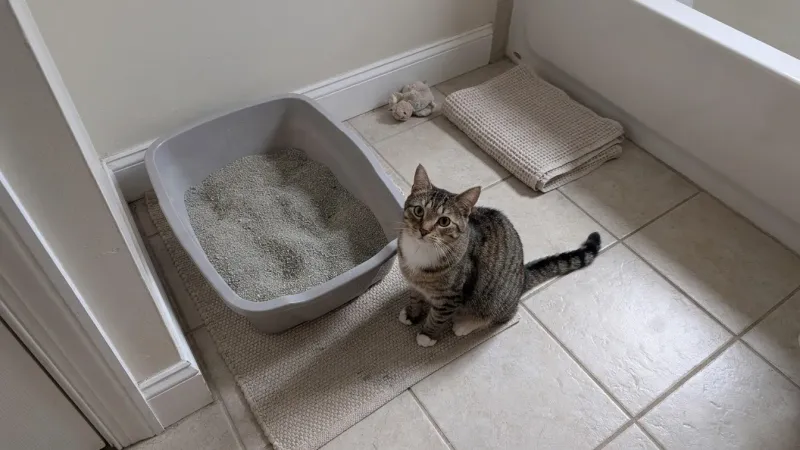
Position the Litter Box Properly
Clean and dry your cat's existing litter box before packing or keep it hygienic during transit, then fill it with the exact same brand and depth of litter used before the move. Transfer just a small clean clump of used litter on top so your cat recognizes the familiar scent without being deterred by strong odor. Place the box in a quiet corner at least six feet away from food and water bowls.
- 4
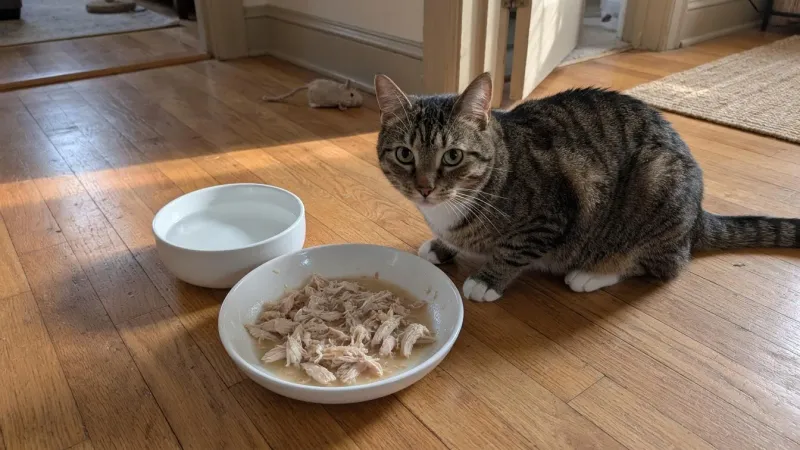
Offer Warm, Aromatic Food in Privacy
Serve your cat's regular wet food warmed in a microwave-safe dish for five to ten seconds, then stir thoroughly and test with a finger to ensure it is only lukewarm before serving so the aroma travels easily without risking hot spots, or drizzle a spoonful of plain, onion-free chicken broth over their kibble. Use shallow, wide dishes to prevent whisker fatigue. Leave the room quietly for thirty minutes so your cat can eat without feeling watched.
- 5
Encourage Hydration With Multiple Water Stations
Place two wide ceramic or stainless steel water bowls in different spots within the safe room, well away from the litter tray. Stress reduces thirst, and dehydration quickly slows digestion and urination. If your cat prefers running water, plug in their familiar pet fountain.
- 6
Plug In a Synthetic Feline Pheromone Diffuser
Insert a synthetic feline facial pheromone diffuser into an unobstructed wall outlet inside the safe room. These odorless diffusers mimic the natural cheek-rubbing markers cats leave on safe territory, helping lower heart rate and curb pacing or crying when you step out.
- 7
Keep Your Visit Calm and Low-Pressure
Sit quietly on the floor inside the safe room for short ten-minute sessions without forcing your cat out from under the bed or furniture. Let them approach and sniff your hand on their own schedule. Stick closely to your pre-move feeding and playtime hours to rebuild predictability.
- 8
Expand Territory Gradually After Two Normal Meals
Wait until your cat eats two regular meals and uses the litter box normally before opening the safe room door. Let them explore one adjoining hallway or room at a time while keeping the safe room open as a retreat. For multi-cat moves, bonded cats who get along well can share a larger safe room together, while only cats with tension or unknown dynamics should be separated initially until both eat and eliminate normally.
When to Call a Veterinarian
Mild appetite loss for 12 to 24 hours is a common reaction to relocation stress, especially in adult cats adjusting to a downsized apartment or a new household. However, going too long without calories puts cats at serious risk for hepatic lipidosis, a dangerous liver condition triggered when the body breaks down fat reserves too rapidly.
- Food refusal past 24 to 36 hours: Contact your vet if your cat eats nothing at all after a full day and a half, or sooner if you have a young kitten, a senior cat, or an overweight pet.
- No urination for 24 hours: Stress can trigger feline idiopathic cystitis or urinary blockages, particularly in male cats. Straining in the box without producing urine is a medical emergency.
- Additional physical signs: Seek immediate care for vomiting, diarrhea, lethargy, open-mouth breathing, or sudden hiding paired with hunched posture.
This guide addresses normal behavioral stress and never replaces a veterinary exam when physical illness is possible.
Common Mistakes That Delay Adjustment
Well-meaning owners often prolong moving stress by giving a confident cat full run of the house on day one. Large, echoey spaces filled with unpacking noise overwhelm a cat's senses and make them hold their urine rather than cross an unfamiliar hallway.
Avoid switching food brands, litter textures, or box styles during moving week, even if you bought new gear for the house. Keep toxic moving-day hazards like lilies, pothos plants, string, foam packing peanuts, and chemical cleaners locked away, as anxious cats sometimes chew non-food items when stressed. If you are moving into a smaller layout, place litter boxes away from noisy washers, dryers, and HVAC units so loud cycles do not startle your cat away from the tray.
Shrinking your cat's world to one quiet, familiar-smelling room gives a overwhelmed pet the control they need to relax. Once eating, drinking, and litter box habits return to normal over the first two days, you can open up the rest of your new home room by room at your cat's pace.
Sources: Cornell Feline Health Center · International Cat Care · ASPCA · VCA Animal Hospitals
Frequently asked questions
How long is it normal for a cat not to eat after moving?
Many cats skip meals for 12 to 24 hours after arriving in a new home due to acute relocation stress. If your cat refuses all food for more than 24 to 36 hours, call your veterinarian promptly, as prolonged fasting can trigger serious liver complications.
Why is my cat crying and acting clingy after moving?
Moving erases all of your cat's familiar scent markers, leaving them disoriented when you leave for work or step into another room. Vocalizing and pacing are normal stress responses that usually ease within a few days once you establish a quiet safe room and consistent daily routine.
Should I put my cat in the litter box after moving?
Avoid picking up a stressed cat and placing them inside the litter box, as forced handling can create a negative association with the tray. Instead, confine your cat to one small room where the familiar box sits in plain sight a few feet away from their hiding spot.
How long does it take a confident cat to adjust to a new house?
Most confident adult cats start eating and using the litter box within 24 to 48 hours when given a quiet safe room, and feel comfortable across the full house within one to two weeks. Kittens often bounce back faster, while senior cats or multi-cat households may need three to four weeks.

Nathan Brooks
Nathan Brooks runs Farmingzoom to help loving pet owners create safe, enriching homes for their animals. He cares deeply about responsible pet care and focuses on making everyday decisions simpler for fellow owners.…