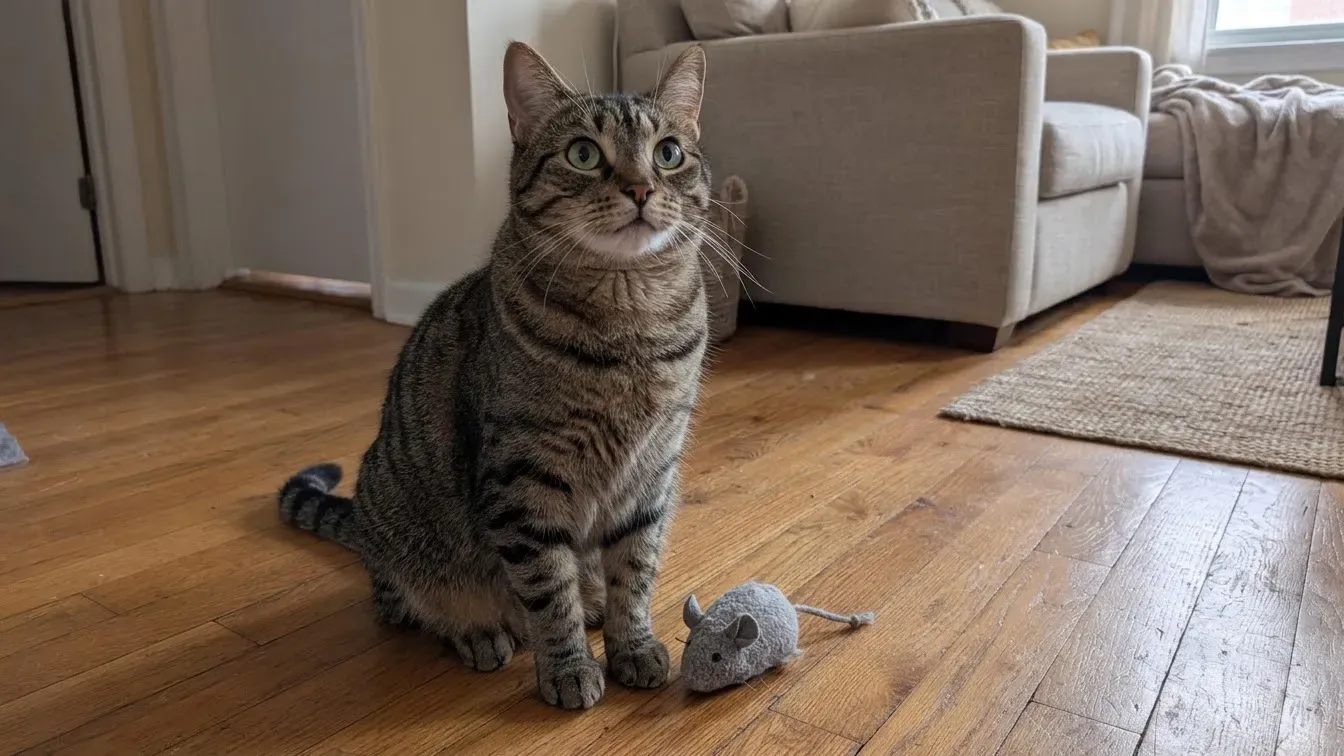
When your cat drops a crumpled foil ball at your feet and trails you from the kitchen to the hallway, it is sharing a prized catch, asking for interactive play, or seeking reassurance from its favorite person. For solo owners living alone with an indoor cat, you are your pet's entire social circle, hunting partner, and safe harbor.
Understanding the difference between a proud gift, midday boredom, and clingy anxiety helps you respond in ways that build lasting trust. Below, you will learn what drives this endearing habit, how to tell if your cat is deeply bonded to you, and when shadowed footsteps point to stress.
Why Does My Cat Bring Me Toys?
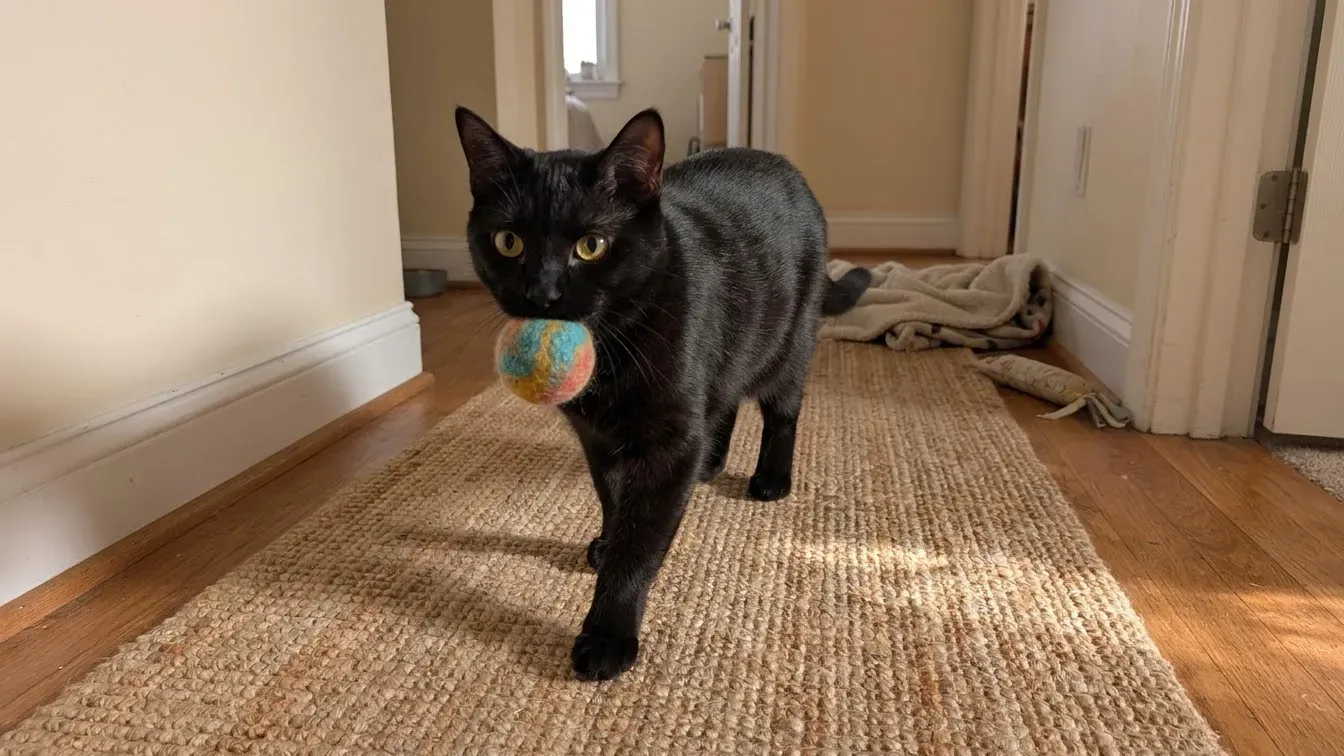
Domestic cats retain the exact predatory wiring of their wild ancestors, even when their meals arrive in a ceramic bowl. When an indoor cat stalks, pounces on, and carries a plush mouse across the living room, it is completing the natural hunt-catch-kill sequence. Dropping that toy beside your chair is an extension of social feline behavior.
- Sharing a prized catch: In feline colonies, skilled hunters bring prey back to safe territory to share with family members or teach kittens how to hunt. Since you never catch mice yourself, your cat may view you as a beloved housemate who needs a little help securing dinner.
- Asking you to guard the prize: Carrying a toy to your feet and walking away often means your cat trusts you to watch over its possession until it is ready to play or rest again.
- Inviting you to play: If your cat drops a wand attachment or crinkle ball and stares expectantly, it is initiating an interactive game.
- Maternal or carrying instincts: Some cats carry soft toys in their mouths while letting out muffled meows, treating the object almost like a kitten and moving it to a secure spot near you.
Why Your Cat Follows You From Room to Room
In a single-person household, an indoor cat's daily routine revolves around one human. Without other pets or family members moving through the home, your footsteps represent the primary source of stimulation, food, and comfort. Trailing you into the bathroom or sitting beside your desk is usually a sign of strong social attachment rather than a behavioral issue.
Cats are naturally territorial patrol animals that like to monitor changes in their environment. When you stand up and walk down the hall, you trigger their curiosity. Combining toy delivery with constant shadowing typically happens when your cat wants to keep its favorite resource—you—and its favorite possession together in the same room. Young cats and high-energy breeds like Siamese, Bengal, and Abyssinian mixes tend to shadow their owners most persistently, whereas senior cats may follow you simply to stay close to a warm lap.
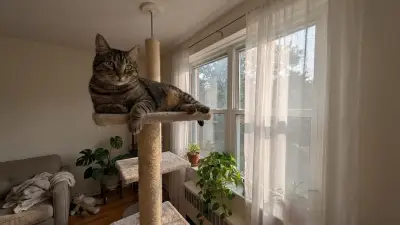
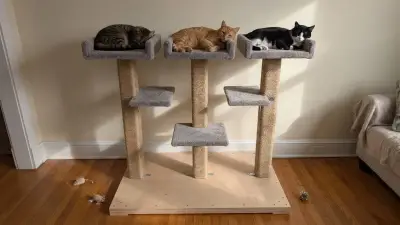
If you live in a compact home where your cat constantly weaves underfoot, adding vertical territory helps give them an elevated lookout spot in each room. Exploring modern wall-mounted cat trees for your living room allows your cat to keep eyes on you from above without blocking your path.
Hunting Gift, Boredom, or Separation Anxiety? How to Tell
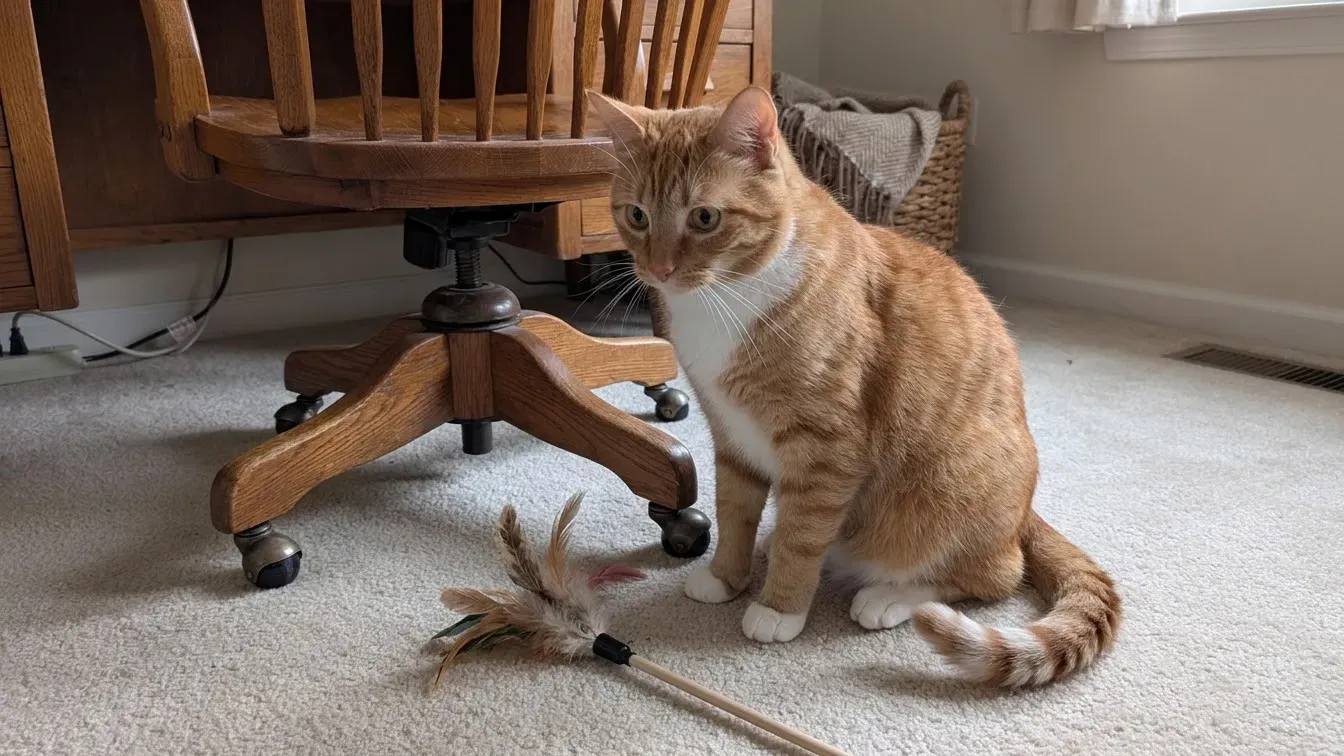
Because toy carrying and room-to-room following look similar on the surface, watching your cat's body language reveals the true motivation behind the behavior. Solo owners can use the comparison below to tell healthy affection apart from unmet stimulation or stress.
| Motivation | What You Will See | Body Language & Vocal Cues |
|---|---|---|
| Hunting Gift & Trust | Drops toy near your feet or bed, then sits calmly nearby or grooms itself. | General signs of contentment, including slow blinks, relaxed posture, and an upright tail with a gentle curve at the tip. |
| Boredom & Play Drive | Places toy in front of you, paws at your leg, or bats the toy toward your hand. | Dilated pupils, forward-tilted whiskers, chirps, trills, or playful crouch. |
| Separation Anxiety | Paces restlessly, follows closely at departure cues, and cries or vocalizes when you prepare to leave or step out of sight. | Flattened or sideways ears, tense posture, urgent yowling, or distress vocalization when separated. |
If your cat only brings toys during your evening wind-down and settles happily afterward, you are seeing healthy bonding and pent-up hunting energy. If the behavior escalates into frantic pacing whenever you step out of sight, your cat is struggling with solo confinement.
How to Tell If Your Cat Is Deeply Bonded to You
Cat owners often wonder if trailing behavior means their pet has formed a primary attachment to them. While cats do not imprint on humans the way newly hatched birds do, they form powerful, selective social bonds with their main caregiver—especially when living one-on-one.
Look for these clear indicators of deep feline trust:
- Sleeping near your scent: Your cat chooses your pillow, freshly worn sweater, or the spot right next to your legs for deep, vulnerable sleep.
- Slow blinking across the room: When you make eye contact, your cat narrows its eyelids slowly and looks away peacefully, signaling zero threat.
- Head-bunting and cheek rubbing: Pressing its forehead or cheeks against your ankles or hands transfers facial pheromones that mark you as safe family.
- Choosing your company over empty rooms: Even when food bowls are full, your cat relocates its toys to whichever room you occupy so you remain in its line of sight.
Understanding subtle posture cues makes these daily interactions even clearer. Reviewing cat sleeping positions in a home office can help you read how relaxed your cat truly feels while keeping you company during the workday.
How to Respond When Your Cat Drops a Toy at Your Feet
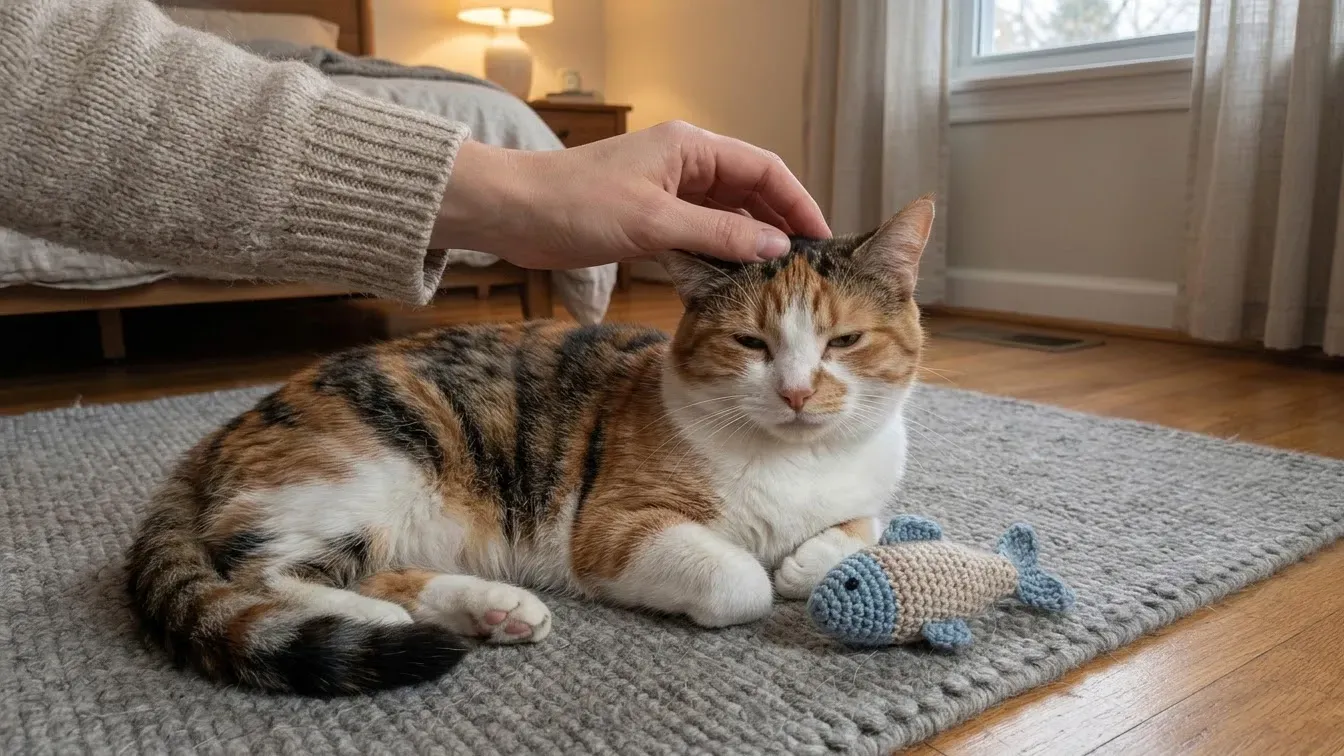
How you react in the first five seconds after your cat delivers a toy shapes whether it feels rewarded or rejected. Never laugh loudly, scold your cat, or toss the toy straight into a closet, as sudden noise or dismissal interrupts a natural social ritual.
- Offer immediate, calm praise: Speak in a warm, gentle tone using your cat's name, and offer a brief scratch behind the ears or under the chin if your cat welcomes touch.
- Accept the gift briefly: Pick up the toy to acknowledge its effort before setting it down or starting a game.
- Launch a 5-to-10-minute play session: Use a wand toy or toss the plush mouse across the floor so your cat can chase it. Always let your cat catch the toy several times before ending the game so the hunting cycle feels complete.
- Finish with a small meal or treat: Serving dinner or a few kibble pieces right after vigorous play mimics the natural wild sequence of hunt, catch, eat, and sleep.
If you are busy working when your cat drops a toy, spend just 60 seconds tossing it twice, then rotate in a puzzle feeder so your cat stays occupied without feeling ignored.
Toy Safety and Enrichment Tips for Solo Indoor Cats
Cats that love carrying toys in their mouths need safe objects designed for chewing and hauling. Inspect plush mice and crinkle balls weekly for loose parts that could be swallowed, and always store wand toys (including feather wands and string toys) in a closed drawer or closet immediately after interactive play rather than leaving them out.
Avoid leaving string, yarn, ribbon, rubber bands, or tinsel out where your cat can access them unsupervised. Linear objects can cause life-threatening intestinal blockages if ingested, and small plastic eyes or bells glued onto cheap toys pose a choking hazard. Stick to sturdy fleece mice, thick felt balls, and catnip-filled kickers large enough that they cannot fit entirely inside your cat's mouth.
To prevent midday boredom while you are away at work, store half of your cat's toys in a closed bin and swap three or four pieces every few days. Pairing toy rotation with solutions for cat behavior problems in small apartments keeps solo indoor cats mentally sharp and less reliant on constant human entertainment.
Red Flag Behaviors: When to Call Your Veterinarian
Normal toy carrying and room-to-room following are cheerful, predictable parts of daily life. However, sudden changes in vocalization, obsession with non-toy objects, or distress signal an underlying medical or behavioral concern that warrants a veterinary exam.
Schedule a checkup if you notice any of these warning signs:
- Loud, disoriented yowling at night: Carrying a toy while crying mournfully in the dark—especially in cats over 10 years old—can indicate feline cognitive dysfunction, high blood pressure, or hyperthyroidism.
- Chewing or swallowing non-food items: Repeatedly chewing and ingesting non-food items such as plastic, fabric, or string (a condition called pica—distinct from wool-sucking, which involves sucking on wool or fabric without swallowing it) requires medical evaluation to rule out nutritional deficiencies or gastrointestinal disease.
- Destructive panic when left alone: Scratching doorframes until paws bleed, eliminating outside the litter box, or refusing to eat while you are away points to clinical separation anxiety.
- Sudden clinginess paired with lethargy or hiding: A previously independent cat that abruptly shadows you while eating less or vocalizing in pain may be seeking comfort because it feels unwell.
Never give human anxiety medications or unprescribed supplements to calm a vocal cat; your veterinarian can rule out pain and recommend safe behavioral support.
When your indoor cat drops a toy beside your feet and trails you from room to room, it is treating you as its trusted partner and favorite companion. Respond with warm praise, short bursts of interactive play, and safe, rotated toys, and contact your veterinarian if the habit ever shifts into frantic crying or sudden clinginess.
Sources: Cornell Feline Health Center · ASPCA · International Cat Care · VCA Animal Hospitals
Frequently asked questions
Why does my cat meow loudly while carrying a toy in its mouth?
Cats often vocalize with a toy in their mouth to announce a successful hunt, call you over to admire their catch, or express mild frustration when they want interactive play. In older cats, loud night yowling with a toy can be linked to vision loss or cognitive changes, so mention new nighttime crying to your vet.
Should I throw the toy when my cat brings it to me?
Yes, if your cat looks alert with forward ears and dilated pupils, tossing the toy gently across the floor invites a fun game of chase or fetch. If your cat drops the toy calmly and walks away to rest, simply praise it softly and leave the toy nearby so it feels its gift was accepted.
Do indoor cats get lonely when living with a single owner?
Indoor cats can become bored or lonely when left alone for long stretches without stimulation, which often leads to extra shadowing and toy delivery once you return home. Providing window perches, food puzzles, and two 10-minute interactive play sessions daily keeps solo cats emotionally balanced and content.
Why does my cat drop toys in my bed while I am sleeping?
Your bed smells strongly of you and represents the safest place in the home. Bringing toys onto your mattress means your cat wants to store its prized possessions in shared territory or hopes to initiate play as soon as you wake up.

Nathan Brooks
Nathan Brooks runs Farmingzoom to help loving pet owners create safe, enriching homes for their animals. He cares deeply about responsible pet care and focuses on making everyday decisions simpler for fellow owners.…