You can tell whether your cat is loafing because it is cold or relaxed by looking at muscle tension, paw placement, ear angle, and where your cat chooses to sit. When your cat tucks its paws beneath its chest like a freshly baked loaf of bread, it is either feeling completely safe in its territory or trapping body heat against a chilly floor.
In older rentals with thin window glass, drafts under doors, and lease rules that ban portable space heaters, guessing wrong leaves your cat uncomfortable all winter. Reading a few small physical details lets you know immediately whether your cat is blissed out or trying to stay warm—and shows you how to fix a drafty spot without risking your security deposit.
What the Cat Loaf Pose Actually Is
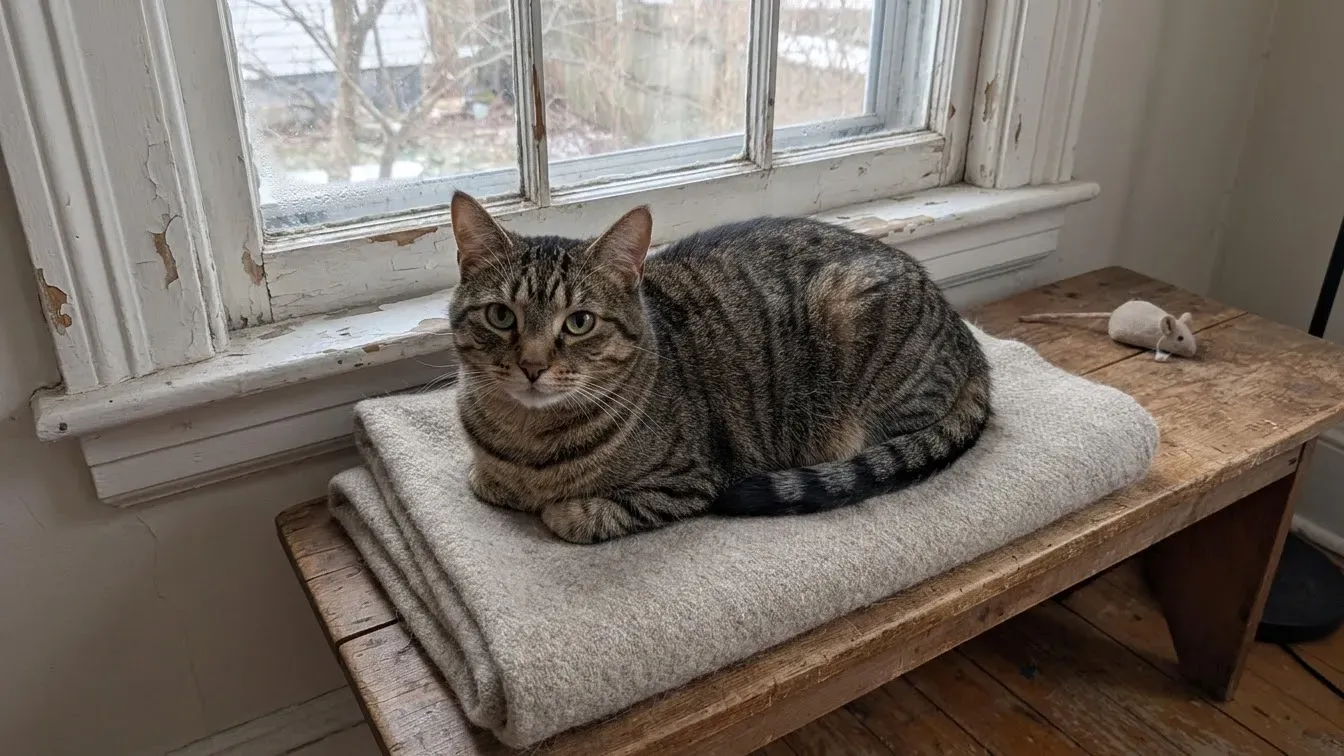
The classic cat loaf happens when a cat sits upright on its belly with its front paws folded neatly underneath its chest, its hind legs tucked tight against its sides, and its tail wrapped cleanly around its body. From above, the silhouette looks smooth, compact, and rounded with no limbs sticking out.
Sometimes a cat does a half-loaf, leaving one front paw slightly visible or resting its chin forward while keeping the rest of its body compact. Every breed does this, from short-haired tabbies to heavy-coated Maine Coons.
Because this posture pins all four legs under the torso, a loafing cat cannot spring away instantly if startled. In the wild, exposed paws and bellies are vulnerable to predators. Choosing to fold those limbs out of sight serves two very different instincts: signaling total trust in a quiet room, or pulling heat-losing extremities close to the core when the air temperature drops.
Signs Your Cat Is Loafing Because It Is Relaxed
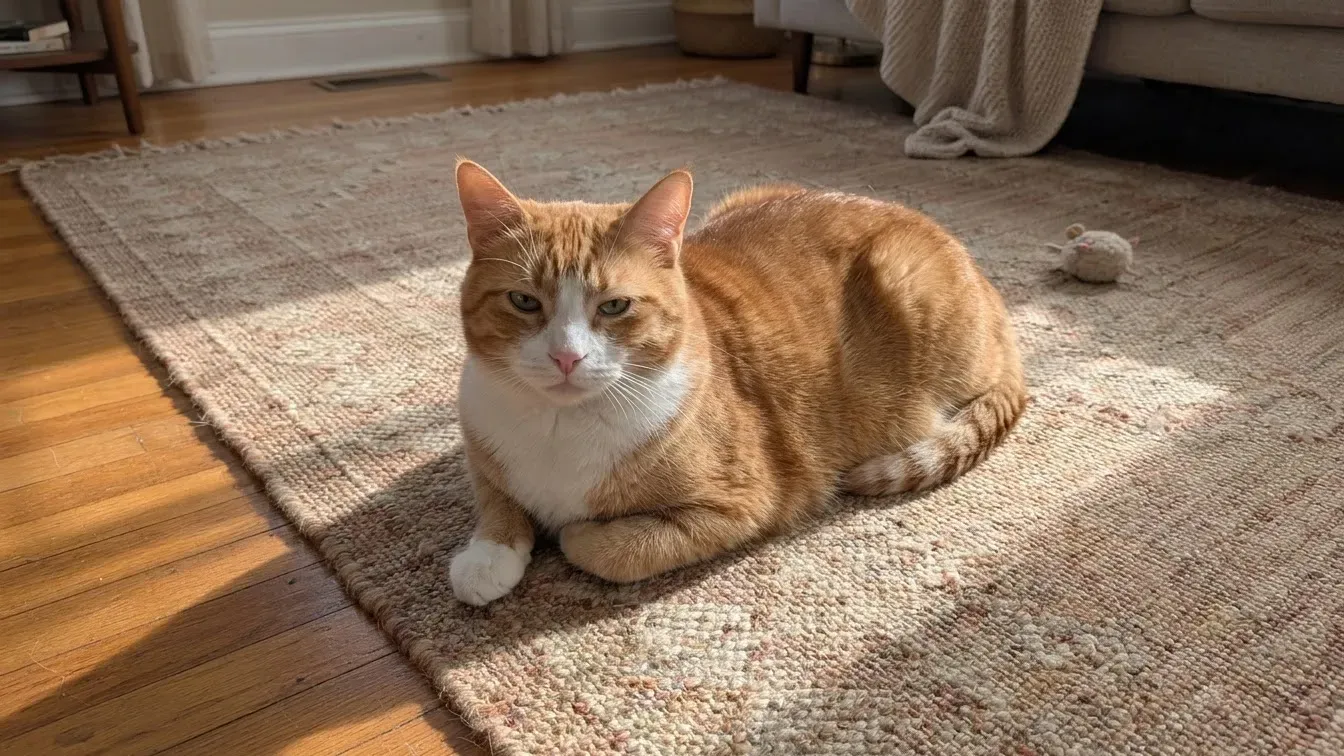
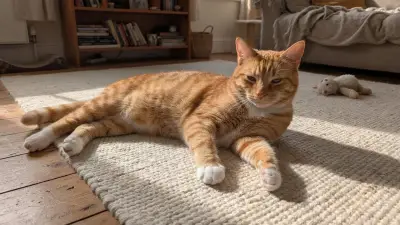
A relaxed loaf looks soft, heavy, and unhurried. Even though your cat is sitting upright rather than sprawled out on its side, every muscle in its face and shoulders remains loose.
- Soft, heavy eyelids: Your cat's eyes are half-closed, blinking slowly, or peacefully shut while its head stays upright.
- Loose paws and partial tucks: One front paw may peek slightly out from under the chest, or the tail rests loosely alongside the hip instead of clamping tight.
- Neutral ears and whiskers: Ears point gently forward or slightly outward in a natural resting position, and whiskers hang relaxed to the sides rather than pulling back against the cheeks.
- Open room placement: A warm, content cat often loafs right in the middle of a rug, on a sofa cushion, or on a sunny desk where air moves freely around it.
If your cat purrs softly when you speak or leans its cheek into your hand without uncurling, the posture is pure contentment. You can also compare this upright rest to other relaxed cat sleeping body language positions to see how your cat's comfort shifts throughout the day.
Signs Your Cat Is Loafing Because It Is Cold
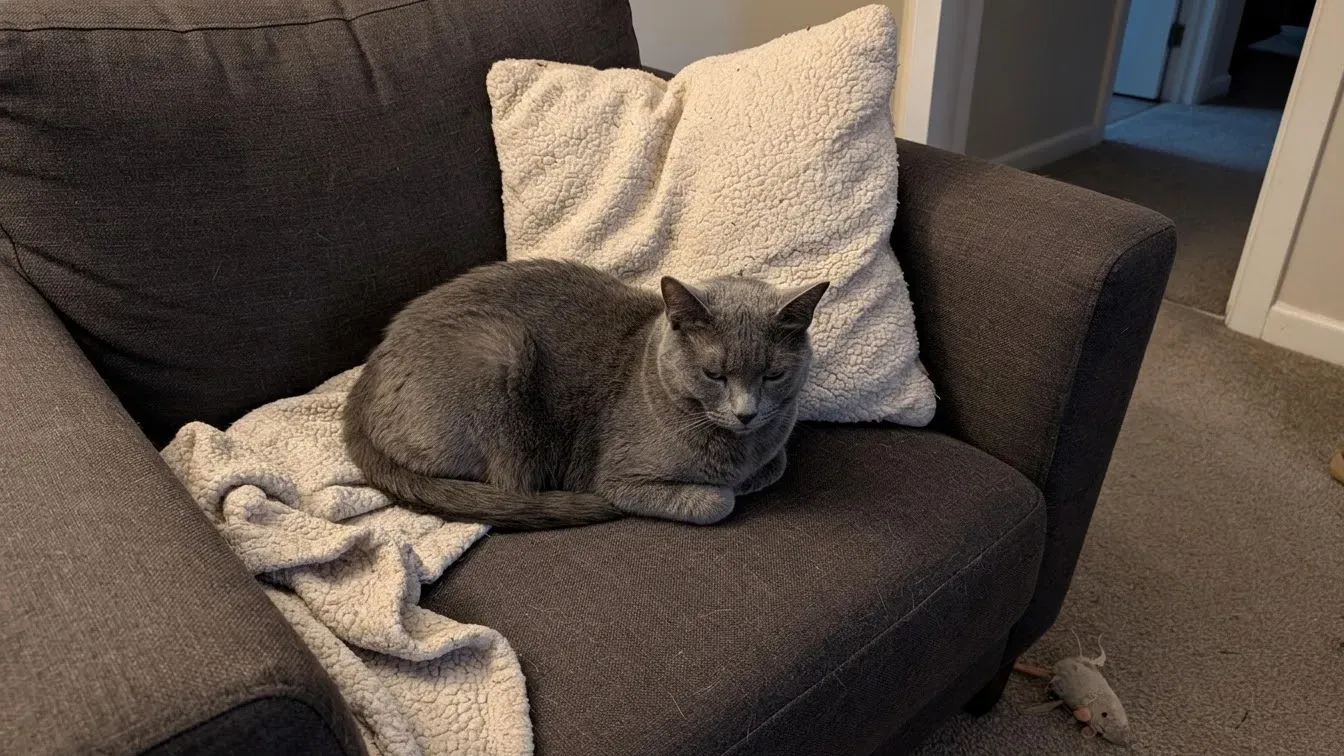
When a cat loafs to conserve warmth, the pose becomes noticeably tighter and more defensive. Paws and lower legs lose body heat faster than the thick fur on a cat's back, so tucking them under the torso acts just like slipping bare hands into coat pockets.
- A tight, hunched outline: The shoulders pull slightly upward, the neck shortens, and the spine rounds more sharply than usual.
- Fully buried paws and clamped tail: Not a single toe shows beneath the chest, and the tail wraps snugly against the flank with the tip tucked in.
- Squinted, tense eyes: Instead of sleepy slow blinks, the eyes stay narrowed in a stiff squint while the cat remains awake and alert.
- Cool ear tips and paw pads: Gently touch the very tips of your cat's ears; if they feel noticeably chilly to your fingers, your cat is working to hold onto core heat.
Watch for secondary cold behaviors too. A chilly cat abandons open floor space to wedge itself against a radiator pipe, burrow under a duvet, curl into a tight nose-to-tail ball, or press firmly against your leg on the couch.
Side-by-Side Comparison: Cold Loaf vs. Relaxed Loaf
When you are trying to decide whether to leave your cat alone or bring out an extra blanket, check these five physical clues together rather than relying on posture alone.
| Body Language Cue | Relaxed Loaf | Cold Loaf |
|---|---|---|
| Body Outline | Plump, loose, and slightly settled into the cushion | Compact, rigid, with slightly hunched shoulders |
| Paw & Tail Tuck | Paws loosely folded; one toe or tail tip may show | Paws buried deep; tail wrapped tightly around body |
| Eyes & Face | Slow blinks, soft eyelids, relaxed cheeks | Tight squint or wide awake, tense facial muscles |
| Spot Selection | Middle of the room, open couch, or low rug | Corners, sunbeams, electronics, or tucked under blankets |
| Response to Touch | Leans into pets, purrs, may stretch a paw out | Stays tightly tucked, seeks your body heat, ears feel cool |
How Age, Coat Type, and Health Change Cold Tolerance
Not every cat in the same apartment feels the chill at the same temperature. While cats' natural thermoneutral zone is higher than humans'—roughly 86°F to 100°F—and experts vary on exact comfort thresholds, most healthy adult cats adapt well to typical indoor room temperatures around 68°F to 72°F, though many prefer slightly warmer spots for napping.
Kittens under six months old lose heat quickly because of their small body mass and still-developing temperature regulation. Senior cats often have thinner muscle mass, slower circulation, or stiff joints that ache when cold air settles near the floor. Hairless breeds like the Sphynx, thin-coated breeds like the Cornish Rex and Siamese, and cats with very low body fat feel drafts long before a plush, double-coated domestic shorthair notices a drop.
Loafing can also signal pain or illness rather than temperature. A cat with nausea, abdominal discomfort, or arthritis often sits in a tense, hunched loaf with lowered head, flat ears, and tucked paws—even in a warm room. If your cat stays hunched in a loaf for hours, refuses food, hides in closets, or vocalizes when touched, schedule a veterinary exam right away.
Heater-Free Ways to Warm a Cat in a Drafty Rental
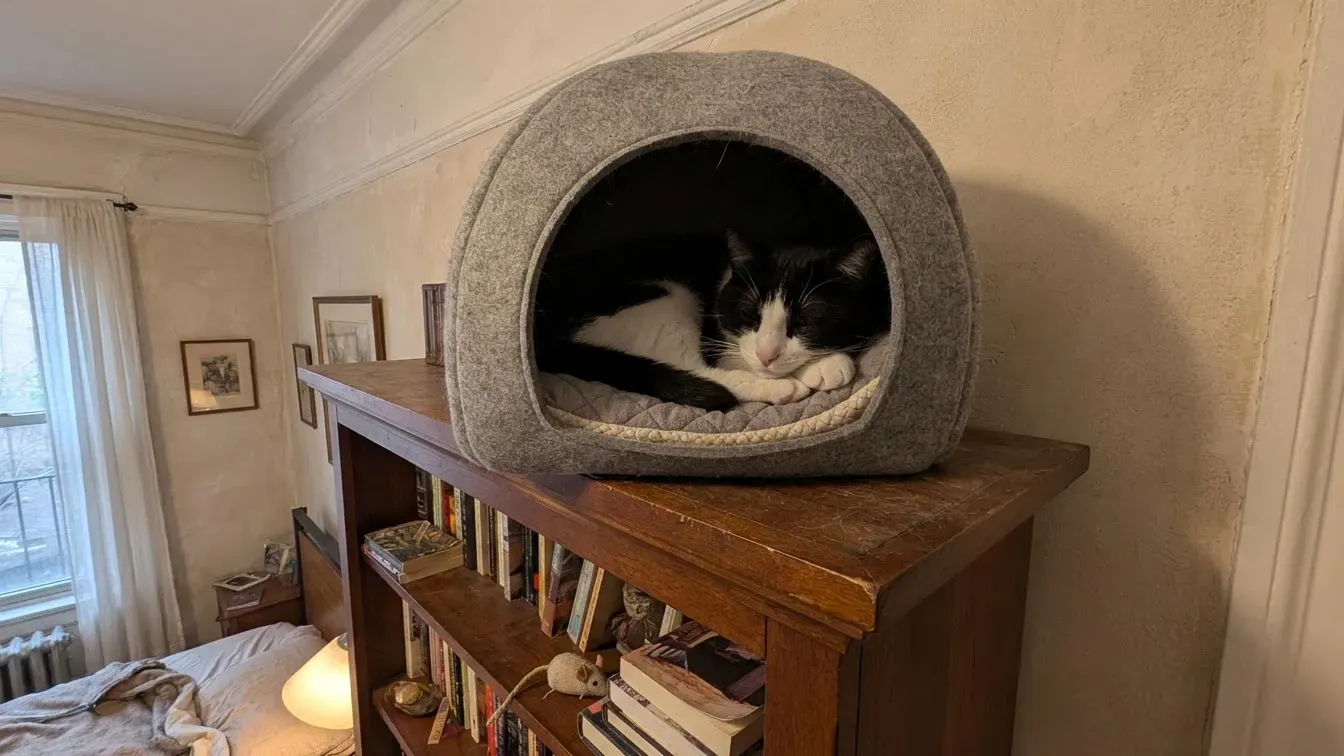
Many older apartment leases prohibit portable space heaters because of fire risk and outdated wiring, and landlords rarely let tenants replace leaky single-pane windows. Fortunately, you can block drafts and trap your cat's own body heat safely without plugging anything into the wall.
- Use self-warming thermal mats: These pads contain a thin, crinkle-free mylar layer that reflects your cat's natural body heat back upward with zero electricity or cords.
- Raise beds off cold floors: Cold air sinks. Place your cat's bed on a sturdy bookshelf, a padded window perch, or a floor-to-ceiling tension cat tree so your cat rests in warmer upper air.
- Switch to covered cave beds: Hooded felt caves or igloo beds trap warm air inside a small pocket, letting your cat heat the interior within minutes.
- Block window and door drafts: Slide fabric draft stoppers along exterior door gaps and hang heavy thermal curtains over leaky windows, pulling them open during sunny hours so your cat can soak up direct afternoon light.
Skip human electric heating pads unless they are specifically veterinary-rated for pets, and never drape heavy blankets over radiators or baseboard heaters where fabric could scorch.
A quick look at your cat's eyes, shoulders, and chosen resting spot tells you immediately whether that tidy loaf means peaceful trust or a chilly draft. When the posture looks tight and hunched, lifting your cat's bed off the bare floor and adding a self-warming mat keeps them cozy all season without violating your lease.
Sources: Cornell Feline Health Center · International Cat Care · ASPCA
Frequently asked questions
Does a cat loafing always mean they are cold?
No. Cats frequently loaf when they feel completely safe, calm, and comfortable in their surroundings. To tell if cold is the cause, look for a tighter, hunched posture, buried paws, cool ear tips, and a habit of seeking out warm corners or blankets.
How can I tell if my cat is loafing from pain instead of cold?
A cat in pain sits in a rigid, hunched loaf with a lowered head, tense whiskers, flattened ears, and squinted eyes even in a warm room. If the posture lasts for hours alongside hiding, low appetite, or litter box changes, contact your veterinarian.
What indoor temperature is too cold for a cat?
While cats' natural thermoneutral zone is higher than humans', most healthy adult cats adapt well to indoor temperatures around 68°F to 72°F, though they enjoy warmer napping spots. When indoor temperatures dip below 60°F, kittens, senior cats, thin-coated breeds, and cats sleeping on bare floors can become uncomfortably cold.
Are self-warming cat mats safe for apartments?
Yes. Self-warming mats use an internal reflective foil layer and plush fabric to bounce your cat's own body heat back to them. Because they use no electricity, cords, or batteries, they meet strict rental rules and cannot overheat.

Nathan Brooks
Nathan Brooks runs Farmingzoom to help loving pet owners create safe, enriching homes for their animals. He cares deeply about responsible pet care and focuses on making everyday decisions simpler for fellow owners.…