The best interior cat door ideas give your cat private access to litter boxes, food stations, and quiet sleeping spots while keeping doors closed and your home looking polished. Whether you want to contain litter box odors in a laundry room or stop a curious cat from scratching at a closed bedroom door at night, standard bulky plastic flaps are not your only choice.
Modern flapless portals, paintable architectural frames, and clever no-cut hardware allow you to match your home's trim and hardware seamlessly. Below are 15 practical, design-conscious ways to create smooth room-to-room passage for both homeowners and renters.
How to Choose the Right Interior Cat Door
Before cutting into a door or ordering hardware, check three practical factors: your cat's size, your door construction, and your household's safety needs.
- Weight and size limits: Most standard interior cat portals comfortably fit cats up to 20 or 25 pounds. If you live with a large breed or a Domestic Shorthair cat with a sturdy build, measure their shoulder width and chest height before picking a cutout size.
- Solid vs. hollow-core doors: Many modern interior doors are hollow inside with a thin wood veneer. If you cut into a hollow-core door, use a two-piece telescoping frame (typically priced between $30 and $40) or line the exposed gap with thin wood trim so your cat cannot get caught inside the door cavity.
- Dogs and small children: If you are installing a pass-through to hide a litter box or food bowls from a curious dog, choose a narrow opening, a locking latch, or a door strap that holds the gap wide enough for a cat but too narrow for your dog's shoulders.
- Cat health and mobility: Senior cats or pets with arthritis can struggle with heavy magnetic flaps or high step-overs. Opt for an open, flapless portal mounted low to the floor so older cats can walk through without straining their joints.
Adding an interior cat door does not mean sacrificing your home's style or living with noisy plastic flaps. Measure your cat's shoulder width, check whether your door is hollow or solid wood, and pick a painted portal, corner cutout, or no-cut latch that fits your layout so your cat enjoys stress-free access day and night.
1Paintable Recessed Cat Portal
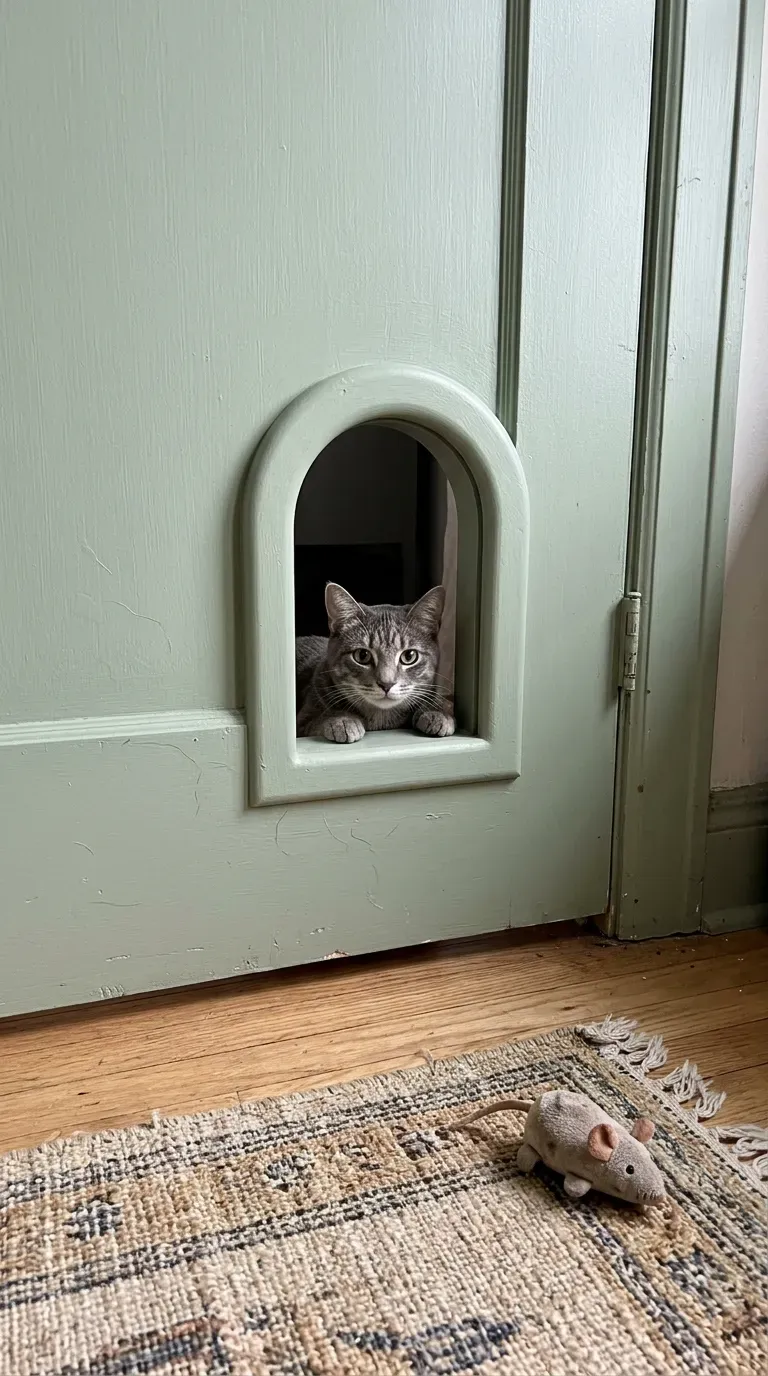
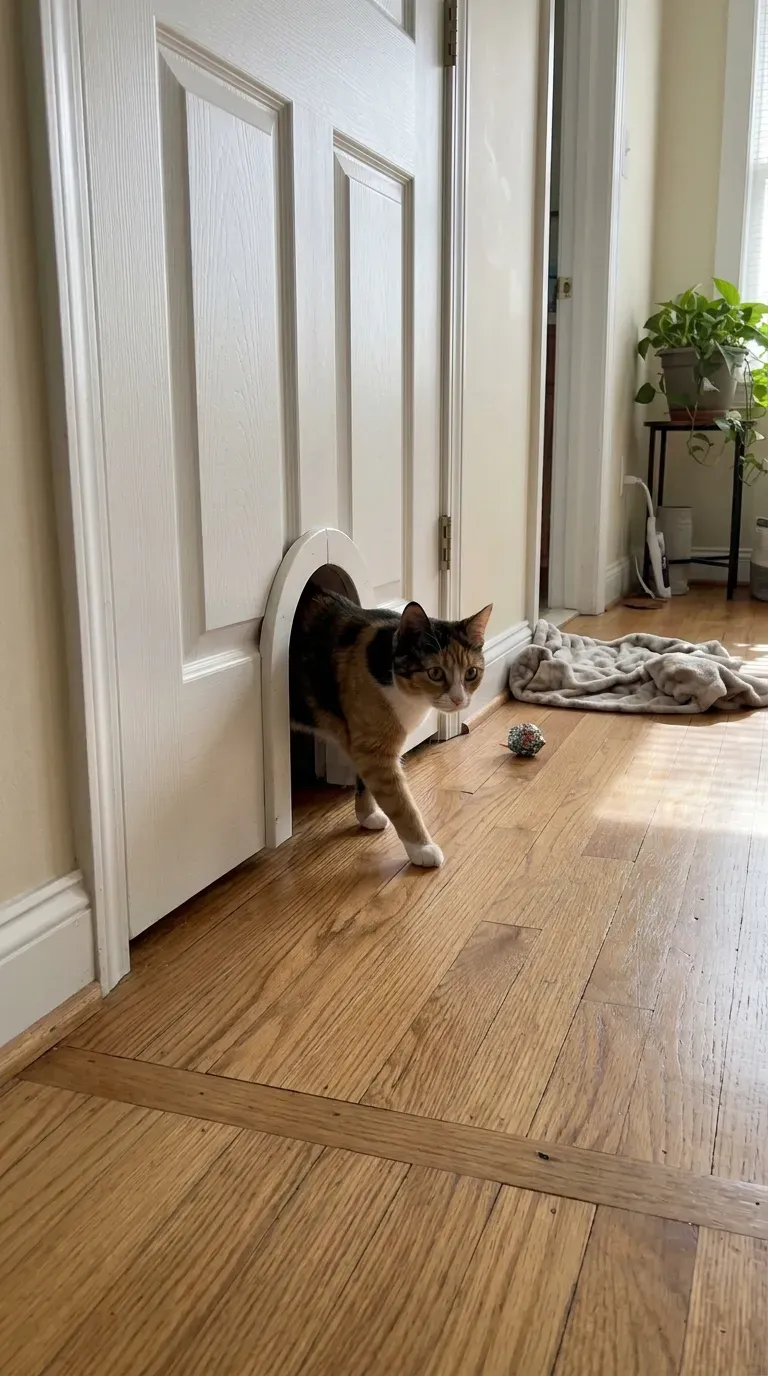
A recessed, flapless plastic or composite portal typically costs $30 to $40 and snaps cleanly into a standard interior door. Lightly sand the frame, apply a coat of bonding primer, and paint it the exact same semi-gloss color as your door and baseboards. Without a noisy plastic flap, cats walk right through without hesitation, and the color-matched frame visually disappears when the door is closed.
2Hinged Corner Cutout With Lock
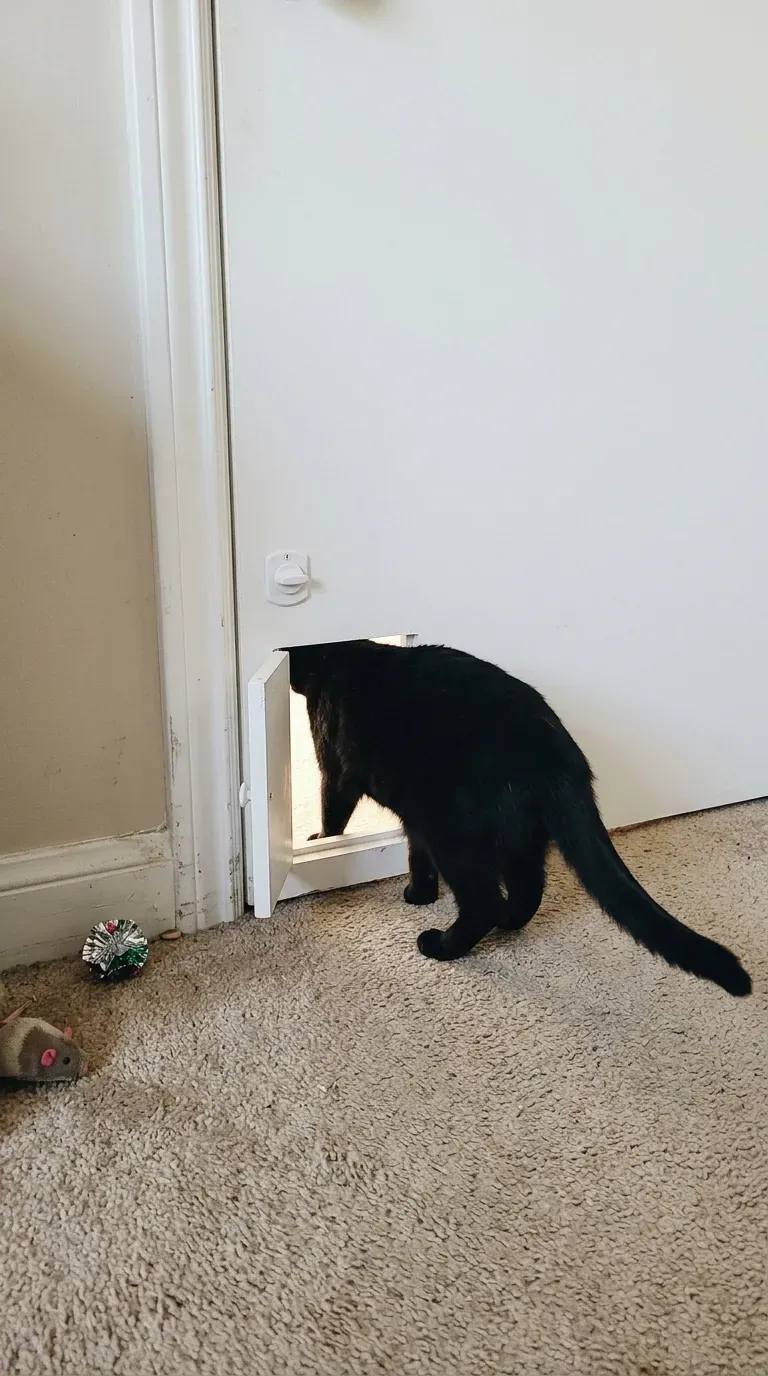
Corner-mounted kits replace the bottom latch-side corner of a bedroom or laundry room door with a smooth, rounded pass-through. Many designs include a built-in rotating latch or sliding cover so you can lock the opening shut whenever you have overnight guests or need privacy. Because it sits flush in the corner, it looks like an intentional architectural detail rather than an afterthought.
3Miniature Arched Doorway Trim
Turn a functional opening into a charming architectural feature by cutting an arched opening at the base of a solid-core door and framing it with flexible polyurethane molding. Paint the molding crisp white to match traditional Craftsman or colonial trim. This flapless design accommodates cats up to 25 pounds and keeps air circulating gently between rooms.
4No-Cut Door Latch Strap
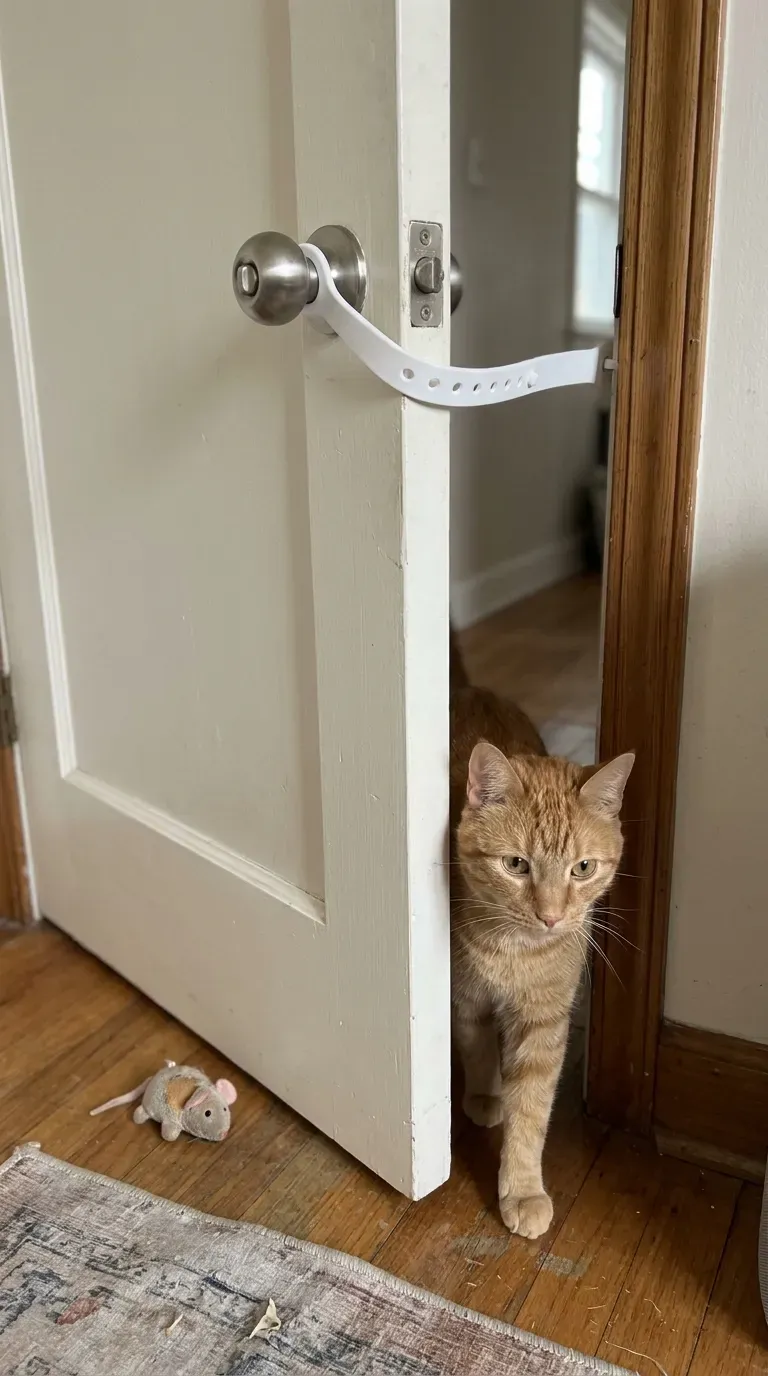
If you rent your home or cannot alter solid wood doors, a flexible nylon door strap hooks directly onto the existing doorknob and latches into the strike plate on the doorframe. It holds the door ajar by 3 to 5 inches—wide enough for a slender cat to slip through, yet narrow enough to block larger dogs and maintain room privacy without leaving a single screw hole.
5Baseboard Wall Pass-Through Tunnel
Instead of cutting a door, install a telescoping wall tunnel directly through the drywall between a hallway and a closet or utility room. Frame both sides with matching baseboard trim so it blends cleanly into the lower wall. Always check for electrical wires and plumbing pipes with a stud finder before cutting into drywall.
6Soft-Close Tinted Acrylic Flap
When you need to block litter box odors or keep air conditioning inside a bedroom, choose an interior door with a slow-closing tinted flap rather than a loud, rigid plastic one. Gentle-close hinges prevent the flap from snapping onto your cat's tail, while smoked or frosted acrylic looks sleeker and hides clutter inside the next room.
7Louvered Closet Door Lower Insert
Bifold or hinged louvered closet doors already feature horizontal slats that hide a cat portal effortlessly. Remove a section of the bottom louvers, reinforce the frame with thin pine strips, and mount a low-profile trim ring painted to match the door. The surrounding slats naturally disguise the opening while keeping litter boxes tucked neatly out of sight.
8Cat-Shaped Silhouette Cutout
For a playful yet clean look on a solid wood door, use a jigsaw to cut a rounded cat-ear silhouette at the bottom center of the panel. Sand the raw wood edges smooth with fine-grit sandpaper and seal them with matching wood stain or paint. Because there is no protruding plastic frame, this option costs next to nothing and works well in modern spaces.
9Sliding Barn Door Base Gap
Interior barn doors hang on an overhead track, allowing you to adjust the clearance between the bottom of the door and the floor. Raising the track mount by an inch or two—or cutting a neat half-moon notch along the bottom edge—lets cats slide underneath quietly while keeping the door fully closed across the doorway.
11Double-Door French Panel Insert
If you have French doors leading to a sunroom or home office, you can replace a single lower glass pane with a custom-cut acrylic or wood panel fitted with a sleek cat portal. Keep the original glass pane wrapped safely in storage so you can restore the door to its original condition whenever you move or redecorate.
12Hollow-Core Door Trim-Framed Opening
Cutting into a hollow-core interior door exposes an empty cardboard honeycomb interior, which looks messy and can trap debris. Solve this by gluing thin 1/4-inch poplar hobby boards inside the cutout perimeter to box in the gap, then finishing both faces with narrow mitered picture-frame molding painted to match the door.
13Magnetic Door Stop Holder
Cats often accidentally push slightly open doors shut, trapping themselves inside a bathroom or bedroom. Mount a heavy-duty magnetic door catch on the baseboard and the back of the door so it stays propped open at a fixed angle, or pair a floor wedge with a door latch strap to prevent your cat from getting locked in.
14Dual-Purpose Mudroom Bench Portal
Built-in mudroom benches and laundry room cabinetry often sit right beside an interior door. Cut a tidy rectangular pass-through into the side panel of the cabinetry, lined with stained oak or painted MDF trim, so your cat can enter a hidden litter enclosure directly from the hallway without a visible pet door on the main room door.
15Shaker Panel Recessed Door
Traditional Shaker doors feature flat recessed panels framed by thicker stiles and rails. If you install a slim cat portal inside the lower recessed panel rather than across the raised rails, the frame sits flush with the door's outer thickness. Painting the portal the exact shade of the panel makes it nearly invisible from across the room.
Frequently asked questions
Can you put a cat door on a hollow-core interior door?
Yes, you can install a cat door on a hollow-core interior door, but you must seal the open interior cavity. Use a two-piece telescoping frame or glue thin wood strips inside the cutout perimeter before adding decorative trim so your cat cannot get stuck or damage the door.
What can I use instead of cutting a cat flap into my door?
Renters and homeowners who want a non-permanent option can use a flexible door latch strap that hooks onto the doorknob and strike plate. It holds the door open a few inches for your cat while keeping dogs out and leaving zero permanent marks.
Do cats prefer open portals or flap-style interior cat doors?
Most cats prefer open, flapless interior portals because they are silent, require no pushing, and never brush against whiskers or tails. Flaps are best reserved for laundry rooms or bathrooms where you need to block litter box odors or drafts.
How high off the floor should an interior cat door be mounted?
Mount the bottom edge of an interior cat door about 2 to 3 inches above the floor. Keeping the step-over low preserves the structural strength of the door's bottom rail while making it easy for kittens and senior cats with stiff joints to walk through.