A reliable cat door latch lets you control exactly which pets enter a room while keeping your feline from ever feeling trapped. Whether you need to prop a bedroom door open four inches for litter box access or stop an exterior pet flap from rattling in high winds, the right latch solves the problem without permanent drilling.
Many owners struggle with dogs raiding food bowls or worn plastic locks failing on traditional pet flaps. By matching the latch style to your door type and your cat's body size, you can create secure, stress-free boundaries throughout your home.
What Is a Cat Door Latch and How Does It Work?
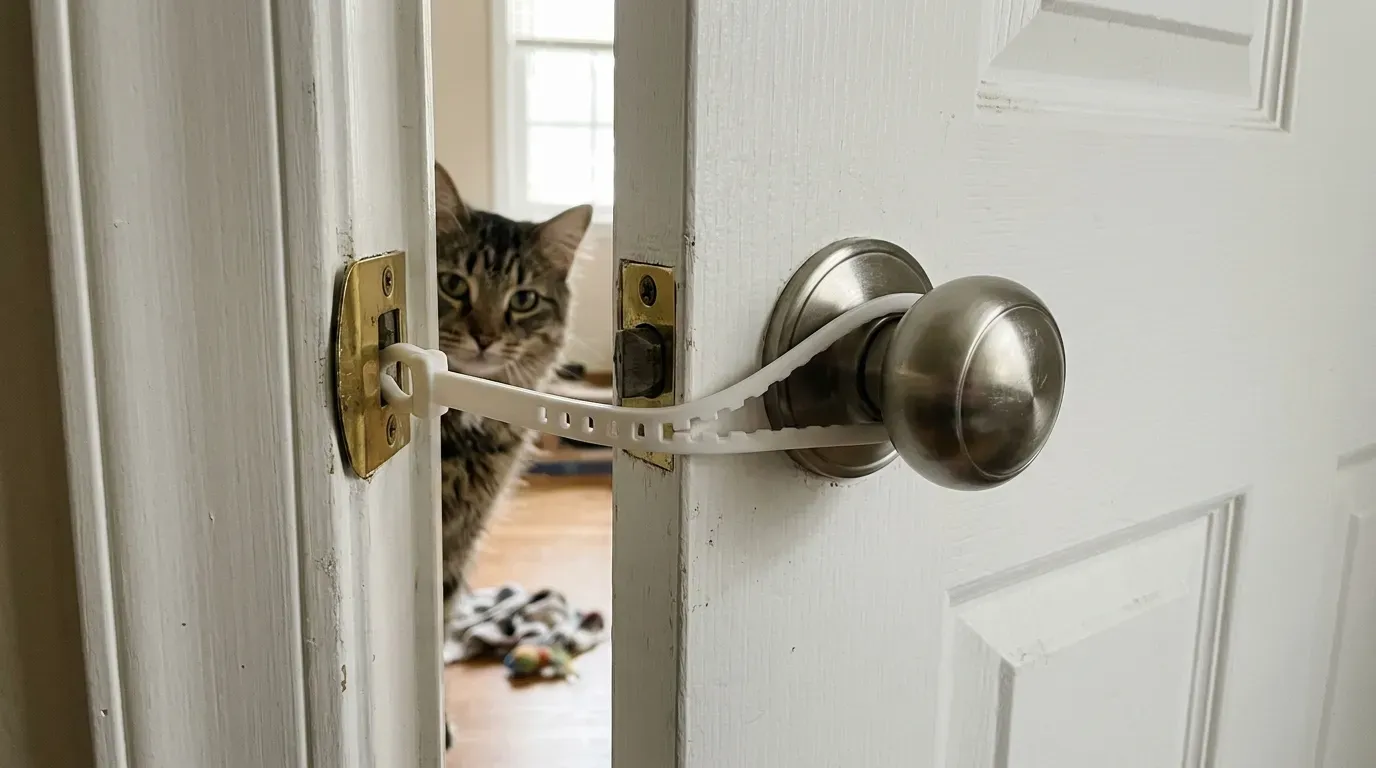
The term cat door latch covers two distinct setups: strap-style holders that keep a standard human door cracked open, and built-in sliding locks mounted directly onto a pet flap frame. Both give you control over household traffic without requiring power tools or permanent alterations.
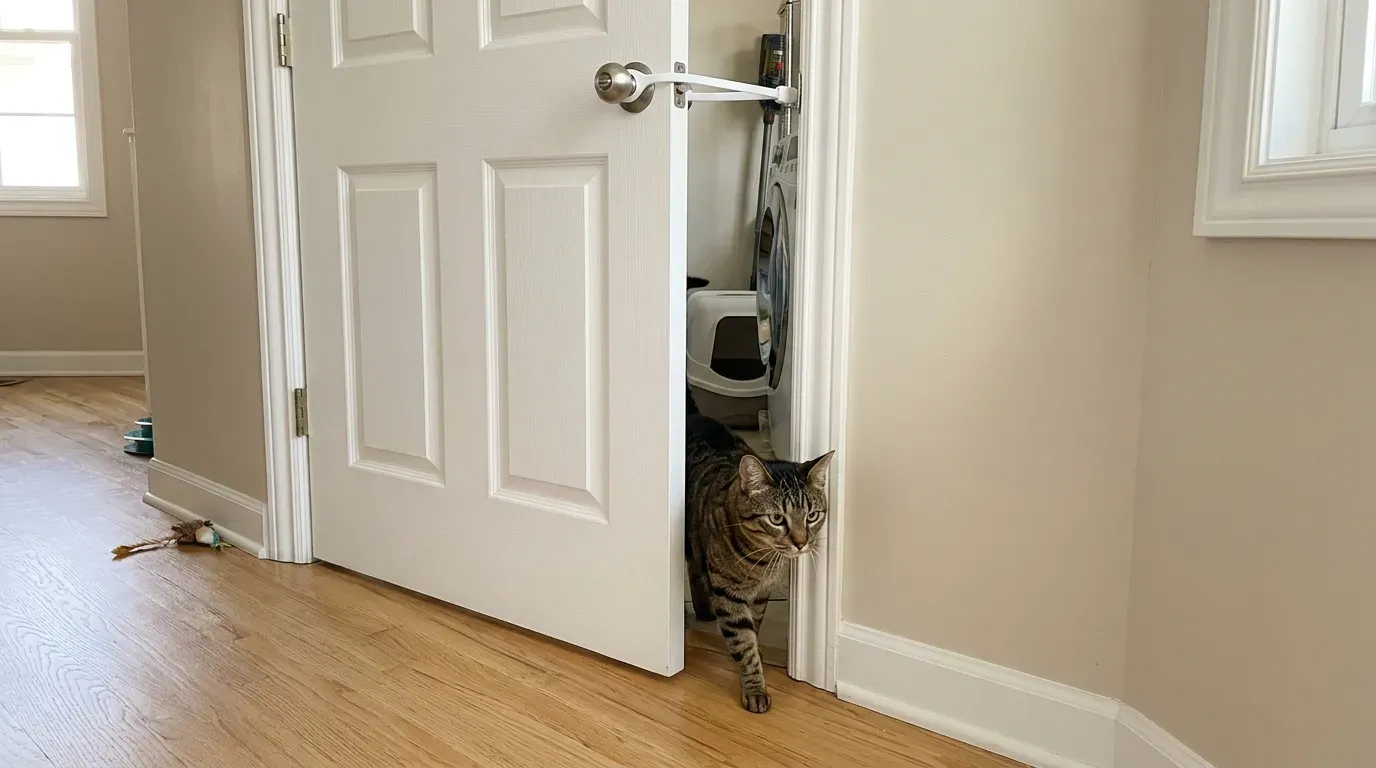
Door-prop latches attach to your existing doorknob and door frame, holding the door ajar at a fixed width—typically around 4 inches. This narrow gap lets slender cats slip into a laundry room or closet while blocking medium and large dogs or toddlers from entering.
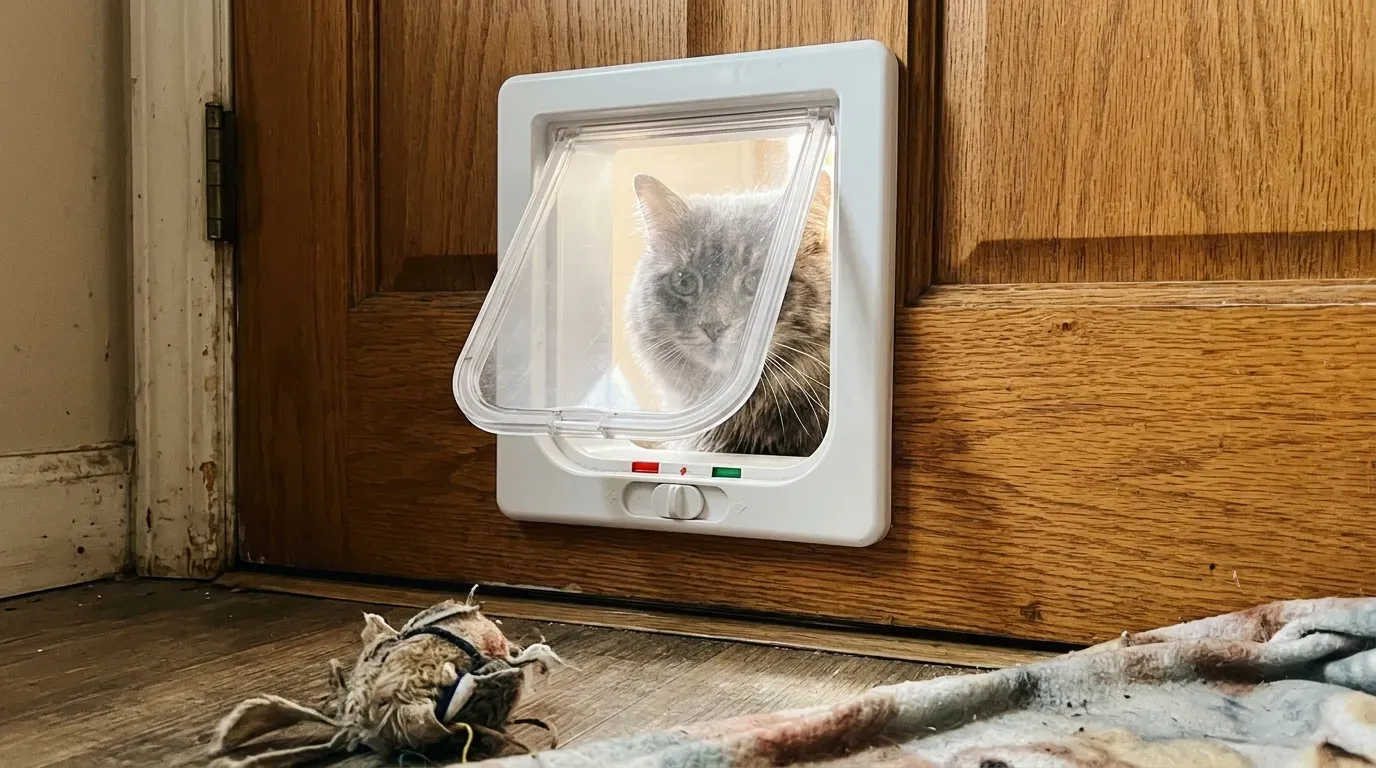
Flap-mounted latches work differently. They slide across the bottom or sides of a cutout pet door to restrict movement in one or both directions. Understanding which style fits your situation prevents accidental lockouts and keeps your pet's routine predictable.
Choosing the Right Renter-Friendly Latch for Interior Doors
If you rent your home or want to avoid cutting into wood panels, strap and hook latches are the safest choice. Before deciding whether to alter a door permanently, it helps to understand the structural limits of different interior doors, since hollow-core interior doors rarely tolerate deep screws or heavy cutouts.
- Adjustable Strap Latches: One end loops over the doorknob while a soft plastic peg hooks into the existing strike plate on the door jamb. Most install in under two minutes with zero tools.
- Flexible Foam and Polymer Holders: These rigid yet bendable arms snap onto the edge of the door and rest against the frame, holding a steady 4-inch gap that resists pushing from persistent dogs.
- Adhesive Hook-and-Loop Straps: Ideal for doors with lever handles where a circular loop might slip off. Use heavy-duty removable strips to protect painted trim.
Always verify that the latch releases smoothly from both sides. You should never have to reach blindly through a narrow crack to unhook a door when stepping inside a room.
Adjusting Gap Width by Cat Size, Age, and Household Pets
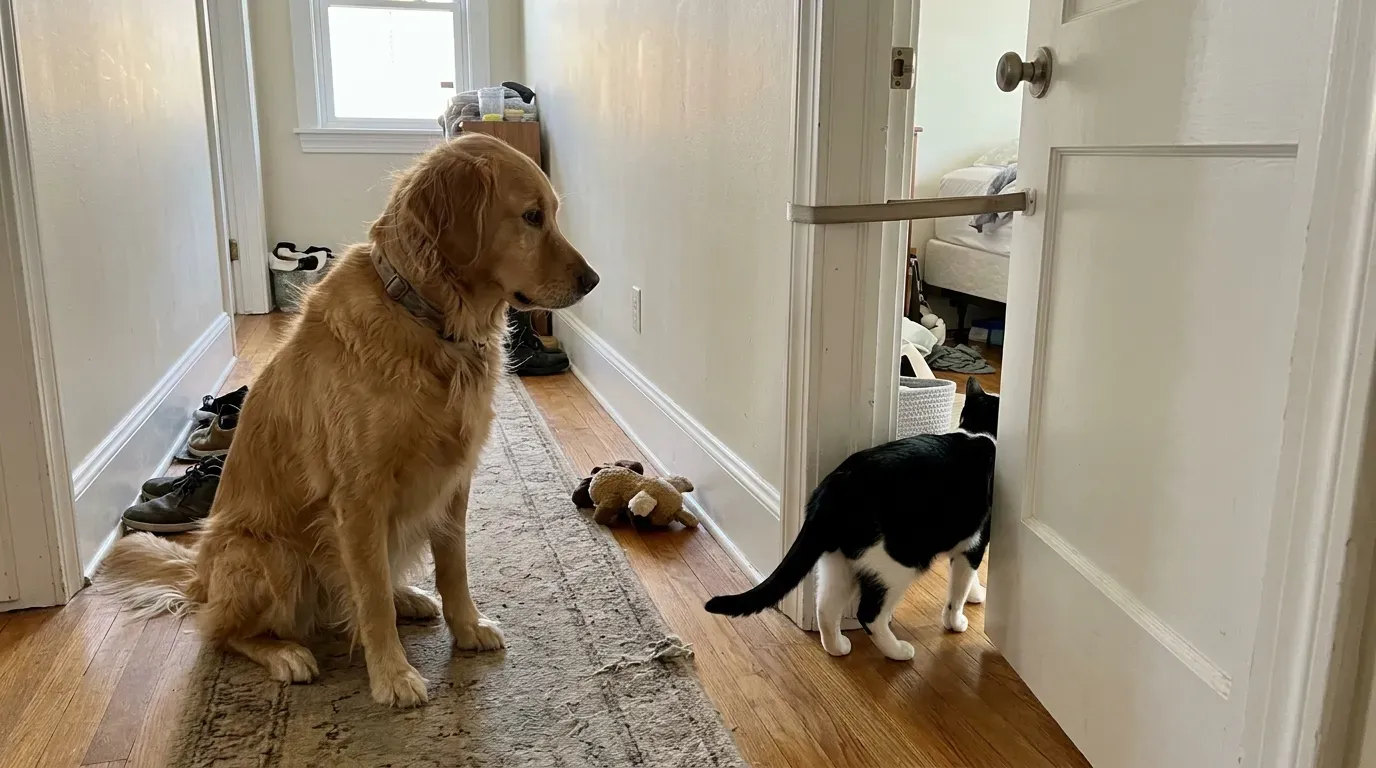
A single gap measurement does not work for every household. While an average 9-pound adult cat glides easily through a 3.5- to 4-inch opening, larger breeds like Maine Coons or senior cats with stiff hips need closer to 5 inches so they do not strain their shoulders or snag their whiskers.
Multi-pet homes face an extra challenge when a small dog shares space with a large cat. If a terrier or dachshund has the same chest width as your cat, a gap-style door latch will not stop the dog. In that scenario, a microchip-activated pet flap or a vertical baby gate with a small pass-through offers better separation.
Kittens also require extra caution. Young cats explore enthusiastically and can wedge themselves behind unlatched doors if a heavy door swings shut in a draft. Always test the latch tension firmly before leaving young pets unsupervised.
How to Keep a Pet Flap Shut Without Locking Your Cat Out
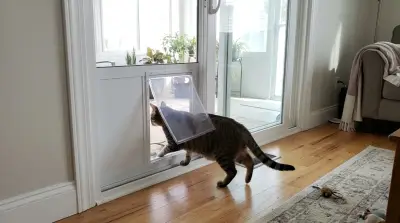
Owners with wall- or door-mounted pet flaps often want to stop cold drafts or wind rattle at night without trapping their cat outside or cutting off litter access. Most modern flaps feature a four-way locking dial with clear settings: unlocked, locked, in-only, and out-only.
Setting the latch to in-only is a reliable overnight routine. Your cat can push the flap inward to come inside to warmth and safety, while the locking tab stops the flap from swinging outward so your cat cannot exit. However, because the flap remains free to swing inward, exterior wind gusts can still push an in-only flap inward unless the bottom magnetic catch or brush seal holds it closed.
If wind still blows the flap open, check the magnetic catch along the bottom edge. Wiping dirt off the magnet and aligning the frame usually restores a snug seal against drafts without needing to engage the full lock.
Troubleshooting Worn or Loose Cat Door Locks
Plastic sliding tabs on pet flaps wear down over time, especially if an energetic pet paws at a locked door. When a latch fails to hold, inspect the track for trapped fur, litter dust, or bent plastic teeth before buying a replacement unit.
- Clean the Sliding Track: Use a dry toothbrush or cotton swab to clear grime from the bottom groove where the locking tabs travel.
- Check Frame Alignment: Over-tightened mounting screws can warp a plastic frame, causing the latch to bind or pop out of its notch. Loosen the corner screws a quarter-turn to relieve pressure.
- Replace Worn Magnetic Seals: Replace a worn magnetic strip or order a manufacturer replacement flap if the factory magnet has lost its pull.
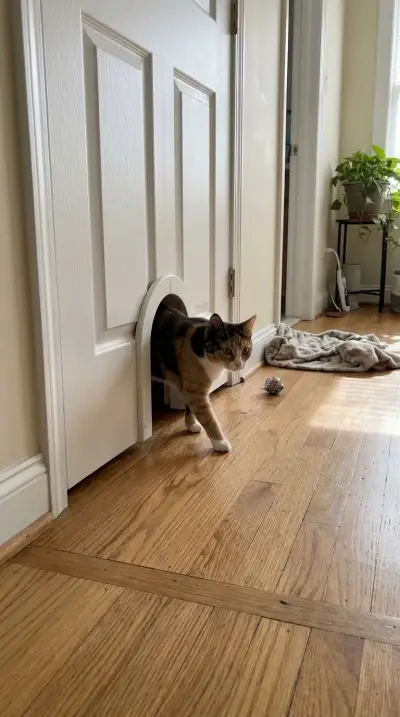
If you are upgrading an indoor setup altogether, exploring interior cat door ideas that blend into home decor can give you sturdier latching options that look clean in hallways and bedrooms.
DIY Door Latch Ideas Using Common Household Hardware
When commercial latches do not fit oversized trim or unusual door thicknesses, a simple homemade setup works well for temporary room control. Keep hardware smooth and secure so curious paws cannot pull small parts loose.
| DIY Method | Best Door Type | Setup Time | Dog Resistance |
|---|---|---|---|
| Non-Elasticated Strap with Hook | Round doorknobs with sturdy strike plates | 2 minutes | Moderate to High (fixed-length hold) |
| Hook-and-Eye Latch | Solid wood doors where tiny screw holes are okay | 5 minutes | High (rigid metal hold) |
| Over-Door Foam Bumper with Doorstop Wedge | Lightweight hollow interior doors | 1 minute | Low (bumper stops slamming; wedge must hold door open) |
Avoid using thin string, elasticated cords, or loose bands that could snap back or tangle around a pet's neck. Always inspect homemade latches weekly for frayed fabric or loose screws.
Safety Tips for Multi-Pet Homes and Curious Dogs
Dog-proofing a litter box room is about more than keeping floors clean. Eating cat feces or clumping clay litter can cause gastrointestinal blockages, vomiting, or parasite transmission in dogs. Similarly, cat food is higher in protein and fat than canine diets and can trigger stomach upset or pancreatitis in sensitive dogs.
Ensure your cat still has easy access to water, clean litter, and safe resting spots on both sides of a latched door—all cats, especially seniors or routine-sensitive individuals, need uninterrupted access to water and litter boxes. Sudden stress or blocked access to a litter box can lead to inappropriate urination or urinary tract discomfort.
If your cat suddenly stops using a familiar pass-through door, cries at the threshold, or strains in the litter box, schedule a visit with your veterinarian. Hesitation at a low flap or narrow gap can be an early sign of arthritis, vision changes, or feline lower urinary tract disease rather than simple stubbornness.
The right cat door latch protects your pet's independence while keeping dogs out of sensitive areas and blocking cold drafts at night. Measure your cat's shoulder width, choose a non-damaging strap or four-way flap lock that releases easily for humans, and inspect magnets or hardware monthly so every pass-through stays safe and reliable.
Frequently asked questions
How wide should a cat door latch hold a door open?
Most adult cats comfortably pass through a 3.5- to 4-inch gap. Larger breeds like Maine Coons or overweight cats usually need 4.5 to 5 inches so they can walk through without brushing their sides or feeling trapped.
How do I keep a cat door from blowing open in the wind without locking my cat out?
Set a four-way pet flap to the in-only position at night or during storms so your cat can push inside freely while being prevented from exiting, and make sure the bottom magnetic catch or brush seal is clean so exterior wind gusts do not push the flap inward.
Can I use a cat door latch on a door with a lever handle?
Yes, though standard loop straps may slide off flat lever handles. Look for latches that attach to the top of the door, hook into the strike plate, or secure around the neck of the lever with an adjustable cinch.
What if my small dog can fit through the same gap as my cat?
If your dog and cat have similar chest widths, a door-prop latch will not separate them. Switch to a microchip-reading pet flap or install a tall pet gate with a small vertical opening that only your cat can jump or squeeze through.