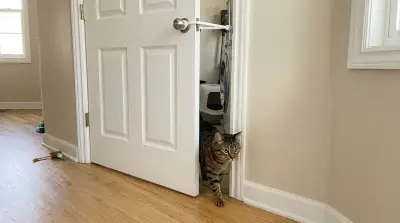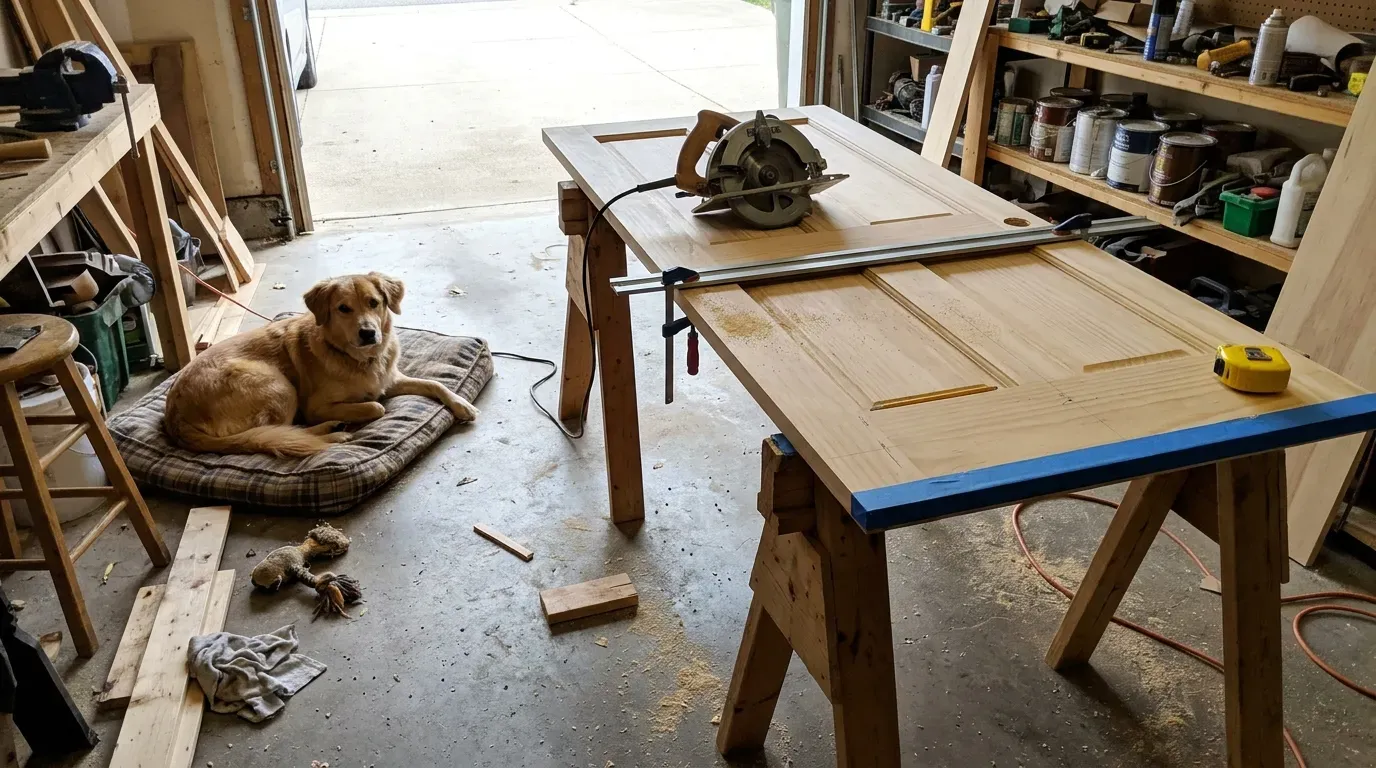
Yes, you can cut most doors down to fit a tight frame, new thick flooring, or an out-of-square opening, provided you stay within the manufacturer's structural limits (cutting an interior hole for a pet door is a separate installation process with different structural rules). Cutting too much off the bottom or sides exposes hollow cardboard cores, weakens hinge screws, and voids product warranties.
Whether you are installing a new slab in an older home or adjusting an interior door so it clears a plush rug near your cat's litter room, knowing exact trim allowances prevents costly mistakes. Below, you will find the maximum safe cut measurements by door construction, step-by-step trimming instructions, and safety precautions to keep curious pets safe from sawdust and sharp tools.
Maximum Trim Limits by Door Construction Type
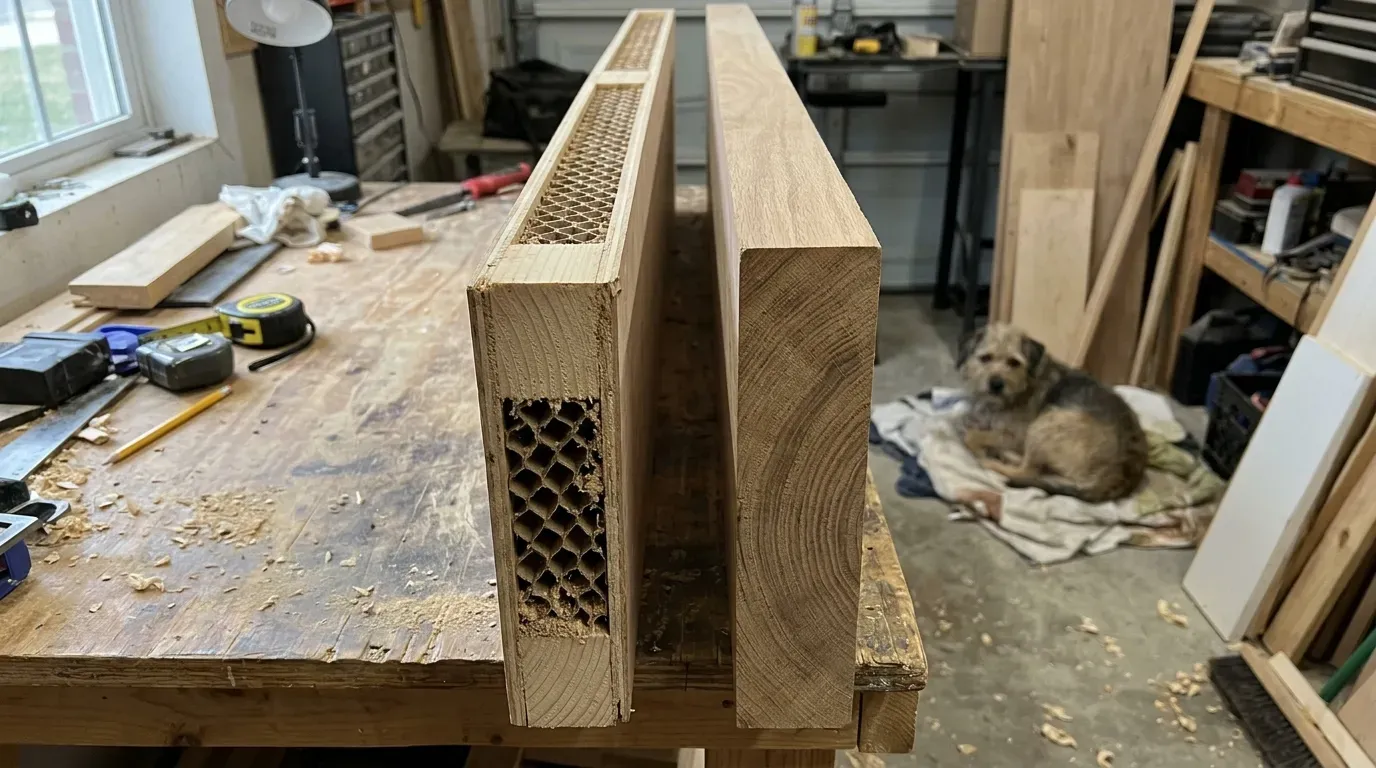
Every interior and exterior door is built differently, which directly controls how much material you can remove before hitting weak points or ruining the door's stability. Always check the manufacturer's specification sheet stamped on the top edge of a new slab before making a cut.
| Door Type | Bottom Trim Limit | Top Trim Limit | Side Trim Limit (Each Side) |
|---|---|---|---|
| Hollow-Core | 1/2 inch to 3/4 inch | 1/4 inch to 1/2 inch | 1/4 inch |
| Solid-Core | 3/4 inch to 1 inch | 1/2 inch | 3/8 inch to 1/2 inch |
| Solid Wood | 1 inch to 1-1/2 inches | 1/2 inch to 3/4 inch | 1/2 inch |
| Fiberglass / Steel | 1/4 inch to 1/2 inch (check label) | Do not trim | Do not trim |
Hollow-core doors have thin wood or hardboard skins glued over a honeycomb cardboard interior, supported only by narrow wooden perimeter rails. If you saw past that bottom wood block, the door loses its structural base and splits easily. Solid-core doors feature a dense particleboard or composite center, giving you slightly more room to trim, while solid wood doors offer the deepest solid rails and stiles for custom fitting.
Why Cutting Too Much Ruins Structure and Voids Warranties
Trimming beyond the manufacturer's printed allowance immediately voids most factory warranties. Manufacturers test doors for warping, moisture resistance, and hinge load based on intact perimeter framing.
When you slice off too much of a hollow-core door's bottom rail, the two outer face skins separate. Even gentle daily use or a heavy cat pushing the door open can cause the bottom corners to flare out and delaminate. On the sides, safe trimming limits vary by door type—1/4 inch per side on hollow-core doors and up to 1/2 inch per side on solid wood—and exceeding those limits weakens the stiles where the latch and hinges anchor, causing screws to strip out over time. When narrowing a door, trim primarily from the hinge side because removing material from the latch side alters the standard pre-bored lockset backset (2-3/8 or 2-3/4 inches).
If you need to remove more than 1-1/2 inches from a hollow-core door, you can salvage it by carefully prying the solid wood bottom block out of the offcut, scraping away the old skin remnants, and gluing that block back inside the newly cut bottom cavity with wood glue and clamps. For cheap slab doors where the thin veneer is damaged, re-skinning with specialty thin plywood is possible, though buying a custom-sized door is usually more practical.
How to Measure and Mark a Door for an Accurate Cut
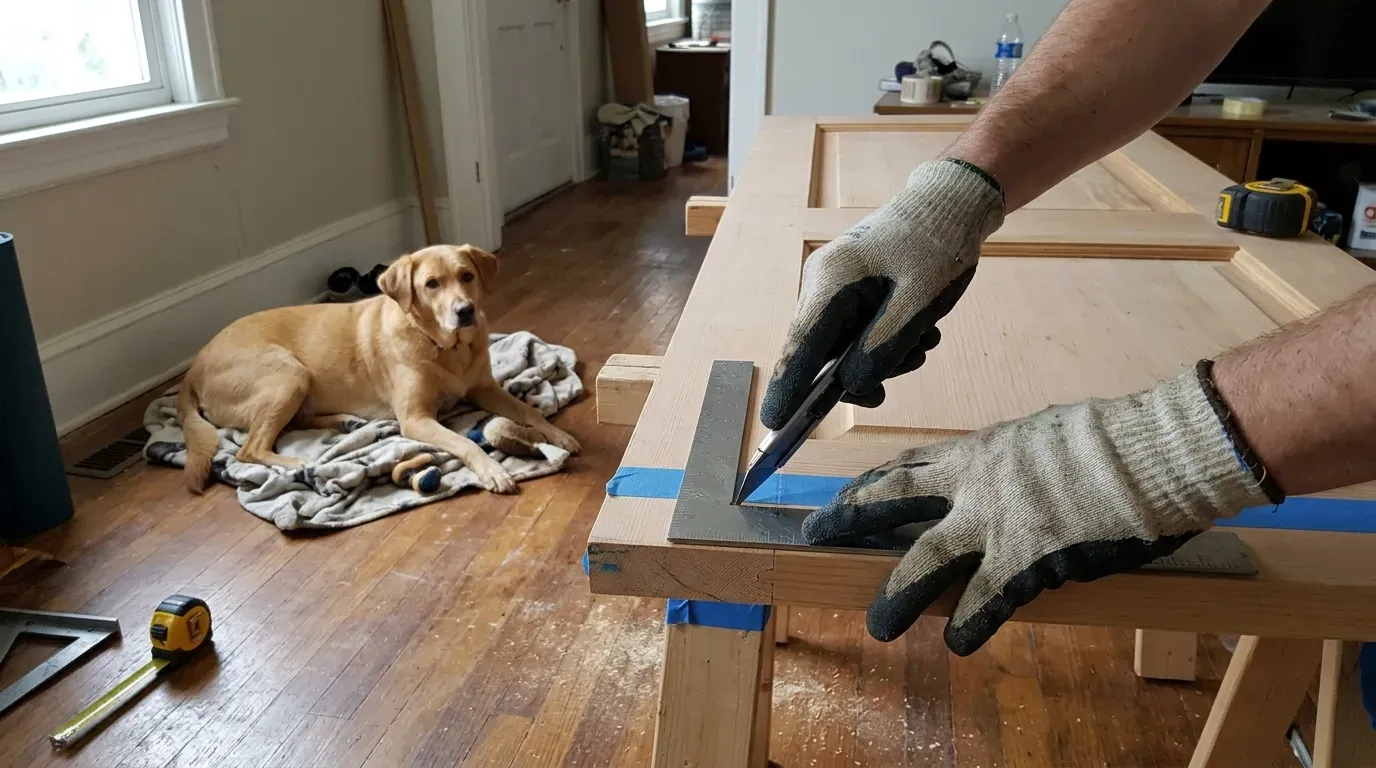
Accurate measuring ensures your door swings freely over new tile or carpet while leaving an appropriate air gap. Standard interior doors typically need a 1/2 inch to 3/4 inch clearance at the bottom for proper HVAC airflow, or slightly more if you want extra clearance for low-profile floor mats.
- Hang or test-fit the door first: Place the door in the jamb using shims at the bottom to hold it at your desired height, leaving a 1/8-inch gap at the top and latch side.
- Scribe the floor line: If your floor slopes, lay a flat block of wood matching your desired floor clearance against the floor and run a pencil along the top of the block across the bottom of the door.
- Transfer measurements clearly: Remove the door and lay it flat on padded sawhorses. Check the line with a framing square so your cut stays true.
- Score the veneer: Press a sharp utility knife along your pencil line using a metal straightedge. Cutting through the surface wood fibers first prevents ugly splintering when the saw blade passes through.
Step-by-Step Guide to Trimming the Bottom of a Door
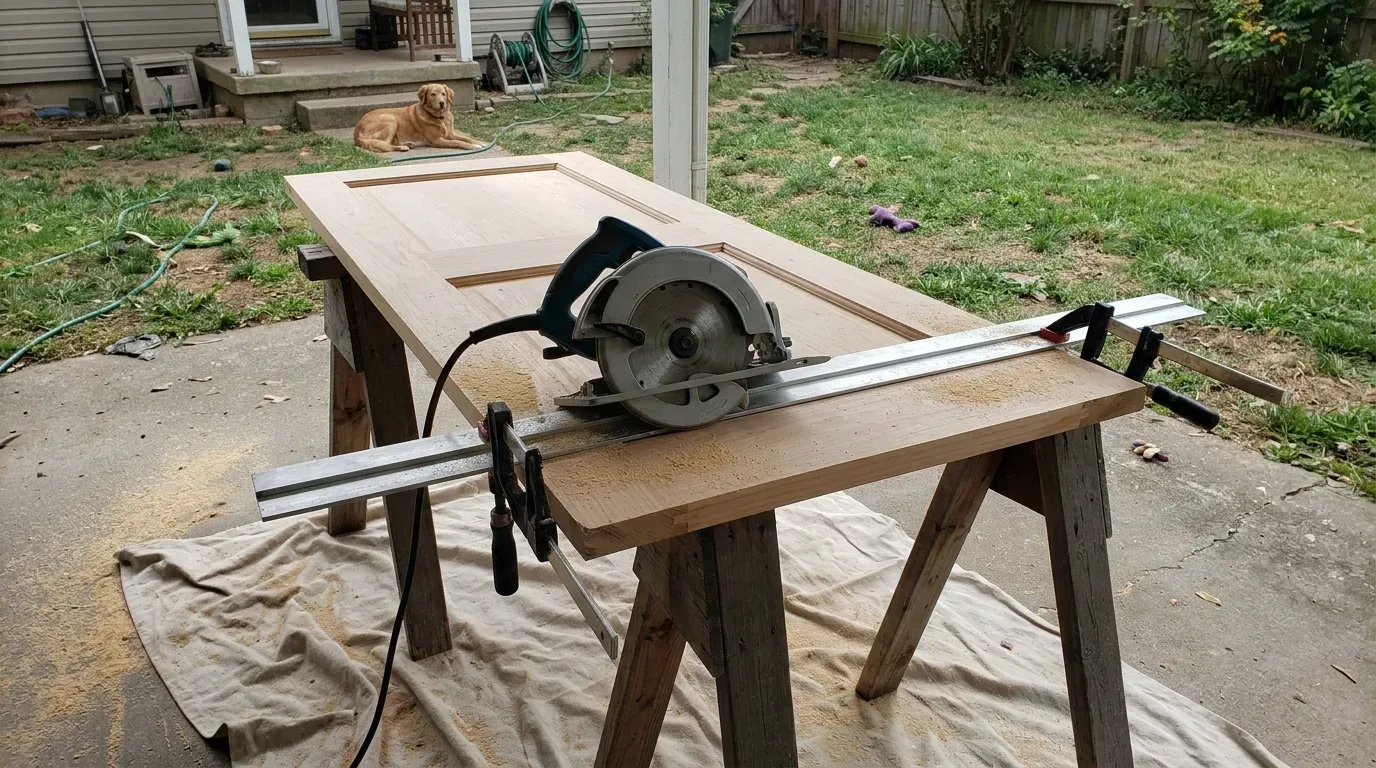
A circular saw paired with a clamped straightedge delivers the cleanest, straightest cut on a door slab. Before starting, set up in a well-ventilated garage or outdoor area and keep pets locked safely indoors away from loud noise and airborne wood dust.
- Apply painter's tape: Run a strip of wide blue painter's tape directly over your scored cut line to further reduce chip-out on thin veneers.
- Clamp a straightedge guide: Measure the distance from the edge of your circular saw's baseplate to the blade, then clamp a straight board or aluminum guide rail that exact distance away from your cut line.
- Use a fine-tooth blade: Install a 60-tooth or 80-tooth carbide-tipped finishing blade and set the blade depth just 1/8 inch deeper than the thickness of the door.
- Cut slightly long and plane to fit: Some carpenters prefer cutting the door 1/16 inch longer than the final mark, then using a hand block plane or electric planer to shave the edge down to a glass-smooth finish.
- Seal the raw wood: Apply primer, paint, or clear polyurethane to the freshly cut bottom edge. Unsealed wood absorbs floor moisture and mopping water, which causes swelling and warping.
Retailer Cutting Services and Professional Costs
Many homeowners ask whether big-box hardware stores like Home Depot or Lowe's will trim a door to size before purchase. In general, most retail stores do not cut slab doors down in-store because store panel saws are calibrated for rough sheet goods like plywood rather than finish-grade doors, and trimming risks damaging veneers.
However, both retailers can special-order custom-height doors directly from the manufacturer, or connect you with local installation pros. If you hire an independent handyman or finish carpenter to pick up, trim, plane, and re-hang an existing door, expect to pay roughly $75 to $175 per door depending on your location and whether hinge mortises need adjustment. If you only need a small passageway for your pet rather than shortening the whole door, exploring interior cat door ideas that blend into your home decor can save you from altering the door's height at all.
Keeping Cats and Dogs Safe During Door Projects
Home carpentry projects introduce several hidden hazards for curious cats and dogs. Sawdust from particleboard, MDF, and treated wood often contains glues and resins that irritate sensitive respiratory tracts and paws if pets walk through debris and groom themselves afterward.
Keep your pets in a closed room far from the work zone until you have thoroughly vacuumed all sawdust and wood shavings. Store wood glue, polyurethane sealants, and paint cans tightly sealed out of reach, as many finishes are toxic if ingested. After re-hanging your trimmed door, keep all pet furniture, food and water bowls, and litter boxes well outside the door's swing arc so pets cannot be trapped, startled, or struck when the door opens.
Finally, if your dog or cat accidentally swallows wood splinters, licks wet sealant, or develops coughing, drooling, or paw irritation after exposure to renovation dust, contact your veterinarian promptly for guidance.
You can safely cut most doors down to fit as long as you stay within 1/2 to 3/4 inch on hollow-core slabs and up to 1-1/2 inches on solid wood doors. Always score the veneer first, seal the raw bottom edge against moisture, and keep pets safely away from sawdust and finishes until cleanup is complete.
Frequently asked questions
How much can you cut off the bottom of a hollow-core door?
You can safely trim 1/2 inch to 3/4 inch off the bottom of most hollow-core doors. Cutting more than 3/4 inch usually removes the internal solid wood block, leaving exposed cardboard honeycomb that weakens the door and voids the manufacturer's warranty.
Will Home Depot or Lowe's cut a door down to size for you?
Most Home Depot and Lowe's stores do not cut doors down in the store because their panel saws can chip door veneers. They can, however, special-order custom-sized doors from the factory or arrange local professional installation.
How much does it cost to have a handyman cut down a door?
Hiring a handyman or finish carpenter to trim, plane, and re-hang a door typically costs between $75 and $175 per door. Prices increase if the door is solid wood, requires hinge adjustments, or needs painting afterward.
What is the best saw to cut a door without splintering?
A circular saw equipped with a fine 60-tooth or 80-tooth carbide finishing blade works best. Scoring the cut line with a utility knife and applying painter's tape over the veneer before sawing prevents splintering.