You can easily install a cat door without cutting your door by using adjustable window inserts, sliding patio panels, or specialized door-latch straps—and nine of the ten setups below require zero power tools (only the temporary replacement slab option requires a drill or jigsaw to cut the flap). Whether you rent an apartment or own a home with expensive solid-wood doors, sawing a permanent hole in your original door is rarely the best option.
These ten renter-friendly setups give your cat private access to litter boxes, feeding stations, or enclosed patios while keeping dogs and toddlers out. Every option below protects your original woodwork, requires minimal setup time, and removes cleanly when you move.
| No-Cut Solution | Best Location | Tools Needed | Dog-Proofing Level |
|---|---|---|---|
| Door Latch Strap | Interior hinged doors | None | High |
| Sliding Glass Door Panel | Patio sliding doors | None | High |
| Sash Window Insert | Double-hung windows | None | High |
| Pressure-Mounted Pet Gate | Hallways & doorways | None | Medium |
| Magnetic Screen Door | Porch & balcony doors | None (adhesive/pins) | Low |
| Temporary Hollow-Core Replacement Door | Interior door frames | Screwdriver, drill & jigsaw | High |
| Tension Rod Curtain | Closet & pantry entries | None | Low |
| Bifold Closet Door Gap Prop | Closet bifold doors | None | Medium |
| High-Clearance Door Stop Wedge | Interior doors over hard floors | None | Low |
| Window Screen Flap | Existing window screens | Utility knife (screen only) | Medium |
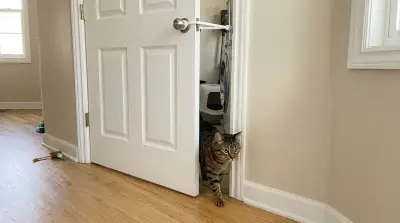
1Adjustable Door Latch Strap
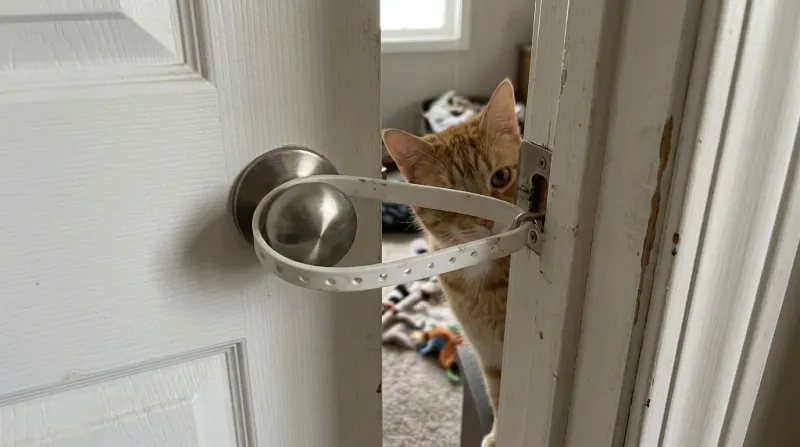
Location: Interior hinged doors · Tools: None · Setup Time: 1 minute A flexible nylon or polyethylene strap hooks onto your existing doorknob and latches into the door frame strike plate. It holds the door cracked open just three to five inches—wide enough for a cat to slip through, yet narrow enough to stop medium and large dogs from pushing the door wider open. Priced around $12 to $20, this zero-tool latch keeps litter boxes private, though you should pair it with a separate foam door stopper or bumper on the door edge to prevent the door from swinging shut on a cat's tail.
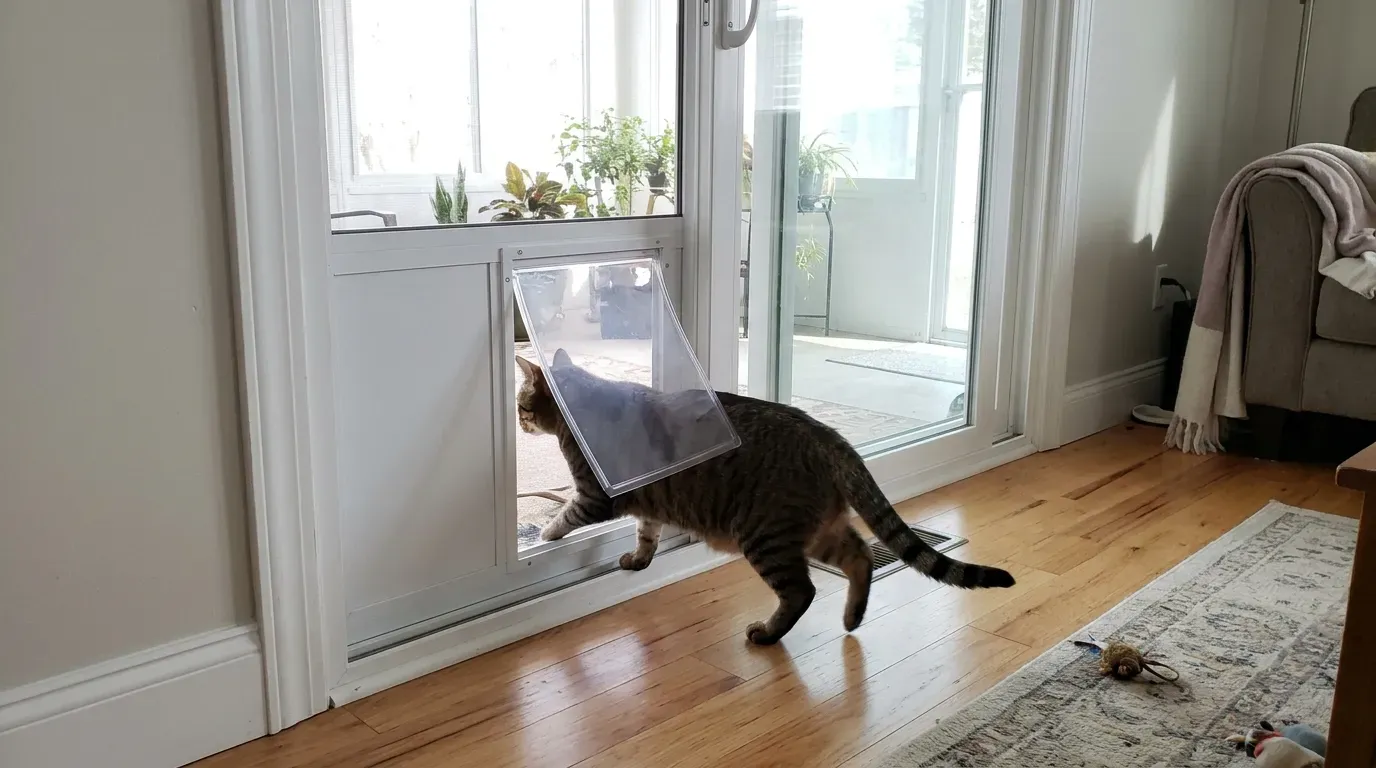
2Spring-Loaded Sliding Glass Door Panel
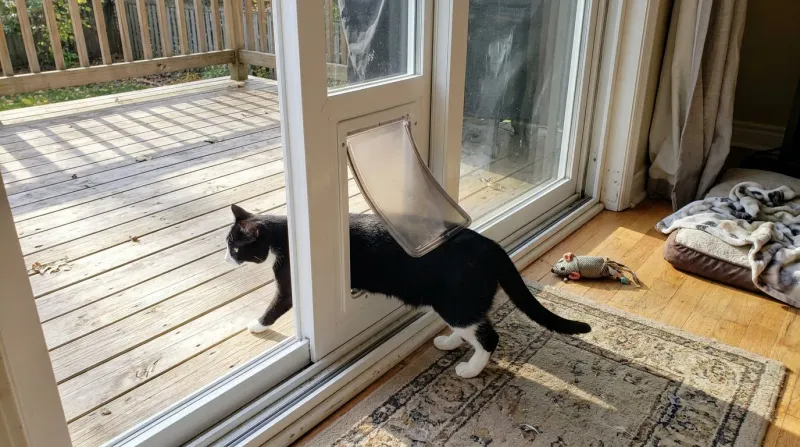
Location: Sliding patio doors · Tools: None · Setup Time: 10 minutes These tall aluminum and tempered-glass inserts fit vertically inside your existing sliding glass door track. A spring-loaded top header expands tightly against the upper frame, creating a weather-sealed barrier with a built-in pet flap at the bottom. You simply slide your patio door closed against the panel's weatherstripping, making it ideal for accessing screened porches or enclosed catios without altering glass or frames.
3Sash Window Cat Flap Insert
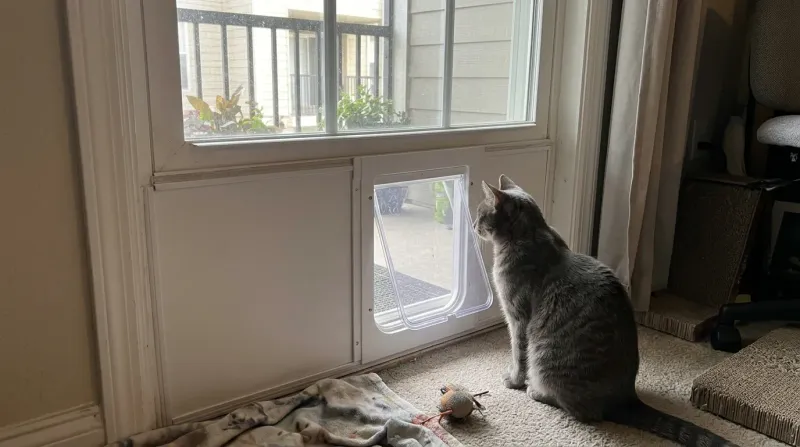
Location: Double-hung windows · Tools: None · Setup Time: 5 minutes Designed for standard vertical-sliding windows, these horizontal panels sit directly on the windowsill while the window sash lowers onto the top edge to hold it in place. Spring-loaded side wings expand to seal gaps on both sides, preventing drafts and bugs. Choose a model with a four-way locking flap or microchip reader if you want to control when your cat enters a secure balcony.
4Pressure-Mounted Pet Gate With Cat Door
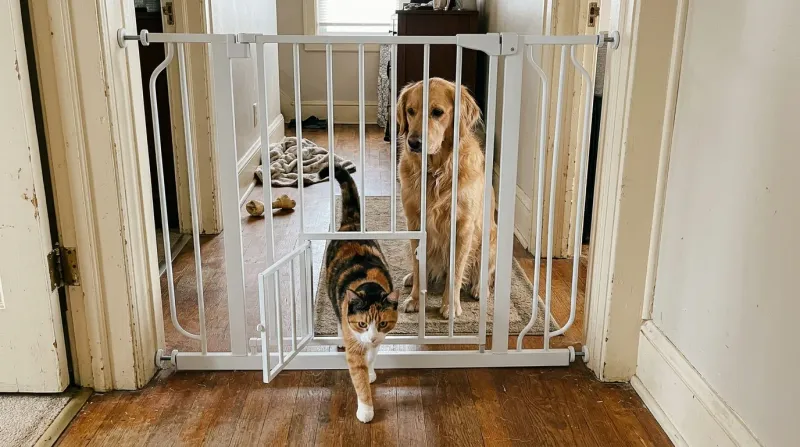
Location: Interior doorways and hallways · Tools: None · Setup Time: 10 minutes Walk-through metal pet gates use threaded rubber bumpers that press firmly against door jambs without screws or wall anchors. Many models feature a built-in 7-by-7-inch lockable pet door at the base so cats can roam freely while toddlers and dogs stay separated. Check bar spacing carefully—gaps wider than 2.5 inches can allow small kittens to squeeze through or get stuck.
5Magnetic Mesh Screen Door
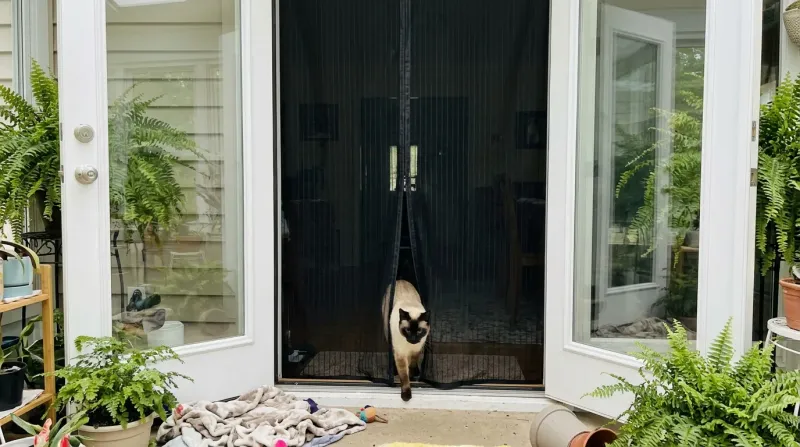
Location: Balcony and porch doorways · Tools: None · Setup Time: 15 minutes Heavy-duty fiberglass mesh curtains attach to your exterior door frame using removable hook-and-loop adhesive strips. Vertical magnets run down the center seam, parting easily when a cat pushes through and snapping shut immediately afterward to keep insects out. While not secure against determined dogs or intruders, it works wonderfully for supervised summer afternoons when you want fresh airflow.
6Temporary Hollow-Core Replacement Door
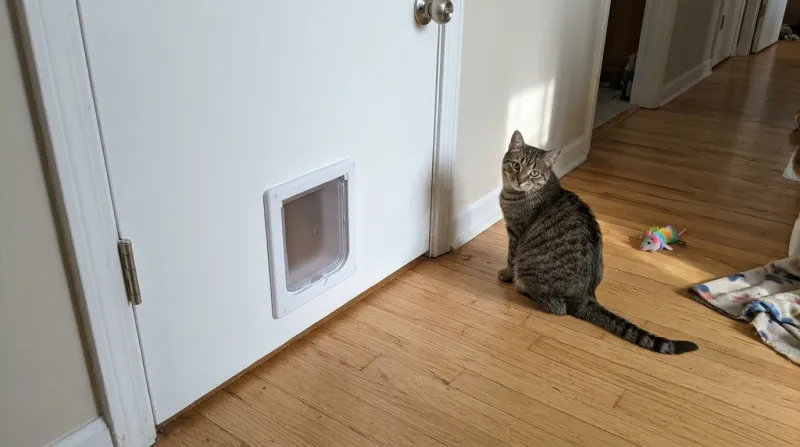
Location: Interior bedroom or laundry doors · Tools: Screwdriver, drill, and jigsaw · Setup Time: 45 to 60 minutes If you want a traditional interior cat door without ruining a landlord's solid wood door, swap the entire slab out temporarily. Buy an inexpensive pre-machined blank interior door slab—or have the hardware store mortise the hinge pockets and bore the doorknob holes to match your existing door—then use a drill and jigsaw to cut the cat flap opening into that replacement slab. Use a screwdriver to transfer your existing doorknob and latch hardware and hang the replacement slab on the existing hinges, storing the original door flat under a bed or in a closet until move-out.
7Tension Rod and Weighted Curtain
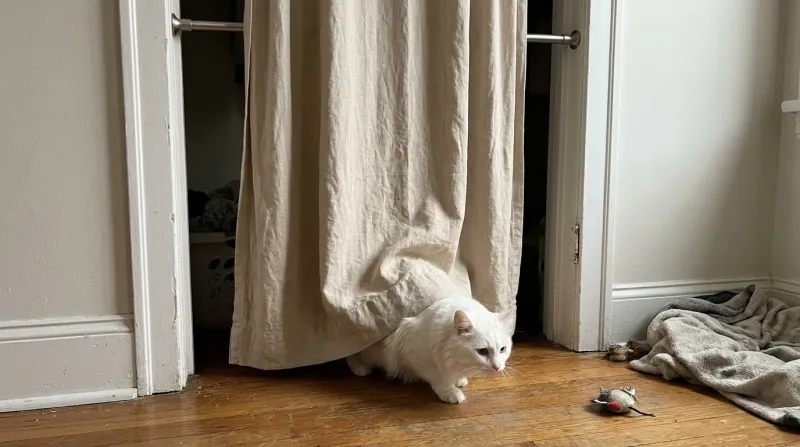
Location: Closet and laundry entries · Tools: None · Setup Time: 5 minutes For rooms where you simply want to hide a litter box from view without blocking airflow, remove the closet door from its track or leave it open and hang a heavy fabric curtain on a spring tension rod. Cats quickly learn to nudge the bottom hem aside to slip underneath. Use fabric weights sewn into the bottom hem so the curtain drapes neatly back into place.
8Bifold Closet Door Gap Prop
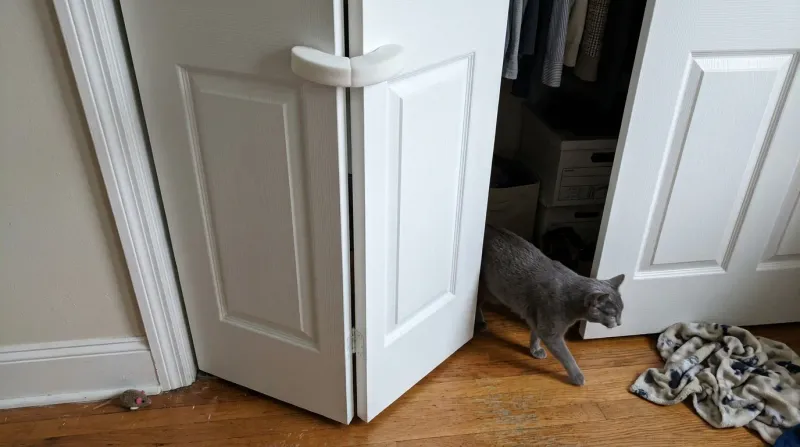
Location: Folding closet doors · Tools: None · Setup Time: 2 minutes Bifold doors on laundry closets often trap cats inside if the panels swing shut unexpectedly. A simple foam pinch guard slipped over the top edge keeps the folding joint propped open at a fixed angle, creating a permanent triangular entryway near the floor. It prevents pinched paws and costs just a few dollars with zero adhesive residue.
9High-Clearance Door Stop Wedge
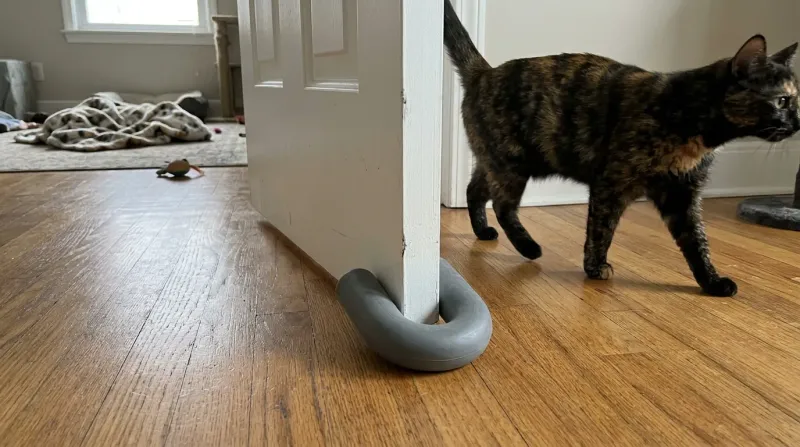
Location: Interior doors over hard floors · Tools: None · Setup Time: 1 minute Heavy rubber dual-sided door wedges grip tile and hardwood floors to hold any interior door open at an exact width. Unlike standard wedges that slide out when nudged, wrap-around U-shaped stoppers hug the bottom edge of the door so your cat cannot accidentally push the door closed and lock themselves away from water bowls. Pair this with safe door-propping habits to protect curious paws.
10Snap-In Window Screen Pet Flap
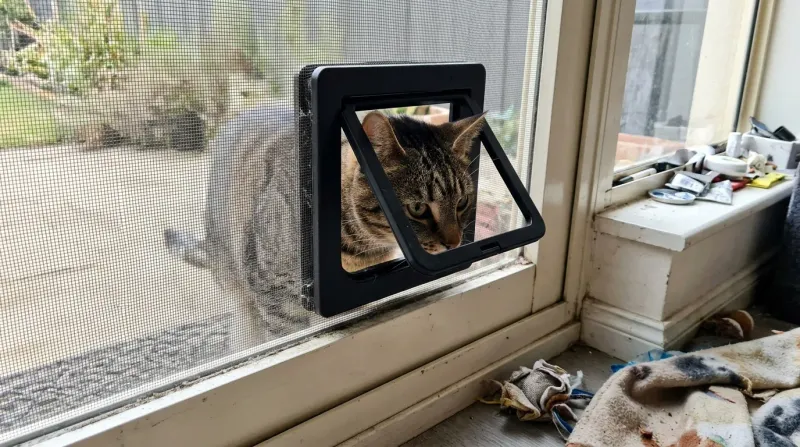
Location: Existing window screens · Tools: Utility knife · Setup Time: 10 minutes If you already have a removable mesh screen on a ground-floor window leading to a screened patio, you can install a lightweight plastic frame directly onto the mesh without touching the window frame itself. Two interlocking frames snap together through the screen fabric, and you trim only the cheap mesh inside the square. Replacement screen mesh costs under $10 to restore before lease end.
How to Choose the Right No-Cut Setup
Start by matching the barrier to your cat's size and your household layout. Large breeds like Maine Coons need wider openings of at least 7.5 by 8.5 inches, while kittens and senior cats with joint stiffness require low step-over thresholds close to the floor. If you live with a curious dog, avoid magnetic screens, tension curtains, or floor door wedges and stick to rigid sliding panels or door latch straps that lock the gap firmly.
Before buying any hardware, measure your door thickness, window track width, or baseboard clearance carefully. Even when avoiding permanent cuts, knowing when doors should never be trimmed or altered helps you protect hollow-core apartment doors from accidental cracking.
Safety and Home Insurance Considerations
When using window inserts or sliding patio panels, always install a secondary track lock or security bar on the main window or glass door. An unlocked sliding panel makes it easy for intruders to lift the frame from outside, which can complicate theft claims on your renters or homeowners insurance policy.
Never let cats use exterior window flaps unless they open into a fully enclosed catio or screened porch. Unsupervised outdoor access exposes cats to traffic, predators, and toxic garden plants like lilies, which cause fatal kidney failure even in tiny amounts.
You never need to cut your original door or risk your security deposit to give your cat independent access around your home. Start by matching your doorway style to a zero-tool latch strap, sliding track panel, or window insert—or swap in a pre-machined replacement slab if you want a traditional flap—and measure your pet's shoulder width first so every passage stays comfortable and safe.
Frequently asked questions
How do you make a cat door without cutting the door?
You can create a no-cut cat passageway using a doorknob latch strap that holds the door cracked open a few inches, a spring-loaded sliding glass door panel, or a double-hung window insert. These options install with tension or existing latches and leave wooden doors completely undamaged.
What is the best cat door that does not damage the door?
For interior rooms, an adjustable door latch strap or a pressure-mounted pet gate with a built-in cat flap provides the best damage-free access. For patios and balconies, a spring-loaded aluminum sliding door insert offers a sturdy, weather-tight flap without drilling or cutting.
Does installing a cat flap affect home insurance?
Installing a flap in an interior door does not affect home insurance. However, placing an exterior panel in a window or sliding glass door can impact theft coverage if the main window or patio door is left unlocked, so always use a secondary track lock.
Can large cats fit through no-cut cat door alternatives?
Yes, provided you check the flap dimensions before buying. Large breeds like Maine Coons or Ragdolls need an opening at least 7.5 inches wide by 8.5 inches tall, which is readily available in tall sliding glass door panels and extra-wide pet gates.

Nathan Brooks
Nathan Brooks runs Farmingzoom to help loving pet owners create safe, enriching homes for their animals. He cares deeply about responsible pet care and focuses on making everyday decisions simpler for fellow owners.…