Time needed
1 h
What you need
- 1/4-inch heavy-duty strap toggle bolts (snap toggles) with 1/4-20 machine bolts
- 1/4-inch flat washers
- 1x4 or 1x6 solid hardwood ledger board (if studs are 24 inches apart)
- 3/4-inch wood screws (or 1-inch wood screws with a 1/4-inch bracket, for attaching brackets to ledger board)
- Painter's tape
Tools
- Cordless drill
- 1/2-inch cobalt or titanium metal-cutting drill bit
- Strong neodymium magnet
- AC voltage and metal scanner
- 24-inch bubble level
- Tape measure
- Phillips screwdriver
- Safety glasses
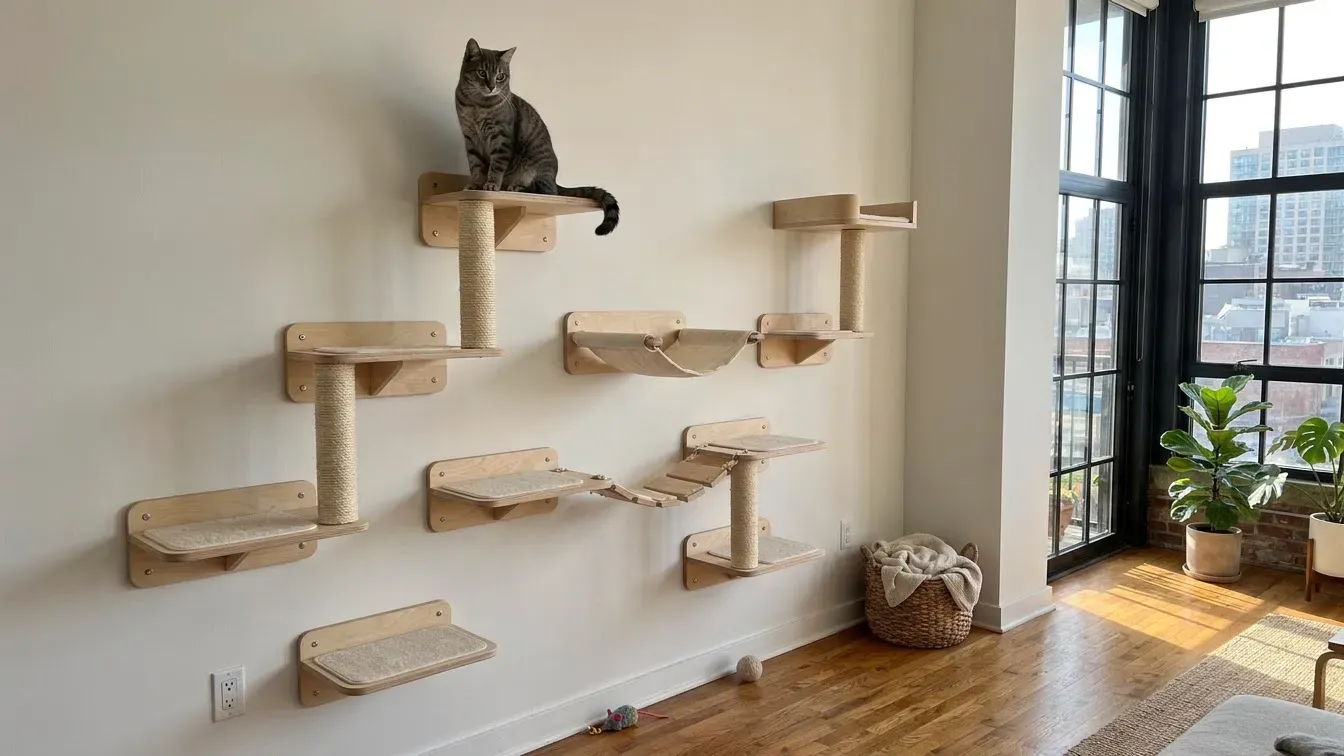
To safely mount a cat tree on metal studs, skip standard wood screws and use heavy-duty 1/4-inch strap toggle bolts (snap toggles) driven directly through the center of the steel channels, or span wide framing with a solid wood ledger board.
High-rise condos, newer apartment buildings, and converted lofts almost always use lightweight, thin-gauge galvanized steel studs instead of solid timber. When a 12-pound cat launches onto a wall shelf, that dynamic downward force acts like a crowbar against thin sheet metal and gypsum board. Following the right anchoring process protects your walls from crumbling and keeps your cat from taking a dangerous fall.
- 1
Locate Steel Studs With a Rare-Earth Magnet
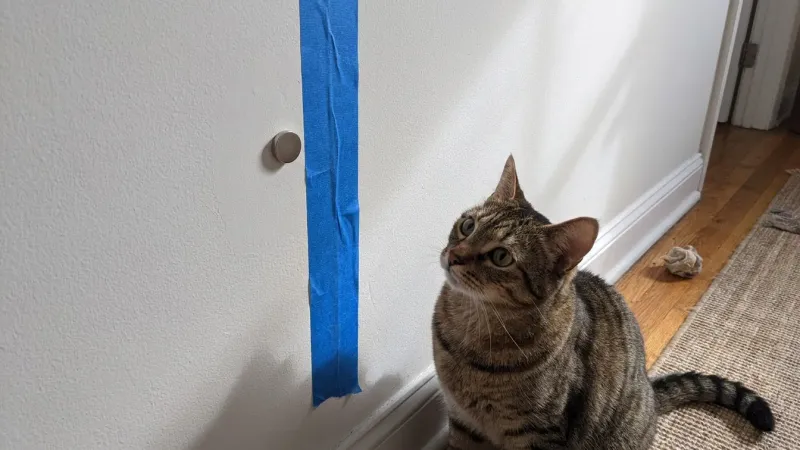
Electronic stud finders often misread hollow metal channels and concrete shear walls in high-rise buildings. Slide a strong neodymium magnet across the wall at your desired height until it snaps onto the drywall screws holding the sheetrock to the steel framing. Mark each screw head with painter's tape, then move vertically up and down 12 inches to confirm you have found a vertical stud rather than a horizontal electrical conduit or plumbing plate. Measure the spacing between studs; high-rise condos frequently use 24-inch spacing rather than standard 16-inch residential spacing.
- 2
Check for Hidden Wiring and Pipes
Before drilling into any condo wall, scan the marked stud lines with an AC voltage detector and a metal pipe scanner. Commercial-style steel studs have pre-punched oval grommets every 24 inches where electricians run armored cable and plumbers route flexible water lines. Keep your planned mounting holes at least 2 inches away from electrical outlets, light switches, and thermostat wiring paths. If a drill bit meets sudden resistance after piercing the drywall, stop immediately and inspect the hole with a flashlight before applying pressure.
- 3
Cut and Mount a Ledger Board for 24-Inch Spacing
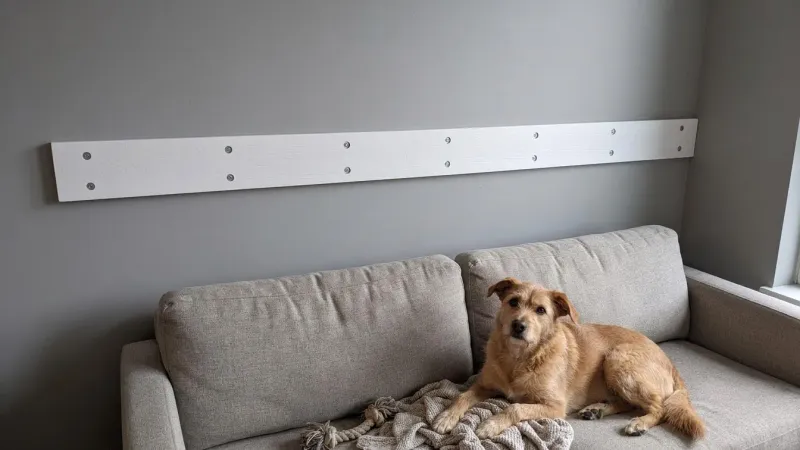
Most wall-mounted cat trees come with brackets spaced 16 inches apart, which will miss every second stud in a 24-inch high-rise wall. Solve this by cutting a 1x4 or 1x6 piece of solid hardwood (such as oak or maple) or 3/4-inch Baltic birch plywood—long enough to span at least two or three metal studs. Sand the edges smooth and paint or stain the board to match your wall or cat furniture. Once mounted across the steel studs, this solid wood ledger lets you attach your cat tree brackets anywhere along its length using standard wood screws.
- 4
Drill Pilot Holes Through Drywall and Steel
Hold your ledger board or cat tree bracket level against the wall and mark the center of each metal stud through the mounting holes. Set your drill to high speed and use a 1/2-inch titanium or cobalt twist bit—designed for cutting sheet metal—to bore cleanly through both the drywall and the front face of the steel stud. Keep the drill perpendicular to the wall so the bit does not walk off the curved edge of the metal stud. Wear safety glasses to protect your eyes from sharp metal shavings.
- 5
Insert 1/4-Inch Heavy-Duty Strap Toggle Bolts
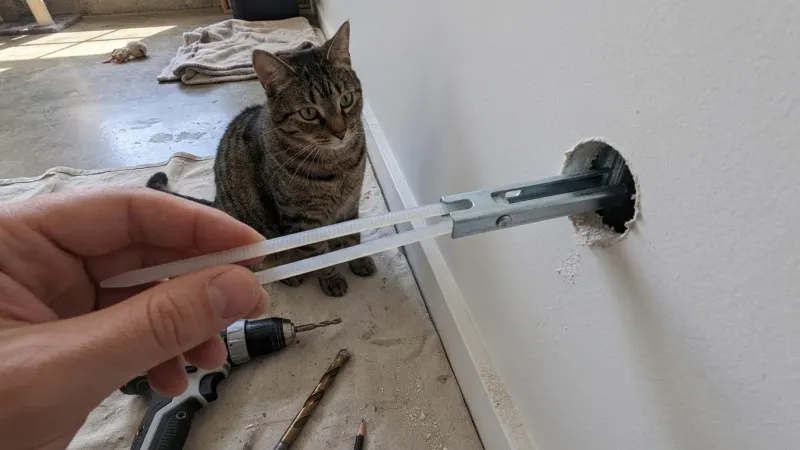
Fold the metal channel of a 1/4-inch strap toggle flat against its plastic zip straps and push it straight through the 1/2-inch hole until it clears the back side of the metal stud. Pull firmly on the plastic ring so the steel channel rotates flush against the inside of the stud framing. Slide the plastic locking cap all the way down the straps until it sits tight against the wall surface, then snap the excess plastic straps off flush with the cap using a quick sideways bend.
- 6
Fasten the Ledger or Brackets Securely
Align your wood ledger board or cat tree steel brackets over the installed toggle caps. Thread 1/4-20 machine bolts with wide flat washers through the brackets and into the metal toggle channels behind the wall. Tighten each bolt with a manual screwdriver or low-torque drill setting until the washer presses firmly against the wood or bracket without crushing the drywall behind it. If you used a ledger board, attach your cat tree's scratching posts, hammocks, and platforms to the board using 3/4-inch wood screws (or 1-inch screws only if the bracket flange is at least 1/4 inch thick) so the fasteners stay completely inside the 3/4-inch ledger board.
- 7
Load-Test Every Platform Before Letting Cats Climb
Once every bolt is tight, press downward firmly on each shelf, sisal post, and hammock with at least 30 to 40 pounds of steady hand pressure to simulate a full-grown cat leaping from above. Listen for any crunching drywall, creaking sheet metal, or shifting brackets. Check that all sisal surfaces are tightly wound with no exposed staples or sharp metal burrs that could snag claws. For multi-level setups, verify that step distances are comfortable for your cat's age and joint mobility before letting them explore.
Snap Toggles vs. Self-Tapping Tek Screws
Hardware kits included with wall-mounted cat trees sometimes suggest #8 x 2-inch flat Phillips-head self-tapping tek screws for metal framing. While tek screws drill cleanly through steel, non-structural interior condo walls typically use 25-gauge sheet metal—roughly the thickness of a credit card. A few fine screw threads biting into paper-thin steel can strip out under the repeated impact of a jumping cat.
Strap toggle bolts (such as Toggler Snaptoggle anchors) solve this problem by spreading the load across a wide steel channel behind the metal stud flanges. Once tightened, the metal bar clamps both the drywall and the steel stud together, supporting far higher shear and pull-out weights than threads alone.
Rental and Heavy-Cat Adjustments
If you have a large breed like a Maine Coon or a multi-cat household where two cats wrestle on the same perch, double up your anchor points by using a continuous 1x6 solid oak or pine ledger board across three studs. You can also explore designs from our guide to wall mounted cat trees for multiple cats to distribute weight across wider wall spans.
If your condo lease strictly forbids drilling half-inch holes into steel framing, avoid risking your security deposit with undersized anchors. Instead, look at wall-hugging cat tree ideas or tension-rod floor-to-ceiling towers that wedge securely between your floor and concrete ceiling without penetrating the drywall.
Taking the extra time to pair heavy-duty strap toggles with a solid wood ledger board turns fragile condo drywall into a rock-solid vertical playground. Check the mounting bolts every few months to ensure daily leaping has not loosened any hardware, and inspect sisal posts for worn threads so your cat stays safe on every climb.
Sources: International Cat Care
Frequently asked questions
Can I use regular plastic drywall anchors for a wall-mounted cat tree?
No. Plastic expansion anchors rely on friction against soft gypsum drywall and will rip straight out when a 10- to 15-pound cat jumps onto a shelf. Always anchor into the metal studs using 1/4-inch strap toggle bolts.
Are self-tapping tek screws strong enough for metal studs?
Self-tapping #8 tek screws work for lightweight picture frames, but interior condo walls usually use thin 25-gauge steel that can strip under jumping forces. Strap toggle bolts clamp behind the stud flange and provide much safer holding strength.
How do I mount a 16-inch cat tree when my loft has 24-inch metal studs?
Mount a horizontal 1x4 or 1x6 solid hardwood ledger board across two or three 24-inch metal studs using 1/4-inch toggle bolts. Then screw your 16-inch cat tree brackets directly into the wood ledger board.
How much weight can a cat tree mounted on metal studs hold?
A single 1/4-inch strap toggle bolt installed through 25-gauge steel drywall framing typically supports over 200 pounds in shear strength, though dynamic jumping creates higher brief loads. Spanning two or three studs easily supports multiple adult cats.

Nathan Brooks
Nathan Brooks runs Farmingzoom to help loving pet owners create safe, enriching homes for their animals. He cares deeply about responsible pet care and focuses on making everyday decisions simpler for fellow owners.…