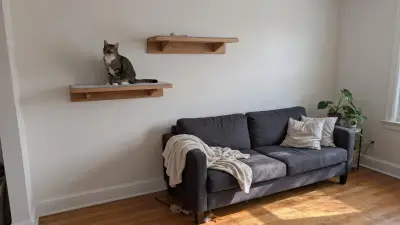
Giving your cat vertical climbing space does not require owning a power drill or mastering stud finders. Easy install wall mounted cat trees rely on paper drilling templates, hand-driven drywall anchors, and floor-to-ceiling tension rods that beginners can set up with basic hand tools.
Climbing high satisfies a cat's natural instinct to survey territory and rest away from household traffic. Below are 15 simple mounting setups and beginner-friendly kits designed to protect your drywall while keeping your cat secure.
1Floor-to-Ceiling Tension Rod Cat Tree
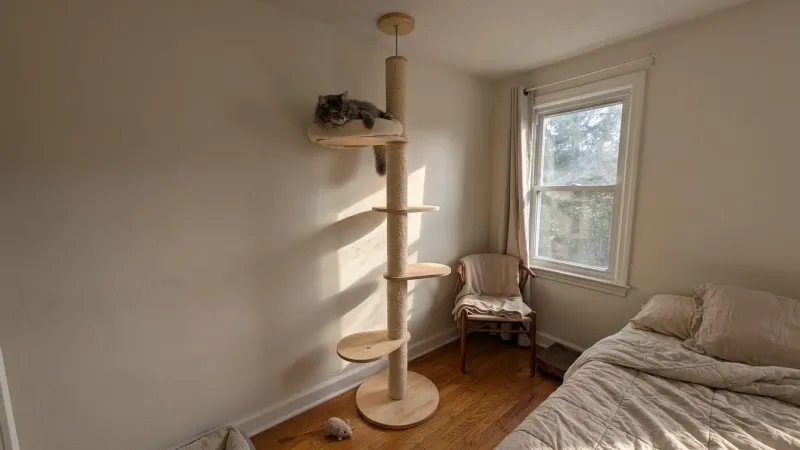
Floor-to-ceiling tension trees wedge tightly between your floor and ceiling using a spring-loaded top cap and a hand-turned tightening collar. Because the central post carries the vertical load, you do not need to drill into drywall or locate wall studs at all. Place the base against a flat wall corner, extend the upper rod until the built-in pressure indicator clicks, and lock the safety ring with the included Allen wrench. It delivers multi-level climbing stability in under twenty minutes with zero wall damage.
2Self-Drilling Drywall Anchor Floating Perches
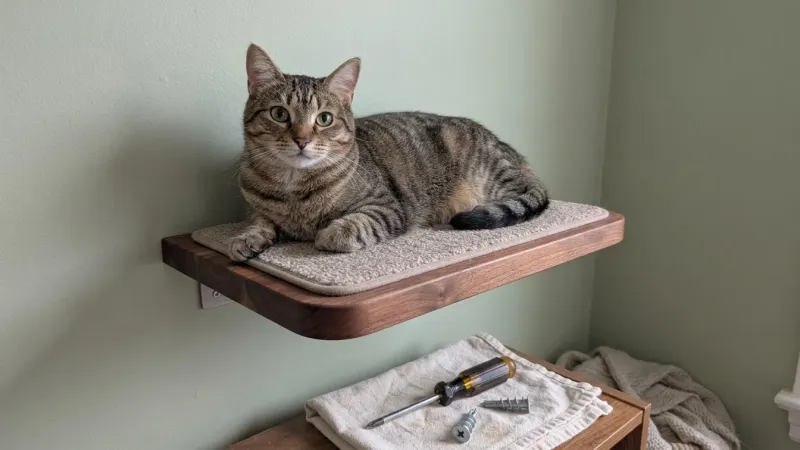
Floating cat perches packaged with coarse-threaded zinc drywall anchors let you install sturdy shelves using only a manual Phillips screwdriver. The sharp tip of each zinc anchor bores directly into standard half-inch drywall when turned clockwise by hand, cutting clean threads without pre-drilling. Once the anchor sits flush with the wall, you simply drive the mounting screw through the shelf bracket into the anchor core. This method holds moderate weight reliably and removes the guesswork of hunting for wooden studs behind paint.
3Peel-and-Stick Template Step Sets
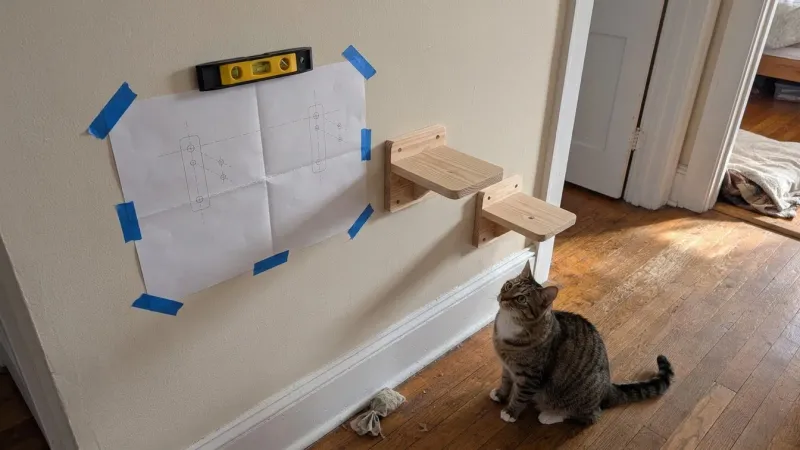
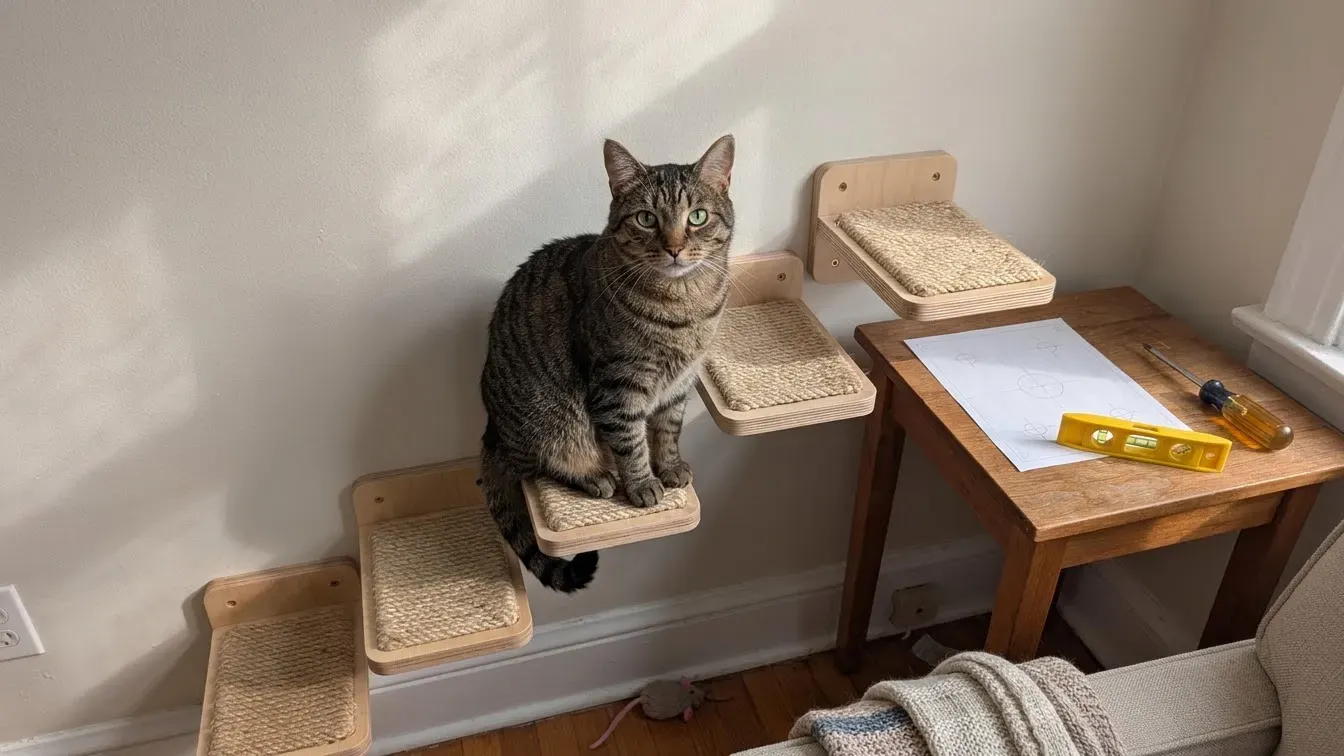
Beginner shelf kits that include full-size adhesive paper templates eliminate measuring errors and crooked brackets. You peel off the backing, stick the paper guide onto your wall using a small bubble level, and push a manual awl or screwdriver tip straight through the printed crosshairs. After starting your anchor holes right through the paper, you tear the template away and fasten the wooden steps. Having exact hole spacing pre-printed prevents extra drywall patching and speeds up multi-step layouts.
4Heavy-Duty Suction Cup Window Climbers
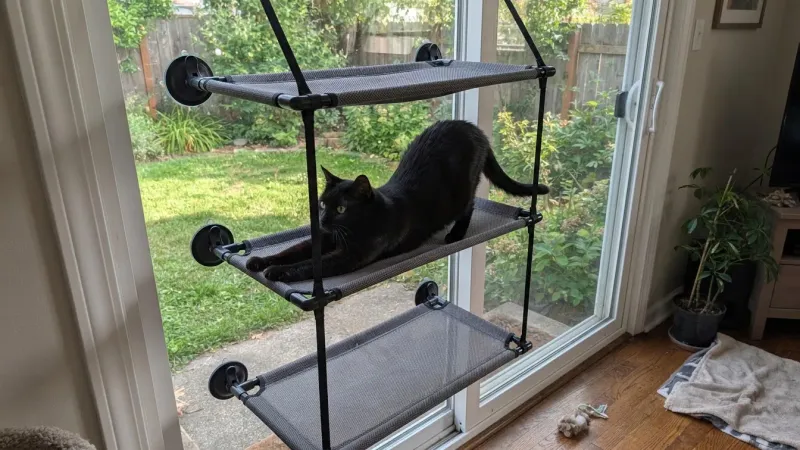
If drywall installation feels too intimidating, industrial lever-lock suction cup climbers attach directly to large glass patio doors or double-pane windows. Wipe the glass clean with warm soapy water, dry it thoroughly with a lint-free cloth, press the rubber suction cups flat, and flip the locking levers down by hand to create a vacuum seal. Many modular window systems stack three or four tiers high with sisal-wrapped steps and mesh hammocks. They give indoor cats prime bird-watching perches without touching a single wall screw.
5Over-the-Door Hanging Cat Tree Towers
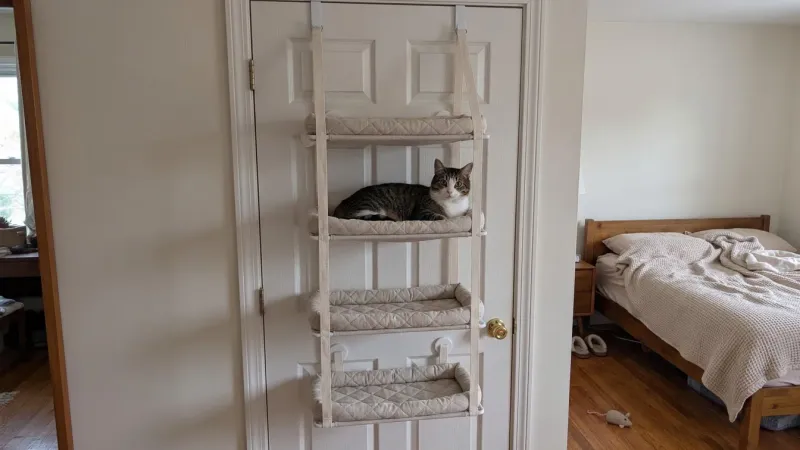
Over-the-door vertical cat towers hook securely over the top edge of any standard interior bedroom or closet door using padded steel brackets. You assemble the fabric-covered shelves with hand-tightened plastic connectors and hang the frame in less than ten minutes without tools. Lower stabilizer pads press gently against the bottom of the door to stop swinging when your cat leaps between levels. If you rent your home, explore more no-drill wall-mounted cat tree ideas that protect security deposits.
6Wall-Anchored Narrow Leaner Cat Trees
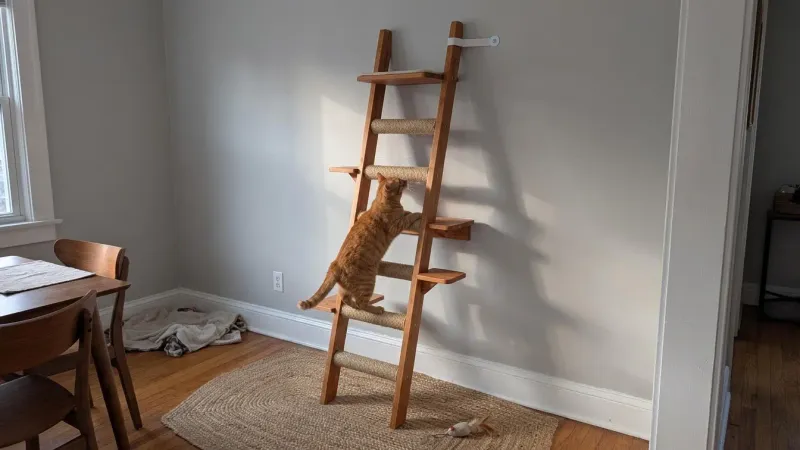
A wall-anchored leaner tree rests its weighted wooden base on the floor while a single top strap fastens to the drywall with one hand-driven toggle bolt. Because the floor supports nearly all the downward weight, the wall fastener only prevents tipping when a cat launches off the top perch. Beginners only have to install one easy wall anchor at eye level rather than aligning a dozen separate brackets. This hybrid design offers tall climbing height with minimal wall hardware.
7Snap-Together Modular Sisal Wall Steps
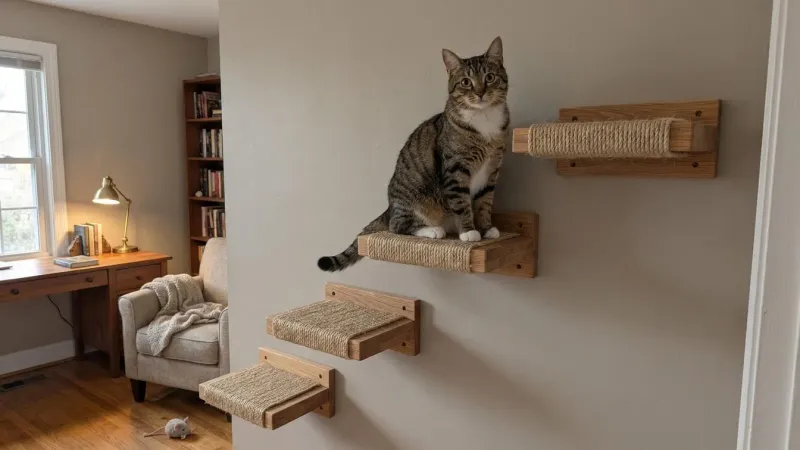
Modular wall step kits with pre-installed keyhole slots let you mount lightweight sisal-wrapped climbing blocks with simple round-head screws. You press the included cardboard spacing jig against the wall, twist two manual drywall anchors into place, and slide the step downward onto the screw heads until it clicks. The sisal rope surface gives cats instant claw traction so they feel confident climbing vertically. You can start with three steps and add more later as your confidence grows.
8Pre-Assembled Corner L-Bracket Cat Shelves
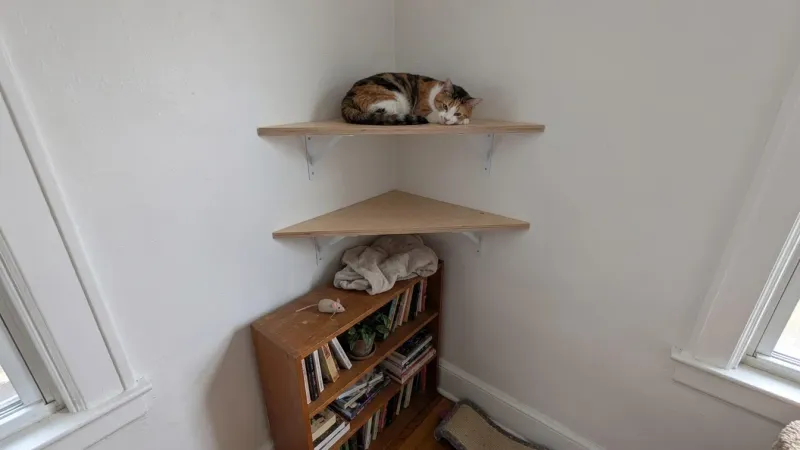
Mounting shelves inside an inward wall corner gives beginners a built-in structural advantage because two perpendicular walls brace each platform. Corner kits come with pre-drilled L-brackets that sit flush against both walls, keeping the shelf naturally level while you mark the screw holes. Even if your cat weighs over fifteen pounds, the dual-wall contact distributes pressure evenly across four hand-driven anchors. Check out specialized corner wall mounted cat trees to turn tight hallways into vertical play zones.
9Toggle-Bolt Fabric Wall Hammock Kits
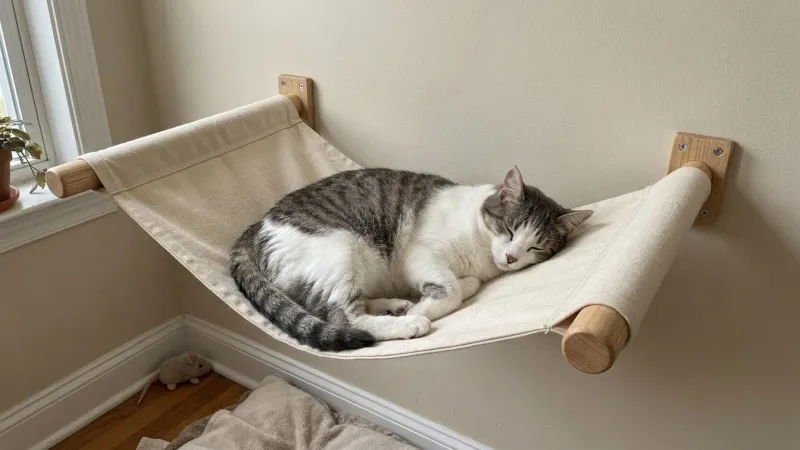
Canvas wall hammocks held by two wooden side rails are among the lightest and easiest wall cat beds to install by hand. Most beginner-friendly hammock kits include spring-wing toggle bolts that fold flat to push through a screwdriver-made drywall hole and snap open behind the wallboard. Tightening the bolt with a standard hand screwdriver pulls the wings tight against the back of the drywall for a rock-solid hold. Removable canvas fabric also makes washing off shed fur simple.
10French Cleat Wooden Wall Condo Boxes
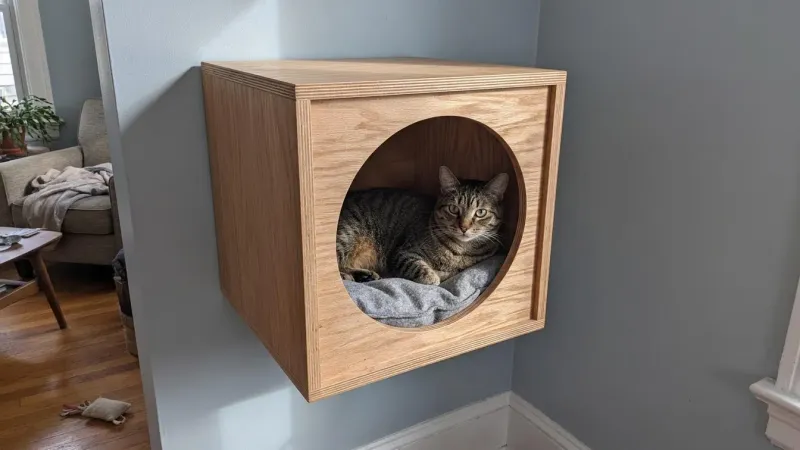
Wall-mounted cat cubbies fitted with pre-cut wooden French cleats take the struggle out of holding a heavy box while driving screws. You fasten one lightweight angled wooden strip to the wall using a mini bubble level and hand-driven anchors, then lift the pre-assembled cat condo and hook its matching back cleat over the wall strip. Gravity locks the condo securely against the drywall without awkward overhead balancing. If you need sturdy support for larger pets, browse heavy duty wall mounted cat trees engineered for bigger cats.
11Single-Rail Track Wall Climbing Systems
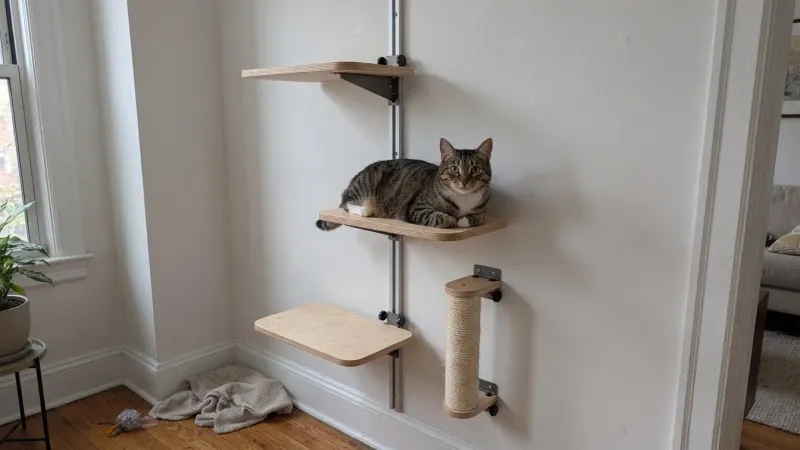
Track-mounted cat trees use one vertical aluminum or hardwood rail fastened straight down a single wall line, eliminating horizontal leveling across multiple shelves. Once you secure the single vertical bar with hand-tightened drywall anchors, you slide perches, scratching posts, and beds onto the track and lock them with thumbscrews. Every platform stays aligned automatically because all pieces connect to the same central spine. Beginners can rearrange shelf heights in seconds without making new holes.
12Sisal-Wrapped Wall Scratching Post Kits
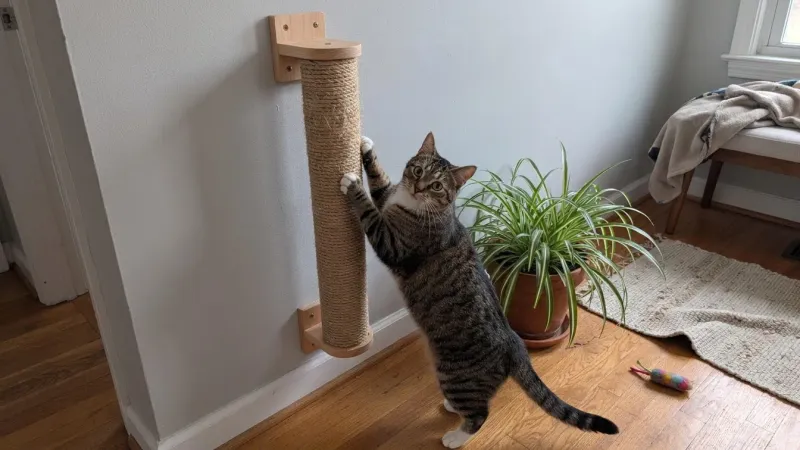
Vertical wall-mounted scratching posts consist of a single wooden cylinder capped with top and bottom mounting brackets that install in under ten minutes. Hold the post plumb against the wall using a small torpedo level, mark the four bracket holes with a pencil, and twist in self-tapping drywall anchors by hand. Mounting the post 18 inches off the floor lets adult cats stretch their backs and shoulders completely while scratching. It doubles as a grippy vertical ladder leading up to a nearby windowsill.
13Clamp-On Bookshelf and Desk Cat Perches
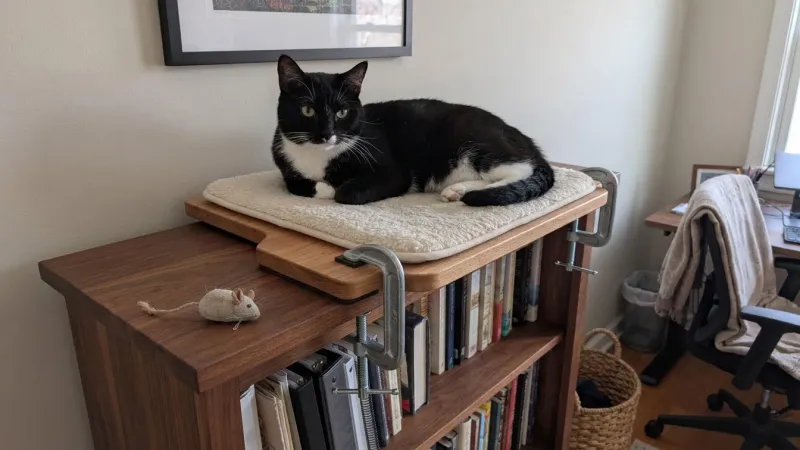
Desk and bookshelf clamp perches attach to sturdy existing furniture using large hand-cranked C-clamps lined with non-slip silicone pads. You position the perch on top of a tall bookcase or beside a home office desk, twist the underside knobs by hand until snug, and let your cat climb up from a nearby chair. No wall holes, anchors, or stud finders are ever needed, and you can move the perch to another room anytime. For more furniture-integrated setups, see bookshelf cat trees for home offices.
14Lightweight Felt-Lined Hexagonal Wall Cubes
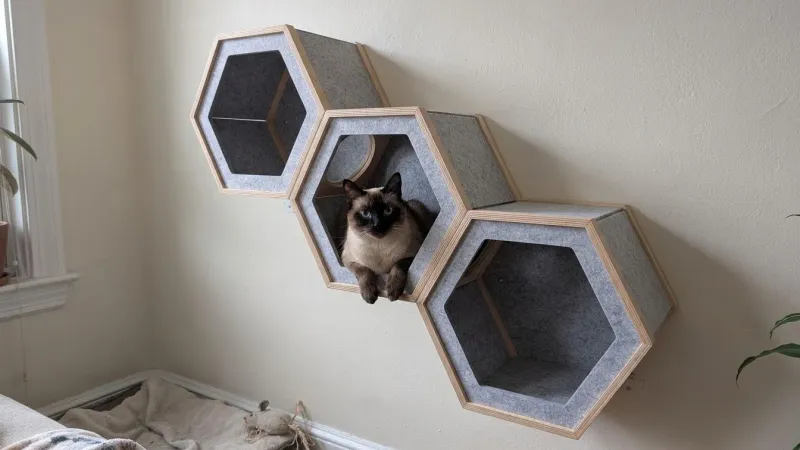
Molded acoustic felt and thin plywood hexagonal cubes weigh less than four pounds each, making them effortless for one person to hold and mount alone. Beginner sets include adhesive alignment tabs and low-profile drywall screws that install cleanly with a manual screwdriver. Grouping three or four hexagons in a honeycomb cluster creates sheltered napping nooks with built-in side walls that prevent rolling off during sleep. The soft felt interior absorbs sound and feels warm under paws.
15Velcro-Strap Ladder Bridges Between Shelves
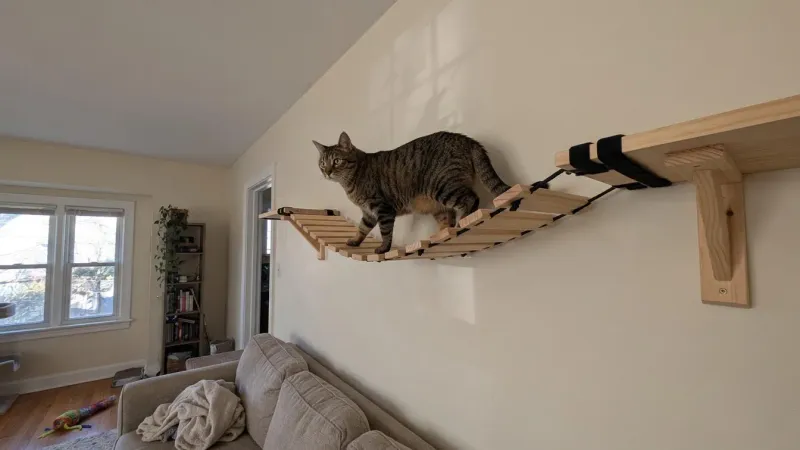
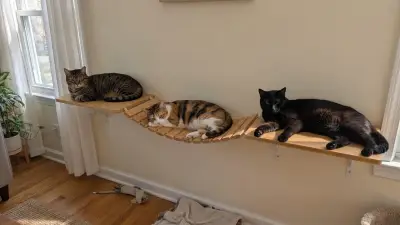
Flexible wooden rope bridges connect two basic wall perches using heavy-duty hook-and-loop straps or simple eye hooks instead of rigid wall brackets. Once you mount two end shelves with your screwdriver, you simply wrap the bridge straps around the shelf frames and press them shut. The suspension bridge spans wide wall gaps without requiring middle anchors or stud alignment. Cats enjoy the gentle sway, and beginners get wide horizontal coverage from just two mounting points.
How to Prep Your Wall Without a Power Drill
Before opening any hardware bag, check what your wall is made of by tapping firmly with your knuckles. Hollow-sounding drywall accepts self-drilling threaded anchors driven with a standard Phillips screwdriver, while solid plaster or concrete requires masonry-specific fasteners. Always map out your cat's climbing path with painter's tape first so steps sit 12 to 16 inches apart, which allows adult cats and older pets to jump comfortably without straining their joints.
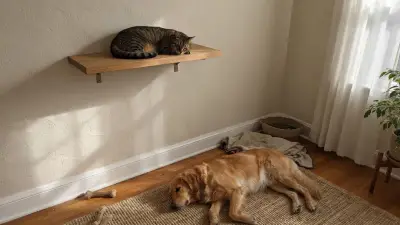
Keep heavy perches out of reach of small dogs or active toddlers if your household shares space, and verify that every shelf supports at least double your cat's body weight. If your cat hesitates to use new high perches or shows signs of stiffness when jumping, schedule a quick checkup with your veterinarian to rule out joint discomfort.
Common Beginner Mounting Mistakes to Avoid
Rushing the marking phase is the fastest way to leave crooked holes in drywall. Never rely on eyeballing shelf alignment; always use a small magnetic bubble level or the paper level strip included inside the box before twisting in a single screw. Avoid hanging heavy hammocks solely on standard push-in plastic anchors, as repeated jumping forces will wiggle them loose over time.
- Skip standard picture hangers: Nails and small picture hooks cannot handle the horizontal shear force of a jumping cat.
- Test every shelf by hand: Press down firmly on each mounted platform with your forearm before letting your cat climb onto it.
- Watch tail and whisker clearance: Leave at least 14 inches of open headroom above each perch so your cat can sit upright comfortably.
You do not need power tools or carpentry training to build a safe vertical playground for your cat. Start with one small kit that includes a paper template and hand-driven anchors, test each shelf firmly with your own weight before introducing your cat, and expand your wall route one easy step at a time.
Sources: International Cat Care · Cornell Feline Health Center · ASPCA
Frequently asked questions
Can I install a wall mounted cat tree without a power drill?
Yes. You can use self-drilling threaded zinc drywall anchors driven with a manual Phillips screwdriver, spring-wing toggle bolts, floor-to-ceiling tension rods, or heavy-duty glass suction cups. These options hold securely in standard drywall or on windows without requiring electric tools.
How do I stabilize a cat tree against a wall without hitting a stud?
Use heavy-duty drywall anchors rated for at least 50 to 75 pounds each, such as metal toggle bolts or coarse-threaded self-drilling anchors. For tall floor-standing trees, attach a single L-bracket or anti-tip fabric strap near the top using a toggle bolt to stop wobbling.
How far apart should wall mounted cat steps be placed?
Space climbing steps 12 to 16 inches apart vertically and horizontally so your cat can step or hop comfortably without overstretching. For senior cats or smaller breeds, keep gaps closer to 10 or 12 inches to protect their joints.
What is better than a traditional floor cat tree for small spaces?
Wall mounted cat shelves and floor-to-ceiling tension trees free up valuable floor space while still giving cats high vantage points. They keep litter boxes and food bowls separated from vertical climbing routes and prevent bulky carpeted bases from crowding narrow rooms.

Nathan Brooks
Nathan Brooks runs Farmingzoom to help loving pet owners create safe, enriching homes for their animals. He cares deeply about responsible pet care and focuses on making everyday decisions simpler for fellow owners.…