Time needed
3 h
What you need
- 1 sheet (24 x 48 inches) 1-inch formaldehyde-free Baltic birch plywood
- 1 sheet (24 x 48 inches) 3/4-inch formaldehyde-free Baltic birch plywood
- 1 kiln-dried untreated 4x4 pine post (8 feet long)
- 50 feet of 3/8-inch unoiled natural sisal rope
- 1 square yard of 1/4-inch thick 100% natural wool felt
- Non-toxic PVA wood glue (FDA food-contact safe)
- Certified zero-VOC water-based polyurethane, pure tung oil, or food-grade mineral oil and beeswax
- 3-inch structural wood screws
- 2-1/2-inch coarse pocket screws
- 3/8-inch and 1/2-inch hardwood dowel plugs
- 120-grit and 150-grit sandpaper
Tools
- Circular saw or table saw
- Jigsaw
- Cordless drill with 3/8-inch and 1/2-inch drill bits
- Pocket-hole jig
- Orbital sander
- Rubber mallet
- Bar clamps
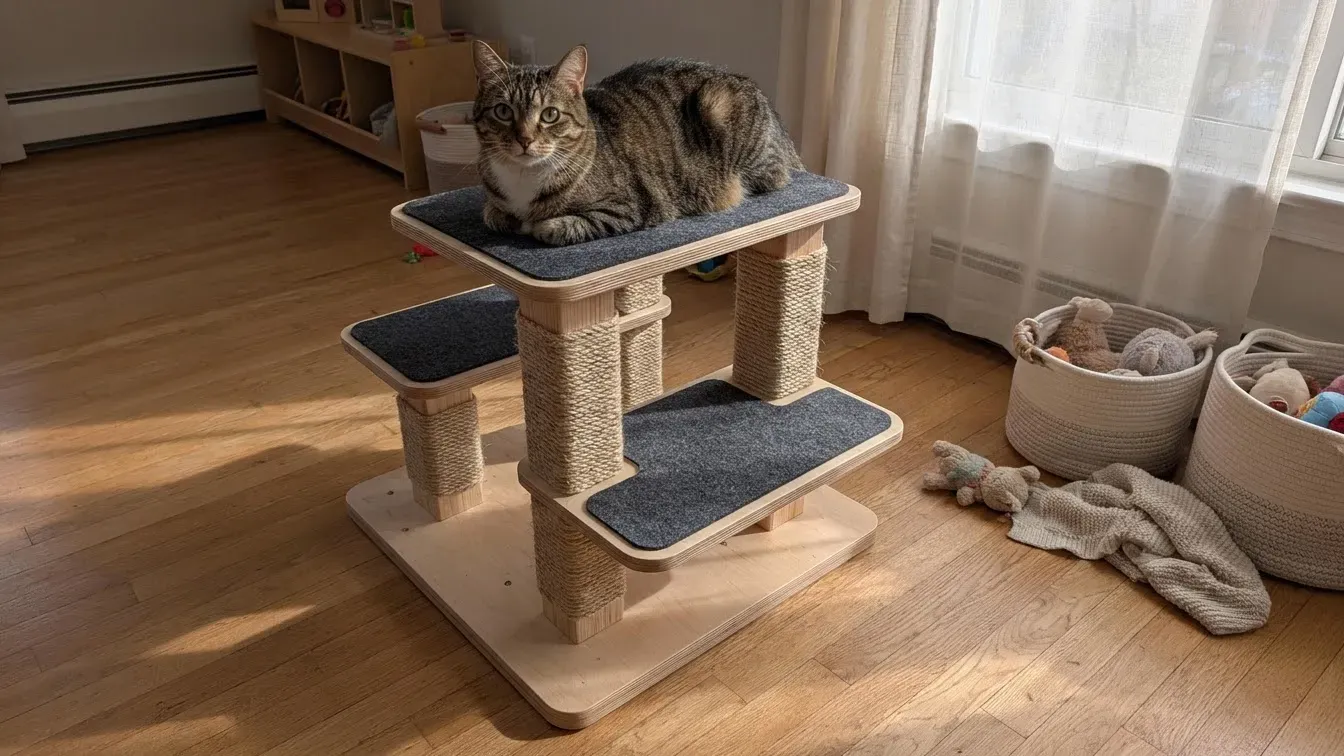
Building a toddler safe DIY cat tree requires designing for low gravity, zero exposed fasteners, and non-toxic surfaces rather than copying tall, top-heavy pet store towers. Standard cat furniture relies on narrow bases, stapled synthetic carpet, and sharp corner edges that create tipping and ingestion hazards when curious toddlers start pulling up on furniture.
This step-by-step build uses thick Baltic birch plywood, weighted support columns, recessed pocket screws, and untreated sisal rope to keep total height under 32 inches while resisting lateral pulling forces. Your cat gets a sturdy scratching and lounging spot, and your playroom stays safe for little hands and mouths.
- 1
Cut and Round the Heavy Plywood Base
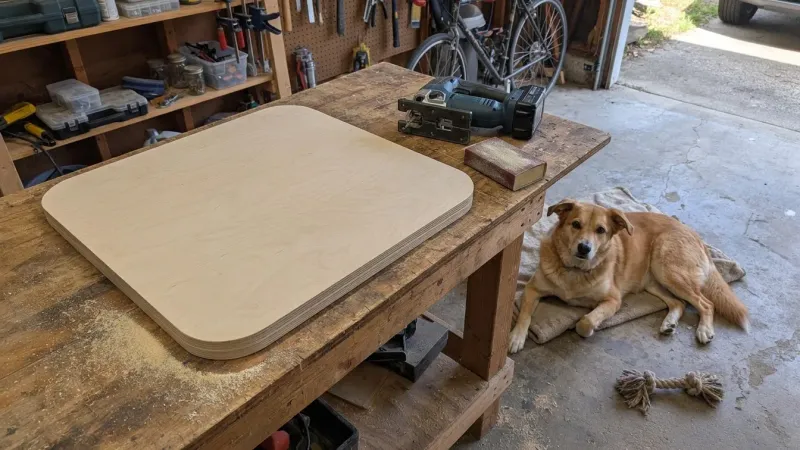
Cut a 24-by-24-inch square from 1-inch-thick formaldehyde-free Baltic birch plywood to establish an ultra-low center of gravity. Use a jigsaw to round all four corners to a 2-inch radius so a falling toddler never strikes a sharp 90-degree angle. Making the base at least 8 inches wider than the upper perch prevents the structure from tipping even if a child leans their full body weight against the side.
- 2
Cut the Step Perch and Top Lounger
Cut one 12-by-14-inch mid-level step platform and one 16-by-16-inch top lounging platform from 3/4-inch birch plywood. Round every corner with your jigsaw and ease all upper and lower edges using a router with a 1/4-inch round-over bit or 120-grit sandpaper. Smooth, curved edges eliminate splinters and soften accidental bumps during active playroom sessions.
- 3
Build Weighted Support Columns
Cut three 4-by-4-inch kiln-dried untreated pine posts: one 10-inch post for the lower step and two 26-inch posts for the top platform. Solid timber posts add low-end ballast without relying on hollow cardboard tubes that crush easily. Sand all post faces smooth with 150-grit sandpaper so no rough splinters remain.
- 4
Recess All Fasteners Beneath the Base
Mark the post locations on the underside of the 24-inch base, spacing the two tall posts 10 inches apart for lateral stability. Drill 1/2-inch countersink holes 3/8-inch deep into the bottom face of the base, then drive 3-inch structural wood screws upward through the base into each post. Plug the countersunk holes with glued wooden dowels so zero metal hardware is exposed.
- 5
Apply a Food-Safe, Zero-VOC Wood Finish
Wipe away all sawdust with a damp cloth and apply two coats of pure tung oil, food-grade mineral oil blended with beeswax, or a certified zero-VOC water-based polyurethane across all exposed wood surfaces. Let the finish cure completely according to the label before bringing the tree indoors—note that certified zero-VOC water-based polyurethane cures within 48 hours, whereas pure tung oil requires 7 to 30 days to fully cure, and non-drying mineral oil must be reapplied periodically and kept away from surfaces where PVA glue will be bonded. Non-toxic finishes protect both teething toddlers and cats that groom their paws after resting on the wood.
- 6
Wrap Scratching Posts With Untreated Sisal
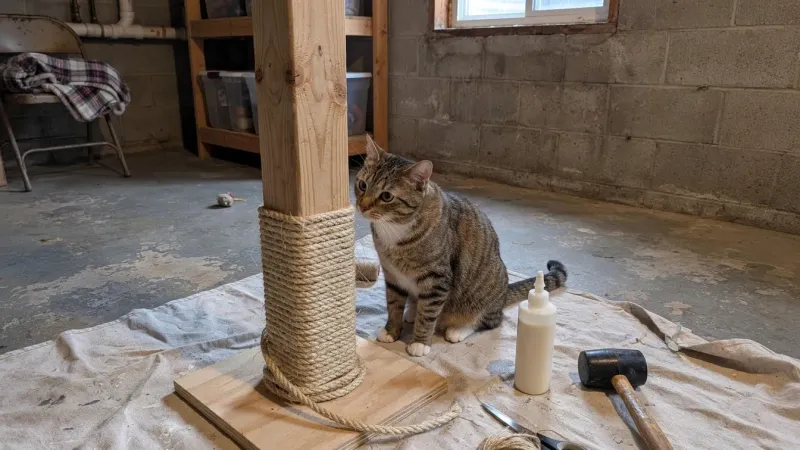
Apply a bead of non-toxic PVA wood glue around the bottom 2 inches of one 26-inch post and press the end of 3/8-inch unoiled, untreated sisal rope firmly into the glue. Wind the rope tightly upward, tapping every few coils downward with a rubber mallet and adding small dabs of wood glue every four wraps instead of using metal staples. Tuck and glue the top end into a pre-drilled 3/8-inch hole in the post.
- 7
Attach Platforms With Hidden Pocket Screws
Drill pocket holes on the upper sides of the 4x4 posts so all screw heads stay tucked away beneath the platforms. Apply wood glue to the top of each post, center the platforms, and drive 2-1/2-inch coarse pocket screws upward at an angle into the underside of the 3/4-inch plywood platforms. Fill the pocket holes with matching wood plugs and sand flush so tiny fingers cannot probe into any gaps.
- 8
Bond Low-Pile Wool Felt Cushion Pads
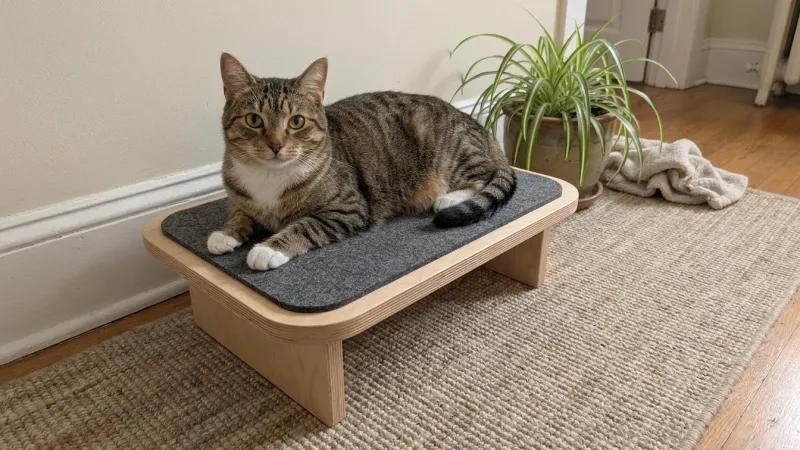
Cut pads from 1/4-inch-thick 100% natural wool felt to fit inside the top of each platform, stopping 1 inch short of the rounded wood edges. Glue the felt flat using non-toxic PVA glue and weigh it down with heavy books for four hours until dry. Dense wool felt gives cats reliable claw traction without shedding loose loops or synthetic fibers that toddlers could pull off and swallow.
Common Childproofing Mistakes to Avoid
Even well-intentioned builders often overlook everyday hazards that turn cat furniture into a safety risk around toddlers and cats alike.
- Using plush pile carpet: Long synthetic carpet fibers shed easily when scratched, creating choking and intestinal blockage hazards if swallowed by a toddler or cat. Stick to tight-weave wool felt or bare sanded hardwood.
- Relying on upholstery staples: Pneumatic staples work loose over time under feline claws. A single pulled staple is a severe swallowing hazard, so rely strictly on non-toxic wood glue and recessed screws.
- Skipping wall anchors on mid-height builds: If you extend this design above 32 inches for larger cats, secure the top platform to a wall stud with a heavy-duty anti-tip furniture strap, or browse wall-mounted cat tree ideas for toddler safety to keep climbing zones completely out of reach.
Adjusting Dimensions for Senior or Large Cats
One size rarely fits every feline household member, especially when balancing toddler safety with adult cat mobility.
For cats weighing over 14 pounds, widen the upper perch from 16 inches to 18 or 20 inches and reinforce the underside with an extra cleat so the platform never flexes during jumps. You can find additional structural reinforcement tips in our guide on building a sturdy DIY cat tree for large heavy cats.
If you have a senior cat or a kitten under six months old, keep the first step platform no higher than 10 inches off the floor. Low, wide steps protect aging joints while preventing young kittens from taking hard tumbles onto playroom flooring.
Once the glue and finish have cured (48 hours for water-based polyurethane, or 7 to 30 days if using pure tung oil), test the finished tree by pulling firmly on the top perch from multiple angles to confirm the base stays planted flat on the floor. Place the unit in a quiet corner of your playroom, set a DIY cat door in a baby gate nearby if your cat needs an easy escape route, and contact a veterinarian promptly if your cat ever ingests rope fibers or splinters.
Sources: ASPCA · Cornell Feline Health Center · International Cat Care
Frequently asked questions
How tall can a DIY cat tree be and still be safe around toddlers?
Keep freestanding cat trees in toddler playrooms under 32 inches tall with a base at least 24 inches wide. Anything taller than 32 inches should be anchored directly into a wall stud using a heavy-duty furniture anti-tip strap so a pulling child cannot tip it over.
What wood finish is safe for both cats and toddlers?
Use certified zero-VOC water-based polyurethane, pure tung oil (allowing 7 to 30 days to fully cure), or food-grade mineral oil blended with beeswax (reapplied periodically and kept away from PVA glue joints). Avoid traditional oil-based stains, lacquers, and chemical sealants that off-gas volatile organic compounds or flake off if chewed.
Why should you avoid staples and carpet on a toddler-safe cat tree?
Cats frequently pull metal upholstery staples loose while scratching, leaving sharp fasteners on the floor where toddlers can swallow them. Plush synthetic carpet also sheds long loops that pose choking hazards for children and intestinal blockage risks for cats.
Is sisal rope safe if my toddler chews on it?
Choose unoiled, unbleached natural agave sisal rope rather than chemically treated or oiled hardware-store rope. While natural sisal contains no toxic dyes, supervise young children so they do not pull loose strands apart, and trim any frayed fibers immediately.

Nathan Brooks
Nathan Brooks runs Farmingzoom to help loving pet owners create safe, enriching homes for their animals. He cares deeply about responsible pet care and focuses on making everyday decisions simpler for fellow owners.…