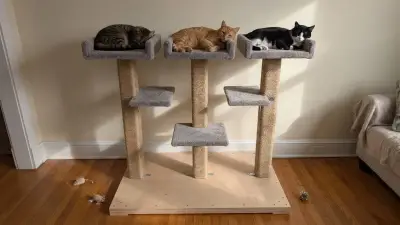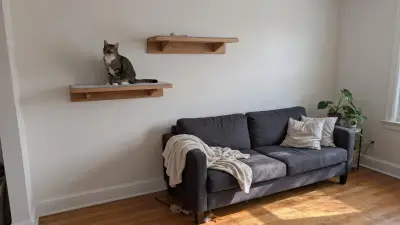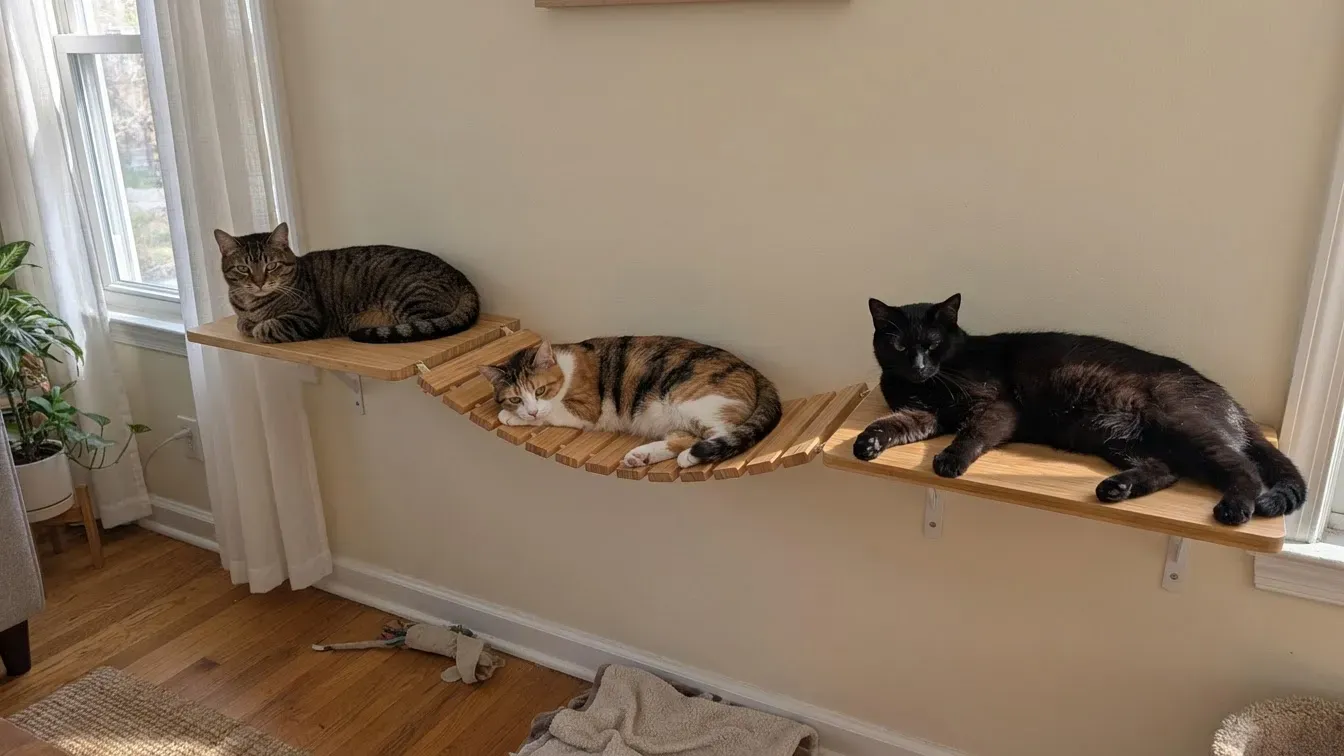
Wall mounted cat trees for multiple cats eliminate territorial fights by replacing single-peak floor towers with continuous vertical highways, dual exit routes, and multiple equal-height beds. When three or more indoor cats share one home, traditional freestanding trees often create dead-end bottlenecks where one confident cat blocks others from climbing down.
By anchoring solid wood or bamboo shelves directly into wall studs, you gain heavy-duty stability without sacrificing floor space. Below are 17 practical layouts engineered to keep multi-cat traffic moving smoothly and give every cat an uncontested high perch.
1The Twin-Peak Symmetric Loop
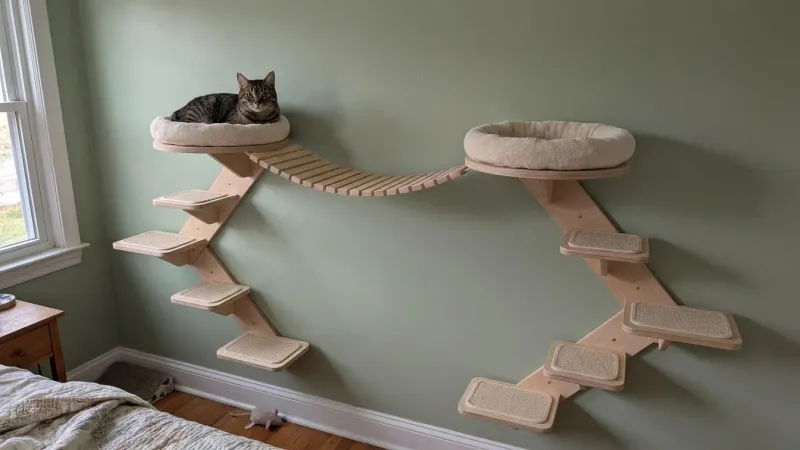
Install two identical top beds at the exact same height—around 6 feet off the floor—connected by a central slatted bridge, with separate stair-step shelves descending on both left and right sides. This layout removes hierarchy disputes because neither perch sits higher than the other. Two cats can nap side-by-side while a third crosses underneath without cornering anyone.
2The Double-Ladder Sisal Highway
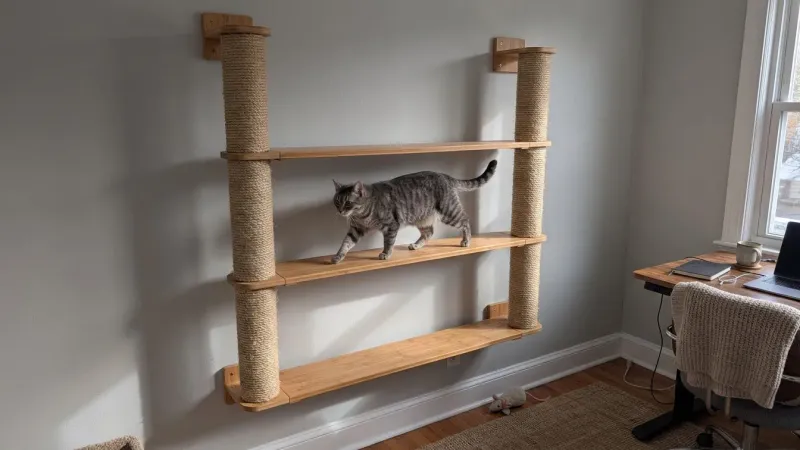
Mount two parallel vertical sisal scratching poles 4 feet apart, linked by three horizontal solid bamboo walkways at staggered heights. Cats can sprint up the left pole, cross any walkway, and descend the right pole in a continuous circuit. Using solid bamboo prevents flexing when two cats pass each other mid-span.
3Three-Tier Corner Wrap-Around
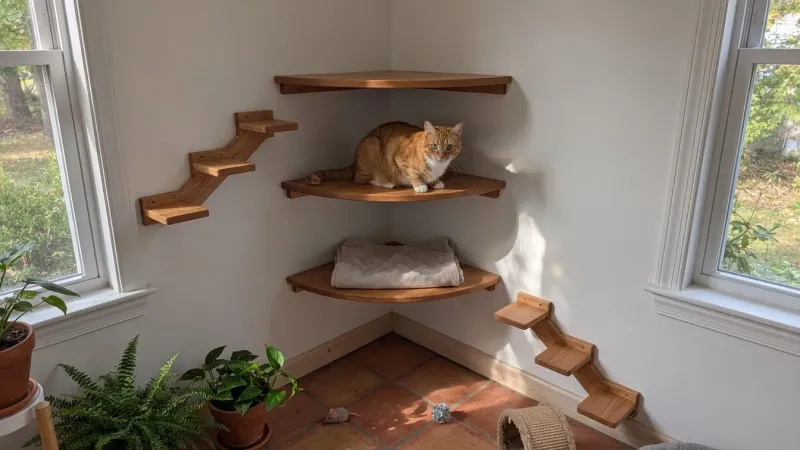
Bridge two adjacent walls using curved corner shelves that connect two separate entry staircases on opposite walls. Instead of trapping a shy cat in a 90-degree corner, the curved platform lets cats turn smoothly and exit onto the perpendicular wall. Space shelves 14 inches apart vertically so cats of different sizes navigate easily.
4Over-Doorway Continuous Bridge
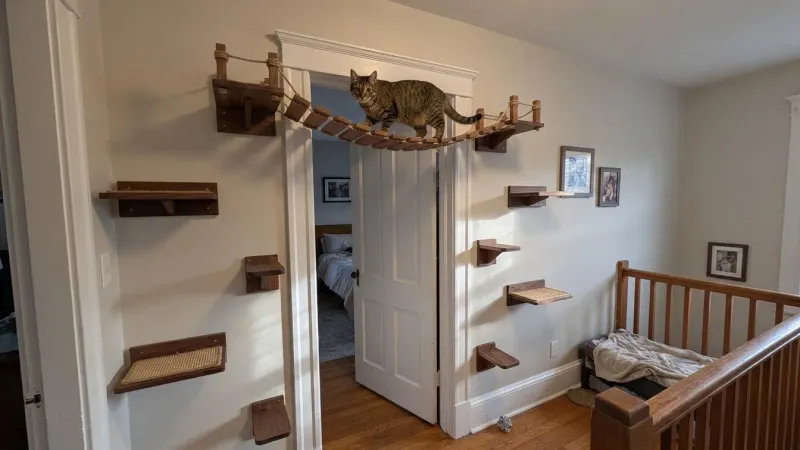
Span a long slatted rope bridge above an interior doorway, flanked by wall-mounted climbing steps on both sides of the doorframe. This setup turns unused upper wall space into a high-altitude bypass connecting two rooms. Cats avoid hallway floor traffic and never hit a dead end at the doorframe.
5Triple-Hammock Parallel Rail
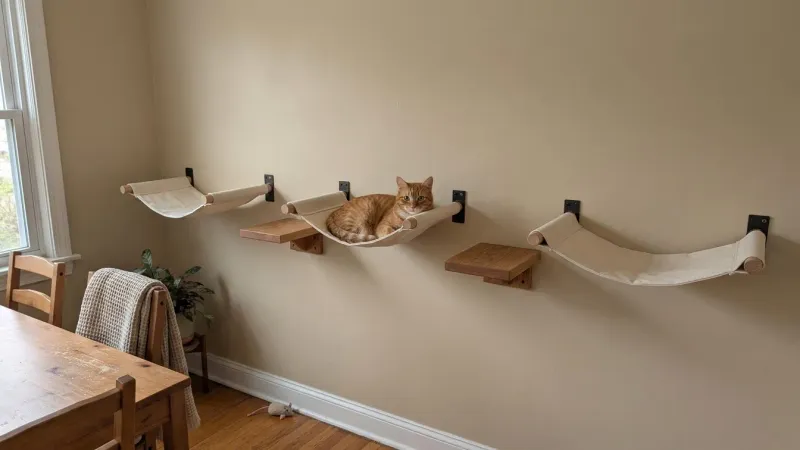
Hang three heavy-duty canvas hammocks in a horizontal row at the same elevation, separated by 16-inch wooden stepping platforms between each hammock. Every cat gets an identical, cradled sleeping spot with a clear step-off point on both its left and right sides, preventing one cat from trapping a neighbor inside a hammock.
6Staggered U-Turn Wall Circuit
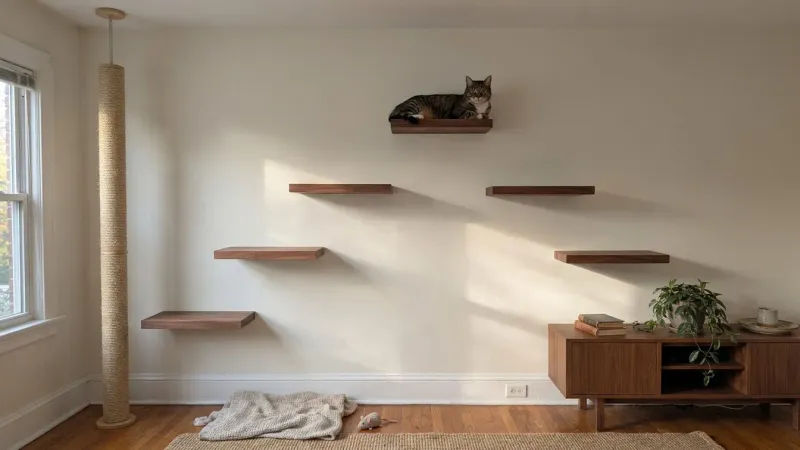
Arrange six wide wooden platforms in a large U-shape across a wide living room wall, placing a floor-to-ceiling tension post at one end and a low console table at the other. Cats climb up either side, lounge along the upper horizontal run, and exit down the opposite end without reversing direction.
7Dual-Entry Wall Condo Cluster
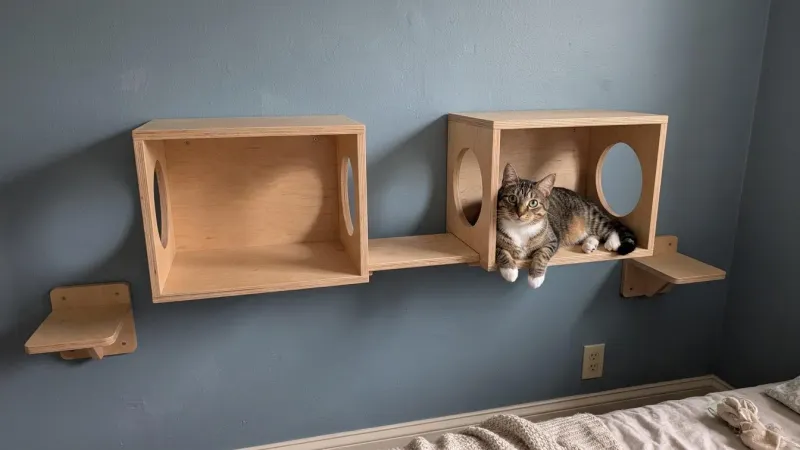
Mount two enclosed wooden cat cubbies side by side, ensuring each box has cutouts on both the left and right panels rather than a single front hole. Connect the cubbies with a short flat plank and place stepping shelves on both outer ends so no cat can ambush another inside an enclosed box.
8Window-to-Wall Perimeter Track
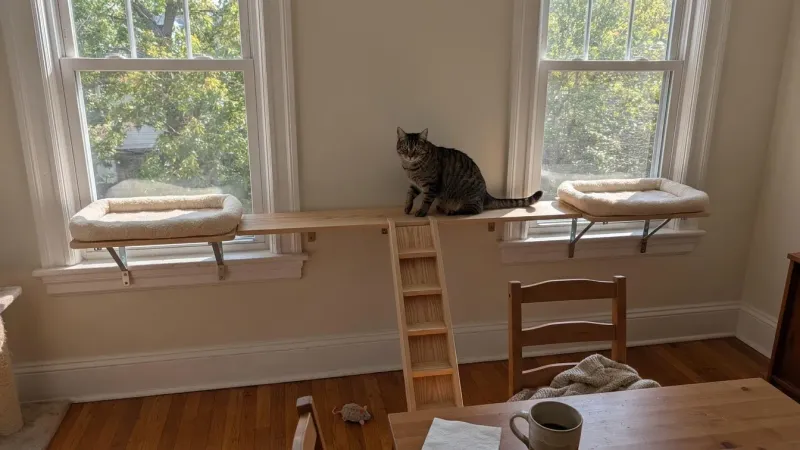
Link two screw-mounted window-sill perches—or wall-mounted shelves anchored directly into the wall studs flanking the window frames—with a wall-mounted wooden runway running between the windows, plus a separate step-down ladder at the center. Three cats can sunbathe simultaneously while retaining three distinct downward escape routes if tension rises over a prime bird-watching spot.
9Twin Vertical Post and Canopy
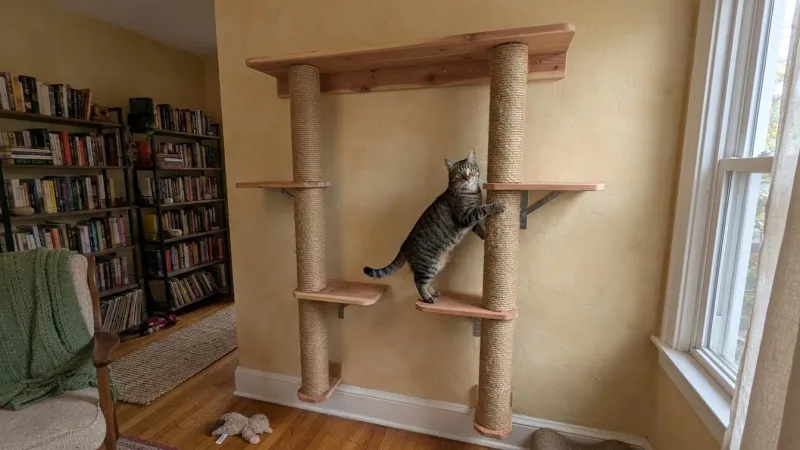
Pair two wall-mounted 5-foot vertical sisal posts with a wide overhead shelf spanning between their tops, plus mid-level escape steps branching outward to the left and right. Cats climb up the textured posts for vigorous scratching and step off onto outer shelves if another cat claims the top canopy.
10The Figure-Eight Wall Track
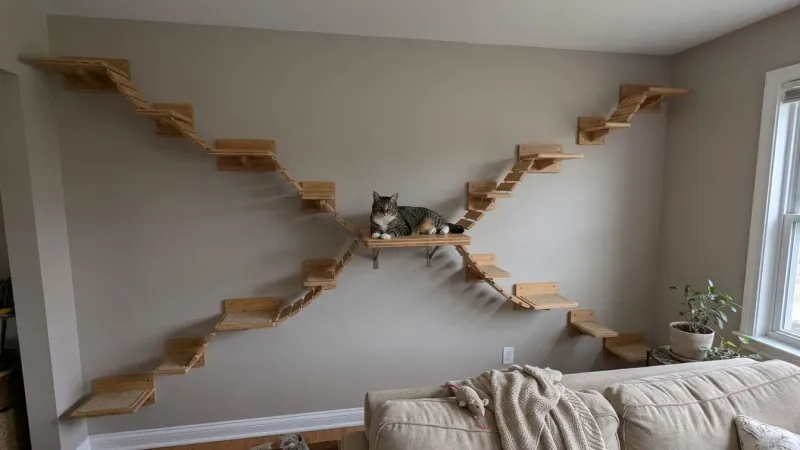
Create an X-shaped crossing in the center of a large wall using a wide 20-inch square intersection platform, with four diagonal step paths radiating to top-left, top-right, bottom-left, and bottom-right corners. The oversized center junction lets two cats pass comfortably while choosing among four distinct exit branches.
11Triple-Tier Bookshelf Integration
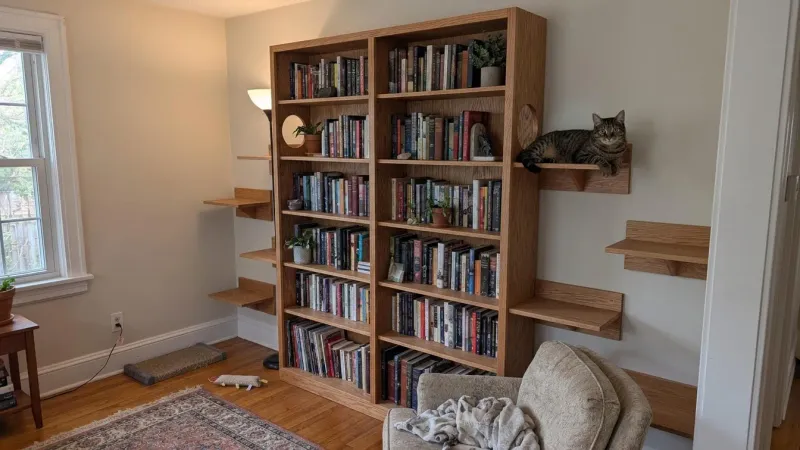
Anchor heavy-duty wall shelves alongside a tall bookcase, cutting pass-through portals on both sides of the top bookcase shelf so cats move seamlessly from the wall steps through the bookcase and down the opposite side. You can find more layout inspiration in these cat tree bookshelf ideas.
12High-Altitude Hallway Galley
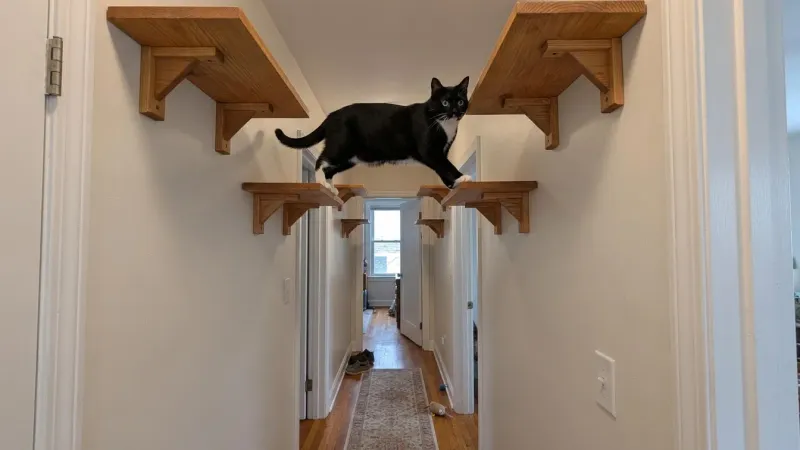
Install alternating offset shelves along both sides of a narrow hallway at 6 feet high, allowing cats to hop back and forth across the corridor or descend at either end of the hall. Keeping steps at least 11 inches deep gives adult cats secure footing when crossing between opposite walls.
13The Triple-Pod Lounging Arc
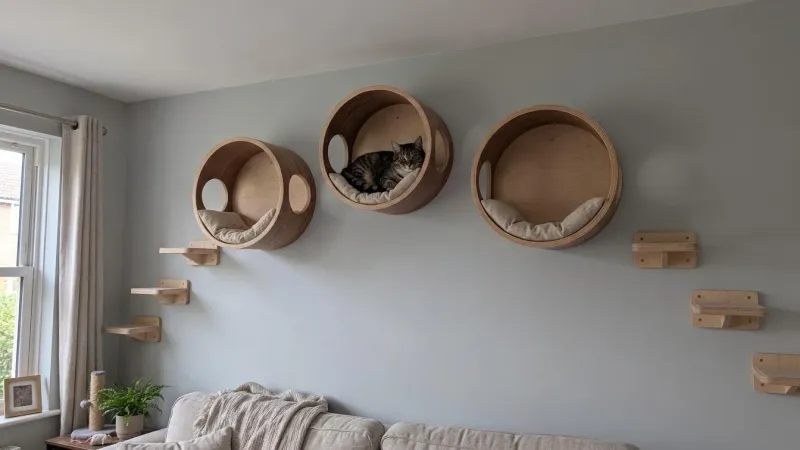
Mount three round curved wooden beds in a gentle shallow arc near the ceiling, keeping all three within 4 inches of the same height and flanking both ends with descending wall steps. Every cat enjoys a panoramic view of the room while having immediate access to a downward exit path.
14Modular Pegboard Climbing Grid
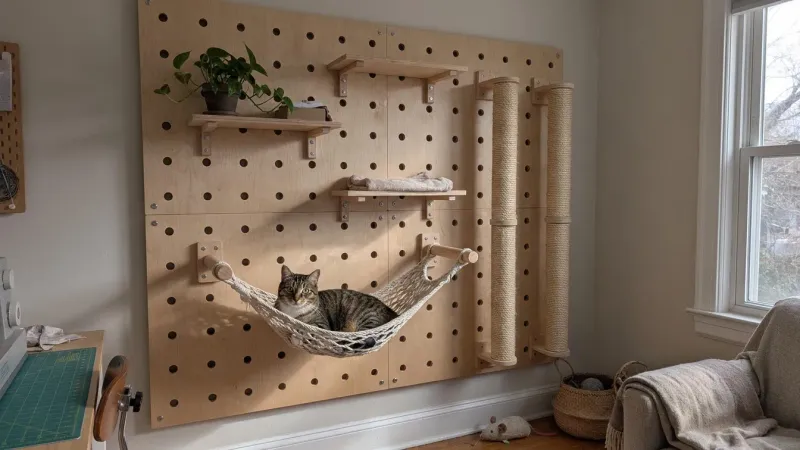
Install a reinforced hardwood pegboard wall panel fitted with wide removable shelves, fabric hammocks, and angled ramps arranged in two parallel vertical columns, ensuring all removable shelves and ramps lock securely into place with bolts, washers, or positive-locking brackets rather than unlatched gravity hooks. You can adjust step distances easily if you have both agile young cats and older cats, or review wall mounted cat trees for senior cats for gentler ramp angles.
15Above-Sofa Dual-Escape Gallery
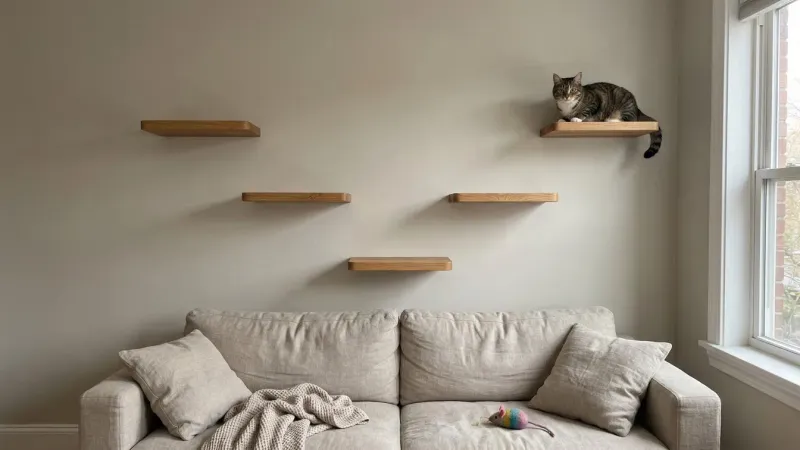
Arrange five floating solid-wood ledges in a wide diamond pattern above a living room sofa, using the sofa back as a soft landing zone at the bottom point and placing two equal high perches at the upper corners. Cats move in a closed diamond loop with zero blind corners.
16Two-Room Pass-Through Wall System
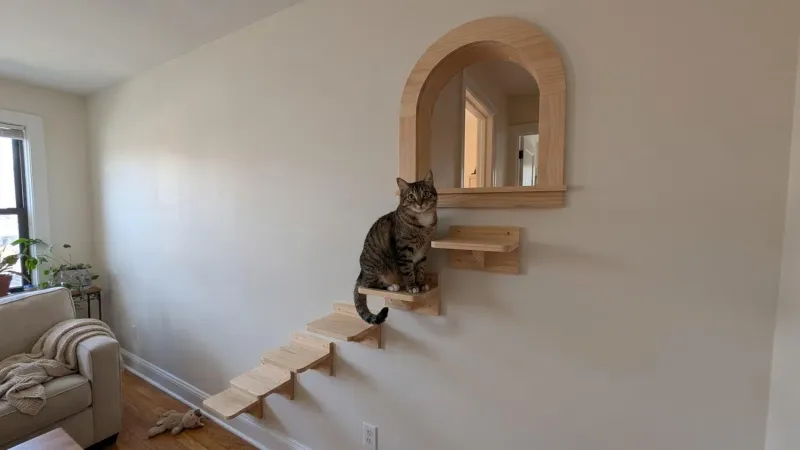
Pair wall-mounted climbing steps on both sides of a shared interior wall with an arched pass-through cutout near the top. Before cutting into the wall, always scan the area with a stud finder and a wire/pipe detector to ensure the wall cavity is completely free of electrical lines, plumbing pipes, and load-bearing framing. Cats climb up in the living room, walk through the upper wall portal into an adjacent room, and descend on the other side, doubling territory and eliminating choke points.
17Multi-Level Dual-Span Rope Bridges
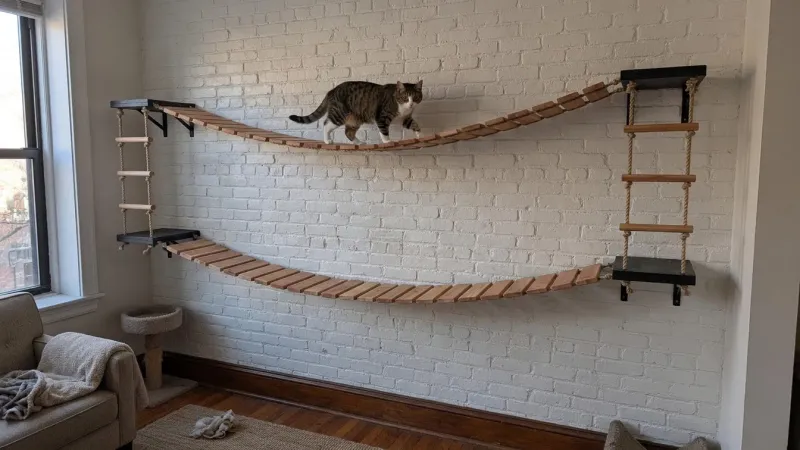
Suspend two parallel cat bridges—one at 5 feet and one at 6.5 feet—anchored to sturdy wall platforms at both ends, with vertical sisal climbing ladders connecting the upper and lower levels on both sides. Three or four cats can spread across both tiers and switch levels at either end.
Key Spacing and Safety Rules for Multi-Cat Walls
Safe vertical traffic depends on spacing shelves 12 to 18 inches apart vertically and 12 to 24 inches horizontally so cats of varying ages and sizes can step or jump without straining their joints. Always mount brackets directly into wooden wall studs using heavy-duty lag screws rather than drywall anchors, as three adult cats leaping simultaneously exert substantial dynamic force. If your household includes large breeds or heavier cats, explore heavy-duty wall mounted cat trees built for higher weight capacities.
Check every shelf surface for non-slip traction like sisal carpet or textured cork, and keep wall paths away from toxic houseplants such as lilies, pothos, or sago palms. If sudden hissing, swatting, or resource guarding escalates into injuries or litter box avoidance, consult a veterinarian to rule out underlying pain or stress-related illness.
Designing a wall-mounted cat tree for multiple cats works best when you think like a traffic engineer: pair every high bed with at least two downward paths and keep top perches at equal heights. Measure your wall studs carefully, choose solid wood or bamboo shelves with grippy surfaces, and watch how quickly territorial tension fades once every cat has room to pass freely.
Sources: International Cat Care · Cornell Feline Health Center · ASPCA
Frequently asked questions
How many wall perches do I need for three indoor cats?
Provide at least four to five elevated resting perches for three indoor cats so every cat has a dedicated spot plus one empty buffer perch. Keeping at least three of those perches at equal height prevents dominant cats from claiming a single highest throne.
How far apart should wall mounted cat shelves be spaced?
Space shelves 12 to 18 inches apart vertically and 12 to 24 inches horizontally for healthy adult cats. If you have kittens, senior cats, or short-legged breeds, keep vertical gaps closer to 10 to 12 inches with wider 12-inch-deep platforms.
Can drywall anchors hold wall mounted cat trees for multiple cats?
No, standard drywall anchors cannot safely hold the dynamic impact of multiple adult cats jumping and chasing. Always secure brackets directly into wall studs—using heavy-duty lag screws for wooden studs or heavy-duty toggle bolts or snap toggles rated for dynamic loads on metal studs—well above your cats' combined weight.
What is better than a traditional cat tree for multiple cats?
A multi-route wall-mounted shelf and bridge system is better than a traditional freestanding cat tree for multiple cats because it eliminates dead-end corners, offers dual exit routes, and anchors solidly into wall studs without wobbling or taking up floor space.

Nathan Brooks
Nathan Brooks runs Farmingzoom to help loving pet owners create safe, enriching homes for their animals. He cares deeply about responsible pet care and focuses on making everyday decisions simpler for fellow owners.…