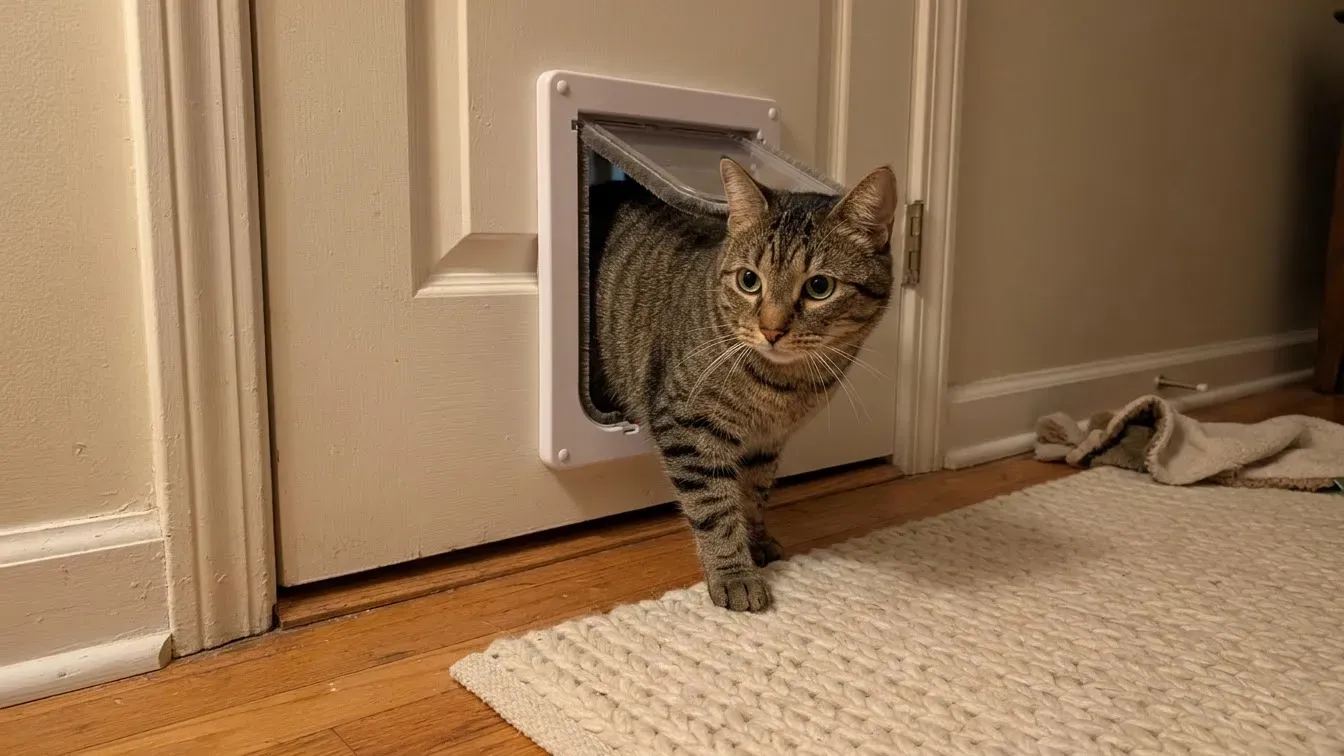
The best quiet interior cat doors for bedrooms use dense brush seals, soft-pull magnets, or flapless archways so your cat can slip out at 3 AM without waking you up. Standard plastic flaps slap loudly against hard frames, turning every midnight litter box trip into a rude awakening for light sleepers.
Whether you have a hollow-core bedroom door, a curious large breed, or sensitivity to hallway light, choosing the right closure mechanism stops the rattle. Compare the seven quietest interior designs below by sound profile, seal style, and bedroom door fit.
| Door Design | Closure Mechanism | Noise Profile | Door Fit | Best For |
|---|---|---|---|---|
| Brush-Seal Soft Magnetic Flap | Weak bottom magnet + pile strip | Soft whisper | 1 to 2 inches thick | Light sleepers wanting odor and draft control |
| Flexible Vinyl Curtain Flap | Weighted flexible vinyl | Near silent | 1.25 to 1.75 inches | Cats startled by magnetic resistance |
| Flapless Open Archway Portal | None (open tunnel) | Zero sound | 1.25 to 2 inches (hollow or solid core) | Zero-click nighttime freedom |
| Top-Pivot Felt-Lined Swing Door | Counterweighted hinge + felt | Low muffled thud | 1.375 to 1.75 inches | Blocking hallway light leaks |
| 2-Way Locking Telescoping Flap | Dual-magnet + sliding panel | Soft click | 1 to 2 inches thick | Daytime room restriction |
| Felt-Hinged Split-Curtain Portal | Overlapping wool-felt flaps | Zero sound | 1.25 to 2 inches thick | Light and draft blocking without clicks |
| Manual Selective Key-Tag Flap | Non-motorized collar-key catch | Soft tap | 1.25 to 2 inches | Keeping non-collared pets out without motor noise |
1Brush-Seal Soft Magnetic Flap
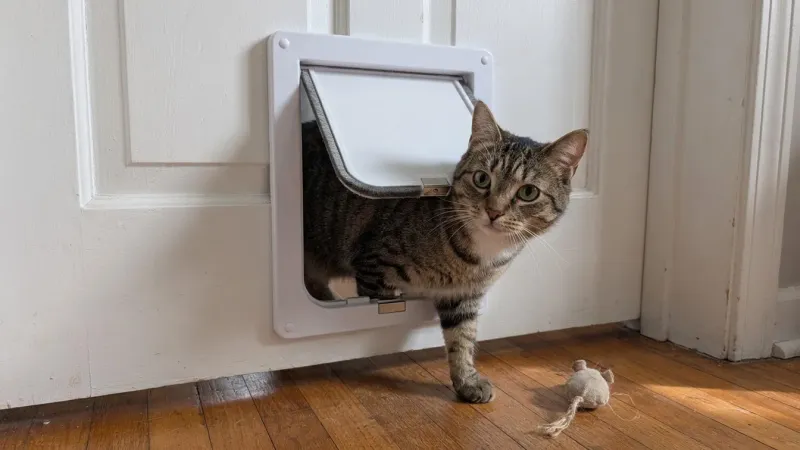
Closure: Weak bottom magnet + perimeter brush · Noise: Soft whisper · Door Fit: 1–2 in · Weight Limit: Up to 20 lbs Dense nylon pile lining the inner frame cushions the flap before the magnet engages, eliminating the sharp plastic slap common on budget doors. The gentle magnetic pull centers the panel smoothly after your cat passes through while still blocking hallway drafts and litter box odors. Look for openings around 5.5 to 8 inches wide to give medium and large cats plenty of shoulder clearance without brushing the frame.
2Flexible Vinyl Curtain Flap
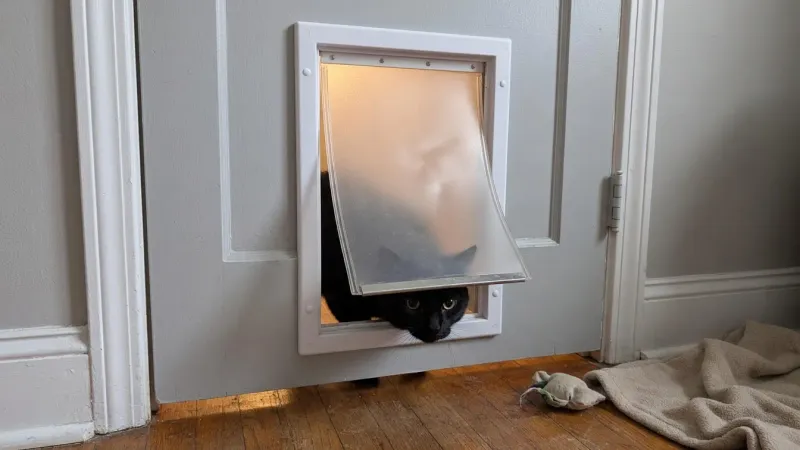
Closure: Weighted flexible vinyl · Noise: Near silent · Door Fit: 1.25–1.75 in · Weight Limit: Up to 22 lbs Instead of a rigid acrylic panel that swings and clatters, this style uses a pliable, weighted vinyl flap that bends around your cat's body and settles straight down by gravity. Because there is no hard latch snapping into place, it produces almost zero sound even when a playful cat sprints out of the bedroom. It works well for timid cats or kittens who dislike pushing against magnetic resistance.
3Flapless Open Archway Portal
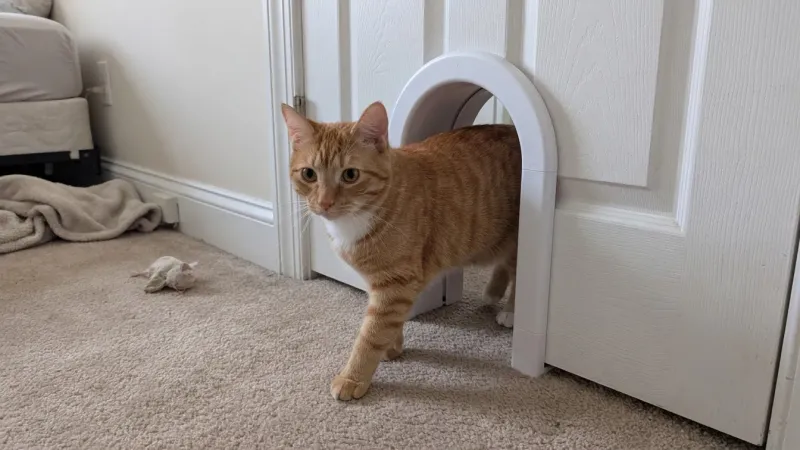
Closure: Open tunnel (no flap) · Noise: Zero sound · Door Fit: 1.25–2 in · Weight Limit: Up to 25 lbs Removing the swinging flap completely guarantees zero clicking, rattling, or plastic slapping at night while keeping your bedroom door closed for privacy. A molded two-piece frame lines the cutout cleanly, making it safe for hollow-core doors without exposed cardboard edges. If you want an attractive look that suits your room, explore interior cat door ideas that blend into your home decor.
4Top-Pivot Felt-Lined Swing Door
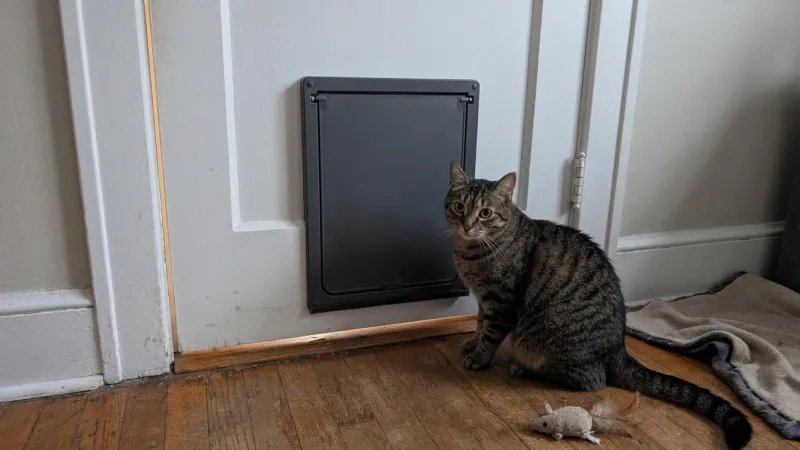
Closure: Gravity pivot + felt bumper · Noise: Low muffled thud · Door Fit: 1.375–1.75 in · Weight Limit: Up to 20 lbs Built with an opaque panel suspended on smooth top pins, this design swings back to center using balanced weight rather than a snapping magnet. Thin felt bumpers along the bottom stop absorb any contact, while the solid opaque finish blocks bright hallway lights from shining onto your bed. It suits light sleepers who wake up easily from both sound and sudden light changes.
52-Way Locking Telescoping Flap
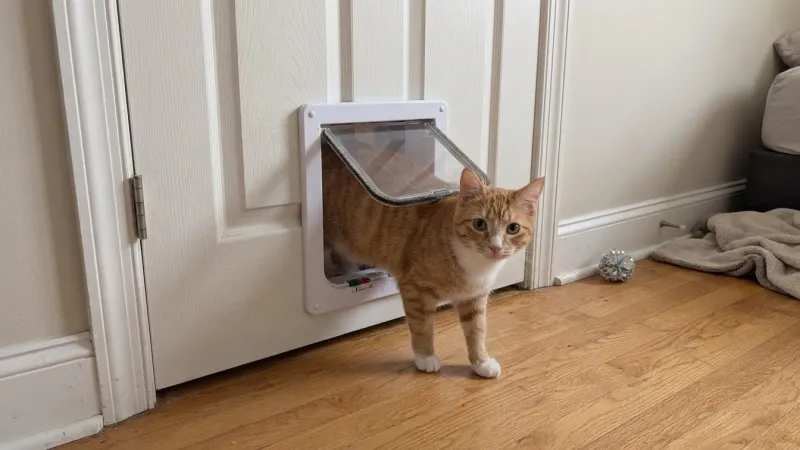
Closure: Dual magnet + slide lock · Noise: Soft click · Door Fit: 1–2 in · Weight Limit: Up to 20 lbs A telescoping tunnel sleeves cleanly through standard interior doors, preventing vibrations from resonating inside hollow door panels. Soft perimeter magnets keep the flap steady when central air kicks on, and a quiet manual sliding panel lets you lock the bedroom off during daytime naps or cleaning. Choose a frame measuring roughly 13 by 9 inches for comfortable passage by larger adult cats.
6Felt-Hinged Split-Curtain Portal
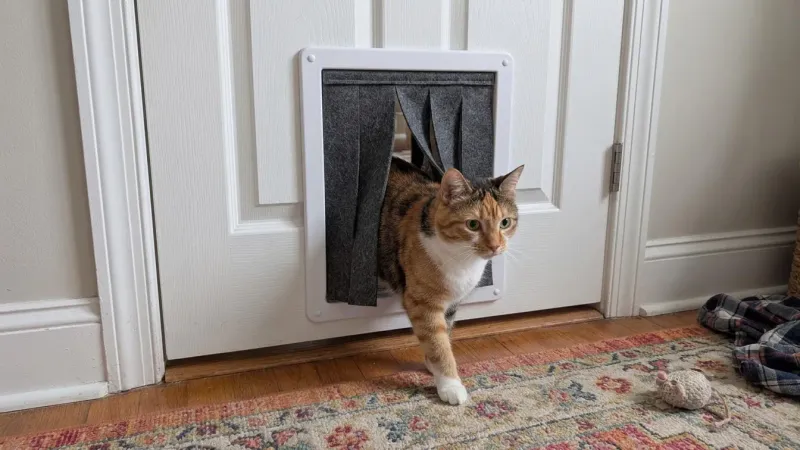
Closure: Overlapping wool-felt flaps · Noise: Zero sound · Door Fit: 1.25–2 in · Weight Limit: Up to 22 lbs Set inside a closed bedroom door frame, overlapping layers of dense wool felt part effortlessly as your cat walks through and drape back together with zero mechanical impact. Unlike leaving a door ajar, this through-door curtain preserves bedroom privacy, blocks hallway light beams, and dampens household noise while operating in complete silence.
7Manual Selective Key-Tag Flap
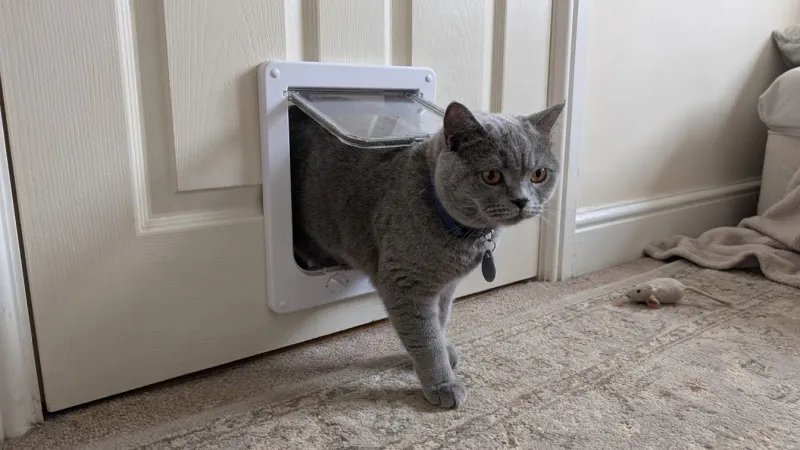
Closure: Non-motorized magnetic collar catch · Noise: Soft tap · Door Fit: 1.25–2 in · Weight Limit: Up to 20 lbs Unlike motorized microchip doors whose whirring gears and electronic latches can wake light sleepers in a quiet bedroom, a passive magnetic key-tag flap uses zero motors or batteries. A small, lightweight magnet on your cat's breakaway collar releases the mechanical catch silently as they push through, keeping non-collared pets out without any electronic hum or low-battery alert beeps.
How to Make Any Magnetic Cat Flap Even Quieter
Even a well-built magnetic cat door can make a faint tap when a fast-moving cat bolts through it at night. Placing a thin strip of adhesive moleskin or self-stick wool felt directly over the magnet housing absorbs the plastic-on-plastic impact without blocking the magnetic pull.
If you are cutting into a standard bedroom door, check whether it is solid wood or hollow core before buying. Hollow-core doors act like acoustic drums that amplify flap vibrations, so choosing a model with a telescoping plastic tunnel bridges the internal gap and dampens echo. For step-by-step guidance on clean cutouts, see how to install an interior cat door without power tool experience.
Senior cats or small kittens sometimes hesitate when pushing against strong magnets. Swapping to a lighter magnet or softening the seal ensures your cat uses the door calmly instead of pawing and scratching at the bedroom frame.
Bedroom Placement and Light-Blocking Tips
Clear translucent flaps let hallway light spill straight into a dark bedroom whenever someone turns on a bathroom switch. If light wakes you up as easily as noise, pick an opaque ABS plastic flap or a dark-tinted panel that keeps your sleeping space dim.
Mount the bottom of the opening roughly 3 to 4 inches above the floor, matching your cat's natural belly height so they step through smoothly rather than scrambling over a tall lip. Keep the area on both sides clear of rugs or laundry baskets that could catch the flap and cause it to snap shut unexpectedly.
Matching the closure mechanism to your sleep sensitivity solves midnight wake-ups for good. Pick a brush-sealed soft magnetic flap if you want quiet draft and odor control, or choose a flapless portal, felt-hinged split curtain, or flexible vinyl curtain when absolute silence matters most. Measure your door thickness and your cat's shoulder width before cutting so the frame fits snugly without rattling.
Sources: International Cat Care · Cornell Feline Health Center
Frequently asked questions
Are motorized microchip cat flaps quiet enough for a bedroom?
Most motorized microchip cat flaps are noticeably louder than passive magnetic or flapless doors because an internal motor must whirr and release a latch every time your cat approaches. For light sleepers in a quiet bedroom, a non-motorized magnetic collar-key flap or a passive brush-seal door avoids motor noise and low-battery beeps.
Can you put a cat door on a hollow-core bedroom door?
Yes, you can install a cat door in a hollow-core bedroom door by choosing a model with a telescoping tunnel frame. The rigid sleeve bridges the hollow space between the two thin wood skins, preventing the door from vibrating and amplifying flap noise.
How do I stop my magnetic cat flap from clicking loudly at night?
Stick a thin strip of self-adhesive felt or moleskin directly over the plastic magnet housing at the bottom of the frame. The soft fabric cushions the impact when the flap swings back, while still allowing the magnet to hold the flap closed.
Why should I keep a bedroom cat door open at night?
Cats are naturally active at dawn and dusk and need unrestricted access to water, food, and litter boxes overnight. Restricting litter box access can cause stress or urinary avoidance, so an easy-to-push interior flap keeps your cat comfortable while you sleep.

Nathan Brooks
Nathan Brooks runs Farmingzoom to help loving pet owners create safe, enriching homes for their animals. He cares deeply about responsible pet care and focuses on making everyday decisions simpler for fellow owners.…