Time needed
4 h
What you need
- 1 sheet of 3/4-inch untreated birch plywood (4x8 feet)
- 4 untreated kiln-dried 4x4 wood posts (8 feet long)
- 3 untreated 1x4 pine boards (8 feet long)
- 700 feet of 3/8-inch natural untreated sisal rope
- 4 square yards of dense, low-pile cut-pile carpet
- 36 structural lag screws (3-1/2 inches)
- 34 heavy-duty steel L-brackets with 3/4-inch wood screws
- Box of 1-1/4-inch wood screws
- Box of 3/8-inch and 1/2-inch heavy-duty staples
- Non-toxic water-based wood glue
Tools
- Circular saw or miter saw
- Cordless drill with drill bits and driver bits
- Heavy-duty staple gun
- Rubber mallet
- Orbital sander with 120-grit sandpaper
- Tape measure and carpenter square
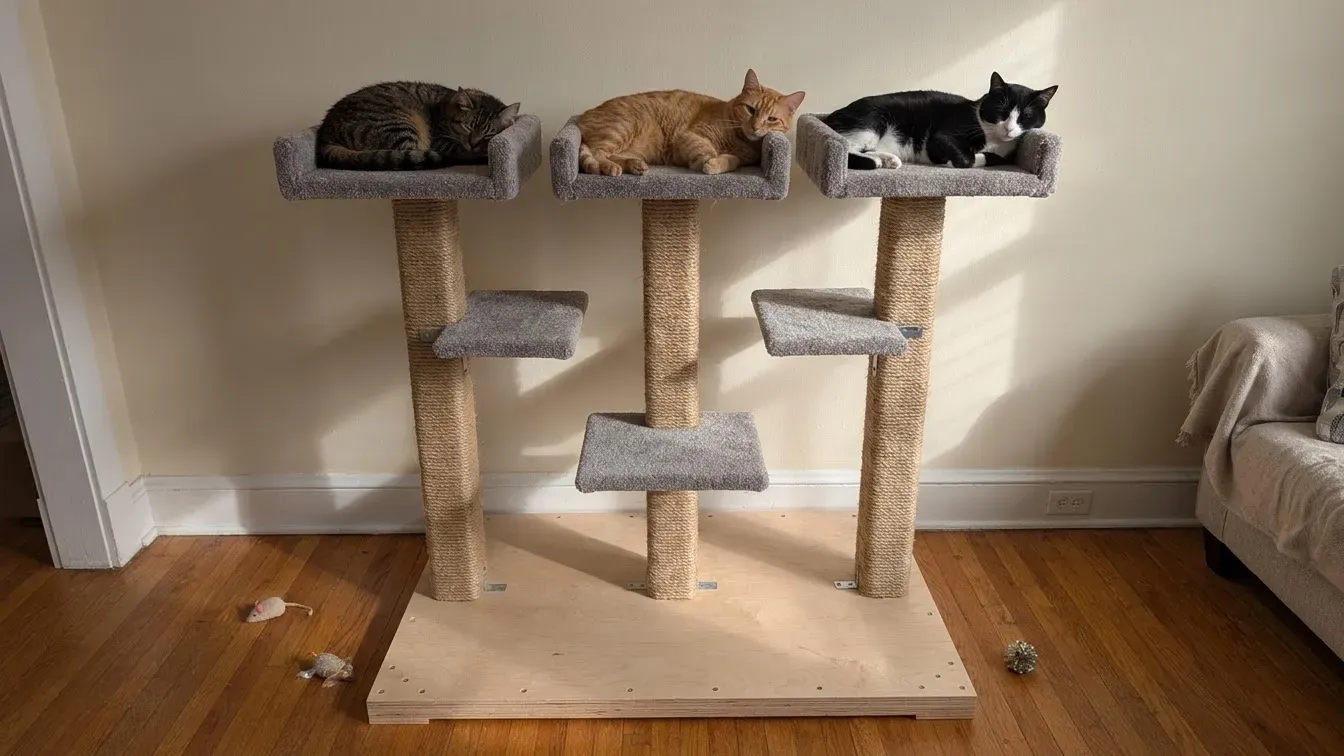
You can stop territorial battles and stress spraying in a three-cat household by building a symmetrical cat tree with three equal-height top perches and separate escape routes. Most store-bought towers feature a single highest platform, which naturally creates a king-of-the-hill bottleneck where one dominant cat blocks the others.
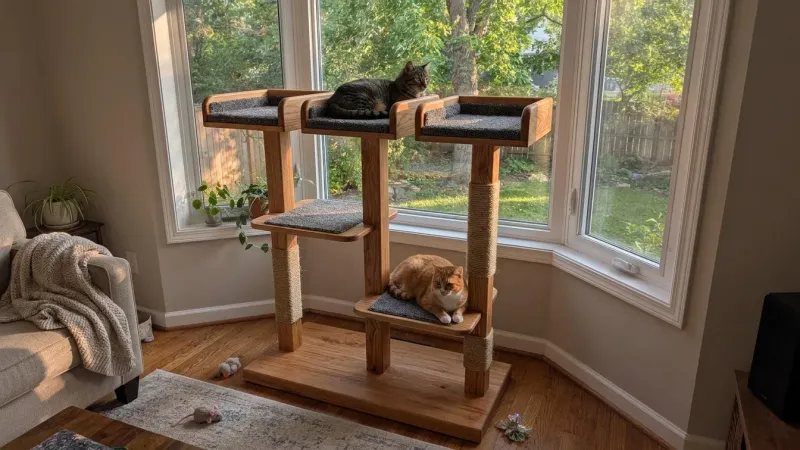
By constructing a wide, low-center-of-gravity base with three identical 60-inch top beds and staggered side landings, every cat gets an equal vantage point and a clear path down without cornering a housemate. This project takes about four hours using untreated lumber, sisal rope, and dense carpet.
- 1
Cut the Base, Landings, and Equal Top Perches
Cut one 32-by-32-inch square from 3/4-inch untreated birch plywood for the heavy base. Next, cut two 16-by-24-inch rectangular mid-level landings and three identical 16-by-16-inch squares for the top perches. Cut three 8-foot 1-by-4 pine boards into 3-inch strips to build raised safety lips around the three top beds. Sand all raw plywood edges smooth with 120-grit sandpaper so no splinters catch your cats' paws.
- 2
Cut the Vertical Support Posts to Equal Heights
Cut three 4x4 untreated kiln-dried fir or pine posts to exactly 58-1/2 inches long so all three top perches sit at an identical 60-inch finished height once assembled with the 3/4-inch base and 3/4-inch top platforms. Cut two shorter 4x4 posts to 24 inches and two more to 38 inches to support the staggered mid-level landings. Check every post end with a square to ensure flat, wobble-free joints.
- 3
Attach Perimeter Lips to the Three Top Beds
Apply a thin bead of non-toxic wood glue along the edges of each 16-by-16-inch top square and secure the 3-inch pine strips with 1-1/4-inch wood screws. These low bolster walls give each cat a secure backrest while preventing sleeping cats from rolling off during deep naps. Countersink every screw head slightly below the wood surface.
- 4
Wrap Scratching Zones in Untreated Sisal Rope
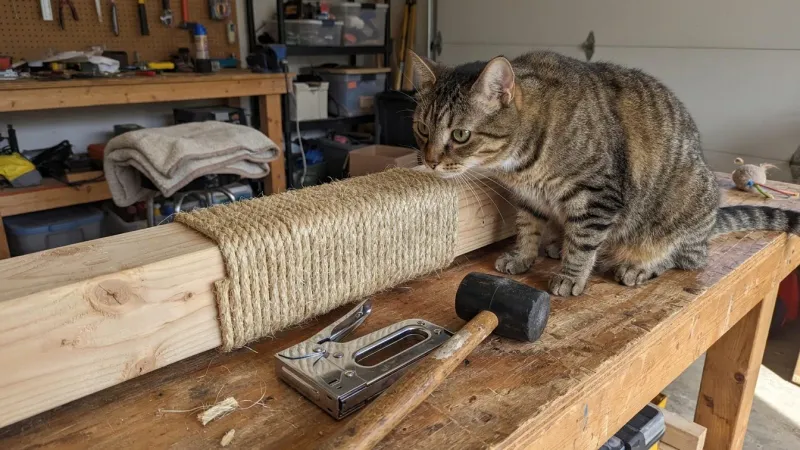
Anchor the end of 3/8-inch untreated, unoiled sisal rope near the bottom of each 58-1/2-inch post using two 1/2-inch staples. Wind the rope tightly upward for 24 inches on each tall post, tapping the coils down every five wraps with a rubber mallet so no gaps form. Staple the top end securely on the back side of the post and trim excess fibers.
- 5
Upholster All Platforms With Low-Pile Carpet
Cut dense, low-pile cut-pile carpet remnants 3 inches larger than each platform on all sides. Center the plywood face down on the carpet backing, fold the edges up tightly, and staple every 2 inches underneath using 3/8-inch staples. Avoid looped Berber carpet and plush shag carpet, which easily snag feline claws and can injure toes. Hammer down any raised staples completely.
- 6
Mount the Three Tall Posts in a Wide Triangle
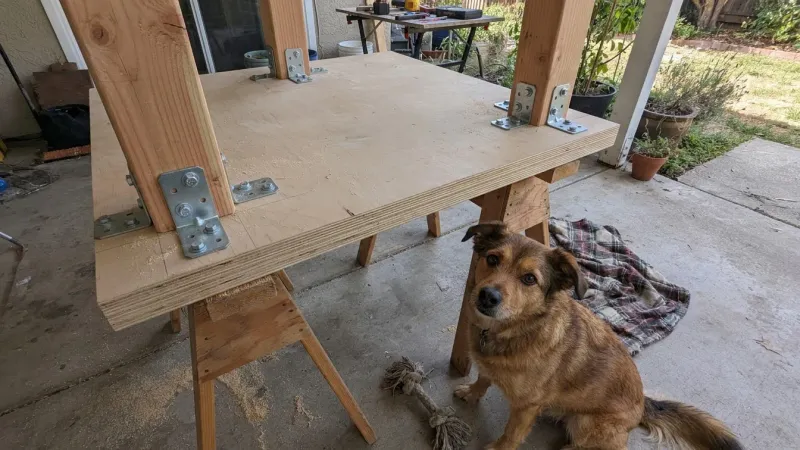
Mark three points on the 32-by-32-inch base arranged in a wide triangle with at least 20 inches between centers. Pre-drill four pilot holes through the underside of the base at each mark. Drive four 3-1/2-inch structural lag screws upward through the base into each 58-1/2-inch post, then reinforce every joint with two steel L-brackets.
- 7
Install Staggered Mid-Level Landings for Dual Exits
Attach the 24-inch and 38-inch support posts to the base between the tall posts using 3-1/2-inch lag screws from underneath. Mount the two 16-by-24-inch rectangular landings across these shorter posts at staggered heights—one at 24 inches and the other at 38 inches—creating two independent staircases so cats can pass each other without physical contact.
- 8
Secure the Three Equal Top Perches and Test Stability
Center one bolstered top bed on each 58-1/2-inch post and fasten it from underneath using four heavy-duty L-brackets and 3/4-inch wood screws so no metal points reach the carpeted surface. Firmly push the top posts from multiple angles to confirm zero tipping. If you prefer a ready-made alternative, compare designs in our roundup of 17 modern cat trees for multiple cats with separate high perches.
Key Dimensions and Layout Rules for Multi-Cat Harmony
When three or more cats share vertical territory, standard narrow towers tip easily and trigger defensive swats. Keep these structural measurements in mind to prevent bottlenecks and wobbling:
- Minimum spacing between top beds: Leave at least 18 inches of open air between the three 60-inch perches so resting cats cannot reach across and swat one another.
- Dual-pathway rule: Every landing below the top tier must connect to at least two different posts or steps so a lower-ranking cat is never trapped in a dead end.
- Heavy-cat adjustments: If your household includes large breeds over 14 pounds, widen the base to 36 by 36 inches and upgrade the top beds to 20 by 20 inches, similar to the reinforcement methods in our guide on how to build a sturdy DIY cat tree for large heavy cats.
Common Mistakes That Trigger Territorial Tension
Even a sturdy homemade tower can cause friction if the layout favors one cat over the others. Avoid these common design errors:
- Building an enclosed single-door condo: Boxed cubbies with only one opening allow a dominant cat to ambush housemates inside. Stick to open platforms or tunnels with two opposite exits.
- Using treated lumber or toxic glues: Pressure-treated wood contains chemical preservatives, and solvent-based adhesives off-gas harmful fumes. Always choose kiln-dried untreated pine or birch plywood and non-toxic water-based wood glue.
- Placing the tree in a corner: Tucked into a tight corner, a cat tree loses half its escape routes. Position the finished tower along an open wall with at least two feet of clearance on both sides.
If stress spraying or aggressive chasing continues even after adding vertical territory, schedule a checkup with your veterinarian to rule out urinary tract discomfort or underlying anxiety.
Giving three or more indoor cats identical top perches and separate climbing lanes transforms vertical space from a battleground into peaceful shared territory. Place the finished tower near a window overlooking outdoor activity, and keep a secondary low scratcher nearby so every cat has plenty of room to stretch and rest.
Sources: International Cat Care · Cornell Feline Health Center · ASPCA
Frequently asked questions
Is it cheaper to build your own cat tree for multiple cats?
Yes. Building a heavy-duty multi-cat tree from birch plywood, 4x4 lumber, and bulk sisal rope typically costs between $110 and $150 in materials. Comparable commercial multi-perch towers sturdy enough for three adult cats generally retail for $250 to $450.
How many cat trees do you need for 3 or more cats?
Veterinary behaviorists recommend providing at least one elevated resting spot per cat plus one extra across your home. One large tree with three equal top perches works well in a main living area when paired with a window perch or secondary shelf in another room.
How do you keep a tall multi-cat tree from tipping over?
Use a wide 32-by-32-inch base made from thick 3/4-inch plywood, anchor solid 4x4 posts from underneath with 3-1/2-inch lag screws, and add steel L-brackets at every joint. Keep the heaviest platforms low and avoid placing all three top beds on one side.
What can I use instead of a traditional cat tree for multiple cats?
Staggered wall-mounted cat shelves, sturdy cube bookcases arranged in steps, or floor-to-ceiling tension poles provide great vertical territory. Always arrange shelves in a loop or U-shape so cats have two ways down and cannot corner each other.

Nathan Brooks
Nathan Brooks runs Farmingzoom to help loving pet owners create safe, enriching homes for their animals. He cares deeply about responsible pet care and focuses on making everyday decisions simpler for fellow owners.…