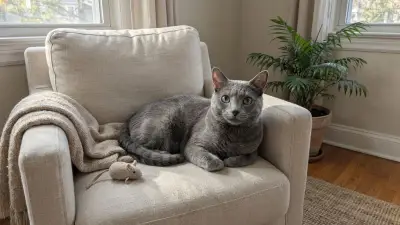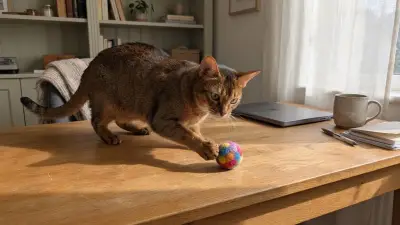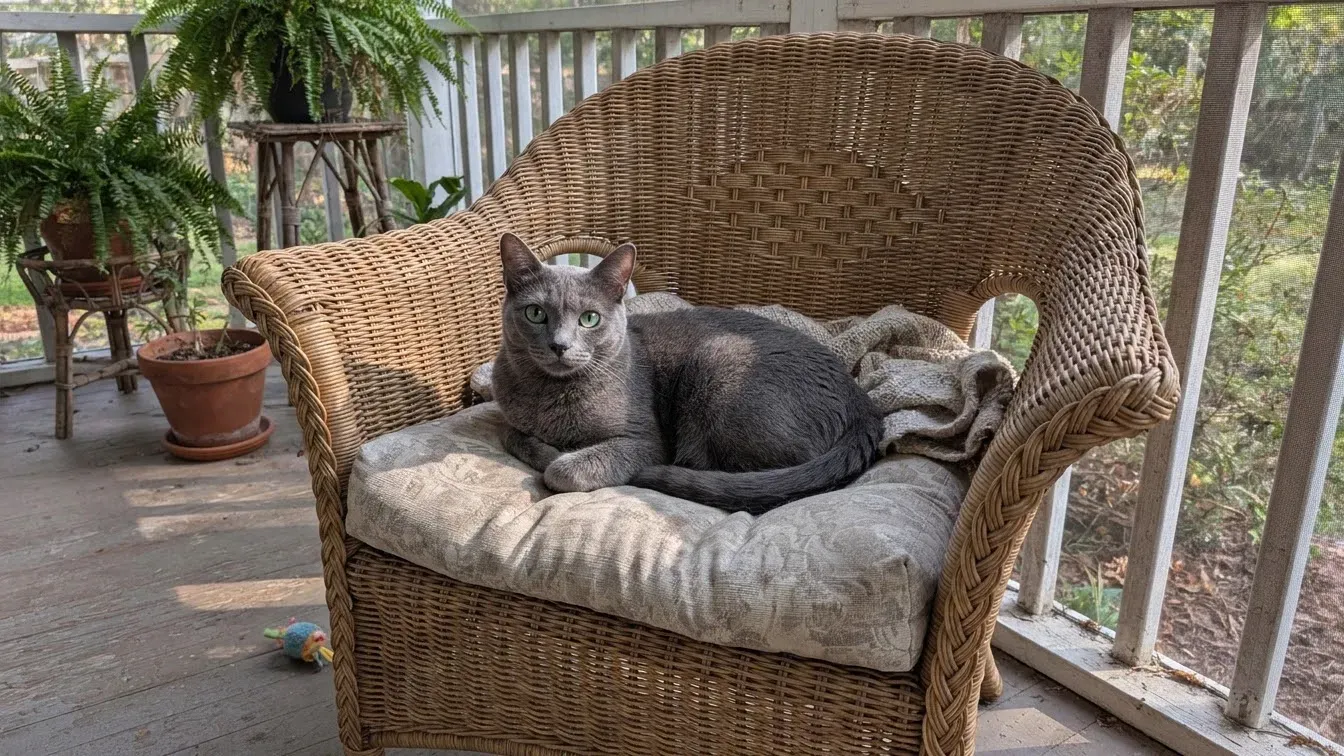
Cats with single-layer, ultra-short, or hairless coats regulate body heat far better than heavy-coated breeds during humid summers. If you are spending afternoons on a screened southern patio, choosing an uncommon breed adapted to tropical or desert regions gives you a striking, low-shedding companion that loves warmth without overheating—though note that low-shedding or hairless coats still produce allergenic Fel d 1 protein in saliva and skin oils and are not truly hypoallergenic.
While all 11 of these genuinely rare breeds tolerate heat well, their energy levels vary widely—several, such as the Egyptian Mau and Sokoke, are highly active, athletic cats rather than uniformly calm lap cats, while others favor unhurried days at home.
| Breed | Coat Type | Origin | Size | Lifespan |
|---|---|---|---|---|
| Korat | Single-layer short | Thailand | Medium (6–10 lbs) | 15–18 years |
| Singapura | Fine, very short | Singapore | Small (4–8 lbs) | 11–15 years |
| Sokoke | Short, tight-lying | Kenya | Medium (6–10 lbs) | 12–15 years |
| Peterbald | Hairless to velvety | Russia | Medium (6–10 lbs) | 12–15 years |
| Egyptian Mau | Fine, silky short | Egypt | Medium (6–14 lbs) | 12–15 years |
| Khao Manee | Close-lying single | Thailand | Medium (8–10 lbs) | 10–12 years |
| Suphalak | Sleek, single-layer | Thailand | Medium (7–11 lbs) | 12–16 years |
| Havana Brown | Smooth, glossy short | England | Medium (6–10 lbs) | 10–15 years |
| Burmilla | Short, dense double | England | Medium (6–13 lbs) | 10–15 years |
| Bambino | Hairless to peach-fuzz | United States | Small (4–7 lbs) | 12–14 years |
| Donskoy | Hairless to brush | Russia | Medium (7–12 lbs) | 12–15 years |
1Korat
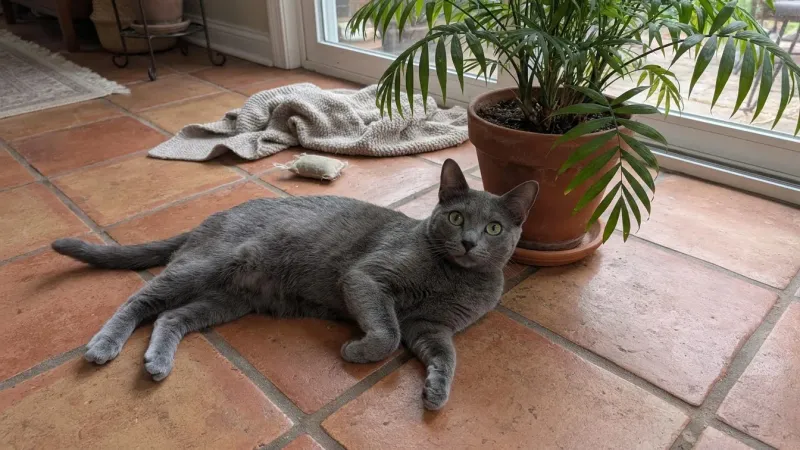
Coat Type: Single-layer short · Origin: Thailand · Size: Medium (6–10 lbs) · Lifespan: 15–18 years Originating in Thailand's tropical climate, the silver-blue Korat lacks an insulating undercoat, allowing heat to escape easily against its sleek, close-lying fur. This quiet, deeply devoted breed prefers bonding closely with one or two calm companions rather than bustling households. A Korat will happily curl up beside your patio chair for hours, offering soft purrs and minimal shedding with just a weekly wipe from a damp cloth.
2Singapura
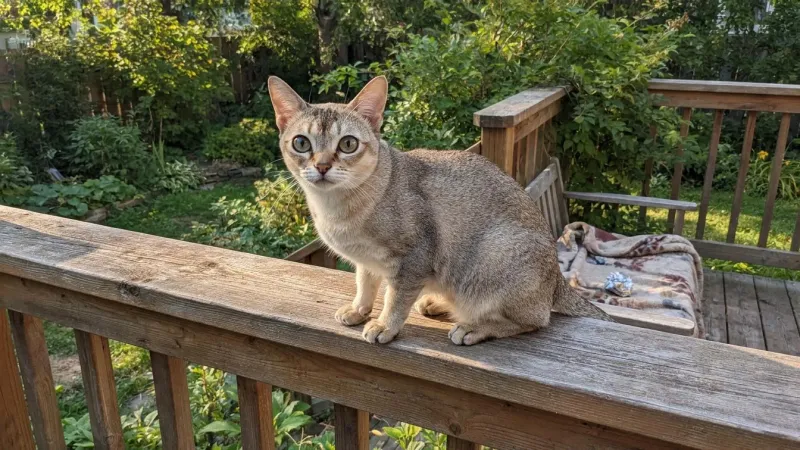
Coat Type: Fine, very short · Origin: Singapore · Size: Small (4–8 lbs) · Lifespan: 11–15 years Developed from street cats in equatorial Singapore, the Singapura is one of the smallest domestic breeds and wears a paper-thin, sepia-ticked coat tailored for year-round humidity. Despite their tiny frame, Singapuras are warm-hearted, people-oriented companions that love perching on a lap or a sunny shoulder. Because they lack heavy fur, they seek out warm sunbeams on a screened porch while shedding almost nothing onto patio cushions.
3Sokoke
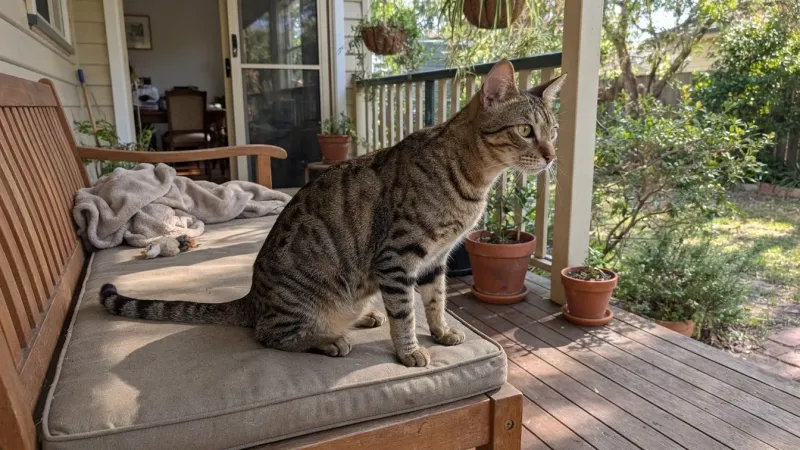
Coat Type: Short, tight-lying · Origin: Kenya · Size: Medium (6–10 lbs) · Lifespan: 12–15 years The Sokoke evolved naturally in the coastal Arabuko-Sokoke forest of Kenya, giving it a remarkably short, coarse, wood-grain tabby coat with virtually no undercoat. Built for tropical heat, this highly active, athletic cat loves climbing and watching birds and lizards from a secure, shaded patio perch. Sokokes form loyal bonds with their owners, need daily interactive play, and require almost zero grooming beyond occasional nail trims.
4Peterbald
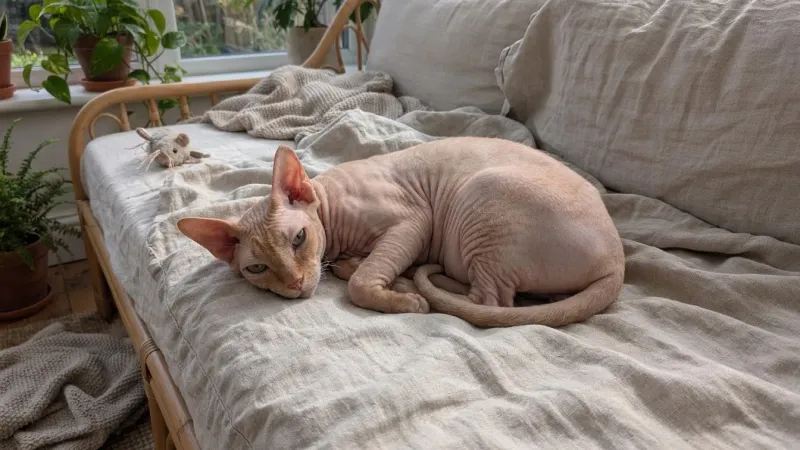
Coat Type: Hairless to velvety · Origin: Russia · Size: Medium (6–10 lbs) · Lifespan: 12–15 years With coats ranging from completely bare skin to a fine chamois peach-fuzz, the Peterbald stays comfortable in hot, sticky weather where plush cats struggle. Bred from Oriental Shorthair and Donskoy lines, Peterbalds are affectionate, dog-like companions that follow their favorite person from the kitchen to the porch. Keep them out of direct midday sun to prevent sunburn, and wipe their skin weekly with a gentle, vet-approved pet wipe.
5Egyptian Mau
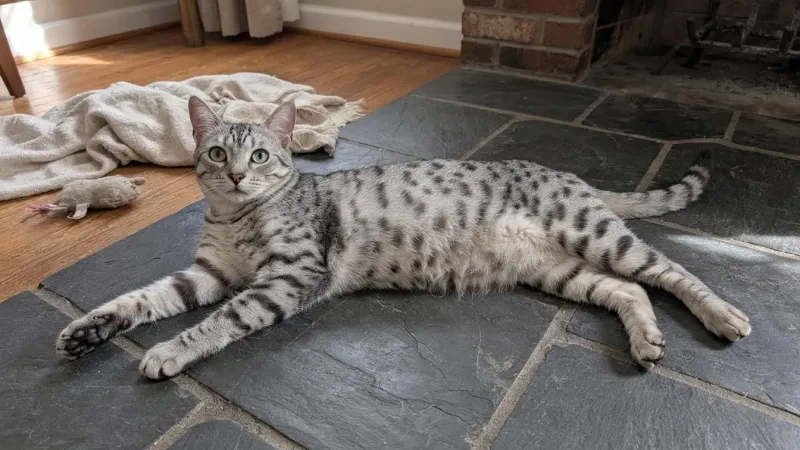
Coat Type: Fine, silky short · Origin: Egypt · Size: Medium (6–14 lbs) · Lifespan: 12–15 years One of the few naturally spotted domestic breeds, the Egyptian Mau carries a fine, single-layer coat adapted to North African heat. A loose flap of skin extending from the flank to the back knee aids their high-speed agility, while their light fur prevents heat buildup during warm afternoons. Maus are energetic, melodic communicators that enjoy sunbathing on a screened lanai after brisk play sessions while remaining reserved with visitors.
6Khao Manee
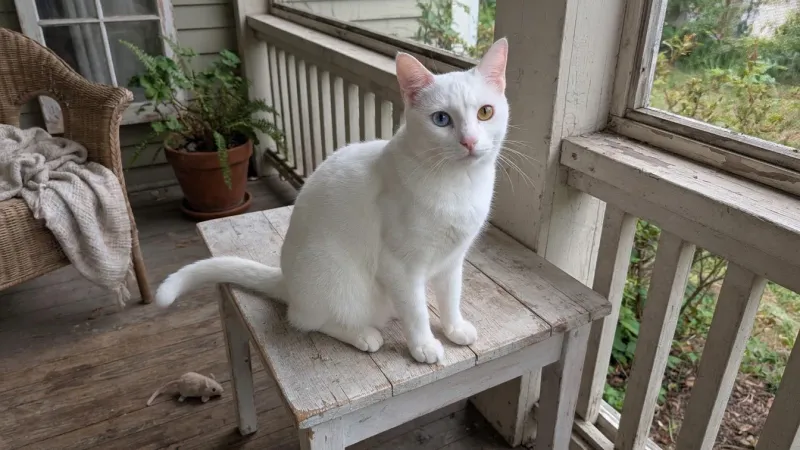
Coat Type: Close-lying single · Origin: Thailand · Size: Medium (8–10 lbs) · Lifespan: 10–12 years Known as the "Diamond Eye" cat in its native Thailand, the Khao Manee features a pure white, short, single-layer coat that reflects sunlight and lets skin breathe in humid air. Often sporting striking odd-colored blue and gold eyes, this ancient breed is social, chatty, and eager to lounge near human company. Because white ears and noses are prone to sun damage, keep patio lounging in shaded areas and ask your vet to check hearing early on.
7Suphalak
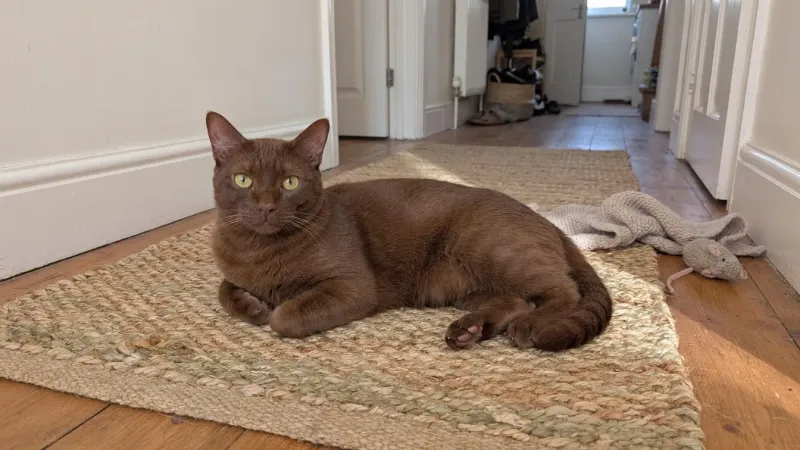
Coat Type: Sleek, single-layer · Origin: Thailand · Size: Medium (7–11 lbs) · Lifespan: 12–16 years Extremely rare outside Thailand, the solid copper-brown Suphalak has a satin-like, single-layer coat with zero undercoat, making it naturally suited to muggy southern climates. Unlike hyperactive breeds, the Suphalak balances curious bird-watching with long stretches of peaceful lap time. Its short fur needs only a quick stroke with a rubber grooming mitt once a week to keep its rich chocolate-copper sheen glowing.
8Havana Brown
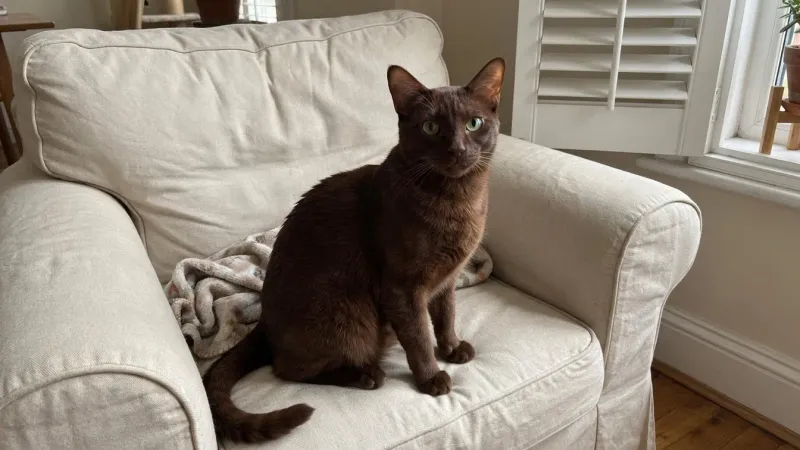
Coat Type: Smooth, glossy short · Origin: England · Size: Medium (6–10 lbs) · Lifespan: 10–15 years Tracing its roots back to early Siamese imports from Thailand, the Havana Brown pairs a warm mahogany coat with emerald-green eyes and a lightweight, low-insulation fur structure. This rare breed thrives in warm indoor-patio setups, often reaching out with a gentle paw to tap your arm for attention. Calm, adaptable, and low-shedding, Havana Browns fit effortlessly into quiet retirement routines without demanding constant vigorous exercise.
9Burmilla
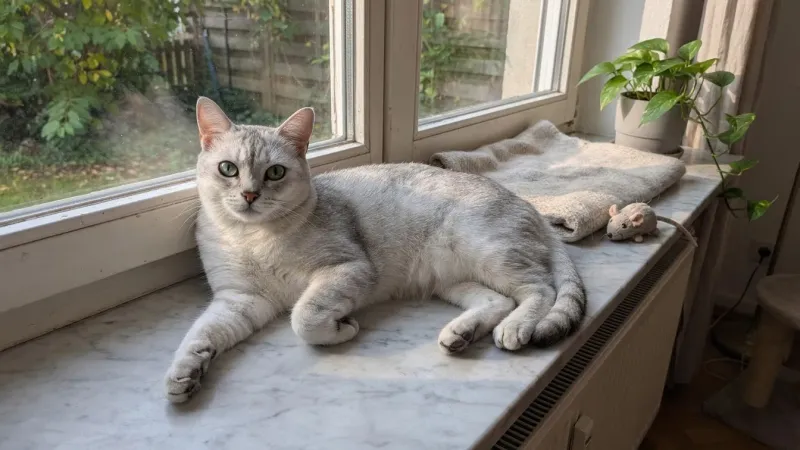
Coat Type: Short, dense double · Origin: England · Size: Medium (6–13 lbs) · Lifespan: 10–15 years Created from a cross between a Burmese and a Chinchilla Persian, the shorthaired Burmilla (which also exists in a semi-longhaired variety) actually carries a dense double coat with a distinct, fine undercoat inherited from its Persian ancestry rather than a single-layer coat, though it stays far lighter than full Persian fur. Its silver-shaded coat feels plush and sheds lightly with weekly brushing. Burmillas are sweet-tempered, easygoing companions that enjoy stretching out on cool tile patio floors after a brief morning play session.
10Bambino
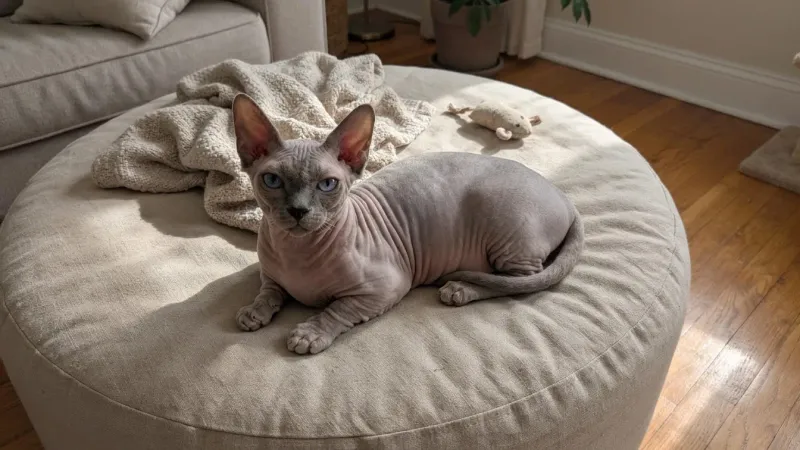
Coat Type: Hairless to peach-fuzz · Origin: United States · Size: Small (4–7 lbs) · Lifespan: 12–14 years An experimental dwarf-hairless hybrid crossing the Sphynx with the Munchkin, the Bambino lacks insulating fur to trap humidity, though prospective owners should note that major registries like CFA and FIFe reject it for championship status due to serious spinal, joint, and skin health risks linked to achondroplastic dwarfism. Because their short legs limit jumping and stress their spine, Bambinos require low-level lounging with ramps or steps, regular skin care, and careful veterinary monitoring.
11Donskoy
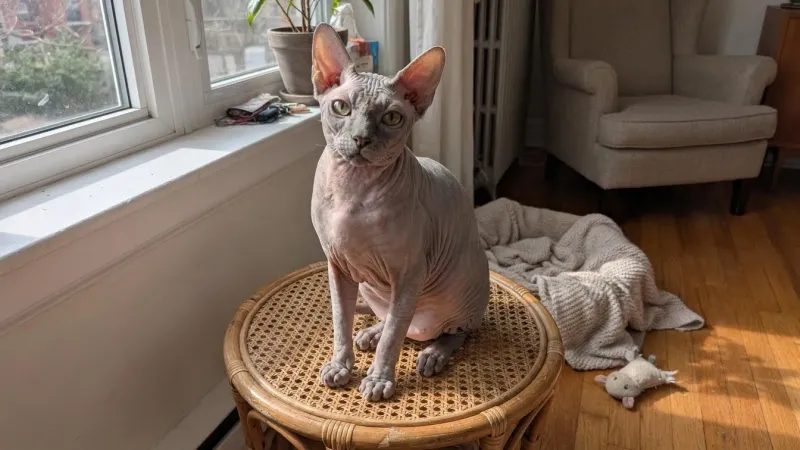
Coat Type: Hairless to brush · Origin: Russia · Size: Medium (7–12 lbs) · Lifespan: 12–15 years A genuinely rare Russian breed unrelated to the Canadian Sphynx, the Donskoy ranges from completely hairless to a fine flock or brush coat that sheds seasonally, allowing excess body heat to dissipate effortlessly in muggy summers. Affectionate, social, and calm-natured, Donskoys love curling up near warm windows or shaded porch chairs, though like all hairless and coated cats they still produce allergenic Fel d 1 protein in saliva and skin oils and are not truly hypoallergenic.
Keeping Warm-Climate Cats Safe on a Screened Patio
Even heat-adapted breeds cannot sweat like humans, relying instead on paw pads, shade, and cool surfaces to release excess warmth. When outdoor temperatures climb toward 90°F (32°C) with heavy humidity, limit patio time to early mornings and late evenings, keeping indoor air conditioning accessible through a pet flap or open sliding door.
Provide fresh, cool water in wide ceramic bowls and inspect patio screening regularly so an inquisitive cat cannot push through loose mesh. Hairless and very pale breeds—such as the Peterbald, Bambino, Donskoy, and white Khao Manee—can sunburn quickly through standard window screens, so ask your veterinarian about pet-safe UV window film and never apply human sunscreen, which often contains toxic zinc oxide or salicylates. Seek immediate veterinary care if your cat pants heavily, drools, wobbles, or has bright red gums, as these signal heatstroke.
What to Expect When Adopting a Rare Breed
Because truly uncommon breeds have small global populations, you will rarely find them at local shelters, and reputable breeders often maintain waiting lists. Expect initial kitten prices to range from $1,500 to $4,000 depending on pedigree and registration, though adopting a retired breeding adult offers a gentler price point and an already settled, couch-ready temperament.
Before placing a deposit, verify that the breeder screens for breed-specific hereditary conditions—such as hypertrophic cardiomyopathy (HCM) or pyruvate kinase deficiency—and provides written health guarantees. Keep in mind that low-shedding or hairless coats still carry allergenic Fel d 1 proteins in saliva and skin dander, so spend time with an adult cat before committing if anyone in your home has allergies. If you want additional low-key options, explore our guide to calm cat breeds for seniors or browse affectionate shorthair cats that barely shed.
Choosing a rare breed with a lightweight, ultra-short, or hairless coat lets you enjoy warm southern seasons without worrying about excessive shedding or heat distress—while keeping in mind that no cat is truly allergen-free and breed energy levels and health needs vary. Pair your cat's natural heat tolerance with shaded patio lounging, fresh water, and reliable indoor air conditioning, and consult a veterinarian before adopting to review breed-specific skin, orthopedic, and heart care.
Sources: Cornell Feline Health Center · The Cat Fanciers' Association (CFA) · The International Cat Association (TICA) · International Cat Care
Frequently asked questions
Can cats safely stay outside in 90-degree weather?
No, prolonged exposure to 90°F (32°C) temperatures—especially with high humidity—puts even heat-tolerant breeds at risk of heatstroke. Keep patio sessions brief during cooler morning or evening hours, ensure constant shade and fresh water, and give your cat unrestricted access to air-conditioned indoor rooms.
What are some of the rarest cat breeds in the world?
Among the rarest recognized breeds are the Suphalak, Sokoke, Khao Manee, Korat, Donskoy, and Havana Brown, each numbering only in the hundreds or low thousands worldwide. Because breeding programs are small, prospective owners should connect with reputable breed clubs and expect waiting lists.
How much do rare heat-tolerant cat breeds typically cost?
Kittens from reputable breeders generally cost between $1,500 and $4,000, depending on pedigree, health testing, and rarity, while extreme rarities or show-quality lines can reach higher figures. Adopting a retired adult cat from a verified breeder often lowers the fee while providing a calmer companion.
Do hairless cats need sunscreen on a screened patio?
Standard patio screens block only part of ultraviolet rays, so hairless and white-coated cats can still sunburn during midday hours. Never use human sunscreen, which can be toxic when licked; instead, install UV-blocking window film or keep your cat in deep shade during peak sun.

Nathan Brooks
Nathan Brooks runs Farmingzoom to help loving pet owners create safe, enriching homes for their animals. He cares deeply about responsible pet care and focuses on making everyday decisions simpler for fellow owners.…