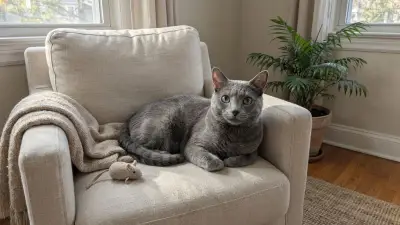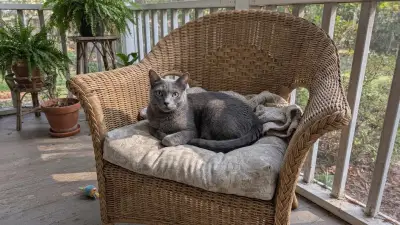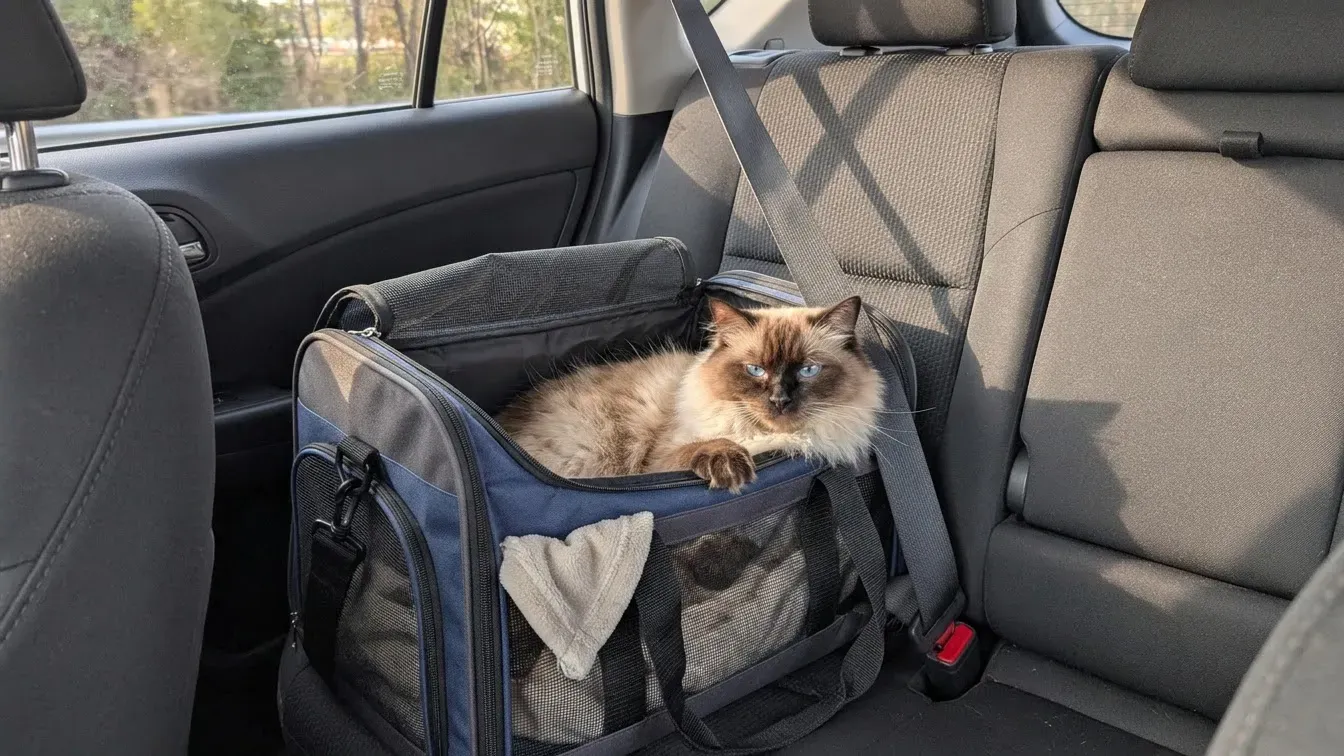
The best cat breeds that travel well in cars share a confident, people-bonded temperament that anchors them when scenery changes. While many cats tie their security to a single territory, certain adaptable breeds care far more about staying near their owners than staying in one house, making them realistic companions for multi-hour drives and RV weekends.
Before hitting the highway, any cat needs gradual carrier training, a crash-tested restraint, and a clean bill of health from your veterinarian—especially for flat-faced or large breeds prone to breathing or heart issues. Compare our 15 top road-trip breeds below by size, coat, and travel traits.
| Breed | Origin | Weight | Lifespan | Key Travel Trait |
|---|---|---|---|---|
| Russian Blue | Russia | 7–15 lbs | 15–20 years | Quiet, steady rider |
| American Bobtail | United States | 7–16 lbs | 13–15 years | Dog-like RV camper |
| American Curl | United States | 5–10 lbs | 12–16 years | Easygoing passenger |
| American Shorthair | United States | 8–15 lbs | 15–20 years | Calm, sturdy temperament |
| British Shorthair | United Kingdom | 7–17 lbs | 12–20 years | Placid backseat lounger |
| Birman | Myanmar | 6–12 lbs | 12–16 years | Quiet lap traveler |
| Burmese | Myanmar | 8–12 lbs | 10–17 years | Deeply owner-bonded |
| Chartreux | France | 6–14 lbs | 12–15 years | Silent, steady rider |
| Japanese Bobtail | Japan | 6–10 lbs | 15–18 years | Playful, adaptable |
| Maine Coon | United States | 10–25 lbs | 10–13 years | Calm gentle giant |
| Manx | Isle of Man | 8–12 lbs | 14–16 years | Alert car companion |
| Norwegian Forest Cat | Norway | 12–16 lbs | 14–16 years | Weather-hardy camper |
| Pixie-Bob | United States | 8–17 lbs | 13–16 years | Loves vehicle rides |
| Ragdoll | United States | 10–20 lbs | 12–17 years | Docile, relaxed floater |
| Ragamuffin | United States | 8–20 lbs | 12–18 years | Sweet, unhurried camper |
1Russian Blue
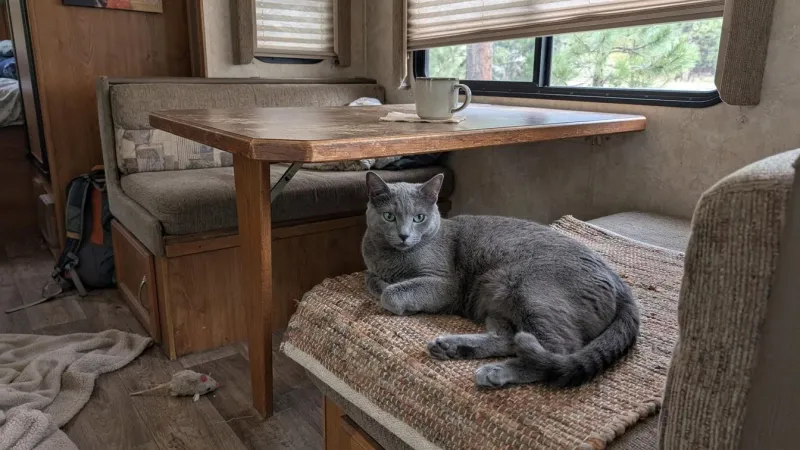
Origin: Russia · Weight: 7–15 lbs · Lifespan: 15–20 years · Coat: Short dense plush Russian Blues are gentle, quiet cats that form a deep, loyal bond with their favorite person, making them serene backseat companions once acclimated to their carrier. While reserved with strangers at busy rest stops, they settle calmly beside their owner inside a parked RV and rarely vocalize loudly during long drives. Keep a familiar fleece blanket inside their carrier so the scent of home anchors them in unfamiliar campsites.
2American Bobtail
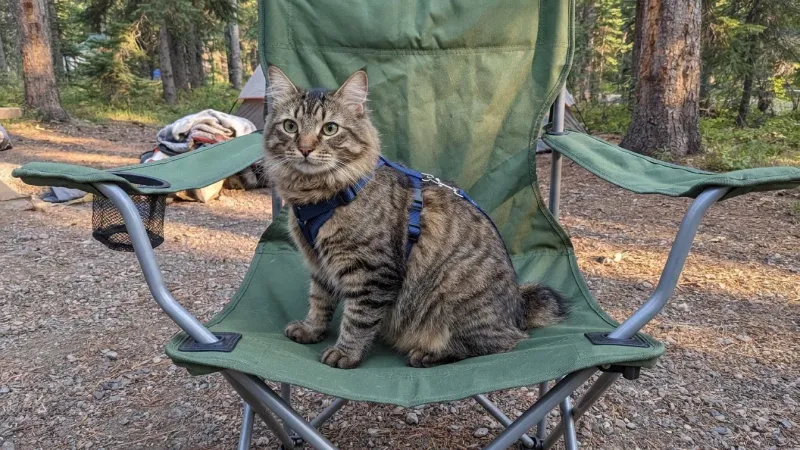
Origin: United States · Weight: 7–16 lbs · Lifespan: 13–15 years · Coat: Short to medium Often described as the golden retrievers of the cat world, American Bobtails are famous among RV owners and long-haul travelers for taking new routes in stride. They bond closely with their human family, adapt quickly to unfamiliar camper layouts, and readily accept harness and leash training. Their sturdy, medium-to-large frame handles bumps smoothly, and they rarely panic when campground neighbors walk past your rig.
3American Curl
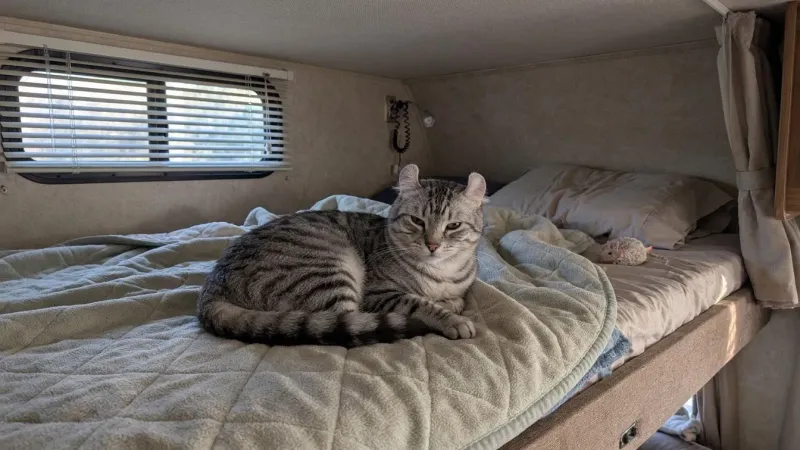
Origin: United States · Weight: 5–10 lbs · Lifespan: 12–16 years · Coat: Short or long silky Recognizable by their backward-curled ears, American Curls maintain a kitten-like curiosity paired with an even, non-reactive disposition. Their compact weight makes carrying them between car seats, rest stops, and camper steps effortless. They prefer staying wherever their people are rather than guarding a single room, so a weekend cabin or motor home feels completely natural once their familiar blanket and litter box are unpacked.
4American Shorthair
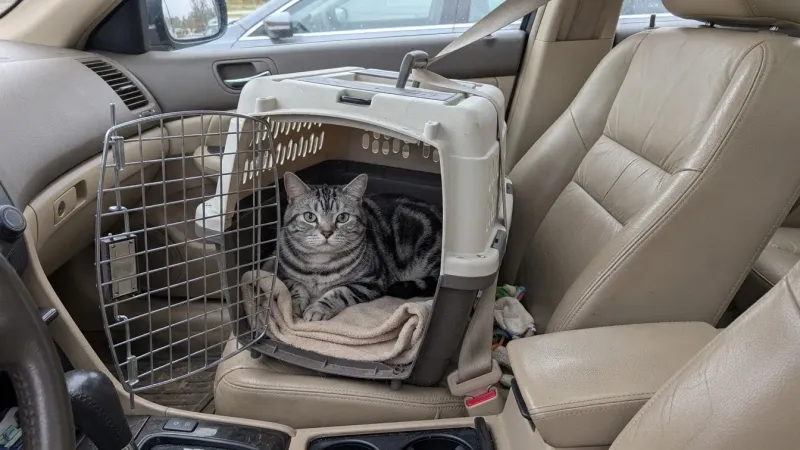
Origin: United States · Weight: 8–15 lbs · Lifespan: 15–20 years · Coat: Short dense Bred from working ship and farm cats, the American Shorthair brings steady nerves and low-maintenance grooming to weekend road trips. They are affectionate without being overly clingy, meaning they rest quietly in their carrier during multi-hour highway stretches and settle right onto a camper dinette at night. Their short, dense coat sheds minimally with weekly brushing, keeping upholstery clean on longer journeys.
5British Shorthair
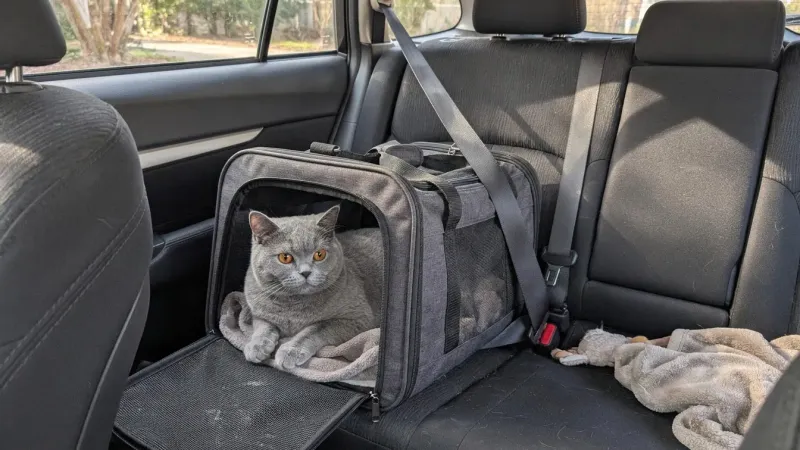
Origin: United Kingdom · Weight: 7–17 lbs · Lifespan: 12–20 years · Coat: Short crisp plush Placid, dignified, and easygoing, the British Shorthair prefers lounging comfortably over pacing or demanding constant entertainment. Their calm, unhurried temperament translates well to highway drives, where they typically nap peacefully in a roomy, seatbelt-secured carrier. Because this sturdy breed can be prone to weight gain and hypertrophic cardiomyopathy, schedule a routine veterinary checkup before long trips and keep cabin temperatures cool.
6Birman
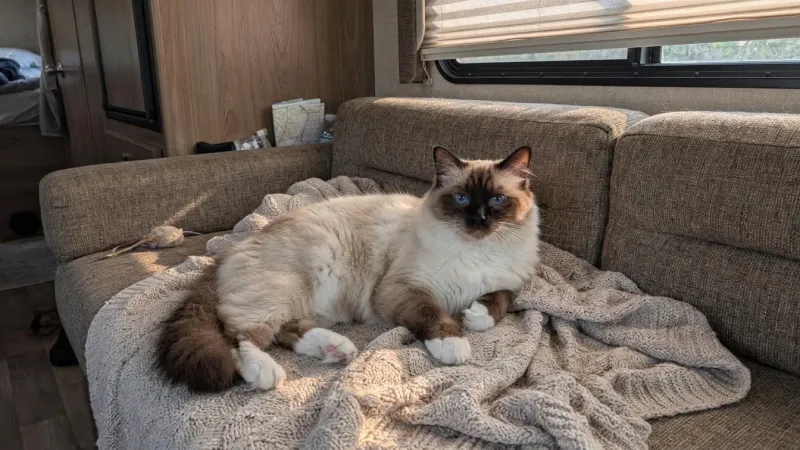
Origin: Myanmar · Weight: 6–12 lbs · Lifespan: 12–16 years · Coat: Medium-long colorpoint Birmans combine soft, plush coats with a serene, gentle nature that makes them quiet backseat companions. They speak in soft chirps rather than loud yowls, which helps keep long drives peaceful for everyone in the vehicle. Unlike high-strung breeds, Birmans stay relaxed when held or transferred between carriers, though their silky fur benefits from a quick daily comb to prevent tangles during camping trips.
7Burmese
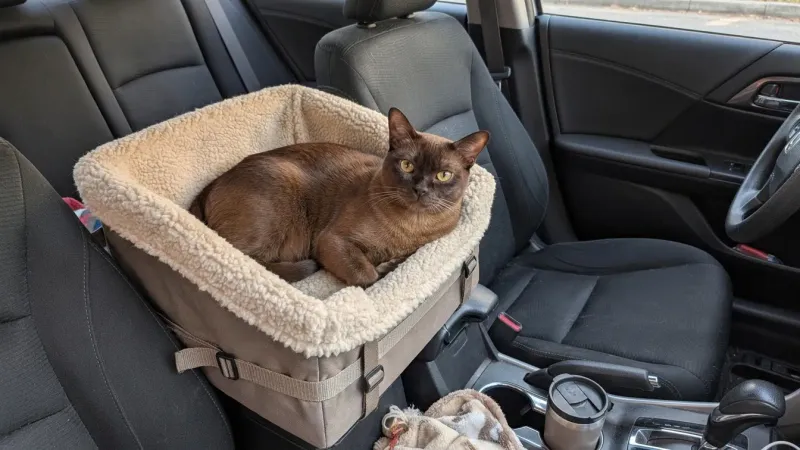
Origin: Myanmar · Weight: 8–12 lbs · Lifespan: 10–17 years · Coat: Short satin Burmese cats are deeply people-oriented companions that would far rather ride beside you for five hours than stay home with a pet sitter, though they can be chatty travelers rather than silent ones. Muscular and compact, they love burrowing under warm throws in an RV and greeting family members at every destination. Monitor cabin temperatures closely for shorter-muzzled lines and schedule a pre-trip veterinary screening for breed-related respiratory and metabolic conditions such as diabetes mellitus or hypokalemia.
8Chartreux
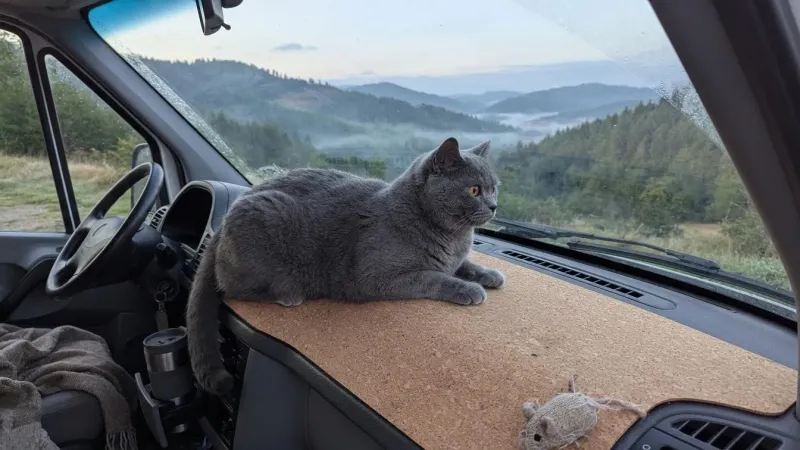
Origin: France · Weight: 6–14 lbs · Lifespan: 12–15 years · Coat: Short woolly blue-gray Known for their quiet voices and smiling expressions, Chartreux cats are famously unbothered by routine changes. They observe new surroundings calmly instead of reacting with stress, making them reliable passengers on winding country roads or busy highways. Their dense, water-repellent blue-gray coat handles damp morning campsite air well, and they typically nap peacefully through the bulk of a long drive.
9Japanese Bobtail
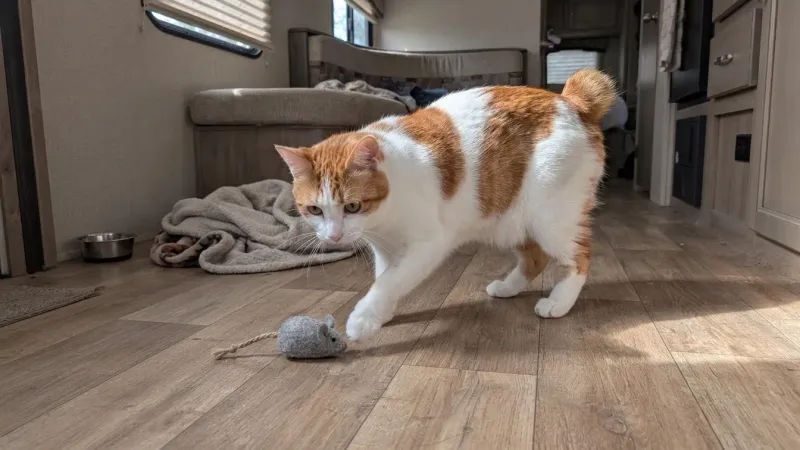
Origin: Japan · Weight: 6–10 lbs · Lifespan: 15–18 years · Coat: Short or long Lightweight, social, and highly adaptable, Japanese Bobtails adjust rapidly to new rooms, hotels, and campers. They love interactive games like fetch, which makes burning off energy inside a modest RV living space easy on rainy weekends. Because they are naturally outgoing and rarely shy around visitors, they handle family gatherings and busy campgrounds without hiding under furniture for days.
10Maine Coon
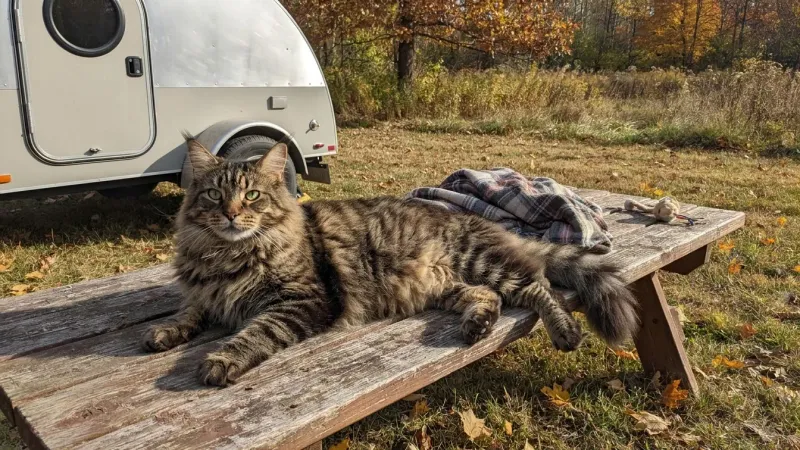
Origin: United States · Weight: 10–25 lbs · Lifespan: 10–13 years · Coat: Long shaggy Despite their impressive size, Maine Coons are laid-back gentle giants that often behave like loyal trail dogs. Many enjoy walking on a sturdy harness in cool weather and lounging calmly during multi-hour car rides. Because Maine Coons can weigh over 20 pounds, invest in an extra-large, crash-tested carrier and ask your veterinarian about routine heart screenings, as the breed carries a higher risk for hypertrophic cardiomyopathy.
11Manx
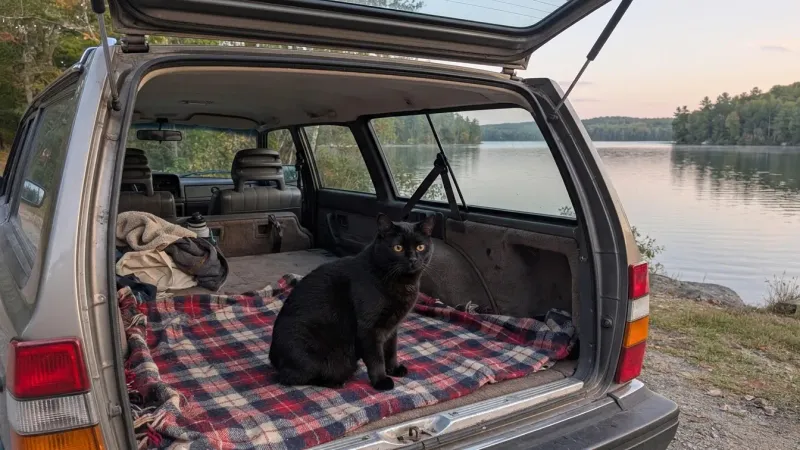
Origin: Isle of Man · Weight: 8–12 lbs · Lifespan: 14–16 years · Coat: Short or long double Rounded, sturdy, and deeply devoted to their favorite person, Manx cats frequently enjoy riding in vehicles and keeping watch over the camp. They possess strong hindquarters and a playful, dog-like loyalty that encourages them to follow you from the driver's area to the campsite chair on a leash. Because the tailless gene is linked to Manx syndrome (sacrocaudal dysgenesis)—which can cause spinal pain, arthritis, or incontinence—have a veterinarian evaluate your cat's spine and hind-end mobility before long car or RV trips, and stick to smooth routes with cushioned carrier pads.
12Norwegian Forest Cat
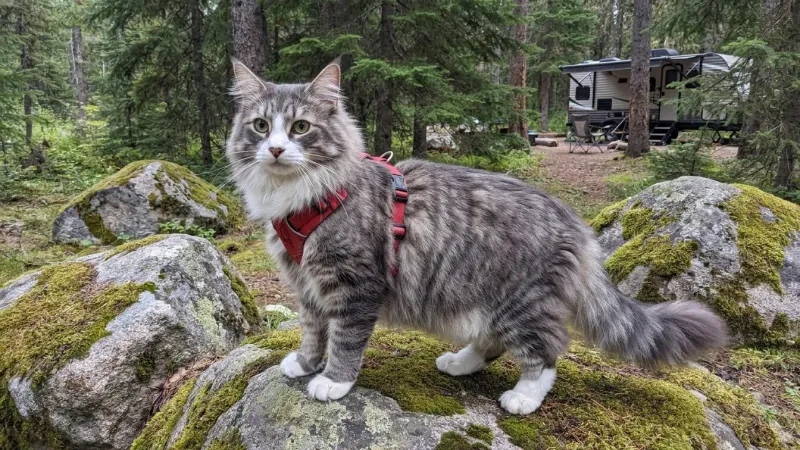
Origin: Norway · Weight: 12–16 lbs · Lifespan: 14–16 years · Coat: Long water-resistant double Built for rugged outdoor climates, the Norwegian Forest Cat is a composed, self-assured traveler ideal for fall and mountain camping trips. They rarely get flustered by unfamiliar sounds like wind, rain on an RV roof, or outdoor campfires. Their thick double coat insulates them in cooler weather, though you must keep the vehicle air-conditioned in summer and brush out pine needles after leashed walks.
13Pixie-Bob
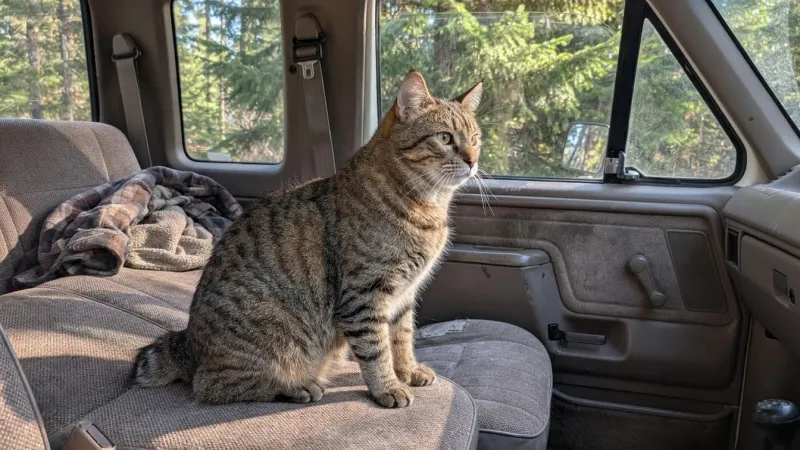
Origin: United States · Weight: 8–17 lbs · Lifespan: 13–16 years · Coat: Short or long spotted Pixie-Bobs were developed to look like wild bobcats while keeping the mellow, devoted temperament of a domestic lap dog. Many Pixie-Bobs actively enjoy car rides, peering calmly out secured windows and walking confidently on a leash at rest stops. They communicate with soft chirps and trills rather than frantic meowing, making them pleasant company over hundreds of highway miles.
14Ragdoll
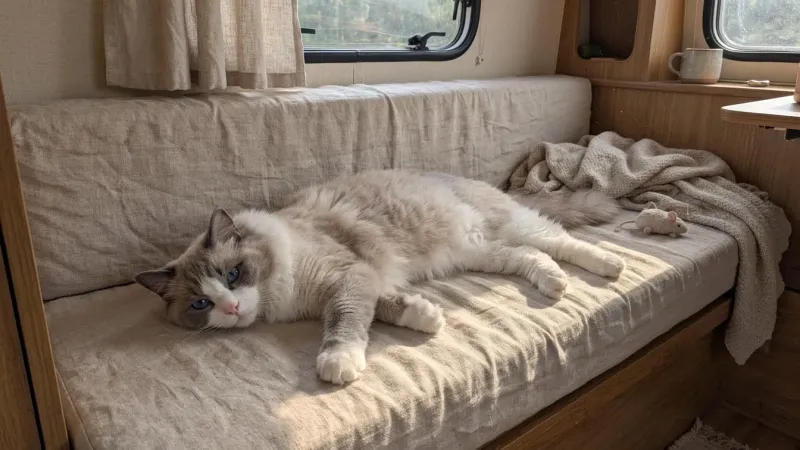
Origin: United States · Weight: 10–20 lbs · Lifespan: 12–17 years · Coat: Medium-long silky Ragdolls earned their name by going limp and relaxed when picked up, a trait that translates into remarkably calm car and RV travel. They are patient, docile, and rarely startled by sudden road noises, preferring to nap on plush bedding until you reach camp. Because Ragdolls are trusting and lack strong street-smart instincts, never let them outdoors without a secure harness and direct supervision.
15Ragamuffin
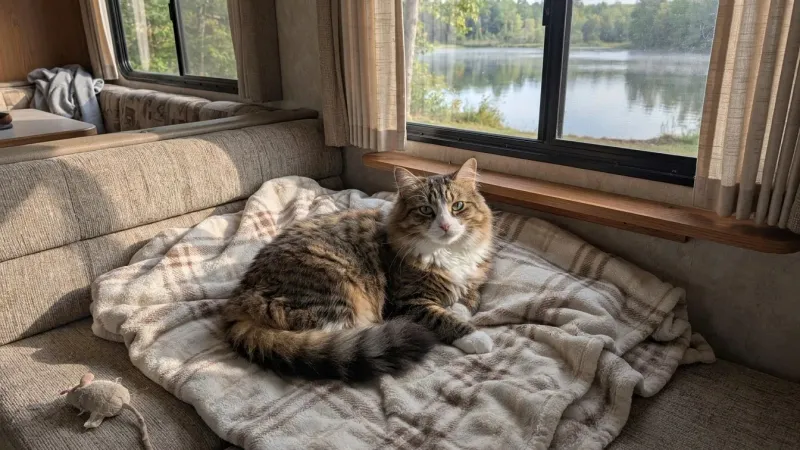
Origin: United States · Weight: 8–20 lbs · Lifespan: 12–18 years · Coat: Medium-long plush Sweet-tempered, patient, and remarkably adaptable, the Ragamuffin handles new campers and scenic highway drives with the same unruffled calm it shows at home. They love being held or curled beside their owners on an RV sofa after a day of travel and tolerate harnesses well for quiet campsite strolls. Their plush, rabbit-soft coat resists matting better than many longhaired breeds, though a quick brush every few days keeps them tidy on the road.
Preparing Your Cat for Multi-Hour Car and RV Trips
Even the calmest breed needs weeks of gradual conditioning before a four- or five-hour drive. Leave a ventilated, hard-sided or crash-tested soft carrier open in your living room with familiar bedding so your cat treats it as a safe den. Start with five-minute engine-on sessions in the driveway, reward calm behavior with treats, and build up to short neighborhood loops before attempting an interstate trip.
On road-trip days, keep your cat secured inside a seatbelt-anchored carrier while the vehicle is moving—never let a cat roam loose near pedals or dashboards. Feed a light meal three to four hours before departure to reduce motion nausea, and schedule breaks every two to three hours so your cat can use a travel litter box inside the closed vehicle and drink fresh water. If your cat drools excessively, pants, or cries nonstop, consult your veterinarian about anti-nausea options or behavioral strategies rather than using unprescribed sedatives.
RV Safety and Campground Rules for Traveling Cats
RV life introduces unique hazards that every traveling cat owner must manage carefully. Never leave a cat unattended inside a parked car or camper without reliable climate control and temperature alarms, as cabin heat can become fatal within minutes. Keep window screens latched, verify that toxic plants like lilies or sago palms are nowhere near your campsite, and check every engine bay or slide-out mechanism before moving the rig.
Fit your cat with a snug, escape-proof H-style harness and a microchip updated with your mobile number before opening any camper door. Practice walking on grass and gravel in a fenced yard at home so campsite noises, barking dogs, and unfamiliar smells do not trigger panic. For more ideas on matching feline personalities to your routine, browse our guides to calm cat breeds for gentle company and affectionate big cat breeds.
Even among the calmest breeds, every cat is an individual—start with short driveway sessions, use a seatbelt-secured carrier, and keep fresh water and a travel litter box accessible on every stop. With patient training and a vet check before long trips, your cat can become a relaxed, happy co-pilot on weekend adventures.
Sources: Cornell Feline Health Center · American Veterinary Medical Association (AVMA) · International Cat Care · The Cat Fanciers' Association (CFA)
Frequently asked questions
Can a cat travel in a car for 5 hours?
Yes, a healthy, carrier-trained cat can safely travel in a car for five hours if you prepare properly. Keep your cat inside a seatbelt-secured carrier while driving, feed a light meal a few hours beforehand, and stop every two to three hours inside the closed vehicle to offer water and access to a travel litter box.
How long does it take a cat to get used to car and RV travel?
Most adaptable cats need two to four weeks of short, positive pre-trip practice—starting with stationary carrier naps, brief engine-on driveway sessions, and short neighborhood loops—before feeling comfortable on multi-hour drives. Once on a weekend RV trip, bringing familiar blankets, scents, and their regular litter box helps most calm breeds settle into the camper within a few hours.
Should I sedate my cat for a long road trip?
Most cats travel well without medication once acclimated to their carrier, and over-the-counter sedatives can be dangerous. If your cat suffers severe motion sickness or panic, ask your veterinarian about safe, prescription anti-nausea or calming options and test any dose at home before your trip.
How do you keep a cat safe in an RV?
Secure your cat in a crash-tested carrier whenever the RV is moving, latch all window screens, and never leave your pet unattended without reliable air conditioning and temperature monitoring. Always put on an escape-proof harness and leash before opening exterior camper doors.

Nathan Brooks
Nathan Brooks runs Farmingzoom to help loving pet owners create safe, enriching homes for their animals. He cares deeply about responsible pet care and focuses on making everyday decisions simpler for fellow owners.…