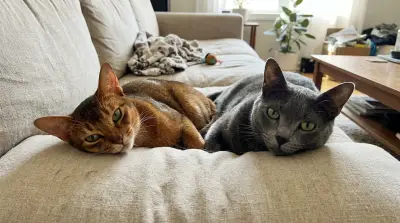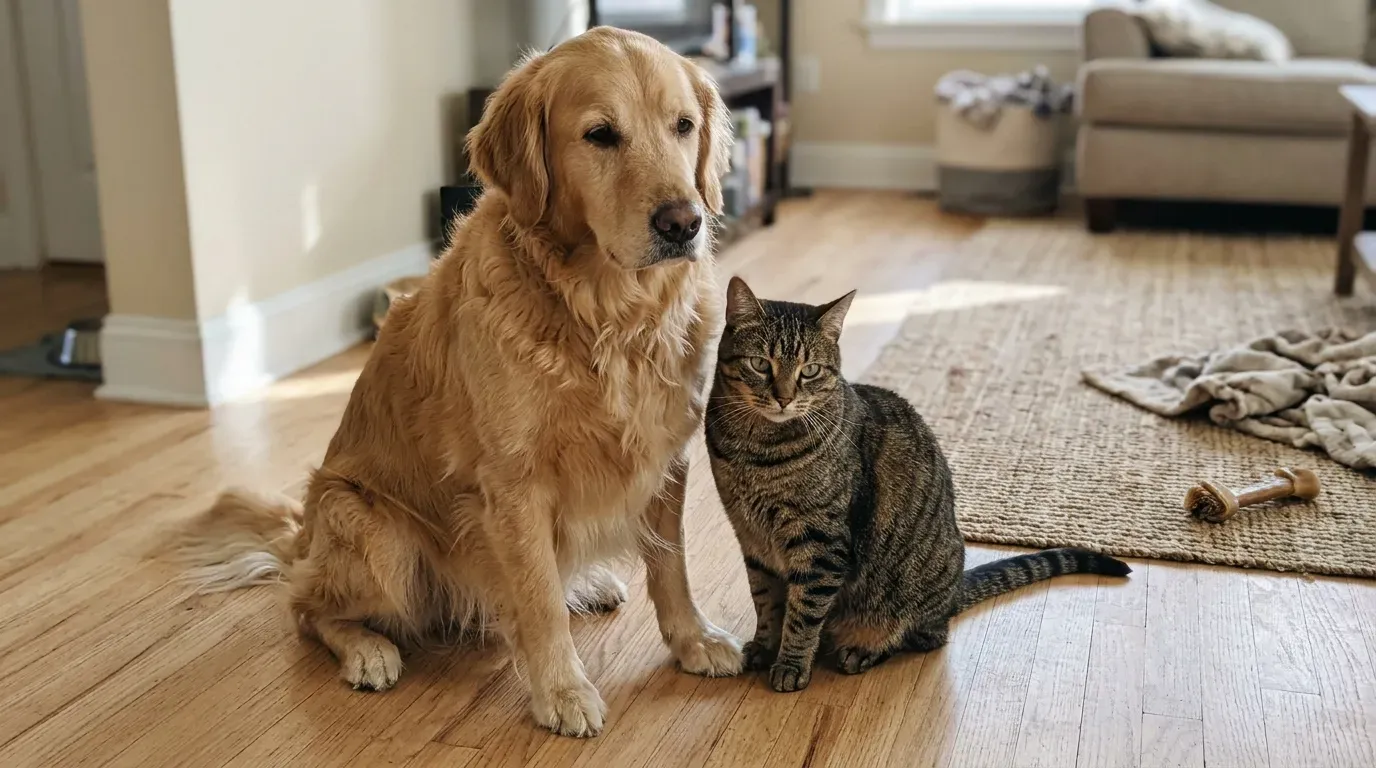
Comparing cat breeds vs dog breeds reveals a striking gap: major canine registries recognize well over 300 dog breeds, while major feline registries recognize between 45 and 75 cat breeds. This difference exists because humans spent thousands of years reshaping dogs for specialized labor, whereas cats remained natural mousers bred mostly for coat color and facial features only in the past 150 years.
Understanding why this gap exists helps you choose the right companion for your home. When you know how tightly genetics control behavior in dogs versus cats, you can set realistic expectations for training, grooming, health care, and daily routines before bringing a new pet home.
Working Roles vs Visual Traits in Breeding History

Dogs have lived alongside humans for tens of thousands of years as working partners. Early breeders selected puppies for specific survival and labor tasks: herding sheep, tracking scents, retrieving waterfowl, guarding livestock, or pulling sleds. Over centuries, isolating those behaviors altered canine skeletons, muscle mass, snout length, and instincts.
Cats took a very different path into human homes. Wild felines domesticated themselves around early grain stores because they were already expert rodent hunters. People did not need to breed cats to herd, guard, or retrieve; cats performed their pest-control job naturally without human training. Formal cat breeding only began in the late nineteenth century, focusing almost entirely on coat length, color patterns, ear shape, and face structure rather than working ability.
Physical Diversity: Extreme Sizes vs Subtle Variations
Because dogs were shaped for distinct jobs, canine physical diversity is unmatched among land mammals. A teacup Pomeranian can weigh 3 to 5 pounds, while a full-grown English Mastiff can exceed 200 pounds. Dog breeds also show drastic structural shifts, such as the elongated spines and short legs of Dachshunds and Corgis built to enter burrows, or the deep chests of Sighthounds built for sprinting.
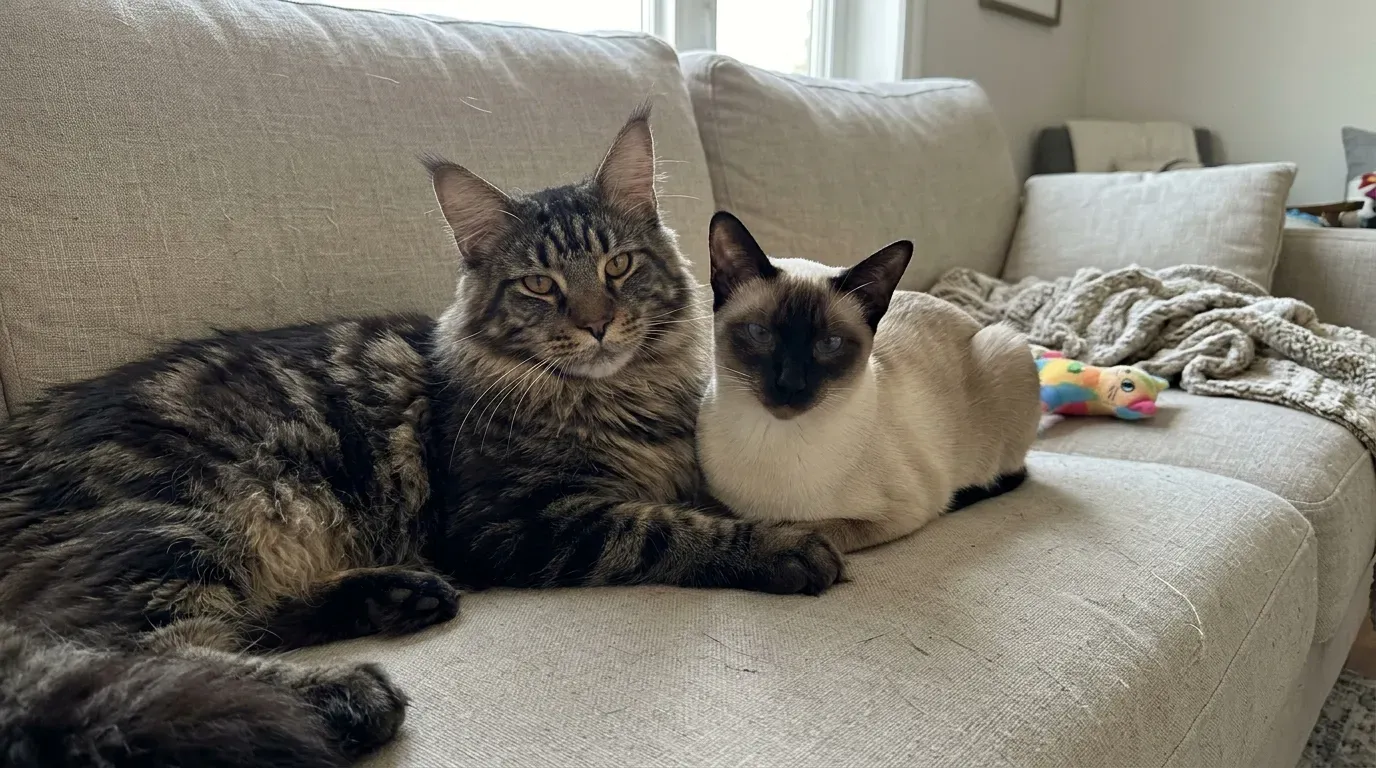
In contrast, outside of deliberate structural mutations like the short-legged Munchkin, domestic cats retain the athletic, flexible build of their wild ancestors. Even the widest physical gaps—comparing a tiny Singapura or a sleek Siamese to a heavy-boned Maine Coon—stay within a much narrower weight range of roughly 5 to 25 pounds. If you are drawn to big, thick-coated felines, exploring fluffy cat breeds with thick coats shows how coat texture creates much of their visual drama without changing their core feline anatomy.
Are Cat Breeds the Same as Dog Breeds in Predictability?
No, cat breeds do not predict behavior as reliably as dog breeds do. When you adopt a Border Collie, generations of working selection almost guarantee high energy and a strong urge to herd. When you adopt a Beagle or Basset Hound, scent-tracking instincts drive much of their daily behavior.
Cat breeds carry softer behavioral tendencies rather than rigid working instincts. Siamese and Oriental cats tend to be vocal and social, while Ragdolls often relax when held. However, early socialization, environment, and individual temperament matter far more than pedigree in felines. Furthermore, the vast majority of pet cats are mixed-breed cats rather than pedigreed animals; learning more about the Domestic Shorthair cat helps you see how varied and adaptable non-pedigreed felines truly are.
Side-by-Side Comparison: Dog Breeds vs Cat Breeds
Comparing both species across registration numbers, genetics, and daily care makes it easier to match a pet to your lifestyle and budget.
| Feature | Dog Breeds | Cat Breeds |
|---|---|---|
| Recognized Breeds | 300+ globally | 45 to 75 globally |
| Primary Breeding Goal | Working tasks and companionship | Coat color, fur length, and appearance |
| Adult Weight Range | 3 to 5 pounds up to 200+ pounds | 5 pounds to 25 pounds |
| Purebred Household Share | Common in family homes | Over 90% of pet cats are mixed-breed |
| Breed-Specific Health Risks | High (hip dysplasia, breathing issues, heart disease) | Moderate to high in extreme body types |
Health Risks Tied to Selective Breeding
Selective breeding can concentrate inherited health problems in both species, and veterinarians urge prospective owners to research breed-linked conditions before buying. In dogs, extreme size and skull shape create predictable vulnerabilities: giant breeds face joint disorders and shorter lifespans, while flat-faced breeds like Bulldogs and Pugs frequently suffer from airway obstruction and heat intolerance.
In cats, extreme aesthetic traits also carry medical risks. Flat-faced Persian cats are prone to tear-duct blockage and dental crowding, Scottish Folds carry a genetic cartilage disorder that causes painful arthritis, and large breeds like Maine Coons have higher rates of hypertrophic cardiomyopathy. Schedule a baseline wellness exam with your veterinarian within the first week of adoption, and ask about genetic screening and preventive care tailored to your pet's breed and size.
Household Safety and Helping Both Species Adjust
Whether you bring home a purebred puppy, a rescue dog, or a kitten, your home environment shapes their safety and confidence. Keep common toxins strictly out of reach for both species: lilies are fatally toxic to cats, xylitol sweeteners are acutely toxic to dogs, and grapes, raisins, onions, garlic, and chocolate are dangerous to both dogs and cats. Ask your vet for a pet-safe plant and pantry checklist before your new companion arrives.
To help a newly adopted dog or cat settle in peacefully, follow the 3-3-3 adjustment guideline used by shelters and trainers:
- First 3 days: Your pet may feel overwhelmed, hide, or refuse food. Keep them in a quiet starter room with water, a bed, and a litter box or crate.
- First 3 weeks: Your pet learns household rules, feeding times, and bathroom routines as their real personality emerges.
- First 3 months: Trust solidifies, and your dog or cat feels secure enough to bond fully with your family.
If you want a low-maintenance feline companion that adapts smoothly to family life, browsing the best cat breeds for families and first-time owners can help narrow down gentle, resilient matches.
Choosing between a dog breed and a cat breed comes down to how much structure and physical variety you want in your daily routine. Dogs offer predictable working traits and dramatic size differences, while cats deliver independent agility and subtle coat variations within a compact size. Whichever companion you choose, partner with your veterinarian early for breed-specific screenings, safe nutrition, and preventive care.
Frequently asked questions
Why are there so many dog breeds compared to cat breeds?
Humans selectively bred dogs for thousands of years to perform specialized jobs like herding, hunting, and guarding, which dramatically reshaped their bodies and instincts. Cats naturally controlled rodents without human direction, so formal cat breeding began only about 150 years ago and focused mostly on coat color and facial appearance.
What can a cat do that a dog cannot?
Cats have retractable claws, rotating wrists, and highly flexible spines that allow them to climb vertical surfaces, leap up to six times their body length, and right themselves mid-air. They also compress their bodies through narrow gaps using collarbones that float freely rather than connecting rigidly to the skeleton.
Can certain dog breeds live peacefully with cats?
Yes, calm and gentle breeds with lower prey drives often coexist well with cats when introduced slowly. Breeds such as Cavalier King Charles Spaniels, Bulldogs, Golden Retrievers, and Labrador Retrievers frequently adapt well to feline housemates, though individual temperament and early socialization always matter most.
Do higher IQ people prefer cats or dogs?
No scientific consensus proves that intelligence determines pet preference. Personality traits and lifestyle habits play a much bigger role: people who enjoy outdoor routines and structured social activities often gravitate toward dogs, while people who value quiet independence and indoor hobbies frequently prefer cats.

Nathan Brooks
Nathan Brooks runs Farmingzoom to help loving pet owners create safe, enriching homes for their animals. He cares deeply about responsible pet care and focuses on making everyday decisions simpler for fellow owners.…