Time needed
30 min
What you need
- Lightweight screen-mounted cat door insert
- 2-inch clear fiberglass screen repair tape
- Painter's tape
- Chalk pencil or washable marker
- Scrap cardboard backing
Tools
- Tape measure
- Sharp utility knife
- Metal straightedge or ruler
- Phillips screwdriver (if required by frame)
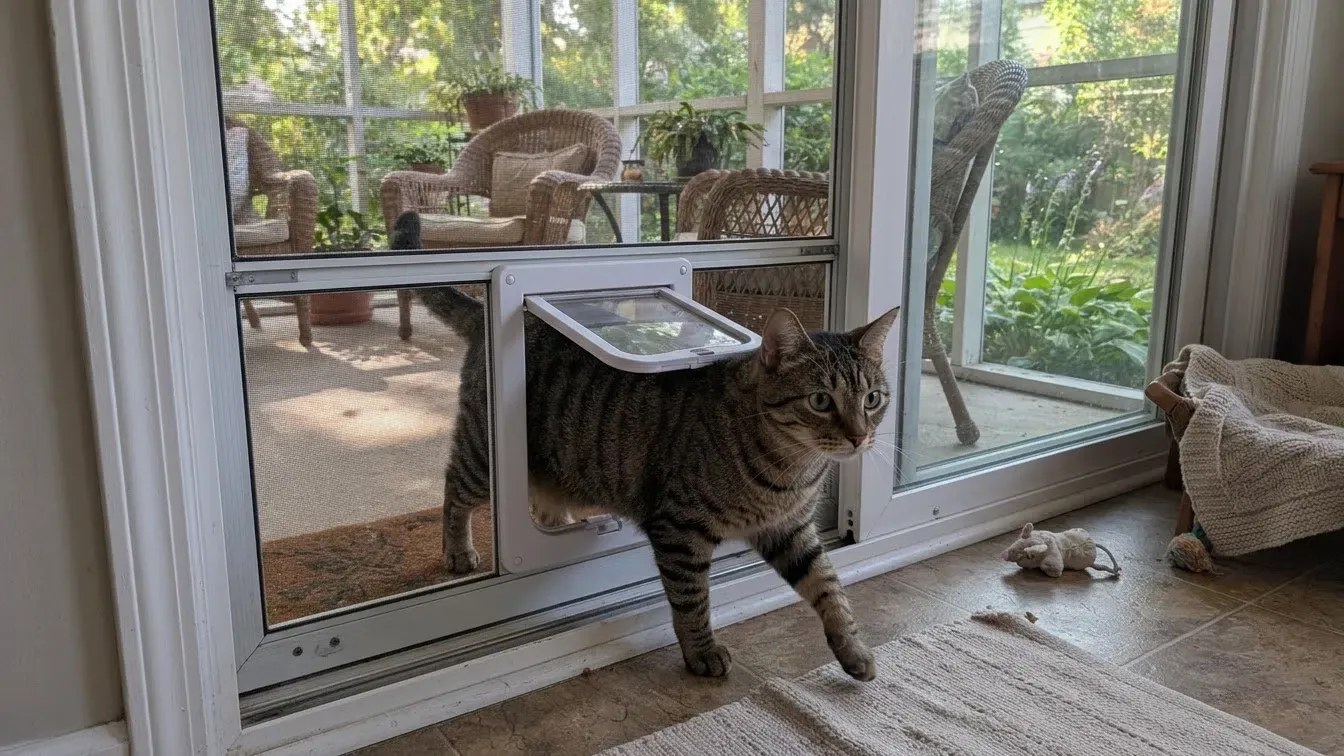
Installing a cat door for sunroom screen door setups takes about 30 minutes when you use a lightweight screen-mounted frame and reinforce the surrounding mesh before cutting. In warm climates, leaving your main patio or sunroom glass door open lets fresh air circulate while keeping bugs out, but a latched screen quickly becomes a scratching target when your indoor cat wants inside or out.
Standard heavy wall or wood pet flaps pull downward on flexible screen fabric, causing warped frames and shredded corners. By pairing a rigid, snap-together screen insert with proper tension and simple mesh reinforcement, you give your cat effortless sunroom access while keeping your screen intact for years.
- 1
Measure Your Cat and Mark Flap Height
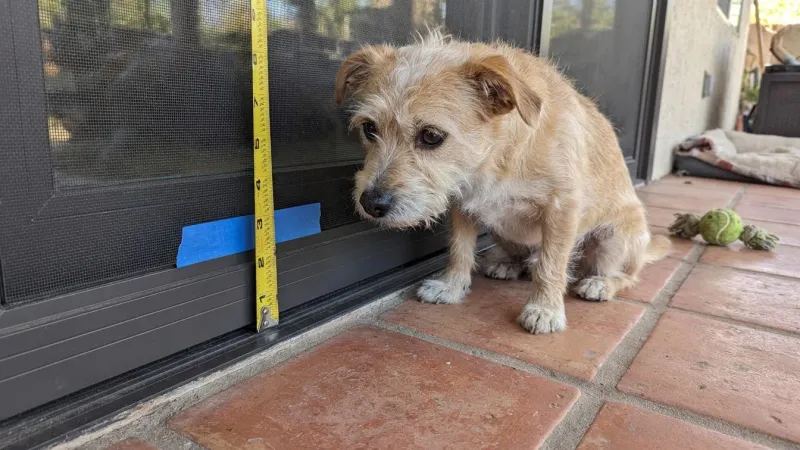
Plan to position the bottom edge of the flap opening 2 to 3 inches above the floor—or level with the lowest point of your cat's chest/sternum without subtracting any height—so your cat can step through effortlessly without tripping or jumping. Place a piece of painter's tape on the sunroom screen door at this low threshold height. Keep the frame at least two inches away from the door's metal side stile so the clamping pins sit flat on the mesh.
- 2
Remove the Screen Door and Lay It Flat
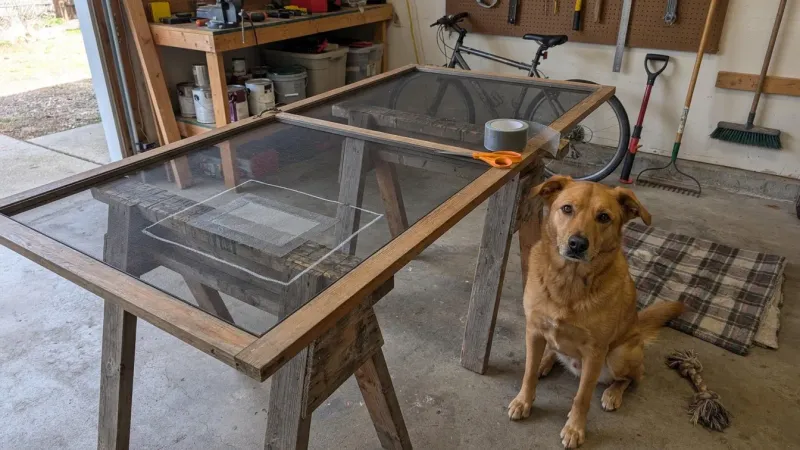
Unlatch the screen door, lift it off its rollers or hinges, and set it flat across two sawhorses or a wide worktable. Working horizontally prevents gravity from pulling the mesh out of square while you cut and clamp the plastic housing. Wipe dust and pollen off the screen area with a dry cloth so reinforcement tape adheres cleanly.
- 3
Reinforce the Cut Zone With Screen Tape
Hold the outer cat door frame against the mesh over your painter's tape mark and trace around the outside edge with a non-permanent chalk pencil. Apply two-inch-wide clear fiberglass screen repair tape just inside your traced outer perimeter on both sides of the screen so the plastic frame flange will completely cover and conceal the tape edges once clamped together. This creates a hidden, double-thick collar that stops the woven mesh from unraveling or sagging under daily use.
- 4
Trace the Inner Cutout Opening
Center the cat door's inner template or back frame inside the taped perimeter and trace the inside opening line carefully. Double-check that the frame is square with the door's bottom rail using a tape measure on both left and right sides. Crooked placement puts uneven tension on the mesh and keeps the magnetic flap from swinging freely.
- 5
Cut the Mesh Carefully With a Utility Knife
Slide a scrap piece of cardboard beneath the screen to protect your work surface, then cut along the inner traced line using a sharp utility knife and straightedge. Make slow, steady passes rather than pulling hard on the blade, which can stretch surrounding fibers. Trim away any tiny stray strands so the opening edges are completely smooth.
- 6
Clamp the Two Frame Halves Together
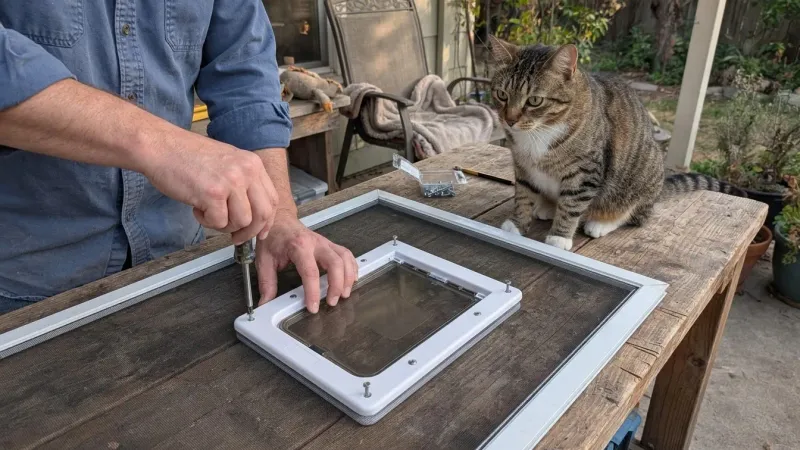
Position the exterior frame half under the screen opening and align the interior flap half directly on top so their locking pins pass cleanly through the reinforced tape collar. Press firmly around all four sides until every pin clicks into place, or tighten the manufacturer's short machine screws evenly with a screwdriver. Test the flap by hand to verify it swings smoothly in both directions and centers on its magnet.
- 7
Rehang the Door and Introduce Your Cat
Set the screen door back onto its track or hinges, latch it securely, and check that the cat door frame clears the main glass door frame when sliding or swinging. Prop the flap open with a strip of painter's tape for the first day and place a few favorite treats or a familiar cat perch on your screened porch just beyond the opening. Once your cat walks through confidently, lower the flap so they learn to nudge it open on their own.
Choosing the Right Screen-Mounted Cat Door for Warm Climates
Standard interior cat doors rely on thick wood or metal cores to hold screws, which makes them far too heavy for flexible fiberglass or aluminum screen cloth. Instead, choose an ABS plastic screen-fit frame that clamps onto both sides of the mesh using interlocking pins or recessed screws. Look for a lightweight magnetic flap that closes quietly in a breeze without slamming, and verify that the flap opening matches your cat's shoulder height using our guide on cat door dimensions and measuring.
If you have a senior cat with stiff joints or a small kitten, pick a flap with a low threshold and weak magnetic catch so they do not have to push hard. For sliding glass patio setups where you prefer not to alter the screen at all, you can also compare cat doors for sliding glass doors that sit directly in the door track.
Common Mesh Installation Mistakes to Avoid
Even a lightweight screen insert will fail if the surrounding mesh loses tension or carries excess load. Avoid these frequent errors when fitting your sunroom screen:
- Skipping corner reinforcement: Screen mesh frays diagonally from sharp 90-degree cuts. Always apply clear adhesive screen patch tape or flexible silicone along the outer perimeter of your cut line before snapping the frame together.
- Installing on loose or sun-brittle mesh: Intense sunlight degrades standard fiberglass mesh over time. If the screen feels brittle or sags when pressed, replace the screen panel with pet-resistant polyester mesh first, or check out cat door ideas without cutting your door such as magnetic mesh curtain panels.
- Leaving sharp cut edges exposed: Trim stray aluminum or fiberglass strands flush inside the plastic channel so your cat cannot snag a claw or chew loose fibers.
Sunroom Safety Checks for Indoor Cats
An enclosed sunroom gives indoor cats valuable mental stimulation, fresh scents, and safe birdwatching, which helps prevent boredom and stress-related scratching. Before giving your cat unsupervised access, inspect the sunroom's outer perimeter screens from floor to ceiling to ensure every spline is tight and no gaps exist around window tracks or baseboards.
Monitor sunroom temperatures closely during warm weather, because an enclosed sunroom can rapidly reach lethal heatstroke levels for cats if airflow is stagnant or the interior glass door accidentally closes. Always maintain adequate cross-ventilation or air conditioning, use a sturdy doorstop or latch guard so the interior glass door cannot blow or click shut behind your cat, and keep blind cords tied high out of reach.
Check that any sunroom houseplants are safe for curious nibblers, as common patio and porch plants like lilies, sago palms, and pothos are toxic to cats. Provide fresh water in the shade, and contact your veterinarian immediately if your cat ever shows signs of overheating, such as open-mouth panting or lethargy, during hot afternoons.
Reinforcing the mesh collar before cutting keeps a sunroom screen door taut, bug-tight, and safe from shredded edges. Once the lightweight flap is in place, you can leave your main glass door open during warm weather while your cat moves freely between your home and their sunlit porch retreat.
Sources: ASPCA · Cornell Feline Health Center · International Cat Care
Frequently asked questions
Are there cat-proof screen doors available for sunrooms?
Yes. Pet-resistant screen mesh made from heavy-duty vinyl-coated polyester resists claws far better than standard fiberglass or aluminum mesh. You can rescreen an existing sunroom door frame with pet-resistant mesh using a spline roller before installing your lightweight screen cat door.
Can you install a cat door in a retractable screen door?
No, rigid plastic cat door inserts cannot be installed in retractable screen doors because the housing blocks the mesh from rolling into its side canister. For retractable screens, use a freestanding magnetic mesh curtain or install a window cat door insert in an adjacent sunroom window instead.
What is the best pet door for a sliding screen door?
A lightweight ABS plastic screen-fit frame with interlocking pins and a magnetic center flap works best on sliding screen doors. Its thin profile clears adjacent sliding glass panels without catching while keeping enough tension on the mesh to prevent sagging.
How do I stop my cat from scratching the sunroom screen around the flap?
Mount the flap opening low—2 to 3 inches off the floor—with the top of the flap at or slightly above your cat's shoulder height so they can step through and nudge it open at head or shoulder level without reaching up with front claws. Prop the flap open with painter's tape for the first 24 hours and reward calm pass-throughs with treats until pushing the flap becomes automatic.

Nathan Brooks
Nathan Brooks runs Farmingzoom to help loving pet owners create safe, enriching homes for their animals. He cares deeply about responsible pet care and focuses on making everyday decisions simpler for fellow owners.…