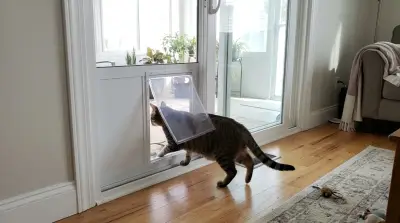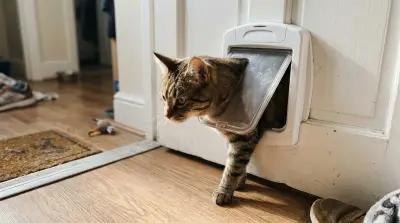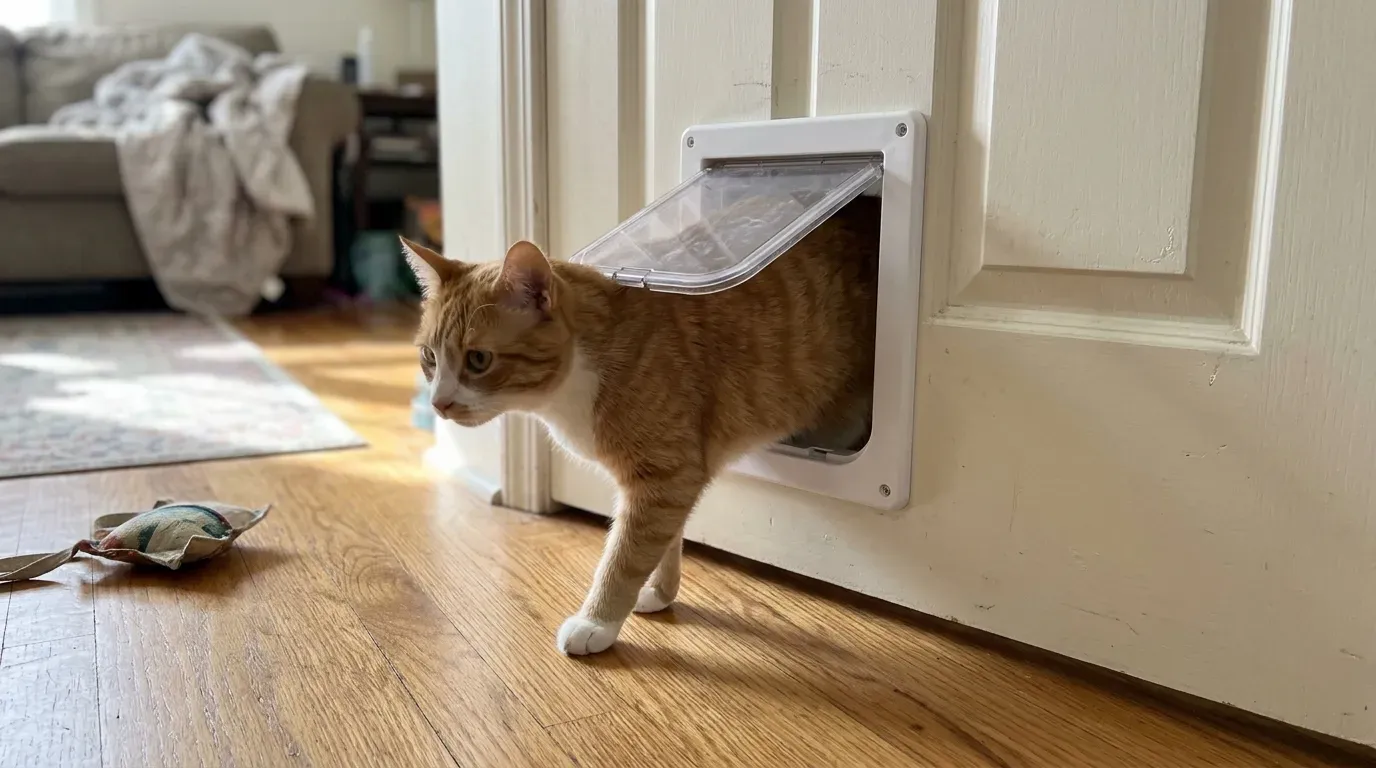
Standard cat door dimensions range from 5 to 10 inches wide and high, with a 6-inch by 6-inch flap fitting most average adult cats under 12 pounds. Choosing the wrong opening size leads to uncomfortable squeezing, whisker stress, or drafts blowing through an oversized hole.
Before cutting into a door or wall, you need three exact numbers: your cat's body height, their chest or shoulder width, and the proper mounting height from the floor. Use the measurement steps, breed chart, and cardboard template test below to match your pet with a comfortable, snug-fitting flap on the first try.
Standard Cat Door Dimensions at a Glance
Most pet door manufacturers group feline flaps into three standard size tiers based on opening width, opening height, and weight limits. Keep in mind that product listings show two different sets of measurements: the flap opening (the space your cat actually walks through) and the cutout size (the hole you saw into your door).
| Door Size | Flap Opening (W x H) | Typical Cutout Size | Weight Capacity |
|---|---|---|---|
| Small | 5" x 5" to 6" x 6" | 6.5" x 6.5" | Under 12 lbs |
| Medium | 7" x 7" to 7.5" x 8" | 8" x 8.5" | 12 to 16 lbs |
| Large | 8.5" x 9" to 9.5" x 10" | 10" x 10.5" | Over 16 to 22 lbs |
A common large opening around 9.41 inches wide by 9.45 inches high comfortably accommodates cats up to 22 pounds. Always check the packaging for the exact rough cutout dimensions before marking your door, as plastic frames typically add 1 to 2 inches around the perimeter of the flap.
How to Measure Your Cat in 3 Simple Steps
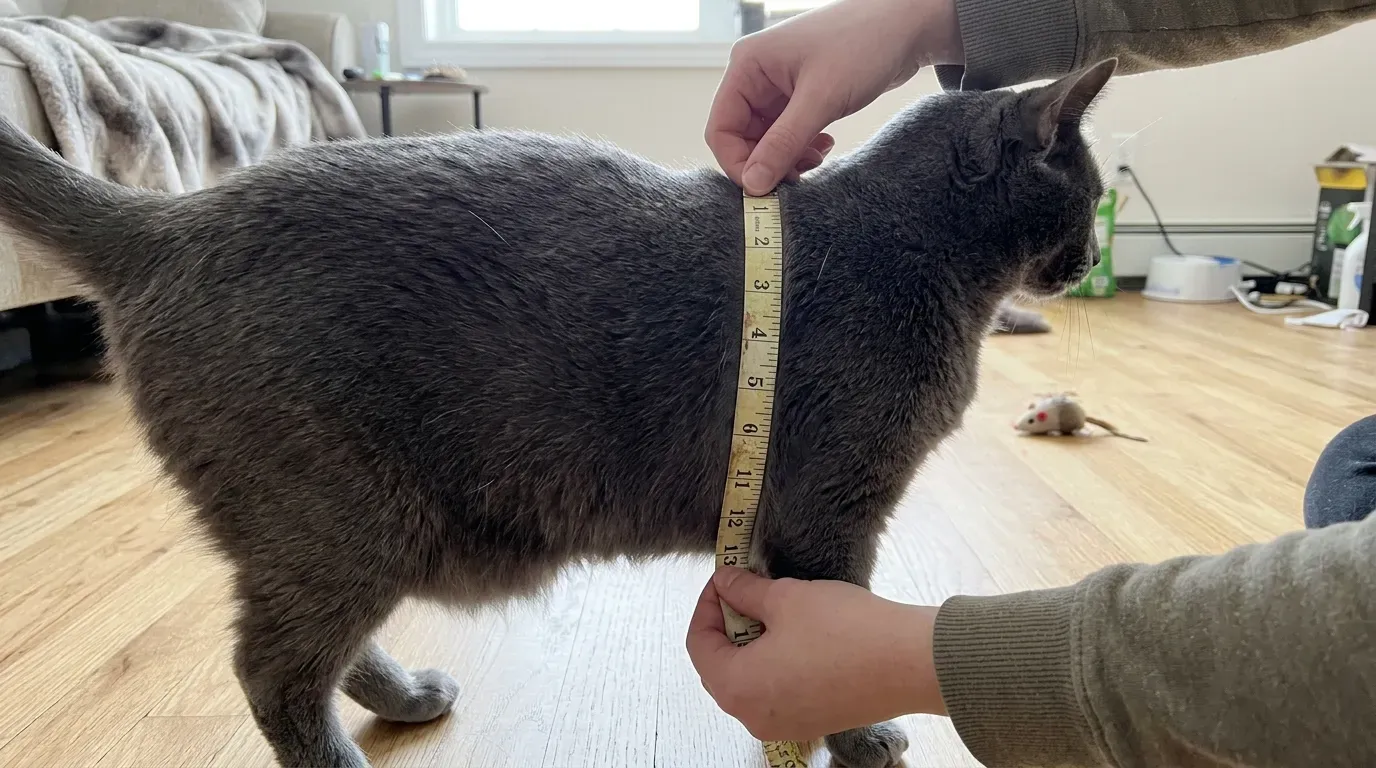
Weight alone is a poor guide because a long, lean cat needs a taller opening than a stocky cat of the same weight. Grab a soft measuring tape and follow these steps while your cat stands naturally on all fours.
- Measure body height at the shoulders: Place the tape at the top of your cat's shoulder blades and measure straight down to the lowest point of their chest or belly—this shoulder-to-belly measurement assumes the bottom lip of the door will be mounted at belly height rather than flush with the floor, though some sizing guides measure from the floor to the top of the shoulders instead. Do not measure to the top of the head, because cats naturally lower their heads when stepping through an opening.
- Measure widest body width: Wrap or hold the tape across the widest part of your cat's ribcage, hips, or shoulders—whichever is broadest. If your cat has a thick coat, press lightly so you measure their frame rather than loose fur.
- Add 1 to 2 inches of clearance: Add 1 inch to both your height and width numbers for sleek, agile cats, or add 2 inches for long-haired cats, seniors, or pets with a low-hanging belly.
For example, if your cat measures 6 inches from shoulder to belly and 5 inches across the ribs, look for a flap opening that is at least 7 to 8 inches high and 6 to 7 inches wide.
Cat Door Size Chart by Breed and Build
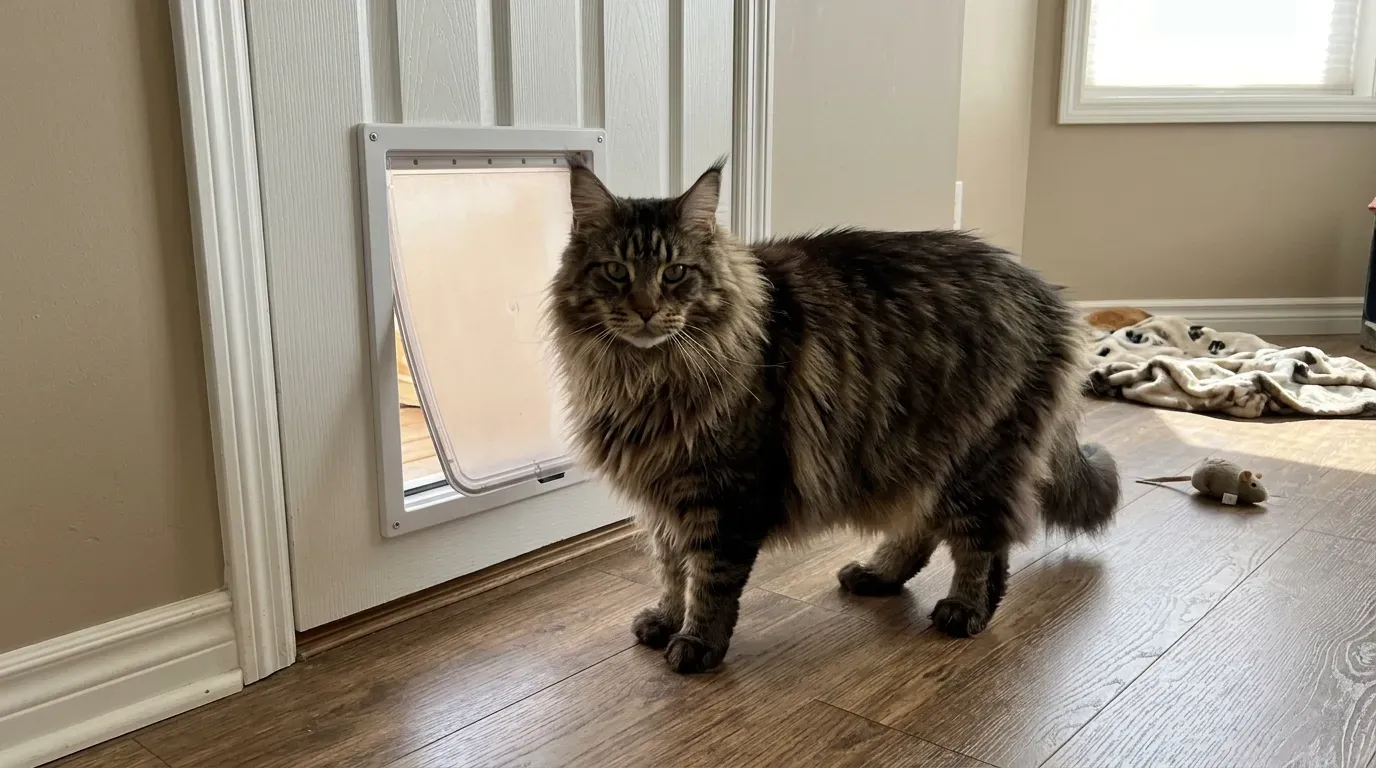
Different breeds have vastly different bone structures, chest depths, and fur volume. While an average Domestic Shorthair cat easily slips through a standard 6-inch opening, broad-chested or heavy-boned cats need extra room so their sides do not rub against the rigid frame. Keep in mind that short-legged dwarf breeds like Munchkins require a lower floor installation height (around 2 to 3 inches, similar to kittens or seniors) rather than being grouped purely by weight with standard-legged cats.
| Breed or Body Type | Typical Weight | Recommended Flap Opening |
|---|---|---|
| Singapura, Cornish Rex, Munchkin (requires 2"–3" floor clearance) | 5 to 9 lbs | 5.5" x 5.5" (Small) |
| Siamese, Abyssinian, Russian Blue | 8 to 12 lbs | 6" x 6.5" (Small to Medium) |
| British Shorthair, Scottish Fold, Bengal | 10 to 15 lbs | 7" x 7.5" (Medium) |
| Ragdoll, Norwegian Forest Cat, Siberian | 13 to 18 lbs | 8.5" x 9" (Large) |
| Maine Coon, Savannah | 15 to 22+ lbs | 9.5" x 10" or larger (Large) |
If you own one of the big cat breeds like a Maine Coon, standard feline flaps are often too narrow. Shopping in the small-dog door category gives large cats the shoulder room they need without forcing them to crouch awkwardly.
DIY Cardboard Template Test Before You Cut
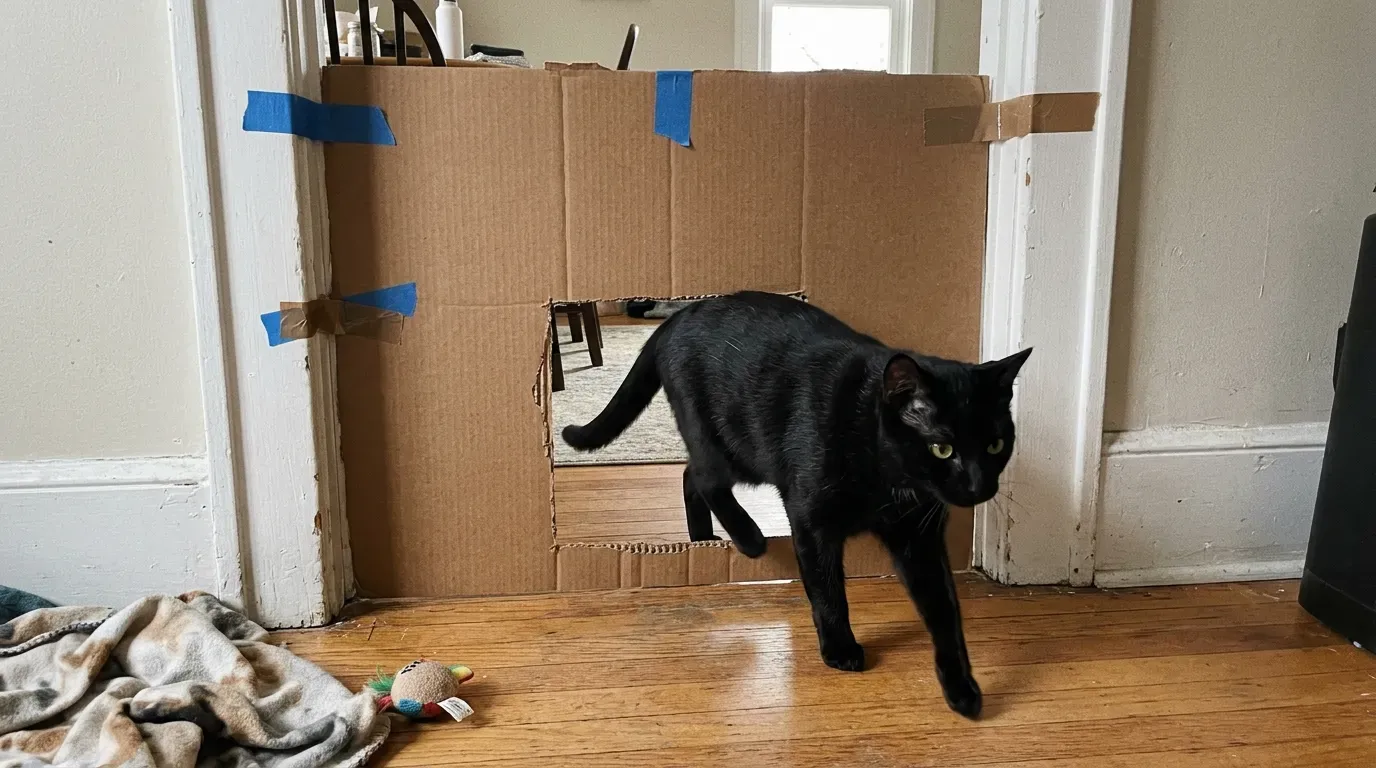
Even after taking careful measurements, testing an opening size in real life prevents expensive mistakes—especially if you are installing a flap in a solid wood or exterior door.
Take a sturdy piece of corrugated cardboard and cut a square or rectangle matching the exact flap opening (not the outer frame) of the model you plan to buy. Tape the cardboard sheet across an open doorway at floor level so your cat has to walk through the hole to reach a favorite toy or a small piece of plain cooked chicken.
Watch how your cat moves through the cutout:
- Good fit: Your cat steps through smoothly with their back flat, belly clearing the bottom edge, and sides barely brushing the cardboard.
- Too small: Your cat hesitates, flattens their ears, arches their back sharply, or scrapes their belly on the bottom lip.
- Too large: There are several inches of empty gap above your cat's back, which lets conditioned indoor air escape and invites drafts.
If you live in a rental or want to avoid sawing into wood altogether, explore cat door ideas without cutting your door, such as window inserts or latch straps.
Proper Installation Height From the Floor
Getting the right flap size only works if you mount the door at the right height off the ground. Set the bottom edge of the flap opening level with the underside of your cat's belly, which is typically 4 to 6 inches (100 to 150 mm) above the floor for most adult cats.
Never mount the bottom lip higher than your cat's belly. If the step-over is too tall, your cat has to jump through the opening rather than walk, which increases the risk of catching a hind leg on the frame. For senior cats, kittens, or pets with arthritis, lower the bottom edge to 2 to 3 inches above the floor so they can step through without lifting their hips high.
In multi-pet households with both a small cat and a taller dog, mount the door at your cat's belly height and pick a flap tall enough to clear the dog's shoulders. If you have a high-traffic entryway, pairing the right height with interior cat door ideas helps keep litter box rooms discreet while giving your pet easy access.
Door Thickness, Tunnel Depth, and Safety Checks
Alongside width and height, check the thickness of your door before ordering. Standard interior hollow-core doors measure 1.375 inches (35 mm) thick, while exterior solid wood, fiberglass, or metal doors measure 1.75 inches (44 mm) thick. Most basic cat doors include a telescoping frame that fits doors up to 2 inches thick, whereas wall installations require tunnel extensions.
Keep a few practical safety rules in mind when choosing and placing a cat door:
- Beware of hollow-core doors: Lightweight interior doors are filled with cardboard honeycomb material; you must line the inside of the cutout with thin wood framing strips so the screws grip securely.
- Avoid thin glass panels without a pro: Standard single-pane glass cracks easily, and tempered glass shatters if cut—use a dedicated cat door for sliding glass doors instead.
- Check flap magnets and edges: Ensure magnetic closures are weak enough for a kitten or older cat to push open easily without trapping a tail, and sand away any sharp plastic burrs after installation.
If your cat suddenly refuses to use a door they previously walked through comfortably, or seems stiff and reluctant to step over a low threshold, schedule a visit with your veterinarian to rule out joint pain, arthritis, or vision changes.
Measuring your cat from shoulder to belly and adding 1 to 2 inches of breathing room takes the guesswork out of buying a cat door. Confirm the exact rough cutout size on the box, run a quick cardboard test at belly height, and you will end up with a snug, draft-free opening your cat uses happily every day.
Frequently asked questions
What are the standard dimensions of a cat door?
Standard cat door flap openings measure between 5 and 10 inches wide and high. A typical small-to-medium cat door has a 6-inch by 6-inch opening for cats under 12 pounds, while large models measure around 9.41 inches by 9.45 inches to fit cats up to 22 pounds.
Can a cat fit through a 3-inch hole?
While a slim adult cat can squeeze its head and flexible ribcage through a 3-to-4-inch gap in an emergency, a 3-inch hole is far too small for a daily cat door. Cats need at least a 5-by-5-inch opening—and ideally 1 to 2 inches wider than their body—to walk through comfortably without whisker stress.
How high off the floor should a cat door be installed?
Install the cat door so the bottom edge of the flap opening sits level with the bottom of your cat's belly, which is usually 4 to 6 inches (100 to 150 mm) above the floor. For kittens or senior cats with stiff joints, place the bottom edge 2 to 3 inches from the floor.
What size cat door do I need for a 15-pound cat?
A 15-pound cat typically needs a medium-to-large cat door with a flap opening measuring at least 7.5 inches wide by 8 inches high. Always measure your cat's shoulder-to-belly height and widest rib width, then add 1 to 2 inches of clearance to be certain.

Nathan Brooks
Nathan Brooks runs Farmingzoom to help loving pet owners create safe, enriching homes for their animals. He cares deeply about responsible pet care and focuses on making everyday decisions simpler for fellow owners.…