Time needed
8 h
What you need
- Sturdy secondhand wooden bookcase (at least 12 inches deep)
- Low-pile carpet remnants
- 1/4-inch plywood sheet for back reinforcement
- 3/8-inch natural unoiled sisal rope
- Heavy-duty anti-tip wall anchor brackets and screws
- Metal L-brackets and 5/8-inch wood screws
- Zero-VOC water-based paint or sealer
- Non-toxic PVA wood glue
- 80-grit and 150-grit sandpaper
- Washable cat beds and short cotton-cord toys
- Drill with a 1/2-inch bit
- Jigsaw
- Staple gun and stainless steel staples
Tools
- Jigsaw with wood-cutting blade
- Cordless drill and 1/2-inch drill bit
- Stud finder
- Heavy-duty staple gun and 3/8-inch staples
- Utility knife
- Tape measure and pencil
- Sanding block or orbital sander
- Rubber mallet
- Safety glasses and dust mask
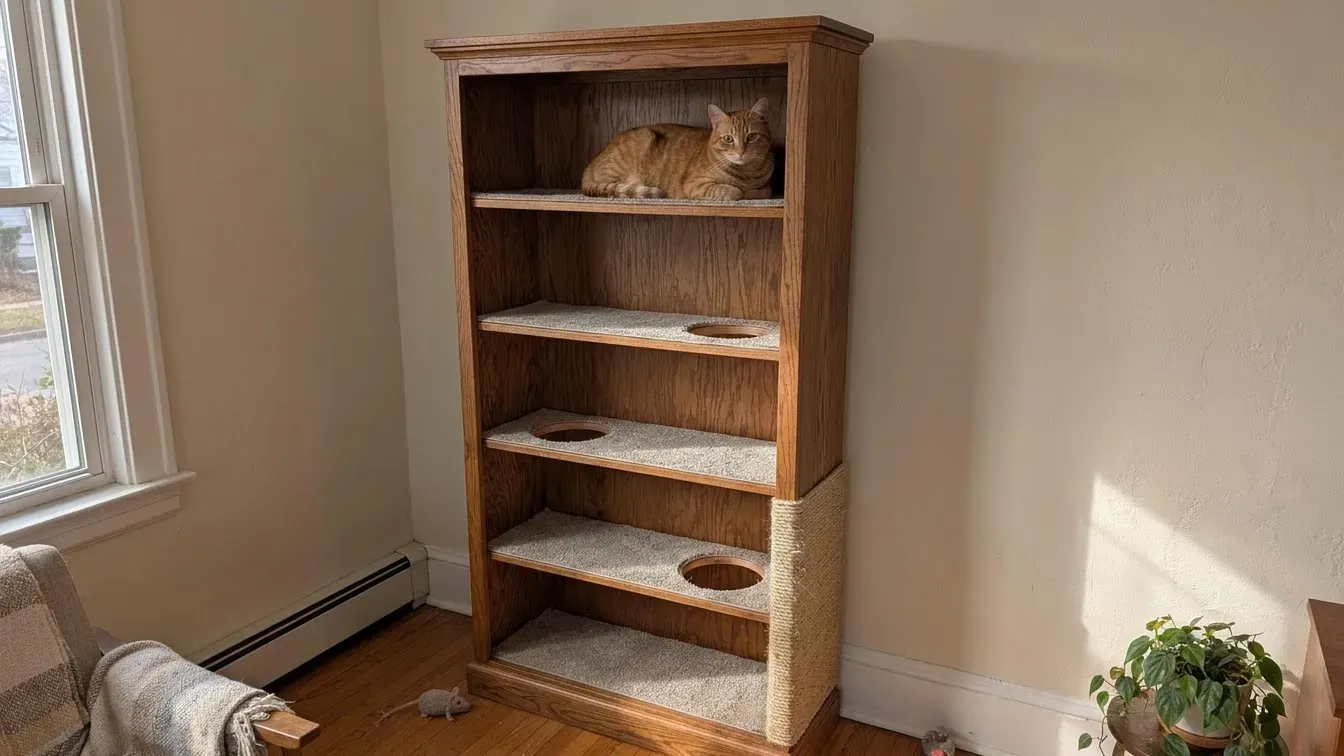
You can convert a sturdy secondhand wooden bookcase into a multi-level cat condo in a single weekend by cutting staggered pass-through holes, reinforcing loose shelves, and wrapping perches in grippy carpet. Upcycling an existing frame saves hours of carpentry and keeps solid wood furniture out of landfills.
With basic power tools and roughly $40 to $75 in pet-safe supplies, you can give your indoor cat high perches, cozy cubbies, and a dedicated scratching zone without sacrificing your living room style.
- 1
Inspect and Clean the Secondhand Bookshelf
Choose a solid wood or thick plywood bookcase at least 30 inches wide, 12 inches deep, and 48 to 72 inches tall. Check every joint for rot or loose nails, and test older finishes for lead; discard any piece with flaking lead paint rather than sanding or scraping it indoors. Wipe down all surfaces with a damp cloth and mild detergent rather than soaking the wood, then let it dry completely before marking cuts.
- 2
Plan Staggered Pass-Through Holes and Cubbies
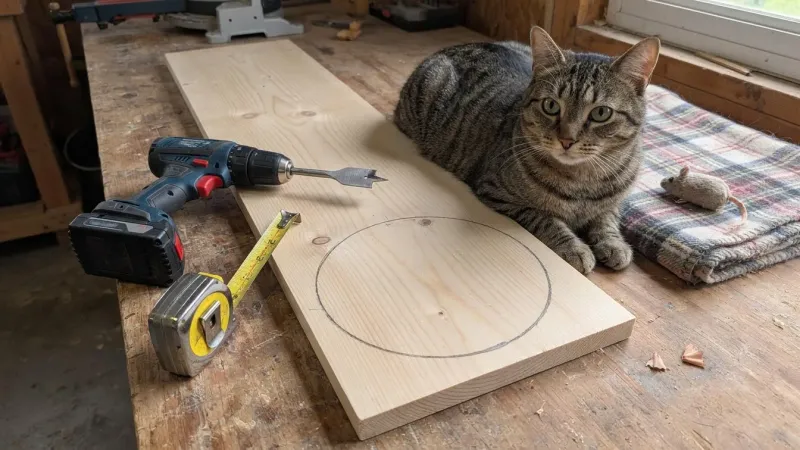
Map out a zigzag climbing path so your cat never has to jump straight vertically through aligned holes. Trace 8-by-8-inch circles or rounded squares on alternating left and right sides of the middle shelves. For large cats over 15 pounds, widen the openings to 9.5 or 10 inches across.
- 3
Cut the Shelf Openings and Sand Smooth
Drill a 1/2-inch starter hole inside each traced shape, insert a jigsaw blade, and cut slowly along your line. Sand every cut edge with 80-grit and then 150-grit sandpaper until the wood feels completely smooth, preventing splinters on paws and whiskers.
- 4
Reinforce Shelves and Upgrade the Back Panel
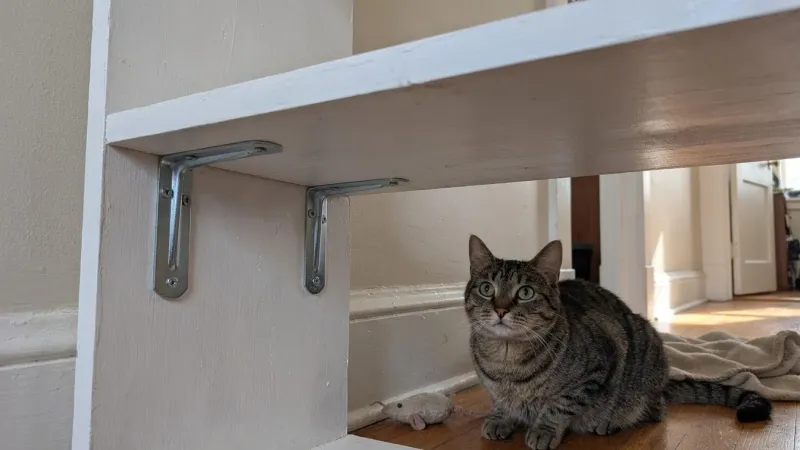
Remove any flimsy cardboard backing and replace it with a 1/4-inch plywood panel nailed every 6 inches to stop side-to-side sway. Replace plastic shelf pins with metal L-brackets screwed directly into the side walls and shelf undersides so heavy landings never dislodge a tier.
- 5
Paint or Seal With Pet-Safe Finishes
Apply two coats of zero-VOC water-based acrylic paint or water-based polyurethane to the exposed wood surfaces. Let the finish cure overnight in a well-ventilated room until no chemical odor remains before attaching fabrics or ropes.
- 6
Attach Low-Pile Carpet to Every Level
Cut low-pile carpet remnants to fit each shelf top and the roof of the bookcase. Secure them mechanically with short, flush-driven stainless steel staples placed on the underside of solid wood shelves at least 3/4-inch thick, and check carefully that no staple tips poke through the top surface.
- 7
Wrap One Vertical Post in Sisal Rope
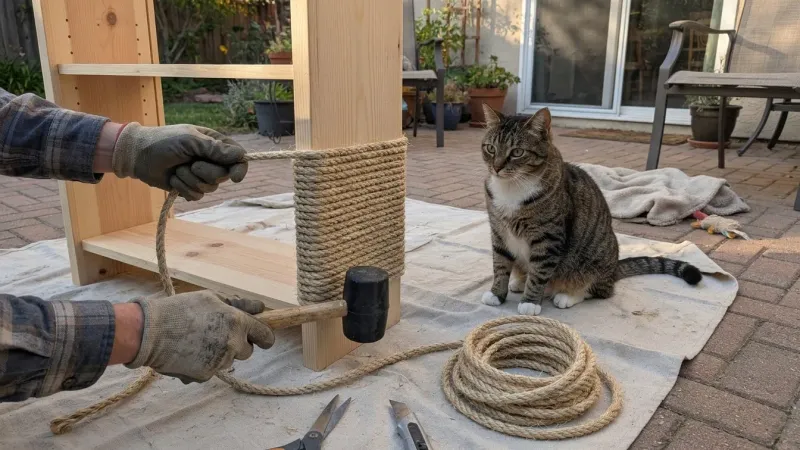
Apply a thin bead of non-toxic white PVA wood glue along the lower 24 inches of a narrow front vertical frame post, or replace a section of a side panel with a wooden post so the rope can wrap completely around a compact circumference. Coil 3/8-inch natural, unoiled sisal rope tightly all the way around the post, tapping rows together with a rubber mallet and stapling the ends on the inside.
- 8
Anchor the Tower to Wall Studs
Move the finished bookcase to its permanent spot away from dangling blind cords or breakable decor. Locate two wall studs behind the top shelf with a stud finder and secure the frame using heavy-duty anti-tip L-brackets or steel furniture straps.
- 9
Add Cozy Cubbies and Supervised Hanging Toys
Place washable fleece beds inside the enclosed bottom cubbies for quiet naps. Drill two small holes in the underside of an upper shelf to tie replaceable feather or felt toys on short 6-inch cotton cords, and always supervise play with dangling feather toys—never leave feather attachments or cords unattended inside the tower.
Cost and Stability: Upcycled Bookshelf vs. Commercial Cat Tree
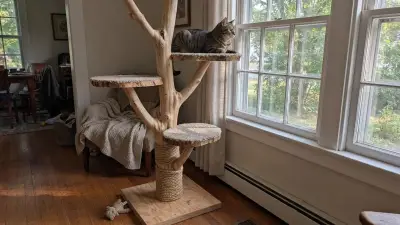
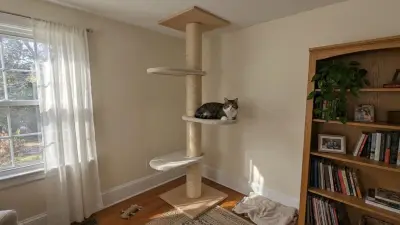
Building a diy bookshelf cat tree from a thrifted cabinet usually costs $40 to $75 for carpet remnants, sisal rope, brackets, and wall anchors, compared to $120 to $250 for a tall, solid-wood commercial tower. Because real wood bookcases have a wider footprint and heavier base than cardboard-tube towers, they resist wobbling when large cats leap onto top tiers—provided you anchor the frame to wall studs. If you prefer building a frame from scratch instead of modifying an existing piece, check out our guide on how to build a DIY modern cat tree.
Safety Tips for Different Cat Sizes and Ages
Tailor the layout to the cats living in your home so every tier stays safe and accessible:
- Large and heavy breeds: Cut pass-through openings at least 9 to 10 inches wide, reinforce every shelf with metal L-brackets, and stick to solid pine, oak, or thick plywood rather than thin particleboard. For more heavy-duty framing advice, read our tips on building a sturdy cat tree for large cats.
- Kittens and senior cats: Keep vertical jumps between shelves under 14 inches, add angled carpeted ramps between lower levels, and place thick memory-foam pads inside bottom cubbies to cushion aging joints.
- Non-toxic materials: Avoid cedar wood, pressure-treated lumber, solvent-based glues, and long-loop Berber carpets that can snag claws.
With solid shelf brackets, smooth pass-through openings, and secure wall anchors, your upcycled bookcase gives indoor cats safe vertical territory for years. Introduce your cat gradually with treats on the lower tiers, inspect the sisal and carpet staples every few months, and replace worn pads as needed.
Sources: International Cat Care · ASPCA
Frequently asked questions
How big should pass-through holes be in a bookshelf cat tree?
Cut pass-through holes at least 8 inches wide for average adult cats and 9.5 to 10 inches wide for large breeds like Maine Coons. Always sand the cut edges thoroughly so your cat's fur and whiskers do not catch.
Is it cheaper to build a bookshelf cat tree or buy one?
Converting an existing thrifted bookcase typically costs $40 to $75 for carpet, sisal rope, brackets, and wall anchors. A comparable solid-wood multi-level commercial cat tower usually costs $120 to $250 or more.
What kind of carpet is safest for a DIY cat tower?
Choose tightly woven, low-pile commercial carpet or cut-pile carpet tiles. Avoid thick looped Berber carpets, because a cat's curved claws can easily snag in the loops and cause painful toe injuries.
Do I really need to anchor a wooden bookcase cat tree to the wall?
Yes. Even a heavy wooden bookcase can tip forward when a cat launches off the top shelf at full speed. Always secure the top frame into wall studs with metal anti-tip brackets.

Nathan Brooks
Nathan Brooks runs Farmingzoom to help loving pet owners create safe, enriching homes for their animals. He cares deeply about responsible pet care and focuses on making everyday decisions simpler for fellow owners.…