Time needed
3 h
What you need
- 2x12 cedar boards (16 linear feet total for base, rip strip, and perches)
- 4x4 western red cedar post (8-foot length)
- 3/8-inch twisted marine-grade polyester rope (100 feet) or untreated natural sisal rope
- Type III waterproof wood glue
- 100% pure tung oil or polymerized linseed oil
- 3-inch and 3.5-inch stainless steel deck screws
- 3/8-inch stainless steel staples
- 4 heavy-duty rubber furniture feet
- 3 outdoor acrylic cat cushions with quick-dry foam
- Adhesive outdoor hook-and-loop fastener strips
Tools
- Circular saw or miter saw
- Cordless drill and driver bits
- Orbital sander with 80-grit and 150-grit pads
- Heavy-duty staple gun
- Carpenter's square and tape measure
- Paintbrush and lint-free rags
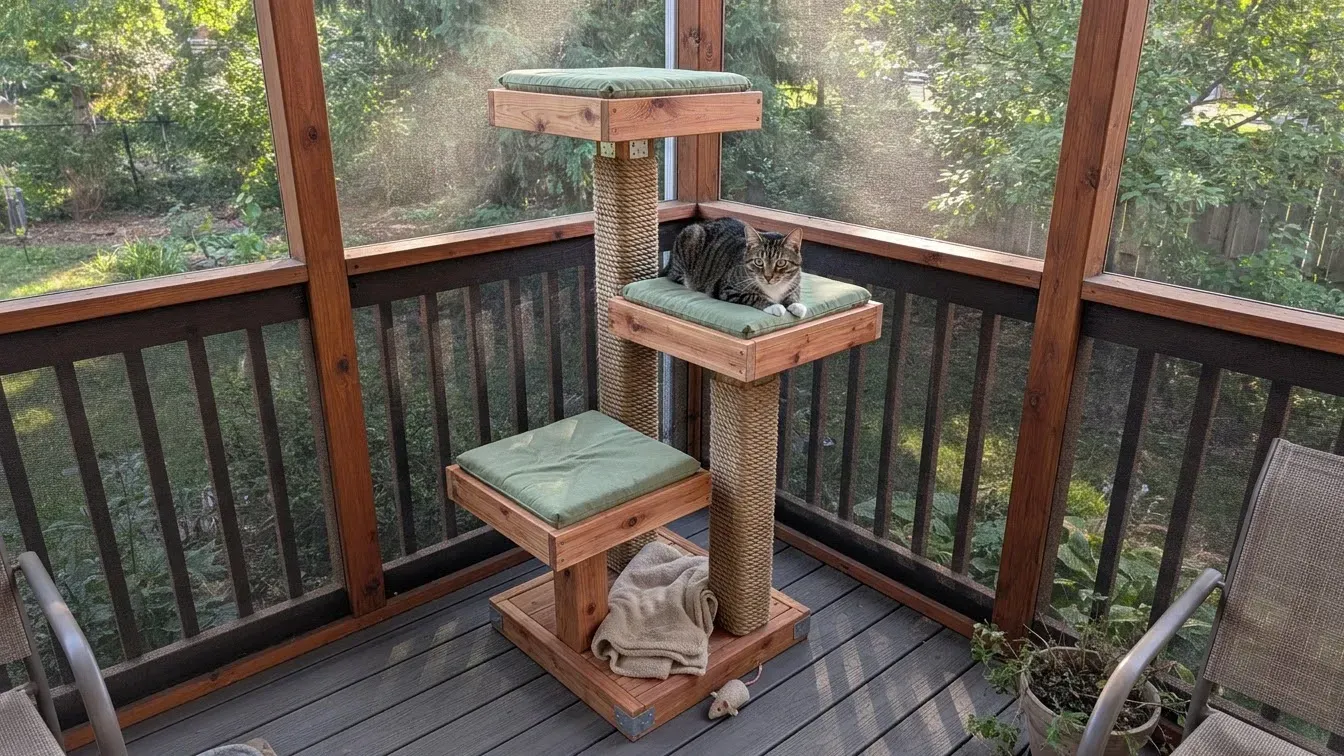
You can build a durable DIY outdoor cat tree for your screened porch over a single weekend—with active carpentry taking just an afternoon followed by several days for the oil finish to cure—by swapping standard carpet and particleboard for rot-resistant cedar, waterproof wood glue, and marine-grade polyester rope. Standard indoor cat furniture traps morning dew and summer humidity, causing pressed wood to swell and natural sisal fibers to grow black mold within one season.
This three-tier porch tower gives your cat a stable perch for birdwatching without rotting on damp concrete or deck boards. Every material in this plan handles temperature swings and blowing rain while keeping paws safe from splinters and toxic chemical treatments.
- 1
Cut Cedar Lumber to Size
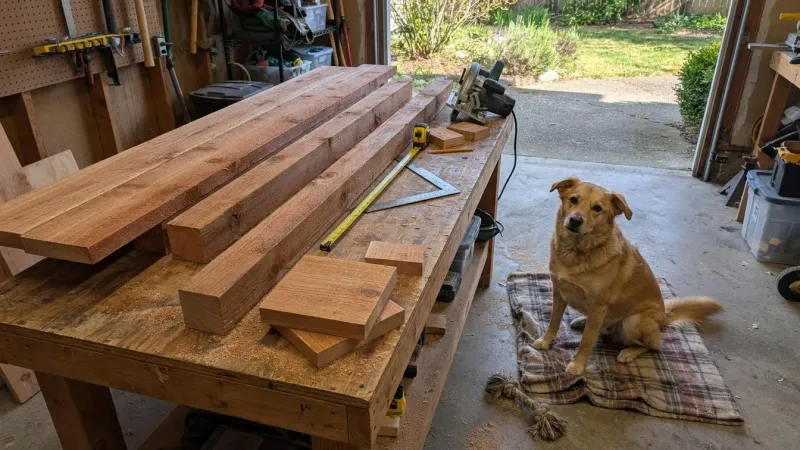
Measure and cut two 24-inch boards from 2-by-12 cedar (which actually measures 1.5 by 11.25 inches) plus a ripped 1.5-inch strip, then edge-glue and join them with pocket holes to form a true 24-by-24-inch base. Cut three perches measuring 16 by 16 inches, 14 by 18 inches, and 14 by 14 inches, and cut three vertical 4x4 cedar posts to 18 inches, 32 inches, and 46 inches so each platform sits at a staggered climbing height.
- 2
Sand All Edges Smooth
Run an orbital sander with 80-grit followed by 150-grit sandpaper over every board face and edge. Round over sharp corners on the perches and base so your cat cannot catch claws or pick up splinters while jumping between levels.
- 3
Assemble the Weighted Base
Attach four rubber furniture feet to the underside of the 24-by-24-inch base to lift the wood off damp porch flooring and promote airflow underneath. Mark the positions for your three vertical posts in a balanced triangle pattern, keeping at least 4 inches of clearance from the outer edges.
- 4
Mount the Vertical Support Posts
Apply Type III waterproof wood glue to the bottom of each bare 4x4 cedar post and pre-drill pilot holes up through the underside of the base. Drive three 3.5-inch stainless steel deck screws into each post, checking with a carpenter's square that every column stands straight.
- 5
Fasten the Multi-Level Perches
Center the lowest perch on the 18-inch post, the middle lounge shelf on the 32-inch post, and the top lookout platform on the 46-inch post. Pre-drill countersunk holes from the top of each bare wood platform and secure them with Type III waterproof glue and 3-inch exterior screws.
- 6
Seal Assembled Wood With Pet-Safe Oil
Once all structural glue joints are assembled on the bare wood, brush two thin coats of 100% pure tung oil or food-grade polymerized linseed oil onto all wood surfaces, paying close attention to cut end grain where moisture enters fastest. Wipe off excess oil after 20 minutes and allow the finish several days to fully oxidize and cure before wrapping the posts.
- 7
Wrap Scratching Columns With Marine Polyester Rope
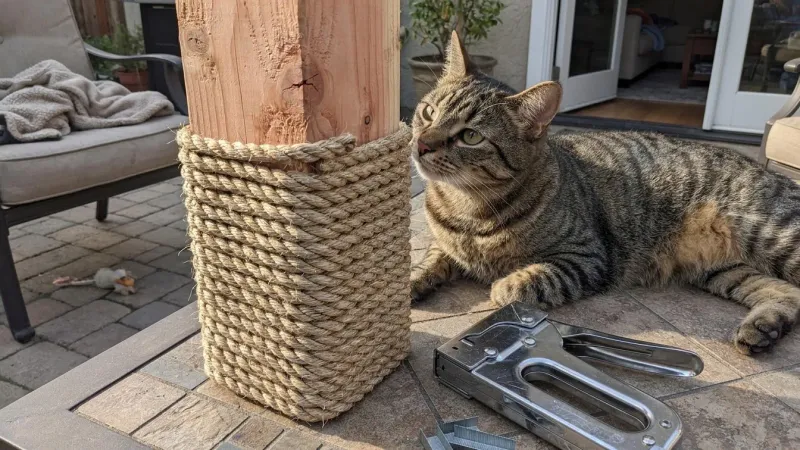
Anchor one end of 3/8-inch twisted marine-grade polyester rope (or untreated natural sisal if you plan to replace it seasonally) near the bottom of the 32-inch and 46-inch posts using a stainless steel staple. Wind the rope tightly upward in neat rows, applying dabs of Type III waterproof wood glue or extra staples periodically along the post so coils cannot slip or sag, and countersink every staple crown flush so claws cannot catch on exposed metal.
- 8
Add Washable Outdoor Cushions
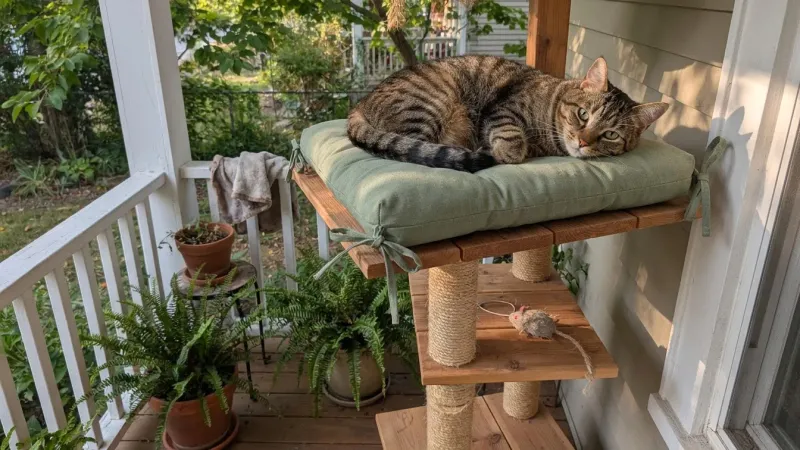
Attach strips of heavy-duty outdoor hook-and-loop tape to the top of each cedar shelf and the underside of matching solution-dyed acrylic cushions. The removable pads give your cat soft traction in cool weather while peeling off easily for hose rinsing after dusty winds.
Best Weather-Resistant Materials for Porch Cat Furniture
Choosing the right lumber and wrap prevents mildew before it starts. Avoid pressure-treated pine, which contains copper preservatives that can irritate paws when cats scratch or lick their claws, and skip unsealed plywood that delaminates in damp air.
- Lumber: Western red cedar, cypress, and redwood contain natural oils that resist decay and insects without chemical coatings.
- Rope: Twisted marine-grade polyester rope mimics the texture of sisal for scratching while shedding moisture instead of absorbing it, or you can use untreated natural sisal that is replaced seasonally.
- Cushions: Use removable outdoor acrylic cushions filled with reticulated quick-dry foam rather than stapled upholstery foam.
- Fasteners: Stick to 304 or 316 stainless steel or ceramic-coated exterior deck screws so joints never bleed rust stains onto your porch floor.
Customizing the Tower for Senior or Heavy Cats
Large cats over 15 pounds need wider resting platforms and a broader footprint to keep the tower from tipping during energetic leaps. If you share your porch with a Maine Coon or Ragdoll, expand the base to 30 by 30 inches and use two 4x4 posts instead of a single central column, similar to the reinforcement methods in our DIY cat tree for large heavy cats guide.
For older cats or kittens with shorter jumps, keep vertical spacing between shelves to 12 to 14 inches and add a sloped cedar ramp covered in ribbed outdoor rubber matting so joints stay protected.
Seasonal Porch Maintenance and Safety Checks
Inspect the tower at the start of spring and autumn to tighten exterior screws that loosen as wood expands and contracts. Scrub rope posts with warm water and mild dish soap, rinse thoroughly, and let them dry in direct sunlight before returning removable cushions.
Never place the finished tower flush against porch screening, as eager climbers can tear mesh and slip outside. Position the base at least 18 inches away from screens and check that surrounding porch plants are safe using the outdoor cat grass box setup rather than toxic patio ornamentals.
Building your own weather-resistant cat tower keeps your screened porch smelling fresh and gives your cat a safe vertical territory through humid summers and damp autumn mornings. Place the finished tree near a sunny screen panel with a clear view of the yard, and swap out worn rope coils whenever fibers fray.
Sources: ASPCA · International Cat Care
Frequently asked questions
Is pressure-treated wood safe for an outdoor cat tree?
No. Pressure-treated lumber contains chemical preservatives like copper azole that can transfer onto your cat's paws and fur during scratching, leading to stomach upset when they groom. Use naturally rot-resistant cedar, redwood, or cypress sealed with cured pure tung oil instead.
What rope is best for an outdoor cat scratching post?
Twisted marine-grade polyester rope works best on screened porches, or you can use untreated natural sisal rope if you replace it seasonally. Marine polyester dries quickly after rainstorms without shredding into sharp plastic slivers, while offering a sturdy grip for claws.
How do I stop an outdoor cat tree from tipping over?
Build the base at least 24 inches wide using heavy 2-inch-thick lumber, distribute vertical posts in a wide triangle rather than a single center pole, and add rubber feet underneath to prevent sliding on smooth patio tile or painted deck boards.
Can I leave a DIY cedar cat tree outside all year?
Yes, on a covered or screened porch where direct snow and heavy downpours are blocked. Reapply a light coat of cured tung oil once a year and bring fabric cushions indoors during freezing winter weeks to extend their lifespan.

Nathan Brooks
Nathan Brooks runs Farmingzoom to help loving pet owners create safe, enriching homes for their animals. He cares deeply about responsible pet care and focuses on making everyday decisions simpler for fellow owners.…