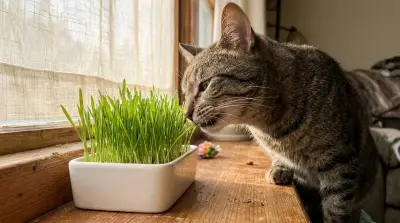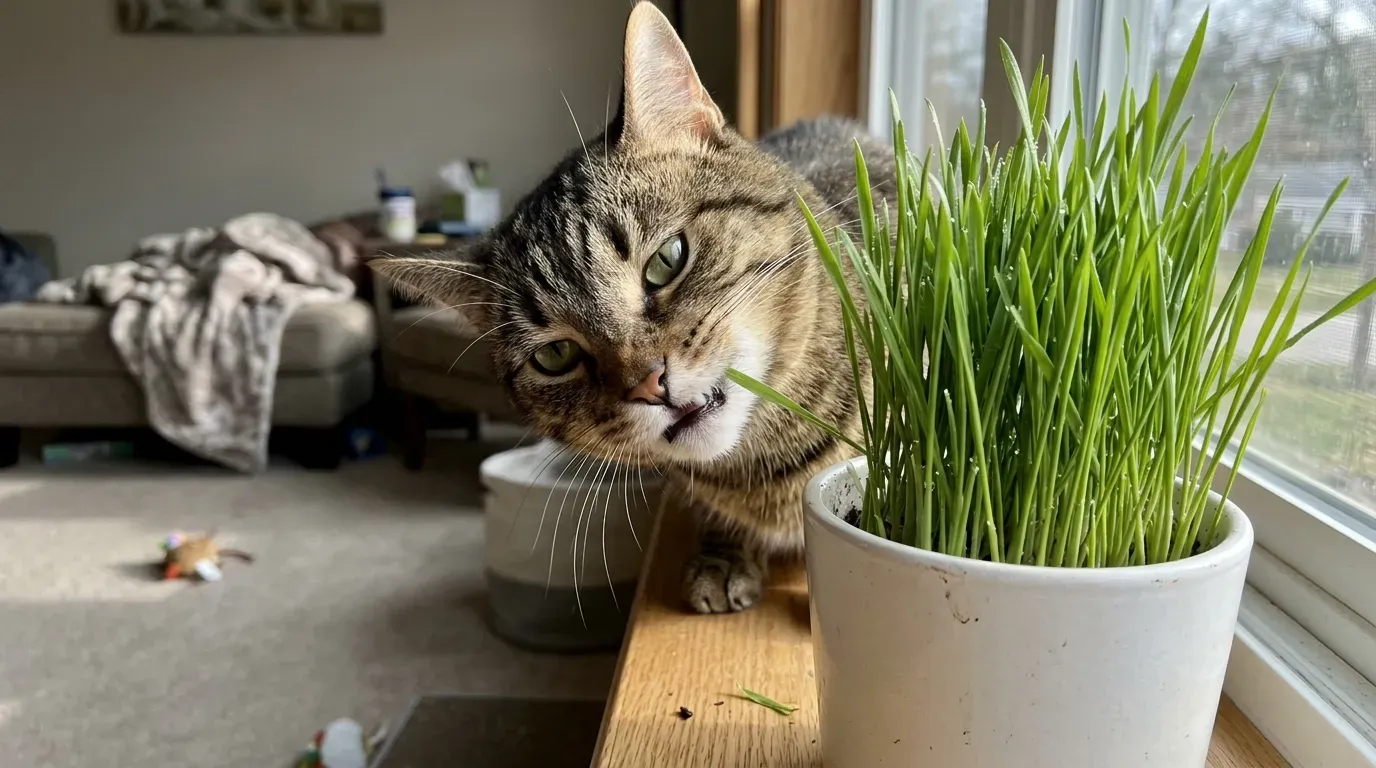
Offering fresh cat grass for hairballs gives your cat a natural source of insoluble fiber that helps push swallowed fur smoothly through the digestive tract before it clumps in the stomach. While cats lack the digestive enzymes needed to break down plant matter completely, those rough, fibrous blades act like a gentle broom for their gut.
Understanding how much grass helps digestion versus how much triggers vomiting keeps snack time safe and mess-free. Below, you will find clear guidance on choosing the right cereal grass varieties, setting sensible portion limits, and recognizing when hairball symptoms point to an underlying medical issue that needs a veterinarian.
How Cat Grass Helps Move Hairballs Through the Gut
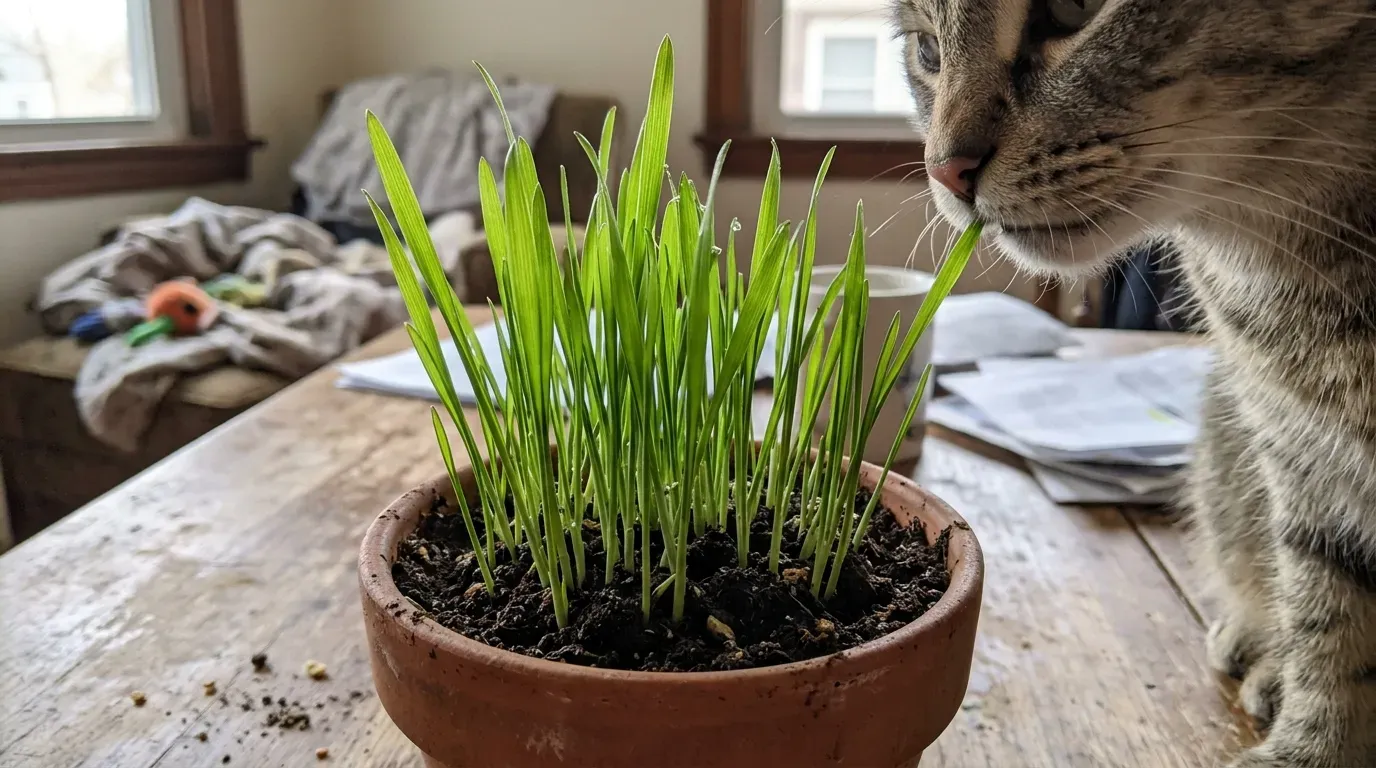
When your cat grooms, tiny backward-facing hooks on their tongue catch loose fur and send it down into the stomach. Most of that hair passes quietly into the litter box, especially in sleek-coated pets like a Domestic Shorthair cat. However, during heavy shedding seasons or in long-haired breeds, fur can tangle into a dense mass.
Fresh cereal grass supports hairball clearance in two distinct ways:
- Adds insoluble dietary fiber: Because cats are obligate carnivores, they do not digest grass blades into nutrients. Instead, the intact fiber adds bulk to stool and stimulates normal intestinal contractions, helping carry trapped fur and swallowed food bits out through the colon.
- Supports downward transit through stomach and intestines: Once swallowed blades reach the stomach and intestines, the indigestible plant fiber adds physical bulk and stimulates intestinal motility to keep loose fur moving through the digestive tract.
Exploring broader cat grass benefits for indoor felines shows that regular, modest grazing also satisfies a natural foraging instinct without exposing your pet to outdoor parasites or treated lawn turf.
Best Cat Grass Varieties for Sensitive Stomachs
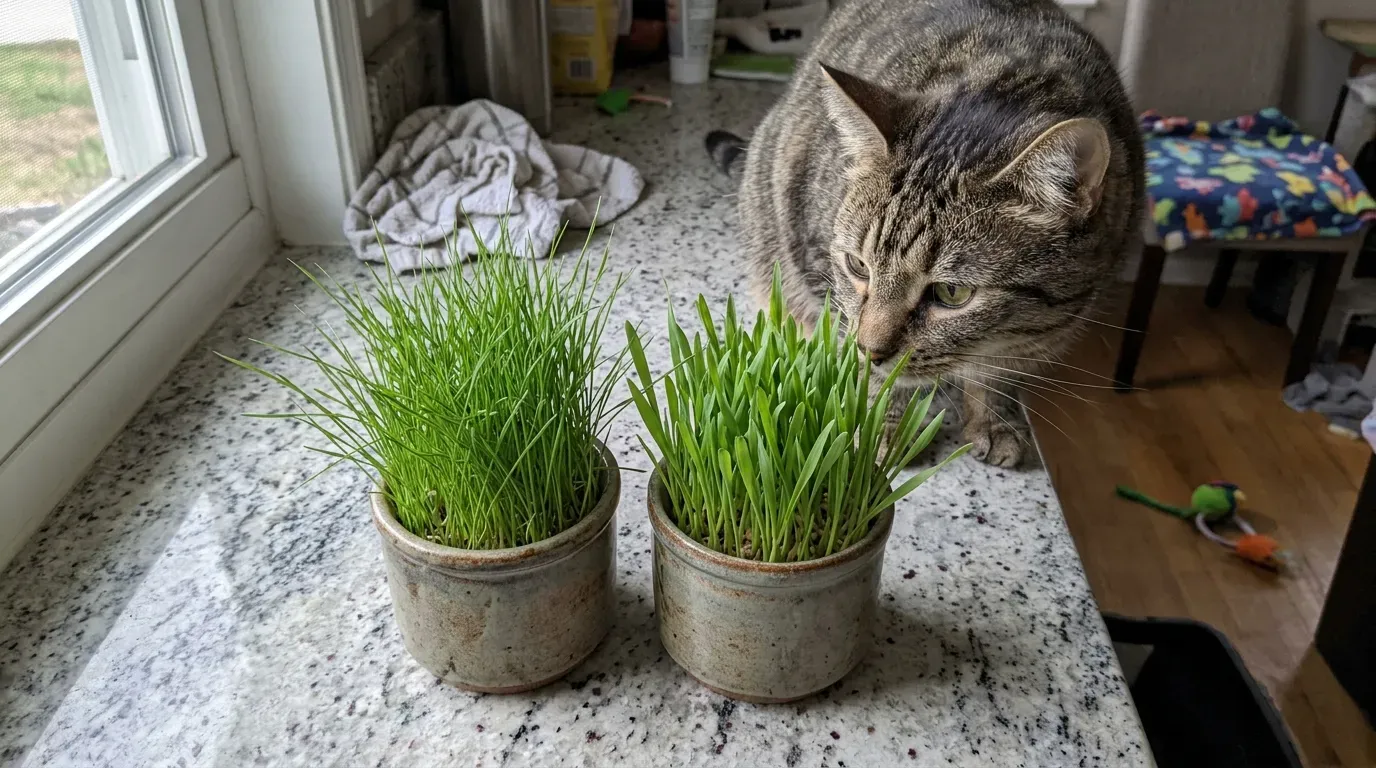
Cat grass is not a single plant species; it is a general name for safe cereal grasses sprouted from grains—such as cereal rye (Secale cereale), rather than outdoor turf ryegrass (Lolium species). Choosing the right blade texture makes a noticeable difference in how well your cat tolerates it.
| Grass Variety | Blade Texture | Best For | Digestive Notes |
|---|---|---|---|
| Cereal Rye | Fine, soft, and narrow | Cats with sensitive stomachs | Rich in gentle fiber; easy to chew without irritating the throat |
| Barley Grass | Medium-wide, tender shoots | Everyday grazing and hairball support | Juicy, mild flavor that appeals to picky indoor cats |
| Oat Grass | Slightly sweet, sturdy blades | Cats that chew enthusiastically | Higher moisture and fiber content to support regular bowel movements |
| Wheatgrass | Dense, thicker blades | Cats that enjoy firm crunch | Tougher texture; best offered in small, supervised amounts |
If your cat tends to gag after nibbling coarser greens, start with cereal rye or barley grass. Keep outdoor lawn grass strictly off the menu, as yard turf often carries fertilizers, weed killers, endophyte toxins, or sharp seed awns that injure the mouth and throat.
How Much Cat Grass to Feed Your Cat Safely
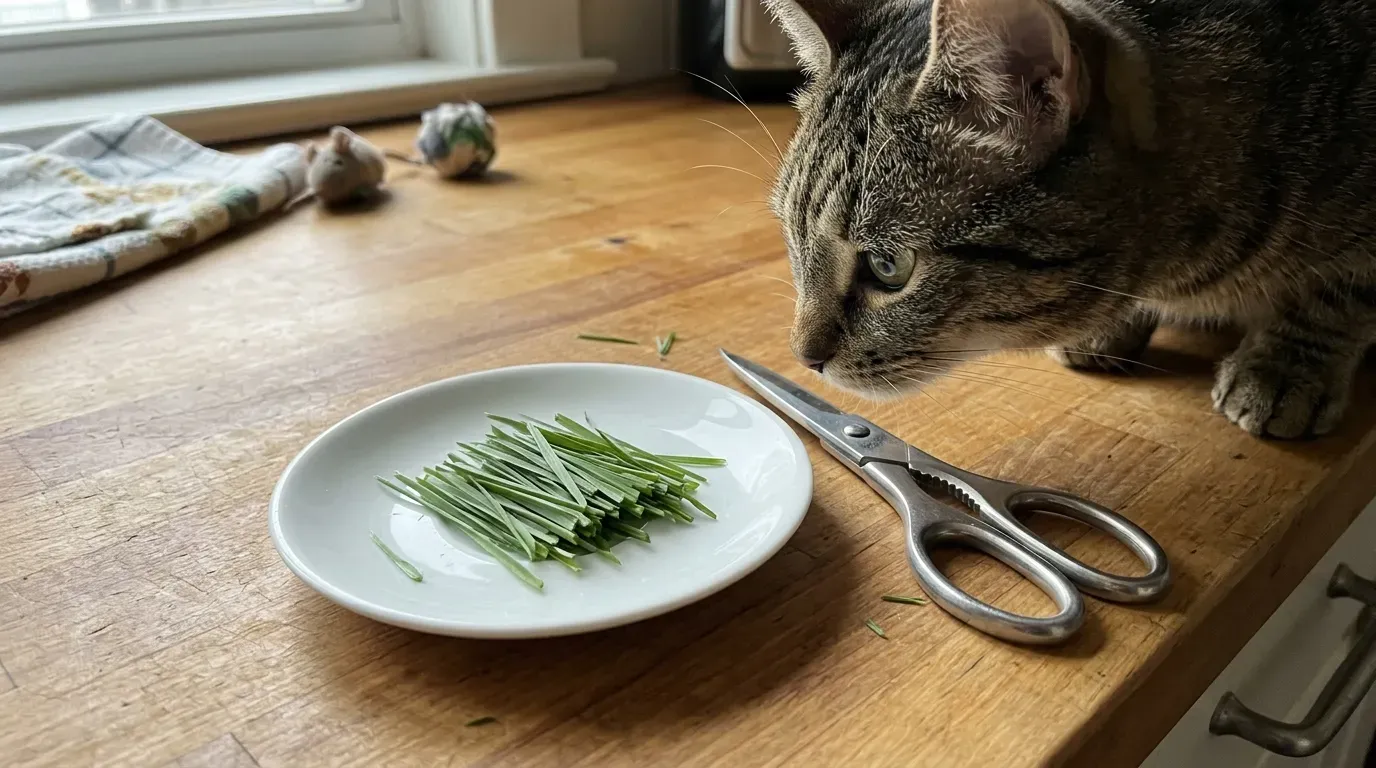
Most veterinarians consider cat grass a safe enrichment treat when offered in moderation, though there is no universal clinical dose because every cat's stomach sensitivity differs. The goal is steady, small intake rather than letting a hungry cat devour an entire planter at once.
Follow these practical portion guidelines to support digestion without triggering stomach upset:
- Start with a pinch: Offer three to five individual blades clipped into one-inch pieces, or allow 15 to 20 seconds of supervised nibbling from a pot.
- Watch for 24 hours: Check your cat's appetite, energy, and litter box habits the next day. Normal stools and zero vomiting mean the portion suits their stomach.
- Maintain a light routine: Once adjusted, let your cat graze on a small tuft—roughly a tablespoon of clipped blades—two to three times per week.
- Store the planter out of reach between sessions: Keeping the pot on a high shelf prevents boredom-driven overeating, which is the most common reason cats bring up green foam or undigested blades.
For fluffy cat breeds with thick coats that swallow extra fur daily, pair consistent small grass portions with daily brushing rather than increasing grass volume.
Fresh Cat Grass vs. Commercial Cat Grass Treats
Pet store shelves feature plenty of crunchy kibble-style treats and freeze-dried pellets made with dried grass powder. While convenient, they work differently from living greens.
Freshly sprouted cat grass delivers high moisture alongside long, intact plant fibers. That combination hydrates gut contents and mechanically sweeps loose hair through the intestines. Cats also enjoy the sensory experience of tearing fresh shoots.
Commercial cat grass treats contain ground, dehydrated grass mixed with starches, fats, and flavorings. Because the fibers are finely pulverized during manufacturing, they offer far less sweeping action than fresh blades. Furthermore, extra calories from daily treats can add up quickly for indoor cats.
If your cat refuses living greens, a hairball-control treat or a vet-approved lubricating paste can help, though fresh grass remains the cleaner, lower-calorie option for routine fiber.
Side Effects, Toxic Houseplants, and When to Call the Vet
Even safe cereal grasses have drawbacks if a cat eats too much too fast. Swallowing large mouthfuls of long blades tickles the stomach lining and throat, often causing immediate vomiting. While some owners assume vomiting is how grass clears hairballs, frequent throwing up irritates the esophagus and leads to dehydration. In addition, long grass blades can become stuck in the back of a cat's throat or nasal passages (nasopharynx) when the cat gags or sneezes, requiring veterinary extraction if your cat starts sneezing repeatedly, reverse sneezing, developing nasal discharge, or pawing at its face.
Be equally careful about plant confusion. Cats that love chewing cat grass may sample nearby houseplants, and several common varieties are toxic to both cats and dogs:
- Lilies (Easter, Asiatic, Tiger, Daylilies): Extremely toxic to cats; even small amounts of pollen or leaf can cause acute kidney failure.
- Sago Palm: Extremely toxic to cats and dogs, causing severe acute liver failure and death.
- Pothos and Philodendron: Contain insoluble calcium oxalate crystals that cause intense oral pain, irritation, swelling, drooling, and vomiting.
- Decorative grasses and sharp reeds: Ornamental plants can slice the gums or lodge in the nasal passages.
Contact your veterinarian promptly if your cat shows repeated unproductive retching, refuses food for more than 24 hours, becomes lethargic, or develops constipation or diarrhea. A sick cat will sometimes graze excessively on grass to soothe nausea, so sudden grass-obsessed behavior warrants a medical exam rather than more greens.
Used in small, supervised amounts, fresh cat grass is a simple way to add helpful fiber to your cat's routine and keep swallowed fur moving smoothly. Stick to tender varieties like cereal rye or barley grass, keep portions modest so your cat does not overindulge, and pair regular grazing with frequent brushing. Whenever retching becomes frequent or your cat seems unwell, check in with your veterinarian right away.
Frequently asked questions
Do vets recommend cat grass for hairballs?
Most veterinarians approve of fresh cat grass as a safe, non-toxic source of fiber and enrichment for indoor cats. However, vets recommend offering it in small portions alongside regular brushing, and they advise an exam if hairballs occur frequently.
What are the disadvantages of cat grass?
The main disadvantage is vomiting when a cat eats too much grass too quickly, which can irritate the stomach and esophagus. Overgrown pots can also develop soil mold, and grazing habits may tempt curious cats to nibble toxic houseplants.
Do cat grass treats really help with hairballs?
Commercial cat grass treats provide a small boost of fiber, but pulverized dried grass is less effective at moving hair than fresh, moisture-rich blades. They also add extra daily calories compared to plain living grass.
What is the best thing to give my cat for hairballs?
Daily brushing is the single most effective way to reduce swallowed fur. For dietary support, vets commonly suggest small amounts of fresh cat grass, high-fiber hairball formulas, or vet-recommended hairball lubricants (such as petrolatum- or plant-oil-based gels).