Watching your resident cat's ears during living room introductions tells you immediately whether they feel curious, cautious, or ready to strike at a newly adopted dog. Forward-pointing ears signal relaxed interest, sideways-angled ears show growing uncertainty, and ears flattened tight against the head warn of imminent defensive swatting.
Unlike dogs, whose ears often flop or perk up in simple excitement, cats rotate each ear independently like radar dishes to track sound and broadcast stress levels. Spotting a subtle half-inch backward twitch gives you the crucial seconds needed to redirect your dog before a peaceful afternoon turns into a scratched nose.
Why Cat Ears Move Differently Than Dog Ears
Over thirty muscles control a cat's outer ear, allowing each pinna to swivel up to 180 degrees independently. While a newly adopted dog might hold both ears forward in friendly focus, a resident cat uses minute ear rotations to monitor footsteps, collar jingles, and panting without turning their whole head.
Because cats and dogs speak distinct body languages, owners who are used to canine cues often misread feline signals. A dog sees a wide-eyed stare and stiff posture as an invitation to play or investigate, whereas a cat uses those exact behaviors to freeze and assess a threat. Understanding subtle feline warning signs before a bite or swat keeps you from misinterpreting silent tension as calm tolerance.
Breed traits also change how clearly you can read ear angles in your living room. Cats with folded ears, such as Scottish Folds, or curled tips, like American Curls, have cartilage structures that limit full forward or flat movement. With these breeds, watch the base of the ear and the skin above the eyes rather than the ear tip alone.
Upright and Forward Ears: Safe Curiosity in the Living Room
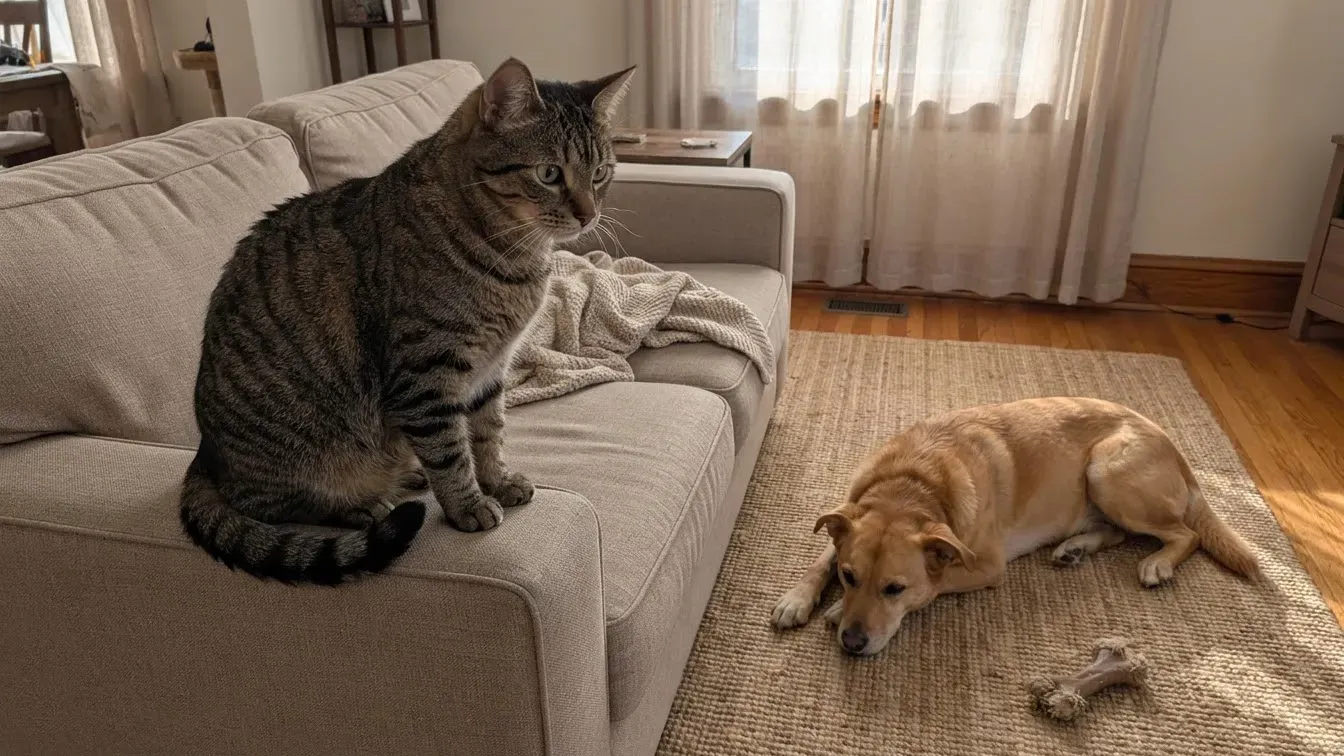
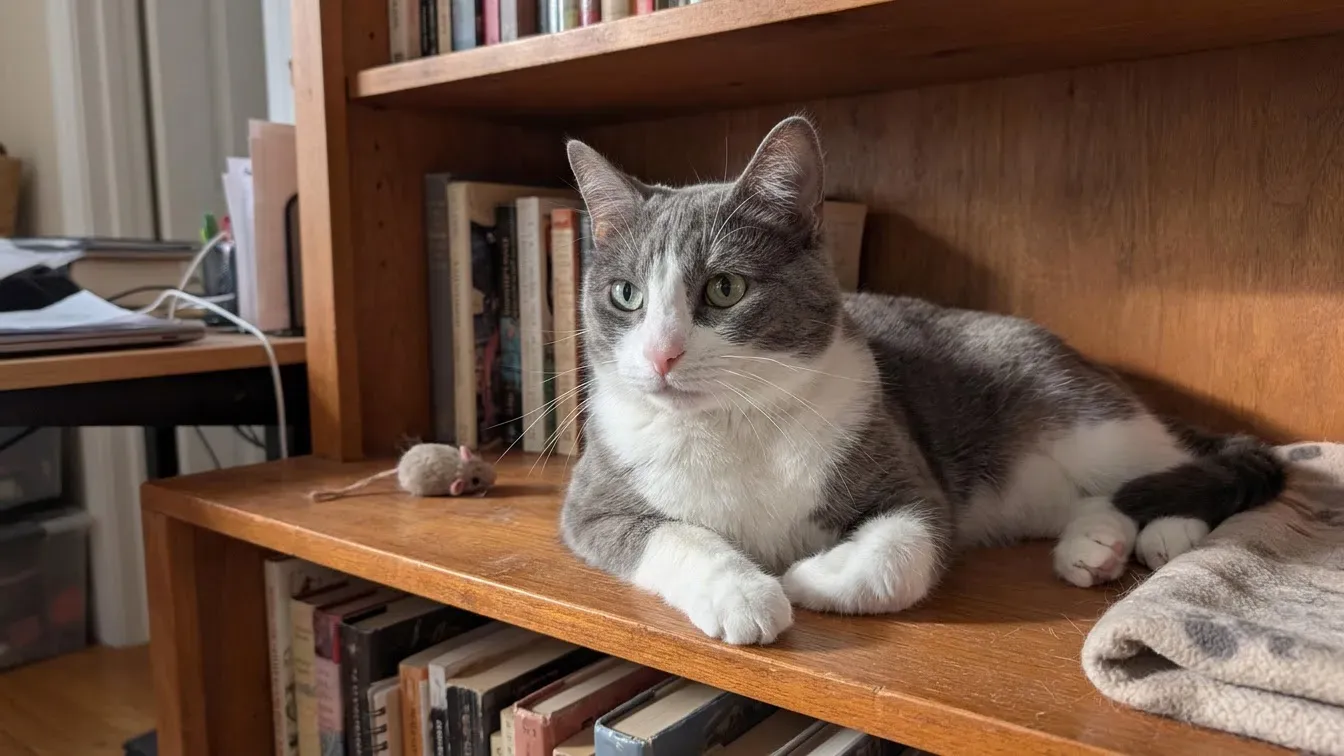
When your cat sits on a sofa arm or high perch with both ears upright and angled slightly forward, they feel secure and mildly curious about the new dog. The openings of the ears face toward the dog, taking in sounds without tension pulling the ear base outward.
In this neutral-to-interested state, your cat's facial muscles stay soft, whiskers rest naturally to the sides, and pupils match the room's lighting. Your cat may lean their head forward an inch to sniff the air when the dog walks past on a leash, showing healthy engagement rather than fear.
Keep supervised sessions brief and positive when you see this posture. Reward your dog with quiet praise and small kibble treats for staying calm on a mat, and let your cat watch from a safe elevated spot without forcing closer contact.
Swiveling and Sideways Ears: Early Caution and Overstimulation
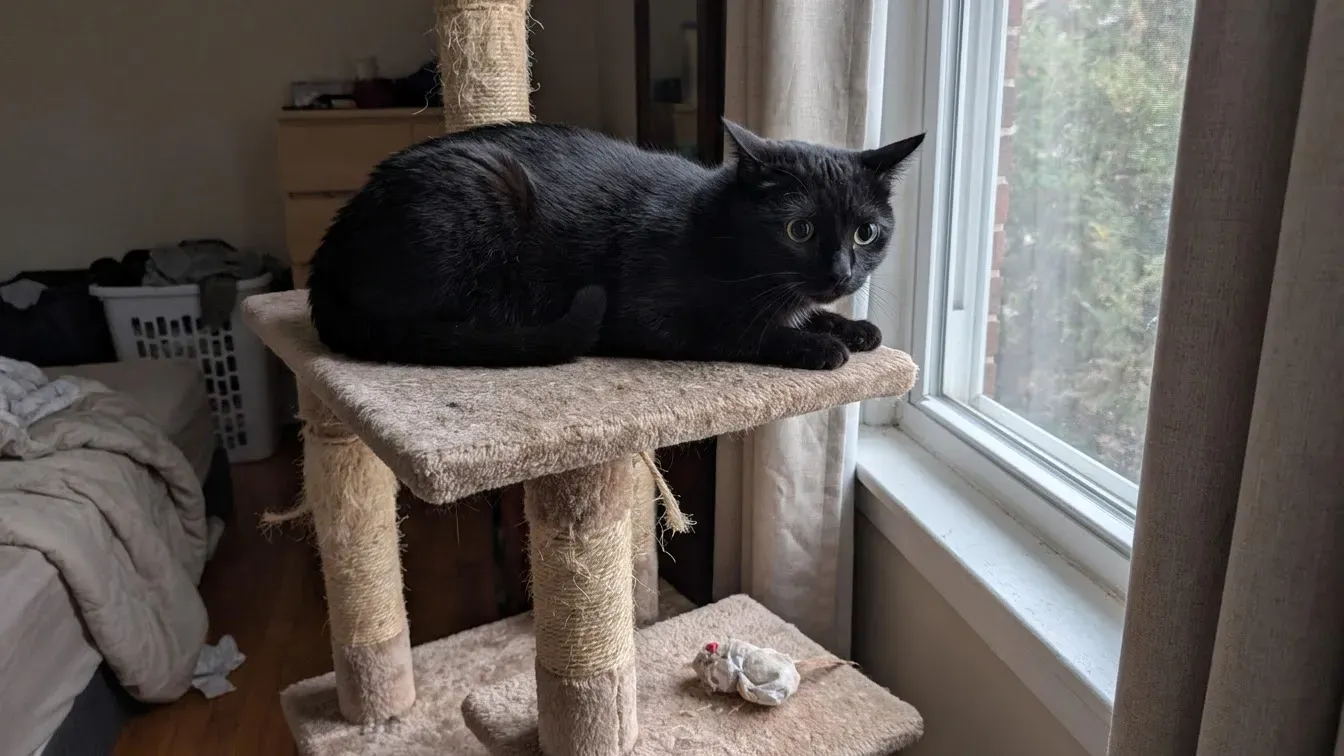
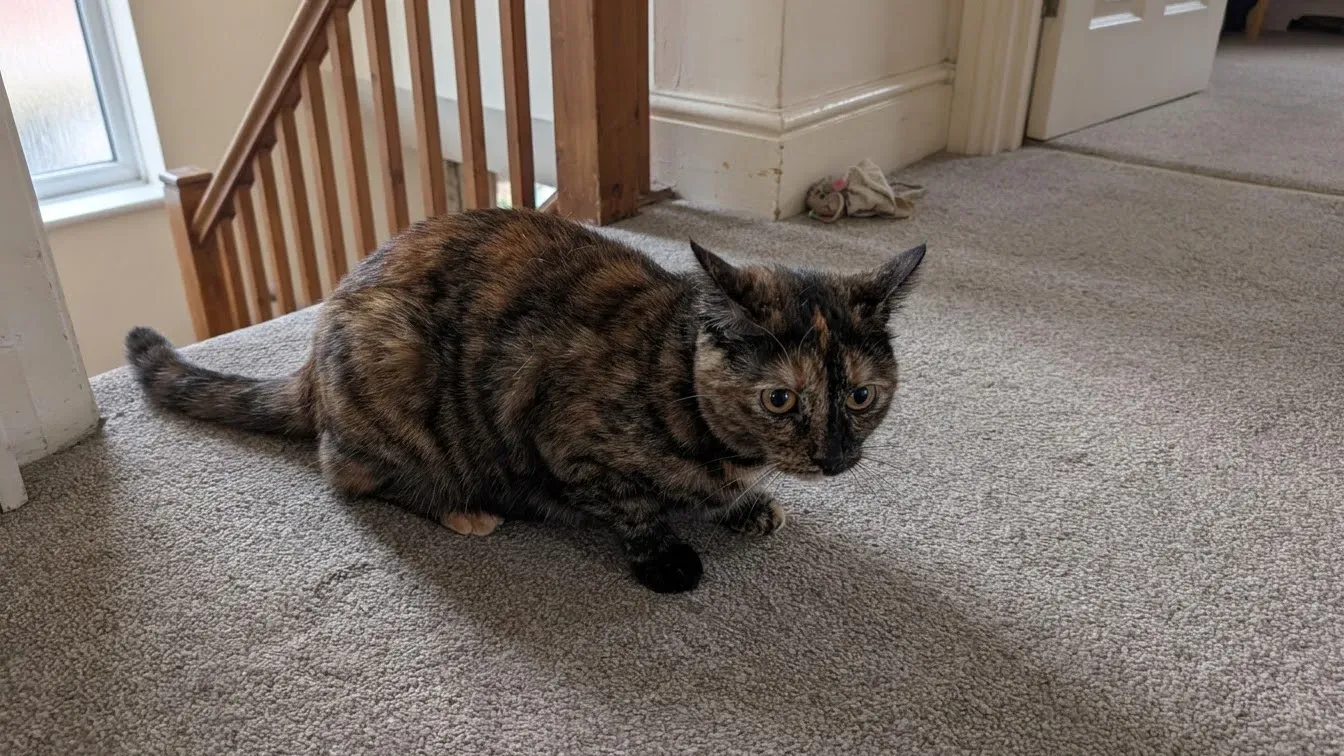
As a dog moves closer, pants loudly, or drops into a sudden play bow, a cat's ears often begin to flick, swivel, or drift outward into an airplane-wing angle. Sideways ears indicate conflict: your cat wants to keep track of the dog's movements while preparing to pull back if the boundary is crossed.
- Rapid ear twitching: Fast back-and-forth flicks mean your cat is processing too much sensory input at once, such as heavy dog breathing combined with clicking nails on hardwood floors.
- One ear back, one forward: Asymmetric ear positioning happens when a cat tracks the dog in front of them while listening for an escape route behind them.
- Low sideways hold: Ears held horizontally out to the sides—often called airplane ears—signal rising irritation and a clear request for personal space.
When ears shift sideways, ask your dog to lie down or step a few feet farther back. Giving your cat extra distance right away usually lets their ears return to an upright position within a minute.
Backward and Flattened Ears: High Alert Before a Swat
Unlike sideways airplane ears that signal early irritation, ears angled sharply backward show escalating defensive fear and agitation. If the pressure continues, your cat will press both ears completely flat against the top of their skull to protect the delicate cartilage from claws or teeth during a scuffle.
Flattened ears are the final visual warning before a hiss, growl, or fast paw strike. At this stage, your cat is no longer merely annoyed; their nervous system is in full self-defense mode, and any sudden movement from the dog will trigger a physical reaction.
Never reach your bare hands or step your body between a flat-eared cat and a curious dog, as redirected aggression can result in deep bites or scratches for you. Instead, use your voice to call the dog away on their leash, toss a treat behind the dog to turn their head, or hold up a solid visual barrier like a piece of cardboard or a blanket while leading the dog away to break visual fixation.
Quick Reference Chart: Cat Ear Positions During Dog Introductions
Use this comparison table during supervised living room sessions to match your cat's ear angle with the right handling response.
| Ear Position | Emotional State | Accompanying Body Cues | Immediate Action |
|---|---|---|---|
| Upright, facing forward | Relaxed, alert, mildly curious | Soft eyes, loose tail, relaxed whiskers | Continue calm, leashed observation and reward the dog |
| Swiveling or flickering | Unsure, mildly overstimulated | Brief tail tip twitches, watchful gaze | Pause movement and ask the dog to hold a down-stay |
| Angled out sideways (airplane ears) | Cautious, irritated, wanting space | Crouched shoulders, wide, unblinking stare, tense jaw | Increase distance by 4 to 6 feet immediately |
| Pinned flat backward against head | Terrified, defensive, ready to strike | Dilated pupils, puffed fur, low growl or hiss | End the session calmly and separate the pets |
Reading Ears Alongside Eyes, Tail, and Posture
Ears give you the earliest clue, but pairing them with three other physical signals prevents misjudgment in dim or busy rooms.
- Pupil size: Sudden pupil dilation in bright living room light confirms an adrenaline surge, even if the ears have only moved a fraction of an inch backward.
- Tail movement: A thrashing or thumping tail paired with sideways ears means frustration is building fast, whereas a tucked tail under the body signals acute fear.
- Weight distribution: Look at whether your cat's weight is shifted back onto their haunches to bolt or coiled forward with one front paw lifted to strike.
Age and mobility also shape how quickly a cat escalates. Senior cats with stiff joints or arthritis often pin their ears earlier because they cannot jump onto high furniture as effortlessly as a young adult cat. Offering vertical wall-mounted cat perches out of dog reach gives older or cautious cats a reliable high zone where they can observe calmly.
How to Intervene Safely and Set Up Your Living Room
Successful living room introductions rely on preventing flattened ears before they happen. Keep your new dog on a standard six-foot hand-held leash under active supervision or behind a secure physical barrier during early meetings so they cannot rush up to sniff your cat.
Arrange furniture so your cat always has at least two clear exit paths and an elevated perch above dog eye level. Avoid cornering your cat in a dead-end hallway or behind a recliner where they feel forced to fight their way past the dog. If your home uses room dividers, adding a small pass-through opening in a baby gate lets your cat slip into a dog-free room the moment their ears angle sideways.
Keep high-value human snacks, xylitol-sweetened treats, grapes, raisins, onions, and chocolate strictly out of reach while rewarding both pets, as these foods are toxic to cats and dogs. Stick to plain cooked chicken, commercial pet treats, or regular kibble. If your cat stays in a flat-eared, hiding, or growling state for more than two weeks despite slow separation, or stops eating and using the litter box, consult your veterinarian or a certified animal behaviorist to rule out pain and build a tailored desensitization plan.
Paying close attention to your cat's ear angles turns living room introductions from guesswork into calm, predictable training sessions. By rewarding relaxed forward ears and increasing distance at the very first sideways swivel, you protect both pets from scary encounters and build steady trust at your cat's own pace.
Sources: Cornell Feline Health Center · International Cat Care · ASPCA · VCA Animal Hospitals
Frequently asked questions
What does it mean when my cat's ears go flat around a dog?
Flattened ears mean your cat feels threatened, frightened, or cornered and is preparing to defend themselves. Pressing the ears tight against the skull protects them from injury during a fight. Calmly call or lead your dog away immediately to prevent hissing, swatting, or biting.
Why does my cat's ear twitch when my dog walks by?
Ear twitching happens when a cat is tracking multiple sounds at once or feeling mild sensory overload. Heavy dog panting, jingling collar tags, and footsteps on hard floors all trigger rapid ear adjustments. Pause your dog's movement so your cat can process the noise comfortably.
Can a cat be happy if their ears are turned sideways?
Sideways ears rarely signal happiness during dog introductions; they usually indicate caution, uncertainty, or irritation. While a sleepy cat might let their ears droop slightly while resting, a cat actively watching a dog with sideways ears is asking for more personal space.
How long should supervised cat and dog introductions last?
Keep early living room sessions short, lasting about 5 to 10 minutes, and always end while your cat's ears are still upright and relaxed. Ending before your cat becomes stressed or flattens their ears builds positive associations faster than long, tense encounters.

Nathan Brooks
Nathan Brooks runs Farmingzoom to help loving pet owners create safe, enriching homes for their animals. He cares deeply about responsible pet care and focuses on making everyday decisions simpler for fellow owners.…