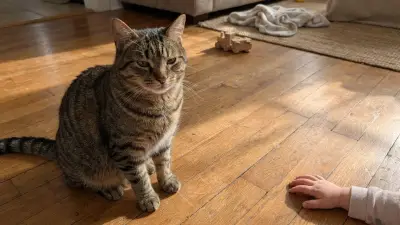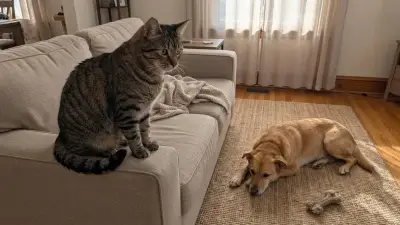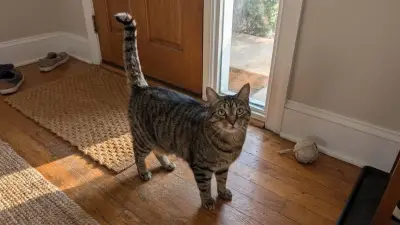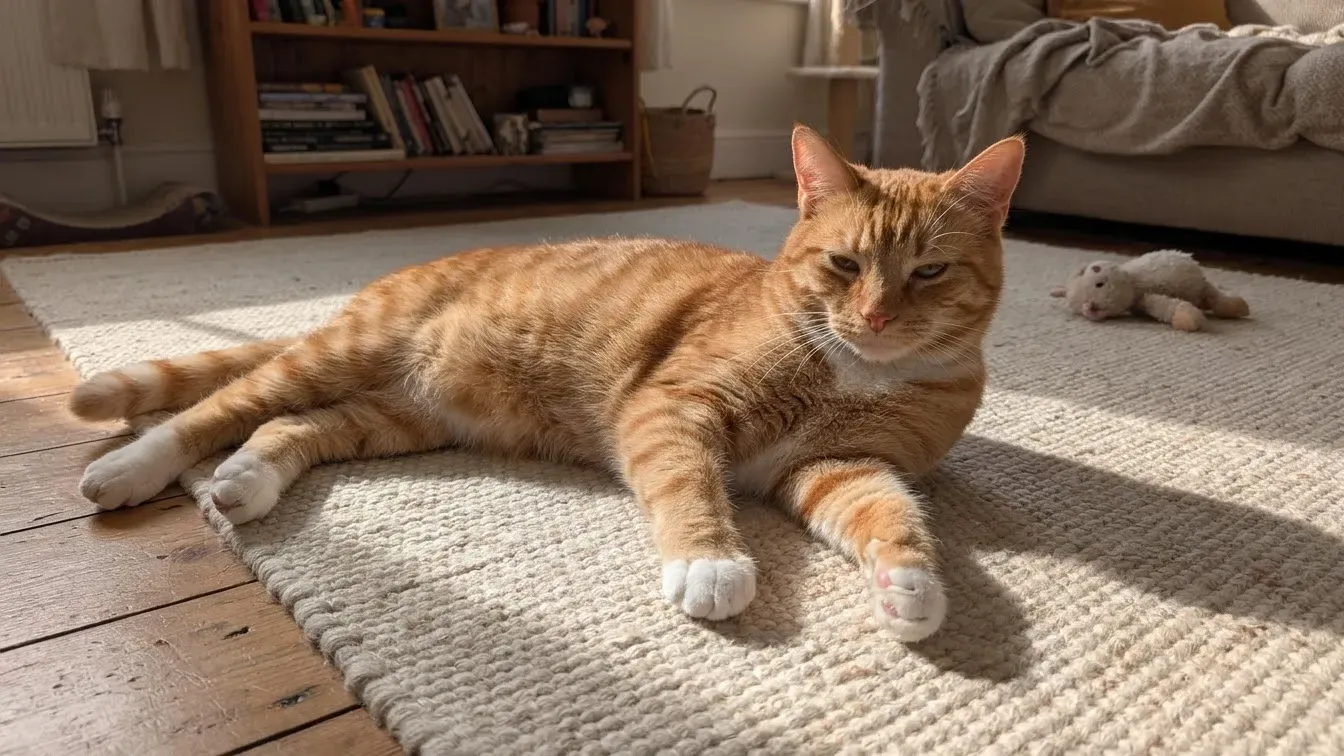
Young children love with their whole bodies, which often means loud voices, sudden hugs, and enthusiastic grabbing that can overwhelm a family cat. This simple red, yellow, and green cat body language chart translates subtle feline signals into clear, visual rules that toddlers and elementary-age kids can remember in the moment.
By teaching your children to check the cat's ears, eyes, and tail before reaching out, you protect everyone in the house from defensive scratches and help your cat feel secure around busy kids.
Why Young Kids Miss Subtle Cat Signals
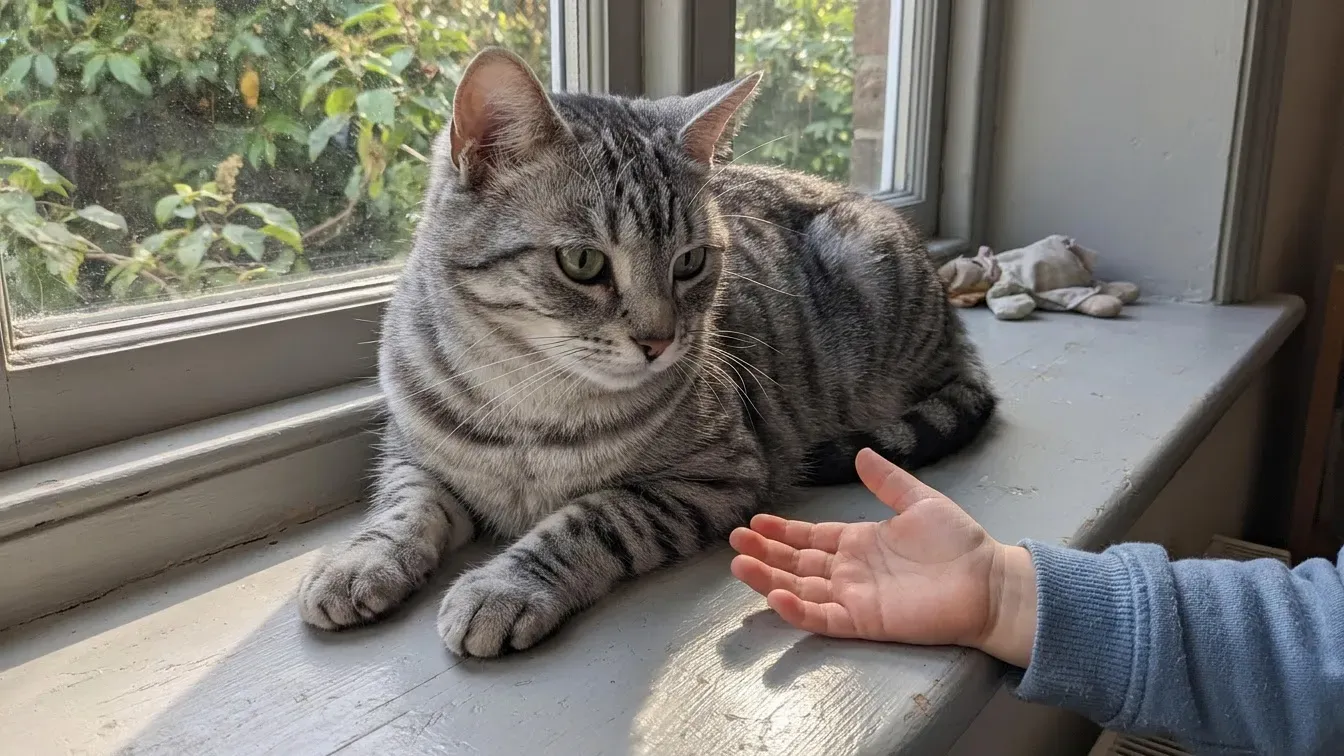
Toddlers and early elementary kids are still learning empathy and impulse control, so they naturally assume a soft, purring animal wants to be hugged like a stuffed toy. Unlike dogs, who often wag their whole bodies or step back visibly when uncomfortable, cats communicate stress through tiny shifts in posture.
A quick flick of the tail tip or a slight rotation of the ears is easy for a child to miss during active play. When those early warnings go unnoticed, a cornered or overstimulated cat resorts to a hiss, swat, or bite to create distance. Giving kids a visual traffic-light system turns abstract concepts like personal boundaries into concrete cues they can spot from across the room. For a deeper look at how feline warnings escalate, review our cat body language guide for kids.
The Red, Yellow, and Green Cat Body Language Chart
Post this quick-reference table on the refrigerator or near your cat's favorite nap spot so kids can check it before approaching. Practice pointing out these signals together when your cat is calm.
| Signal Zone | Ears & Eyes | Tail & Body | Kid Rule |
|---|---|---|---|
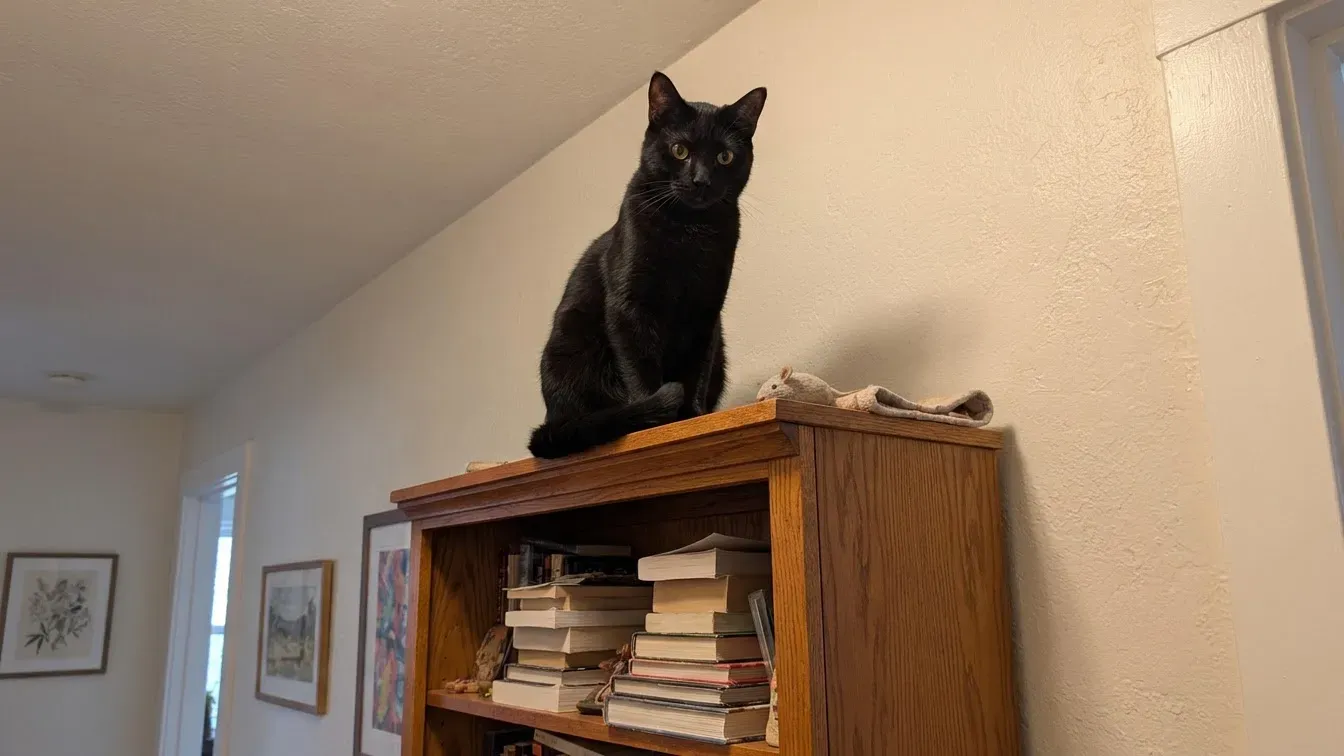
| Green: Happy & Open | Ears forward, soft half-closed eyes, slow blinking | Tail held up with a gentle curve, loose body, purring or head-butting | Go: Keep a relaxed hand low and still near the cat's shoulder or side so the cat can choose to approach and sniff first, then give two gentle chin or cheek strokes. |
| Yellow: Unsure or Overstimulated | Ears sideways like airplane wings, wide dilated pupils | Tail tip twitching or thumping, skin rippling along the back | Slow Down: Stop petting immediately and take two steps back. |
| Red: Scared or Angry | Ears flattened tight to the head, staring hard, dilated (huge) pupils signaling fear or high arousal, or constricted slit pupils in dim light signaling offensive aggression | Tail puffed up or tucked under, arched back, crouched low, hissing or growling | Stop: Hands off completely. Walk away quietly and tell an adult. |
Green Light Rules: How to Teach Gentle Petting
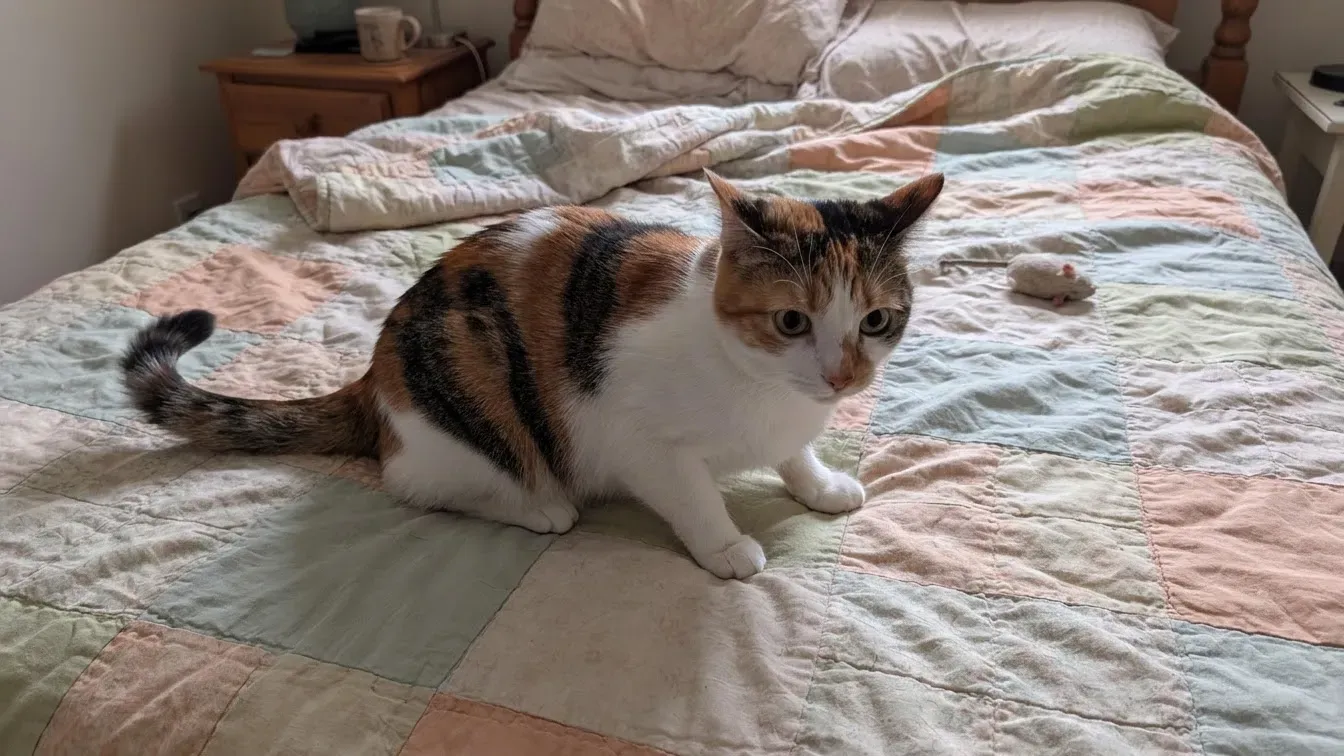
Even when a cat shows every green-light signal, young children need clear physical boundaries to keep interactions pleasant. Cats have sensitive nerve endings along their lower backs and bellies, so rough patting or full-body hugs quickly turn a friendly moment sour.
- Use the two-finger rule: Have toddlers pet using only two fingers or the back of one hand to prevent accidental grabbing or squeezing of fur.
- Stick to safe zones: Teach kids to scratch gently under the chin, behind the ears, and along the cheeks, while leaving the belly, paws, and tail completely alone.
- Follow the three-second pause: After three gentle strokes, ask your child to pause their hand. If the cat leans in or rubs against their fingers, they can continue; if the cat walks away or looks elsewhere, petting time is over.
Yellow and Red Light Rules: Preventing Scratches Before They Happen
Yellow-light signals are your household's best defense against injuries. A twitching tail does not mean a cat is happy; it means tension is building. Teach kids that a moving tail is a countdown timer telling them to freeze their hands and give the cat room to leave.
If your cat enters the red zone—flattening their ears, crouching low, or letting out a low growl—never let a child try to comfort or pick them up. Explain to kids that a scared cat needs an exit route, not an apology hug. Also keep in mind that a purr is not always a green light; cats sometimes purr when they are nervous, injured, or in pain, so kids should always look at the ears and tail rather than relying on sound alone.
How Age, Size, and Breed Affect Kid-Cat Interactions
Not every cat tolerates household noise the same way, and matching your supervision to your pets and kids makes a big difference. Kittens under six months old are playful and energetic, yet their needle-sharp baby claws and tendency to wrestle hands make them a risky match for rough toddlers.
Senior cats often have stiff joints or arthritis, meaning an accidental squeeze around the hips can trigger a sudden defensive snap. If you are still choosing a family pet or adjusting to a new adoption, look into patient, gentle cat breeds for young kids, as larger, laid-back cats generally handle bustling rooms better than high-strung or tiny breeds. Regardless of breed, never leave babies, toddlers, or young elementary children unsupervised with any cat.
Setting Up Safe Escape Zones and Daily Routines
A visual chart works best when your cat also has kid-free places to retreat whenever the living room gets loud. Elevated perches allow cats to watch family activity from a safe height without feeling trapped.
- Add vertical retreats: Install sturdy shelving or wall-mounted cat trees that keep cats safe from toddlers so your cat always has an upward escape path.
- Block off a quiet room: Note that small pet openings in baby gates can allow babies and small toddlers to crawl through, so doors with high latches or door-strap locks are safer for blocking off litter boxes, food bowls, and favorite beds from curious hands.
- Keep toys and toxic items out of reach: Store wand toys in a closet after play so toddlers do not wave sticks near the cat's face, keep true lilies (Lilium and Hemerocallis species) strictly off-limits in any household with cats due to fatal kidney toxicity, and store dangerous household items like onions, garlic, chocolate, grapes, and string out of reach of both kids and pets.
If your cat suddenly starts hiding all day, growling when touched, or scratching without warning, schedule a veterinary visit to rule out hidden pain, dental trouble, or illness before treating it as a behavior issue. Seek immediate medical care for any deep cat scratch or bite on a child, as feline mouths carry bacteria that easily cause infection.
Print or copy the red, yellow, and green chart onto bright paper and review it with your kids before morning playtime. Consistent practice turns cautious checking into a natural habit, keeping small hands scratch-free and helping your cat relax as a trusted member of the family.
Sources: Cornell Feline Health Center · ASPCA · International Cat Care · American Veterinary Medical Association (AVMA)
Frequently asked questions
At what age can kids start learning cat body language?
Children as young as two or three can learn simple red-and-green rules, such as flat ears mean stop and gentle two-finger touches are for the cheeks. Keep interactions closely supervised until kids consistently respect boundaries around age seven or eight.
Why did my cat scratch my child while purring?
Cats purr both when content and when stressed, overstimulated, or in pain. If a child pets a cat for too long or touches a sensitive spot like the belly, the cat may suddenly swat to stop the stimulation even while purring.
Is it good for young kids to grow up around cats?
Yes, living with cats teaches children empathy, patience, and respect for living creatures' boundaries. With adult supervision and clear petting rules, kids build strong, gentle bonds with family cats.
What should I do if my cat scratches or bites my child?
Wash the wound immediately with warm water and mild soap for several minutes, then apply a clean bandage. Contact your pediatrician right away, especially for bites or deep scratches, because cat bacteria can cause fast-developing infections.

Nathan Brooks
Nathan Brooks runs Farmingzoom to help loving pet owners create safe, enriching homes for their animals. He cares deeply about responsible pet care and focuses on making everyday decisions simpler for fellow owners.…