Combining a hidden bathroom cabinet with a multi-level climbing tower solves two major apartment headaches at once: scattered litter and crowded floor plans. A well-designed cat tree with litter box enclosure keeps daily mess out of sight while giving your cat vertical territory to scratch, perch, and nap.
However, many all-in-one units trap odors or cramp larger cats. These 11 functional designs prioritize easy scoop access, cross-ventilation, and sturdy bases so both you and your pet stay comfortable in compact living spaces.
| Design Style | Footprint | Best For | Access Type |
|---|---|---|---|
| Slim Corner Tower | Compact | Tight studio corners | Front double doors |
| Side-Entry Winding Maze | Medium | Litter-tracking control | Front cabinet door |
| Open-Back Slatted Villa | Medium | Maximum odor airflow | Front hinged doors |
| Wide Credenza Condo | Wide | Single-cat homes or large cats | Wide front doors |
| Flip-Top Bench Tower | Medium | Quick daily scooping | Top-lifting lid |
| Tall Tension-Rod Climber | Compact | High-energy climbers | Front pull-out tray |
| Louvered Wood Cabinet | Medium | Dry, ventilated spaces | Front magnetic doors |
| Dual-Compartment Villa | Wide | Box plus supply storage | Split front doors |
| Low-Profile Window Perch | Medium | Senior or heavy cats | Wide front swing |
| Modular Cube Tower | Compact | Customizable layouts | Removable front panel |
| Elevated Litter Loft | Medium | Small or low-mobility dogs | Elevated front hatch |
1Slim Corner Tower with Front Double Doors
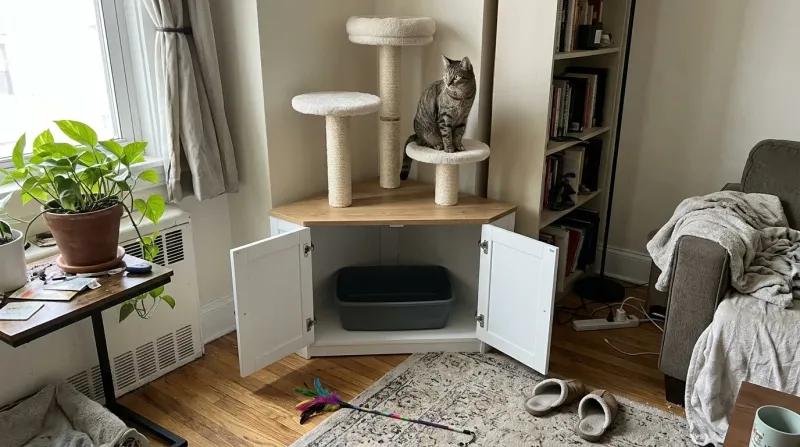
Footprint: Compact · Best For: Tight studio corners · Access Type: Front double doors Triangular and narrow square bases tuck cleanly into unused room corners while supporting three to four vertical tiers above. Full-width double doors on the front let you slide the entire litter pan out without tilting it or spilling granules. Look for models with a sisal-wrapped corner post so your cat can stretch upward right after exiting the cabinet.
2Side-Entry Winding Maze Enclosure
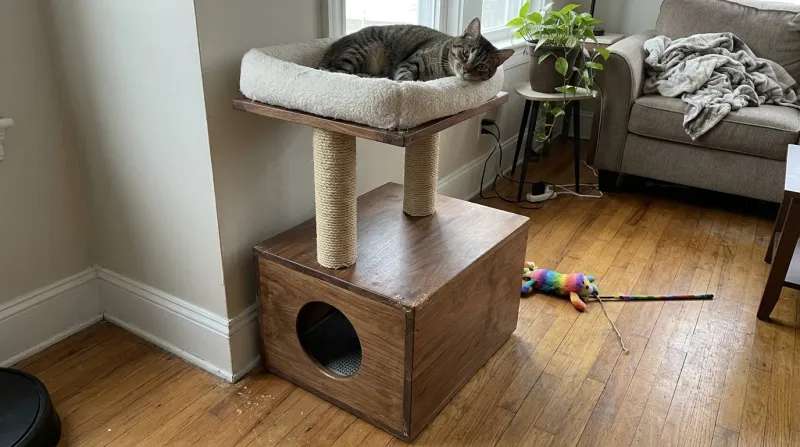
Footprint: Medium · Best For: Litter-tracking control · Access Type: Front cabinet door An internal divider creates a short hallway between the exterior entrance hole and the litter pan. As your cat walks out across a built-in grooved mat, loose litter drops off their paws before they reach your rug. The upper structure usually features a staggered platform layout and a top viewing perch, giving active cats an easy climb without requiring a massive footprint.
3Open-Back Slatted Villa Tower
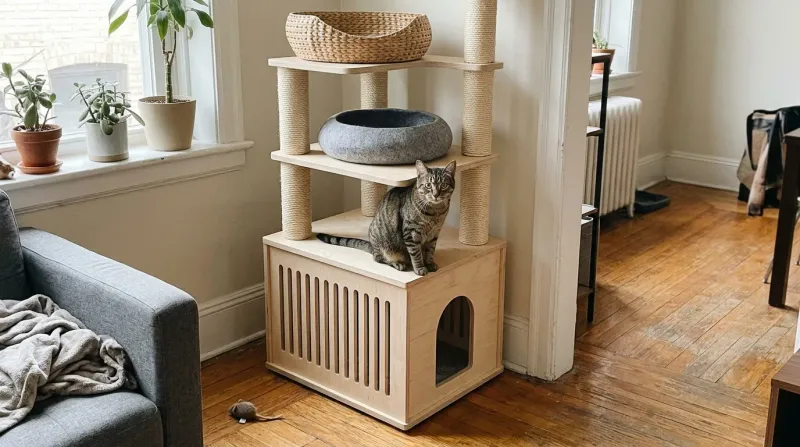
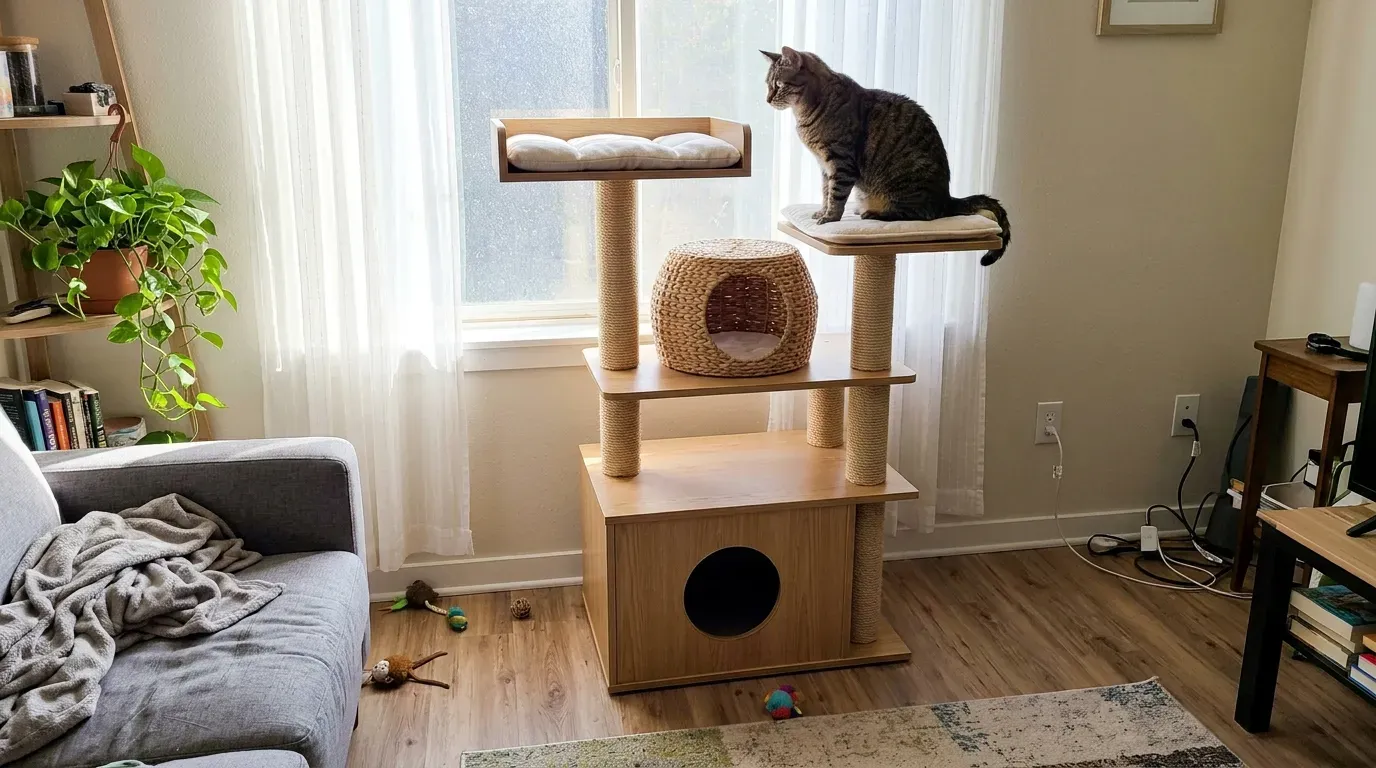
Footprint: Medium · Best For: Maximum odor airflow · Access Type: Front hinged doors Poor ventilation is the top reason cats reject covered litter cabinets, making slatted wood sides and partially open rear panels essential in small rooms. Cross-breezes prevent ammonia buildup and keep dust from settling inside while your cat digs. Above the base, a plush sleeping bowl and mid-level condo provide cozy resting spots that stay fresh and airy.
4Wide Credenza Condo with Dual Perches
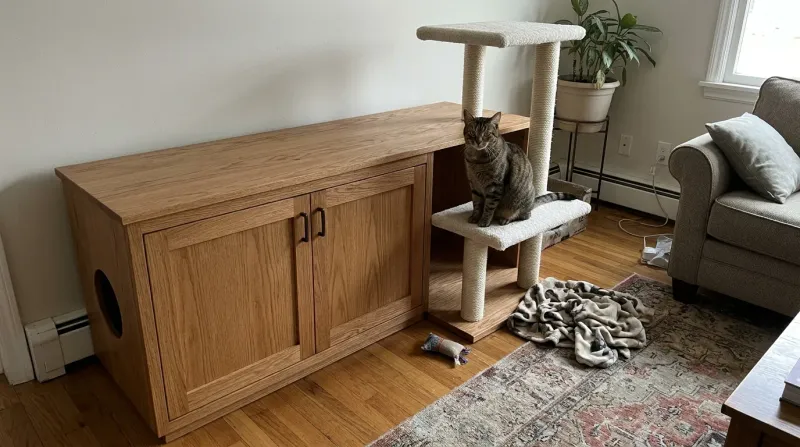
Footprint: Wide · Best For: Single-cat homes or large cats · Access Type: Wide front doors Shaped like a low media console on one side with an asymmetrical climbing tower rising on the other, this layout accommodates jumbo litter pans for single-cat homes or large cats—though multi-cat households still need additional separate litter boxes elsewhere. Two cats can lounge on separate upper platforms at different heights without crowding each other. The flat tabletop section next to the tower posts also holds grooming brushes and waste bags within easy reach.
5Flip-Top Bench Tower for Fast Scooping
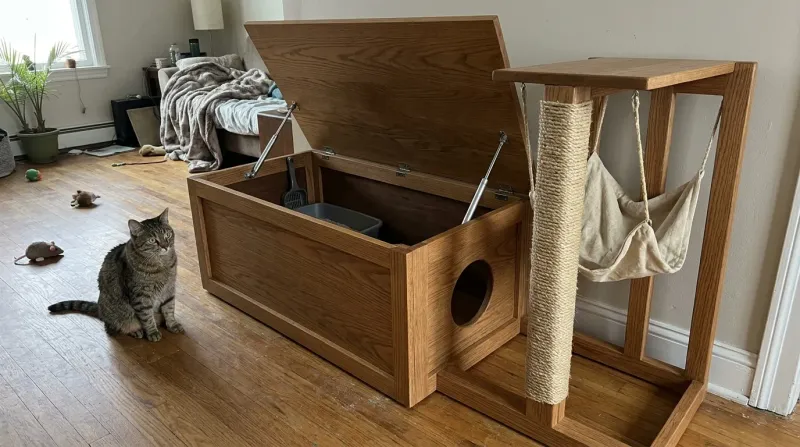
Footprint: Medium · Best For: Quick daily scooping · Access Type: Top-lifting lid Instead of kneeling on the floor to reach through narrow cabinet doors, you lift a hinged wooden lid equipped with slow-close safety struts. This gives you full overhead visibility for quick morning and evening scooping. The climbing posts attach to the reinforced side frame, keeping upper hammocks and scratching boards steady even while the lid is raised.
6Tall Tension-Rod Climber Over Base Box
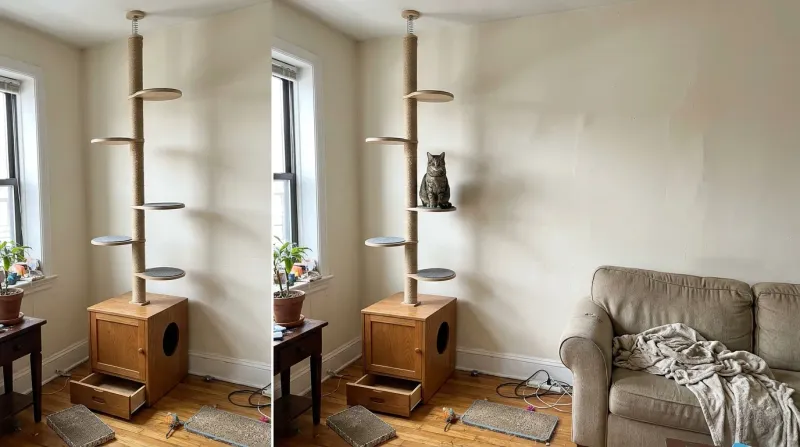
Footprint: Compact · Best For: High-energy climbers · Access Type: Front pull-out tray Floor-to-ceiling tension rods anchor the upper scratching columns directly against your ceiling, eliminating side-to-side sway on a small base. The ground-level litter cabinet houses a smooth-gliding front pull-out drawer tray so you can pull the pan forward in seconds. Vertical climbers get five or six elevated perches in less than four square feet of floor space.
7Louvered Wood Cabinet for Dry, Ventilated Spaces
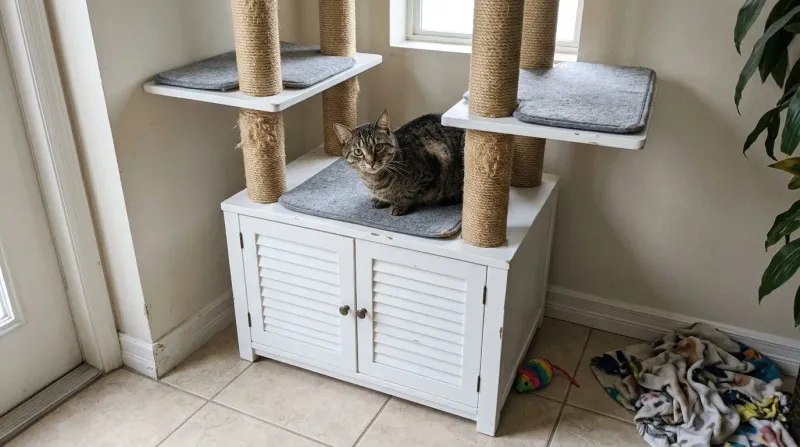
Footprint: Medium · Best For: Dry, ventilated spaces · Access Type: Front magnetic doors Angled louver vents across the front cabinet doors mimic classic window shutters while disguising the litter area completely. Place the unit in a dry, well-ventilated area rather than a damp, unventilated bathroom where steam and humidity can cause litter to clump prematurely, trap ammonia odors, and warp engineered wood. Upper tiers include machine-washable felt pads that snap off easily for weekly hair removal.
8Dual-Compartment Villa with Supply Storage
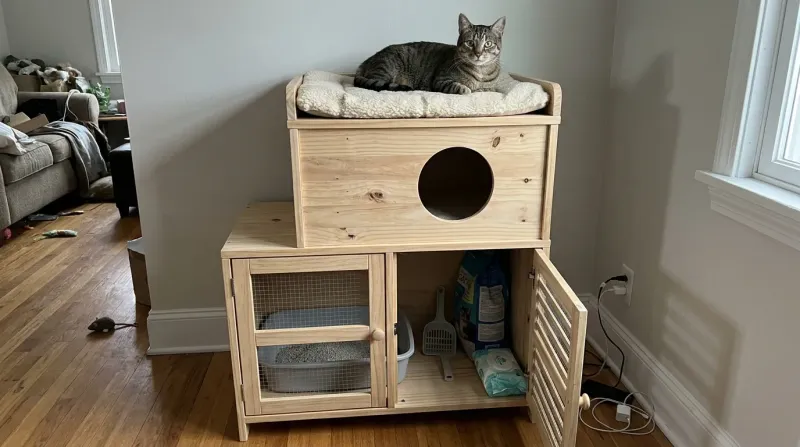
Footprint: Wide · Best For: Box plus supply storage · Access Type: Split front doors A central partition separates the litter pan chamber from a narrow storage cubby on the side. You can stash extra litter jugs, liners, and scoopers behind a closed door instead of cluttering your apartment closet. Above the split base, alternating sisal posts lead up to an enclosed cubby house and a padded top lookout.
9Low-Profile Window Perch Enclosure
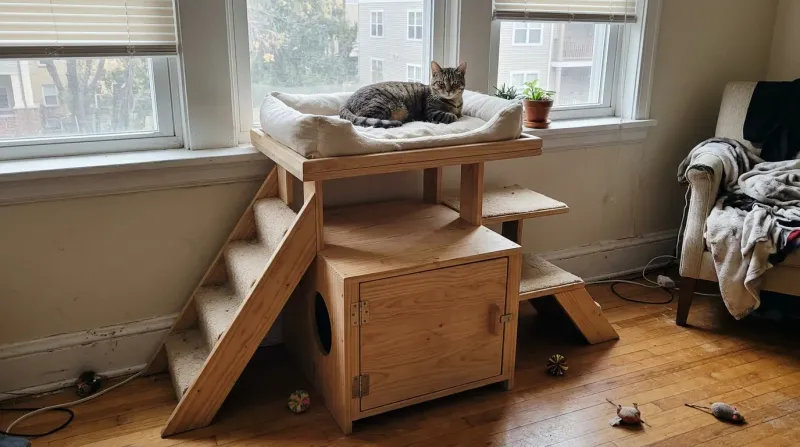
Footprint: Medium · Best For: Senior or heavy cats · Access Type: Wide front swing Shorter overall height puts the top padded bed level with a standard apartment windowsill for effortless birdwatching. Wide, carpeted ramp steps replace steep vertical jumps, protecting aging joints and supporting heavier body frames. The base cabinet features a low entry threshold so older cats never have to hop over a high lip.
10Modular Cube Tower with Removable Panels
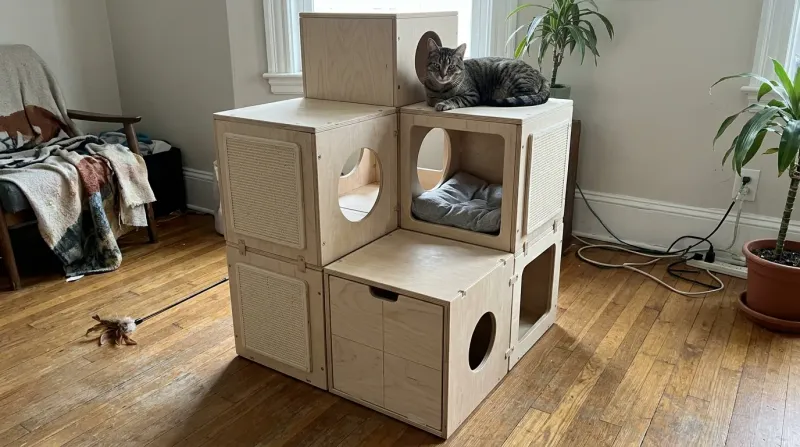
Footprint: Compact · Best For: Customizable layouts · Access Type: Removable front panel Stackable square cubes let you orient the litter entrance to the left, right, or front depending on your furniture arrangement. If a shy cat feels trapped by enclosed walls, you can leave one side panel off until they adjust. Swapping worn sisal panels or replacing scratched cushions takes minutes without replacing the whole unit.
11Elevated Litter Loft for Small-Dog Homes
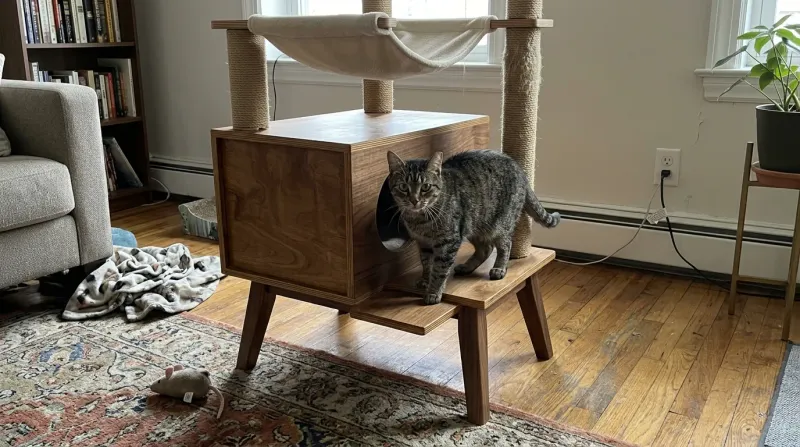
Footprint: Medium · Best For: Small or low-mobility dogs · Access Type: Elevated front hatch Raising the enclosed litter compartment onto sturdy legs deters very small or mobility-limited dogs from reaching the pan while preserving floor clearance underneath for a robotic vacuum, though it is not dog-proof against medium or large breeds that can reach the compartment or climb the side step platform. Cats enter through that side step platform and climb higher up to a hammock and sisal scratching posts. Always check the weight rating and install wall anchors to keep the elevated center of gravity rock-solid.
Veterinary Advice on Covered Litter Boxes and Feline Stress
While enclosed furniture looks tidy to humans, veterinarians note that many cats naturally prefer open litter boxes. Covered cabinets can trap ammonia odors inside and make timid cats feel cornered, especially in multi-pet homes where another animal might block the single exit. If your cat hesitates to enter the enclosure, remove one cabinet door temporarily or choose a model with slatted sides for better airflow and sightlines.
Keep feeding stations far away from the tower base, as cats dislike eliminating near their food and water. Watch closely for changes in bathroom habits, such as straining, crying, or avoiding the box altogether. Sudden litter box avoidance is often a sign of a urinary tract infection or feline idiopathic cystitis rather than stubbornness, so schedule a veterinary exam promptly if your cat stops using the cabinet.
Sizing, Placement, and Safety Tips for Small Apartments
Measure your cat before ordering any cabinet tower. Behaviorists recommend an interior cabin at least 1.5 times your cat's body length from nose to base of tail so your cat can posture, dig, and turn around comfortably without pressing against the walls. Large breeds like Maine Coons or Ragdolls need extra-roomy interiors and reinforced upper platforms, much like the heavy-duty builds featured in our guide to cat trees for large cats.
Anchor tall, narrow towers to the wall with anti-tip straps to prevent wobbling when a cat leaps off the top perch. Avoid placing toxic houseplants like lilies, pothos, or philodendrons on upper shelves where curious cats might chew them, and offer safe indoor greens like cat grass on a separate windowsill instead. Finally, scoop the box at least once daily and wipe down interior wood surfaces with an enzymatic cleaner to prevent moisture damage.
Choosing the right cat tree with litter box enclosure comes down to measuring your litter pan first and prioritizing airflow over purely decorative walls. Pick a layout with full-width access doors, anchor tall towers securely to the wall, and introduce your cat gradually with familiar litter so the new setup feels safe from day one.
Frequently asked questions
Is a cat tree with an enclosed litter box sanitary for cats?
It can be sanitary if the cabinet has proper ventilation vents, water-resistant interior surfaces, and enough space for your cat to turn around easily. You must still scoop daily and scrub the pan regularly so ammonia odors do not build up inside.
Can you put a litter box inside or next to a cat tree?
Yes, most cats adapt well to a litter box housed at the base of a cat tree as long as the unit is sturdy and does not wobble while they dig. Keep food and water bowls in a separate room so bathroom smells do not affect appetite.
Why do some veterinarians advise against closed litter boxes?
Veterinarians often prefer open boxes because covered enclosures trap strong odors, limit visibility, and make anxious cats feel trapped. In multi-cat homes, an ambush at a single narrow exit can trigger stress and litter box avoidance.
What is middening in cats, and how does it relate to litter enclosures?
Middening is when a cat deliberately leaves uncovered feces in visible areas to mark territory or signal stress. If a litter cabinet feels too cramped, dirty, or intimidating, a cat may midden nearby instead of entering the enclosure.