Time needed
15 min
What you need
- Breakaway cat collar
- Engraved ID tag
- Small flashlight
- Crunchy cat treats
- Crinkly toy or paper bag
Tools
- Set of house keys
- Metal spoon
- Ceramic bowl
You can check if a blue-eyed white kitten is deaf at home using simple, vibration-free sound tests behind their line of sight, then adjust their daily routine for safe indoor living. Because the dominant white gene linked to blue eyes often causes inner ear degeneration, traditional veterinary estimates suggest roughly 65 to 85 percent of solid white cats with two blue eyes are deaf, along with about 40 percent of those with one blue eye, though newer research indicates the statistical link between blue irises and deafness is not always consistent.
While only a veterinary BAER hearing test confirms complete or one-sided deafness, careful observation at home gives stray adopters reliable answers without costly specialist bills. Once you know how your kitten perceives the world, a few zero-cost changes to how you approach, play, and secure your home will help them thrive.
- 1
Wait Until the Kitten Is Calm and Awake
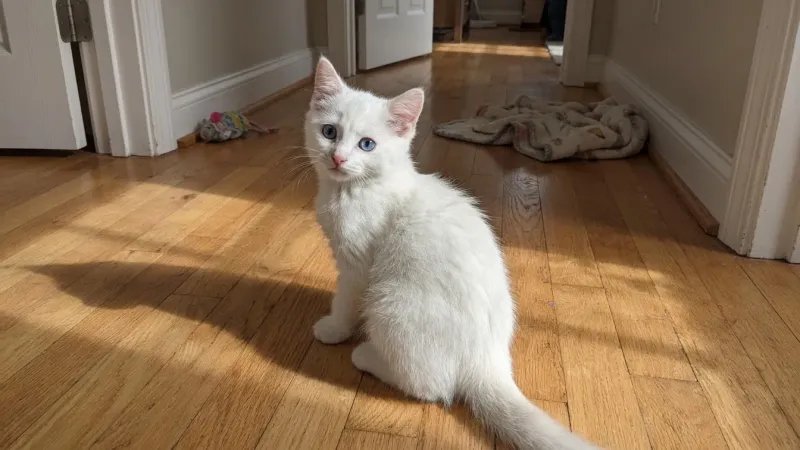
Choose a quiet room with no running appliances, open windows, or other pets moving around. Wait until your kitten is at least six to eight weeks old—when they have developed consistent motor coordination and attention spans—and is awake and resting calmly while looking away from you. Testing a frantic, sleepy, or distracted kitten makes it nearly impossible to tell whether a lack of reaction comes from hearing loss or simple disinterest.
- 2
Stand Behind the Kitten Without Casting Shadows
Position yourself three to four feet behind the kitten so you are completely outside their peripheral vision. Make sure overhead lights do not cast your moving shadow onto the floor in front of them, and avoid brushing against furniture or shifting your weight heavily on creaky floorboards. Cats rely heavily on sight and touch to compensate for missing hearing.
- 3
Test With High-Pitched Sounds Without Air Movement
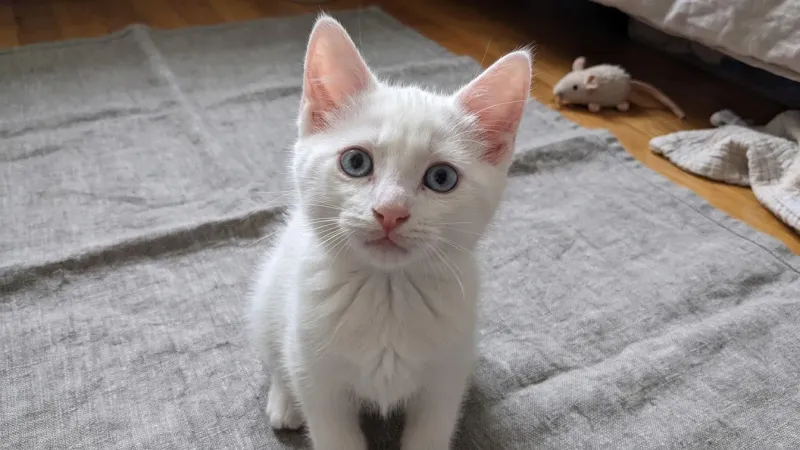
Make a sharp, high-pitched sound that does not move air toward the kitten, such as jingling keys gently, crinkling a treat wrapper, or clicking your tongue. Watch the kitten's ears and head closely for five seconds. A hearing kitten will typically flick one ear toward the noise or turn their head, while a deaf kitten stays completely still.
- 4
Repeat the Sound Check Over Several Days
Run the quiet sound test three or four separate times across different days using varied noises, like shaking a dry kibble container or tapping a spoon against a ceramic bowl. If the kitten fails to swivel their ears or react every single time, they are almost certainly deaf. If they react inconsistently, they may have hearing in only one ear.
- 5
Watch Daily Vocalization and Sleep Patterns
Observe how your kitten behaves during normal routines over the next week. Deaf kittens often meow much louder than hearing cats because they cannot hear their own voice, sleep deeply through vacuuming or loud kitchen noises, and fail to wake up when you enter the room unless they feel footsteps or see movement.
- 6
Signal Your Approach With Light or Floor Taps
Prevent startle bites and stress by announcing yourself visually before touching your kitten. Flick a room light switch on and off once when entering, shine a small flashlight beam on the floor in front of their face, or tap your foot gently on the floor a few feet away so they feel the vibration before you reach down to pet them.
- 7
Teach Simple Hand Signals for Daily Routines
Pair consistent, large hand or arm gestures with everyday rewards so your kitten learns to check in with you visually across a room. Wave an open hand to call them for meals, point clearly toward toys or perches, and raise a flat palm high or make a wide sweeping gesture immediately followed by a small treat. Review our cat body language guide so everyone in the household reads their silent cues accurately.

- 8
Keep Your Cat Indoors and Collar-Tagged
Commit to an indoor-only lifestyle so your kitten never faces traffic or predators they cannot hear coming. Fit them with a breakaway collar carrying an ID tag engraved with your phone number and the words Deaf Indoor Cat, and check screens on windows and balconies regularly so an accidental slip outside never happens.
Why Blue-Eyed White Kittens Often Have Hearing Loss
Solid white coat color in cats is commonly controlled by a dominant masking gene called the W gene. Alongside blocking pigment in the fur and iris, this gene frequently disrupts the development of blood vessels and sensory hair cells inside the cochlea of the inner ear during the first few weeks of life. The result is congenital sensorineural deafness, which is permanent and painless.
Eye color offers a helpful clue because pigment cells in the iris share an embryonic origin with inner ear structures. All kittens are born with blue eyes that typically shift to green, gold, or copper by seven to eight weeks of age. If a stray white kitten keeps two blue eyes past two months, the likelihood of bilateral deafness is higher. If only one eye remains blue, hearing loss may affect only the ear on that side, which is much harder to spot without a formal veterinary test. Keep in mind that while the dominant W gene is the primary mechanism, the severity and occurrence of deafness are polygenic and depend heavily on the cat's broader genetic background, and you can explore more about feline genetics in our guide to white cat breeds without deafness.
Common Mistakes When Testing and Caring for a Deaf Kitten
- Testing too early: Kittens open their ear canals between two and three weeks of age, and cochlear degeneration often progresses over the first few weeks. Testing a young stray before six to eight weeks old often produces false alarms because their motor coordination and attention spans are still inconsistent.
- Creating air drafts or floor vibrations: Clapping loudly near a kitten's head pushes air onto their whiskers, and stomping on hardwood floors vibrates through their paws. Both trigger physical startle reflexes that look like hearing.
- Waking a sleeping cat by touching them: Reaching directly for a sleeping deaf kitten triggers a defensive bite or scratch out of pure surprise. Always use floor vibrations or a flashlight beam first.
- Allowing unsupervised outdoor access: A deaf cat cannot hear approaching cars, barking dogs, or warning calls. Keeping them strictly indoors is the single most effective way to prevent fatal accidents.
When to Schedule a Regular Veterinary Visit
You do not need an expensive neurological hearing test to raise a healthy deaf kitten, since congenital deafness requires no medication or surgery. However, every stray kitten still needs a standard wellness exam at a regular clinic or low-cost community vet. Ask the veterinarian to check inside the ear canals with an otoscope to rule out treatable issues that mimic deafness, such as severe ear mites, yeast infections, or wax blockages.
During that routine visit, schedule core vaccinations, deworming, flea treatment, and spay or neuter surgery. If your kitten ever shows head tilting, loss of balance, or sudden eye darting, see a vet promptly, as those signs point to an active inner ear infection rather than inherited deafness.
Checking a blue-eyed stray white kitten for deafness takes patience rather than expensive equipment, and caring for a deaf cat quickly becomes second nature. By combining strictly indoor safety with simple visual cues like light flicks and large hand signals, you can give your rescue kitten a secure, affectionate home without straining your budget.
Sources: Cornell Feline Health Center · International Cat Care
Frequently asked questions
Are all white cats with blue eyes deaf?
No, not all blue-eyed white cats are deaf. Traditional veterinary estimates suggest roughly 65 to 85 percent of solid white cats with two blue eyes have congenital deafness, while about 40 percent of white cats with one blue eye are deaf, though newer research shows the statistical link between blue irises and deafness is not always consistent. Cats with one blue eye are sometimes deaf only on the side of the blue eye.
At what age can you tell if a kitten is deaf?
You can reliably start checking a kitten's hearing at home once they reach at least six to eight weeks of age, when their motor coordination and attention spans are consistent. Kitten ear canals remain closed until two to three weeks old and cochlear degeneration progresses over the first few weeks, so testing too early gives misleading results. Final eye color also settles around seven to eight weeks, which helps clarify genetic risk.
Can a deaf kitten live a normal, happy life?
Yes, deaf cats live full, normal lifespans and adjust effortlessly when kept strictly indoors. Because congenital inner ear deafness causes no pain, a deaf kitten plays, bonds, and explores just like a hearing cat once you use visual signals, vibration cues, and secure window screens.
How much does a vet BAER hearing test cost for a cat?
A formal Brainstem Auditory Evoked Response (BAER) test typically requires a veterinary neurologist or university clinic and can cost several hundred dollars. For pet adopters on a budget, a standard wellness exam to rule out ear mites or infection plus careful home sound checks is completely sufficient.

Nathan Brooks
Nathan Brooks runs Farmingzoom to help loving pet owners create safe, enriching homes for their animals. He cares deeply about responsible pet care and focuses on making everyday decisions simpler for fellow owners.…