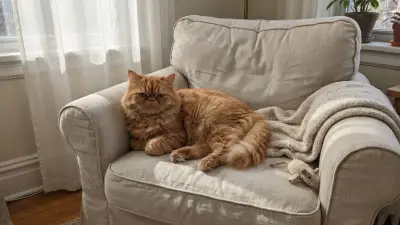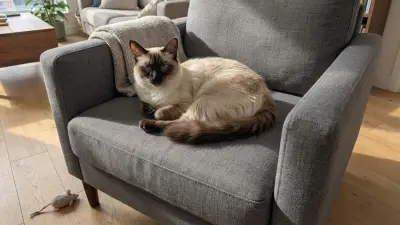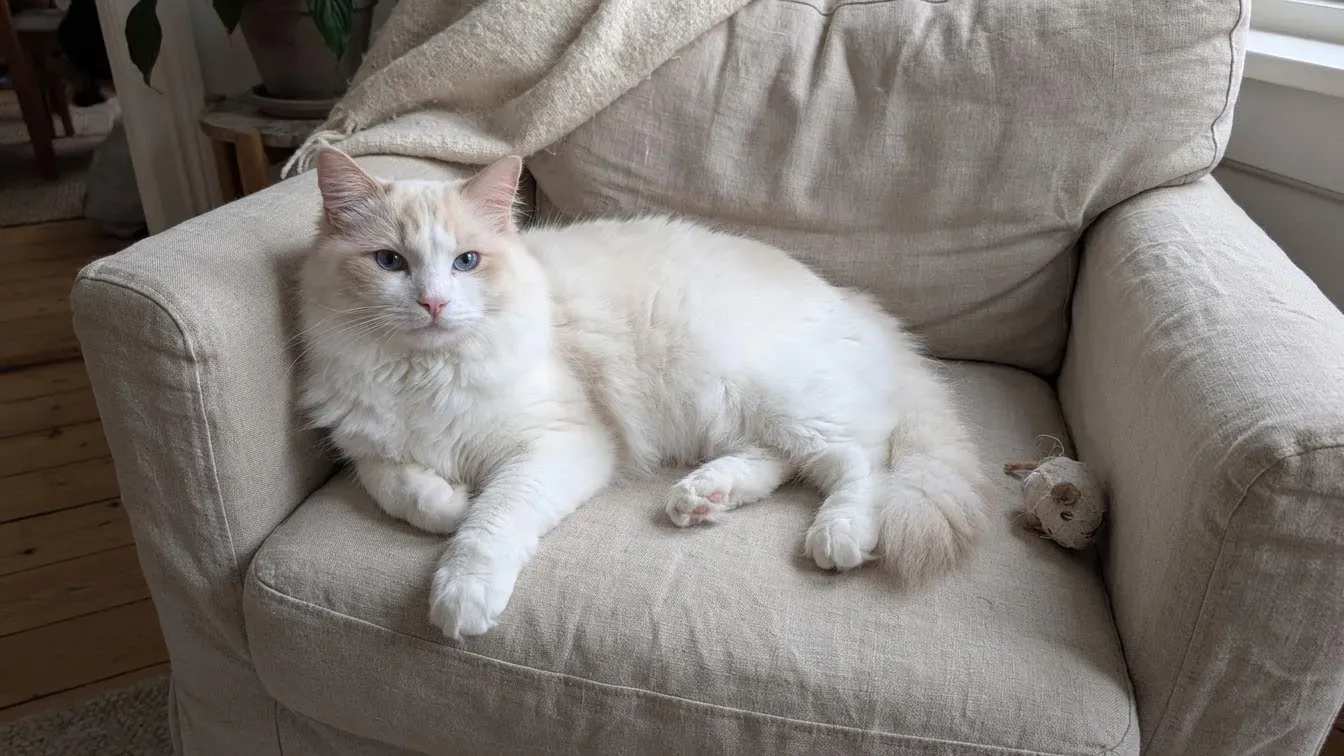
Bringing home a long-haired white cat works best for first-time adopters when the breed has a steady, low-stress temperament and a coat that forgives beginner brushing mistakes. While many fluffy breeds require intense daily upkeep or thrive in busy households, several affectionate cats flourish in peaceful spaces with straightforward weekly care.
Before visiting a shelter or reputable breeder, compare how much coat maintenance each breed needs alongside their natural energy level. Because solid white coats are linked to congenital deafness—especially in blue-eyed cats—always ask for a BAER hearing test and schedule an early wellness exam with your veterinarian.
| Breed | Origin | Size | Weekly Brushing | Lifespan |
|---|---|---|---|---|
| Ragdoll | United States | Large | 2–3 times | 12–17 years |
| Ragamuffin | United States | Large | 2 times | 12–18 years |
| Siberian | Russia | Medium to large | 2–3 times | 11–18 years |
| Turkish Angora | Turkey | Small to medium | 1–2 times | 12–18 years |
| Maine Coon | United States | Large | 2–3 times | 12–15 years |
| Turkish Van | Turkey | Medium to large | 1–2 times | 12–17 years |
| Birman | Myanmar (Burma) | Medium to large | 1–2 times | 12–16 years |
1Ragdoll
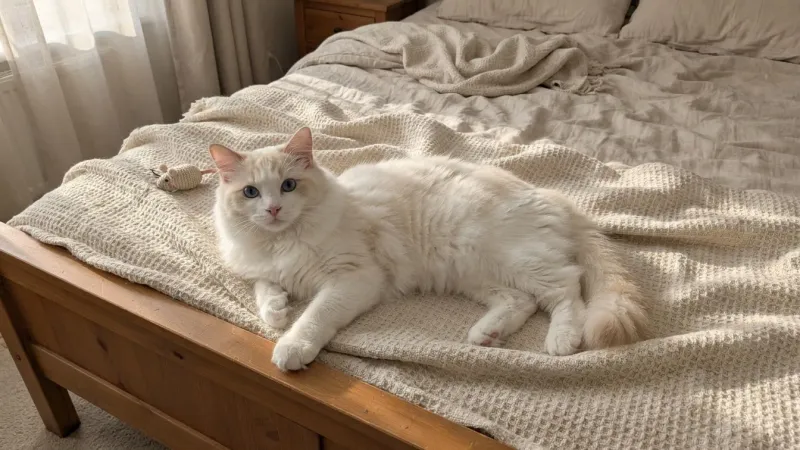
Origin: United States · Size: Large · Weekly Brushing: 2–3 times · Lifespan: 12–17 years Ragdolls are famous for going limp when held and greeting owners quietly at the door. Their silky, semi-long coat lacks a dense undercoat, making it far less prone to painful mats than most long-haired breeds. While true pedigreed Ragdolls are always colorpointed rather than solid white, a gentle comb-through two or three times a week keeps a high-white bicolor or mitted Ragdoll tidy. They dislike loud chaos and thrive in predictable, peaceful routines, though they still enjoy gentle floor-level wand play.
2Ragamuffin
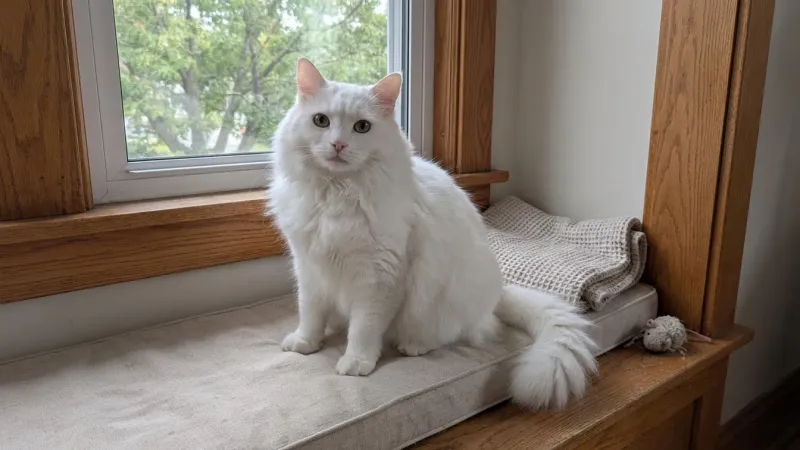
Origin: United States · Size: Large · Weekly Brushing: 2 times · Lifespan: 12–18 years Closely related to the Ragdoll, the Ragamuffin offers a sweet, patient temperament and a rabbit-soft coat that resists clumping. First-time owners appreciate how calmly most Ragamuffins sit for brushing sessions, especially when started early with a wide-toothed metal comb. They mature slowly—taking up to four years to reach full size—and prefer curling up beside a quiet reader rather than climbing curtains or demanding constant noisy attention.
3Siberian
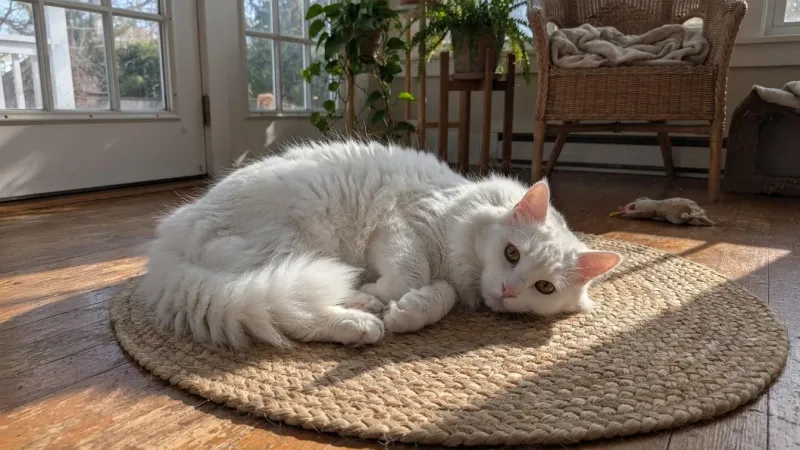
Origin: Russia · Size: Medium to large · Weekly Brushing: 2–3 times · Lifespan: 11–18 years Despite sporting a thick triple coat built for cold winters, Siberians have glossy guard hairs that shed dirt and resist matting better than expected. Brush twice weekly during warmer months and increase to three or four times during spring and autumn shedding seasons. Siberians are deeply loyal, quiet-voiced companions that bond closely with one or two calm household members and adapt smoothly to indoor apartment living.
4Turkish Angora
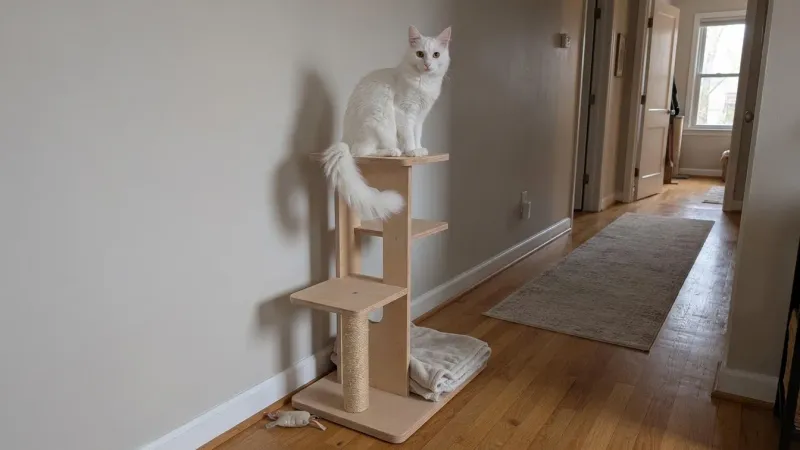
Origin: Turkey · Size: Small to medium · Weekly Brushing: 1–2 times · Lifespan: 12–18 years The Turkish Angora is the classic graceful white cat with a fine, single-layer coat and zero woolly undercoat. Because there is no dense underfur to tangle, a ten-minute brushing once or twice a week is plenty for beginners—much like other fluffy cat breeds that rarely mat with weekly brushing. They are intelligent, quiet, and affectionate, preferring to perch on a high cat tree and watch their favorite person.
5Maine Coon
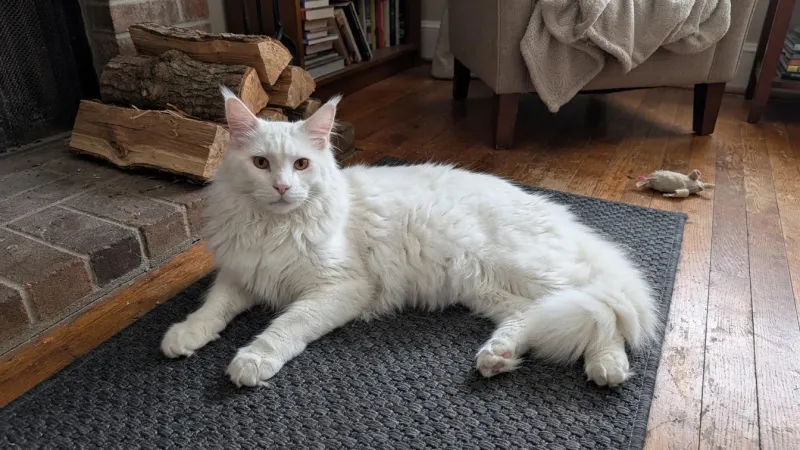
Origin: United States · Size: Large · Weekly Brushing: 2–3 times · Lifespan: 12–15 years Often called gentle giants, solid white Maine Coons communicate in soft chirps and trills rather than loud meows. Their shaggy coat is uneven in length, with thicker fur around the ruff and britches that needs combing two or three times a week to prevent knots behind the ears and underarms. They are easygoing, sociable, and rarely rattle easily, making them steady companions for nervous first-time cat owners.
6Turkish Van
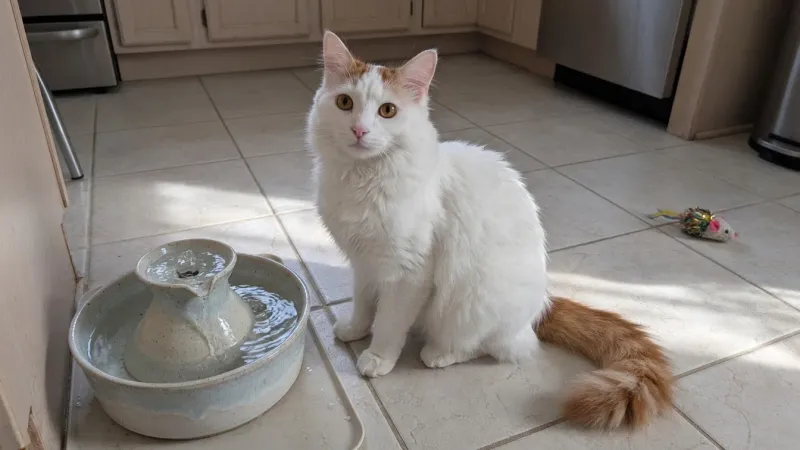
Origin: Turkey · Size: Medium to large · Weekly Brushing: 1–2 times · Lifespan: 12–17 years Known for a chalk-white body with color markings restricted to the head and tail, the Turkish Van gets its white body from the piebald white-spotting gene rather than the dominant solid-white gene, and solid white Turkish Vans are rare. Its cashmere-like coat has no undercoat, so weekly brushing takes only minutes and makes coat care simple for newcomers. While they enjoy interactive play and splashing near water bowls, they settle peacefully in quiet homes once their daily play session ends and bond deeply with calm, attentive owners.
7Birman
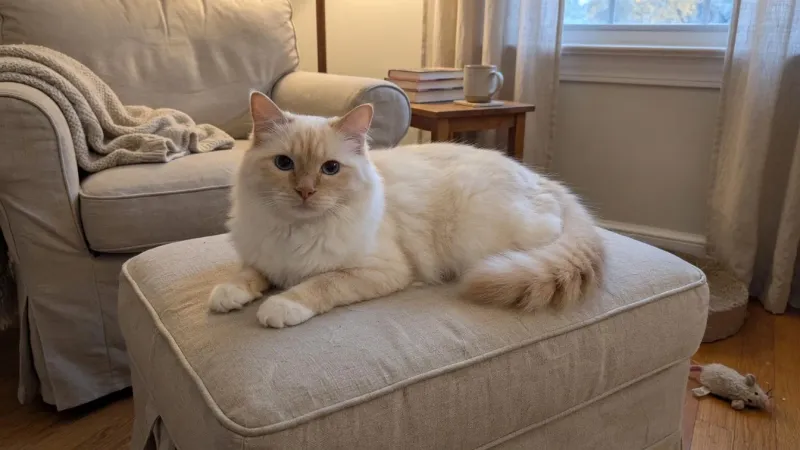
Origin: Myanmar (Burma) · Size: Medium to large · Weekly Brushing: 1–2 times · Lifespan: 12–16 years Birmans are gentle, quiet-voiced companions recognized by their bright white coats, pale color points, pure white gloves, and deep blue eyes. Unlike breeds with heavy double coats, the Birman has a silky single coat with no dense undercoat, so brushing once or twice a week with a steel comb keeps knots away effortlessly. They adore peaceful routines, follow their favorite person softly from room to room, and make coat care stress-free—much like other easier cat breeds for first-time owners.
Beginner Grooming Setup and White Coat Safety
Keep grooming sessions short—five to ten minutes—while your cat is sleepy, and reward calm behavior with a small treat. Use a stainless-steel greyhound comb for tangles behind the ears and under the legs, followed by a soft slicker brush. Never use human shampoo, essential oils, or sharp scissors near mats, as cat skin tears easily; ask a professional groomer or vet clinic to shave stubborn knots safely.
White fur on the ears and nose has minimal pigment and burns easily in sunny windows. Apply only veterinarian-approved feline sunscreen if your cat sunbathes, and keep toxic houseplants like lilies, sago palms, and pothos completely out of your home, as lily ingestion causes fatal kidney failure in cats.
Shelter Adoption vs. Breeder Checklist
Many gentle long-haired white cats in shelters are domestic longhairs rather than pedigreed cats, offering the same plush look and calm demeanor without a high breeder fee. When adopting an adult cat, shelter staff can already confirm whether the cat prefers a quiet home and tolerates brushing.
If you choose a breeder, ask for proof of genetic screening for breed-specific conditions such as hypertrophic cardiomyopathy (HCM) in Ragdolls, Maine Coons, Siberians, and Birmans. Schedule a veterinary checkup within your first week home to review vaccinations, dental care, and parasite prevention.
Matching a fluffy white cat to your quiet home comes down to honest grooming time and steady temperament. Choose a single-coated breed like the Turkish Angora, Birman, or silky Ragdoll if you want minimal brushing, or adopt an adult domestic longhair whose calm personality and hearing health are already known. Book a wellness exam with your veterinarian shortly after adoption to keep your new companion thriving.
Sources: Cornell Feline Health Center · The Cat Fanciers' Association (CFA) · The International Cat Association (TICA) · ASPCA
Frequently asked questions
Are all white cats with blue eyes deaf?
No, not all blue-eyed white cats are deaf, though they carry a higher genetic risk than cats with green, gold, or copper eyes. Odd-eyed white cats may have normal hearing on the non-blue side. Ask a shelter or breeder for a BAER hearing test, and keep deaf white cats strictly indoors for safety.
What is the easiest fluffy white cat breed to groom?
The Turkish Angora, Turkish Van, Birman, and Ragdoll are among the easiest long-haired white breeds to maintain. Turkish Angoras, Turkish Vans, and Birmans lack a dense undercoat, while Ragdolls have silky fur that resists tangling, so brushing one to three times per week usually prevents mats.
How do you keep a white cat's fur clean without frequent baths?
Regular brushing removes loose hair, skin oils, and dust before they dull the coat. Keep litter boxes scooped daily, use ceramic or stainless-steel food bowls to prevent chin acne and staining, and wipe tear tracks gently with a warm, damp cloth rather than bathing frequently.
Are fluffy white cats good for quiet apartments?
Yes. Breeds like the Ragdoll, Ragamuffin, Birman, and Siberian are naturally soft-voiced and thrive in calm indoor spaces. Providing a sturdy scratching post, a window perch with sun protection, and a daily ten-minute play session keeps them content without loud vocalizing.

Nathan Brooks
Nathan Brooks runs Farmingzoom to help loving pet owners create safe, enriching homes for their animals. He cares deeply about responsible pet care and focuses on making everyday decisions simpler for fellow owners.…