
No pure white cat breed is completely immune to congenital deafness, because the dominant white gene (W) acts independently of breed boundaries. However, roughly 78 to 83 percent of white cats with non-blue eyes have normal hearing, and choosing non-blue eyes, white-spotted patterns, or sturdy, low-maintenance breeds dramatically reduces your risk of adopting a cat with hearing loss.
If you love snowy coats but want to avoid unexpected specialty vet bills on a modest adoption budget, understanding feline coat genetics is your best safeguard. You can easily screen a cat's hearing in a quiet room and pick a healthy, easy-care companion built for a long, affordable life.
Why Are Some White Cats Born Deaf?
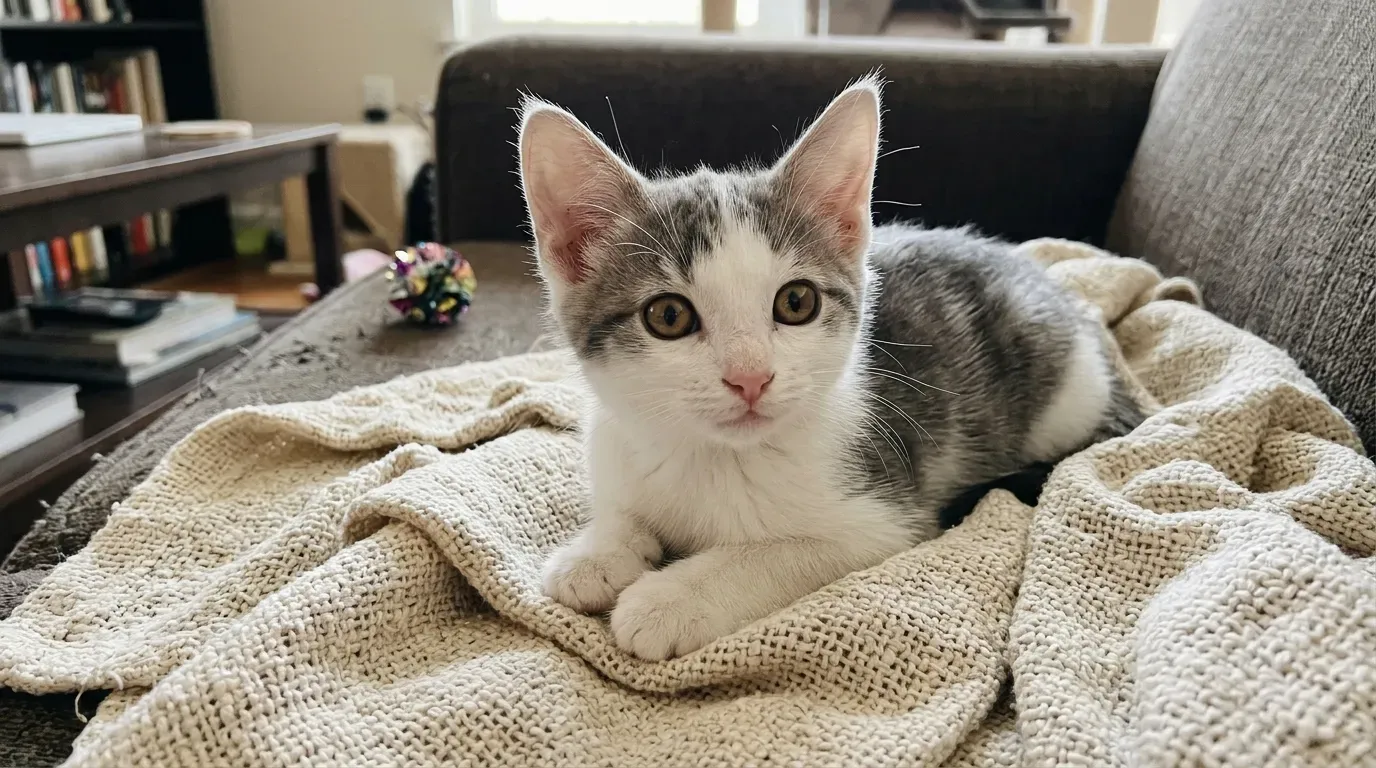
Congenital sensorineural deafness in white cats happens because of how pigment cells behave before a kitten is born. The dominant white gene (W) suppresses melanocytes, the specialized cells that produce pigment for fur and eye color. Because melanocytes also help maintain fluid balance inside the cochlea of the inner ear, a lack of these cells causes the delicate inner ear structures to degenerate shortly after birth.
Veterinary data shows that deafness rates vary significantly by eye color—roughly 17 to 22 percent of solid white cats with non-blue eyes are born deaf, compared to around 40 percent of odd-eyed white cats and 65 to 85 percent of solid white cats with two blue eyes. Fortunately, this genetic link stops at the inner ear. Unlike certain merle-coated dogs, white cats are not predisposed to hereditary blindness, visual defects, or reproductive problems. Aside from potential hearing loss and sun sensitivity on pale skin, white cats enjoy the same average life expectancy of 12 to 18 years as any other domestic feline.
- Solid white with two blue eyes: Highest statistical risk of congenital deafness in one or both ears (roughly 65 to 85 percent).
- Odd-eyed white cats: Higher chance of unilateral deafness on the same side as the blue iris (around 40 percent overall).
- Solid white with green, gold, or copper eyes: Significantly lower risk (roughly 17 to 22 percent) because pigment cells reached the iris and inner ear.
Are There Truly White Cat Breeds Without Deafness?

No registry or breeder can guarantee a pure white cat breed with zero deafness risk, because any breed carrying the dominant W gene shares the exact same inner-ear biology. However, you can eliminate congenital white-coat deafness entirely by focusing on non-W-gene white cats—whose pale coats come from temperature-sensitive albinism (the pointed Siamese gene) or high-grade white spotting (the piebald gene)—rather than the dominant W gene.
When kittens show even a tiny smudge of color on top of their heads—often called a kitten cap—pigment cells are active in their bodies, which safely rules out W-gene deafness. For budget-friendly adoption, look toward hardy, outcrossed breeds or mixed-breed cats rather than expensive, heavily inbred show lines.
| Breed or Type | Coat Mechanism | Grooming Needs | Deafness Risk |
|---|---|---|---|
| Domestic Shorthair (High-Grade Bicolor/Van) | Piebald white-spotting gene (non-W) | Low (weekly brushing) | Virtually zero (pigment cells present) |
| Oriental White (White-Spotting Line) | High-grade white spotting (non-W) | Low (short, sleek coat) | Virtually zero (when free of dominant W) |
| Turkish Van | Piebald white-spotting gene (non-W) | Moderate (silky single coat) | Virtually zero (not W-gene white) |
| Siamese (Light-Pointed Varieties) | Temperature-sensitive albinism | Low (short, fine coat) | Virtually zero (not W-gene white) |
| Colorpoint Shorthair (Flame/Cream Point) | Temperature-sensitive albinism | Low (short, fine coat) | Virtually zero (not W-gene white) |
Best Low-Maintenance White Cat Breeds for Budget Adopters
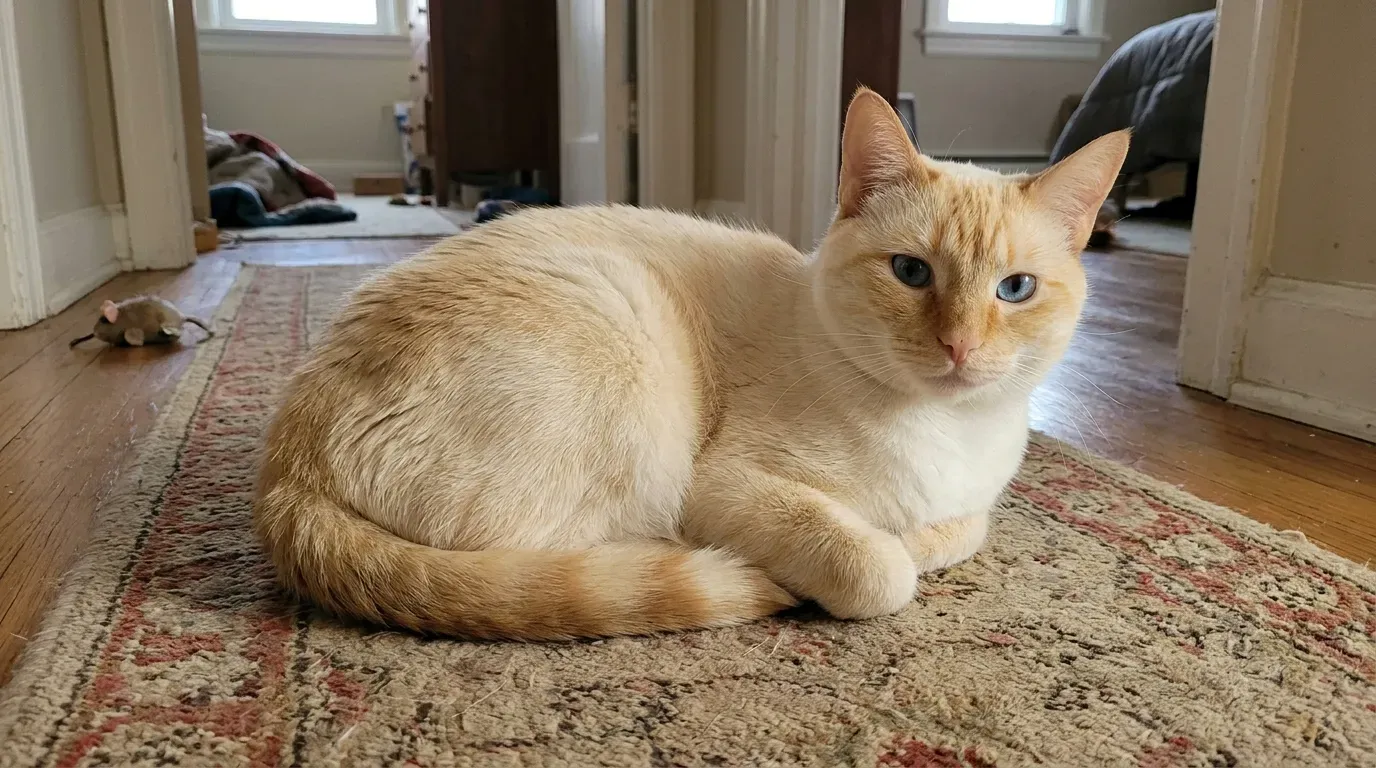
If you want a snowy companion without steep grooming expenses or chronic hereditary illnesses, focus on athletic, short-coated cats from broad gene pools rather than rare pedigree breeds from specialized catteries that cost hundreds to over a thousand dollars. Many of the most common cat breeds and local shelter mixes offer tremendous hybrid vigor, keeping routine veterinary care predictable and affordable.
- Bicolor or Van-Patterned Domestic Shorthair: The most budget-friendly option at any shelter. Pick a predominantly white cat with a tiny patch of tabby or black fur on the head, ears, or tail to rule out dominant W deafness and enjoy sturdy overall health.
- Non-Blue-Eyed White Domestic Shorthair: A solid white shelter cat with amber, green, or copper eyes carries a dramatically lower risk of deafness than blue-eyed white cats, while offering easy-care grooming and a modest adoption fee.
- Seal- or Lilac-Point Domestic Mix: Commonly found in rescues and shelters, these short-coated cats have pale, creamy-white bodies with darker points and avoid dominant W deafness entirely, making them great examples of short hair cat breeds that need very little grooming.
- Flame-Point or Cream-Point Domestic Shorthair: Colorpoint kittens are born completely white and gradually develop soft cream or apricot points on their face, ears, paws, and tail as they age, while keeping a pale cream-white body. Because their color comes from the Himalayan gene rather than dominant white, they do not suffer from W-gene deafness.
How to Check a Cat's Hearing Before You Adopt
You do not need expensive medical equipment to screen an adult cat or older kitten at a shelter or foster home. Because deaf cats are masters at reading subtle environmental cues, standard clapping or stomping often gives false results by alerting a deaf cat via floor vibrations or peripheral movement across the room.
- Wait until the cat is relaxed and looking away: Stand several feet behind the cat on a carpeted surface so your footsteps do not vibrate the floor.
- Use high-pitched, subtle sounds: Crinkle a stiff piece of cellophane, jingle a small set of keys gently, or squeak a quiet toy without waving your hand in the cat's peripheral vision.
- Watch the ear pinnae: A hearing cat will immediately swivel one or both ears toward the sound, even if it chooses not to turn its head.
- Check each side separately: Unilateral deafness is common in odd-eyed white cats. Make a soft sound to the left, pause, and repeat on the right to see if both ears twitch independently.
If you want definitive medical proof—especially when adopting a young blue-eyed kitten—ask a veterinarian about a BAER (Brainstem Auditory Evoked Response) test. This painless diagnostic test measures electrical brain activity in response to clicks and confirms whether one or both ears hear normally.
Everyday Health Care for White Cats on a Budget
Even when a white cat hears perfectly, pale fur and pink skin require a few simple, inexpensive habits to prevent costly vet bills later in life. Pink noses, eyelids, and ear tips lack protective melanin, making white cats vulnerable to solar dermatitis and squamous cell carcinoma from prolonged sun exposure.
Keep your white cat indoors, and apply UV-blocking window film to sunny south-facing windows where your cat loves to nap. Never apply human sunscreen to a cat, as ingredients like zinc oxide and salicylates are toxic when licked off during grooming; ask your vet for a feline-safe sunscreen if your cat ever goes into a screened patio.
Routine indoor care stays easy and affordable when you focus on prevention. Brush a short white coat once a week with a rubber grooming mitt to lift loose hair and keep tear stains from settling around the eyes. To protect your cat from toxic houseplants while satisfying its urge to chew greens, follow a simple guide on how to grow cat grass indoors for just a few dollars. Always keep lilies, sago palms, onions, garlic, grapes, raisins, and xylitol out of your home, as these everyday items are dangerous to cats. Schedule an annual wellness exam with your veterinarian—and call your vet promptly if you notice crusty red scabs on your cat's ear tips, sudden balance issues, or changes in vocal volume.
You do not have to give up your dream of adopting a snowy white cat to protect your wallet or your pet's long-term health. By choosing a green- or gold-eyed shelter cat, looking for subtle color points or spots, and testing ear responses in a quiet room before signing adoption papers, you can bring home an affectionate, low-maintenance companion with strong hearing and minimal upkeep.
Frequently asked questions
Are all white cats with blue eyes deaf?
No, not all blue-eyed white cats are deaf. While solid white cats with two blue eyes have the highest risk of congenital deafness—around 65 to 85 percent—some still hear in one or both ears. Cats with green, gold, or copper eyes have a much lower chance of hearing loss (roughly 17 to 22 percent).
What is the average life expectancy of a white cat?
An indoor white cat has the same average life expectancy as any other domestic cat, typically 12 to 18 years. Protecting pink ears and noses from direct UV sunlight prevents skin damage and helps ensure a full, healthy lifespan.
Can a white cat go deaf later in life from genetics?
Congenital white-coat deafness develops within the first few weeks after birth as the inner ear matures, not years later. If an adult white cat suddenly stops responding to sounds, schedule a vet visit to check for treatable ear mites, infections, or age-related changes.
Are white cats more prone to other health issues besides deafness?
Aside from congenital inner-ear deafness and higher sunburn sensitivity on pink skin, white cats are not more prone to internal diseases, blindness, or reproductive problems than cats of other coat colors.

Nathan Brooks
Nathan Brooks runs Farmingzoom to help loving pet owners create safe, enriching homes for their animals. He cares deeply about responsible pet care and focuses on making everyday decisions simpler for fellow owners.…