Teaching cat body language for kids gives toddlers and grade-schoolers a simple visual code to know when your family cat wants quiet space—preventing scratches before they happen. Cats rarely lash out without warning; they use clear ear, tail, and posture signals long before resorting to claws.
In a busy household, young children often mistake a wagging tail for excitement or a crouching cat for a playful invitation. By turning feline body signals into an easy traffic-light chart and setting clear household rules, parents can build safe, respectful habits for both kids and cats.
Why Kids Misread Cat Body Language
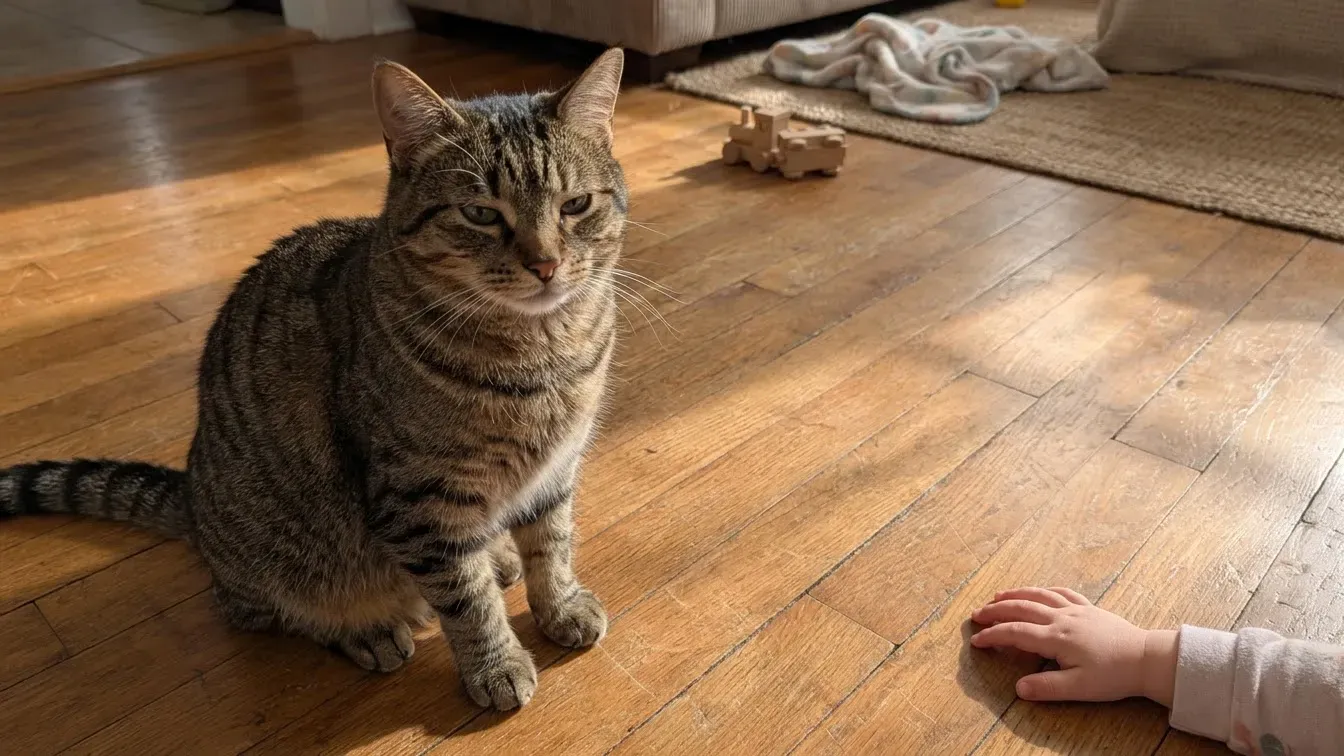
Young children naturally compare cats to dogs or stuffed animals, which leads to common misunderstandings in active homes. A child who sees a dog wagging its tail knows the dog is happy, so they assume a cat thumping its tail back and forth feels the exact same way. In reality, a fast-moving feline tail usually signals irritation or overstimulation.
Toddlers and grade-schoolers also move quickly, make loud noises, and reach directly over a cat's head for hugs. Even if you bring home one of the medium-to-large cat breeds known for patience with young kids, every individual cat has a limit to noise and handling. Cats rely on subtle facial and body adjustments to ask for distance, and children need adults to translate those signals into clear, concrete actions.
Green Light Signs: Your Cat Feels Happy and Safe
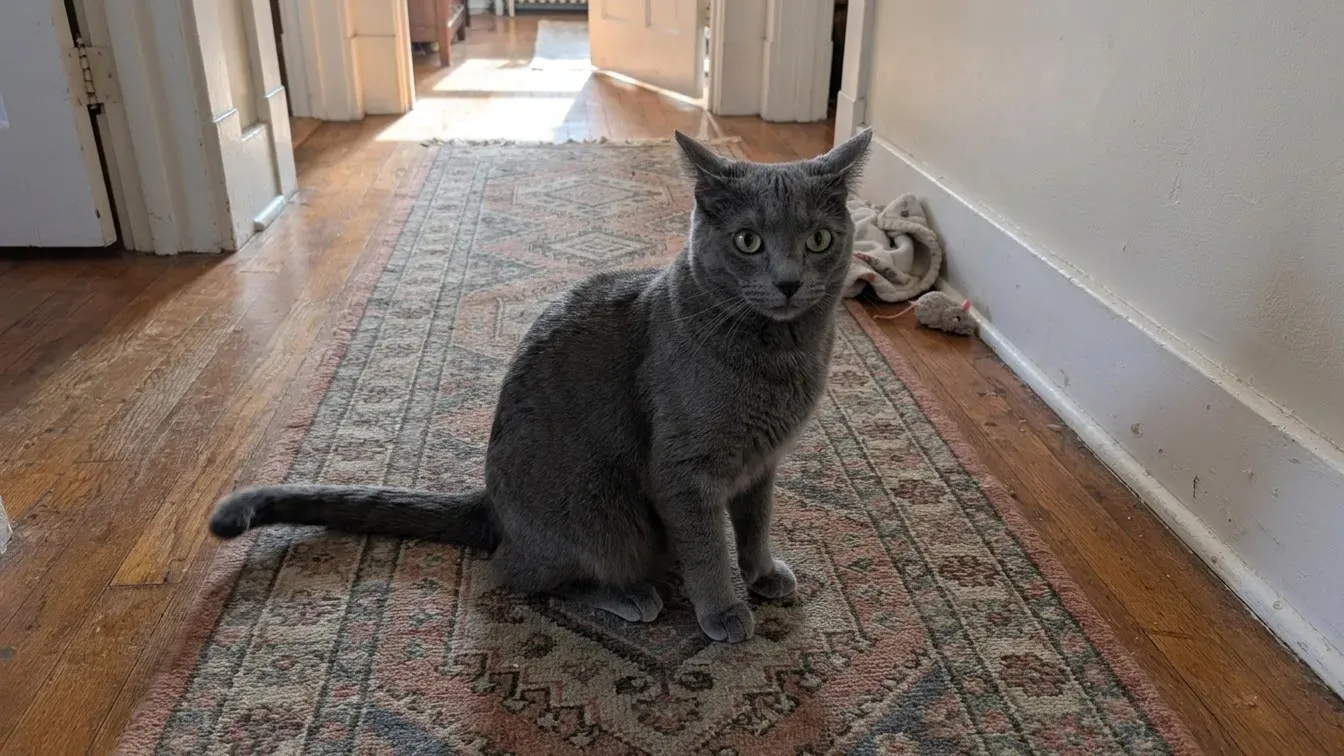
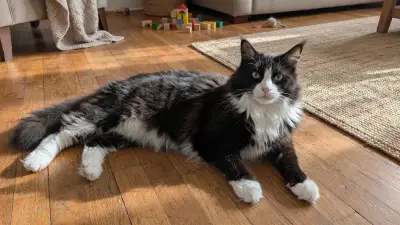
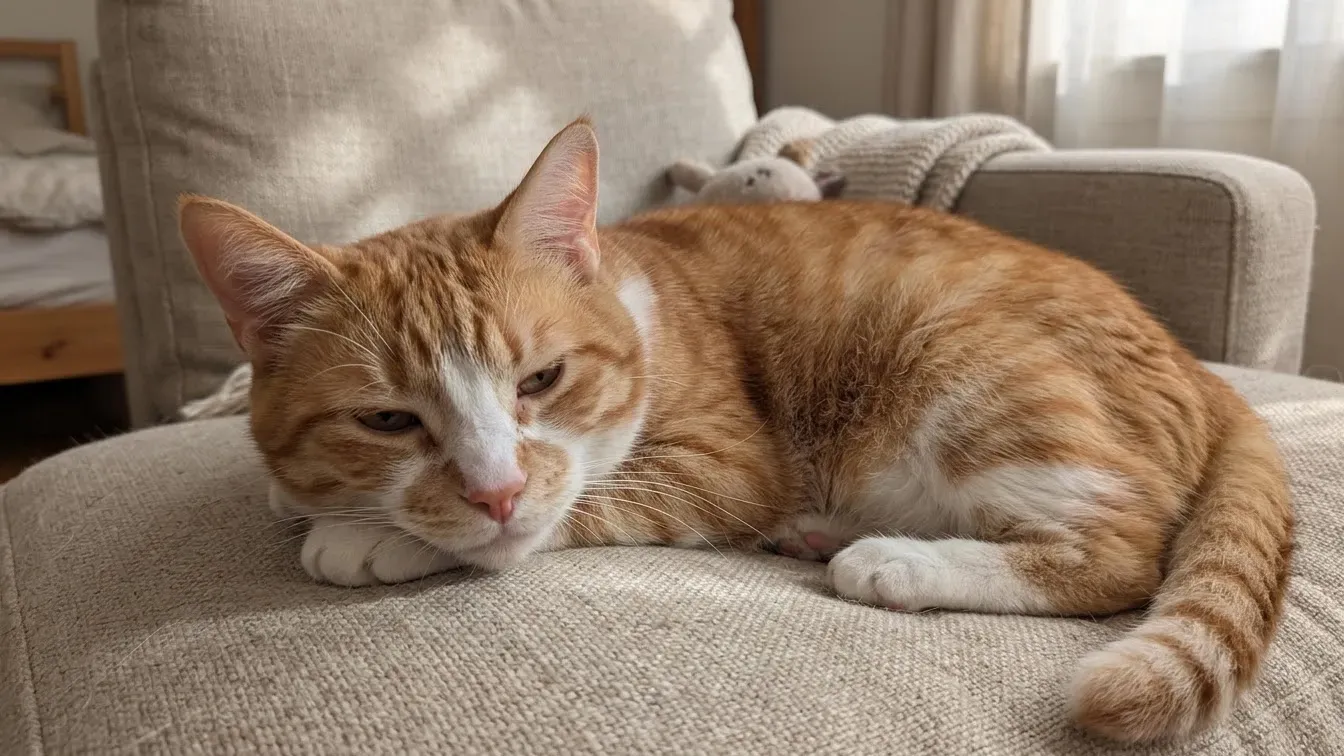
Start by teaching your children what a relaxed, friendly cat looks like so they can spot the difference when moods shift. When a cat is comfortable and open to gentle attention, their entire body looks soft and loose rather than stiff.
- Ears: Facing forward and slightly tilted to the sides in a natural, rounded position.
- Eyes: Softly half-closed or blinking slowly, with small, relaxed pupils.
- Whiskers: Extending naturally out to the sides in a gentle curve instead of pushed forward or pinned back.
- Tail and Posture: Held upright with a slight hook at the tip, or curled loosely around the body while lying down.
When kids see these green-light cues, they can sit quietly nearby and offer a closed hand for the cat to sniff. If the cat rubs their cheeks against the child's hand or raises their hindquarters when petted, the cat is enjoying the interaction.
Yellow Light Signs: Your Cat Is Getting Overwhelmed
Yellow-light signals are the most important part of cat body language for kids to learn because they appear right before a scratch or swat. A cat showing these signs is asking for a break, and children should stop petting immediately and step back.
- Tail Twitching: The tip of the tail flicks rapidly, or the whole tail thumps against the floor like a metronome.
- Airplane Ears: The ears rotate sideways or flatten slightly outward instead of pointing forward.
- Skin Rippling: The fur along the cat's back twitches or ripples when touched.
- Dilated Pupils: The black centers of the eyes suddenly grow large and round, even in a bright room.
Practice a simple household freeze rule: the moment a child spots a flicking tail or sideways ears, hands go in pockets and feet walk calmly away.
Red Light Signs: Give Your Cat Space Right Away
Red-light postures mean a cat feels cornered, frightened, or ready to defend themselves. Teach children never to approach, pick up, or try to comfort a cat displaying any of these warning signs.
- Pinned Ears: Ears are flattened completely backward against the head.
- Puffed Fur and Arched Back: Hair stands up along the spine and tail, making the cat look larger.
- Crouched Freeze: The body presses low to the floor with legs tucked tightly underneath, ready to bolt or swipe.
- Vocal Warnings: Hissing, growling, or low snarling accompanied by tense whiskers pushed forward.
If your cat shows red-light behavior, calmly guide your child to another room and give the cat at least 20 to 30 minutes alone to decompress. Never punish a cat for hissing or growling, as those warnings prevent bites and scratches.
Quick Cat Body Language Chart for Kids
Print or copy this simple reference table to keep near your family command center so kids can check what each body part means at a glance.
| Body Part | Green Light (Happy) | Yellow Light (Take a Break) | Red Light (Hands Off) |
|---|---|---|---|
| Ears | Forward and relaxed | Turned sideways | Pinned flat backward |
| Tail | Up high or resting still | Flicking or thumping | Puffed out or tucked tight |
| Eyes | Half-closed, slow blinks | Wide open, larger pupils | Hard stare, huge pupils |
| Body | Loose, relaxed, or stretched out | Tense, skin twitching | Crouched low or arched |
| Kid Action | Gentle two-finger pets | Stop petting and step back | Leave the room quietly |
Five Household Safety Rules for Toddlers and Grade-Schoolers
Visual charts work best when paired with simple daily routines that fit busy family life. Keep these five rules visible and practice them together during calm moments.
- Use Two-Finger Pets Only: Teach toddlers to stroke gently along the cat's cheeks and chin with two fingers rather than grabbing fur or patting the belly.
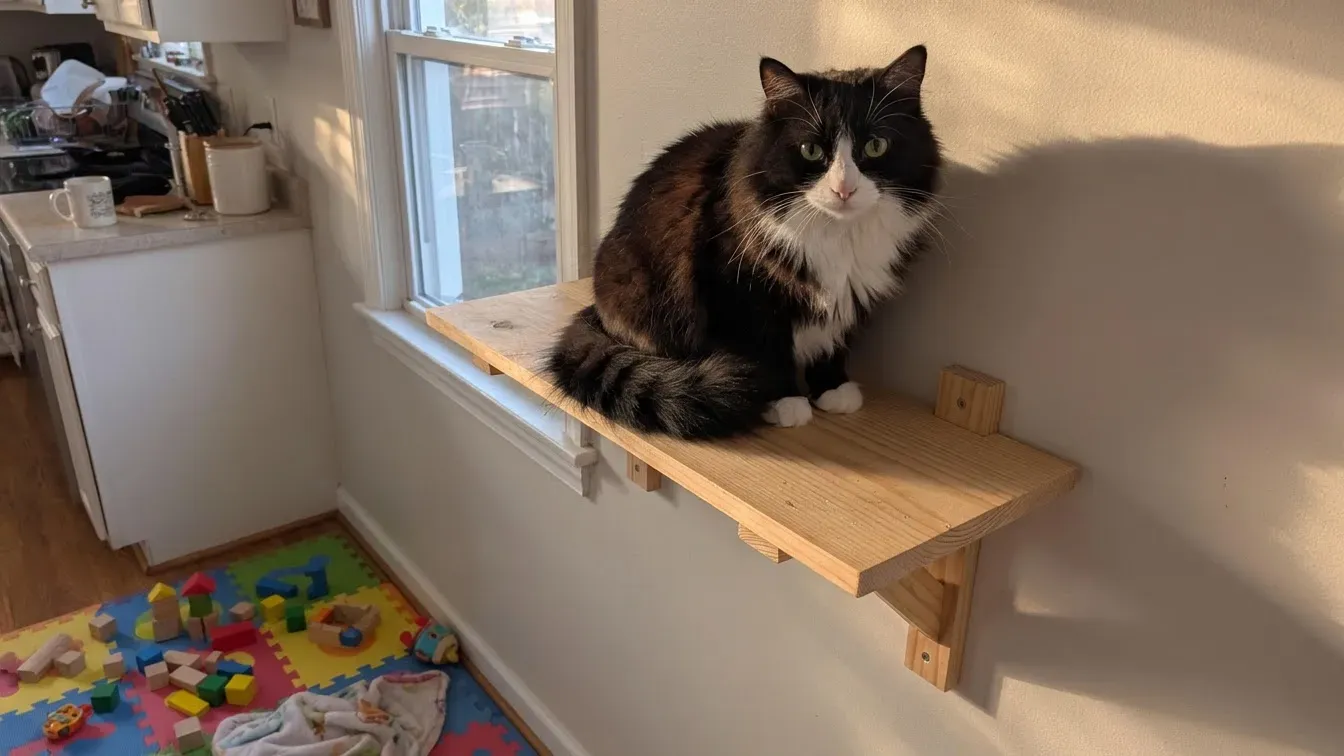
- Respect Safe Zones: Make cat beds, litter boxes, and tall perches strict kid-free zones. Adding vertical territory like wall-mounted cat trees gives your cat an elevated escape route out of toddler reach.
- Never Pick Up the Cat: Young children lack the coordination to support a cat's chest and hindquarters safely, so leave lifting to adults.
- Play With Wands, Not Hands: Keep fingers safe by letting kids play only with cat-safe wand toys and large, non-swallowable balls supervised by adults, and always put string or wand toys away after playtime instead of wiggling hands near a playful cat.
- Leave Sleeping and Eating Cats Alone: Startling a napping cat or crowding their food bowl triggers defensive swipes.
When Sudden Body Language Changes Need a Vet Visit
Sometimes a normally patient family cat starts pinning their ears, hiding, or swatting when touched in a specific spot. Sudden irritability or defensive posture is often a sign of hidden physical pain, dental discomfort, arthritis, or urinary issues rather than a sudden dislike of your children.
Kittens and senior cats need extra consideration too—kittens play roughly while learning claw control, and older cats may have stiff joints or reduced vision that makes sudden toddler movements startling. If your cat's body language shifts abruptly, or if they flinch when their back, hips, or belly are touched, schedule a checkup with your veterinarian. If a child ever receives a deep cat scratch or bite, wash the wound immediately with soap and warm water and contact your pediatrician, as cat-inflicted wounds carry a high risk of bacterial infection.
Helping children learn cat body language turns confusing feline moods into clear, memorable rules they can follow every day. Review the green, yellow, and red signals together regularly, praise your kids whenever they give your cat space, and provide plenty of quiet elevated perches so your cat always feels secure in your busy home.
Sources: Cornell Feline Health Center · ASPCA · International Cat Care · American Veterinary Medical Association (AVMA)
Frequently asked questions
How do kids say I love you in cat body language?
Children can show affection in feline language by sitting quietly at the cat's level, looking softly at the cat, and slowly closing and opening their eyes. If the cat feels relaxed and trusts the child, they will often return the slow blink.
Why do cats raise their butts when you pet them?
Raising the hindquarters when petted near the base of the tail is a friendly, natural reflex that shows a cat feels comfortable and enjoys the attention. However, some cats get overstimulated quickly there, so kids should stick to cheek and chin scratches.
At what age can kids start learning cat body language?
Toddlers as young as two or three can learn basic rules like gentle two-finger touches and leaving a flicking tail alone. While school-aged children can start spotting obvious ear and posture cues, adults must always supervise interactions between young children and cats.
What should a child do if a cat swats or hisses at them?
Tell your child to freeze, pull their hands back slowly without yelling, and walk calmly away from the cat. Never scold the child or punish the cat, and check your child's skin right away to wash any small scratches with soap and water.

Nathan Brooks
Nathan Brooks runs Farmingzoom to help loving pet owners create safe, enriching homes for their animals. He cares deeply about responsible pet care and focuses on making everyday decisions simpler for fellow owners.…