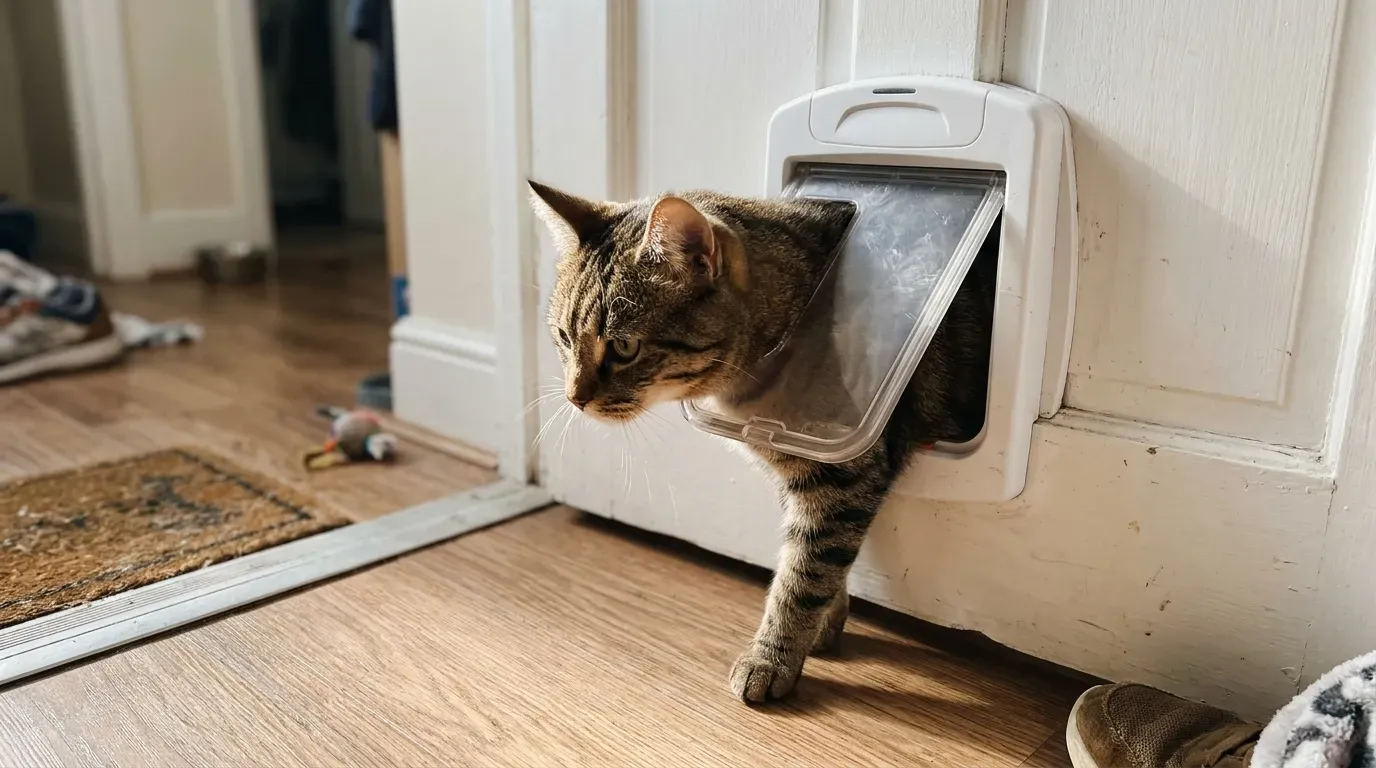
Most microchip cat flap batteries last between 6 and 12 months under normal daily use, though high-traffic households and smart camera models often need fresh cells every 4 to 8 weeks. Knowing what drains your specific door helps you avoid coming home to a locked-out cat or a stuck latch.
Manufacturer estimates usually assume one or two cats using a basic microchip reader in mild weather. Real-world battery life depends heavily on how many pets share the door, outdoor temperatures, and whether your unit connects to a Wi-Fi hub or records video. Below, you will find realistic lifespans by model type, early warning signs of dying cells, and troubleshooting steps to stop rapid power loss.
Average Cat Flap Battery Lifespan by Model Type
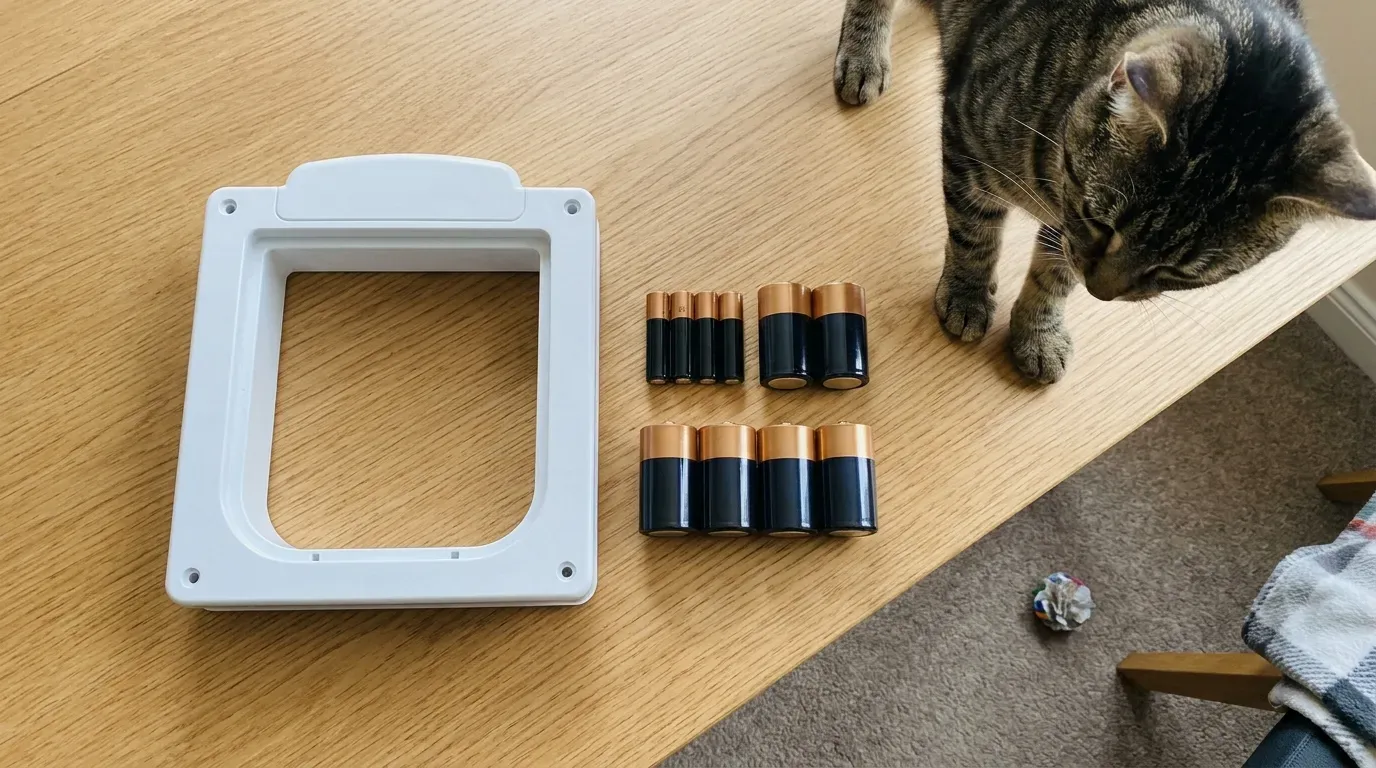
Different electronic cat doors require different battery sizes and draw varying amounts of power. Standard microchip readers only activate when a cat pushes against the flap or enters the tunnel, while connected hubs and built-in cameras consume power continuously.
| Cat Flap Type | Typical Battery Setup | Realistic Lifespan |
|---|---|---|
| Standard microchip flap (basic operation) | 4 AA or 4 C cells | 8 to 14 months |
| App-connected hub microchip flap | 4 AA or 4 C cells (depending on flap size) | 4 to 8 months |
| Multi-cat household (3 or more cats) | 4 C cells | 2 to 4 months |
| Smart camera and AI detection flap | 6 C cells | 4 to 8 weeks |
Manufacturers of standard microchip units like PetSafe and SureFlap generally cite a 12-month benchmark for basic operation. In a single-cat home with mild weather, reaching that full year is realistic. Once you add Wi-Fi connectivity or multiple pets triggering the motor dozens of times a day, expect to replace the batteries two to six times a year.
5 Factors That Drain Cat Flap Batteries Faster
If your batteries die months ahead of schedule, environmental conditions or mechanical resistance are usually to blame. Identifying the culprit prevents wasted money on fresh cells.
- Cold outdoor temperatures: Alkaline batteries rely on chemical reactions that slow down in freezing weather. An exterior door exposed to winter wind can lose 30 to 50 percent of its expected battery capacity.
- High daily traffic: Every time a cat approaches the tunnel, the radio-frequency antenna scans for a microchip and powers the latch motor. Three active outdoor cats triple the mechanical workload compared to one indoor-outdoor cat.
- Metal doors and interference: Installing a microchip flap directly into a metal door or near thick wiring without a proper mounting adapter forces the antenna to work harder, drawing extra current during every scan.
- Debris in the tunnel: Fur, mud, or stray leaves wedged around the locking catch force the motor to strain against physical resistance each time it unlocks.
- Curious neighborhood cats: Even if stray or neighboring cats cannot enter, their repeated visits trigger the motion sensor and microchip scanner all day and night.
If your cat only needs indoor room access rather than an exterior portal, browsing interior cat door ideas can help you choose a non-motorized pass-through that requires zero batteries.
Warning Signs Your Cat Flap Batteries Need Replacing
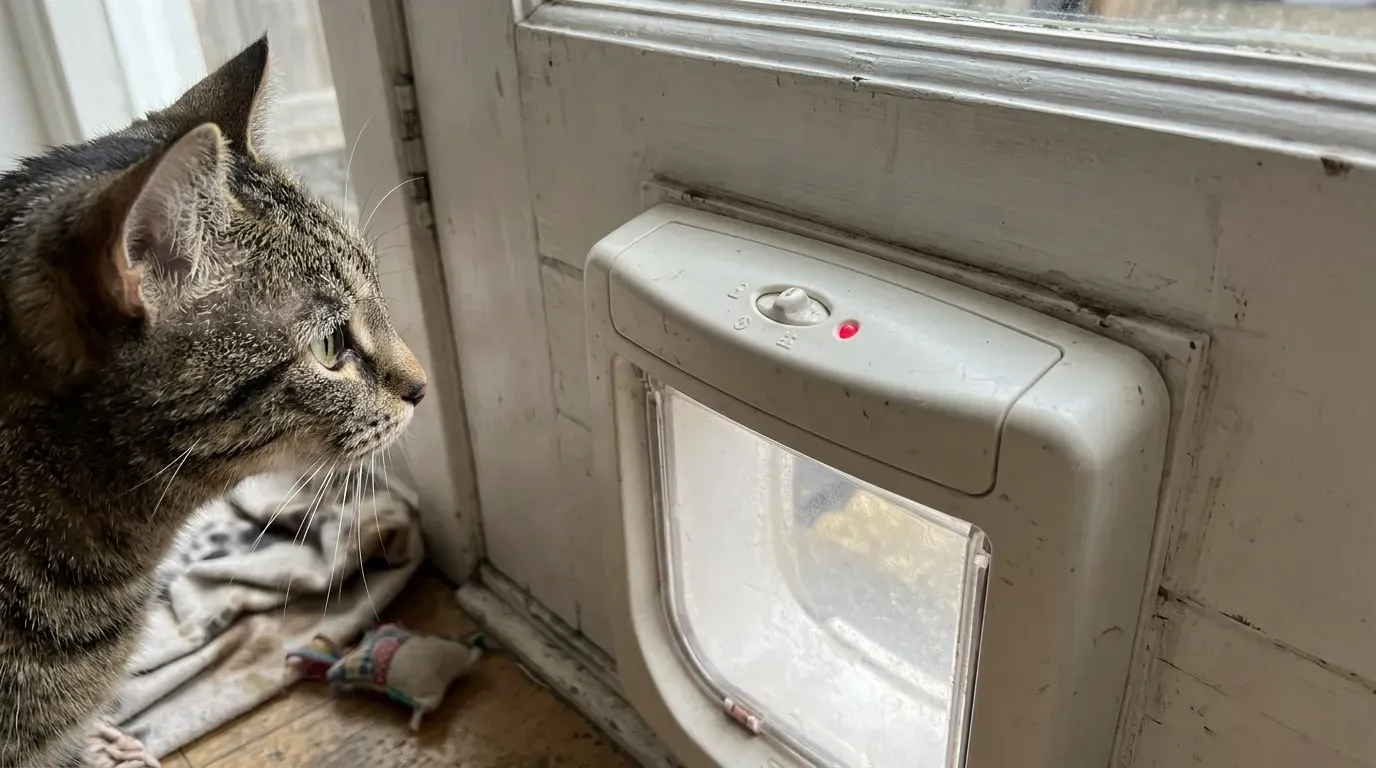
Electronic pet doors rarely fail without giving a few days of advance notice. Checking the door once a week helps you catch weak cells before the lock stops responding.
The clearest signal is the built-in low-battery indicator. On SureFlap microchip models, a small red LED on the top or front frame begins flashing steadily—often once every few seconds—when voltage drops below a safe threshold, whereas PetSafe microchip units indicate low power via an LCD battery icon or an LED near the battery compartment. Do not ignore these alerts, as the motor may fail to retract the locking pins within 48 to 72 hours of the first warning.
You may also notice behavioral and mechanical clues before the light turns on:
- Sluggish clicking sounds: The latch motor sounds weak, slow, or clicks repeatedly instead of snapping cleanly open.
- Delayed unlocking: Your cat has to pause in the tunnel for a full second or two before the flap releases.
- Disconnected app alerts: On hub-connected doors, the app may show the flap going offline intermittently or failing to log entry times.
- Unexplained lockouts: If your cat is suddenly hesitant to push through, check the latch before assuming a behavioral issue, or learn how to keep a cat door shut without locking your pet out safely during maintenance.
Alkaline vs. Rechargeable Batteries in Microchip Cat Flaps
Using rechargeable NiMH batteries seems like an easy way to save money in a multi-cat home, yet most cat flap manufacturers advise against them. Standard disposable alkaline cells start at 1.5 volts each, giving a four-cell flap 6.0 volts of power. Rechargeable NiMH cells operate at a lower nominal voltage of 1.2 volts, delivering only 4.8 volts across four batteries.
That 1.2-volt difference matters for two reasons. First, the microchip antenna has a slightly shorter read range at lower voltage, which can cause missed scans for larger cats or pets whose microchips have shifted toward the shoulder. Second, the low-battery warning light is calibrated for alkaline voltage curves. With rechargeables, the red LED may flash constantly from day one, or fail to warn you at all before the door suddenly loses power.
For the most reliable operation, stick to high-quality non-rechargeable alkaline batteries from reputable brands. Always replace all four or six cells at the exact same time, and never mix old and new batteries or different brands in the same compartment.
How to Safely Replace Cat Flap Batteries Step by Step
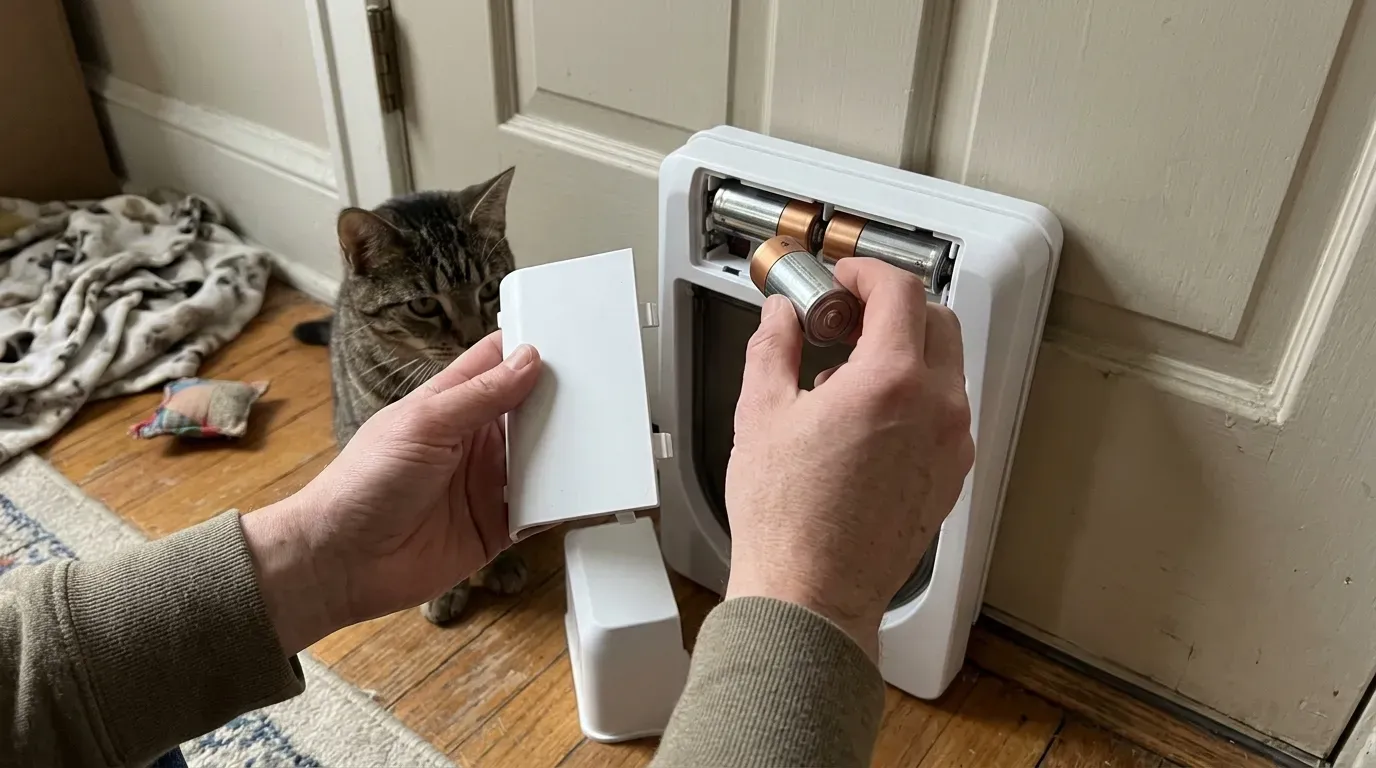
Swapping batteries takes less than five minutes, and your cat's stored microchip numbers remain saved in internal memory even while the power is disconnected.
- Keep your cat inside first: Make sure your cat is indoors before removing the battery cover so they do not get stuck outside while the latch resets.
- Remove the battery compartment lid: Unclip or unscrew the cover on the top or front of the interior frame.
- Inspect the metal contacts: Look for white powdery corrosion or moisture inside the bay. Wipe the terminals gently with a dry cotton swab before inserting new cells.
- Insert fresh alkaline batteries: Match the positive and negative symbols carefully. On models with dual compartments on either side of the frame, replace both sides together.
- Test the latch with your cat: Close the cover, wait for the motor to calibrate, and hold your cat near the tunnel entrance to confirm the lock clicks open smoothly.
Keep loose and spent batteries in a sealed container out of reach. Swallowing a battery causes severe internal chemical burns in pets; if you ever suspect your cat chewed or ingested a battery, contact an emergency veterinarian immediately.
Troubleshooting Rapid Battery Drain
If a brand-new set of quality alkaline batteries dies within two or three weeks on a standard microchip door, run through these quick checks before buying a replacement unit:
- Clean the optical sensors: Wipe the inside of the tunnel roof and sides with a slightly damp microfiber cloth. Dust, cobwebs, or dried nose prints over the infrared sensor can trick the door into scanning continuously.
- Check the weatherstrip and magnet: Make sure the flap hangs straight and centers cleanly against the bottom magnet. A warped flap lets drafts in and keeps the sensor awake.
- Verify door thickness clearance: If you recently installed the flap into a thick wooden or composite panel, review the limits when cutting doors down to fit and confirm you used the manufacturer's tunnel extender so the frame is not pinched.
- Reset the unit: Remove the batteries for ten full minutes to clear any minor firmware glitch, then install fresh cells and test the scan range.
If rapid drain persists after cleaning the sensors and testing fresh alkaline cells, reach out to the manufacturer's customer support, as an internal circuit fault may be drawing standby current.
Expect standard microchip cat flap batteries to last 8 to 12 months in a quiet household, and 2 to 6 months in busy multi-cat homes or cold climates. Check the red indicator light weekly, keep the tunnel sensors wiped clean, and use fresh disposable alkaline cells so your cat always has reliable, stress-free access indoors.
Frequently asked questions
Why do my SureFlap batteries run out so quickly?
Rapid drain in a SureFlap door is usually caused by dirty infrared tunnel sensors, cold winter temperatures, rechargeable 1.2V batteries, or frequent visits from neighborhood cats triggering the scanner. Wiping the tunnel clean and switching to fresh 1.5V alkaline cells resolves most early drain issues.
Will my cat flap forget my cat's microchip when I change the batteries?
No. Microchip cat flaps store programmed microchip numbers in non-volatile internal memory. You can remove the old batteries, clean the compartment, and install fresh cells without needing to reprogram your cat.
Can I use rechargeable batteries in a microchip cat door?
Most manufacturers advise against rechargeable NiMH batteries because they output 1.2 volts instead of 1.5 volts. This lower voltage reduces microchip scan range and disrupts the low-battery warning light, which can leave your cat locked out without warning.
What happens to a microchip cat flap when the batteries die completely?
When batteries die completely, most microchip cat flaps default to the unlocked position so your cat is not trapped outside, though some models may leave the latch jammed if power fails mid-cycle.

Nathan Brooks
Nathan Brooks runs Farmingzoom to help loving pet owners create safe, enriching homes for their animals. He cares deeply about responsible pet care and focuses on making everyday decisions simpler for fellow owners.…