Time needed
2 h
What you need
- 1x4 exterior-grade pine or cedar board (6 feet)
- 1/4-inch exterior plywood sheet (12x16 inches)
- Wooden U-channel moulding or 1/2-inch furring strips (6 feet)
- Thin wooden batten strip
- Heavy-duty clear vinyl sheet or thick canvas (10x12 inches)
- Heavy-duty metal barrel bolt latch with screws
- 1.5-inch exterior wood screws
- Exterior wood glue
- Exterior silicone caulk
- Self-adhesive foam weather stripping
- 120-grit sandpaper
- Jigsaw with a wood-cutting blade
- Drill with a 3/8-inch drill bit
- Safety glasses
Tools
- Jigsaw with wood-cutting blade
- Cordless drill with 3/8-inch bit and screwdriver bits
- Tape measure and carpenter's square
- Caulking gun
- Utility knife
- Safety glasses
Building a sturdy DIY locking cat door gives your indoor-outdoor cat daytime freedom while sealing your home securely against coyotes, raccoons, and other nocturnal wildlife after dusk. Standard plastic pet flaps use tiny slide tabs that clever raccoons can pry open or heavy predators can shatter in seconds.
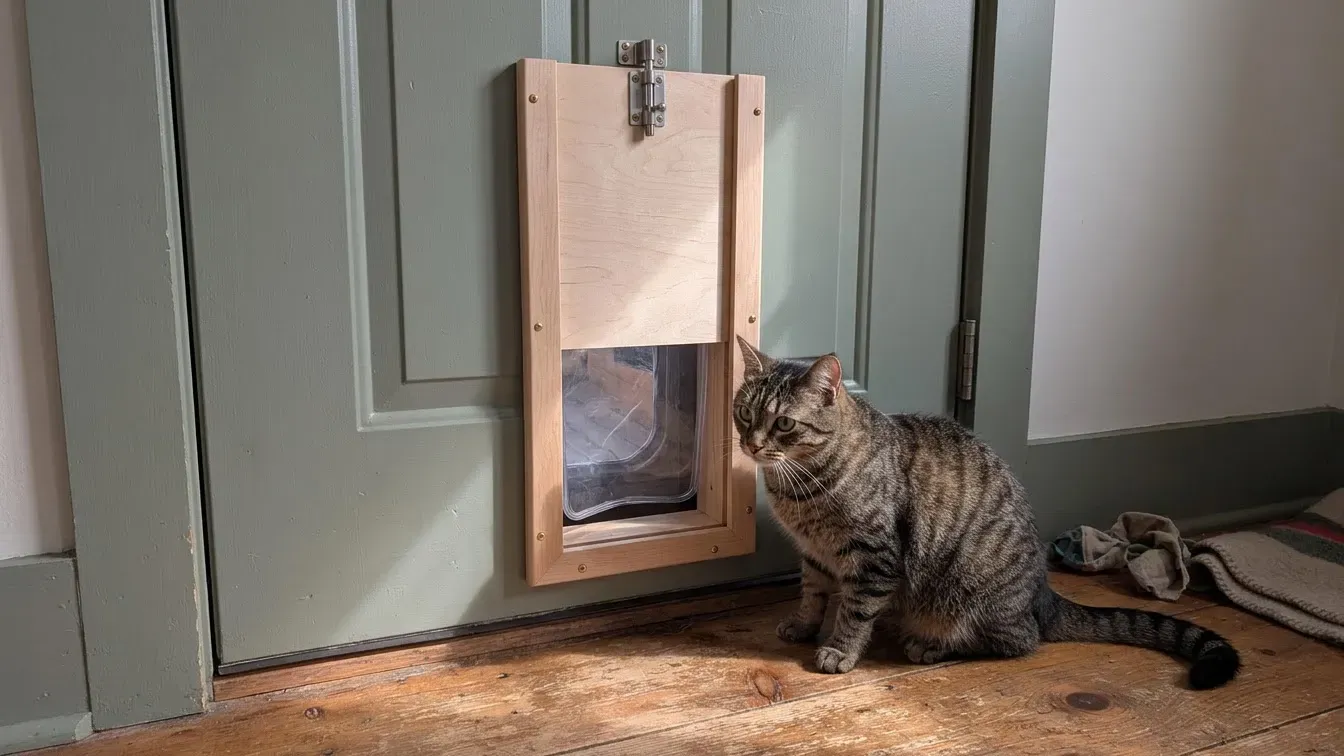
By framing a custom opening with solid exterior-grade lumber and adding a heavy-duty sliding security panel with a barrel bolt, you create a true physical barrier. This step-by-step build installs directly into an exterior wooden door or porch wall, giving you peace of mind every night when you call your cat inside.
- 1
Measure Your Cat and Mark the Cutout
Measure your cat's shoulder width and chest height, then add 1.5 inches to each dimension for comfortable clearance. Mark a rectangle on the lower center of your solid exterior door, keeping the bottom edge at least 4 inches above the door's bottom rail so the structural integrity of the door stays intact.
- 2
Drill Corner Holes and Cut the Opening
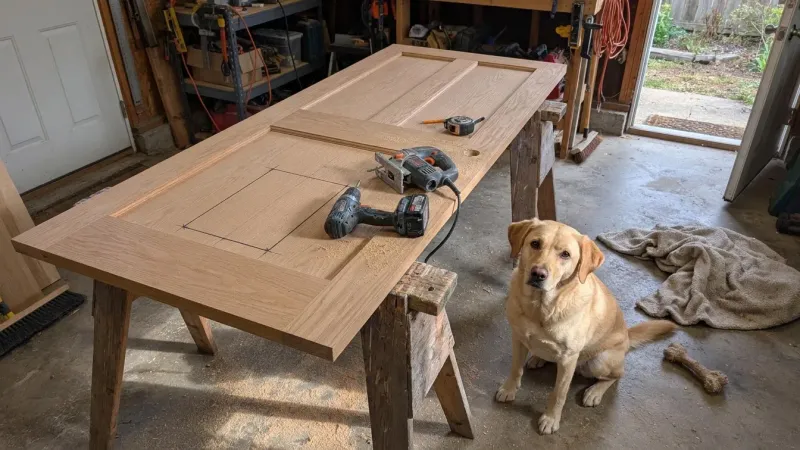
Put on safety glasses and drill a 3/8-inch pilot hole inside each of the four marked corners. Insert a wood-cutting jigsaw blade into one hole and carefully cut straight along your pencil lines to remove the center block, keeping the saw base flat against the door.
- 3
Build and Install the Hardwood Tunnel Liner
Rip or plane your 1x4 exterior-grade pine or cedar boards to match the exact thickness of your exterior door (typically 1.75 inches). Cut four pieces to fit snugly inside the rough door cutout, forming a solid rectangular sleeve. Apply exterior wood glue to the joints, slide the box into the opening flush with both door faces, and secure it with 1.5-inch exterior wood screws.
- 4
Attach the Flexible Daytime Flap
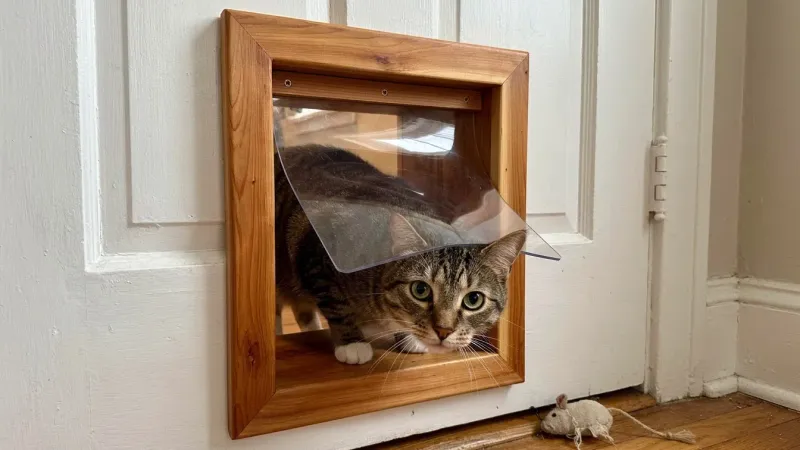
Cut a piece of heavy-duty clear vinyl or thick canvas 1/2 inch narrower than the inside width of your tunnel and 1/4 inch shorter than the height. Sandwich the top edge between a thin wooden batten strip and the top inside wall of the tunnel, then screw it firmly in place.
- 5
Mount the U-Channel Track for the Night Lock
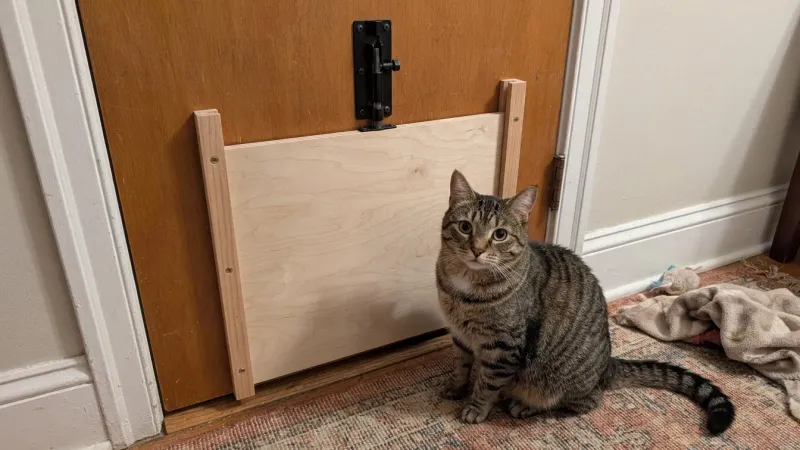
On the inside face of the door, frame the left, right, and bottom edges of the cat tunnel with wooden U-channel trim or layered furring strips. Leave a 3/8-inch slot facing inward and test-fit a piece of 1/4-inch exterior plywood to make sure it slides down smoothly without binding.
- 6
Cut the Security Panel and Install the Barrel Bolt
Cut your 1/4-inch plywood security panel 3 inches taller than the opening so you have a comfortable grip handle at the top. Slide the panel fully down into the track, mount a heavy-duty metal barrel bolt onto the top frame, and drill a matching receiver hole into the upper edge of the panel.
- 7
Seal Exterior Joints Against Drafts and Moisture
Step outside and run a continuous bead of paintable exterior silicone caulk around the perimeter where the wooden tunnel meets the door face. Mount self-adhesive foam weather stripping on the exterior stop or along the inner face of the U-channel slot—rather than directly under the sliding edge of the plywood panel—to block cold drafts without interfering with the slide. Allow the exterior silicone caulk to cure completely according to the manufacturer's instructions before letting your cat pass through or closing the security panel.
Sizing the Opening for Different Cats
A standard 6-by-7-inch opening comfortably fits most adult domestic shorthairs, but large breeds like Maine Coons or Ragdolls need a 7.5-by-9-inch passage so their whiskers and shoulders clear the frame without stress. Always measure from the floor to the underside of your cat's belly to set the bottom sill height—typically 3 to 5 inches off the ground for healthy adults, or 2 inches for senior cats with stiff joints.
Common Mistakes That Weaken Nighttime Security
- Using thin plywood or hollow-core doors without reinforcement: Raccoons have strong paws and sharp claws; always line the cutout with solid 1x4 exterior-grade lumber or cedar, and never install an exterior security flap in an unreinforced hollow-core door.
- Relying on magnetic latches alone: Magnets keep drafts out during the day, but they offer zero resistance against a determined animal pushing from outside.
- Leaving sharp wood splinters or exposed screw tips: Sand every interior edge smooth and choose screw lengths that sit flush without poking through the opposite side, preventing paw injuries and collar snags.
Alternative Setup for Renters and Glass Doors
If you cannot cut into an exterior entry door, build the exact same reinforced wooden tunnel and locking panel inside a tall wooden insert sized for a sliding patio track or window frame. For step-by-step framing instructions on glass tracks, follow our guide on how to build a DIY cat door for your sliding glass patio door, or check out these 7 practical cat door blocker solutions if you need a quick secondary barrier for an existing commercial flap.
Once the caulk cures, practice sliding the wooden security panel into place each evening right after dinner so your cat learns the household curfew routine. Pair your locked door with an indoor litter box, fresh water, and an evening play session to keep your cat calm and content until morning. If your cat ever returns home with a bite, scratch, or limp, contact your veterinarian promptly.
Sources: Cornell Feline Health Center · International Cat Care · American Veterinary Medical Association (AVMA)
Frequently asked questions
Can raccoons or coyotes break through a DIY cat door?
Raccoons and coyotes can easily push through flimsy plastic flaps or pry open tiny slide locks. A 1/4-inch solid plywood security panel held inside a solid wood U-channel track with a metal barrel bolt creates a rigid barrier that animals cannot pry open or push inward from the outside.
Should I lock my cat inside at night in a rural area?
Yes. Veterinary and wildlife welfare groups recommend keeping cats indoors from dusk until dawn, especially near woods or rural fields. Coyotes, foxes, owls, and raccoons are most active after dark, and bringing cats inside prevents traumatic injuries, fights, and road accidents.
How do I train my cat to come inside before I lock the door?
Feed your cat their main evening meal indoors at the same time every sunset. Shake their treat jar or use a consistent call right before serving dinner, then immediately slide the night lock into place once they step inside.
Can I put a locking cat door in a hollow-core exterior door?
Exterior doors should always be solid wood, fiberglass, or steel for home security and weather protection. If you are modifying a hollow-core interior door instead, you must frame the entire cutout perimeter with solid wood blocking so your screws hold tightly.

Nathan Brooks
Nathan Brooks runs Farmingzoom to help loving pet owners create safe, enriching homes for their animals. He cares deeply about responsible pet care and focuses on making everyday decisions simpler for fellow owners.…