Whether you need to keep an adventurous cat inside after dark, block cold drafts, or stop neighborhood wildlife from sneaking into your kitchen, a reliable cat door blocker solves the problem without forcing you to replace the entire unit. Built-in plastic latches wear out quickly, and determined cats or raccoons can often pry weak tabs open in seconds.
Below are seven practical ways to secure both interior and exterior pet flaps, ranging from zero-damage, renter-friendly covers to heavy-duty hardware locks. Use the quick comparison table to match the right blocker to your door type and your pet's strength.
| Blocker Type | Install Method | Door Compatibility | Best For |
|---|---|---|---|
| Snap-In Replacement Cover | Slide-in track | Existing grooved frames | Quick daily locking |
| Magnetic Insulated Flap Cover | Adhesive or magnetic strips | Exterior and garage doors | Stopping drafts and mild pushers |
| Heavy-Duty Velcro Strap | Peel-and-stick hook-and-loop | Renters and smooth frames | Tool-free temporary blocking |
| Solid Wood Drop-In Hanger | Hangs from door handle | Standard hinged doors | No-drill overnight security |
| Slide Barrel Bolt Latch | Screws into frame | Wood or thick plastic frames | Determined cats and raccoons |
| Child Safety Strap Lock | Adhesive pads | Interior hollow-core doors | Multi-pet household separation |
| Plywood Tension Wedge | Friction fit inside tunnel | Deep wall or garage tunnels | Long-term seasonal closure |
1Manufacturer Snap-In Closing Panel
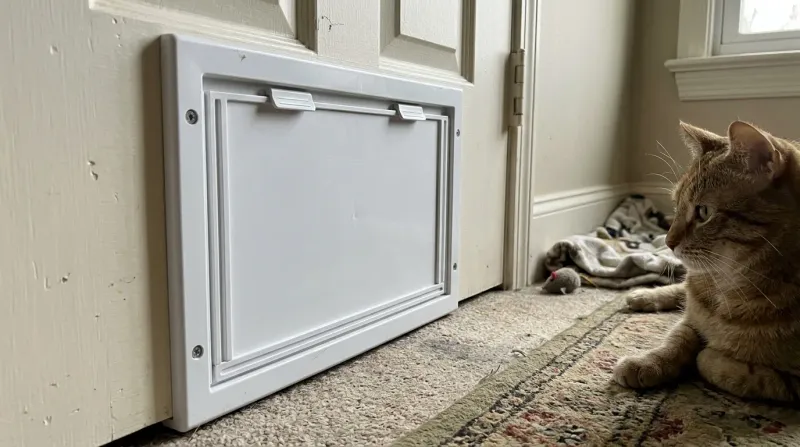
Install Method: Slide-in groove · Door Compatibility: Brand-matched frames · Best For: Fast daily lockouts Many mid-range and microchip cat doors include built-in side tracks designed to hold a rigid polycarbonate or ABS plastic closing panel. Slide the solid plate down from the top until the bottom tab clicks firmly into the frame lip. This blocker creates a flush, chew-resistant barrier that prevents cats from hooking a claw under the flap edge. If you lost your original panel, measure the exact width and thickness of your frame's inner channel to order a replacement or cut a piece of sturdy acrylic sheet to fit.
2Magnetic Insulated Draft Cover
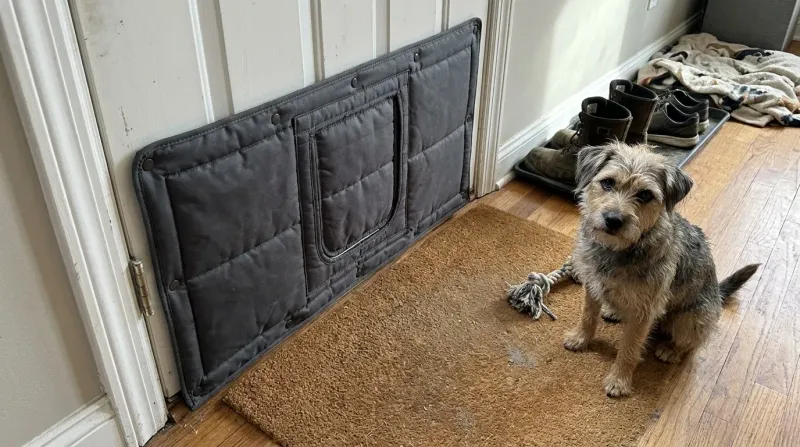
Install Method: Adhesive magnetic tape · Door Compatibility: Exterior and garage doors · Best For: Stopping drafts and casual pushing A magnetic draft cover pairs a padded, weather-resistant fabric or flexible vinyl sheet with strong perimeter magnet strips. Stick one magnetic strip around the outer cat door frame and align the matching strip on the cover so it snaps cleanly over the opening. This setup seals out cold winter air and summer heat while discouraging casual pawing, though a single-sided magnetic cover only resists pressure from the side opposite the cover (pressing against the frame) and will pop right off if pushed directly from the side it is mounted on. If you have a cat door in a garage door, choose a heavy-duty rubberized magnetic cover that resists moisture and temperature swings.
3Heavy-Duty Hook-and-Loop Strap
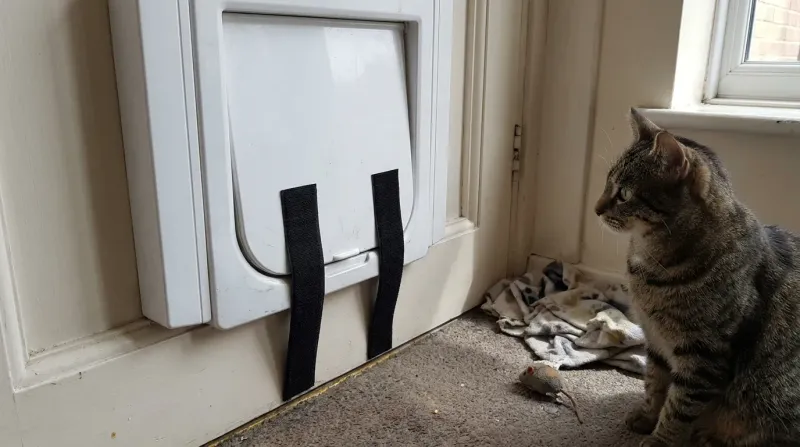
Install Method: Peel-and-stick adhesive · Door Compatibility: Renters and smooth plastic frames · Best For: Quick no-drill blocking Industrial-strength hook-and-loop strips offer a fast, damage-free way to immobilize a swinging flap without tools. Wipe the plastic frame and the center of the flap clean with mild soapy water, dry both surfaces thoroughly, and press two parallel strips across the seam where the flap meets the bottom sill. For two-way swinging flaps, apply hook-and-loop straps to both sides of the flap (or loop a single strap under the bottom sill from front to back) so the tension blocks movement in both directions rather than only stopping a push from one side. When you move out or want to reopen the passage, warm the adhesive gently with a hairdryer to peel it off cleanly.
4Solid Wood Over-the-Handle Hanger
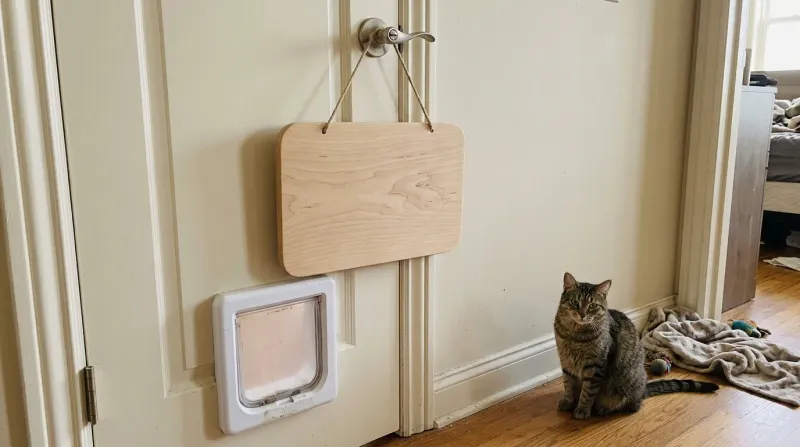
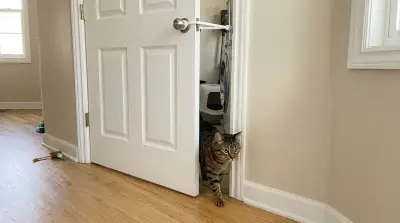
Install Method: Hangs from doorknob · Door Compatibility: Standard hinged doors · Best For: Zero-damage overnight security A custom-cut wooden hanger suspends a solid hardwood board directly over the cat flap using a cutout loop that rests on your door's lever or knob. Cut a piece of smooth three-quarter-inch pine or birch plywood long enough to reach from the doorknob down past the bottom of the pet door frame, and sand all edges smooth so pets cannot splinter the wood or snag their fur. Keep in mind that an over-the-handle hanger only blocks inward pushing when hung on the exterior side—or outward pushing when hung on the interior side—and requires a bottom rest, cleat, or guide to stop pets from pushing the unanchored bottom edge out. When properly braced at the bottom on the side facing the push, cats cannot get leverage behind it, and you can lift it off in one second each morning.
5Surface-Mounted Slide Barrel Bolt
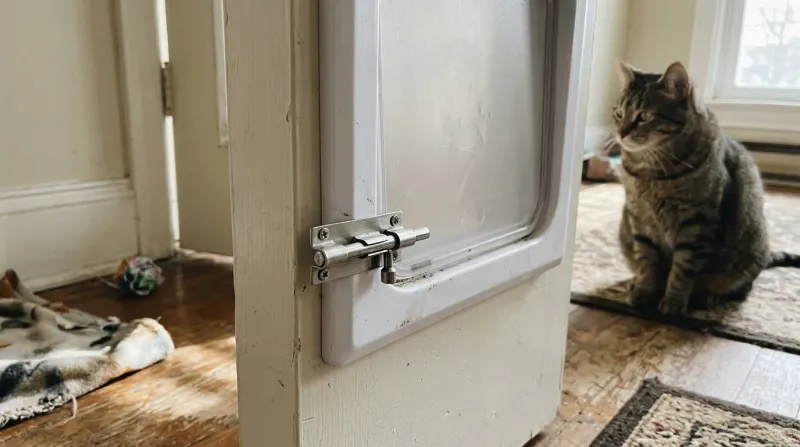
Install Method: Wood or machine screws · Door Compatibility: Solid wood or thick frames · Best For: Strong cats and wildlife When plastic tabs fail against a determined large cat or neighborhood raccoon, mount a small stainless steel barrel bolt onto the exterior or interior frame. Mount the barrel bolt on the side frame so the metal pin slides horizontally across the lower face of the swinging flap, or mount it vertically on the bottom sill so the pin slides upward directly in front of the flap. Pre-drill tiny pilot holes into the frame to prevent cracking the plastic or splitting the wood. Once the steel bolt is slid shut across the flap, the door cannot swing inward or outward even under heavy body weight.
6Adhesive Child Safety Strap Lock
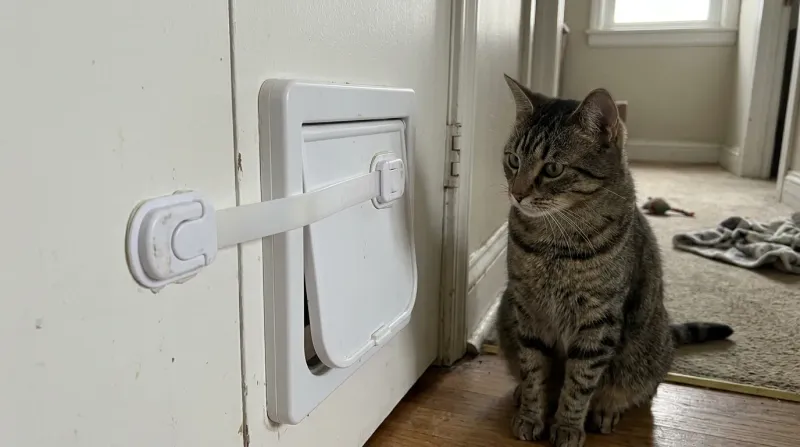
Install Method: Foam adhesive pads · Door Compatibility: Hollow-core interior doors · Best For: Separating indoor pets Flexible plastic child-safety latches designed for cabinets and refrigerators work remarkably well on interior cat flaps. Attach one swivel end to the flat face of the swinging flap and the opposing anchor pad to the side frame, leaving zero slack in the strap. These locks resist persistent head-butting from energetic cats and small dogs while protecting thin hollow-core doors from screw damage. When you want to keep a cat door shut without locking your pet out permanently, simply unclip one side of the strap.
7Friction-Fit Plywood Tunnel Wedge
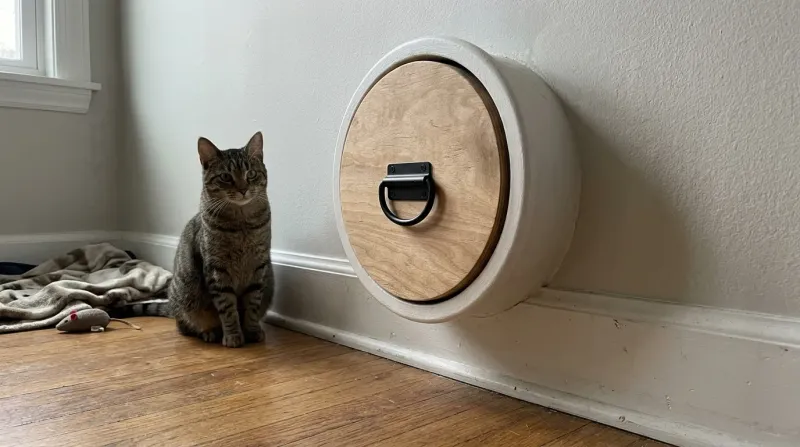
Install Method: Tight friction press · Door Compatibility: Deep wall or garage tunnels · Best For: Seasonal or long-term closure For cat doors installed through thick exterior brick or drywall tunnels, a snug friction-fit block seals the entire passage from the inside. Measure the interior height and width of the tunnel liner, then cut a thick piece of sanded plywood or rigid foam board wrapped in canvas to match those exact dimensions. Attach a simple cabinet pull handle to the center of the block so you can slide it firmly into the tunnel and pull it out easily whenever needed. The deep fit stops drafts, noise, and persistent digging.
How to Choose the Right Cat Door Blocker
Start by matching the blocker to the strength and determination of the animal you are trying to stop. A lightweight magnetic cover or adhesive child strap easily deters a polite senior cat or a small puppy, whereas large breeds like Maine Coons or persistent outdoor raccoons require mechanical resistance like a slide bolt or solid wood panel.
Next, consider your door material and living situation. If you live in a rental or have a delicate hollow-core interior cat door, stick to adhesive hook-and-loop straps or over-the-handle wooden hangers that leave zero screw holes. For exterior wooden or steel doors, hardware-mounted latches offer the highest security against weather and intruders.
Safety Mistakes to Avoid When Blocking a Pet Flap
Never block a cat flap that leads to your cat's only litter box, food bowl, or water station. Locking a cat away from essential resources causes acute stress and can trigger urinary tract issues or behavioral house-soiling. Always double-check that every pet is on the intended side of the door before engaging a heavy-duty lock. Verify that any room the pet is confined to has safe temperature control and adequate ventilation, especially when blocking access to or from an unventilated or sun-exposed enclosed porch, garage, mudroom, or sunroom where trapped heat or cold could be fatal.
Avoid using toxic glues, sharp sheet metal, or loose small magnets that a curious cat or dog could chew off and swallow. If your cat paws aggressively at a newly blocked door and damages their claws or skin, consult your veterinarian for calm behavioral strategies rather than adding harsher barriers.
Securing a pet flap comes down to matching the blocker's strength to your pet's determination and your door's construction. Start with a simple adhesive strap or magnetic draft cover for everyday indoor control, or step up to a braced solid wood hanger or steel barrel bolt for exterior security. Test the barrier gently before leaving your pets unattended so everyone stays safe and comfortable.
Frequently asked questions
How do I block a cat door without drilling holes?
Use industrial-strength hook-and-loop adhesive straps on both sides of the flap (or looped under the sill), attach a foam-backed child safety cabinet lock, or hang a solid wood panel with a bottom guide from your doorknob down over the pet door frame on the side facing the push. All three methods hold securely without damaging rental doors.
How can I stop raccoons from opening my cat flap at night?
Raccoons have nimble paws that easily defeat lightweight magnets and thin plastic tabs. Install a metal slide barrel bolt across the lower face of the flap at night, use a rigid drop-in locking plate, or hang a braced heavy wooden hanger over the exterior face of the door.
What is the best cat door blocker for stopping cold drafts?
A padded magnetic draft cover or a friction-fit insulated tunnel plug works best for weatherproofing. Magnetic covers snap tightly against the outer frame to seal air leaks, while a snug foam-backed wood block fills deep wall tunnels to block winter wind.
Can I use a regular door stopper to block a cat flap?
Floor wedge door stoppers only hold a full-sized room door open or shut; they cannot attach to a swinging pet flap. To block the flap itself, you need a cover, strap, or latch that mounts directly onto the pet door frame or hangs flush over the opening.

Nathan Brooks
Nathan Brooks runs Farmingzoom to help loving pet owners create safe, enriching homes for their animals. He cares deeply about responsible pet care and focuses on making everyday decisions simpler for fellow owners.…