Time needed
1 h 30 min
What you need
- Commercial microchip cat flap (with 30-32 pet memory and 4-way lock)
- 3/4-inch exterior-grade plywood or solid PVC trim board
- Alkaline batteries (typically 4 AA or C batteries per manufacturer specs)
- Adhesive foam weatherstripping tape
- Exterior primer and paint (if using plywood)
- Wooden dowel or secondary window sash lock
Tools
- Tape measure
- Jigsaw
- Power drill with 3/8-inch drill bit
- Phillips screwdriver
- Medium-grit sandpaper
- Pencil
Installing a microchip window cat door gives your cat selective entry through a window insert while keeping neighborhood strays, raccoons, and other wildlife locked outside. Unlike standard magnetic or open flaps, an RFID-enabled flap reads your cat's implanted microchip as they approach and releases the latch exclusively for registered pets.
In neighborhoods with heavy stray traffic or curious raccoons, an unsecured window flap quickly invites stolen food, territorial spraying, and stress-related health issues for your indoor cat. By mounting a commercial microchip cat flap inside a solid, custom-fitted window panel—rather than cutting directly into glass—you create a sturdy, renter-friendly barrier that protects your home and gives your pet freedom on their schedule.
- 1
Verify Your Cat's Microchip and Flap Compatibility
Before buying hardware, confirm with your veterinarian that your cat's implanted microchip is functioning and note its chip number. While most commercial microchip cat flaps read standard 15-digit ISO (FDX-B) chips and store between 30 and 32 separate pet identities in internal memory, owners in North America should verify whether their chosen model also supports 9- or 10-digit (FDX-A/Avid) microchips. If your cat is too young for a microchip or cannot be chipped for medical reasons, choose a model that supports lightweight RFID collar tags with a breakaway safety collar so your cat cannot snag on branches outdoors.
- 2
Measure Your Window Track and Flap Dimensions
Open your vertical double-hung or horizontal sliding window and measure the exact interior width and height of the open channel where the insert will sit. Check our guide on how to measure and choose the right cat door size to match the tunnel opening to your cat's shoulder width and chest height. Ensure your planned window insert leaves at least two inches of solid border material around the cutout so the frame stays rigid.
- 3
Program Your Cat's Microchip Before Mounting
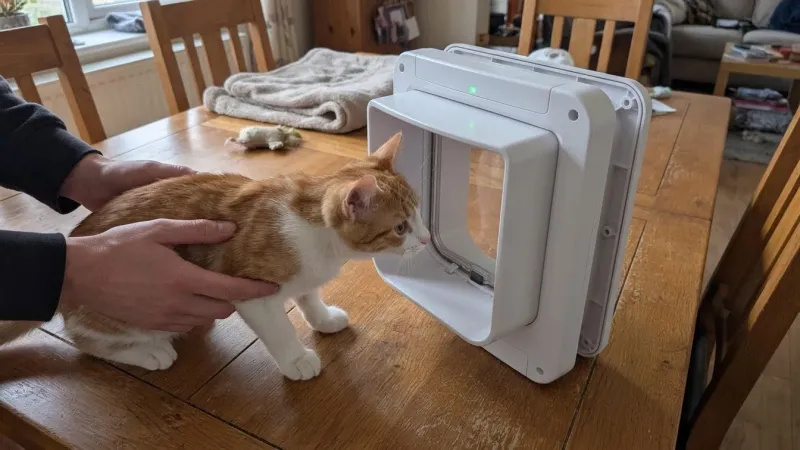
Insert fresh alkaline batteries into the cat flap and run the pairing sequence on a table before installing it in the window. Press the program button, hold your cat comfortably near the tunnel canopy, and wait for the latch to click and the indicator light to confirm registration. Testing the sensor indoors first eliminates stress and verifies that the chip reads quickly without requiring your cat to push hard against a locked flap.
- 4
Cut a Solid Panel for the Window Opening
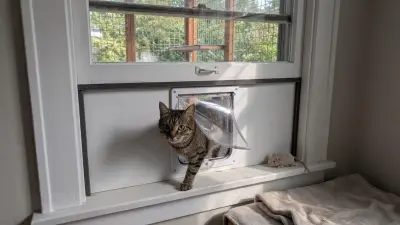
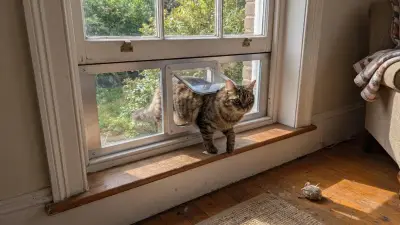
Cut a piece of 3/4-inch exterior-grade plywood or cellular PVC board to fit snugly into your window track. For a budget-friendly build that seals tightly against drafts, follow the framing steps in our guide to building a safe DIY window cat door. Sand all rough edges smooth and apply exterior paint or waterproof sealant to protect wood panels from rain and condensation.
- 5
Cut the Flap Opening and Mount the Frame
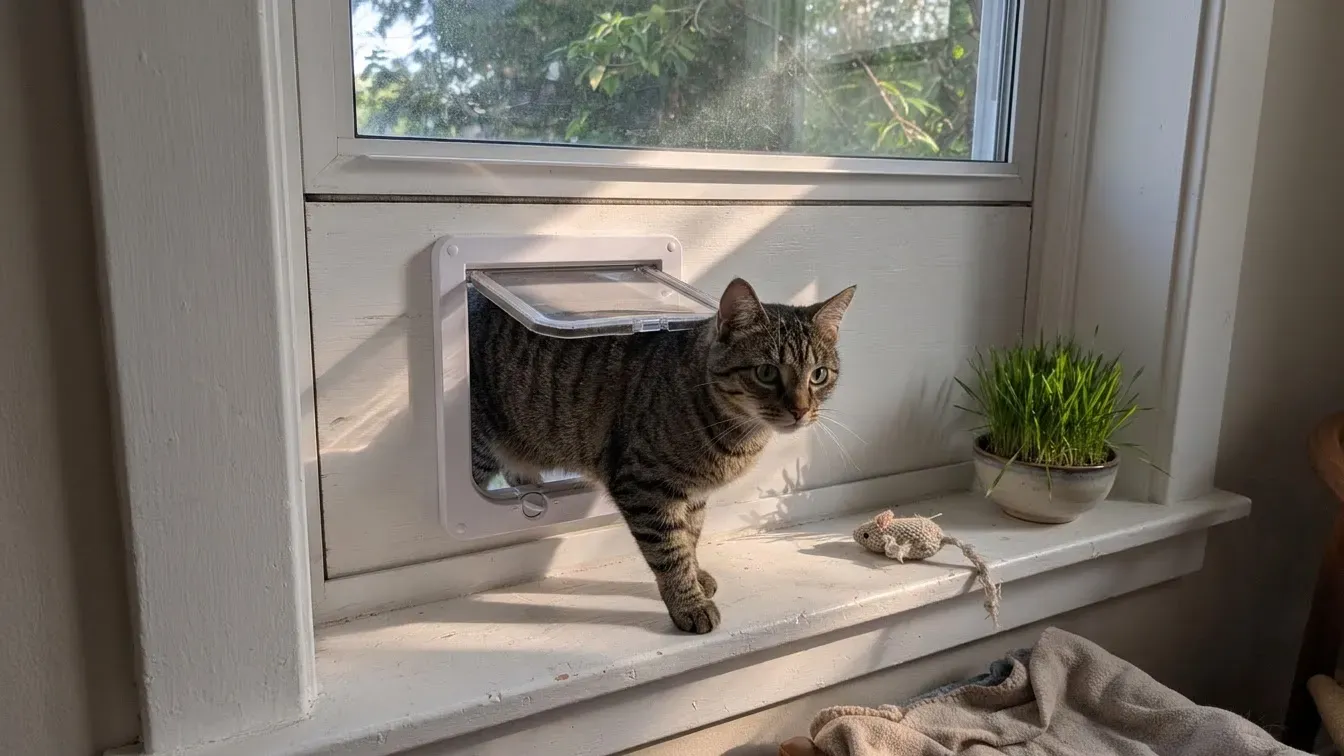
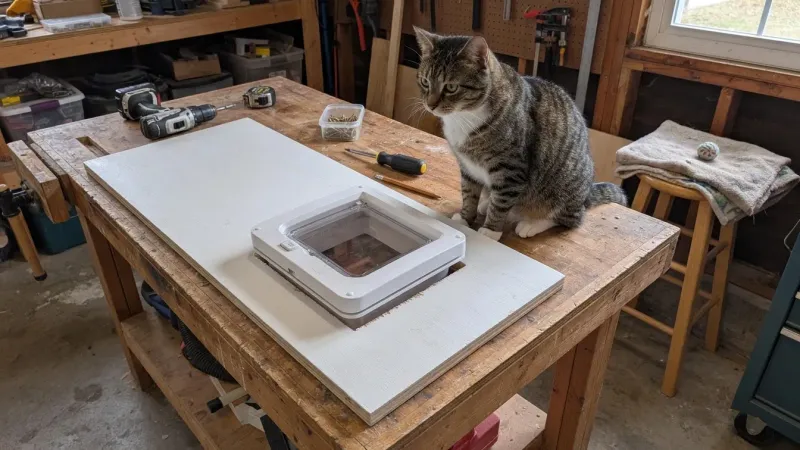
Trace the paper template included with your microchip door onto the center of your board, positioning the bottom of the tunnel roughly three to four inches above the windowsill so older or smaller cats can step through easily. Drill pilot holes at the corners, cut out the opening with a jigsaw, and secure the interior and exterior frames together using the provided bolts and screw caps.
- 6
Install Weatherstripping and Seat the Window Insert
Apply adhesive foam weatherstripping along the top, bottom, and side edges of your finished panel to block drafts and prevent rattling. Slide the panel firmly into the window channel and lower or slide the window sash tight against the edge. For cold climates or drafty frames, check these tips on sealing an insulated window cat door so warm indoor air stays inside.
- 7
Lock the Window Sash and Set Up Safe Steps
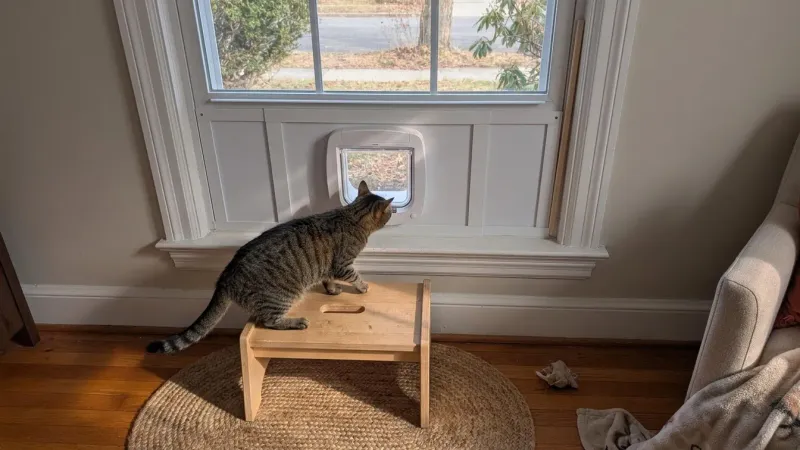
Prevent anyone from lifting or sliding the window open from outside by wedging a cut wooden dowel into the upper track or clamping a secondary sash lock onto the frame. Place a sturdy, non-slip step stool or landing shelf beneath the window on both sides if the sill sits more than 12 inches off the floor or ground, protecting your cat's joints as they enter and exit.
- 8
Train Your Cat to Use the Selective Flap
Tape the clear flap open for the first day or two while supervising your cat so they learn the tunnel path without being startled by the clicking latch. Reward them with praise or small pieces of plain cooked chicken or commercial cat treats after each pass. Once your cat moves through confidently, release the flap and listen for the audible click as their chip unlocks the door.
Extra Security Tips Against Raccoons and Tailgating Strays
Determined raccoons have dexterous paws capable of prying upward on weak plastic flaps, while bold neighborhood strays sometimes try to slip through right behind your cat. Taking a few extra precautions keeps your window setup truly intruder-proof:
- Use the 4-way manual lock overnight: Most microchip doors include a mechanical dial that overrides the sensor. Set it to locked or exit-only after dusk, when raccoons and roaming cats are most active.
- Check latch engagement regularly: Wipe dust, fur, and sap away from the bottom locking catch so the deadbolt clicks cleanly into place within a second of your cat passing through.
- Create a narrow approach path: Placing a small, stable bench or shelf inside and outside the window limits space to one cat at a time, making it much harder for a stray to tailgate behind your pet.
- Review your cat's health and safety: Unvaccinated strays can transmit feline leukemia virus (FeLV), feline immunodeficiency virus (FIV), and parasites through bites or shared food bowls. Keep your cat's vaccinations and parasite prevention current with your veterinarian.
Common Window Installation Mistakes to Avoid
Even the best selective-entry flap will fail if the surrounding window panel shifts or interferes with the RFID antenna. Watch out for these frequent setup errors:
- Using thin plexiglass or cardboard: Flimsy panels bow when a heavy cat or raccoon pushes against the frame, allowing the window sash to lift or the panel to pop out of the track. Stick to 3/4-inch solid wood, PVC trim board, or thick exterior-grade plywood.
- Mounting the flap too close to metal tracks: Metal window frames and aluminum sash tracks disrupt the radio frequency field that reads your cat's microchip. While manufacturer mounting adapters are typically designed for circular glass installations, spacing the flap away from aluminum tracks inside a thick wood or PVC panel is what prevents radio frequency interference.
- Leaving the upper window sash unlocked: Sliding a window up to insert a panel disables the built-in sash latch. Always brace the upper sash with a cut wooden dowel or window pin lock so intruders cannot slide the window open from outside.
A properly fitted microchip window cat door stops neighborhood strays and raccoons at the glass while letting your own cat come and go safely. Check the battery indicator light every few months, keep the sensor tunnel clean, and use the manual lock overnight for reliable, worry-free protection year-round.
Sources: International Cat Care · Cornell Feline Health Center · ASPCA
Frequently asked questions
Can raccoons force open a microchip window cat door?
Quality microchip cat doors use motorized deadbolt latches that resist pushing from the outside, making them much stronger than magnetic flaps. However, determined raccoons can pry at edges with their paws, so always switch the manual 4-way lock to closed after dark.
What if my cat is not microchipped?
Most microchip cat doors also work with lightweight RFID collar tags sold by the same manufacturer. Attach the tag to a breakaway cat collar so your cat can unlock the door safely without risking injury if the collar catches outdoors.
How do I stop a stray cat from tailgating behind my cat?
Place a narrow shelf or step inside and outside the window so only one cat can stand at the entrance at a time. Adjust the door's latch closing speed if your model allows it, ensuring the lock re-engages immediately after your cat clears the tunnel.
Will a metal window frame stop the microchip reader from working?
Yes, aluminum or steel window tracks can interfere with the radio signal that reads your cat's microchip. Mounting the flap centered in a wide, thick wood or PVC insert creates enough non-metallic clearance from the aluminum frame so the reader works reliably without needing a glass-mounting adapter.

Nathan Brooks
Nathan Brooks runs Farmingzoom to help loving pet owners create safe, enriching homes for their animals. He cares deeply about responsible pet care and focuses on making everyday decisions simpler for fellow owners.…