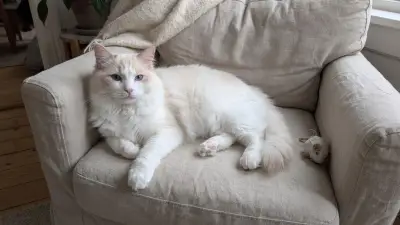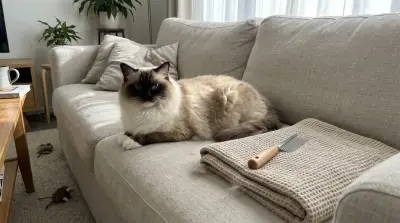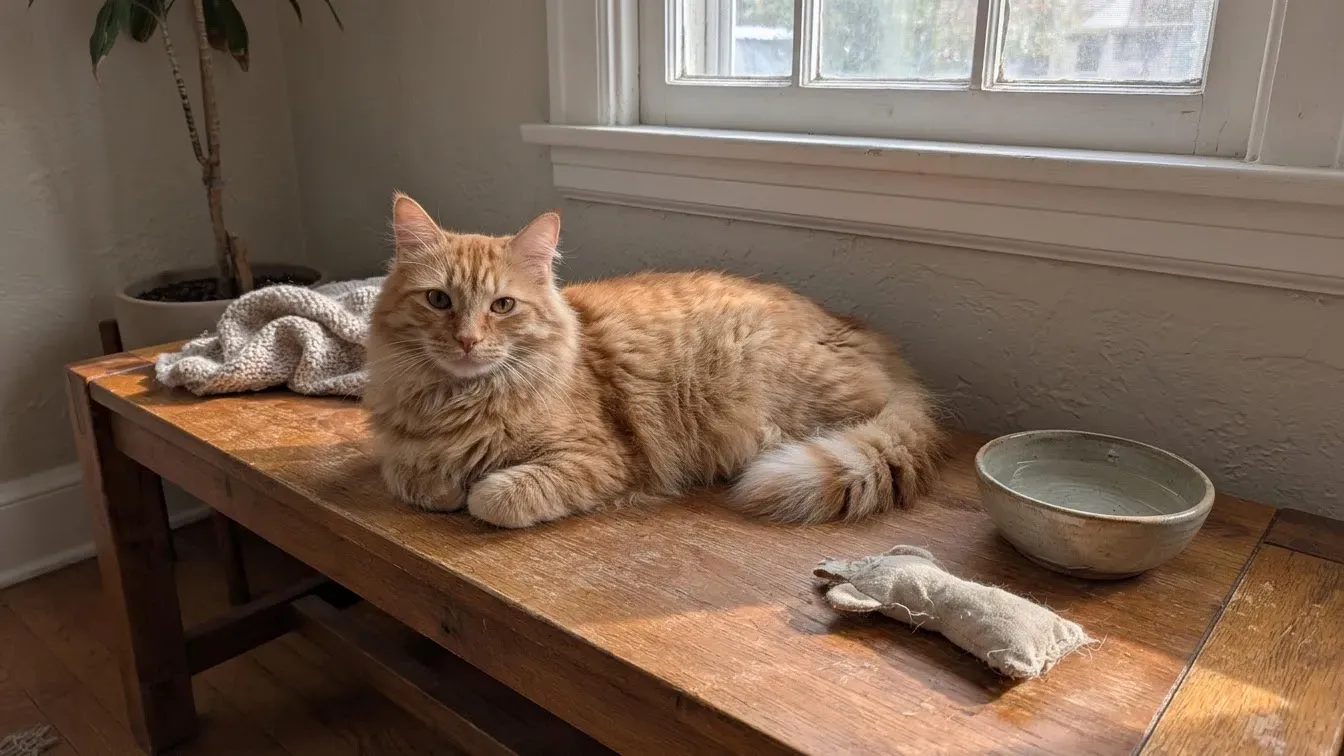
Orange is a coat color produced by a sex-linked pigment gene rather than a single breed, and at least 15 recognized long-haired breeds—alongside the widespread Domestic Longhair mixed-breed category—naturally appear in red, cream, or ginger tabby coats. If you are searching shelters or reputable breeders for a fluffy orange companion, knowing the exact breed or coat type helps you plan for coat texture, weekly brushing time, and adult size.
Whether you want a relaxed lap cat or an active climber, each breed or category below includes verified coat care requirements and adoption notes so you can match their grooming needs to your schedule. For an overview that mixes shorthaired and long-haired options, see 12 Orange Cat Breeds From Fluffy Giants to Sleek Companions.
| Breed / Type | Weekly Brushing | Size | Shelter Odds |
|---|---|---|---|
| Domestic Longhair (Mixed-Breed) | 2–3 times | Medium to large | Very high |
| Maine Coon | 2–3 times | Large | Moderate |
| Persian | Daily (7 times) | Medium | Low to moderate |
| Ragdoll | 2 times | Large | Low to moderate |
| Siberian | 2–3 times | Medium to large | Low |
| Norwegian Forest Cat | 2–3 times | Large | Low |
| Turkish Angora | 1–2 times | Small to medium | Low |
| Turkish Van | 1–2 times | Medium to large | Low |
| Somali | 1–2 times | Medium | Low |
| British Longhair | 2–3 times | Medium to large | Low |
| Scottish Fold (Longhair) | 2–3 times | Medium | Low |
| Selkirk Rex (Longhair) | 2–3 times | Medium to large | Low |
| American Curl (Longhair) | 1–2 times | Small to medium | Low |
| Birman | 2 times | Medium to large | Low |
| Ragamuffin | 2 times | Large | Low |
| Munchkin (Longhair) | 2 times | Small | Low |
1Domestic Longhair
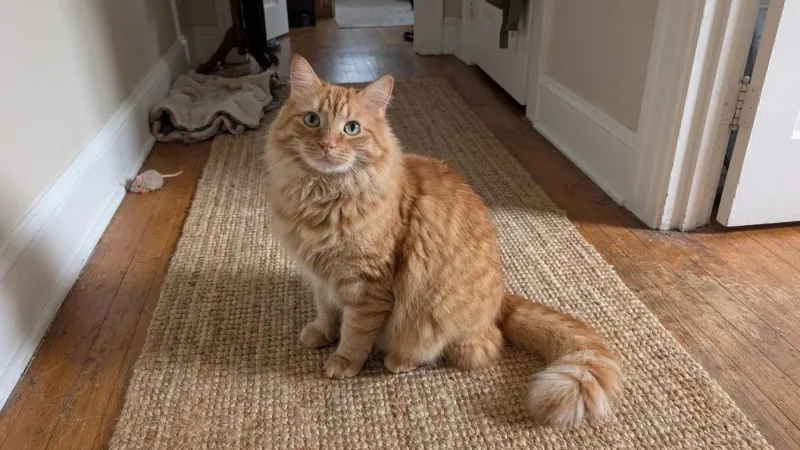
Weekly Brushing: 2–3 times (30 minutes) · Size: Medium to large · Coat Type: Medium-to-long double coat Rather than a formal pedigreed breed, the Domestic Longhair is a mixed-breed category of unpedigreed ancestry and the most common fluffy orange cat in shelters, showing wide variation in coat thickness and personality. Because their genetics blend many lines, they often enjoy strong hybrid vigor and fewer inherited health issues than purebreds. Brush their chest ruff, armpits, and britches twice a week with a slicker brush, increasing to every other day during spring and fall shedding seasons.
2Maine Coon
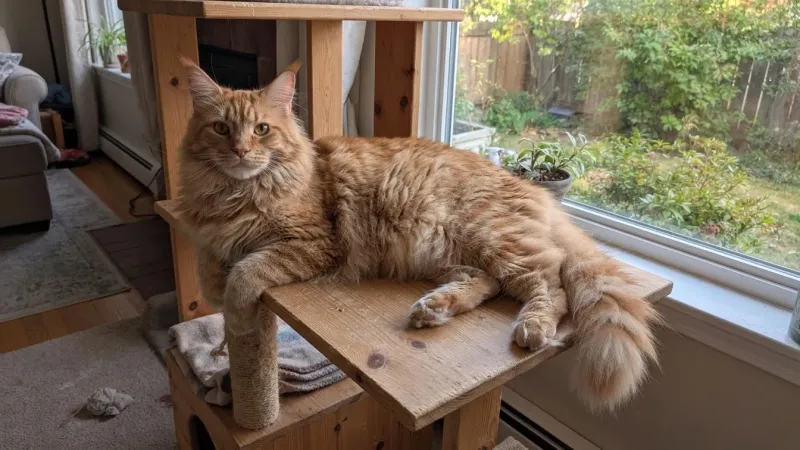
Weekly Brushing: 2–3 times (30–45 minutes) · Size: Large (10–25 pounds) · Coat Type: Heavy, shaggy, water-resistant coat Known for tufted ears, a boxy muzzle, and a long plumed tail, the orange tabby Maine Coon is sociable, adaptable, and dog-like in how it follows family members from room to room. Their coat is shaggy and textured rather than cottony, so it resists severe matting better than a Persian's fur. Comb through the dense belly and ruff hair twice weekly, and ask breeders or rescues about screening for hypertrophic cardiomyopathy.
3Persian
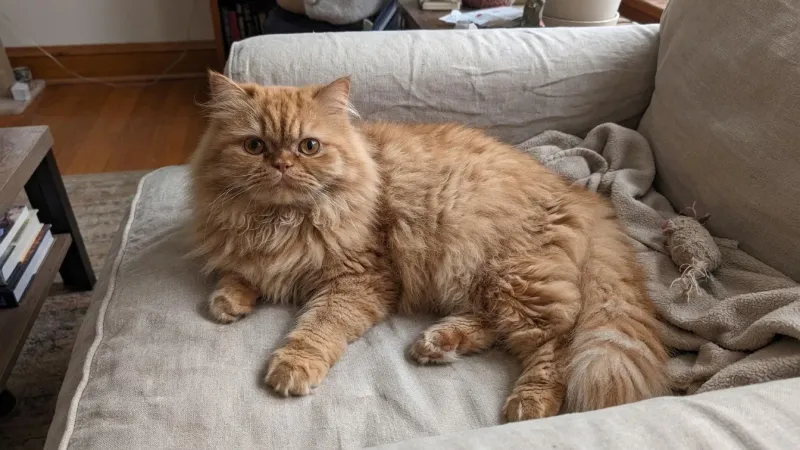
Weekly Brushing: Daily (10–15 minutes per session) · Size: Medium (7–12 pounds) · Coat Type: Extremely long, dense double coat Red and cream Persians pair a sweet, quiet temperament with a floor-sweeping coat that requires daily combing to prevent painful felted mats. Their flat brachycephalic face also needs daily wiping around the eyes with a damp cloth to clear tear staining. Persians thrive in peaceful indoor households and prefer lounging on low cushions rather than climbing tall cat trees. If you love calm companions, compare 11 Calm Orange Cat Breeds for First-Time Owners in Quiet Homes.
4Ragdoll
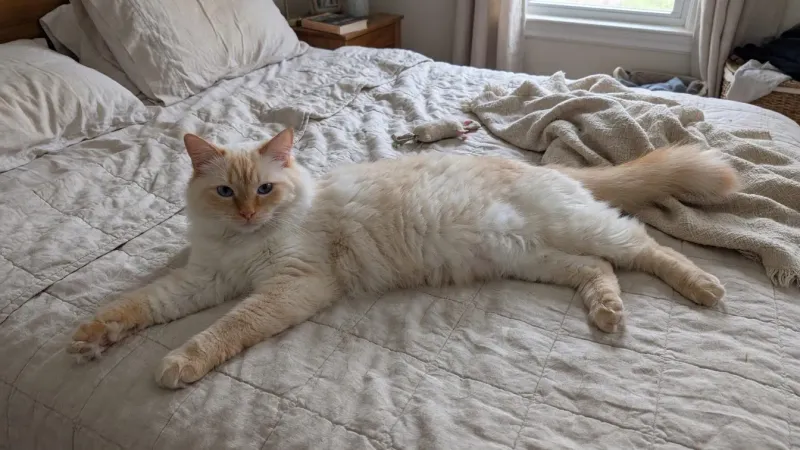
Weekly Brushing: 2 times (20–30 minutes) · Size: Large (10–20 pounds) · Coat Type: Silky, medium-long coat Flame-point and red bicolor Ragdolls display warm orange markings on their ears, face, tail, and paws alongside striking blue eyes. They are famous for relaxing completely when picked up and greeting owners at the door. Because their silky, medium-long coat lacks a thick woolly undercoat, two thorough combings per week keep it smooth and free of tangles, though you should check under their chin and back legs weekly.
5Siberian
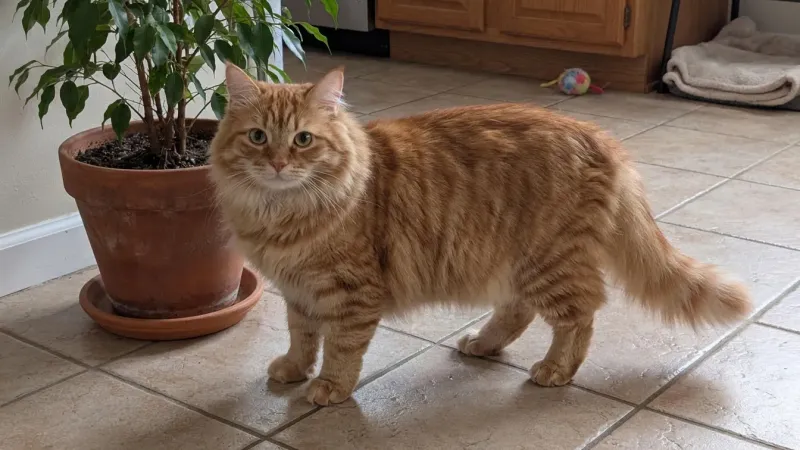
Weekly Brushing: 2–3 times (30 minutes) · Size: Medium to large (10–20 pounds) · Coat Type: Thick triple coat Built for freezing forests, the Siberian sports a dense triple coat that comes in rich red mackerel and classic tabby patterns. Despite their rugged appearance, Siberians are affectionate, agile jumpers who love interactive play and puzzle feeders. Their water-repellent topcoat sheds dirt easily, so two brushing sessions a week suffice most of the year, rising to four times weekly during their heavy spring molt.
6Norwegian Forest Cat
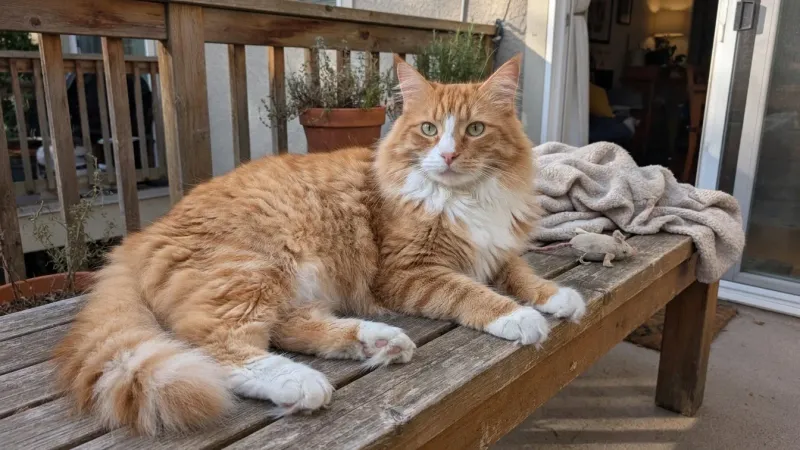
Weekly Brushing: 2–3 times (30 minutes) · Size: Large (9–20 pounds) · Coat Type: Woolly undercoat with glossy guard hairs Distinguished by a straight triangular profile and almond eyes, the Norwegian Forest Cat grows a heavy winter ruff and tufted paws in vibrant ginger and white patterns. They are confident, observant climbers who enjoy high perches without demanding constant lap time. Use a wide-tooth metal comb twice weekly to reach the woolly undercoat without pulling the long, weather-resistant guard hairs.
7Turkish Angora
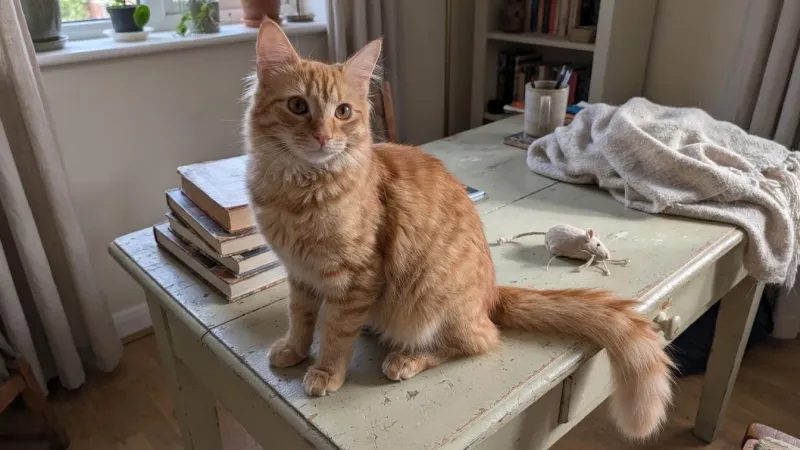
Weekly Brushing: 1–2 times (15–20 minutes) · Size: Small to medium (5–10 pounds) · Coat Type: Fine, silky single coat One of the easiest fluffy breeds to maintain, the red or cream Turkish Angora has a fine, single-layered coat with no dense undercoat to mat. They are energetic, intelligent cats that bond closely with one or two favorite people and often enjoy playing fetch. A single weekly combing keeps their feathery tail and neck ruff glossy, making them ideal if you want long fur without heavy grooming chores.
8Turkish Van
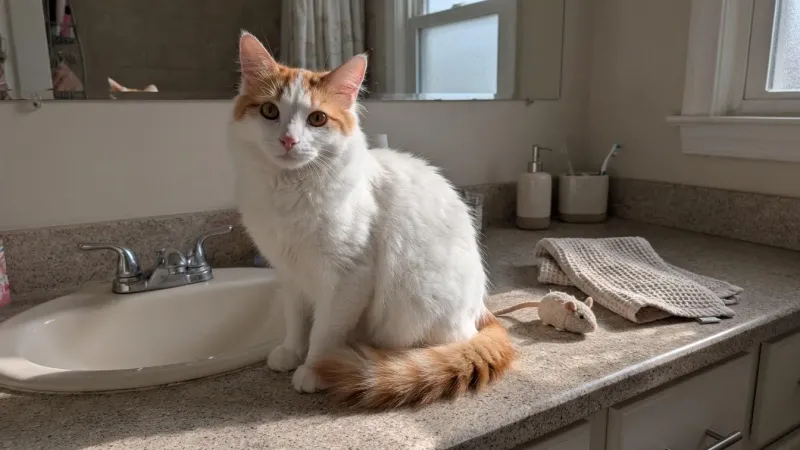
Weekly Brushing: 1–2 times (15–20 minutes) · Size: Medium to large (10–18 pounds) · Coat Type: Semi-long, cashmere-textured coat The classic Turkish Van wears a chalk-white body with auburn-orange markings restricted to the head and fluffy tail, a pattern breeders call the van pattern. Athletic and curious, many Turkish Vans are fascinated by dripping faucets and shallow water bowls. Because their semi-long, cashmere-textured coat lacks a heavy woolly undercoat in summer and develops a thicker coat only in winter, one or two gentle brushings per week prevent tangles even around the ears.
9Somali
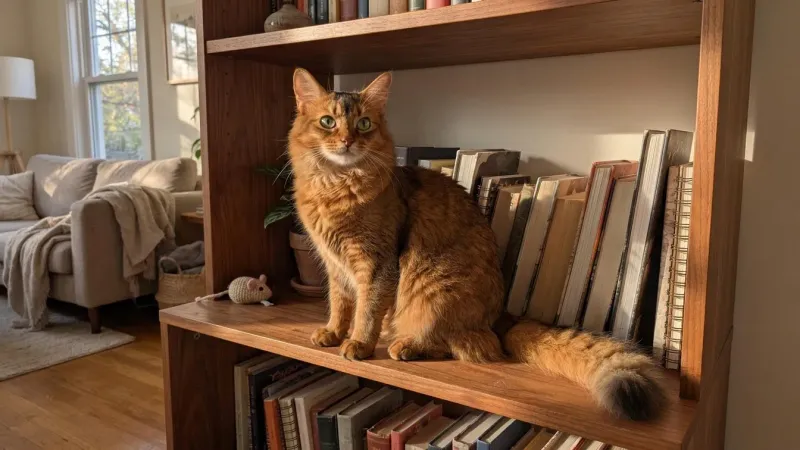
Weekly Brushing: 1–2 times (15–20 minutes) · Size: Medium (6–10 pounds) · Coat Type: Fine, ticked semi-long coat Often called the fox cat, the red Somali features a bushy tail, ear tufts, and ticked fur where each hair shaft carries bands of warm orange and deeper red. Somalis are endlessly curious, busy, and social, so they do best with vertical shelves and daily interactive wand play. Their fine coat rarely mats and needs only one or two quick brushings each week to lift loose hair.
10British Longhair
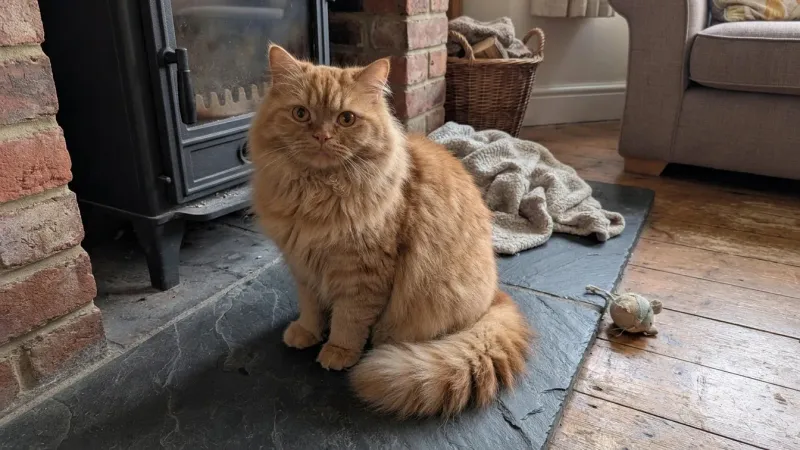
Weekly Brushing: 2–3 times (30 minutes) · Size: Medium to large (9–18 pounds) · Coat Type: Dense, plush semi-long coat Created by crossing British Shorthairs with Persians, the British Longhair has a round face, copper eyes, and a thick, teddy-bear coat in solid red, cream, or ginger tabby. They are dignified, steady companions who enjoy sitting beside you on the couch rather than being carried around. Their dense undercoat requires brushing two to three times a week so dead hair does not pack near the skin.
11Scottish Fold (Longhair)
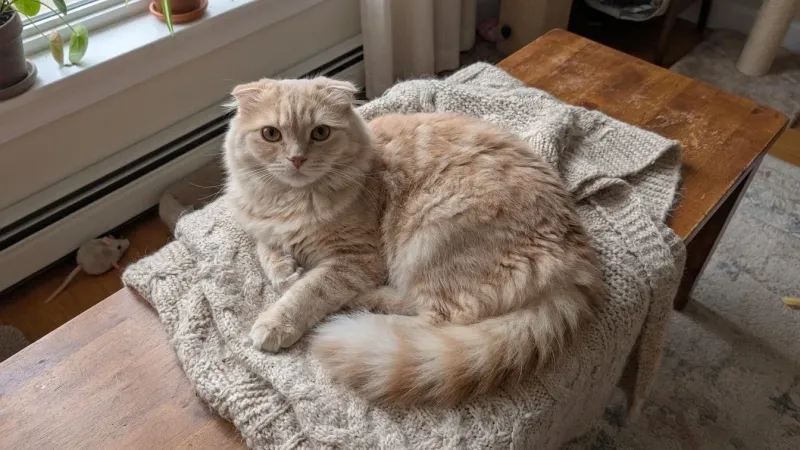
Weekly Brushing: 2–3 times (25–30 minutes) · Size: Medium (6–13 pounds) · Coat Type: Plush, dense semi-long coat Also known as the Highland Fold, the long-haired Scottish Fold pairs folded ears and round owl-like eyes with a soft, puffy ginger coat. They are gentle, quiet cats that adapt smoothly to apartment living. Comb their dense coat twice weekly and ask a veterinarian to monitor joint comfort, as the cartilage gene that folds their ears can also cause painful osteochondrodysplasia in some cats.
12Selkirk Rex (Longhair)
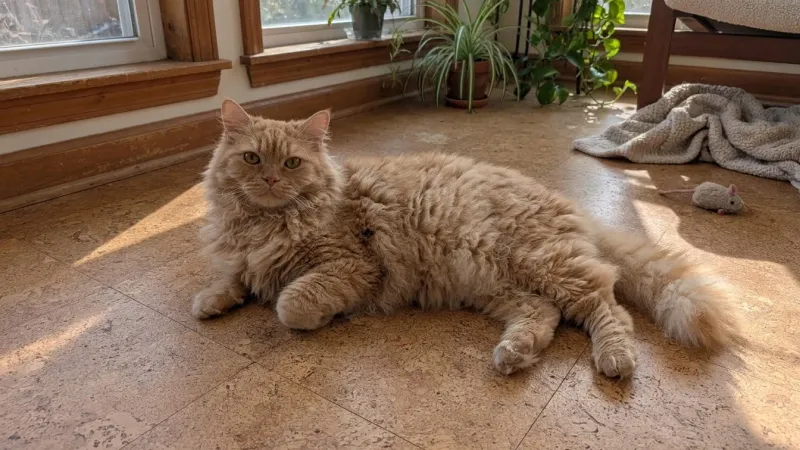
Weekly Brushing: 2–3 times (25–30 minutes) · Size: Medium to large (9–16 pounds) · Coat Type: Loose, curly plush coat The long-haired Selkirk Rex wears a tousled coat of soft, unstructured curls that looks like a sheep's fleece in shades of apricot, red, and cream. Patient and good-natured, they tolerate handling well and fit nicely into calm multi-pet homes. Use a wide-tooth comb two or three times a week to detangle the curls gently without over-brushing, which can frizz the natural wave.
13American Curl (Longhair)
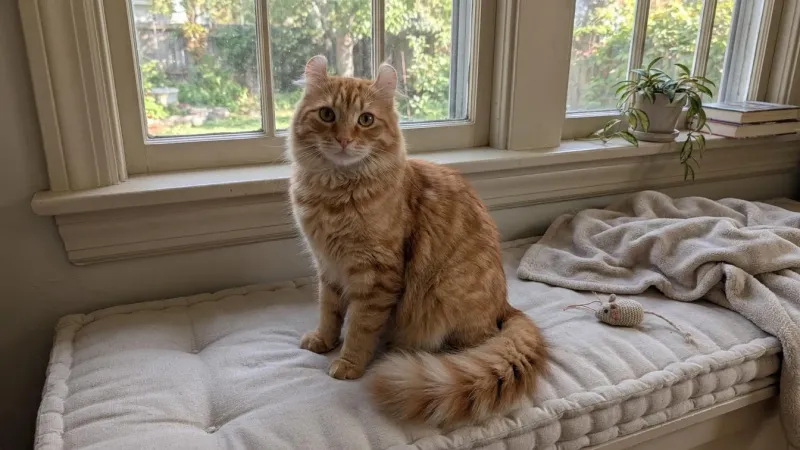
Weekly Brushing: 1–2 times (15–20 minutes) · Size: Small to medium (5–10 pounds) · Coat Type: Silky, flat-lying semi-long coat Recognized by ears that curl gracefully backward toward the center of the skull, the long-haired American Curl stays playful and kitten-like well into adulthood. Their silky orange coat has minimal undercoat and lies flat against the body, ending in a full plume tail. Weekly brushing keeps their coat sleek, and you should handle their firm ear cartilage gently during routine ear checks.
14Birman
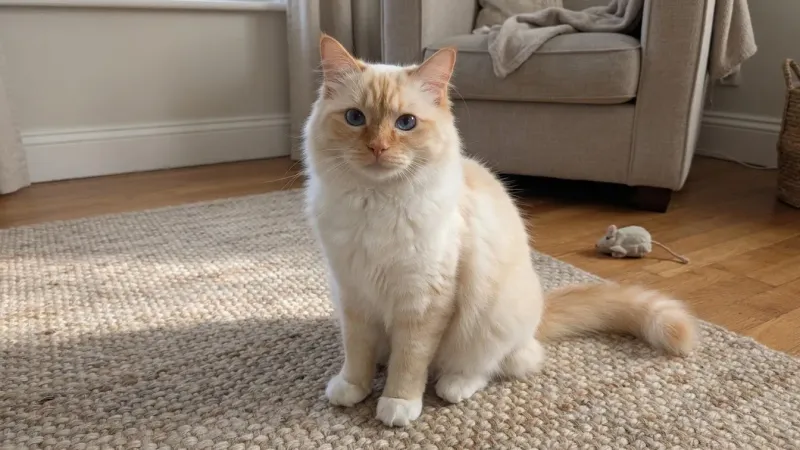
Weekly Brushing: 2 times (20–30 minutes) · Size: Medium to large (8–15 pounds) · Coat Type: Silky, medium-long single-layered coat Flame-point and cream-point Birmans pair a silky, medium-long coat and full neck ruff with deep blue eyes, warm orange points, and signature pure-white paws. Gentle, affectionate, and people-oriented, they enjoy quiet companionship around the house. Because their silky coat lacks a dense undercoat, two thorough combings per week keep it smooth and free of tangles.
15Ragamuffin
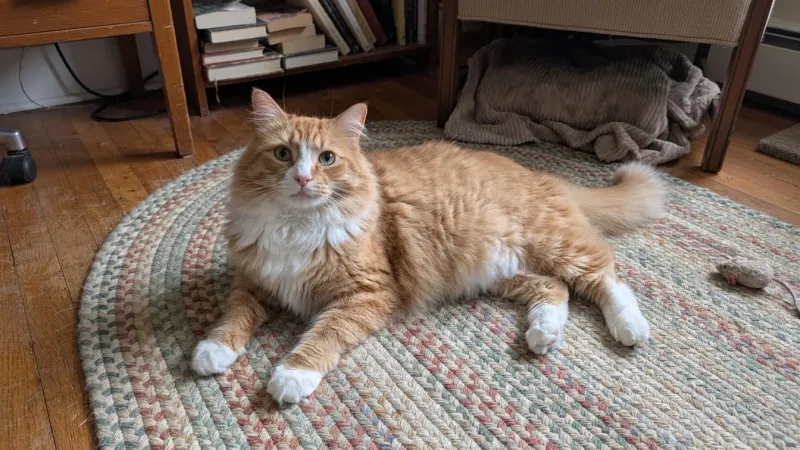
Weekly Brushing: 2 times (20–30 minutes) · Size: Large (10–20 pounds) · Coat Type: Plush, rabbit-like medium-long coat Closely related to the Ragdoll, the Ragamuffin comes in a wider range of colors, including rich solid red, cream, and ginger tabby with white mittens. They are docile, trusting indoor cats that get along well with gentle children and respectful dogs. Their plush, rabbit-like coat resists matting and stays clean with two thorough combings per week, focusing behind the ears and under the belly.
16Munchkin (Longhair)
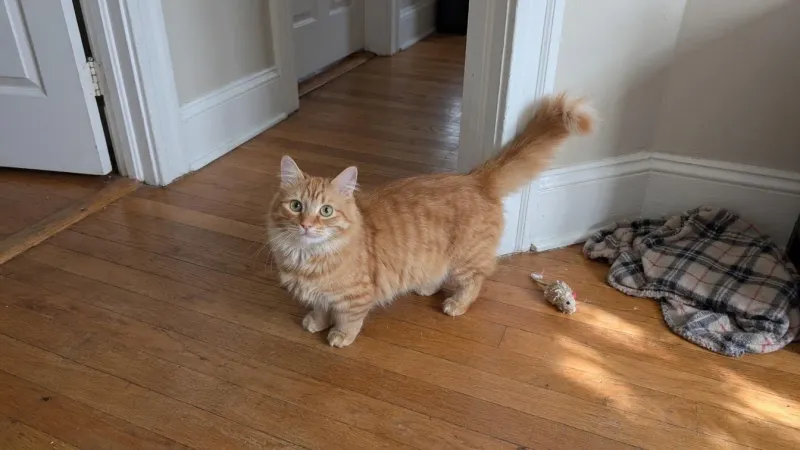
Weekly Brushing: 2 times (20 minutes) · Size: Small (5–9 pounds) · Coat Type: Plush, silky semi-long coat With short legs caused by a natural genetic mutation, the long-haired Munchkin scoots quickly across floors and loves stashing small toys in favorite corners. They are outgoing, social cats that enjoy interactive play on low-to-the-ground tracks. Because their belly fur sits close to the floor, brush their underbelly and tail twice a week to clear dust and prevent small tangles.
How to Spot Fluffy Orange Breeds in Shelters
Most fluffy ginger cats in rescues are Domestic Longhairs—mixed-breed cats that carry long-hair genes without formal pedigree papers. Shelters often label any large orange cat with ear tufts as a Maine Coon mix, yet true pedigreed cats make up a small fraction of shelter intakes. Ask shelter staff to handle the cat's coat during your visit so you can check whether the undercoat feels dense and cottony or silky and single-layered, which predicts how often you will need a metal slicker brush and wide-tooth comb.
Adoption fees for adult mixed-breed longhairs typically range from $50 to $200, whereas kittens from health-tested breeders often cost $1,000 to $3,000 depending on pedigree and region. If you want an easier grooming routine without giving up long fur, read about 9 Fluffy Cat Breeds That Rarely Mat With Weekly Brushing. Because roughly four out of five orange cats are male due to how the red pigment gene sits on the X chromosome, expect most fluffy ginger cats you meet to be boys.
Safe Grooming Habits and When to Call a Vet
Long coats trap loose hair behind the ears, under the front legs, and around the hindquarters. Never use scissors to cut out tight mats, because feline skin is paper-thin and pulls upward into the hair clump, leading to accidental cuts. Use a stainless-steel comb to gently work from the tips toward the skin, or book a professional groomer for a sanitary trim if a mat sits tight against the body.
Keep all grooming tools, hair ties, and yarn stored in closed drawers, as swallowed string or elastic can cause life-threatening intestinal blockages. Also check your home for lilies, which are fatally toxic to cats even in tiny amounts. Schedule a veterinary visit if you notice sudden coat dullness, excessive dandruff, bald patches, or heavy matting in a previously well-groomed cat, as painful arthritis or dental disease often stops cats from grooming themselves.
Finding the right fluffy orange cat comes down to matching coat structure with the grooming time you can realistically keep every week. Silky single-coated breeds like the Turkish Angora need only one or two brief combings, while dense-coated Persians demand daily care. Visit local shelters first to meet Domestic Longhairs in person, and consult a veterinarian whenever you notice sudden matting or skin changes.
Sources: The Cat Fanciers' Association (CFA) · The International Cat Association (TICA) · Cornell Feline Health Center · ASPCA
Frequently asked questions
What breed would a fluffy orange cat be?
Most fluffy orange cats found in shelters or neighborhoods are Domestic Longhairs, which are mixed-breed cats carrying long-hair genes. If the cat has pedigree traits, common purebred possibilities include the Maine Coon, Persian, Siberian, Norwegian Forest Cat, Ragdoll, or Turkish Angora.
Are fluffy orange cats rare?
Male fluffy orange cats are common because the orange pigment gene sits on the X chromosome and males only need one copy. Fluffy orange females are much rarer, making up roughly 20 percent of orange cats because they must inherit the gene from both parents.
How much does a fluffy orange cat cost?
Adopting a fluffy orange Domestic Longhair from a local shelter or rescue typically costs $50 to $200, which usually covers spay or neuter surgery and initial vaccines. Purchasing a pedigreed fluffy orange kitten from a health-tested breeder generally costs $1,000 to $3,000.
How often should you brush a fluffy orange cat?
Most fluffy orange cats need thorough brushing two to three times per week with a stainless-steel comb and slicker brush to prevent undercoat mats. Dense-coated breeds like Persians require daily 10-minute grooming sessions, while single-coated Turkish Angoras need brushing once or twice weekly.
Nathan Brooks
Nathan Brooks runs Farmingzoom to help loving pet owners create safe, enriching homes for their animals. He cares deeply about responsible pet care and focuses on making everyday decisions simpler for fellow owners.…