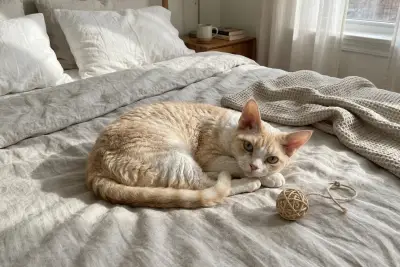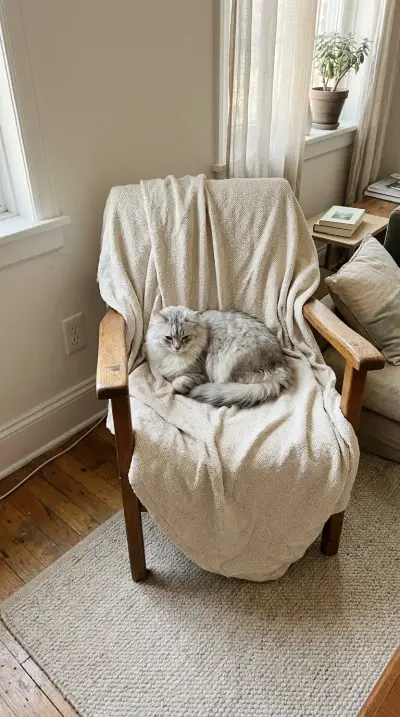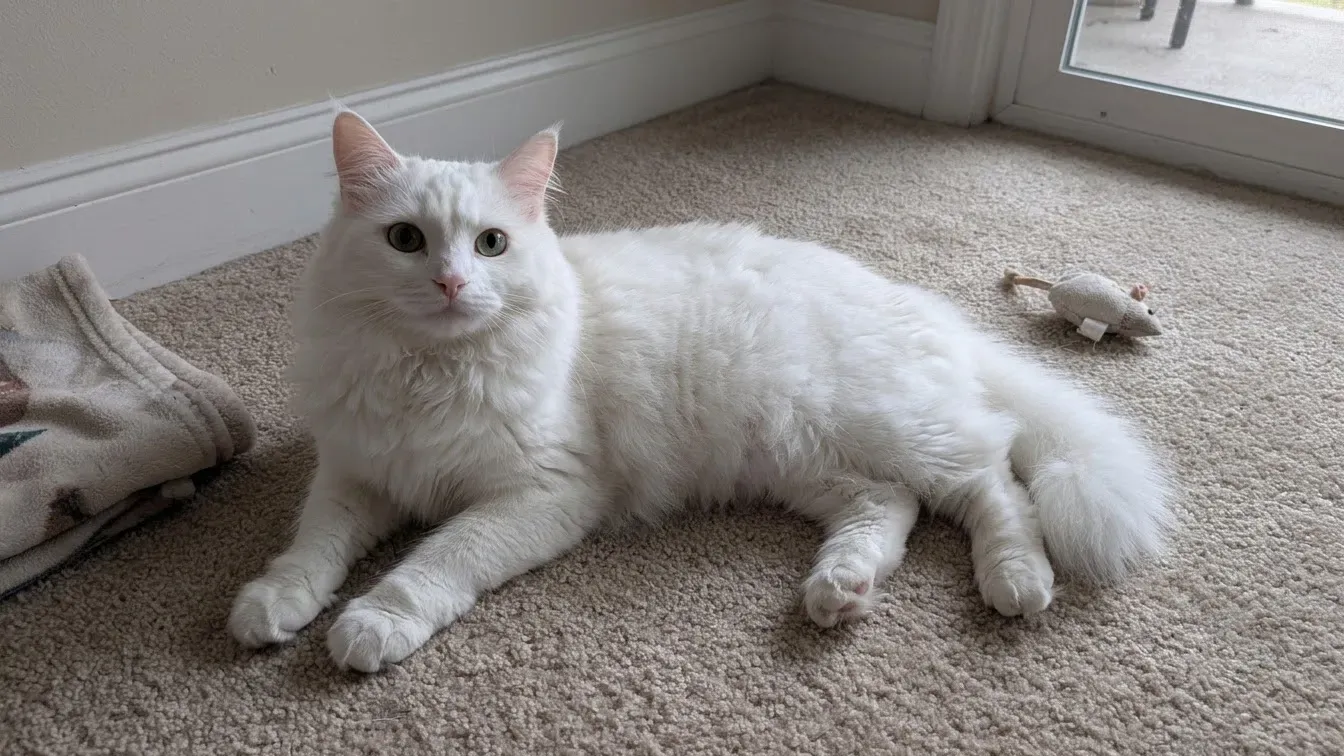
No cat is 100% allergen-free, because reactions are triggered by proteins like Fel d 1 in saliva and skin flakes rather than fur color. However, several cat breeds that come in solid white either produce lower levels of Fel d 1 or have specialized coats that trap dander close to the skin instead of releasing it into your apartment.
If you have mild cat allergies, cannot take daily medication, and live in a rental with wall-to-wall carpeting where dander settles deep into fibers, choosing the right breed makes all the difference. Always consult an allergist before adopting, and spend time with the specific cat first.
| Breed | Coat Type | Allergen Factor | Size | Grooming |
|---|---|---|---|---|
| Siberian | Long, triple coat | Lower Fel d 1 output | Medium-Large | 2-3x weekly |
| Balinese | Long, silky single coat | Lower Fel d 1 output | Medium | 2x weekly |
| Devon Rex | Short, wavy rex coat | Minimal shedding | Small-Medium | Weekly wipe |
| Cornish Rex | Short, tight marcel waves | Minimal shedding | Small-Medium | Weekly wipe |
| Foreign White | Short, fine single coat | Low dander spread | Medium | Weekly brush |
| Sphynx | Hairless, suede skin | Zero fur shedding | Medium | Weekly bath |
| Turkish Angora | Medium-long, single coat | No woolly undercoat | Small-Medium | 2x weekly |
1Solid White Siberian
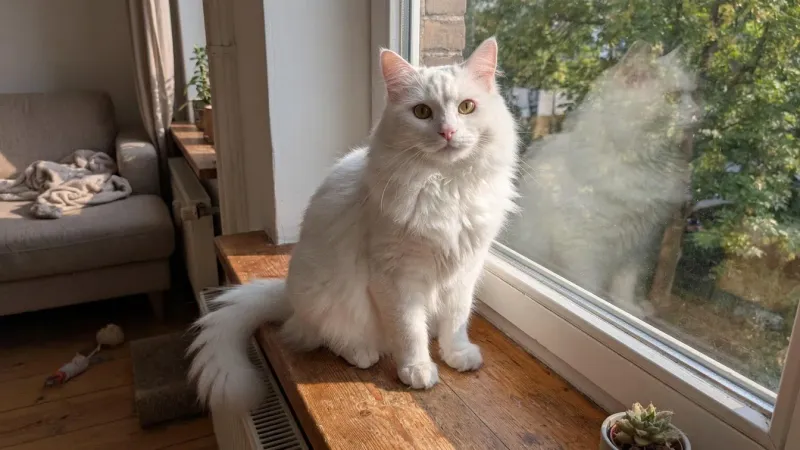
Coat: Long triple coat · Allergen Factor: Lower Fel d 1 protein · Size: Medium to large · Lifespan: 12-15 years Despite lush, dense fur, studies show some Siberians carry genetic variations that produce lower Fel d 1 levels, though allergen output varies widely by individual cat, making certain solid white individuals top contenders for mild allergy sufferers. Brush the coat two to three times weekly using a stainless-steel slicker brush to catch loose guard hairs before they settle into your rental carpet. Keep a HEPA air purifier running in the bedroom so airborne dander stays minimal overnight.
2White Balinese
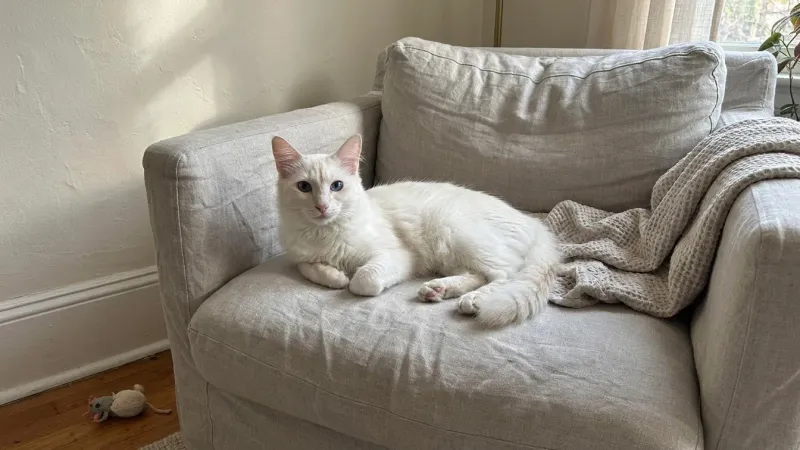
Coat: Long silky single coat · Allergen Factor: Lower Fel d 1 protein · Size: Medium · Lifespan: 12-18 years Often called the long-haired Siamese, the Balinese carries a genetic trait that reduces Fel d 1 protein levels in its saliva. While breeders recognize white-coated individuals as White Oriental Longhairs, all share a single-layered coat without a fluffy undercoat that traps and sheds heavy dander. Comb the silky fur twice a week with a fine-toothed metal comb, and give occasional baths only when dirty, relying instead on regular combing and damp grooming wipes to remove dried saliva.
3White Devon Rex
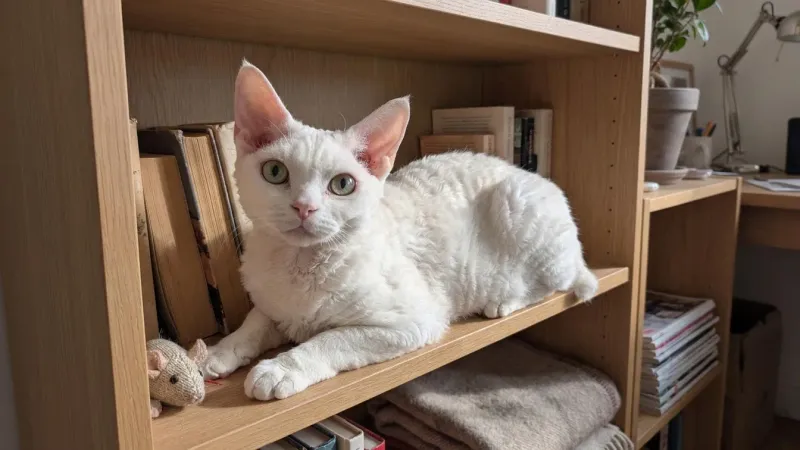
Coat: Short wavy rex coat · Allergen Factor: Very low shedding · Size: Small to medium · Lifespan: 9-15 years The Devon Rex has a very sparse, short coat composed mostly of down hair that sheds minimally into apartment carpets. Many owners explore curly cat breeds better for couples with mild allergies, though the Devon Rex requires weekly wiping with a damp microfiber cloth to remove skin oils and saliva rather than trapping dander in its curls. Also check its large ears weekly for wax buildup.
4White Cornish Rex
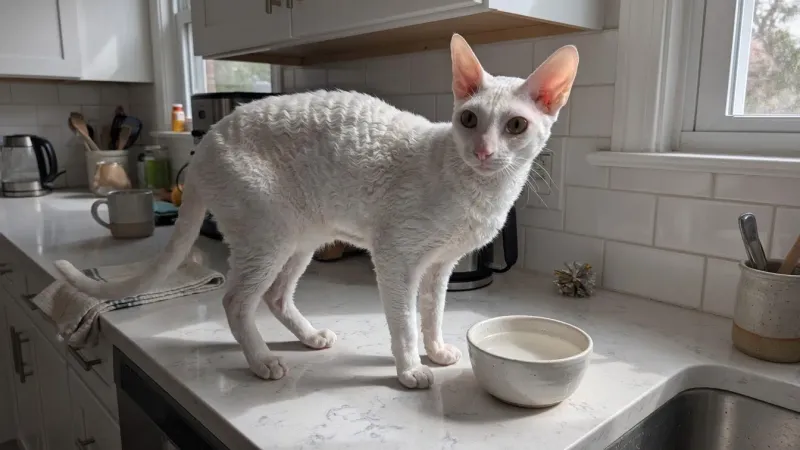
Coat: Short tight marcel waves · Allergen Factor: Minimal shedding · Size: Small to medium · Lifespan: 11-15 years Unlike standard cats that have three layers of fur, the Cornish Rex has only a downy undercoat arranged in tight, velvety curls. Because there are no brittle guard hairs breaking off onto your rental carpet, dander dispersal stays remarkably low. Wipe the coat weekly with a warm, damp washcloth to lift skin oils and dried saliva, and avoid harsh brush bristles that can damage its delicate waves.
5Foreign White
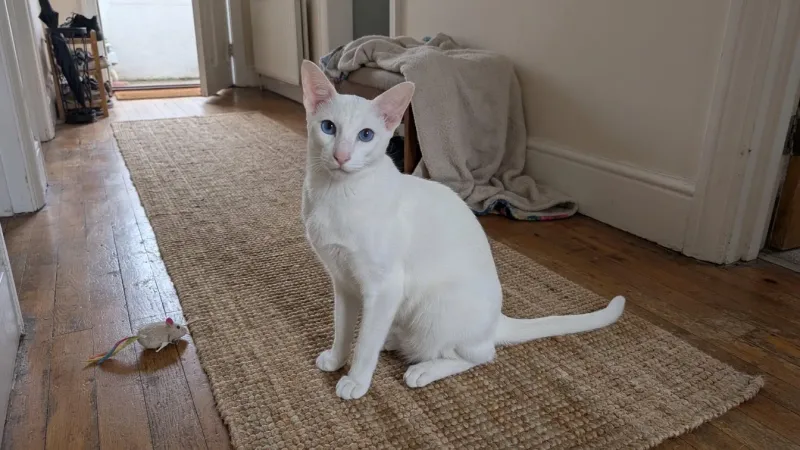
Coat: Short fine single coat · Allergen Factor: Low dander spread · Size: Medium · Lifespan: 12-15 years The Foreign White is its own recognized white Siamese-type breed—distinct from the standard green-eyed White Oriental Shorthair—developed through a breeding program combining the Siamese point gene with the dominant white gene to achieve blue eyes while preventing hereditary deafness. Its sleek, close-lying coat lacks a thick undercoat, which means minimal hair embeds into carpeted floors. Run a soft rubber grooming mitt over your cat every few days to capture loose flakes, and schedule a veterinary hearing evaluation early as an added precaution.
6White Sphynx
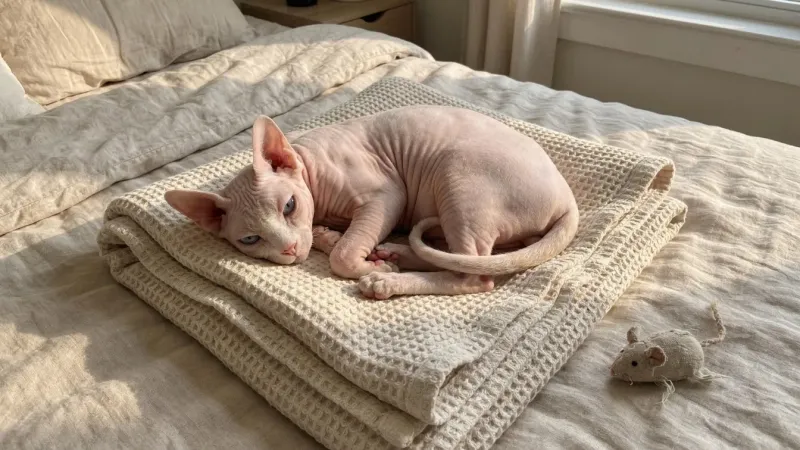
Coat: Hairless suede-like skin · Allergen Factor: Zero fur shedding · Size: Medium · Lifespan: 8-14 years Without fur to trap saliva and float across your apartment, a genetically solid white Sphynx—which has unpigmented pink skin, as Sphynx skin color reflects their underlying genetic coat pattern—eliminates hair buildup in rental carpets completely. Skin allergens still exist, however, so bathe your cat every seven to ten days in lukewarm water using a fragrance-free, vet-recommended pet cleanser to wash away Fel d 1 proteins and body oils. Keep soft, washable fleece blankets on furniture so oils do not stain upholstery or rugs.
7White Turkish Angora
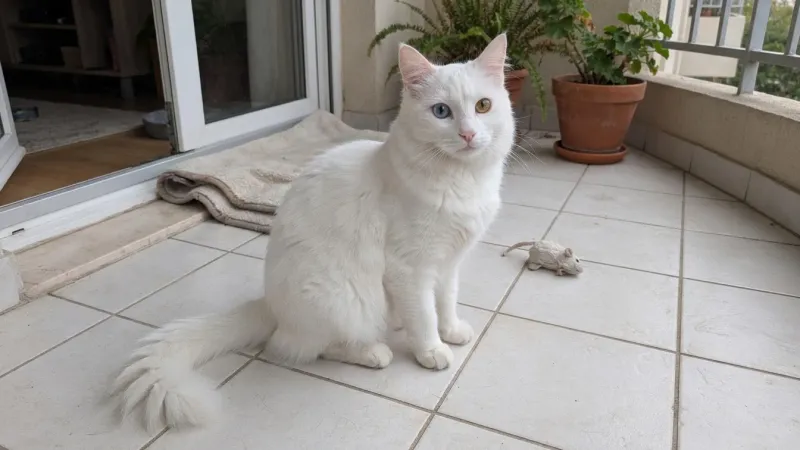
Coat: Medium-long single coat · Allergen Factor: No woolly undercoat · Size: Small to medium · Lifespan: 12-18 years Famous for its snow-white coat and plumed tail, the Turkish Angora has a fine, single-layered coat without the dense undercoat that causes heavy seasonal shedding in carpets. While it still produces normal Fel d 1 levels, its low-matting fur releases less airborne dander when groomed twice a week with a wide-toothed comb. Pair regular brushing with a HEPA vacuum routine to keep carpeted rooms comfortable.
Keeping Dander Out of Rental Carpets Without Medication
Even with hypoallergenic cat breeds that are easier on allergies, carpeted floors act like sponges for microscopic dander. Run a vacuum equipped with a true HEPA filter at least three times a week, and place washable cotton throws over your cat's favorite carpeted napping spots so you can launder allergens weekly in hot water.
Wipe your cat's coat every few days with vet-approved, fragrance-free grooming wipes to remove dried saliva before it flakes onto the rug. Also note that solid white cats with blue eyes carry a higher genetic risk of congenital deafness, so ask a veterinarian to check hearing early and review how to check if a blue-eyed white kitten is deaf before bringing one home.
Before You Sign an Adoption Agreement
Allergen production varies between individual cats of the same breed, and intact males typically produce more Fel d 1 than spayed females or neutered males. Spend at least an hour in an enclosed room with the exact white kitten or adult cat you plan to adopt to test your personal tolerance without medication. If you experience wheezing, chest tightness, or severe swelling, stop interaction immediately and speak with your doctor.
Living with a white cat when you have mild allergies and carpeted floors comes down to lowering Fel d 1 exposure at the source and trapping dander before it settles into rug fibers. Meet your prospective cat in person first, keep up a steady weekly coat-wiping and HEPA vacuuming habit, and partner with your veterinarian to keep your cat's skin healthy and flake-free.
Sources: Cornell Feline Health Center · The Cat Fanciers' Association (CFA) · The International Cat Association (TICA) · International Cat Care
Frequently asked questions
Are white cats hypoallergenic?
White fur itself does not make a cat hypoallergenic, because cat allergies are triggered by proteins like Fel d 1 in saliva and skin dander rather than coat pigment. However, specific breeds that come in white, such as the Siberian, Balinese, and Devon Rex, produce fewer allergens or shed minimally.
Is there a 100% hypoallergenic cat?
No cat breed is 100% allergen-free. Every cat produces allergenic proteins in its saliva, skin glands, and urine. Low-allergen breeds simply produce lower amounts of Fel d 1 protein or have specialized coats that trap dander close to the body instead of shedding it around your home.
What is the rarest white cat breed?
The Khao Manee, an ancient white cat breed from Thailand known for diamond-bright blue, gold, or odd-colored eyes, is widely considered one of the rarest white breeds. Because global numbers are very small, prospective owners usually work with specialized preservation breeders.
How can I reduce cat dander in a carpeted rental without medication?
Vacuum carpets three times a week using a sealed HEPA-filter vacuum, run a HEPA air purifier in your bedroom, and wipe your cat's fur twice weekly with vet-approved grooming wipes. Covering your cat's favorite carpeted sleeping spots with washable cotton throws also prevents deep dander buildup.

Nathan Brooks
Nathan Brooks runs Farmingzoom to help loving pet owners create safe, enriching homes for their animals. He cares deeply about responsible pet care and focuses on making everyday decisions simpler for fellow owners.…