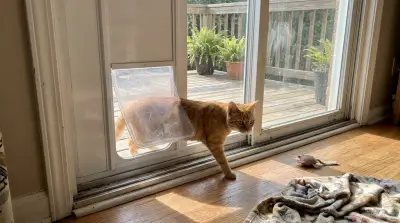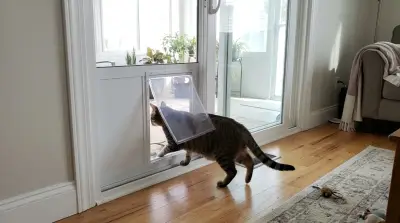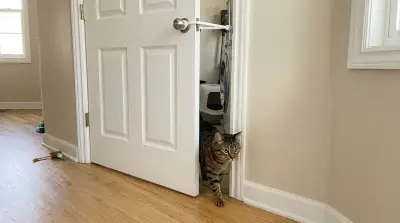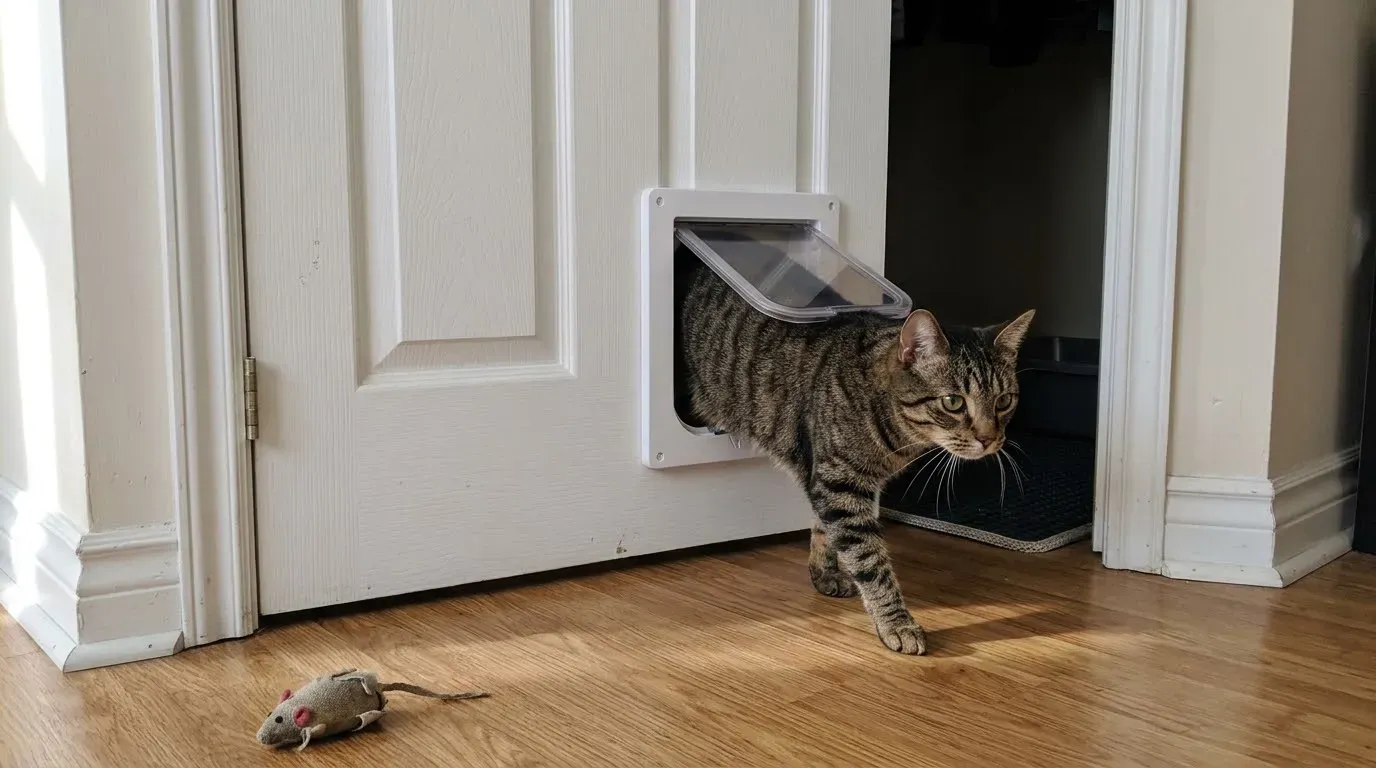
Hiding a litter box inside a tight apartment closet or bathroom is much easier when you install a dedicated interior cat door instead of leaving the main door propped open. A closed door blocks litter odors from drifting into your living room, keeps dogs or toddlers away from the tray, and frees up valuable floor space.
Whether you own a compact condo or rent a studio where permanent door cuts are off-limits, you have plenty of practical options. Below are 17 clever interior cat door ideas tailored for narrow apartment doors, thin hollow-core panels, and security-deposit-safe setups.
1Swap in a Pre-Cut Replacement Door
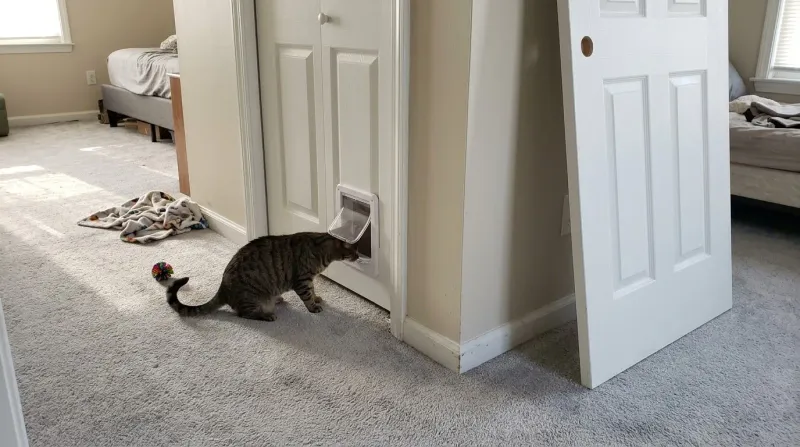
Buy a pre-hung or pre-machined matching hollow-core interior door slab (or have a hardware store rout the hinge mortises and bore the doorknob holes), cut your cat opening into it, and store your landlord's original door flat under a bed or behind a wardrobe. Provided your existing hinges have removable pins or can be unscrewed safely, you can hang the modified door in minutes and reinstall the original before moving out. This renter-friendly trick lets you use any framed cat door without risking your security deposit.
2Cat-Shaped Cutout With Smooth Trim
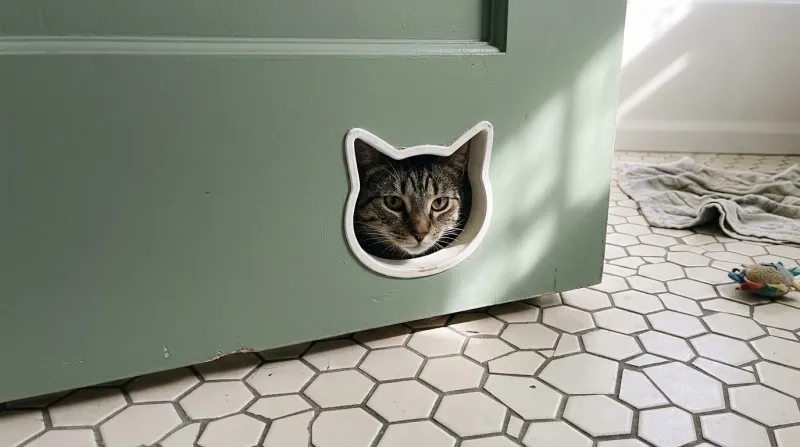
Trace a playful cat silhouette onto the bottom corner of a bathroom or laundry closet door and cut it out with a jigsaw. Sand the inner edges smooth and line the hollow core with flexible wood veneer or plastic edge banding so your cat's fur never snags. Because there is no flap to push, shy cats and kittens walk right through on day one.
3Brush-Sealed Magnetic Flap Door
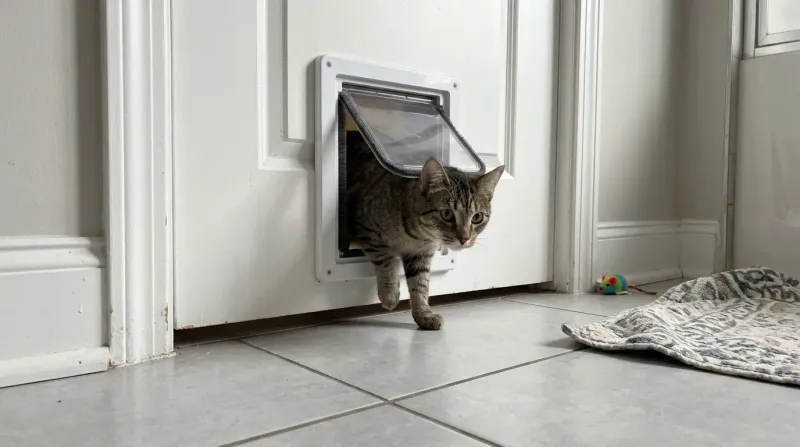
Install a standard framed pet door equipped with perimeter brush strips and a light magnetic catch on your bathroom door. The tight seal stops litter dust and odors from drifting into your bedroom while closing quietly without loud plastic slapping. Look for a model with a telescoping tunnel designed specifically for 1 3/8-inch hollow-core apartment doors.
4Interior French Door Bottom Corner Pass-Through
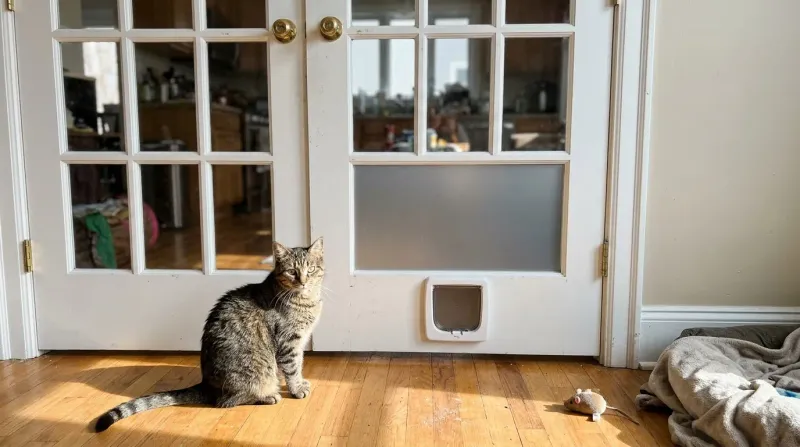
If your apartment uses a single-pane glass French door for a pantry or den closet, replace the lowest glass pane with a frosted acrylic panel cut to hold a slim cat flap. You preserve natural light while concealing the litter box behind the frosted surface. Keeping the rest of the glass intact maintains an airy feel in narrow hallways.
5Arched Mouse-Hole Pass-Through
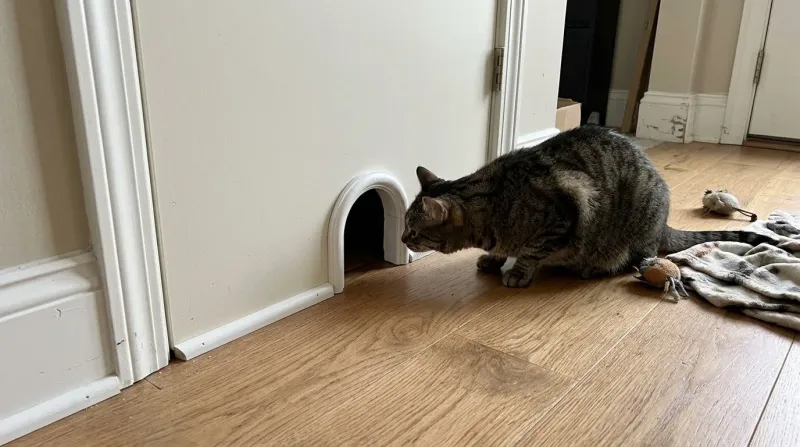
Cut a clean semicircular arch right at floor level on a solid-core linen closet door, leaving zero step-over lip for older or arthritic cats. Frame the arch with paintable quarter-round molding painted to match your existing baseboards so it blends seamlessly with your trim. Many interior cat door ideas that blend into home decor rely on matching trim paint to look built-in.
6Bi-Fold Closet Door Bottom Panel Flap
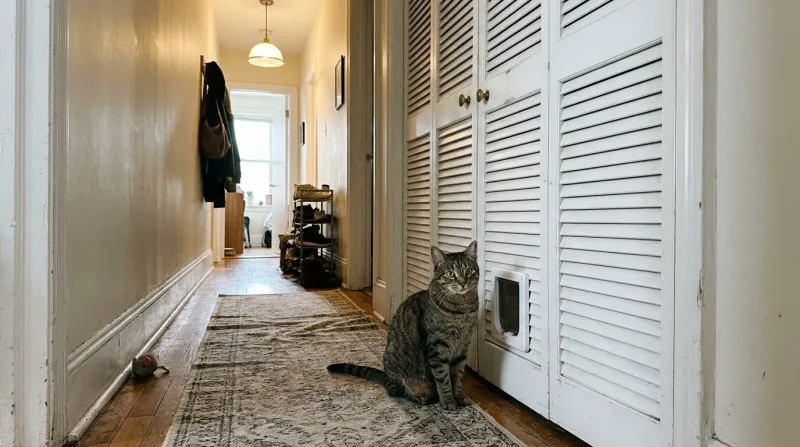
Many small apartment closets use narrow bi-fold doors that fold outward into tight hallways. Mount a slim, lightweight cat flap into the lower panel of the stationary side of the bi-fold door so it never interferes with the folding track. Your cat gains private access to a closet-floor litter box while the doors stay neatly latched.
7Adjustable Door-Strap Latch and Gap Holder
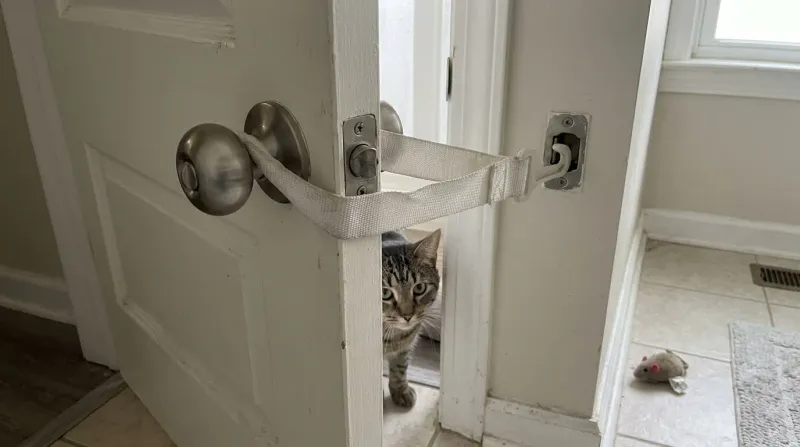
When cutting any door is completely off-limits, attach a flexible nylon door strap between the doorknob and the strike plate on the doorframe. Setting the strap to a 3.5- to 4.5-inch gap blocks medium and large dogs while letting your cat slip inside, though small dogs can still fit through a wider 5-inch opening.
8Pocket Door Corner Notch
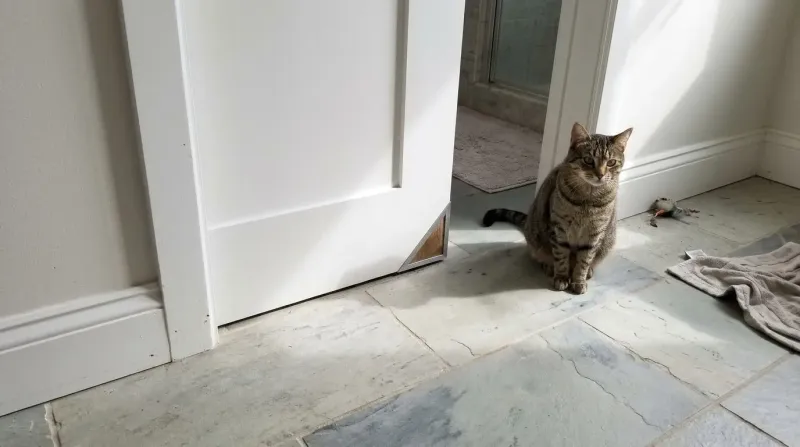
Sliding pocket doors save huge amounts of swing space in tiny apartment bathrooms, though they leave no room for bulky protruding cat door frames. Cut a sleek triangular or arched notch in the bottom leading corner of the door and finish the edge with flush aluminum channel trim so the door still slides smoothly into the wall cavity.
9Telescoping Hollow-Core Tunnel Frame
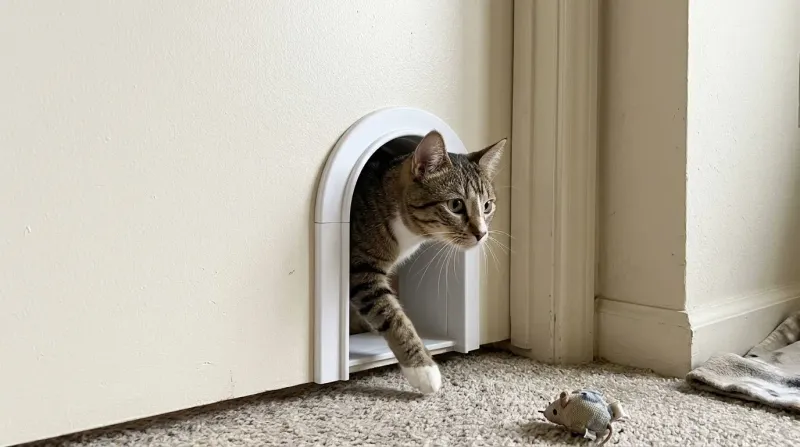
Standard exterior pet doors often pull apart on thin indoor doors because hollow-core panels lack solid wood in the middle. Choose an interior-specific cat door with a two-piece telescoping sleeve that clamps tightly around the front and back skins of the door, adding structural rigidity without requiring extra wood blocking.
10Louvered Closet Door Lower Insert
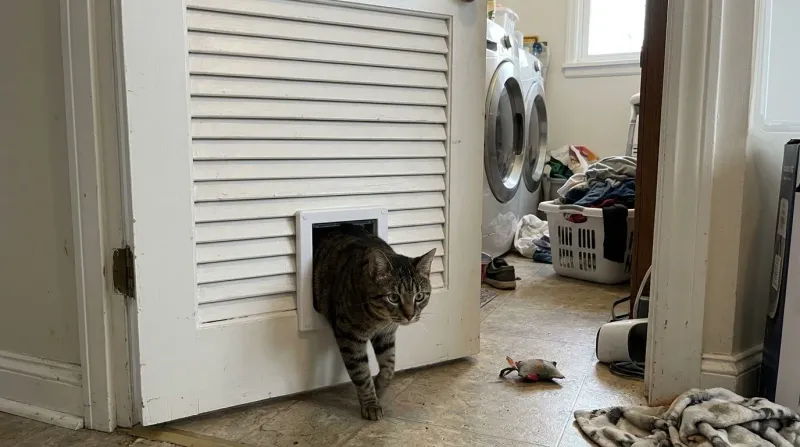
If your utility or laundry closet already has slatted louver doors, remove the bottom six slats and fit a framed cat flap into the resulting rectangular opening. The remaining upper slats allow fresh air to circulate over the litter box while the closed door keeps everything hidden from guests.
11Wall-Mounted Stud-Bay Tunnel Next to a Door
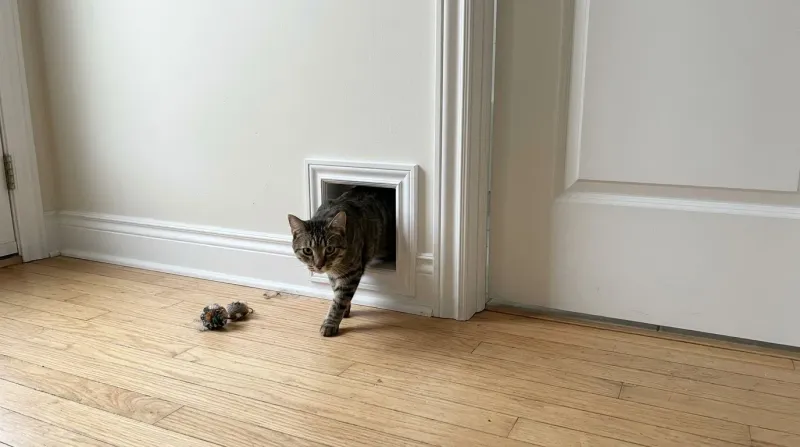
Strictly for condo owners rather than renters, installing a tunnel-style cat pass-through directly into the drywall cavity beside a narrow bathroom doorframe saves door space. Always scan the wall for electrical wires, plumbing pipes, and fire-blocking studs before cutting, then frame the opening between two standard wall studs and insert a paintable tunnel liner.
12Tension-Rod Curtain Doorway for No-Door Closets
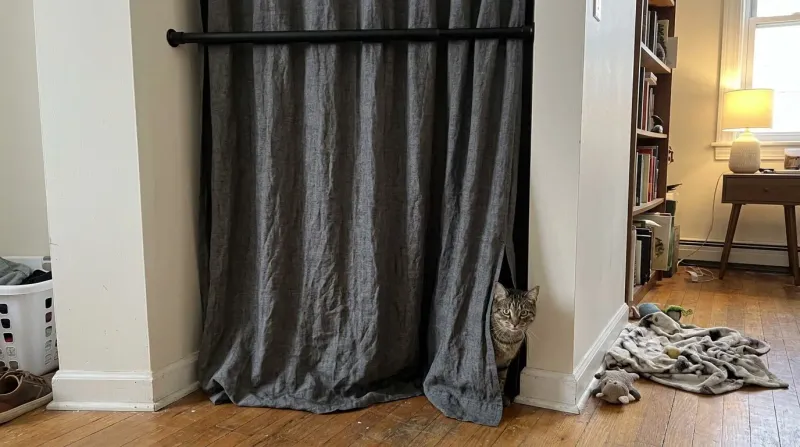
For open coat closets or alcoves that lack a hinged door, hang a heavy blackout curtain on a sturdy tension rod and slit the bottom corner or sew in a weighted magnetic flap. The dense fabric traps odors and blocks the view of the litter pan without a single screw hole in your walls.
13Clear Acrylic Flap for Timid Cats
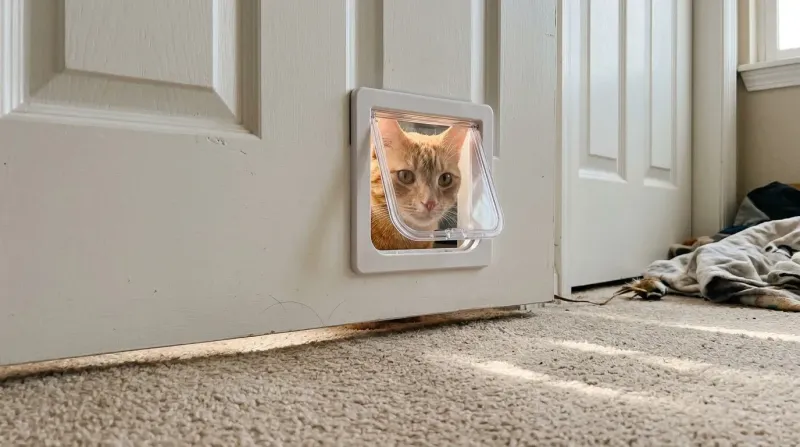
Some apartment cats hesitate to push through opaque doors because they cannot see what is waiting on the other side. Fit your closet door with a transparent polycarbonate flap that lets your cat check the hallway before stepping out, reducing startle responses in busy studio layouts.
14Two-Way Locking Flap for Cleaning Time
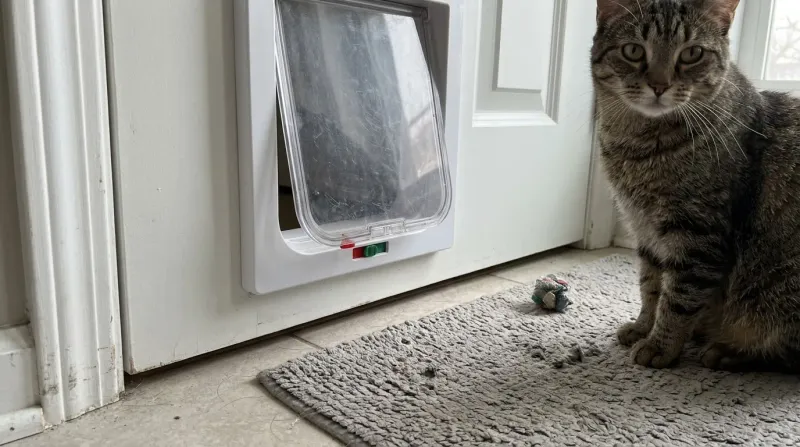
Install a four-way locking interior cat door on your bathroom or utility closet so you can briefly restrict entry while mopping floors or scrubbing the litter tray, taking care never to leave your cat locked out of its litter box unattended for long periods. If your main goal is keeping toddlers or other pets out while leaving access open for your cat, choose a microchip- or collar-activated selective flap instead.
15Flush-Mount Magnetic Swing Door
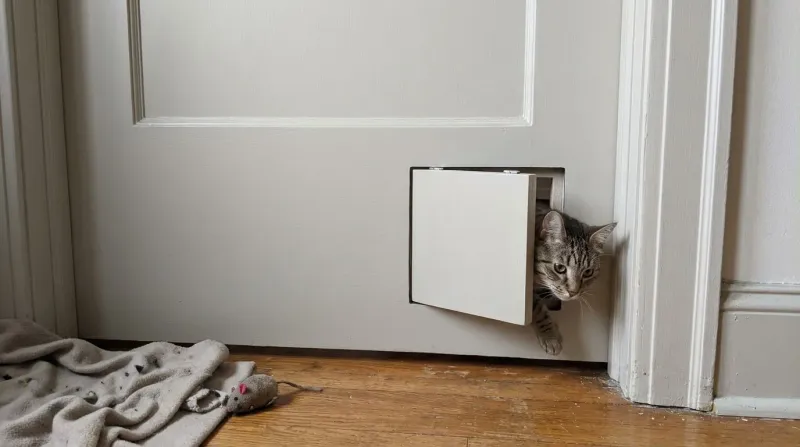
Instead of a plastic pet frame, hinge the cutout piece of wood back into the bottom corner of a solid door using concealed mini barrel hinges and a soft magnetic catch. Painted the exact shade of your door, the swinging flap disappears completely until your cat nudges it open.
16Barn-Style Sliding Closet Door Lower Corner Cutout
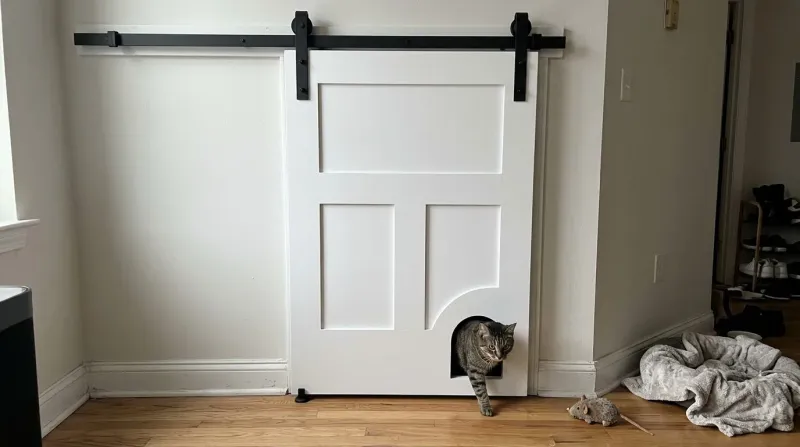
Apartments with space-saving sliding barn doors over laundry closets can accommodate a low-profile cat opening placed in the lower corner away from the floor guide's travel path. Alternatively, switch to wall-mounted stay rollers that grip the outside edge of the door instead of a bottom groove so the door never swings loose or derails.
17Half-Height Louvered Saloon-Style Under-Door Panel
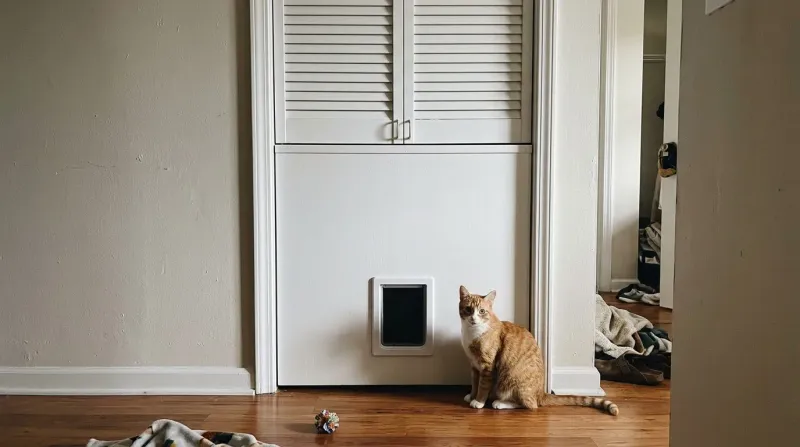
Replace a standard closet door with a custom split setup where a solid upper door latches shut and a fixed lower panel holds a built-in cat door. This gives you full access to upper closet shelves for coats and linens while keeping the bottom litter zone closed off behind its own dedicated pet entry.
How to Choose the Right Cat Door for an Apartment
Start by checking your lease and measuring your door thickness before buying hardware. Most apartment interior doors are hollow-core slabs measuring 1 3/8 inches thick, which require either a telescoping tunnel frame or internal wood blocking so screws grip securely. If you cannot alter the original door, store it safely in a closet and hang an inexpensive replacement slab for your cutout, or use one of the no-cut cat door alternatives listed above.
Next, match the opening size to your largest cat, especially if you share your home with a large breed or a senior cat with stiff joints. Check our guide on cat door dimensions to ensure the bottom threshold sits low enough for effortless entry; cats see well in dim light, so you only need a low-heat battery LED inside a windowless closet if you want extra visibility for scooping.
Common Mistakes to Avoid With Closet Litter Setups
Never seal a closet completely airtight without considering airflow, as trapped ammonia fumes can irritate your cat's respiratory system and cause litter box avoidance. Pair a brush-sealed flap with a battery-powered carbon air purifier or a louvered upper vent to keep air fresh without letting odors escape into the hallway.
Avoid spring-loaded latches or heavy magnets that require hard pushing, as timid cats and kittens often refuse to use stiff flaps. Finally, keep toxic household cleaners, bleach, and essential oil diffusers completely out of any bathroom or utility closet your cat can enter, and consult your veterinarian promptly if your cat suddenly stops using a newly enclosed box.
Adding an interior cat door lets you reclaim tight apartment floor space without sacrificing your cat's privacy or filling your living room with litter dust. Pick the modification level that matches your lease, measure your cat's shoulder height carefully, and introduce the new passage gradually with treats so your cat feels confident using it.
Sources: International Cat Care · ASPCA
Frequently asked questions
How do I put a cat door in a rental apartment without losing my deposit?
Buy a pre-hung or pre-machined hollow-core replacement door slab, install the cat door in it, and store the landlord's original door flat until you move out. Alternatively, use a no-cut door strap latch or a tension-rod curtain panel so you never alter permanent apartment fixtures.
Will putting a litter box in a small closet trap too much odor for my cat?
A completely sealed closet can hold ammonia fumes that bother a cat's sensitive nose. Pair your cat door with daily scooping, a small carbon air purifier, or upper louver vents so fresh air circulates while keeping smells out of your main room.
What size interior cat door works best for most cats?
An opening roughly 6 to 7 inches wide and 7 to 8 inches tall fits most average adult cats comfortably. If you have a large breed like a Maine Coon or a heavy senior cat, choose a larger flap and keep the bottom step under 3 inches high.
Can you cut a cat door into a hollow-core apartment door?
Yes, you can cut into a hollow-core door using a fine-tooth jigsaw blade after applying painter's tape to prevent splintering. Use an interior cat door with a telescoping frame or glue thin wood strips inside the cut edges so mounting screws have solid material to grip.

Nathan Brooks
Nathan Brooks runs Farmingzoom to help loving pet owners create safe, enriching homes for their animals. He cares deeply about responsible pet care and focuses on making everyday decisions simpler for fellow owners.…