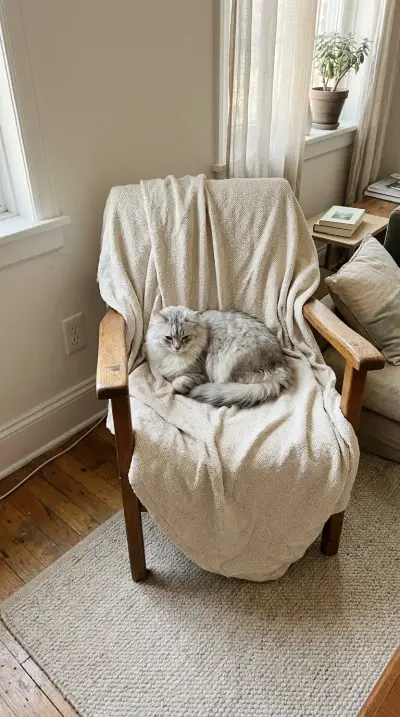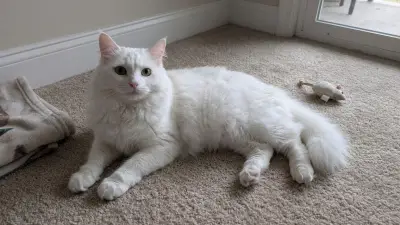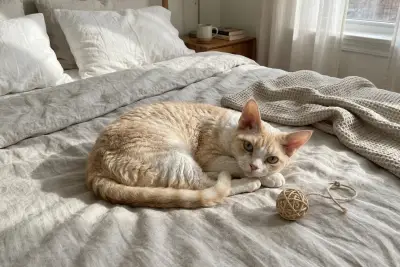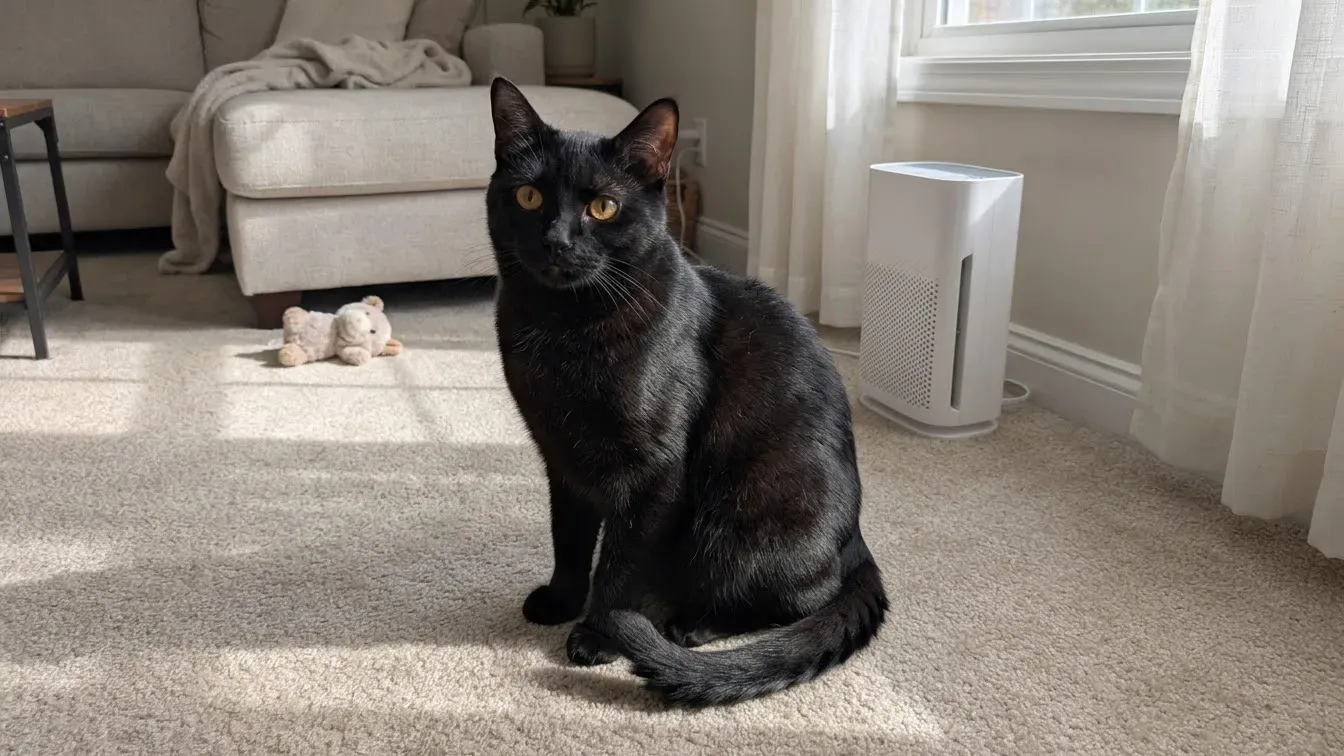
No cat is completely allergen-free, but seven breeds that come in solid black produce lower amounts of the Fel d 1 protein or shed far less dander into plush carpets. Reactions come from proteins found in cat saliva, skin oils, and dander rather than fur length alone, which means a dark-coated cat can still fit a sensitive household.
Wall-to-wall rugs and rooms with limited airflow trap microscopic dander particles, triggering watery eyes and sneezing long after your cat leaves the room. Choosing a breed with minimal shedding or naturally lower allergen output reduces what settles into floor fibers, especially when paired with smart weekly cleaning habits. Explore more black cat breeds with striking coats if you want to compare coat textures before adopting.
| Breed | Coat Type | Shedding | Weight | Lifespan |
|---|---|---|---|---|
| Bombay | Short, satin | Low | 8–15 lbs | 12–16 years |
| Devon Rex | Short, curly | Very low | 6–9 lbs | 9–15 years |
| Cornish Rex | Short, wavy | Very low | 6–10 lbs | 11–15 years |
| Oriental Shorthair | Short, fine | Low | 8–12 lbs | 12–15 years |
| Sphynx | Hairless, suede-like | Minimal | 6–12 lbs | 8–14 years |
| Siberian | Long, triple-coated | Moderate | 10–20 lbs | 11–18 years |
| Oriental Longhair | Medium-long, silky | Low | 8–12 lbs | 12–15 years |
1Bombay
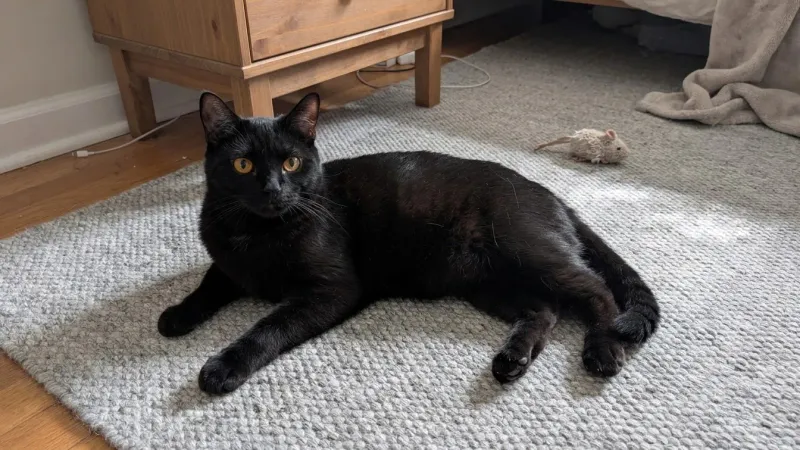
Coat Type: Short, satin · Shedding: Low · Weight: 8–15 lbs · Lifespan: 12–16 years Bred to resemble a miniature panther, the Bombay carries a sleek, single-layered jet-black coat with virtually no undercoat. While Bombays have not been scientifically proven to produce less Fel d 1 protein, they shed very little and groom moderately, so any benefit for allergy sufferers comes strictly from minimal shedding rather than lower allergen output. Weekly wiping with a damp microfiber cloth removes dried saliva from their glossy fur before it settles into low-airflow corners.
2Devon Rex
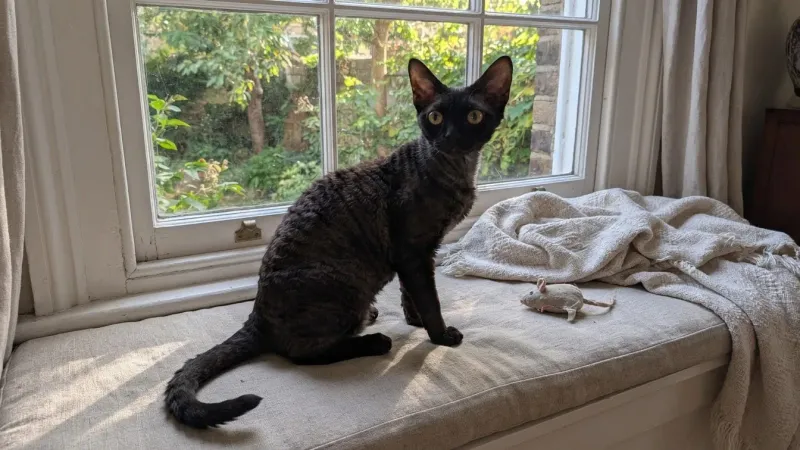
Coat Type: Short, curly · Shedding: Very low · Weight: 6–9 lbs · Lifespan: 9–15 years Recognized by oversized ears and a soft, rippled coat, the Devon Rex lacks long guard hairs and sheds minimally. Ebony-colored Devon Rex cats keep carpet fibers much cleaner than standard domestic shorthairs. Their short curls do absorb natural skin oils, so gentle ear cleaning and occasional warm baths keep skin flakes from building up on furniture. You can compare similar wavy-coated options in this guide to curly cat breeds for mild allergies.
3Cornish Rex
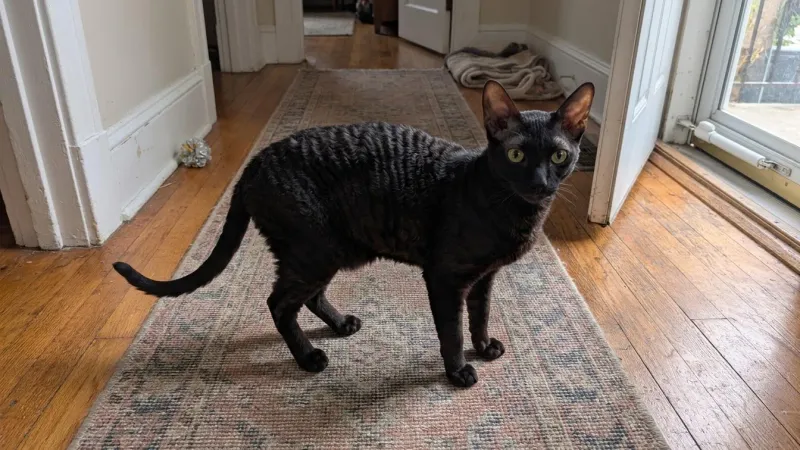
Coat Type: Short, wavy · Shedding: Very low · Weight: 6–10 lbs · Lifespan: 11–15 years The Cornish Rex wears only a fine, marcel-waved undercoat, making their solid black coat feel like warm velvet. With no heavy outer coat to shed seasonally, far less loose fur drifts across carpeted bedrooms. Regular gentle wipe-downs with vet-approved pet wipes clear away surface oils and dander before they trigger morning congestion.
4Oriental Shorthair
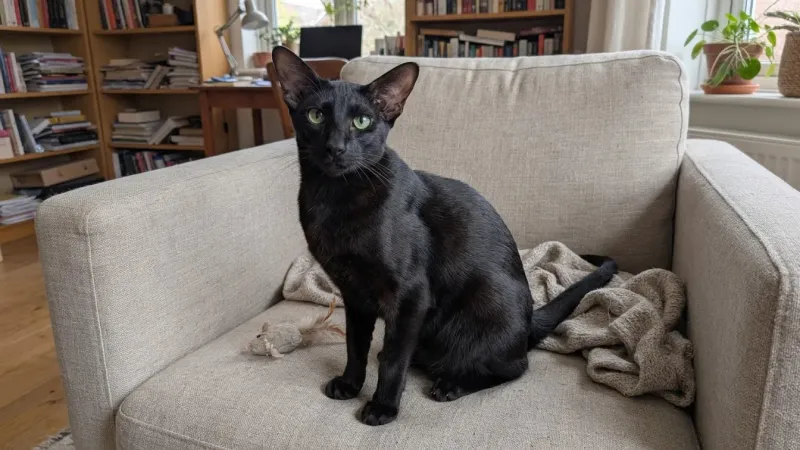
Coat Type: Short, fine · Shedding: Low · Weight: 8–12 lbs · Lifespan: 12–15 years Available in ebony, the Oriental Shorthair has an ultra-fine, short coat that lies flat against a slender, athletic body. They still produce normal levels of Fel d 1 protein and are only considered easier on mild allergies because their short, single-layer coat sheds less fur into wall-to-wall carpeting. Brushing once a week with a soft rubber curry brush captures loose skin flakes in seconds and keeps their dark coat gleaming.
5Sphynx
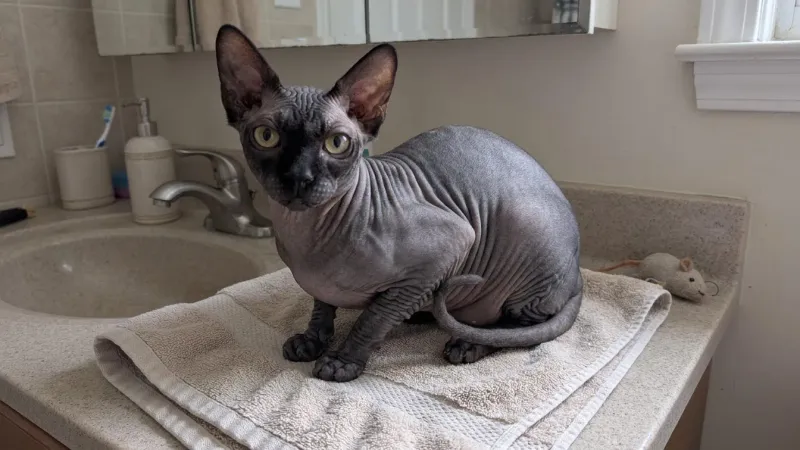
Coat Type: Hairless, suede-like · Shedding: Minimal · Weight: 6–12 lbs · Lifespan: 8–14 years Black-pigmented Sphynx cats have charcoal-dark skin covered in fine peach fuzz rather than fur, eliminating shed hair from carpets completely. However, Sphynx cats still produce normal levels of Fel d 1 protein in their skin oils and saliva, and while weekly lukewarm baths with mild, fragrance-free cat shampoo help wash skin oils away, evidence on whether they cause fewer reactions than furred cats is mixed.
6Siberian
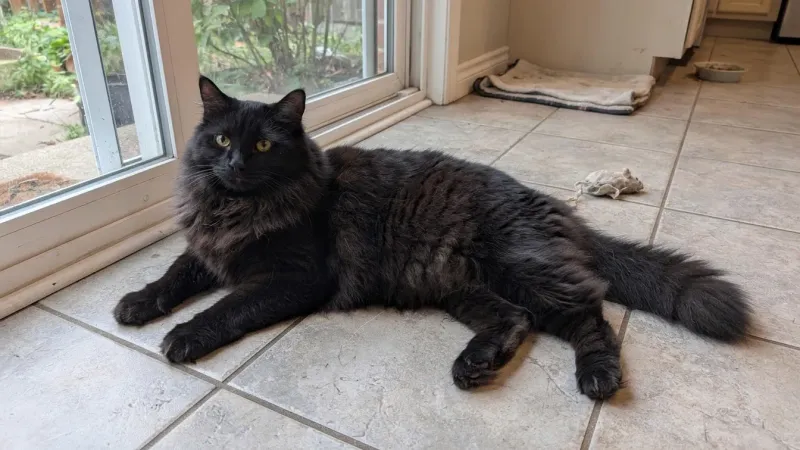
Coat Type: Long, triple-coated · Shedding: Moderate · Weight: 10–20 lbs · Lifespan: 11–18 years Despite a thick, plush coat that comes in solid black, many Siberians naturally produce lower levels of the Fel d 1 allergen than typical domestic cats. While you will need to brush their dense fur twice a week to prevent loose tufts on carpets, their reduced protein output makes them surprisingly comfortable for mild allergy sufferers.
7Oriental Longhair
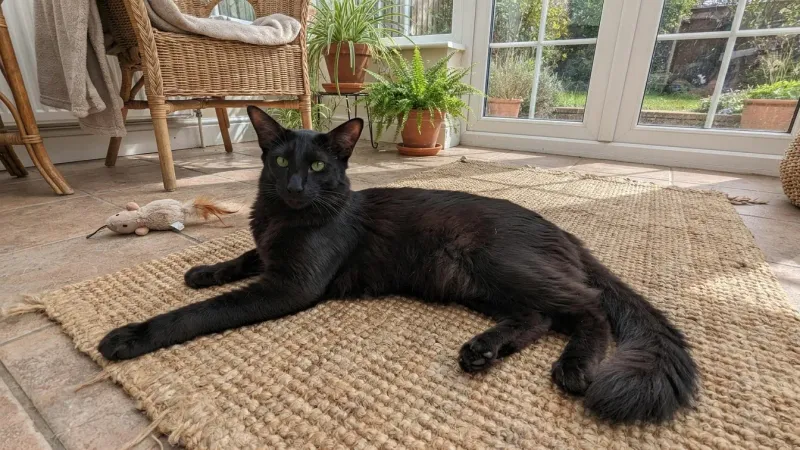
Coat Type: Medium-long, silky · Shedding: Low · Weight: 8–12 lbs · Lifespan: 12–15 years The ebony Oriental Longhair pairs a flowing, single-layer silky coat with minimal undercoat. Unlike double-coated longhaired breeds that drop heavy clumps of fluff into carpets, this sleek cat sheds lightly and requires only twice-weekly combing to trap dander before it becomes airborne.
Keeping Dander Out of Carpets and Stuffy Rooms
Even low-allergen cats leave microscopic skin flakes behind, and plush carpets hold onto those particles like a sponge. In rooms with low airflow, dander stays suspended longer before settling deep into floor padding.
- Upgrade your vacuum: Vacuum high-traffic carpets at least twice a week using a machine sealed with a true HEPA filter so fine allergens do not blow back into the air.
- Filter stale air: Run a portable HEPA air purifier continuously in bedrooms and living rooms where air circulation is weak.
- Create allergen-free zones: Keep your bedroom door closed so your sinuses get eight hours of clean recovery time each night.
- Wash soft surfaces weekly: Launder cat beds, throw blankets, and washable area rugs in hot water (at least 130°F) to break down dried saliva proteins.
Testing Your Sensitivity Before Adopting
Allergen levels vary from one individual cat to another, even within the same breed, and intact males typically produce more Fel d 1 than spayed females or neutered males. Before bringing a kitten home, spend an hour in a closed room with the specific cat you plan to adopt to see how your sinuses and eyes respond.
Consult an allergist about targeted medications or allergy shots before adopting, and speak with your veterinarian about allergen-reducing cat diets that neutralize Fel d 1 in saliva. Keep household plants safe while decorating airy spaces by checking the ASPCA toxic plant list before adding greenery to improve indoor air.
Finding the right low-allergen black cat comes down to matching a low-shedding or low-Fel d 1 breed with consistent carpet and air care. Spend time around your chosen cat before adopting, run a HEPA purifier in stagnant rooms, and keep up with weekly grooming so you can breathe easily alongside your dark-coated companion.
Sources: Cornell Feline Health Center · The Cat Fanciers' Association (CFA) · The International Cat Association (TICA) · VCA Animal Hospitals
Frequently asked questions
Are black cats more hypoallergenic than other cat colors?
No, coat color does not affect allergen production. Allergic reactions are triggered by proteins like Fel d 1 in a cat's saliva and skin glands, which depend on breed genetics and hormone levels rather than black pigment.
Which black cat breed is best for severe cat allergies?
No cat breed is safe for severe allergies, as all cats produce some Fel d 1 protein. People with severe asthma or strong allergic reactions should consult an allergist before living with any cat, even hairless or low-shedding breeds.
How can I reduce cat dander in a carpeted apartment?
Vacuum carpets twice weekly with a sealed HEPA vacuum, run a HEPA air purifier in rooms with poor airflow, keep your cat out of the bedroom, and wipe your cat's coat weekly with vet-approved grooming wipes.
Do male or female black cats cause fewer allergies?
Spayed females and neutered males generally produce lower levels of Fel d 1 allergen than intact males. Neutering reduces hormone-driven skin oil and saliva protein production, making fixed cats easier on mild allergies.

Nathan Brooks
Nathan Brooks runs Farmingzoom to help loving pet owners create safe, enriching homes for their animals. He cares deeply about responsible pet care and focuses on making everyday decisions simpler for fellow owners.…