Time needed
45 min
What you need
- Feline facial pheromone diffuser and refill
- High-value single-ingredient cat treats (such as freeze-dried chicken or salmon)
- Covered cat cave bed or cardboard box
- Clean cotton towel or sock for scent swapping
Tools
- Sturdy tall cat tree or wall-mounted perch
- Under-bed blockers or storage bins
While many adopters describe black cats as affectionate and loyal companions who shadow their favorite person from room to room, personality depends on individual genetics and socialization rather than coat color—and an adult rescue with an unknown past will frequently bolt under the bed the second a doorbell rings. Giving your cat an elevated safe zone and pairing quiet visitor presence with high-value rewards teaches them that strangers are harmless.
Overlooked adult shelter cats carry histories you cannot see, and forcing them into a visitor's lap only deepens their fear. Instead of pushing interaction, you can use structured, low-pressure desensitization to turn frantic hiding into calm curiosity at your cat's own pace.
- 1
Set Up a Dedicated Safe Room Before Guests Arrive
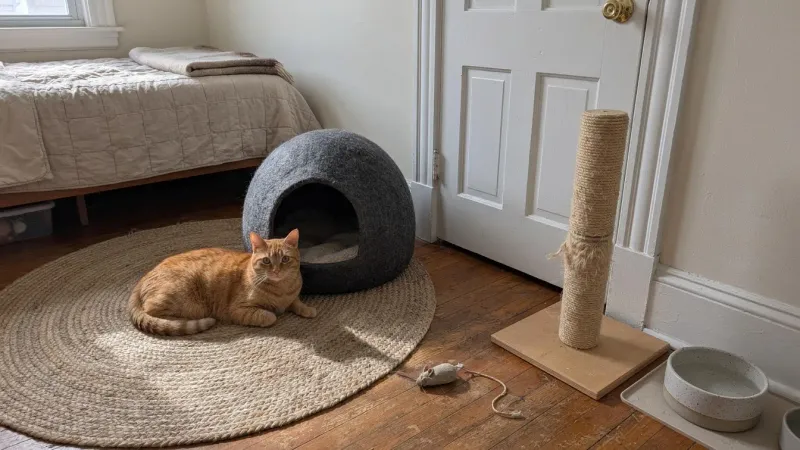
Prepare a quiet bedroom or spare room with your cat's litter box and water bowl placed on opposite sides of the room as far apart as possible, along with a scratching post and a covered bed before visitors ring the bell. Close the door softly so your cat is not startled by sudden entryways opening or strangers carrying coats and bags. This prevents the panicked dash under low furniture where a cat feels trapped.
- 2
Plug In a Feline Facial Pheromone Diffuser
Place a synthetic feline facial pheromone diffuser in the main living area and another inside your cat's safe room at least 24 hours before company visits. Synthetic feline facial pheromones mimic natural cheek-rubbing scent markers that help cats feel more familiar and relaxed in their environment as an adult rescue adjusts to new routines.
- 3
Provide Covered Floor-Level Hideaways Alongside Elevated Perches
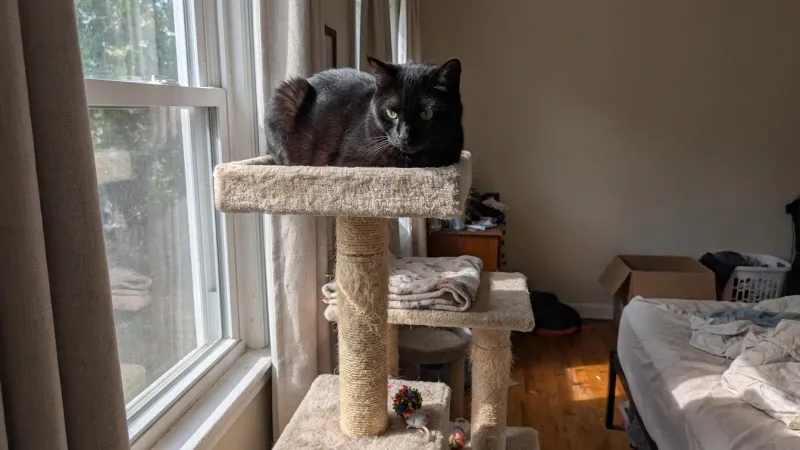
Keep accessible covered floor-level hiding boxes or cat caves available rather than blocking off all low retreats, while adding a sturdy cat tree or window hammock as an additional option. Having both enclosed ground-level hideaways and elevated perches gives a fearful cat choices to retreat privately or watch the room from a secure height, building confidence through safe observation.
- 4
Coach Your Guests on Calm Cat Etiquette
Brief your visitors before they enter so they know to ignore your cat completely at first. Ask them to speak in soft voices, keep their hands at their sides, and avoid walking toward the cat's room or perch. When a stranger poses zero social pressure, a shy rescue cat realizes they are not being hunted or cornered.
- 5
Introduce the Guest's Scent on a Soft Cloth
Have a calm friend rub a clean cotton sock or small towel gently against their hands and wrists, then place that cloth near your cat's bedding alongside a few freeze-dried chicken treats. Associating a newcomer's unfamiliar smell with quiet comfort and tasty food builds positive familiarity before your cat ever sees the person.
- 6
Open the Safe Room Door Without Forcing Contact
Once guests are seated and chatting quietly, crack the safe room door open a few inches so your cat can choose whether to peek out. Never call the cat out or rattle a treat bag at the doorway. Letting an adult shelter cat control the distance is the fastest way to replace fear with curiosity.
- 7
Have Guests Toss High-Value Treats From Afar
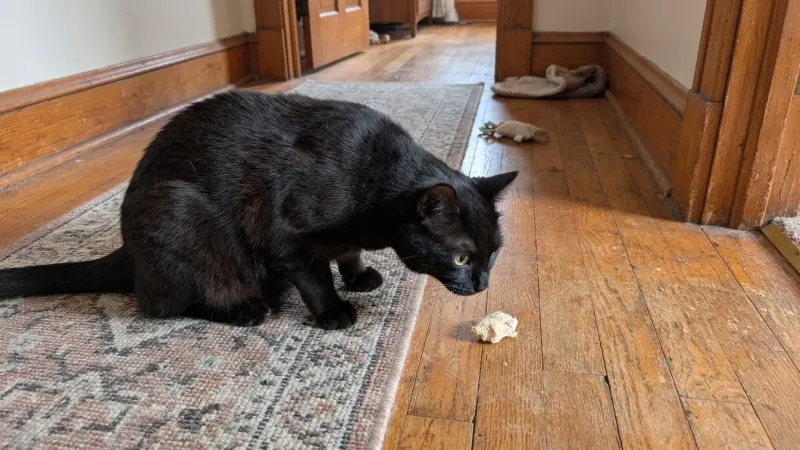
If your black cat steps into the hallway or sits on a high perch, ask your guest to gently toss a small piece of plain cooked chicken or commercial cat treat a few feet away from the cat—never directly at them. Tossing the reward slightly behind or beside the cat lets them eat without moving closer to a stranger.
- 8
Watch Body Language and End Sessions Early
Monitor your cat's posture for subtle signs of tension, such as flattened ears, a tucked tail, or dilated pupils. You can review cat tail body language signals to spot early discomfort before your cat feels overwhelmed. Keep early visits short—around 30 to 45 minutes—so every interaction ends on a calm, positive note.
Common Mistakes That Set Back a Shy Shelter Cat
Even well-meaning visitors can accidentally undo weeks of trust in a few seconds. Before guests walk through your front door, make sure everyone understands these boundaries:
- Pulling the cat out from under furniture: Dragging a terrified cat from a hiding spot removes their sense of control and can trigger defensive scratching or biting.
- Making direct, prolonged eye contact: In feline body language, staring straight at a nervous cat reads as a predatory threat rather than friendly interest.
- Loud greetings and sudden movements: Heavy footsteps, booming voices, and reaching over the cat's head to pet them will send an adult shelter cat straight back into retreat.
- Feeding toxic human party foods: Remind guests never to drop table scraps, as common hosting ingredients like onions, garlic, chocolate, grapes, and raisins are dangerous to cats.
Understanding Black Cat Loyalty and Stranger Anxiety
Many adopters feel confused when their black cat curls up on their chest every evening but vanishes whenever company arrives. Despite outdated superstitions—sometimes called black cat syndrome, which causes dark-coated cats to wait longer in shelters—most black cats are deeply people-oriented once they feel secure. They frequently pick one primary human they trust completely.
For an adult rescue cat, that strong bond makes unfamiliar voices, shoes, and scents feel especially overwhelming. Respecting their need for distance while offering vertical perches, such as no-drill wall-mounted cat trees, lets them observe your guests safely from above rather than cowering in a dark corner.
Helping an adult rescue black cat overcome fear of visitors takes patience, predictable routines, and complete respect for their personal space. Keep early gatherings small and quiet, reward every tiny step of curiosity, and consult your veterinarian or a certified feline behaviorist if your cat shows persistent panic, appetite loss, or litter box avoidance after visits.
Sources: Cornell Feline Health Center · ASPCA · International Cat Care · VCA Animal Hospitals
Frequently asked questions
Why does my rescue black cat hide from guests but follow me everywhere?
Adult shelter cats with unknown histories often form an intense bond with their primary caregiver while viewing unfamiliar voices and scents as potential threats. Hiding is a normal self-protection instinct rather than a sign that your cat dislikes living with you.
How long does it take a shy adult rescue cat to warm up to visitors?
Most shy adult cats need several weeks to a few months of calm, low-pressure visits before they feel comfortable entering a room with guests. Letting your cat set the pace without forced petting speeds up their long-term confidence.
Should I shut my shy cat in a bedroom whenever company comes over?
Yes, starting your cat in a quiet, well-equipped safe room prevents panic when the front door opens. Once guests are seated calmly, you can crack the door open so your cat has the choice to explore or stay tucked away.
When should I talk to a vet about my cat hiding from guests?
Schedule a veterinary visit if your cat stays hidden for hours after guests leave, stops eating or using the litter box, overgrooms, or reacts with sudden aggression. A vet can rule out underlying pain and discuss safe anxiety support.

Nathan Brooks
Nathan Brooks runs Farmingzoom to help loving pet owners create safe, enriching homes for their animals. He cares deeply about responsible pet care and focuses on making everyday decisions simpler for fellow owners.…