Understanding cat tail body language meaning within three seconds of unlocking a client's front door prevents scratched hands and stressed pets. When you arrive for a 15- or 30-minute drop-in visit, an unfamiliar cat treats your entry as an intrusion until proven otherwise.
Rather than reaching down immediately to pet or scoop kibble, pause on the doormat and look at the cat's tail height, fur texture, and movement speed. Those three visual cues tell you whether the cat wants a chin scratch, needs quiet space near the food bowl, or is preparing to defend its territory.
Why Your First Three Seconds at the Door Matter
Unlike dogs that rush the entryway barking or wagging, cats rely on silent distance signals to manage sudden visitors. During a short drop-in visit, you do not have hours to earn trust, so misreading an initial tail posture can ruin the entire booking.
Before stepping fully into the hallway, unlock the door slowly, speak in a low, steady voice, and keep your hands at your sides. Scan the cat from a distance to check its overall silhouette.
- Tail height: Indicates confidence versus fear or submission.
- Fur volume: Shows whether the cat's nervous system is calm or startled.
- Motion speed: Separates playful curiosity from rising irritation.
If you are transitioning from dog walking to feline care, reviewing cat body language before biting helps you spot subtle tension before reaching into a carrier or corner.
Green Light Signals: Upright and Question-Mark Tails
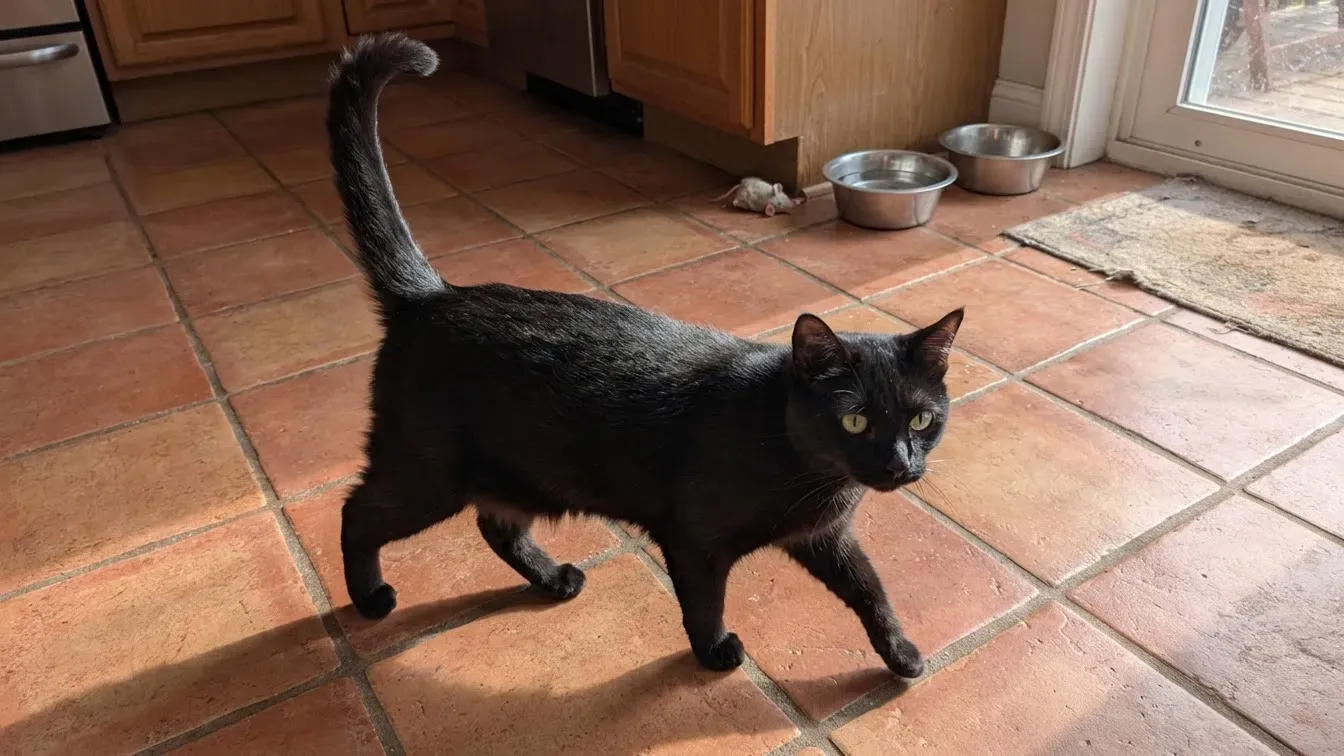
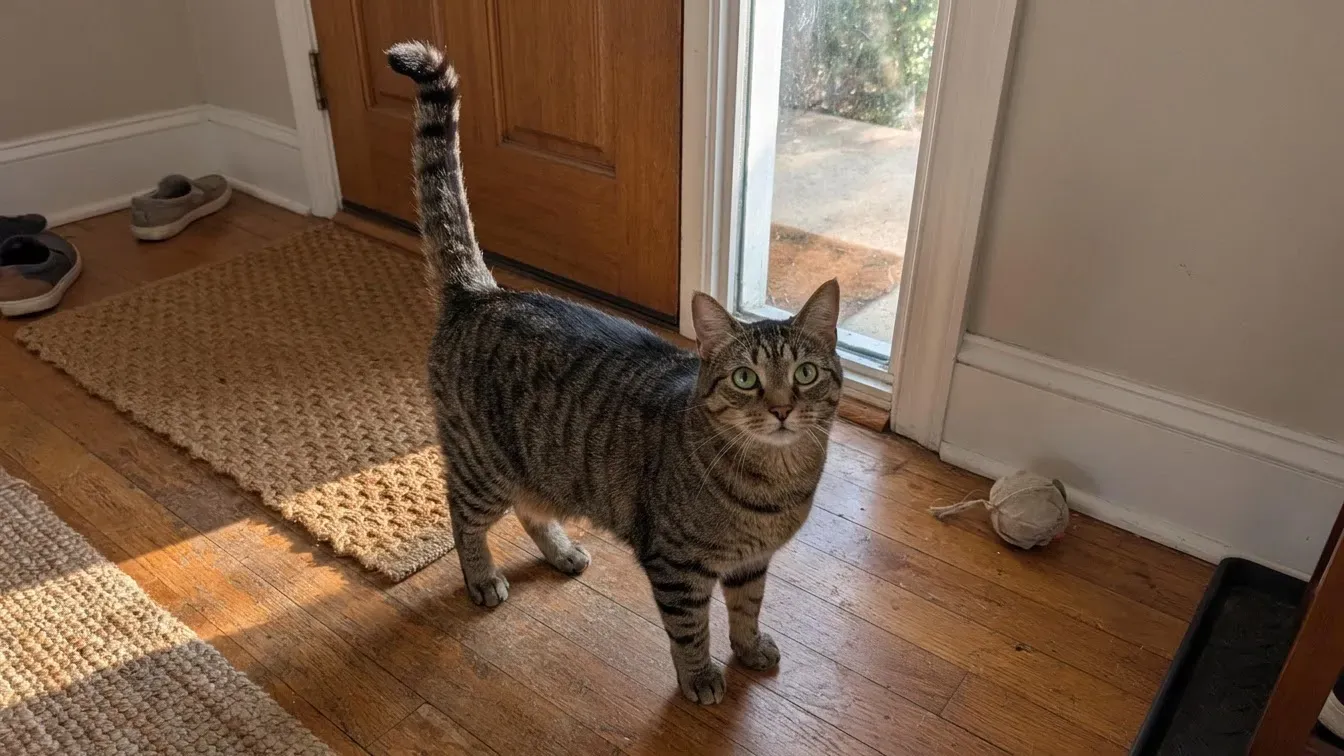
When a cat trots toward the foyer with its tail held straight up like a flagpole, you have received a clear feline greeting. An erect tail signals happiness, confidence, and an open invitation for social interaction. Both male and female cats commonly use this upright greeting to welcome familiar or friendly visitors, though some sources note it may be observed slightly more frequently in females.
Sometimes the very tip of an upright tail curves slightly into a hook or question mark. This variation means the cat feels playful, curious, and ready to investigate your shoes or offered fingers.
How to Respond to a Flagpole Tail
- Crouch down to reduce your height rather than towering over the cat.
- Extend one relaxed finger at nose level so the cat can sniff your scent first.
- Stroke the cheeks or base of the ears only after the cat rubs its face against your hand.
If the cat raises its hindquarters while you pet along its spine, it is leaning into the affection and signaling comfort, not trying to pull away.
Yellow Light Signals: Slow Swishing and Low Tucked Tails
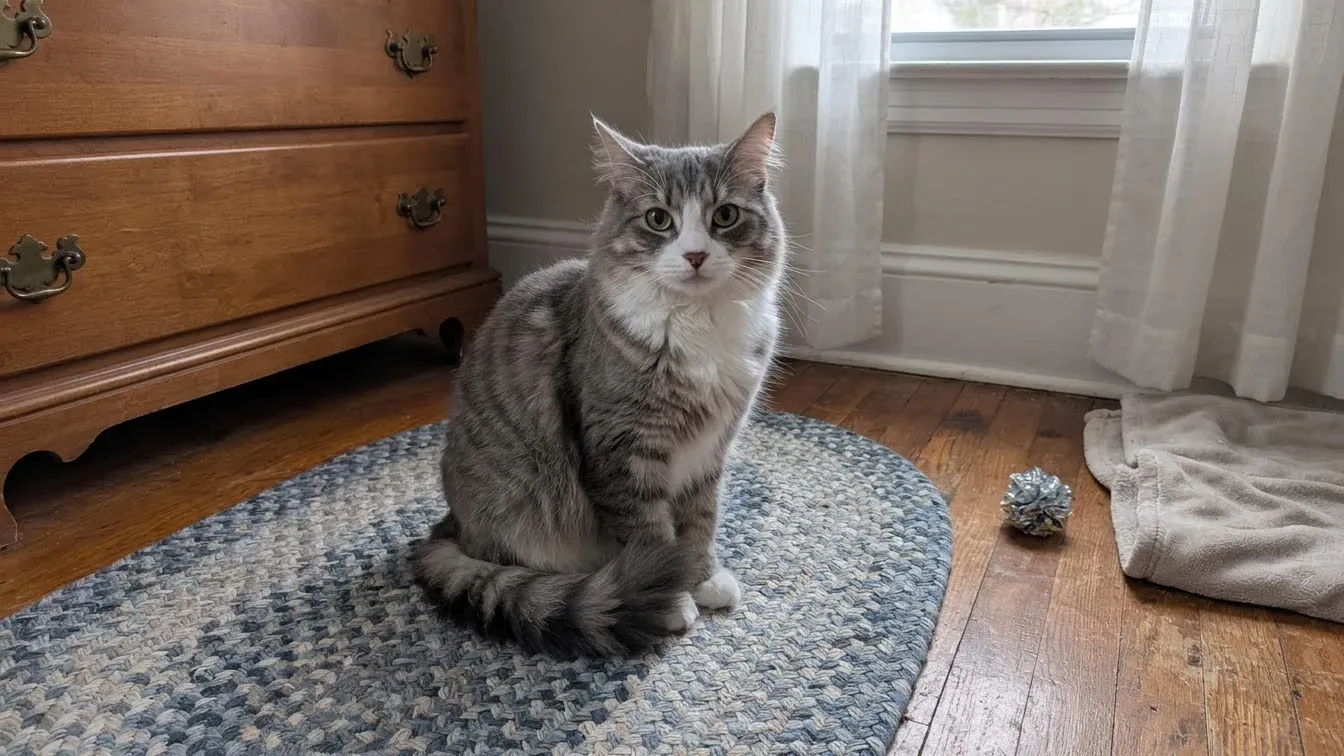
A tail held low to the floor or sweeping gently from side to side calls for patience rather than immediate touch. While a slow, rhythmic swish can accompany playful focus on a toy, a shadow, or your shoelaces, it can also signal mild annoyance, uncertainty, or early tension, so sitters should watch the cat's ears and overall posture before approaching.
By contrast, a cat sitting on the rug with its tail wrapped tightly around its paws and body is feeling frightened, defensive, or physically unwell. Senior cats with arthritis or kittens experiencing their first sitter visit frequently use this closed posture to protect themselves.
For anxious cats that retreat behind furniture, check these signs your cat wants space and focus on quiet chores first. Walk calmly to the kitchen, refresh the water bowl, and place food down without forcing eye contact.
Red Light Signals: Fast Lashing and Puffed Fur
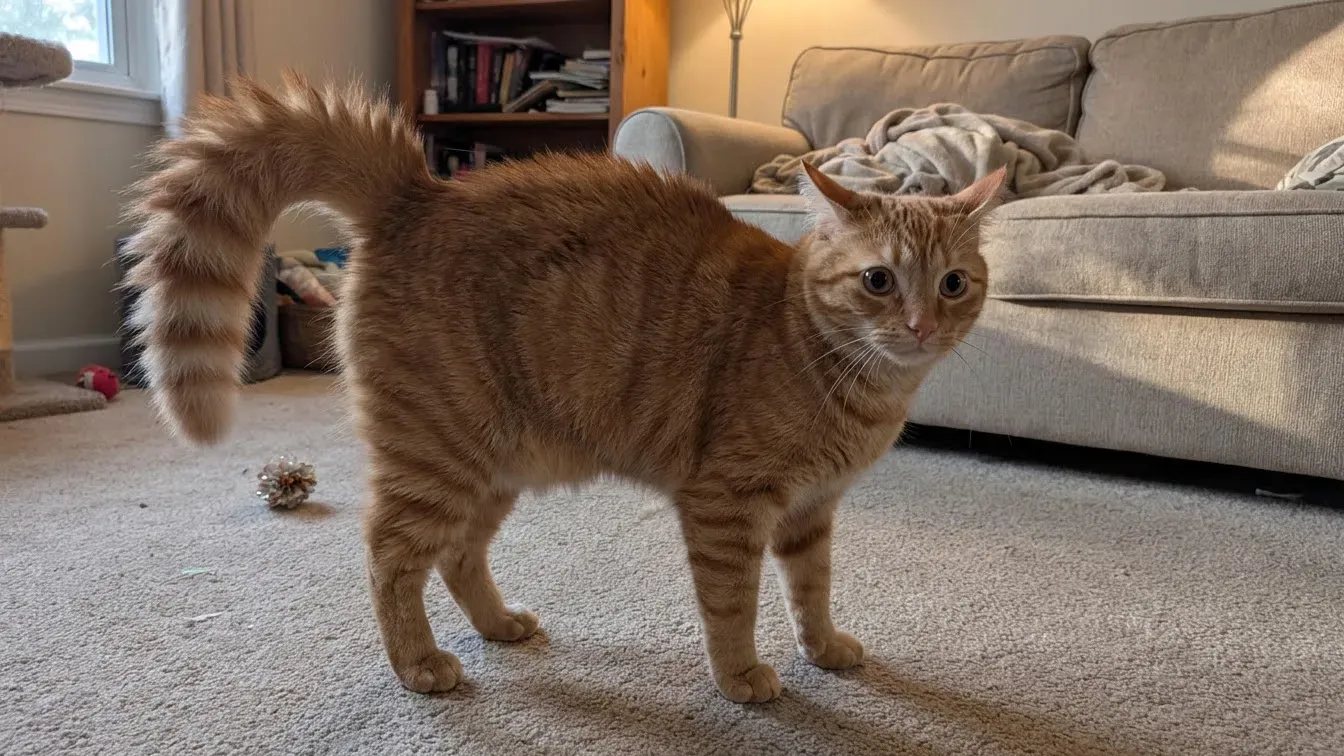
Rapid, forceful tail lashing against the floor or flanks is a clear warning that the cat feels angry, threatened, or overstimulated. The faster and harder the tail whips back and forth, the closer the cat is to swatting or biting.
Similarly, if the fur along the base of the tail—or down its entire length—suddenly puffs up like a bottle brush, the cat is severely startled and trying to look larger to deter a perceived threat. Long-haired breeds like Maine Coons show dramatic tail fluffing, while short-haired cats may display raised fur along the spine at the same time.
When you see rapid thumping or a puffed tail at the doorway, freeze for a moment, turn your body slightly sideways to appear less confrontational, and give the cat an unobstructed escape route down the hall.
Doorway Tail Quick-Reference Guide for Drop-In Visits
Use this doorway checklist during brief visits to match your actions to the cat's immediate comfort level.
| Tail Position or Motion | What the Cat Is Feeling | Your Best Doorway Action |
|---|---|---|
| Straight up (flagpole) | Happy, confident, welcoming | Crouch down and offer a finger to sniff |
| Upright with curved tip | Curious, friendly, slightly playful | Offer a relaxed finger to sniff and wait for the cat to initiate cheek rubs |
| Slow side-to-side swish | Focused, assessing you, or mildly uncertain | Watch ears and posture; keep hands clear and give space or toss a wand toy |
| Wrapped tightly around body | Fearful, defensive, or unwell | Avoid touching; prep food and speak softly |
| Fast lashing or thumping | Agitated, threatened, overstimulated | Step back immediately and give space |
| Puffed bottle-brush fur | Startled, scared, defensive | Turn sideways, move slowly, leave room |
Age, Breed, and Health Factors Affecting Tail Posture
Tail signals vary slightly depending on the individual cat in your care. Kittens often hold their tails straight up while bouncing sideways during energetic bursts, whereas older cats with stiff joints or spinal arthritis may carry their tails lower even when pleased to see you. Naturally bobbed or curled breeds, such as Manx, Japanese Bobtail, or American Bobtail cats, have limited tail length or mobility and rely more heavily on ear position, whiskers, and body posture to communicate.
Chronic pain, mobility loss, or underlying illness can also alter a cat's baseline tail carriage over time. If a cat's tail remains tucked tightly against its body across multiple visits alongside hiding, vomiting, litter box avoidance, or skipped meals, notify the owner right away so they can arrange a veterinary checkup.
Reading a cat's tail before taking your first step inside turns tense drop-in visits into calm, predictable routines. Match your pace to the cat's posture—welcoming upright tails with gentle greetings and giving low or lashing tails plenty of room—and every client's pet will feel safer under your care.
Sources: Cornell Feline Health Center · International Cat Care · ASPCA
Frequently asked questions
What does cat tail flicking back and forth mean?
Slow, gentle tail flicking can mean a cat is focused, curious, or feeling playful, or it can be an early sign of mild annoyance or uncertainty, so watch the cat's ears and posture. Rapid, forceful flicking or thumping signals frustration, overstimulation, or anger, meaning you should stop petting and give the cat space immediately.
Why do cats raise their butts when you pet them?
Cats raise their hindquarters when petted along the back or tail base because that area contains dense nerve endings that feel pleasant. Lifting the rear is an instinctive posture showing trust, comfort, and enjoyment of your attention.
How do you say I love you in cat body language?
You communicate affection to a cat by offering slow, relaxed blinks from across the room while keeping your posture still and low. Greeting them with a calm voice and letting them approach your extended hand builds trust.
What does it mean when a cat wraps its tail around its body?
A cat sitting or lying with its tail tucked tightly around its paws and body is feeling nervous, defensive, cold, or physically unwell. Give the cat quiet space and avoid reaching in to pick it up.
Nathan Brooks
Nathan Brooks runs Farmingzoom to help loving pet owners create safe, enriching homes for their animals. He cares deeply about responsible pet care and focuses on making everyday decisions simpler for fellow owners.…