Wall mounted cat trees for dogs and cats sharing one roof give your feline a reliable, elevated sanctuary well above canine reach. When an energetic dog treats every floor-level sprint as an invitation to chase, your cat needs vertical territory where they can rest, eat, and watch the room without feeling cornered.
Below are 17 practical wall-mounted cat tree designs, climbing layouts, and feeding perches tailored for multi-pet households. Each setup focuses on out-of-reach mounting heights, stud-anchored stability, and two-way exit routes so your cat never gets trapped on a single ledge.
1Elevated Dual-Bowl Feeding Station With Entry Steps
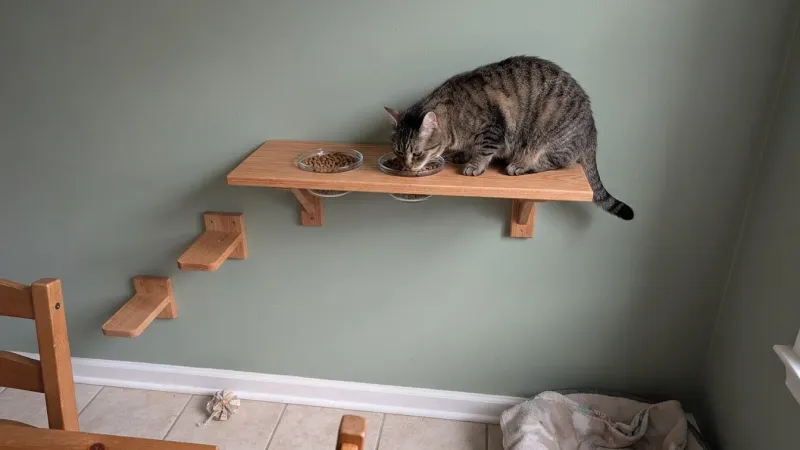
Mount a 23-inch-wide feeding shelf at least 56 inches above the floor with two recessed 4-ounce bowls and two staggered entry steps. Placing meals high on the wall prevents food-motivated dogs from gulping down calorie-dense cat kibble, which can trigger canine stomach upset. Keep the lower entry step narrow so only a nimble cat can balance on it, letting your cat eat slowly without guarding their dish.
2Two-Way Bridge Loop With Central Hammock
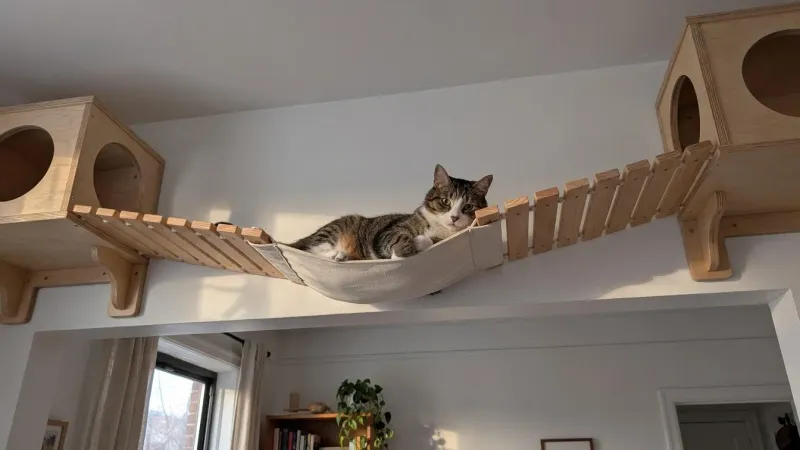
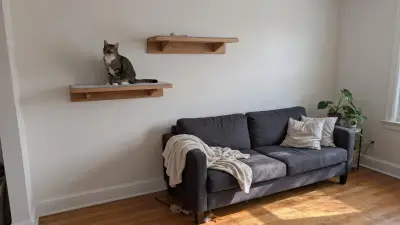
Connect two wall-mounted cubbies with a flexible wooden slat bridge and hang a canvas hammock in the middle. In homes with high-prey-drive dogs, single-entry shelves can make cats feel trapped when a dog barks underneath. A continuous bridge lets your cat cross from one side of the living room to the other and drop down onto a tall bookcase far away from the commotion.
3Vertical Sisal Pole Entry to High Perches
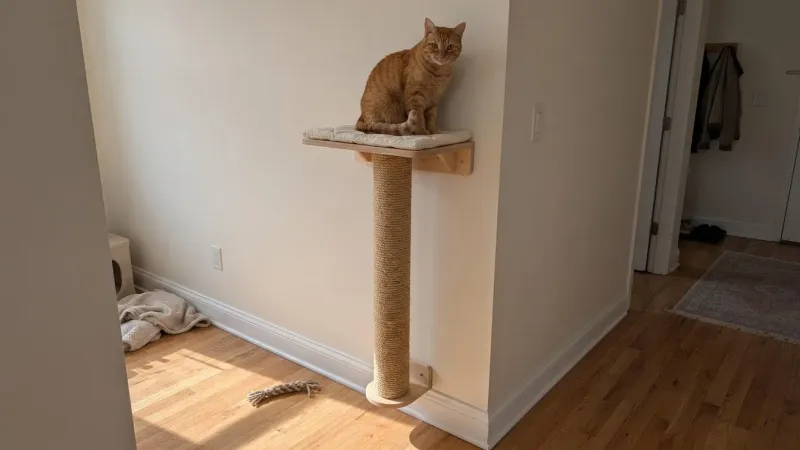
Replace low stepping shelves with a 48-inch wall-mounted vertical sisal scratching column leading directly to a top lookout bed. Dogs cannot climb a vertical rope-wrapped cylinder, which immediately solves the problem of athletic jumpers following your cat partway up the wall. Your cat gets a full-body stretch and claw-sharpening session every time they retreat upward.
4Five-Piece Modular Activity Wall System
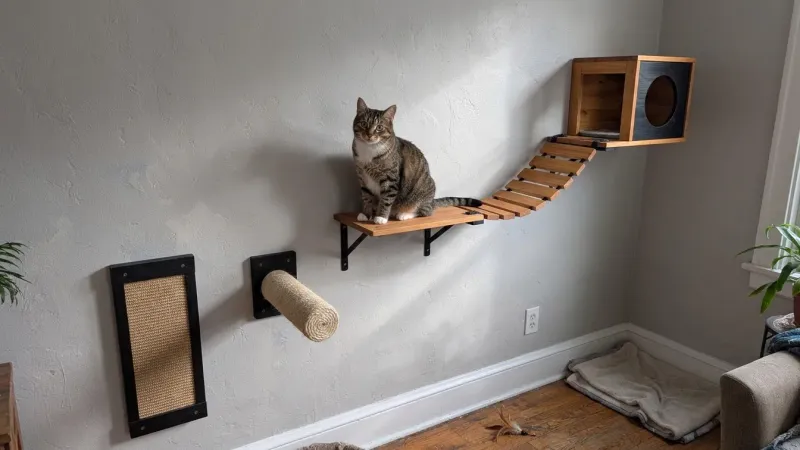
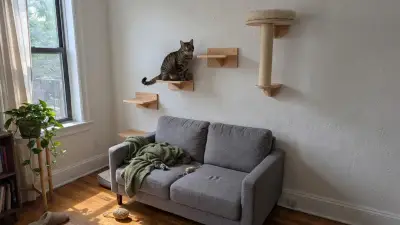
Combine a covered wall condo, wooden bridge, sisal post, scratching pad, and flat jumping platform into a staggered vertical course. Keeping all five pieces at least four feet off the ground creates an entire above-floor territory for active indoor cats. Spread the components across two wall studs per bracket so the entire layout stays rock-solid during fast zoomies.
5Over-Sofa Escape Shelf Highway
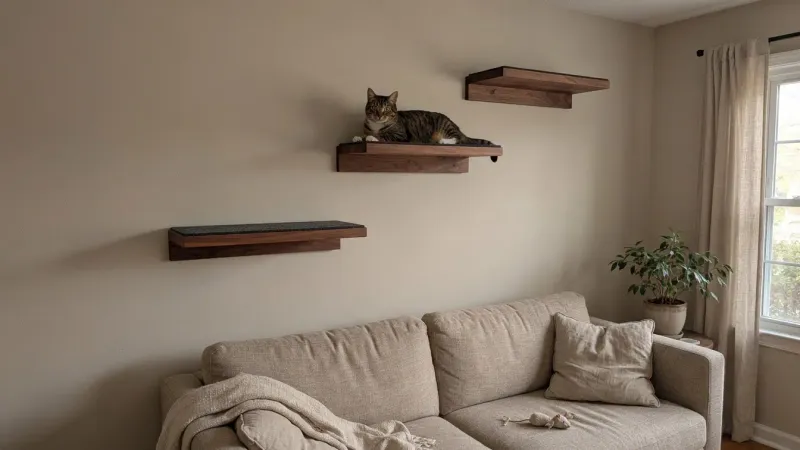
Install a staggered line of three floating wood ledges starting 48 inches above the back of your couch and rising toward a hallway doorway. Your cat can spring from the sofa cushions onto the first ledge in one smooth motion while your dog remains on the floor. Adding adhesive felt or sisal treads on each plank prevents slipping during quick takeoffs.
6Corner Wraparound Lookout Perches
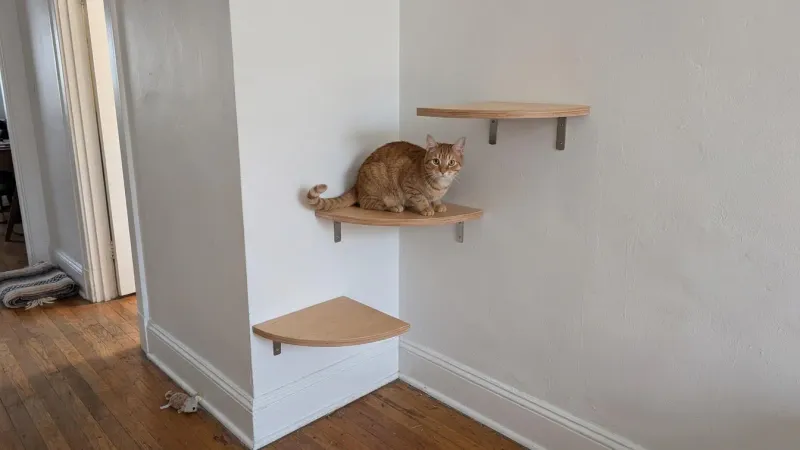
Mount triangular corner shelves in a spiral climbing pattern where two walls meet. Corners naturally support heavier loads because brackets anchor into framing studs on both walls, and the 90-degree angle gives your cat a wide view of two intersecting rooms. Check out our corner wall mounted cat trees for tight hallway layouts.
7Enclosed Wall Condo With Dual Exit Holes
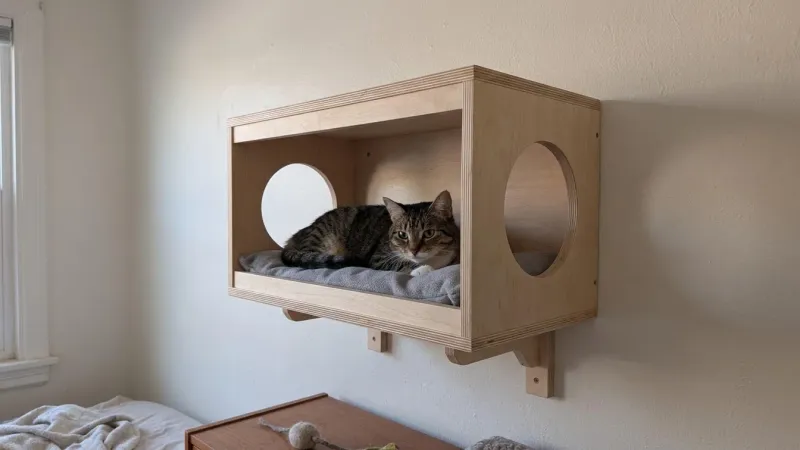
Choose a wooden wall box mounted at least 54 to 60 inches above the floor (and at least 12 inches above your dog's standing nose height) that features circular cutouts on both the left and right sides rather than a single front door. An enclosed den blocks visual contact with an excited puppy below, lowering your cat's heart rate while they nap. Dual side exits guarantee your cat can slip out quietly onto an adjacent shelf if startled and keep dogs from reaching or jumping into the side openings.
8Window-Level Acrylic Bowl Lounger
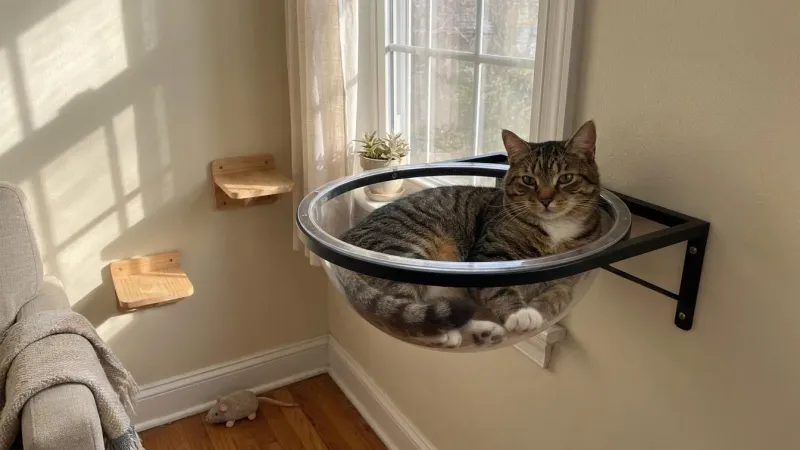
Pair a wall-mounted clear acrylic bowl perch next to a sunny window with two small approach steps mounted on the adjacent wall. Cats love warm sunbeams and outdoor bird-watching, and a curved bowl cradles their body so they feel hidden from dogs walking past below. Wipe the acrylic weekly with pet-safe soap and water to keep paw prints clear.
9High-Mounted Curved Wood Wave Shelf
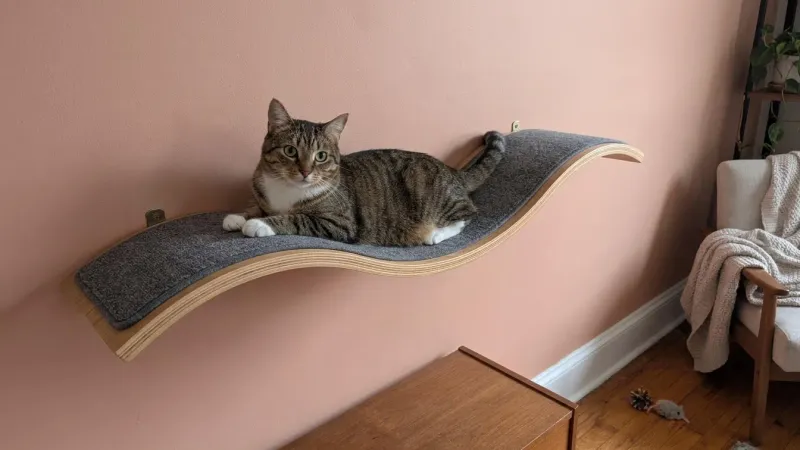
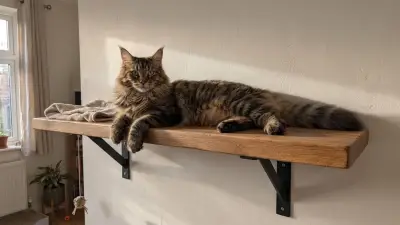
Install an S-curved plywood wall lounger fitted with replaceable carpet pads at a height of 60 inches. The gentle dip in the middle supports a sleeping cat's spine and keeps them from rolling off during deep sleep. Because the underside is smooth curved wood with no low rungs, large dogs cannot hook their paws onto it.
10Hallway Crossing Catwalk Above Doorframes
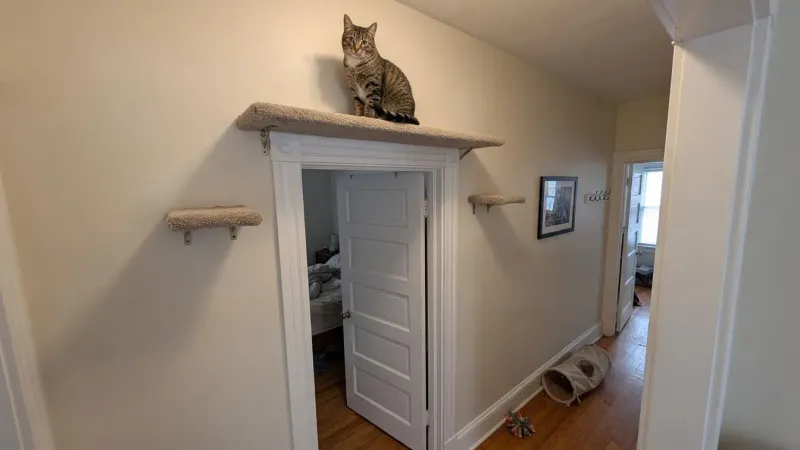
Run a 10-inch-deep carpeted plank directly above a standard interior doorway, flanked by stepping shelves on either side of the frame. This turns a narrow hallway bottleneck—where dogs often accidentally corner cats—into a safe overhead bypass. Ensure at least 14 inches of headroom between the plank and the ceiling so your cat can walk upright comfortably—note that mounting above an 80-inch doorframe requires at least 9-foot (108-inch) ceilings to achieve that clearance, or mount the catwalk slightly lower on a hallway wall instead.
11Wall-Mounted Sisal Scratching Ramp
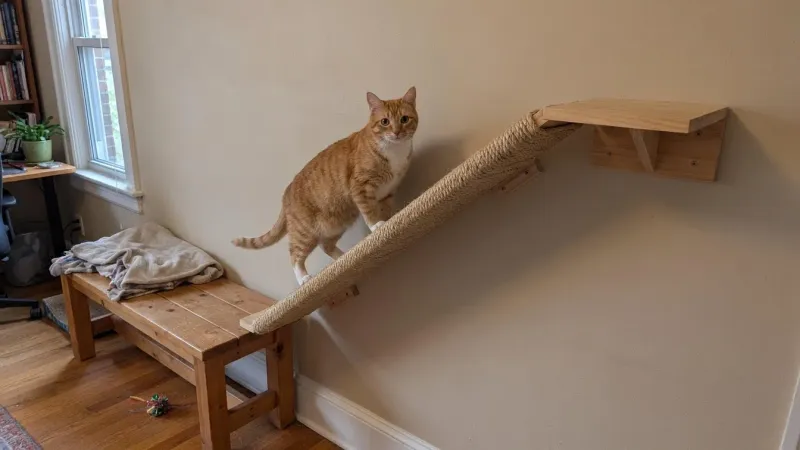
Angle a 36-inch sisal-wrapped ramp at 35 degrees starting 30 inches above the baseboard and ending at a flat resting platform, positioned so your cat accesses the bottom of the ramp from a nearby sofa, dresser, or low bench rather than making a straight 30-inch leap from the floor. Inclined ramps work especially well for senior cats or heavy breeds who struggle with straight vertical jumps but still need to escape a boisterous young dog. The textured sisal gives rear claws reliable traction on the climb up.
12Staggered Hexagon Cubby Cluster
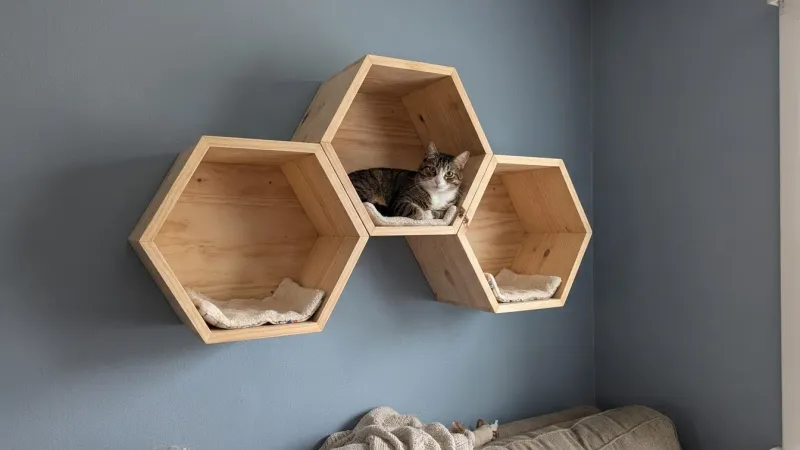
Group three hexagonal wooden wall boxes in a honeycomb cluster high on a living room wall, leaving open pass-throughs between the adjoining sides. Cats can weave through the interior openings out of sight while resting above the dog's line of vision. Line the interior floors with washable non-slip fleece mats for warmth and grip.
13Bookshelf-Integrated Wall Step Ladder
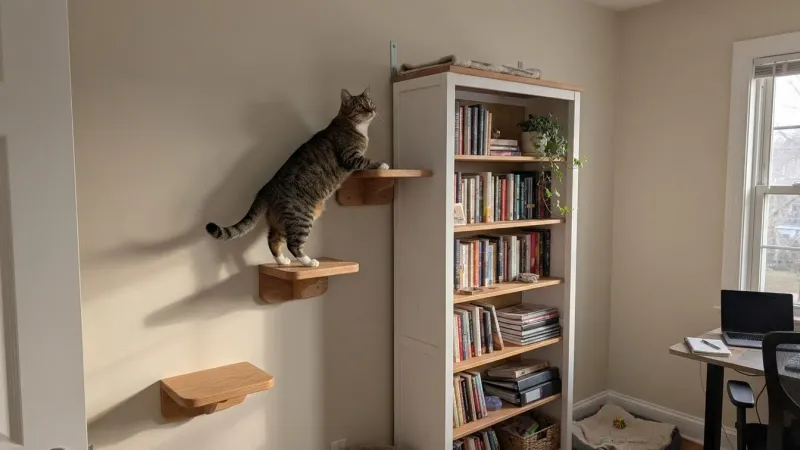
Mount three compact wall steps beside a sturdy, wall-anchored bookcase so your cat can climb to the top shelf safely. Using existing tall furniture as the final destination saves wall space and gives your cat a wide, flat surface to stretch out on. Always secure the bookcase to a wall stud with an anti-tip strap so energetic leaps never wobble it.
14Raised Water Fountain and Snack Ledge
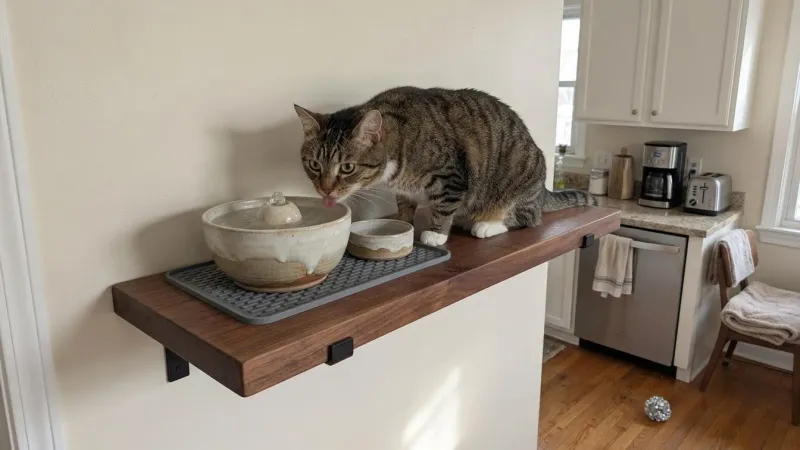
Install a deep, heavy-duty wall shelf wide enough to hold a spill-resistant water fountain and a puzzle feeder away from your dog's reach, choosing a cordless, battery-operated model or routing the low-voltage cord inside a wall-mounted cord channel out of reach of both pets. Many cats drink less water when their floor bowl sits next to a panting dog, which can contribute to urinary issues over time. Placing fresh water on a quiet upper ledge encourages regular hydration without dangling cords that pets could chew, pull down, or trip over.
15Dual-Perch Wall Tree for Multi-Cat Homes
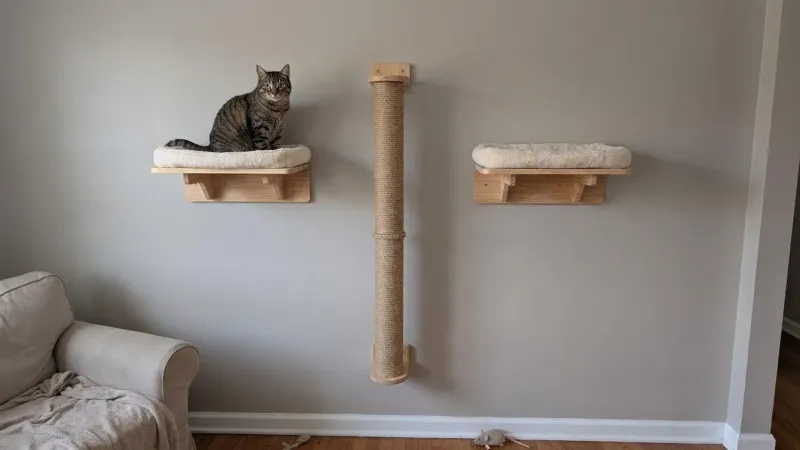
Mount two identical fleece-lined perches at equal 62-inch heights separated by a central climbing post. When you have two cats escaping one dog, uneven shelf heights often spark feline turf battles over the highest spot. Equal-height perches let both cats stay safely off the floor without competing for status, similar to modern cat trees for multiple cats.
16Compact Renter-Friendly Wall Column and Shelf Setup
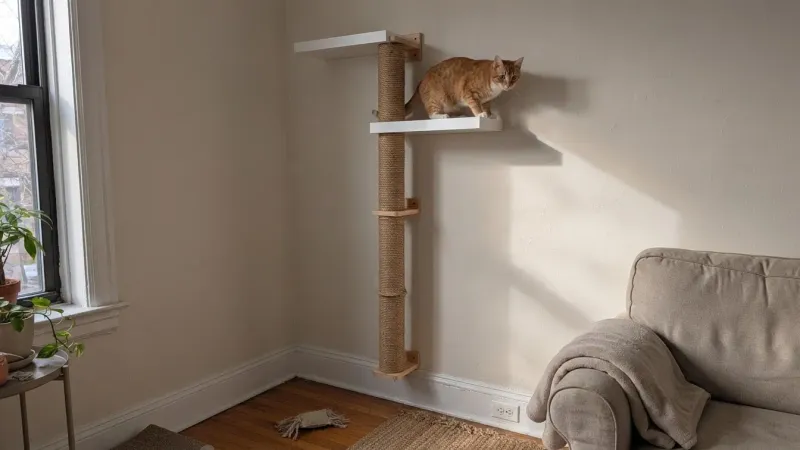
Pair a wall-mounted vertical sisal column with two lightweight floating wall shelves anchored into a single stud using minimal screws. This genuinely wall-mounted layout takes up zero floor space while lifting your cat well above a dog's jumping range. If you cannot drill into walls at all, explore no-drill wall-mounted cat tree ideas for lease-safe alternatives.
17Bedroom Door-Bypass Sanctuary Shelf
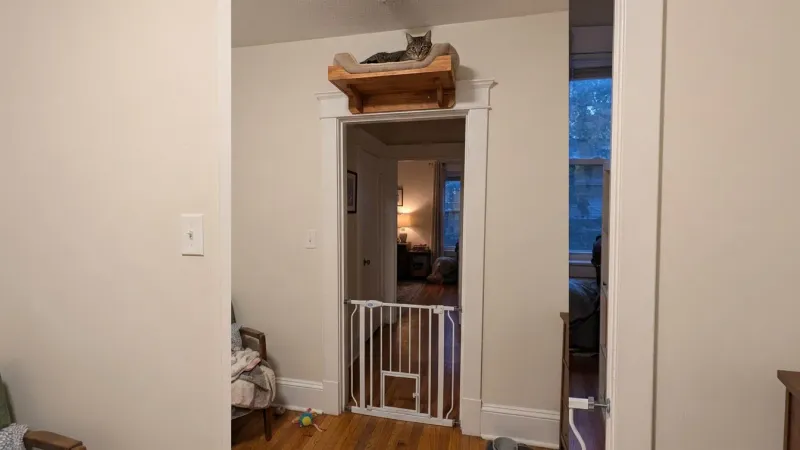
Mount a cozy bolster bed shelf inside your bedroom just above the doorframe, paired with a DIY interior cat door or baby gate with a small pet pass-through below. Your cat can slip through the low gate into the bedroom and immediately climb up to their elevated bed if a persistent dog pushes against the barrier.
How to Mount Cat Wall Furniture Safely Above Dog Reach
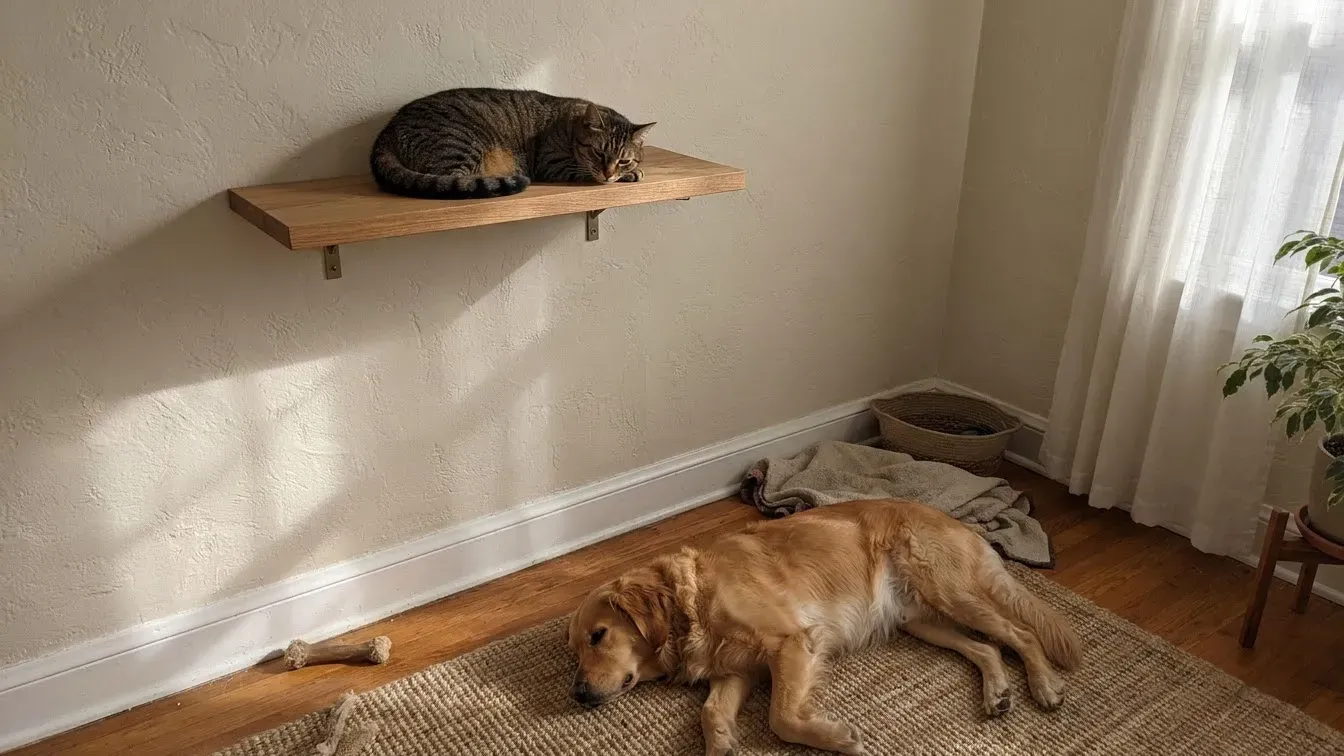
Measure your dog's standing nose height on their hind legs before drilling a single hole. For medium and large breeds, place the main lounging and feeding shelves at least 54 to 60 inches off the floor, using a single narrow jump-up step around 36 inches high that a cat can leap onto easily from a nearby dresser or sofa.
Always anchor brackets directly into wood wall studs using heavy-duty lag screws rather than hollow drywall anchors. A startled cat launches off shelves with sudden horizontal force, and larger breeds need extra reinforcement—see our guide on heavy-duty wall mounted cat trees if your cat weighs over 15 pounds.
Avoid building dead-end shelves where one cat can block another or feel trapped while a dog barks below. Arrange shelves in a continuous U-shape or bridge across two walls so your cat always has a left and right exit path. If your cat shows signs of chronic stress—such as hiding all day, over-grooming, or avoiding the litter box—consult your veterinarian to rule out medical causes and discuss feline calming strategies.
Common Mistakes to Avoid in Multi-Pet Homes
- Using carpeted lower steps as a dog ladder: Wide, carpeted platforms mounted 18 inches off the floor invite agile dogs to climb up after your cat. Keep the entry point elevated or accessible only via a slim vertical sisal pole.
- Placing food bowls near edge drops: Energetic dogs bumping the wall below can rattle loose bowls. Choose recessed feeder shelves with raised lips or fitted stainless-steel dishes.
- Forgetting senior or short-legged cats: Older cats or breeds like Munchkins cannot make 24-inch vertical leaps. Space steps 10 to 12 inches apart vertically for older felines, and reserve wide gaps only for young, agile jumpers.
- Leaving toxic houseplants on high shelves: Cats retreating to high wall perches often nibble nearby greenery out of boredom. Keep lilies, pothos, and sago palms completely out of your home, as they are toxic to both cats and dogs.
Building a safe vertical network gives your cat control over when and how they interact with your dog, turning daily tension into peaceful coexistence. Start with one high escape route and an elevated feeding shelf anchored firmly into wall studs, then watch where your cat naturally likes to perch before adding extra bridges or beds.
Sources: Cornell Feline Health Center · International Cat Care · ASPCA
Frequently asked questions
How high should I mount wall cat shelves to keep them away from dogs?
Mount main lounging and feeding shelves at least 54 to 60 inches off the floor for medium and large dogs. Measure your dog standing on their hind legs and place the main resting perches at least 12 inches above their nose reach, using a narrow single jump-up step around 36 inches high.
How do I stop my dog from climbing onto lower wall cat steps?
Eliminate wide carpeted steps near the floor. Instead, start your cat's climbing route from the back of a sofa, a tall dresser, or a vertical sisal-wrapped pole at least 36 inches off the ground, which agile dogs cannot climb.
Why do cats sometimes stop using wall mounted cat trees?
Cats often abandon wall shelves if the wood feels slippery, a bracket wobbles when they jump, or the layout ends in a corner with only one exit. Adding non-slip sisal or carpet treads, tightening stud screws, and creating a two-way exit path usually restores their confidence.
Can large cats safely use wall mounted cat shelves?
Yes, provided every shelf bracket is anchored directly into solid wood wall studs with lag screws and rated for at least 30 to 40 pounds to handle dynamic jumping forces. Choose shelves at least 11 to 14 inches deep so large cats can turn around comfortably.

Nathan Brooks
Nathan Brooks runs Farmingzoom to help loving pet owners create safe, enriching homes for their animals. He cares deeply about responsible pet care and focuses on making everyday decisions simpler for fellow owners.…